This post contains affiliate links. As an Amazon Associate we earn from qualifying purchases, at no extra cost to you. Read our disclosure.
Safety first: This is general money education, not personalised financial advice. Please read our financial disclaimer before you start.
Key takeaways
- Start with a letter-size 1 to 1.5 inch binder and four dividers.
- Planning sections first: Start Here, monthly budget, paycheck budget, bills.
- Saving sections: goals, sinking funds, emergency fund, challenge charts, Christmas.
- Free PDFs cover the budget, biweekly and debt pages with no sign-up.
- Never keep passwords, full account numbers or your SSN in the binder.
In this post22 sections
- Budget Binder Basics: What Size to Get
- Budget Binder Sections for Planning
- 1. A Start Here page
- 2. A monthly budget
- 3. A paycheck budget (if you're paid every two weeks)
- 4. A bill tracker and due-date calendar
- 5. A zero based budget page (optional)
- Budget Binder Sections for Saving
- 6. Savings goals
- 7. Sinking funds
- 8. An emergency fund tracker
- 9. Savings challenge charts
- 10. A Christmas and gift budget
- Budget Binder Sections for Debt and Spending
- 11. Debt overview and payoff tracker
- 12. A spending log
- 13. A no-spend tracker
- 14. Cash envelope pouches
- 15. A monthly money date page and notes
- Bonus: 3 Things Never to Keep in Your Budget Binder
- How to Set Up Your Budget Binder in One Afternoon
- FAQ
Budget Binder Basics: What Size to Get
A budget binder is a ring binder that holds every money page you use: your budget, bills, savings goals, debt trackers and sometimes cash. The size depends on what goes inside.
| Size | Best for | Holds |
|---|---|---|
| A6 (about 4 x 7 inches) | Cash envelopes on the go | Zipper pouches, small tracker cards |
| A5 (about 6 x 8 inches) | A planner-style binder | Half-size budget and goal pages |
| 1 inch letter | A starter binder | Around 100 sheets of printables |
| 1.5 to 2 inch letter | Full system with dividers | All sections below plus pouches |
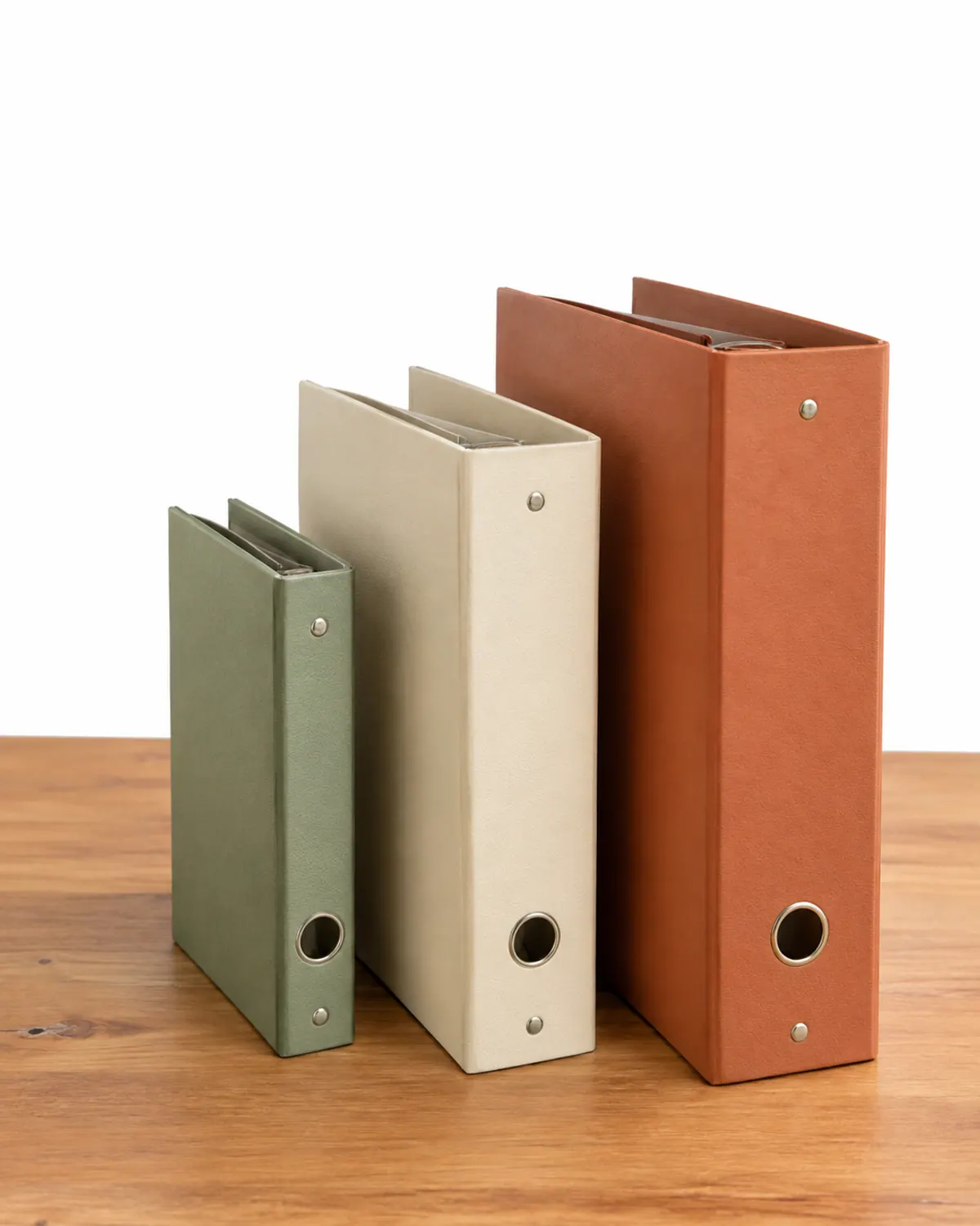
Most printables, including our free PDFs below, print on US Letter paper, so a letter binder is the simplest start. Add an A6 binder later if you use cash stuffing.
Budget Binder Sections for Planning
Set these up first. They're the pages you'll open every payday.
1A Start Here page
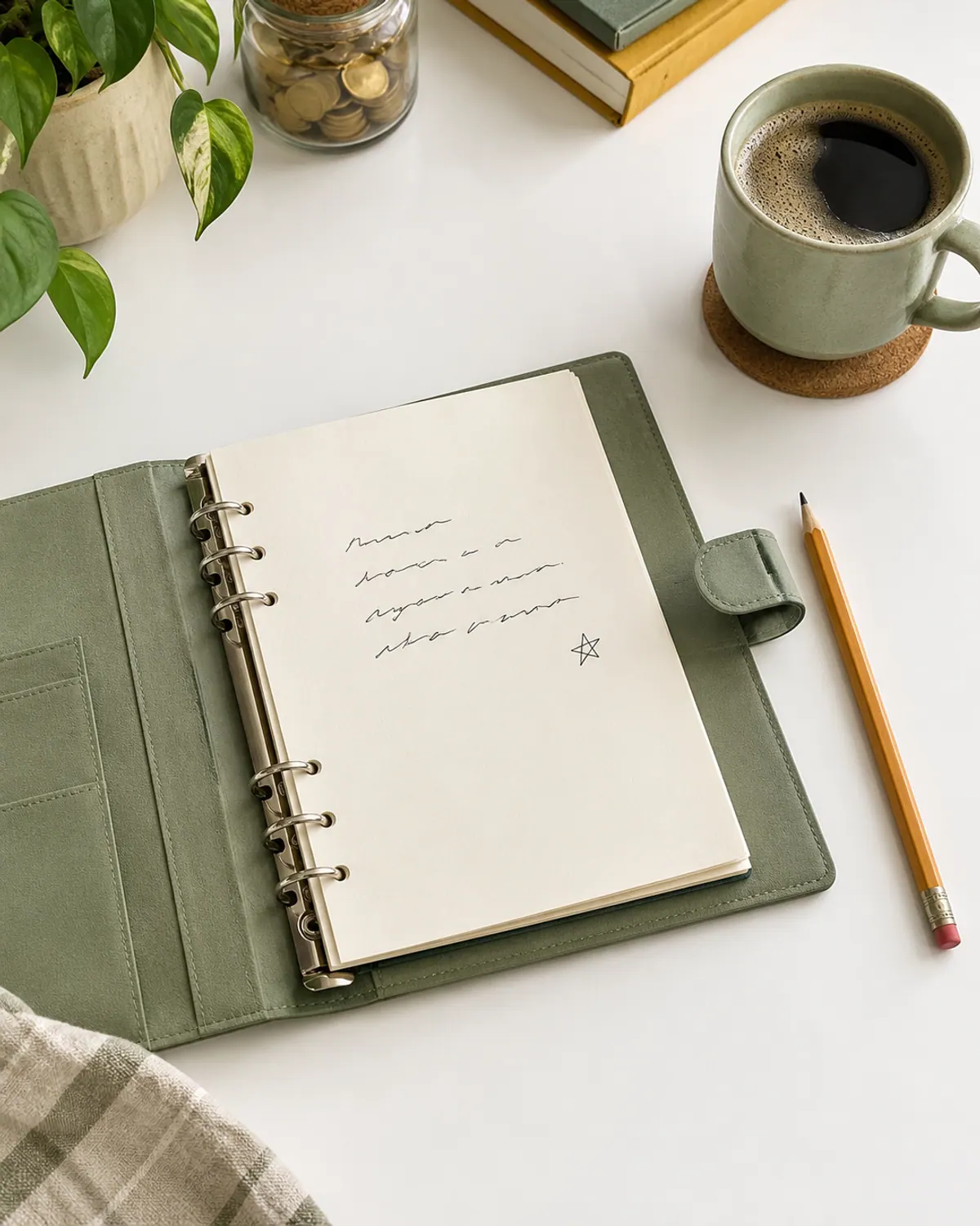
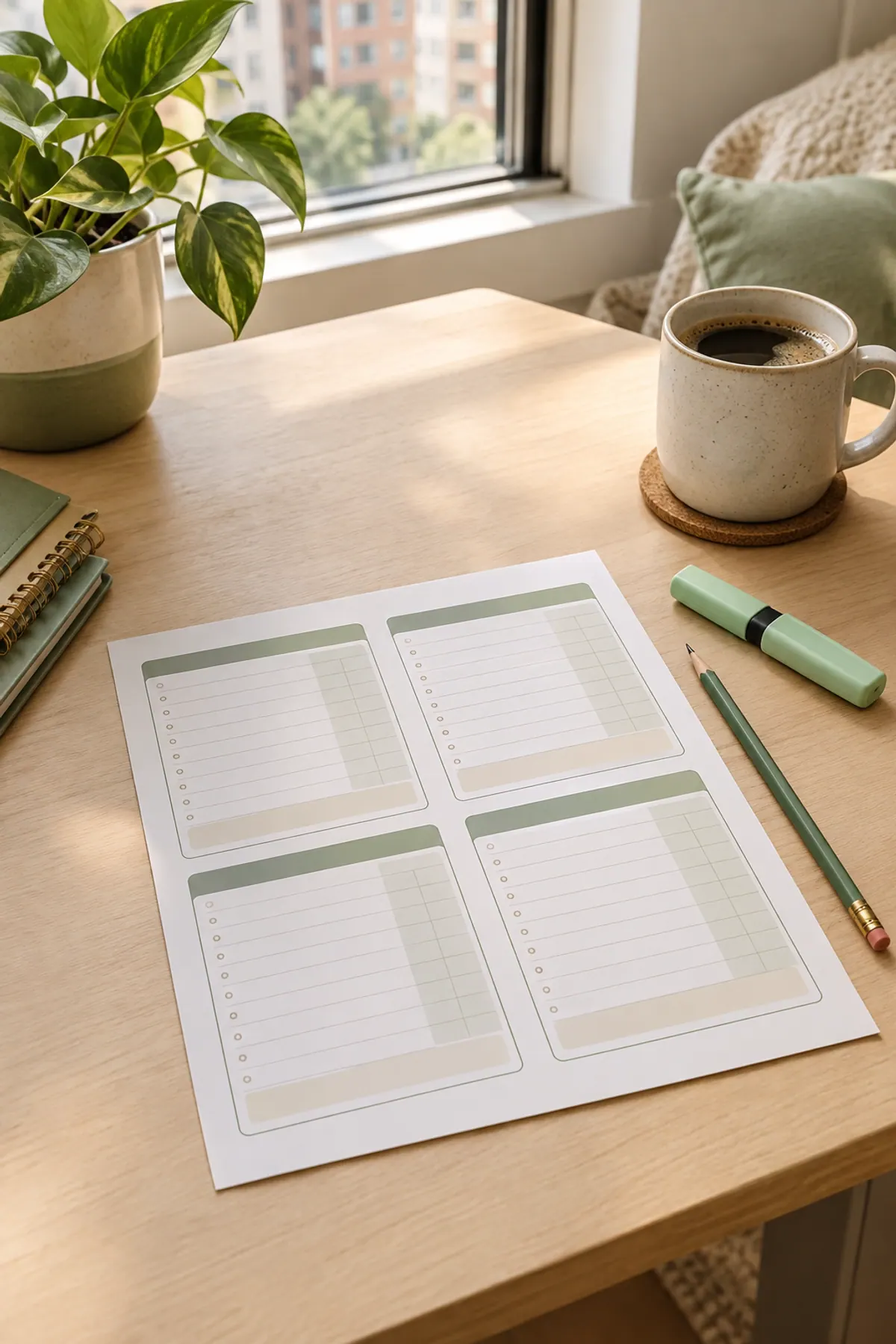
One page at the front with your top three money goals, your payday dates and the date of your next money check-in. It's the page that reminds you why the binder exists.
- Write goals as numbers with dates, like "$500 starter fund by March."
2A monthly budget
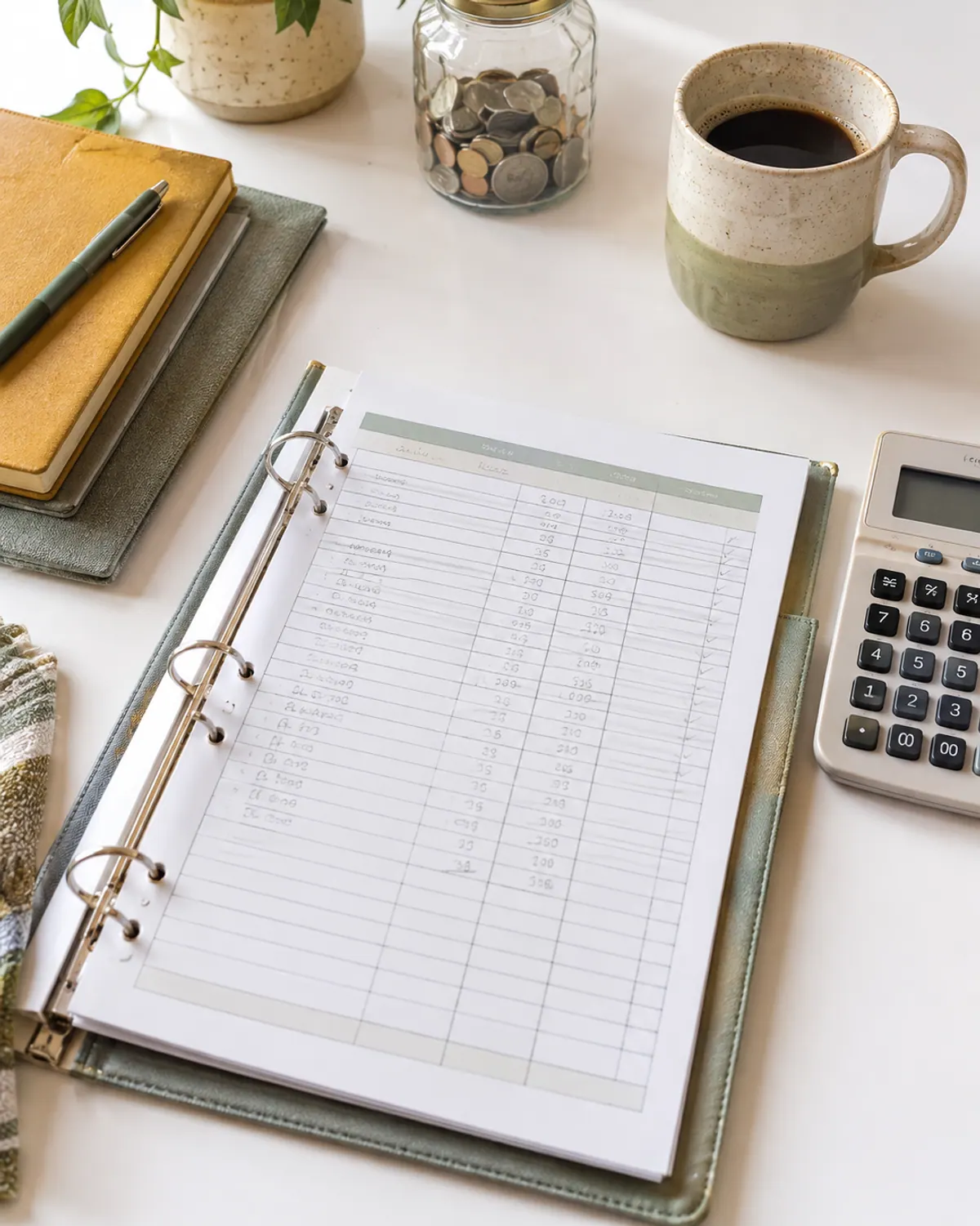
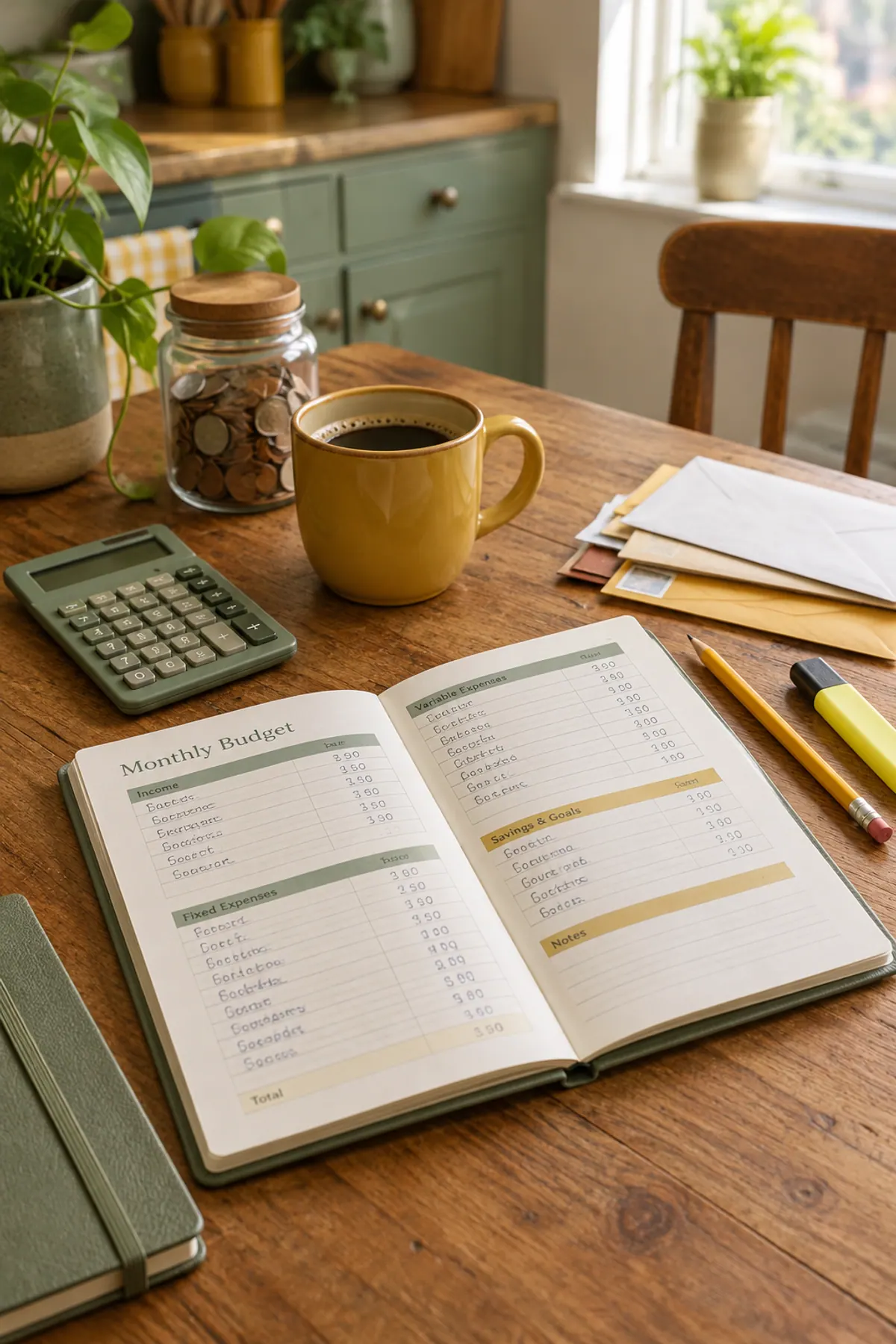
The heart of the binder: income at the top, every bill and spending category below, and the total that's left. Our free monthly budget sheet (PDF, 3 pages) fills this section. No sign-up needed.
- Print 12 copies at once and file them behind a "Plan" divider.
3A paycheck budget (if you're paid every two weeks)
Paid biweekly? Plan each paycheck on its own page so bills land on the right check. Page 2 of the free monthly budget sheet is a biweekly paycheck sheet, and our biweekly budget guide walks through it.
- Mark the two months a year with three paychecks; that extra check is easy savings.
4A bill tracker and due-date calendar
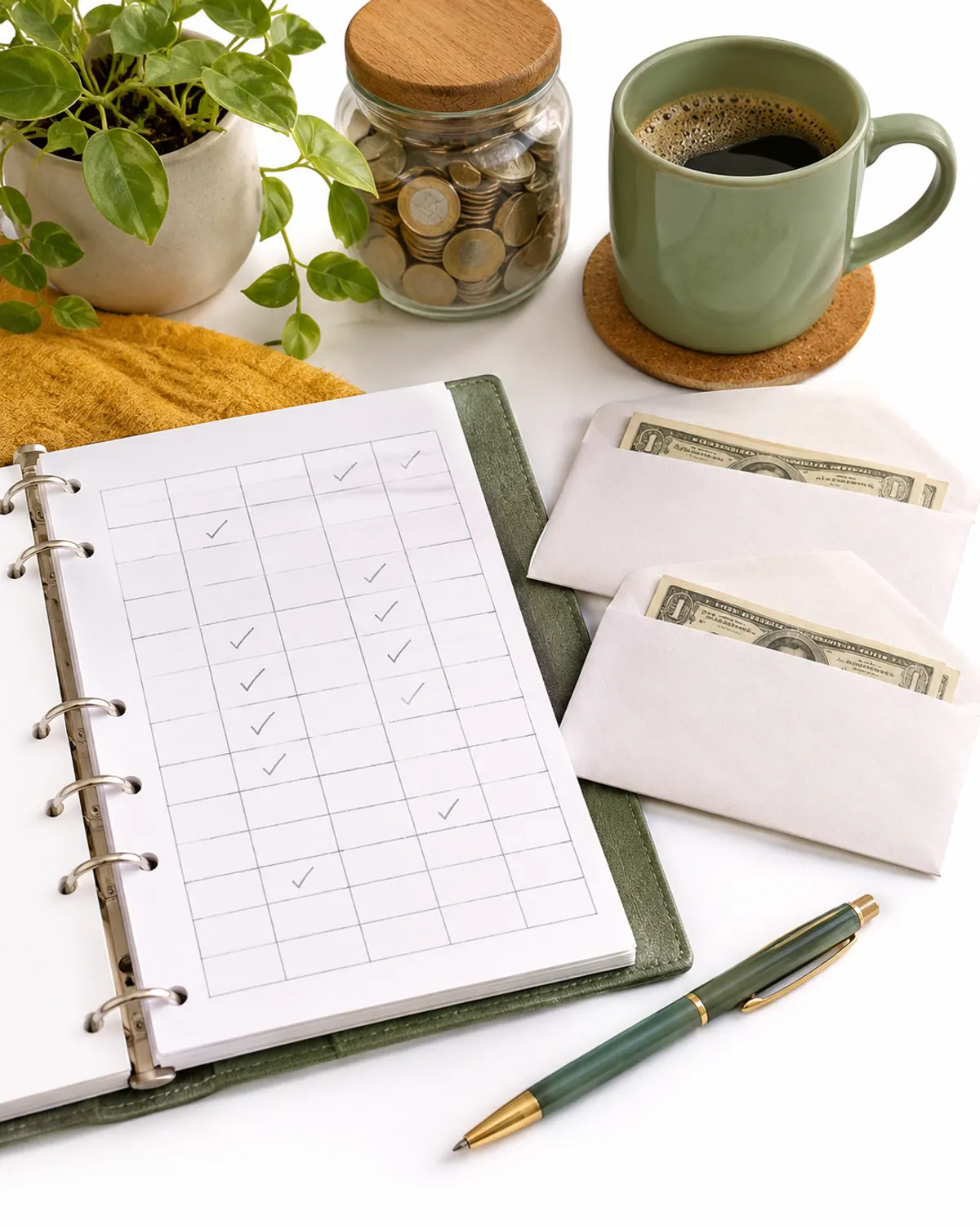
List every bill with its amount and due date, then check it off when paid. It's the fastest way to avoid late fees.
- Write autopay bills in a different color so you know which ones still need you.
5A zero based budget page (optional)
If you like giving every dollar a job, add a zero based page. The free zero based budget template (PDF, 3 pages) works here; our zero based budget guide explains the method.
- Use either the monthly sheet or the zero based page, not both, so the binder stays simple.
Budget Binder Sections for Saving
Put these behind a "Save" divider. Seeing progress on paper is what keeps a savings goal going.
6Savings goals

One page per goal with the amount, the deadline and the per-paycheck number. Example: $1,200 by December = $100 a month. Example numbers, not financial advice.
- Draw a jar and color it in each time you add money.
7Sinking funds
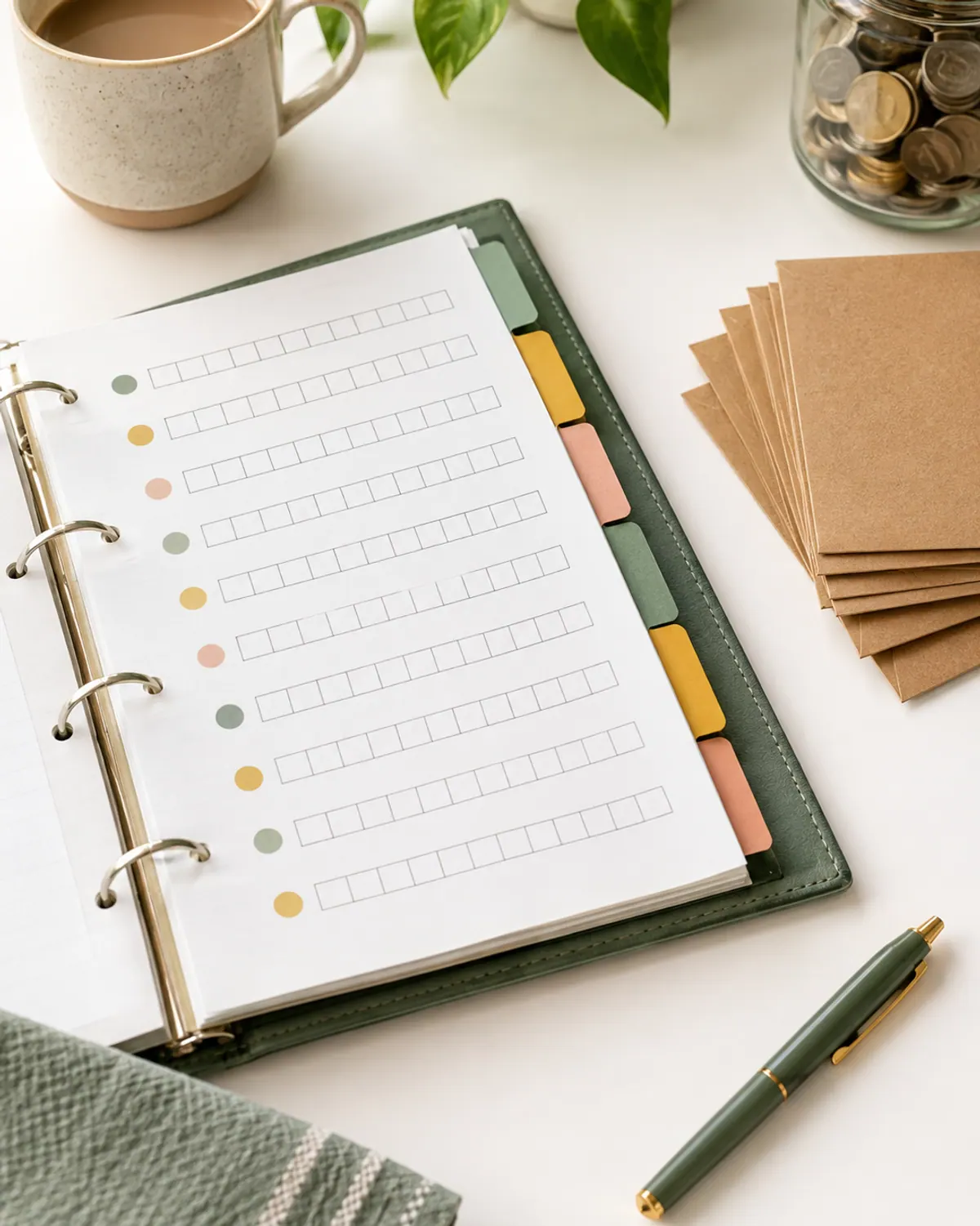
Small monthly amounts for bills that aren't monthly, like car repairs, gifts and the vet. Our list of sinking funds categories has 20 ideas with example amounts.
- Keep one tracker line per fund with a running balance.
8An emergency fund tracker
A simple chart from $0 to your starter goal, then to one month of expenses. See how much an emergency fund should be for the steps.
- Track the starter fund and the bigger goal on the same page so the next step is in view.
9Savings challenge charts
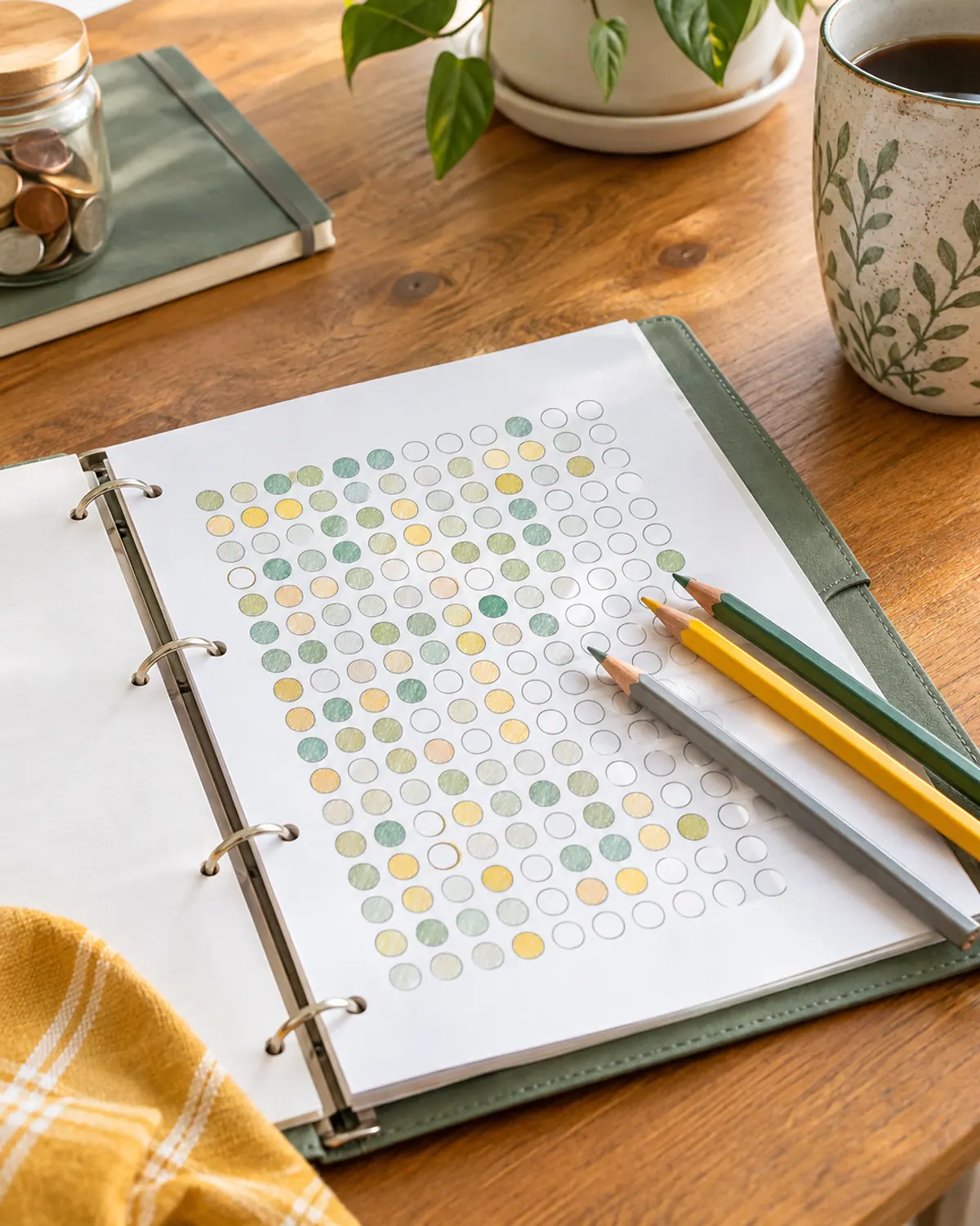
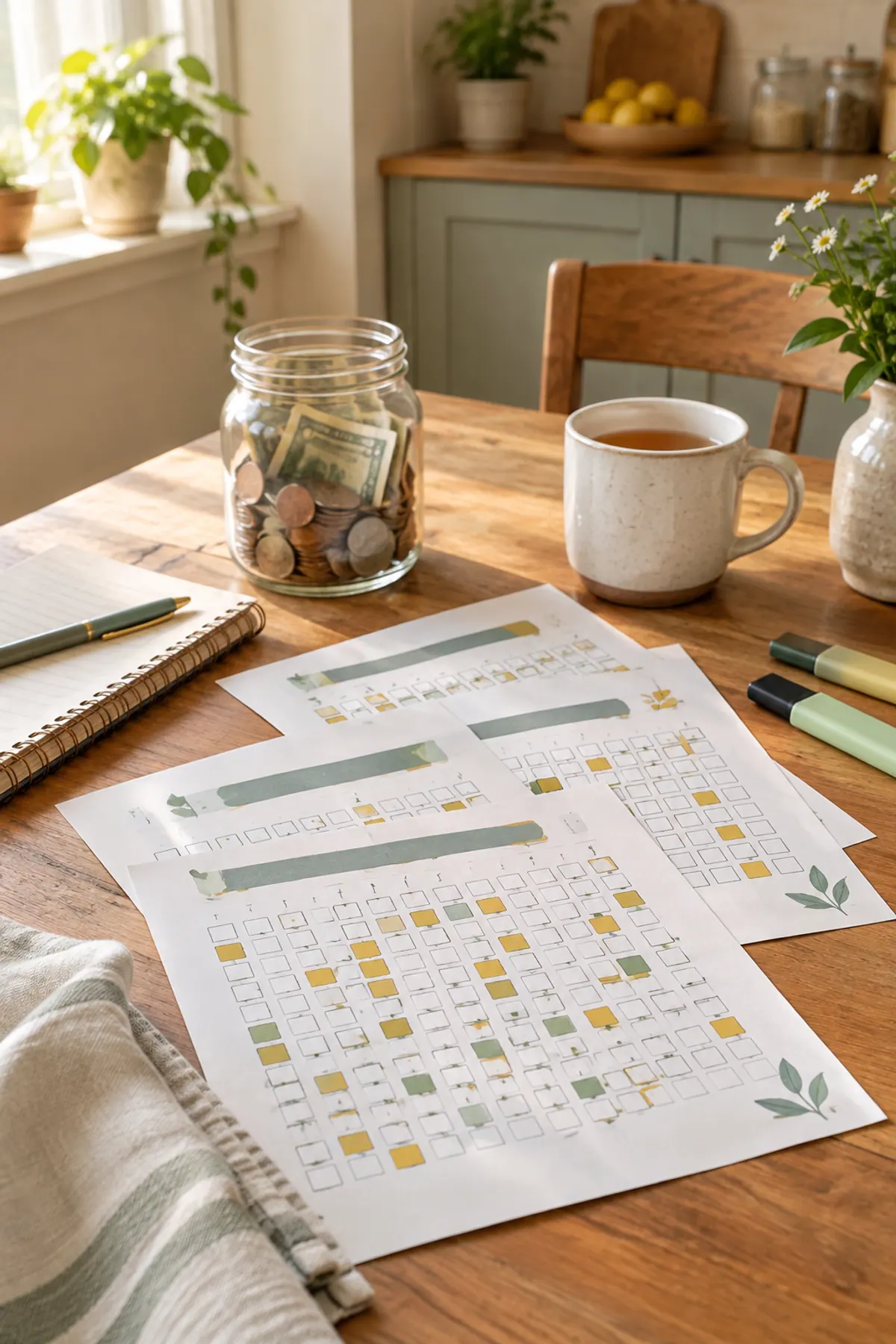
Charts you color in turn saving into a game. The free bi weekly savings challenge charts (PDF, 6 pages) need no sign-up, and the 100 envelope chart comes in our free Cozy Savings Challenge Pack.
- Pick one chart at a time. Three half-finished charts are less motivating than one full one.
10A Christmas and gift budget
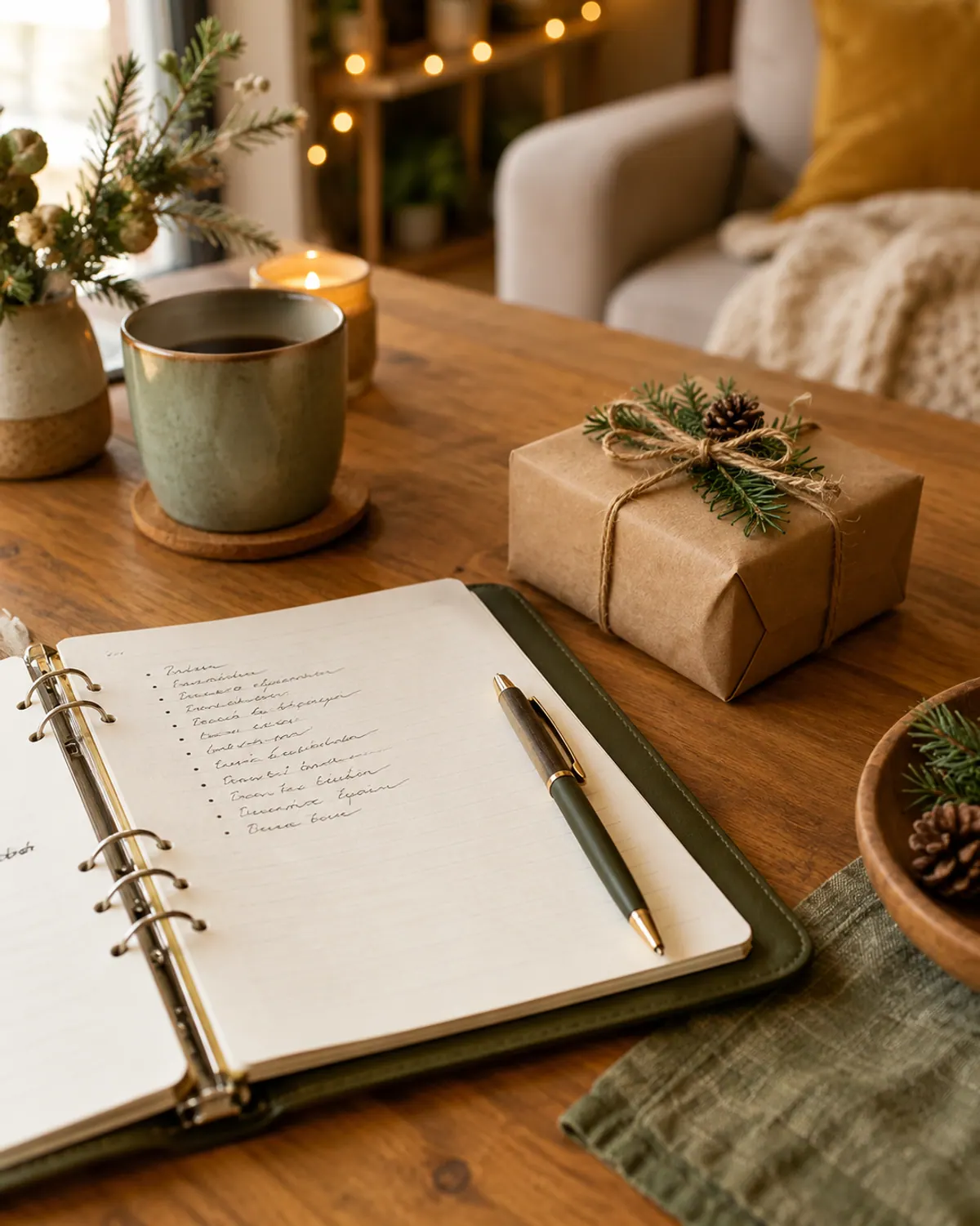
A section for gift lists, the holiday budget and what's been spent. It's the section that saves January. Our Christmas budget planner guide shows what to include.
- Start it in January with a monthly amount so December is already paid for.
Budget Binder Sections for Debt and Spending
These pages show where the money actually goes and how fast debt is shrinking.
11Debt overview and payoff tracker
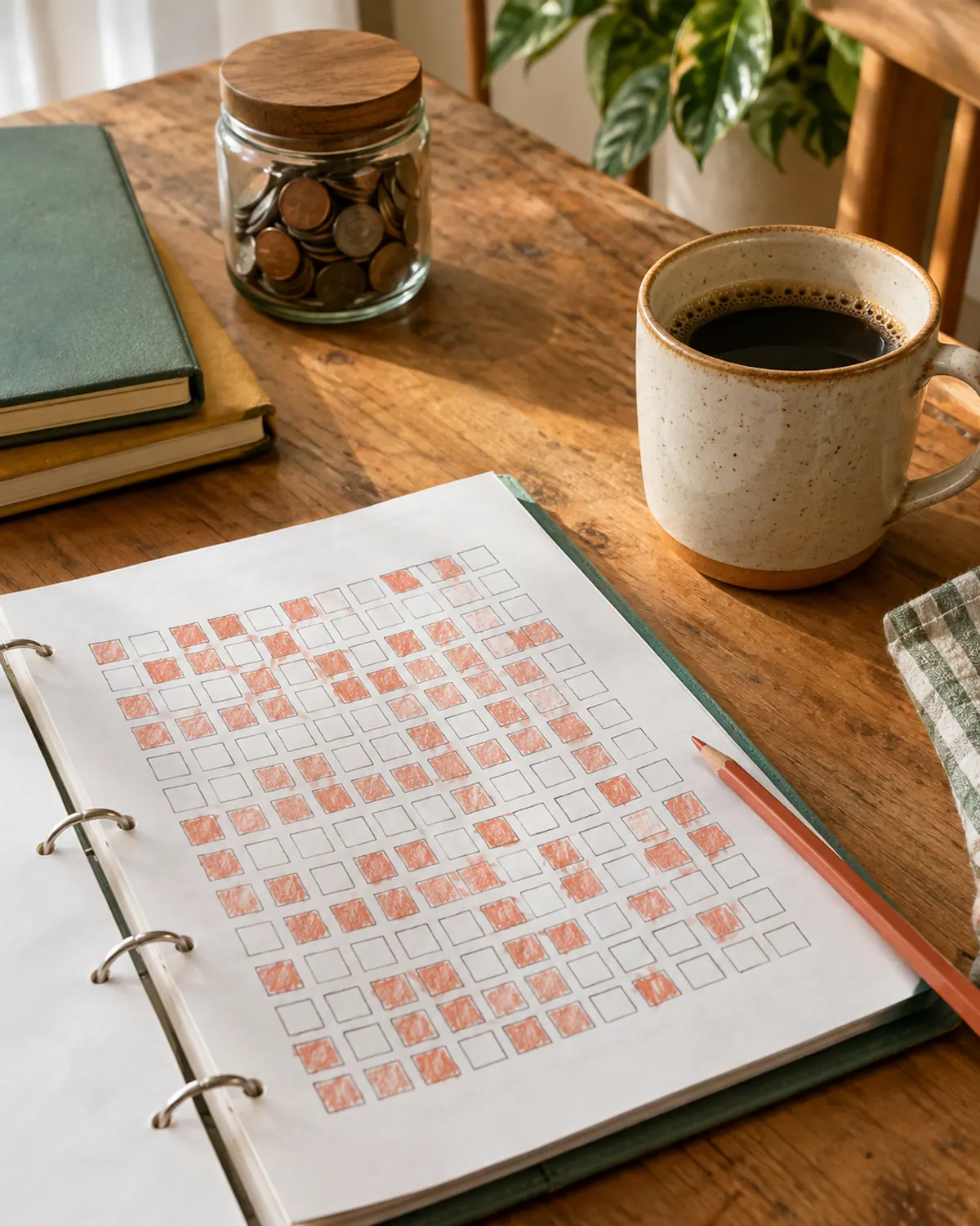
List each debt with balance, rate and minimum payment, then track balances monthly. The free debt payoff worksheets (PDF, 3 pages) include snowball and avalanche pages plus a 12-month tracker. No sign-up needed.
- Our debt payoff tracker guide helps you choose which debt goes first.
12A spending log

Write down what you spend each week by category. Two or three weeks of real numbers make next month's budget far more accurate.
- Tuck a pen in the binder's pen loop so logging takes seconds.
13A no-spend tracker
A grid of days you color in for every day without extra spending. The free Cozy Savings Challenge Pack includes a 30-day no-spend tracker, and our no-spend challenge guide has the rules.
- Keep it at the front of the spending section so you see it every time you log.
14Cash envelope pouches
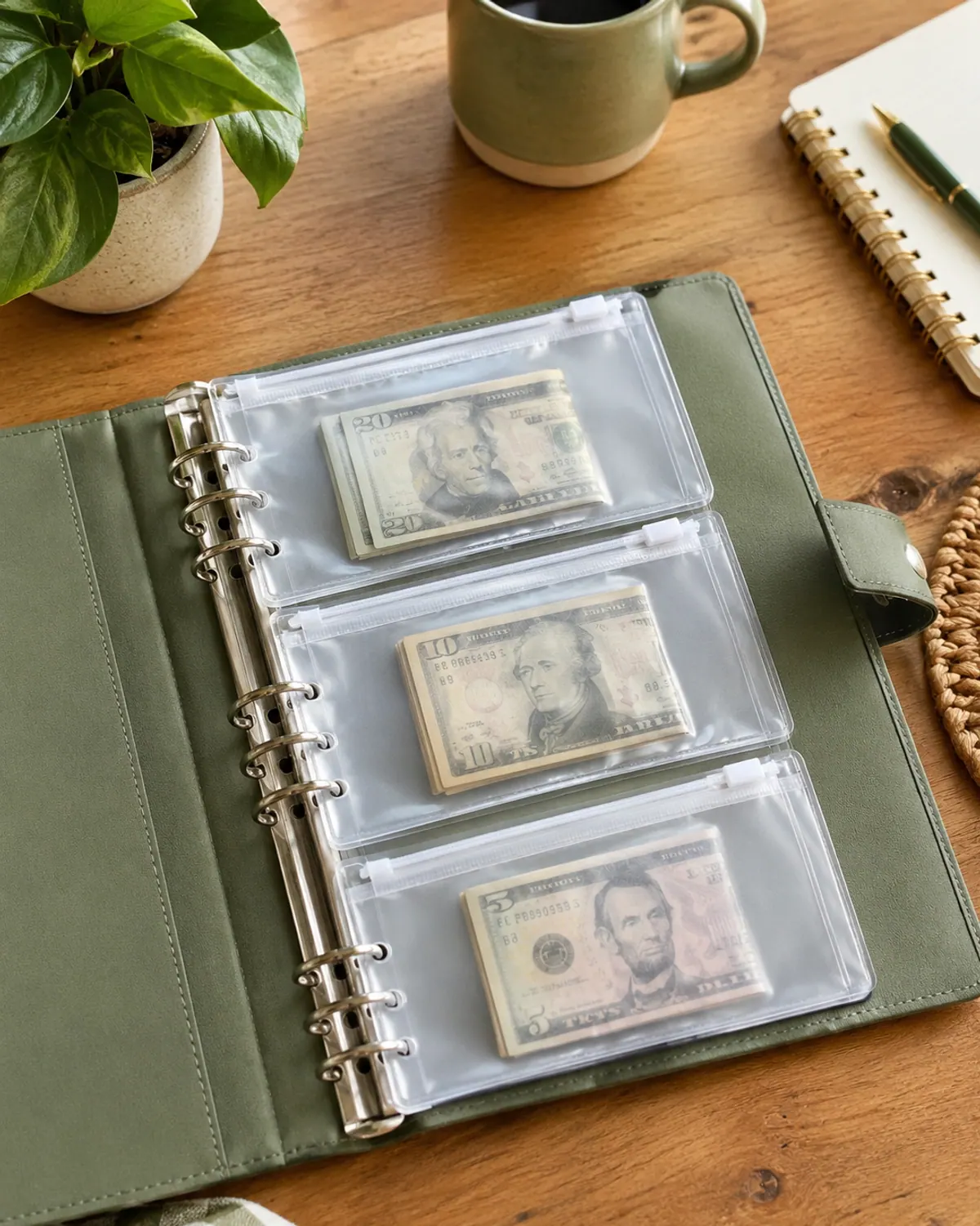
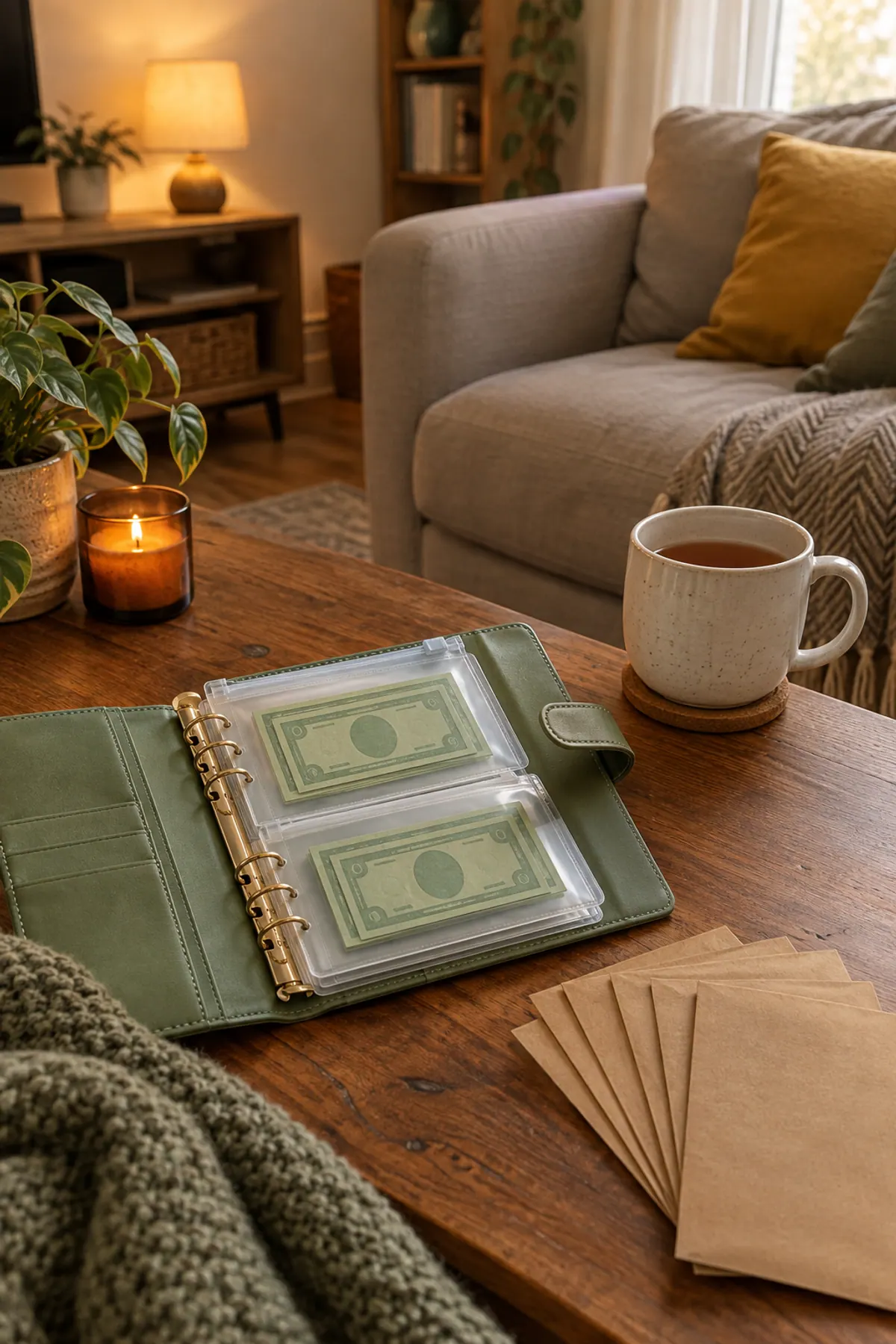
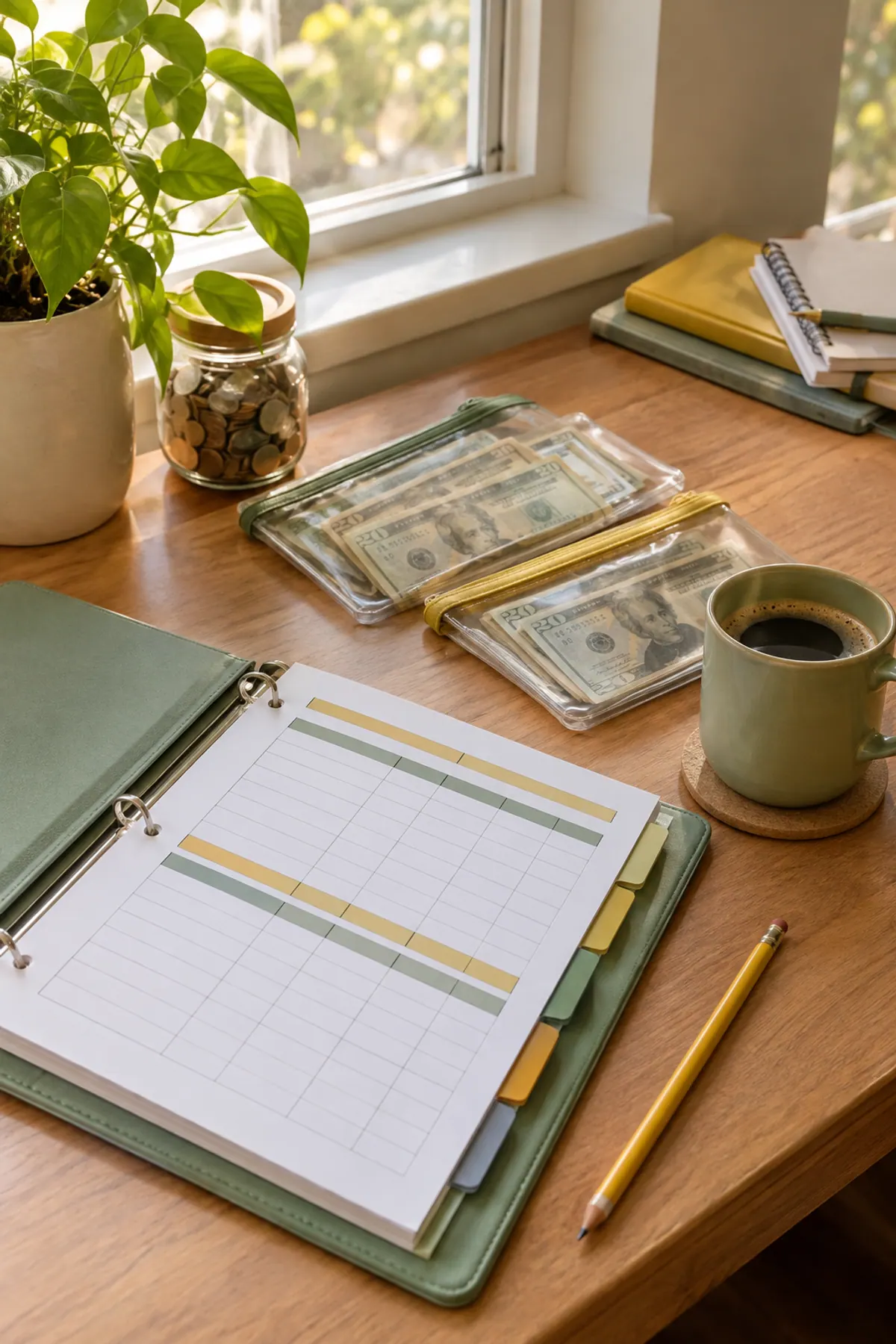
If you use cash for groceries or fun money, add zipper pouches that snap onto the rings. One pouch per category keeps cash and receipts together.
- Label each pouch with the category and the monthly amount.
Hold cash, receipts and coupons inside the binder rings.
15A monthly money date page and notes

One page per month to review: what went well, what went over, what changes next month. Add a few blank notes pages behind it for quotes, account phone numbers and questions.
- Book the money date on your calendar, like any other appointment.
Bonus: 3 Things Never to Keep in Your Budget Binder
A budget binder often sits on the counter or goes in your bag. Keep it useful, not risky. Leave these out:
Keep these out of the binder
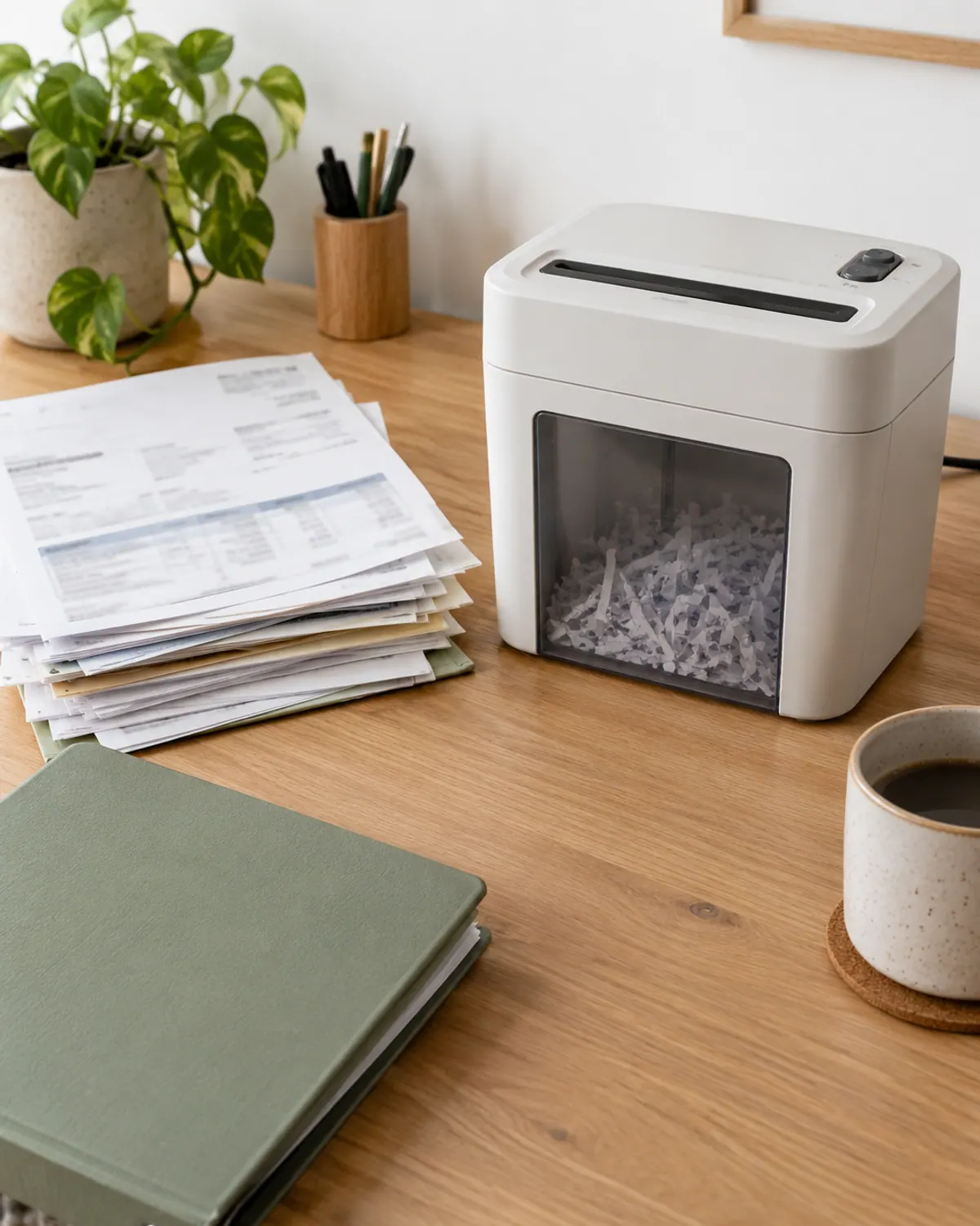
The FTC advises keeping documents with personal or financial information in a safe place and shredding them before you throw them away. Shred old statements and receipts you've finished logging.
How to Set Up Your Budget Binder in One Afternoon
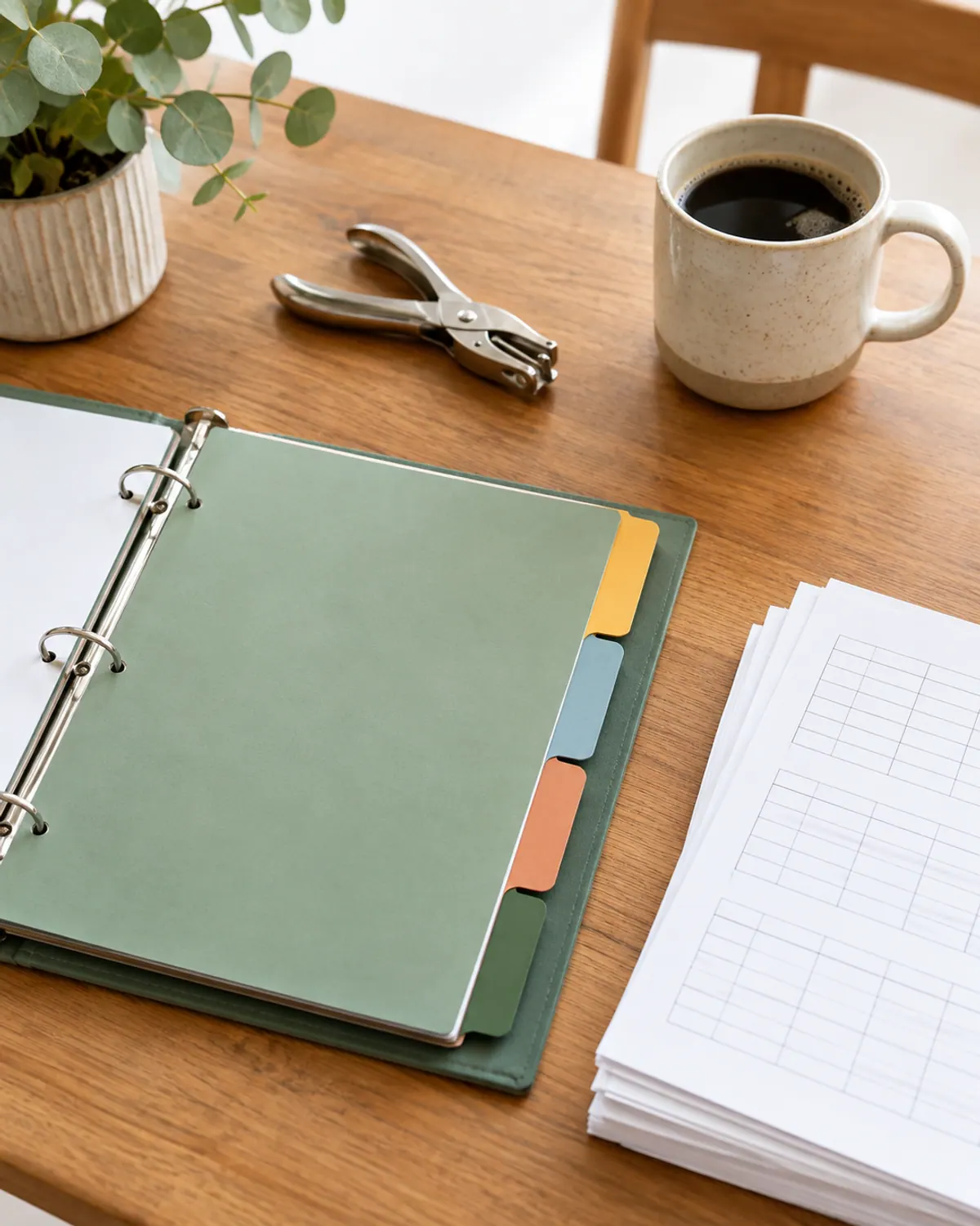
Start with four dividers: Plan, Save, Debt and Spending, Notes. Put the Start Here page in front, then fill each section with the pages above. You can add sections later; a binder with five pages you use beats one with fifty you don't.
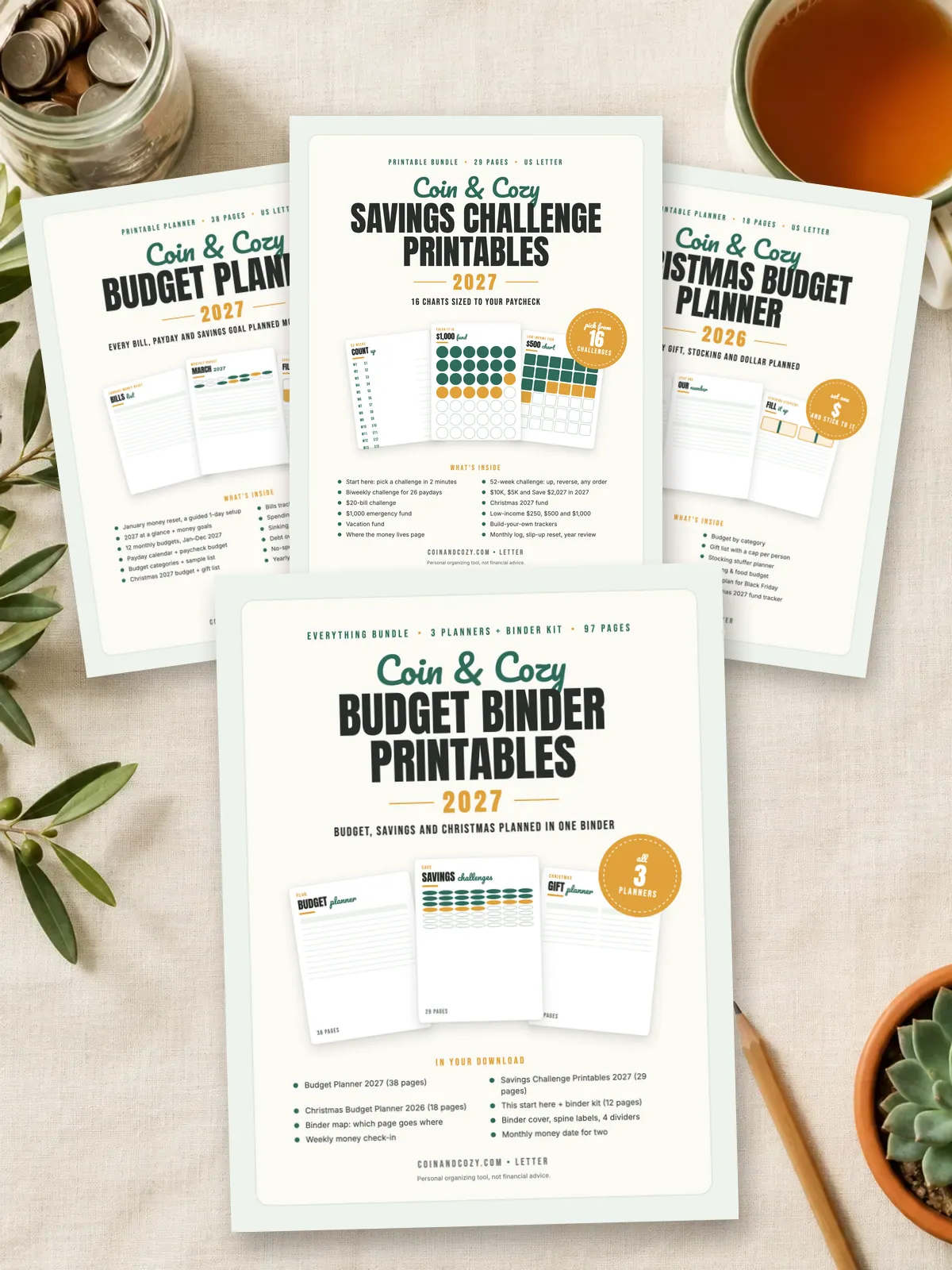
Want it done for you? The Cozy Money Binder is a 97-page printable kit with a binder map, cover, spine labels for 1, 1.5 and 2 inch binders, four dividers, a weekly 15-minute check-in and a monthly money date page, plus the full Cozy Budget Planner 2027, the savings challenge charts and the Christmas planner.
Binders that get used
- 5 to 8 sections to start
- Pages that match your pay schedule
- A set weekly check-in
- Free printables first, upgrades later
Binders that get shelved
- Every section on day 1
- Decorating more than budgeting
- Full account numbers inside
- No regular time to update it
The best budget binder is the one you open every week.
Helpful, not required
-
1.5 inch 3-ring binder
Typically $5 to $15
Holds all 15 sections, dividers and pouches with room to grow.
Check price on Amazon for 1.5 inch 3-ring binder -
A6 budget binder with zipper pockets
Typically $8 to $20
A small binder for cash envelopes and tracker cards.
Check price on Amazon for A6 budget binder with zipper pockets -
Tab dividers for 3-ring binders
Typically $4 to $10
Separate Plan, Save, Debt and Notes sections.
Check price on Amazon for Tab dividers for 3-ring binders -
Sheet protectors
Typically $6 to $15
Protect pages you reuse, like the Start Here page.
Check price on Amazon for Sheet protectors -
Zipper binder pouches
Typically $7 to $15
Hold cash, receipts and coupons inside the binder rings.
Check price on Amazon for Zipper binder pouches
Frequently asked questions
What should be in a budget binder?
A Start Here page, a monthly budget, a bill tracker, savings goals, sinking funds, a debt tracker and a spending log cover most needs. Add savings challenges, a Christmas budget and cash pouches if you use them.
What size binder is best for a budget binder?
A 1 to 1.5 inch US Letter binder fits most printables. Use an A6 binder for cash envelopes and an A5 for a planner-style setup.
Where can I get free budget binder printables?
Our monthly budget sheet, zero based budget template, debt payoff worksheets and bi weekly savings charts are free PDFs with no sign-up. The 100 envelope chart and no-spend tracker come in the free Cozy Savings Challenge Pack.
How do I organize a budget binder?
Use four dividers: Plan, Save, Debt and Spending, and Notes. Put a Start Here page at the front and the pages you use most at the front of each section.
Is it safe to keep a budget binder?
Yes, if you leave out passwords, PINs, full account numbers and your Social Security number. Use the last four digits of accounts and shred old pages you no longer need.
Save it for later
Pin this to your Budget Printables board so it's there when you need it.
Save to Pinterest