This post contains affiliate links. As an Amazon Associate we earn from qualifying purchases, at no extra cost to you. Read our disclosure.
Safety first: This is general money education, not personalised financial advice. Please read our financial disclaimer before you start.
Key takeaways
- The free budget template is a 3 page PDF: monthly sheet, biweekly paycheck sheet and a low-ink version. No sign-up needed.
- Four blocks only: income, fixed bills, variable spending, and savings and debt. One left-over line at the bottom.
- Fill it in pencil on payday, write actuals as you go, and review on the last day of the month.
- Paid every two weeks? Use the paycheck page and split bills between the two checks.
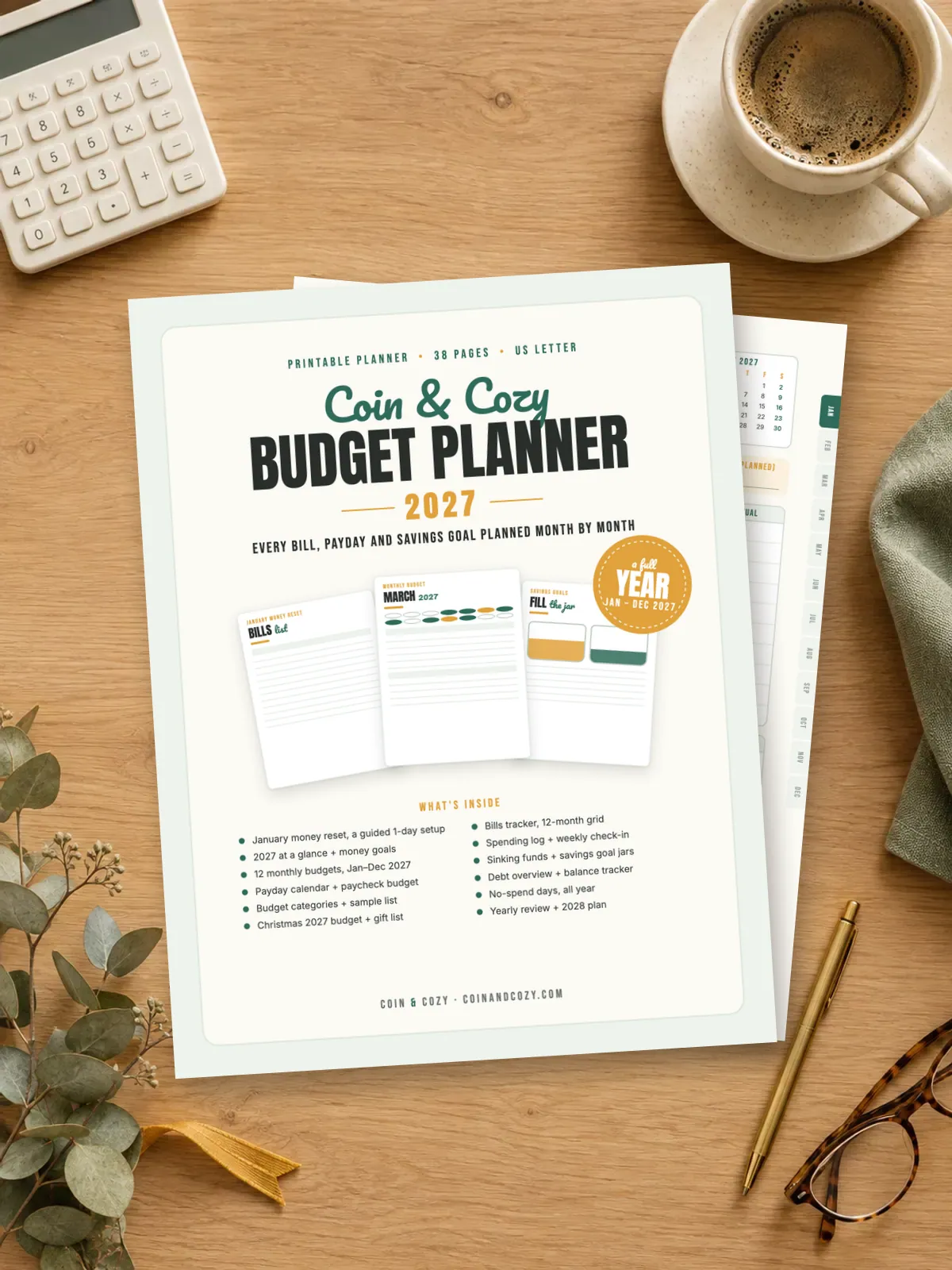
- Want all 12 months plus trackers in one book? That is the Cozy Budget Planner 2027.
In this post9 sections
- Budget Template Free Printable: The Simple Monthly Budget Sheet
- What Goes on a Monthly Budget Sheet (Income, Bills, Sinking Funds, Savings)
- The Sheet Filled In: An Example Month for a Family (Example Numbers)
- Biweekly Paycheck Budget Template (Two-Paycheck Months)
- Household and Couples Version
- Weekly Budget Template for Groceries and Gas
- How to Print, Fill and Review the Sheet Each Month
- Want All 12 Months Plus Trackers? The Cozy Budget Planner 2027
- FAQ
Budget Template Free Printable: The Simple Monthly Budget Sheet
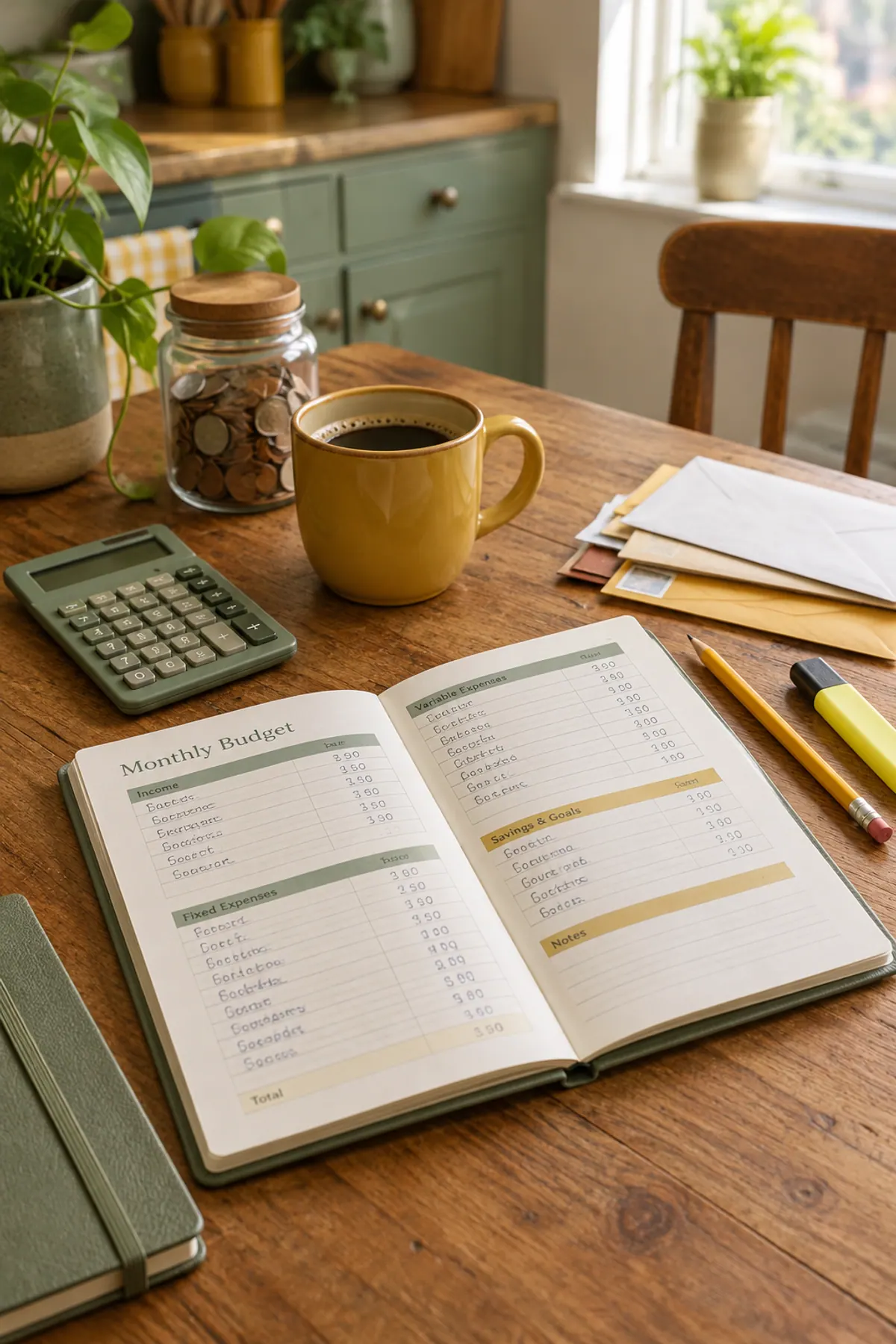
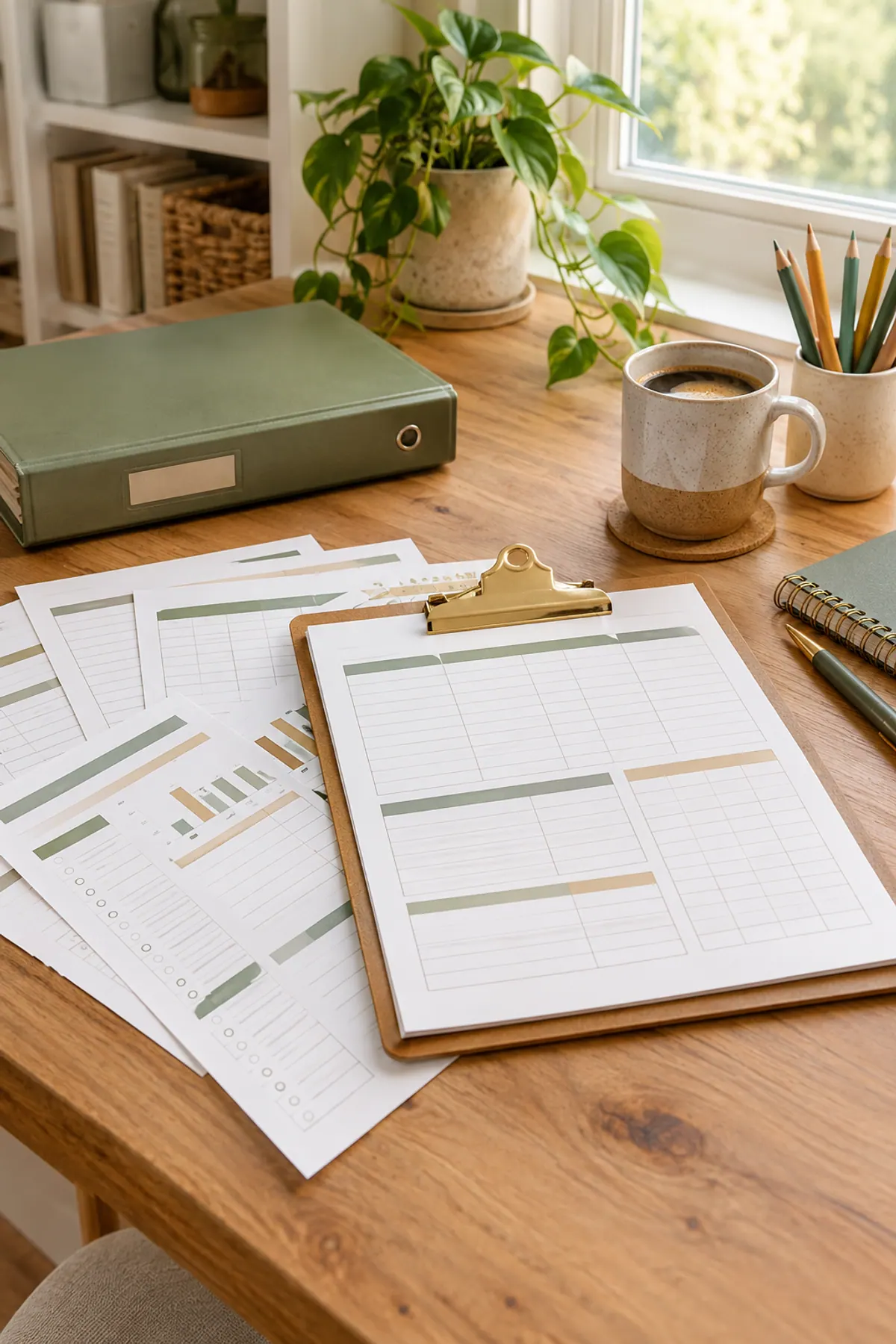
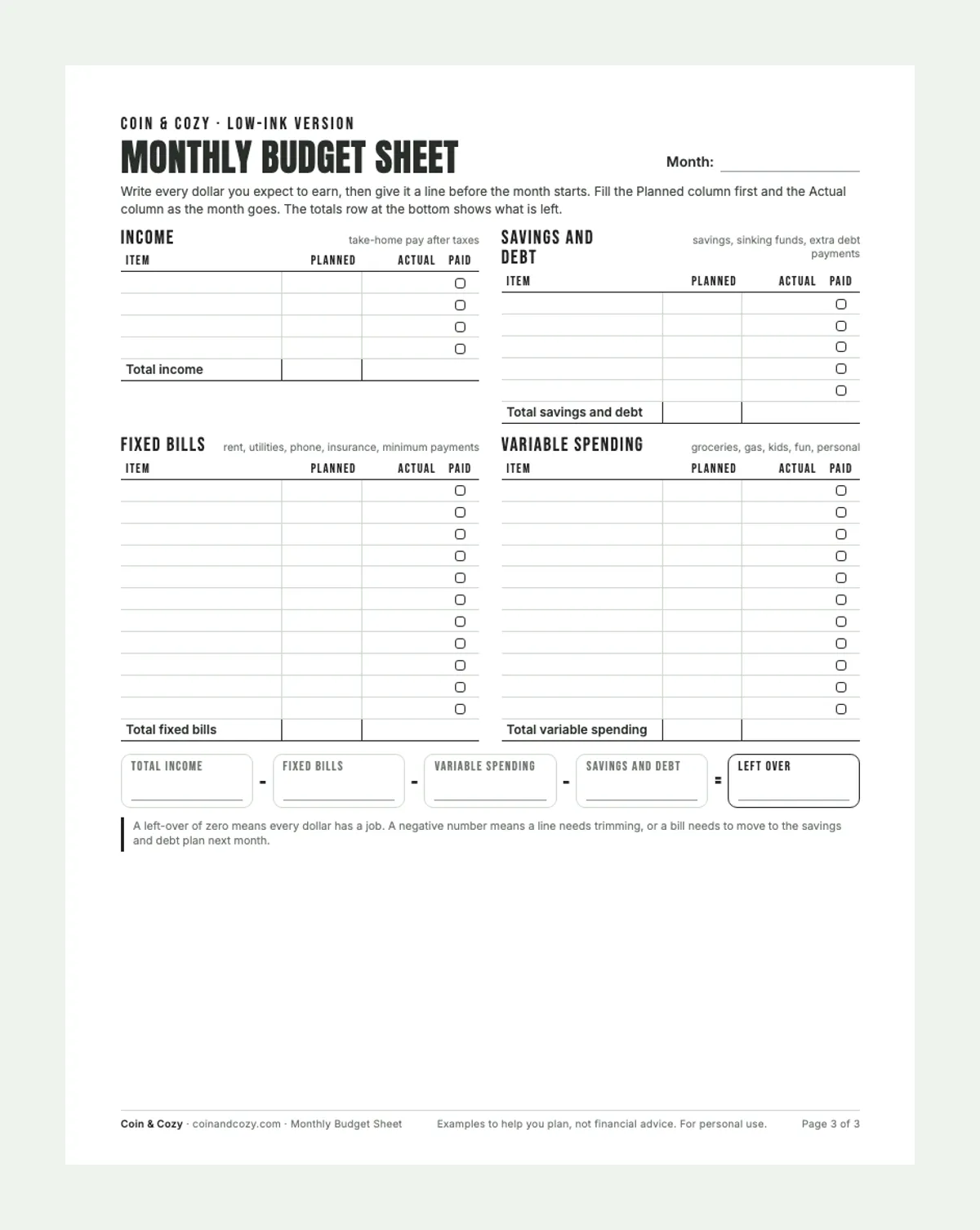
Download the free monthly budget sheet (PDF, 3 pages). No sign-up needed. It prints on US Letter paper; on A4, pick "fit to page" in the print dialog. Page 1 is the monthly sheet, page 2 is the biweekly paycheck sheet and page 3 is a low-ink copy of page 1.
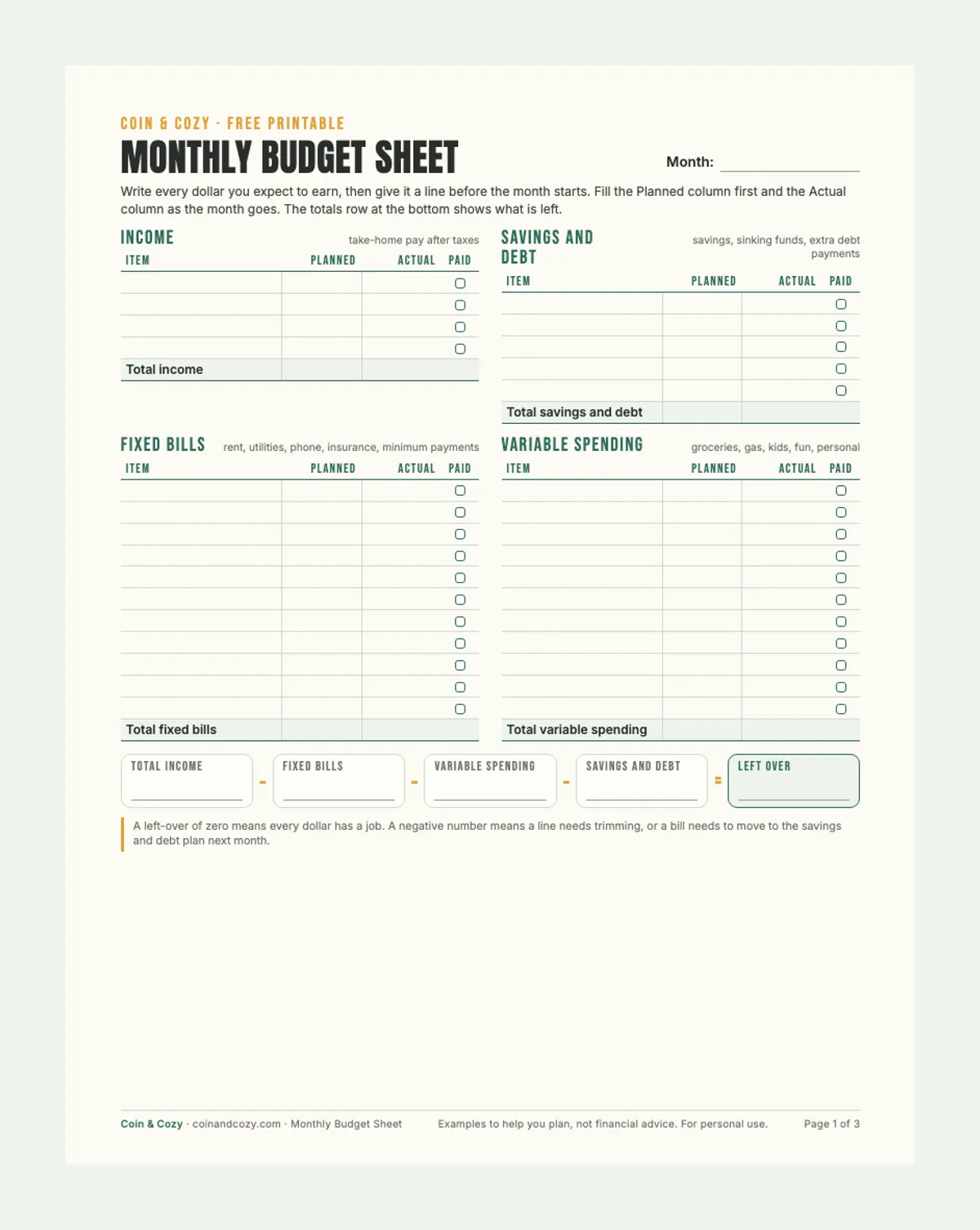
The sheet is built around one rule: every block has a planned column and an actual column. Planned is what you decide on payday. Actual is what happened. The gap between them is the only thing you need to learn from a budget, and a one-page sheet makes the gap easy to see.
This page is the template, not the method. If you have never built a budget before and want the 10 steps, read our budget planner for beginners first, then come back and fill in the sheet.
What Goes on a Monthly Budget Sheet (Income, Bills, Sinking Funds, Savings)
The sheet has four blocks. Keep them in this order, because the order is what makes the bottom line work.
Income. Four lines for take-home pay, side income, child support or anything else that lands in the account this month. Use take-home, not gross. Total it.
Savings and debt. Five lines, and they sit second on purpose. Emergency fund, extra debt payment, a Christmas or car sinking fund, anything you move out before you spend. Putting this block above bills is the simplest version of "pay yourself first".
Fixed bills. Eleven lines for the amounts that are the same every month: rent or mortgage, utilities, phone, car payment, insurance, internet, childcare, minimum debt payments, subscriptions. Each line has a "paid" box to tick.
Variable spending. Eleven lines for the amounts you control week to week: groceries, gas, eating out, household, kids, clothing, fun, gifts. This is the block the actual column was made for.
The bottom line reads: total income, minus fixed bills, minus variable spending, minus savings and debt, equals left over. If left over is a positive number, give it a job (a savings line usually). If it is negative, trim the variable block until it is not. The sheet is doing its work when that line lands at or near zero.
The Sheet Filled In: An Example Month for a Family (Example Numbers)
Here is the sheet filled in for an example family of four with two paychecks a month and a little side income. The numbers are invented to show the layout and are not advice; your rent, your groceries and your take-home will be different.
| Block | Line | Planned | Actual |
|---|---|---|---|
| Income | Paycheck 1 (take-home) | $2,100 | $2,100 |
| Income | Paycheck 2 (take-home) | $2,100 | $2,100 |
| Income | Side income | $600 | $540 |
| Income | Total income | $4,800 | $4,740 |
| Savings and debt | Emergency fund | $200 | $200 |
| Savings and debt | Extra on credit card | $150 | $150 |
| Savings and debt | Christmas fund | $100 | $100 |
| Savings and debt | Car repair fund | $50 | $50 |
| Fixed bills | Rent | $1,450 | $1,450 |
| Fixed bills | Utilities | $180 | $196 |
| Fixed bills | Phone | $90 | $90 |
| Fixed bills | Car payment | $320 | $320 |
| Fixed bills | Car insurance | $140 | $140 |
| Fixed bills | Internet | $60 | $60 |
| Fixed bills | Childcare | $400 | $400 |
| Variable | Groceries | $700 | $742 |
| Variable | Gas | $220 | $205 |
| Variable | Kids activities | $80 | $80 |
| Variable | Household | $60 | $48 |
| Variable | Eating out | $120 | $163 |
| Variable | Clothing | $60 | $0 |
| Variable | Fun | $80 | $95 |
| Bottom line | Left over | $340 | $211 |
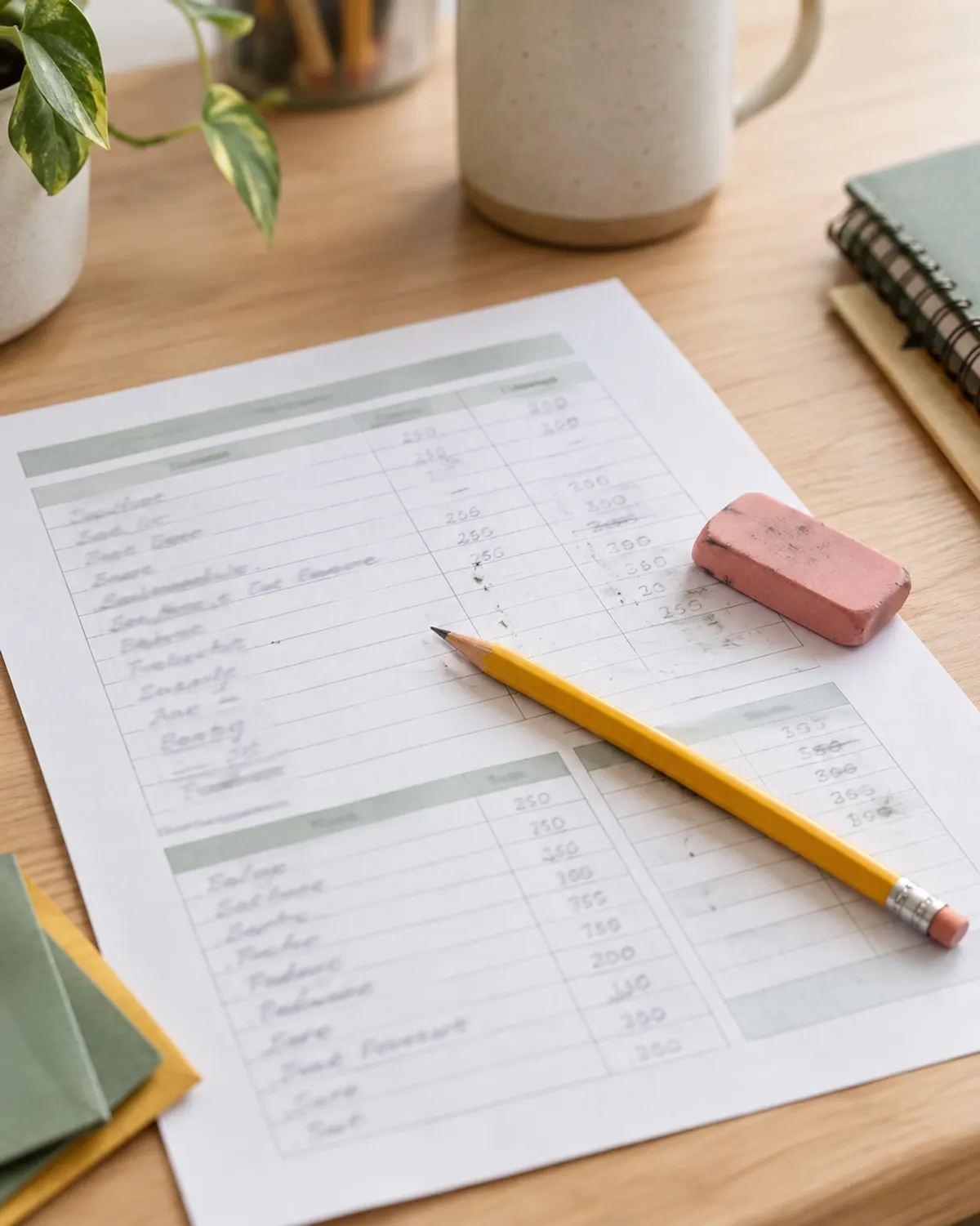
Read the example from the bottom up. The planned left-over was $340; the actual was $211, because side income came in lower and eating out ran $43 over. Neither is a crisis. Next month, this family writes $150 for eating out instead of $120, and moves $300 of the planned left-over into the emergency fund line so it has a job.
Notice the clothing line: $60 planned, $0 spent. That is a sinking fund in disguise. Carry the $60 forward on paper and in three months there is $180 for winter coats without touching the grocery money.
If you want the same layout for every month of 2027, plus the paycheck pages, savings trackers and a January reset, that is what the planner below is. The free sheet is the one-month version of it.
Biweekly Paycheck Budget Template (Two-Paycheck Months)
A monthly sheet assumes the money arrives once. If you are paid every two weeks, it arrives twice, and the rent is due before the second check. Page 2 of the PDF is the paycheck budget sheet for exactly this.
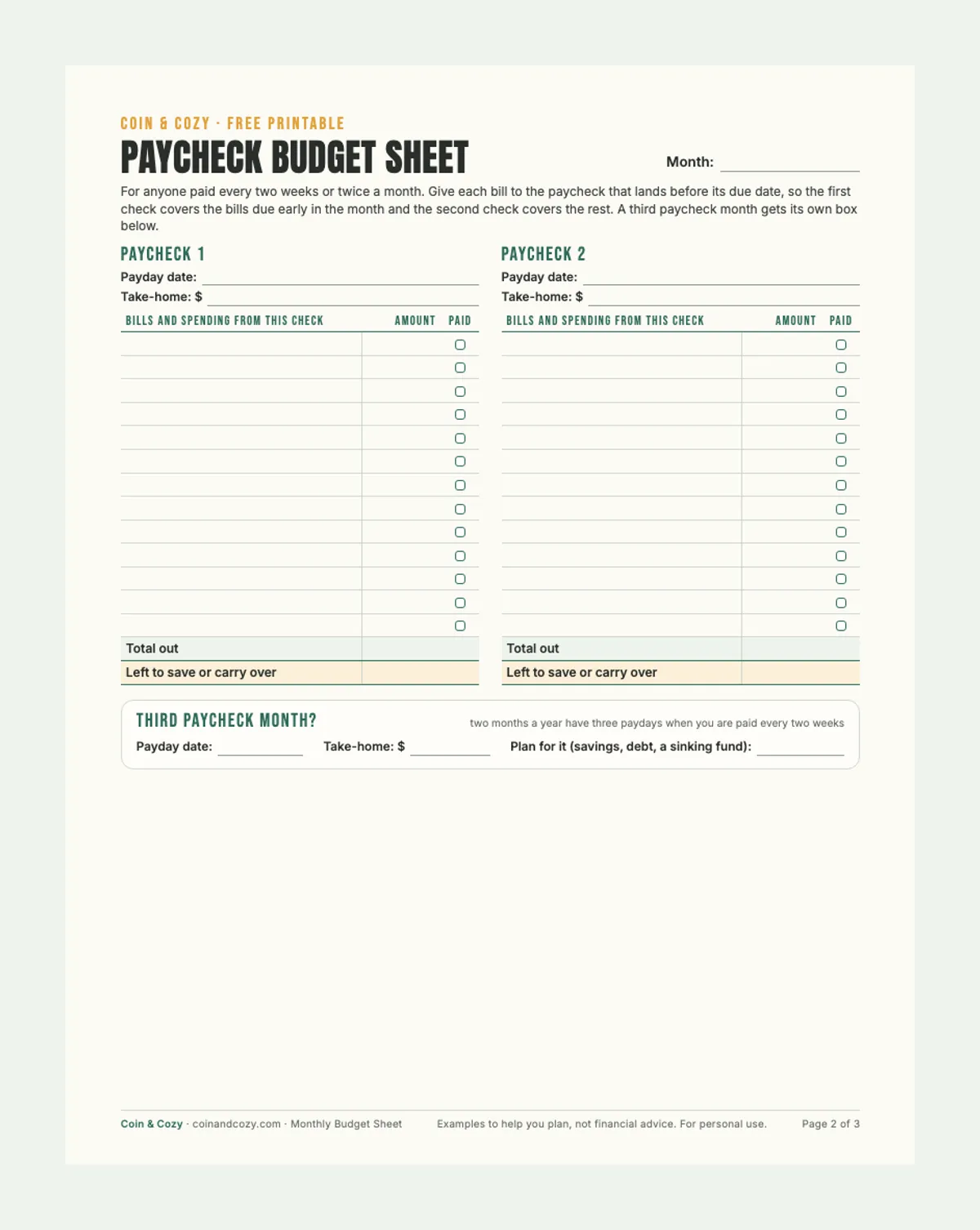
Each column has the payday date, take-home for that check, 13 lines for what that check pays, a total out, and a "left to save or carry over" line. The split is the whole trick: rent and car payment from paycheck 1, utilities, insurance and groceries from paycheck 2, and the savings line on whichever check has room.
| Line | Paycheck 1 ($2,100) | Paycheck 2 ($2,100) |
|---|---|---|
| Rent | $1,450 | |
| Car payment | $320 | |
| Utilities, phone, internet | $330 | |
| Car insurance | $140 | |
| Childcare | $200 | $200 |
| Groceries (half each) | $350 | $350 |
| Gas | $110 | $110 |
| Savings and debt | $500 | |
| Everything else | $0 | $150 |
| Left to save or carry over | -$10 | $0 |
Paycheck 1 comes out $10 short in this example, which is normal when rent lands on one check. Carry it from paycheck 2's "everything else" line, or move $10 of groceries. The point of seeing it on paper is that you fix it on payday instead of discovering it at the register.
Two months a year have three paydays. The box at the bottom of page 2 is for that third check: write what it is for before it arrives, or it disappears. Our bi weekly savings challenge charts are built for the same 26-payday rhythm if you want the savings line to follow a chart.
Household and Couples Version
Two incomes do not need two sheets. Put each person's take-home on its own income line, total it, and run the rest of the page as one household. The sheet stops being "mine and yours" the moment both names are on the top of it.
For couples who keep separate accounts, the paycheck page works as a split sheet instead: one column per person, each listing the bills that person covers, with the savings line agreed up front. Review it together at the end of the month, actuals only, no blame. Fifteen minutes with the sheet and a cup of tea is enough.

Add a "personal" line in the variable block for each adult, even if it is $25. A small no-questions amount is what keeps a shared budget from turning into a monthly argument about coffee.
Weekly Budget Template for Groceries and Gas
Groceries and gas are the two lines that go over most often, and a monthly number is hard to feel at the store. Divide those two lines by the number of weeks in the month and write the weekly amount in the margin of the sheet. $700 of groceries in a 4-week month is $175 a week; in a 5-week month it is $140.
| Line | Monthly plan | 4-week month | 5-week month |
|---|---|---|---|
| Groceries | $700 | $175 a week | $140 a week |
| Gas | $220 | $55 a week | $44 a week |
| Eating out | $120 | $30 a week | $24 a week |
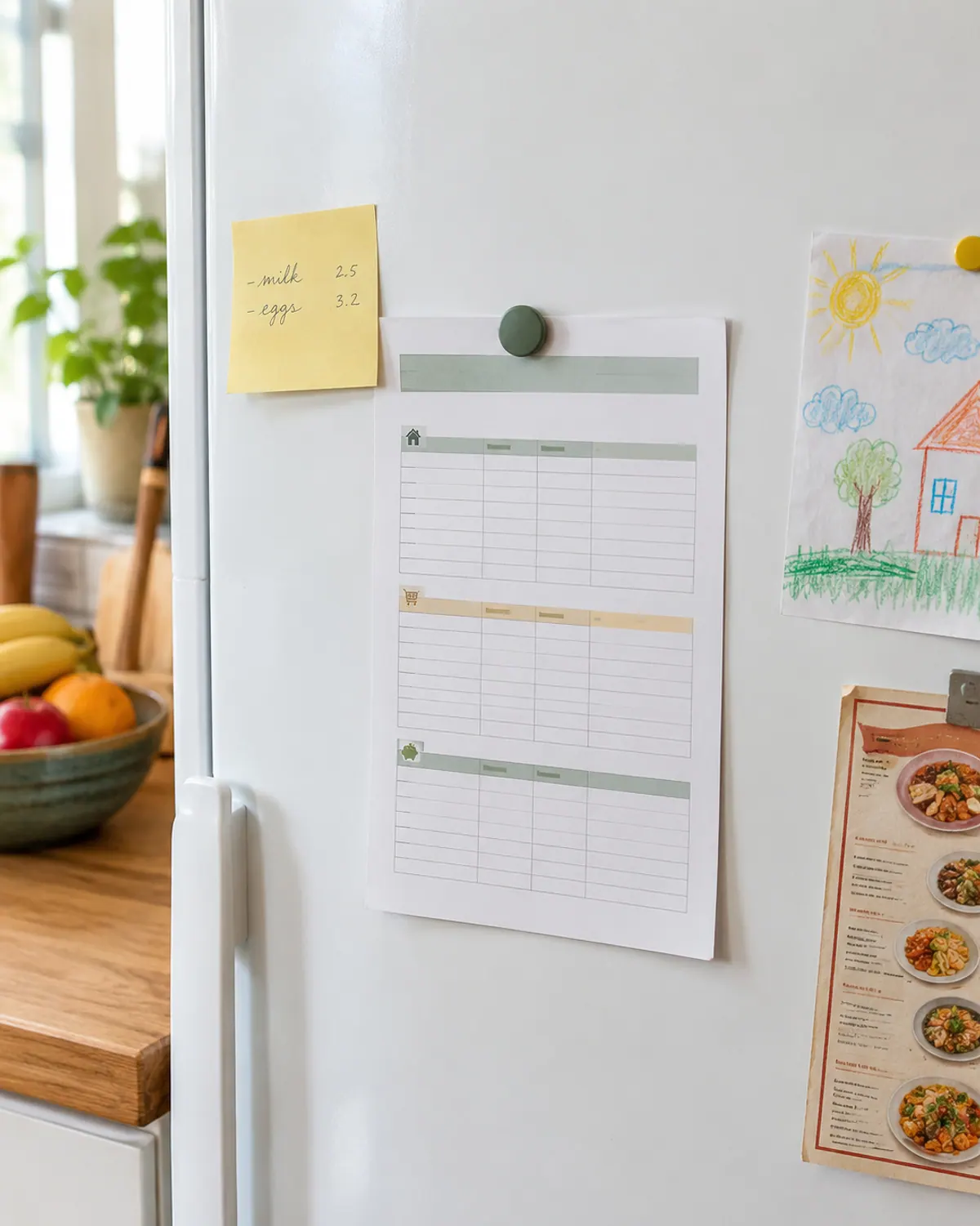
If you already run a weekly grocery number, the grocery budget for a family of 4 shows what a week at that number looks like, and the $75 a week meal planning budget is the smaller version. Write the weekly amount on the envelope or the sticky note on the fridge, and the monthly sheet takes care of itself.
How to Print, Fill and Review the Sheet Each Month
-
Step 1: Print page 1, or page 3 for low ink
Plain paper, US Letter, "actual size" in the print dialog. Page 3 is the same sheet in black outline for printers running low on ink. Print three months at once so there is always a blank sheet in the binder.
-
Step 2: Fill the planned column on payday
Start with income, then the savings and debt block, then bills, then variable spending. Work the left-over line to zero or close to it. Pencil, every time.
-
Step 3: Write actuals as you go
Once a week, add the grocery and gas receipts to the actual column and tick the "paid" box on any bill that cleared. Five minutes on Sunday is enough.
-
Step 4: Review on the last day of the month
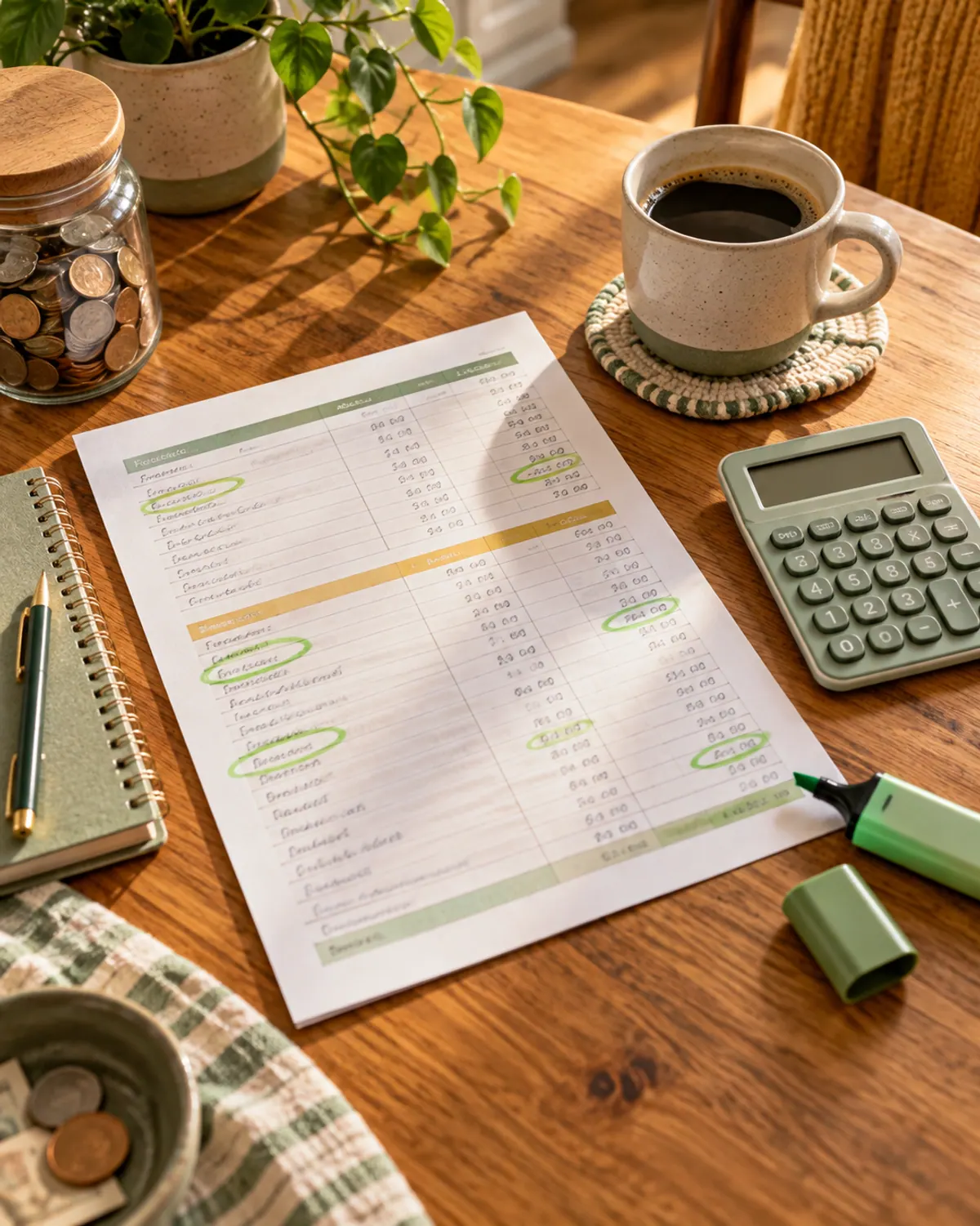
Circle every line where actual beat planned by more than $20 either way. Those are next month's edits. Carry any unspent sinking-fund line forward on paper.
-
Step 5: File it and print the next one
Slide the finished sheet into a sheet protector behind the new one. After three months you will have a real average for groceries, and after twelve you have a year of actuals for the 2027 planner.
Monthly budget sheet checklist
Want All 12 Months Plus Trackers? The Cozy Budget Planner 2027
The free sheet is one month. The Cozy Budget Planner 2027 is the same layout for all twelve, with a paycheck page for every month, a bill tracker, savings trackers, a debt payoff page and a January reset section. It is a 38 page PDF you print once and keep in the binder for the year, and the standing code COZY20 takes 20% off at checkout.
Simple supplies for a paper budget
-
Budget binder with cash envelopes
Typically $12 to $25
Holds the monthly sheet in front and grocery cash in the zip envelopes, so the weekly number and the money sit together.
Check price on Amazon for Budget binder with cash envelopes -
Letter size binder with sheet protectors
Typically $8 to $18
Twelve finished sheets in protectors is a year of real numbers, which is worth more than any app export.
Check price on Amazon for Letter size binder with sheet protectors -
Pastel highlighter set
Typically $5 to $12
One color for paid bills, one for over-budget lines. The end-of-month review takes two minutes with the colors.
Check price on Amazon for Pastel highlighter set -
Mechanical pencils with erasers
Typically $5 to $10
Pencil is the rule for the planned column, and a decent eraser keeps the sheet readable after the third grocery edit.
Check price on Amazon for Mechanical pencils with erasers
If the savings and debt block is the part you want to grow, the free Cozy Savings Challenge Pack below adds a 100 envelope chart, a 50 envelope version and a goal thermometer that pin up next to the monthly sheet. The no spend January rules are the easiest way to find the first $200 for that block.
Print the sheet tonight, fill in the planned column in pencil, and let the actual column teach you the rest.
Frequently asked questions
What is the simplest budget template?
One page with four blocks: income, savings and debt, fixed bills and variable spending, each with a planned and an actual column, and a single left-over line at the bottom. That is the free monthly budget sheet on this page. If a template needs more than ten minutes a month, it is too complicated to keep up.
How do I make a monthly budget sheet?
List take-home income at the top, then what you move to savings and debt, then fixed bills, then variable spending like groceries and gas. Subtract everything from income to get the left-over line and work it to zero. Or skip the drawing and print the free PDF above, which has all of that laid out.
What should a monthly budget template include?
Income lines (take-home, not gross), a savings and debt block, fixed bills with a paid checkbox, variable spending with planned and actual columns, and a bottom line that shows what is left. A paycheck version helps if you are paid every two weeks.
Is there a free printable budget template PDF?
Yes. The free PDF on this page has a monthly budget sheet, a biweekly paycheck sheet and a low-ink copy, all on US Letter, with no sign-up. It is the one-month version of the Cozy Budget Planner 2027.
What is the 50/30/20 budget template?
It is a guideline that splits take-home pay into about 50% needs, 30% wants and 20% savings and debt. On this sheet, needs are the fixed bills block plus groceries and gas, wants are the rest of variable spending, and the savings and debt block is the 20%. It is a starting point, not a rule, and it is not financial advice.
How do you budget when paid biweekly?
Use the paycheck sheet on page 2: one column per check, with rent on one and most other bills on the other, groceries split in half, and the savings line on whichever check has room. Two months a year have a third check; write its job in the box before it arrives.
Save it for later
Pin this to your Budget Printables board so it's there when you need it.
Save to Pinterest