This post contains affiliate links. As an Amazon Associate we earn from qualifying purchases, at no extra cost to you. Read our disclosure.
Safety first: This is general money education, not personalised financial advice. Please read our financial disclaimer before you start.
Key takeaways
- The USDA Thrifty Food Plan for a reference family of four was $236.10 a week in June 2026; its other plans run higher.
- A frugal family of 4 can plan an example week at $120 to $160 by cooking from staples, but $50 a week is a bare-minimum week, not a normal one.
- Set the number first, then write the list to hit it, in this order: protein, dairy and eggs, produce, pantry, extras.
- The sample list below is one example week at $140 and covers seven dinners plus breakfasts and packed lunches.
- Snacks, drinks and single-serve packs are where most family grocery budgets leak.
In this post10 sections
- Grocery Budget for a Family of 4: What to Spend (Example Tiers)
- Why the USDA Numbers Feel High and What a Frugal Week Looks Like
- Sample Weekly Grocery List for a Family of 4 (Example Budget Week)
- The Aldi Grocery List Version for Families
- Dinners This List Covers (Ideas, Not Recipes)
- Scaling the List for a Family of 3 or 5
- What About a Family of 5? The USDA Figures for Five
- Where the Money Leaks: Snacks, Drinks and Single-Serve Packs
- Track the Grocery Line in the Cozy Budget Planner 2027
- FAQ
Grocery Budget for a Family of 4: What to Spend (Example Tiers)
The honest reference point is the USDA Cost of Food report, which prices four food plans every month for a reference family of four (two adults and two school-age children). For June 2026, the Thrifty Food Plan for that family was $236.10 a week, or about $1,023 a month. USDA also publishes Low-Cost, Moderate-Cost and Liberal plans that run higher; the current month's figures are on usda.gov under the Cost of Food reports.
The Thrifty plan is the one SNAP benefits are built on, so it is the floor the government uses, not a stretch goal. Here is how we think about weekly tiers for a family of four. These are examples for planning, not advice, and your region, your kids' ages and your store will move every number.
| Tier | Example weekly spend | What it looks like | Who it fits |
|---|---|---|---|
| Bare minimum | $50 to $90 | Staples only, little meat, repeated breakfasts, no snacks | A tight week or two, not a plan for the year |
| Frugal | $120 to $160 | Cook from staples, one or two cheap proteins, seasonal produce, simple snacks | Most frugal families; this is the sample list below |
| Thrifty plan level | About $236 | USDA's own floor for a reference family of four, June 2026 | A realistic baseline if you eat out rarely |
| Comfortable | $275 to $350 | Name brands, more fresh meat, convenience items | Two incomes, little time to cook |
If your actual spend sits above the Thrifty line, you are normal, not failing. The goal of this page is to move one tier down without the house noticing, and to do it with a list you can repeat.
Why the USDA Numbers Feel High and What a Frugal Week Looks Like
The USDA plans assume all meals are cooked at home, nutrition targets are met every day, and nothing is bought in bulk or on markdown. A frugal family breaks those assumptions on purpose. You buy the 10-pound bag of rice, the whole chicken instead of breasts, the store brand of everything, and you repeat breakfasts all week.
That is how a $140 example week is possible without anyone going hungry. It is not how a $50 week is possible for four people for a month. If you need the bare-minimum version for a hard week, our $50 a week grocery list is the staples-only list; use it as a reset, not a routine.
-
Step 1: Pick the weekly number before you open the app
Write it at the top of the list. For the sample below it is $140. If you do not know your current spend, add up the last four weeks of receipts and start $20 under that.
-
Step 2: Plan seven dinners by name, not by recipe
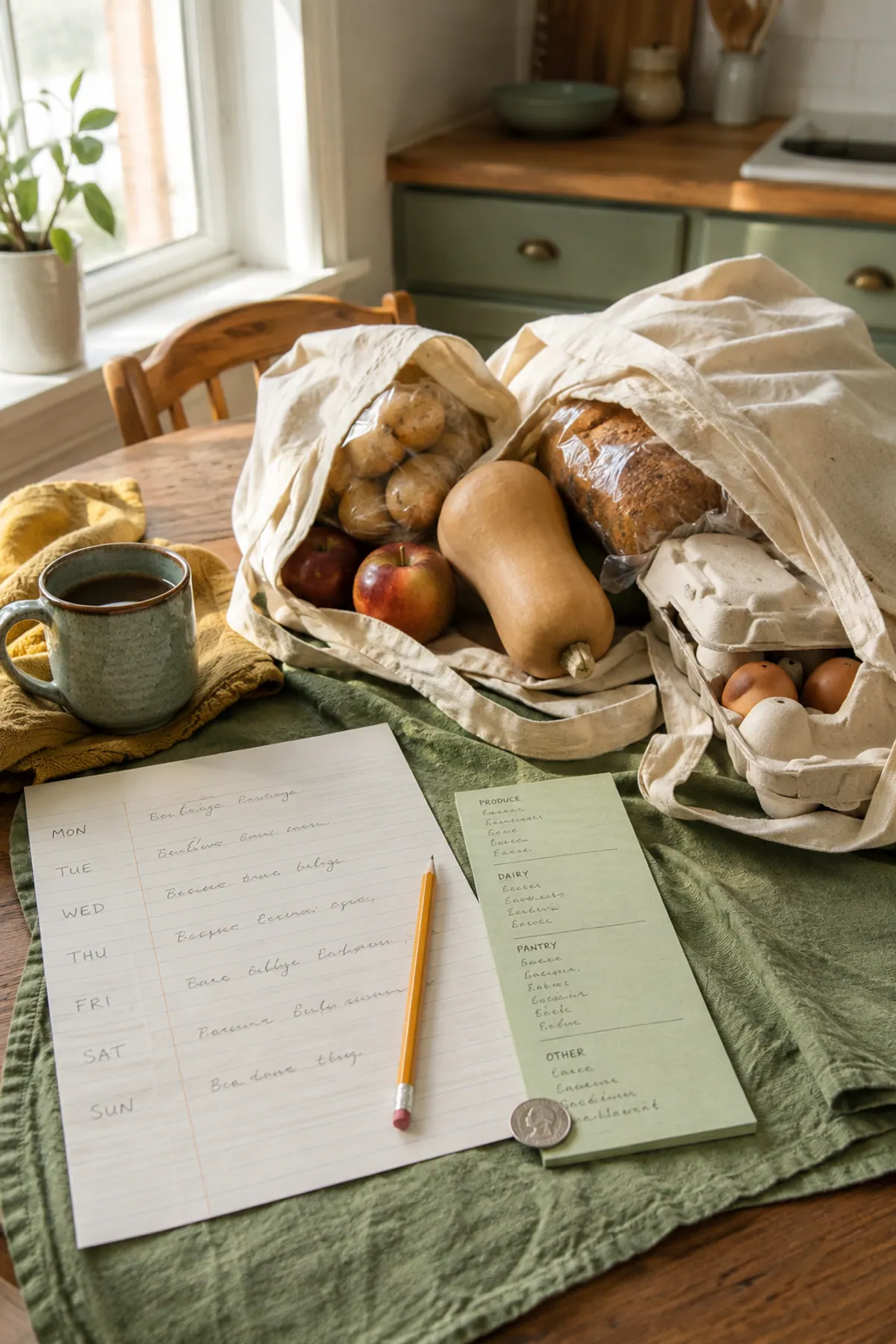
Chicken and rice, bean chili, pasta night, breakfast-for-dinner. Names only. Each dinner should share at least one ingredient with another dinner that week.
-
Step 3: List proteins and dairy first, produce second, pantry last
Protein and dairy are the expensive lines, so they get the first claim on the number. Pantry staples are cheap per meal and fill the rest.
-
Step 4: Price it on paper, then cut to the number
Use last week's receipt prices. If the list comes in at $162, cut the extras line first, then swap one meat dinner for a bean or egg dinner.
-
Step 5: Shop the list once, mid-week top-up for milk and fruit only
One big shop and one tiny one. Most overspending happens on the third and fourth trip of the week.
Sample Weekly Grocery List for a Family of 4 (Example Budget Week)
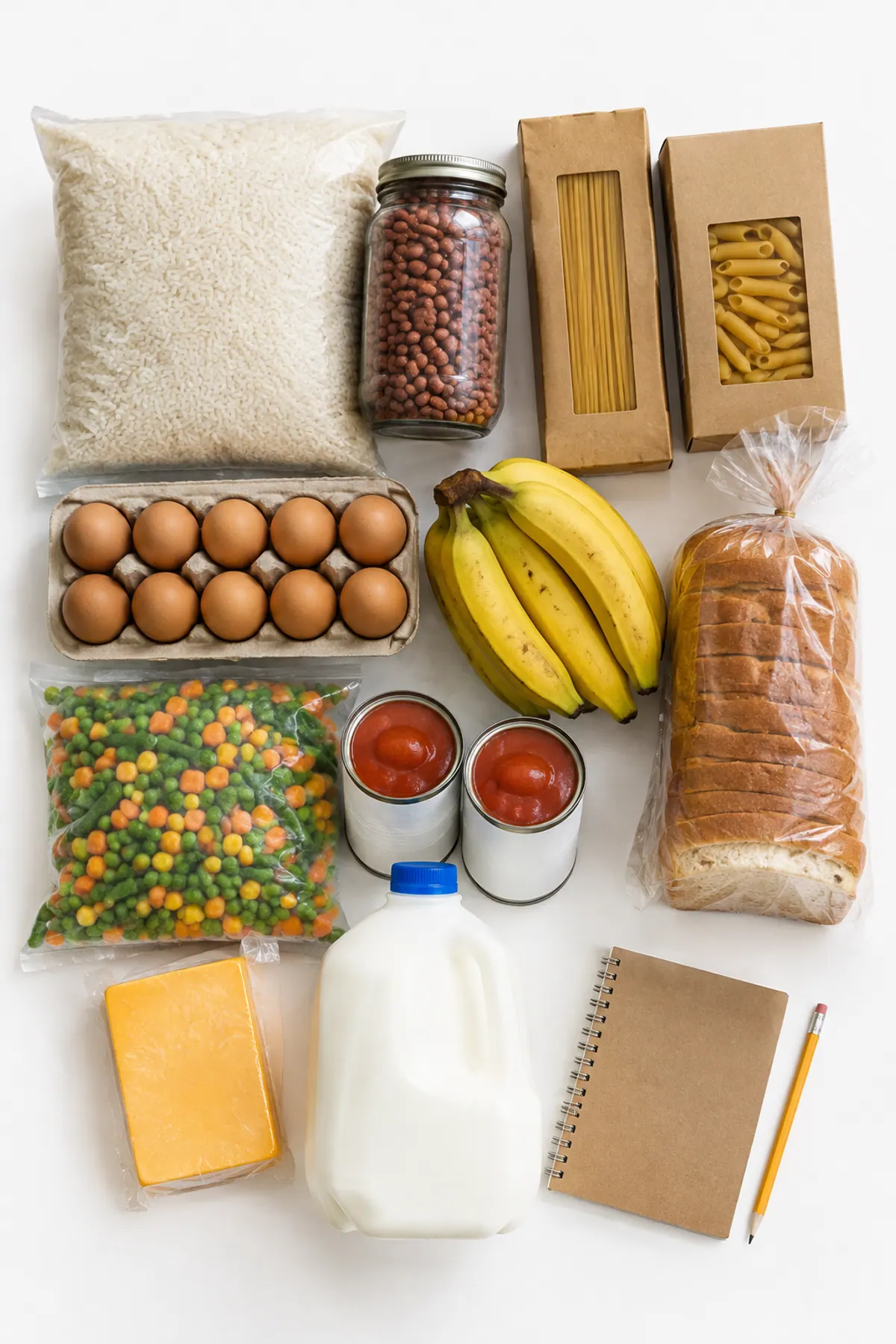
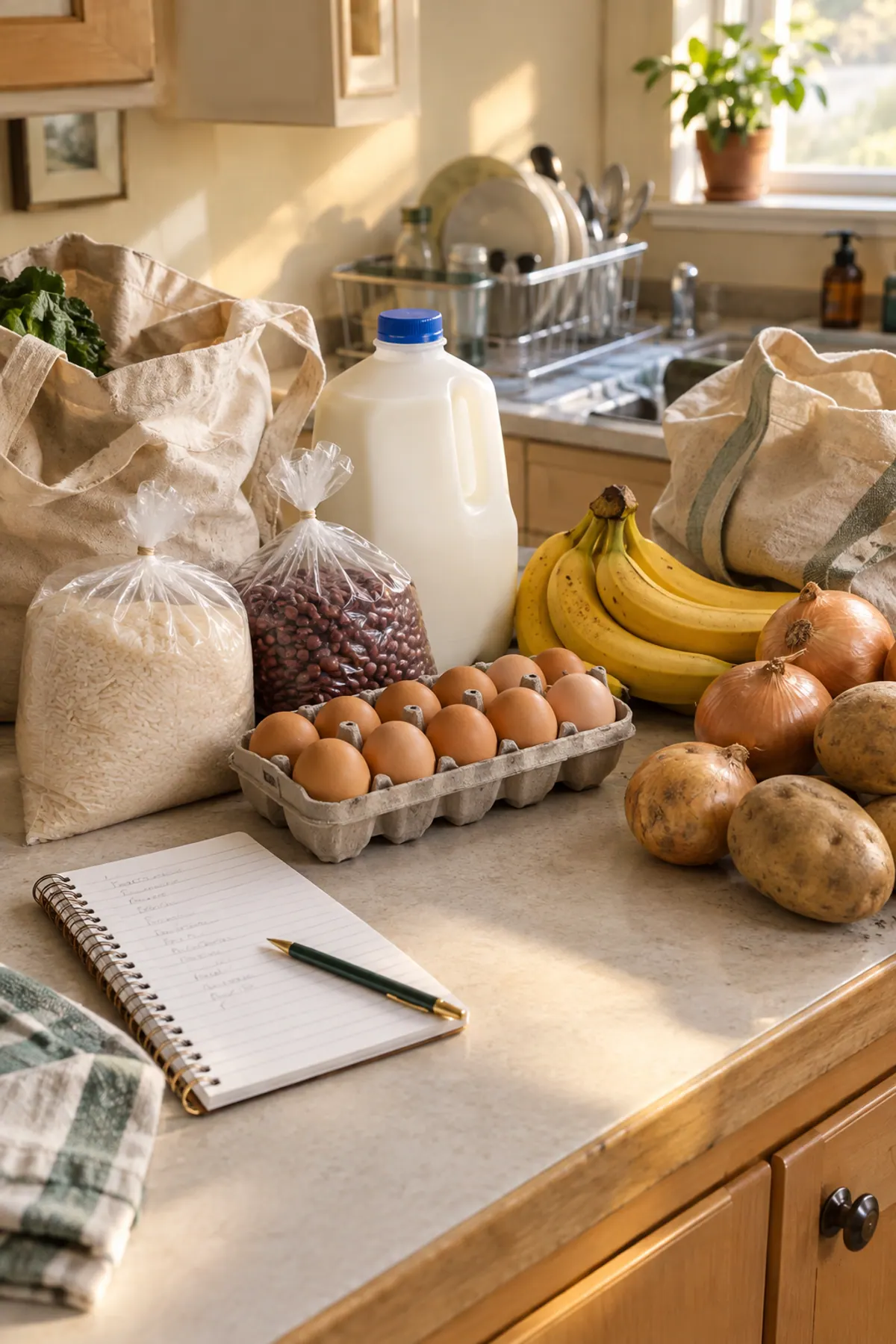
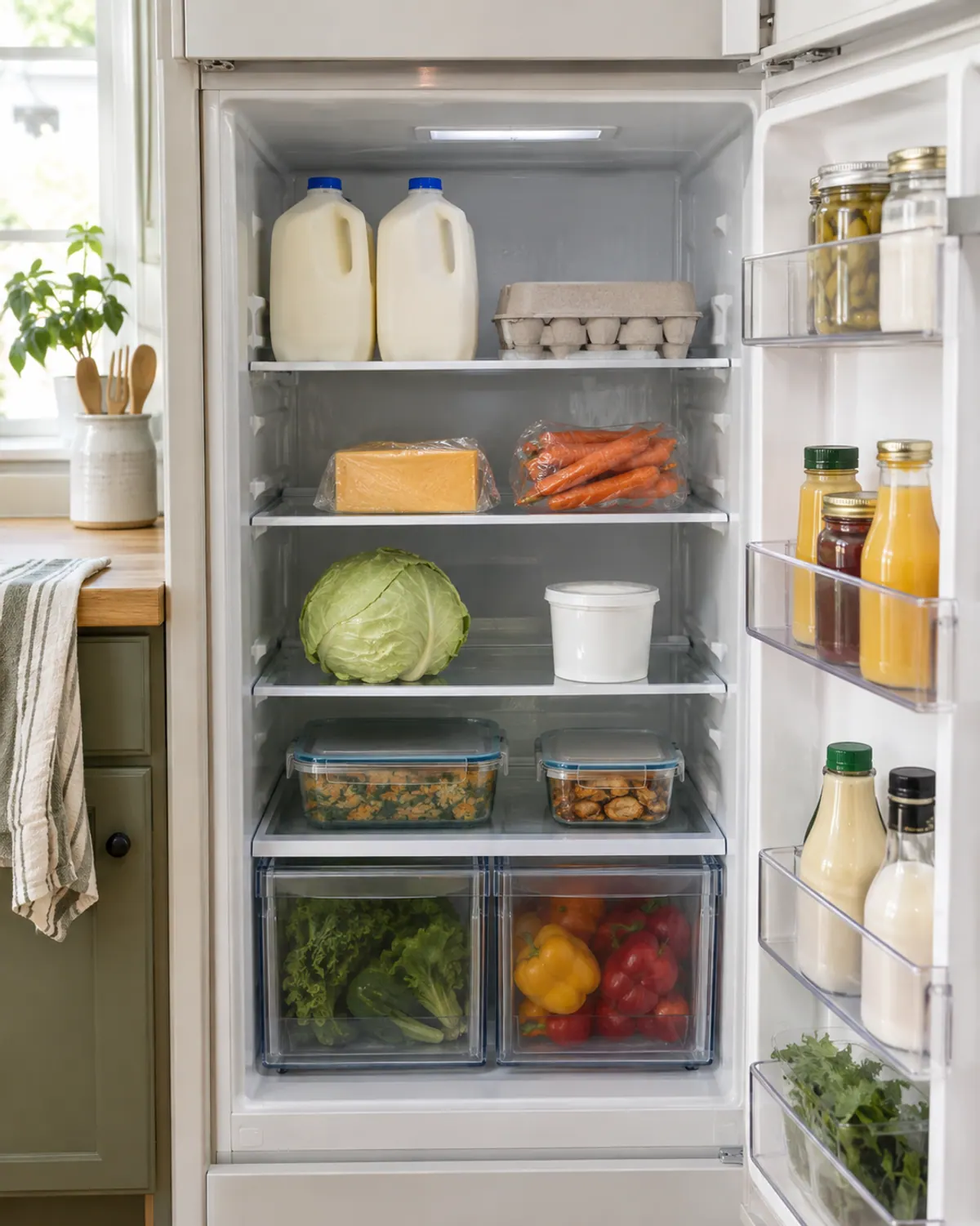
Here is one example week at $140 for two adults and two school-age kids, built to cover seven dinners, simple breakfasts and packed lunches. Prices are example store-brand prices from our planning and will not match your store exactly; use the categories and the subtotals as the template and swap in what is cheap near you.
| Category | What to buy | Example subtotal |
|---|---|---|
| Protein | Whole chicken or leg quarters (5 lb), ground beef or turkey (2 lb), eggs (2 dozen), dried beans (2 lb), canned tuna (4) | $38 |
| Dairy | Milk (2 gal), block cheese (2 lb), plain yogurt (large tub), butter | $22 |
| Produce | Bananas, apples (3 lb), oranges or seasonal fruit, carrots (2 lb), onions (3 lb), potatoes (5 lb), cabbage or bagged salad, frozen mixed vegetables (2 bags) | $30 |
| Pantry and grains | Rice (5 lb), pasta (3 boxes), oats (large), bread (2 loaves), tortillas, flour, canned tomatoes (3), peanut butter, cooking oil | $30 |
| Frozen | Frozen peas, frozen fruit for oatmeal, one bag of frozen fish or chicken nuggets for the hard night | $10 |
| Snacks and drinks | Popcorn kernels, crackers, coffee or tea, one treat the kids pick | $10 |
| Total | $140 |
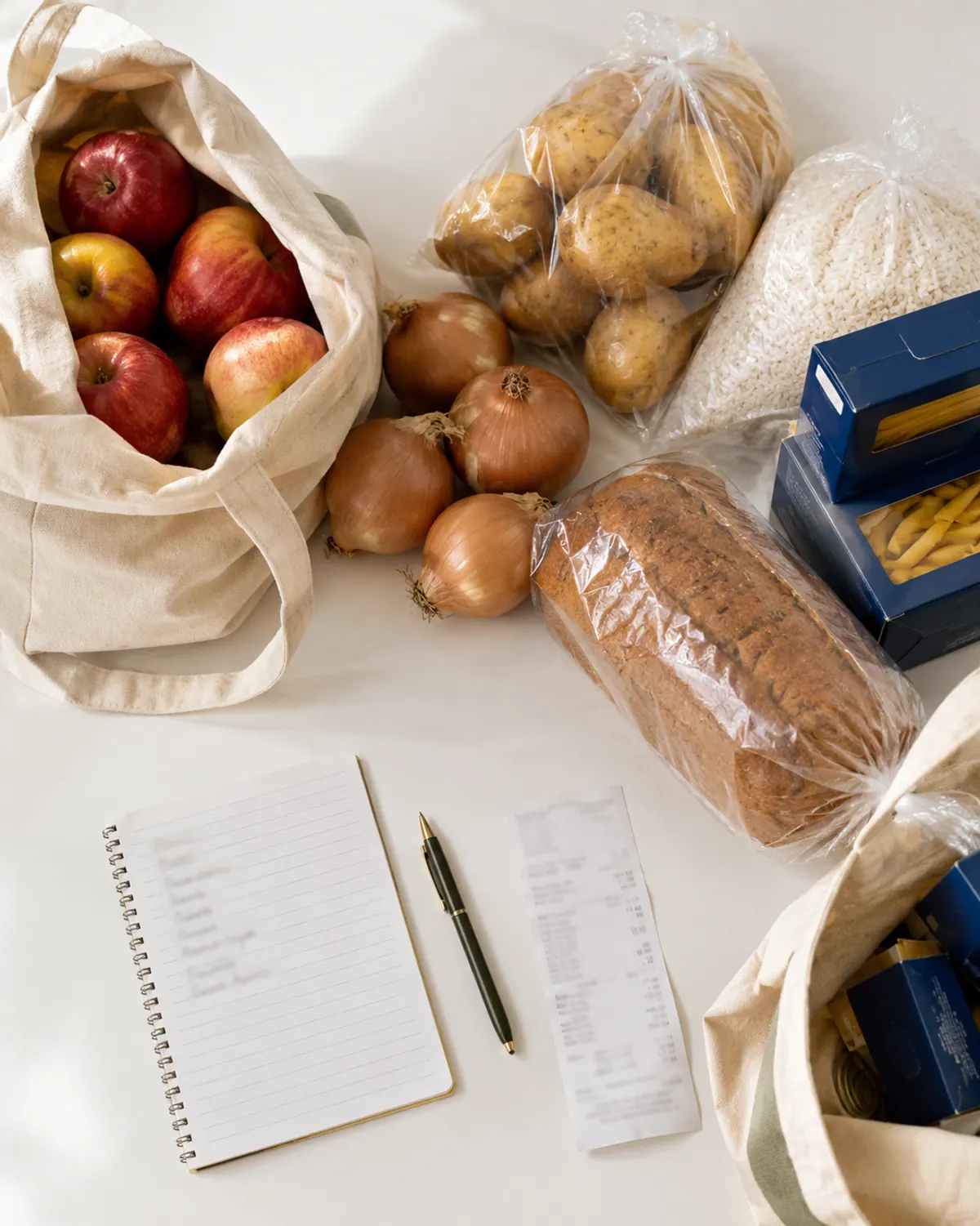
The list leans on four cheap anchors: the whole chicken (two dinners plus stock), the beans (one dinner plus lunches), eggs (breakfasts plus one dinner) and the 5-pound rice. Everything else fills in around them. Swap the ground beef for a second chicken or a pork shoulder on markdown and the week gets cheaper still.
Once you have a weekly number that works, write it on the grocery line of your monthly budget so it stops being a guess. The Cozy Budget Planner 2027 has a grocery line and a spending tracker on every month's page, which is where a $140 week turns into a $600 month you can actually see. Our free monthly budget sheet is the one-month version if you want to try it first.
The Aldi Grocery List Version for Families
Aldi is the top search next to "family of 4" on Pinterest for a reason: a limited-selection store with mostly house brands makes the list above easier to hit. The same categories work, with a few changes in how you shop.
Buy the weekly produce specials first and build the fruit line around whatever is on the front-page deal. Take the quarter for the cart and bring your own bags, since the bag charge adds up over a year. Skip the center "finds" aisle on a budget week; that is where the $140 becomes $175.
If you want the full week mapped out for that kind of store, our 7-day Aldi meal plan and grocery list does it dinner by dinner. The list on this page is the budget-first version; that one is the store-first version.
Dinners This List Covers (Ideas, Not Recipes)
Seven dinner ideas from the sample list, with why each one is cheap. These are names and reasons only; we do not publish recipes.
Seven dinners from the $140 list
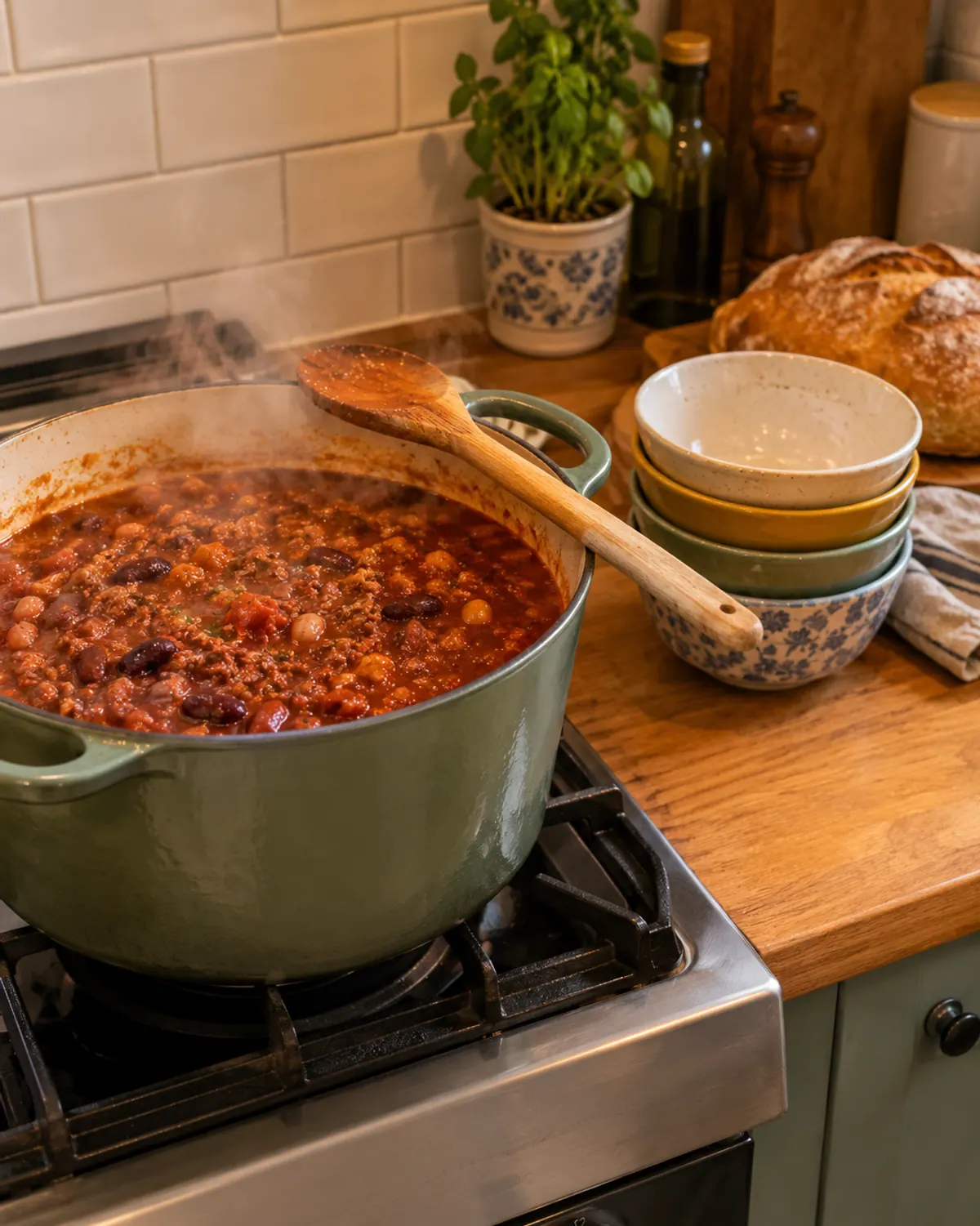
Lunches come from leftovers plus peanut butter sandwiches, apples and the yogurt tub. Breakfast is oats with frozen fruit on weekdays and eggs on the weekend. If you want a full month of this pattern, the 4-week frugal meal plan runs the same idea across four grocery weeks.
Scaling the List for a Family of 3 or 5
The list does not scale in a straight line, because the anchors (the chicken, the rice, the beans) already feed more than four. Scale the dairy, produce and bread lines and leave the pantry line alone.
| Line | Family of 3 | Family of 4 | Family of 5 |
|---|---|---|---|
| Protein | $32 (skip the tuna) | $38 | $46 (add a second dozen eggs and a pork shoulder on markdown) |
| Dairy | $16 (one gallon of milk) | $22 | $28 (three gallons) |
| Produce | $24 | $30 | $38 |
| Pantry and grains | $28 | $30 | $32 (one extra loaf) |
| Frozen | $8 | $10 | $12 |
| Snacks and drinks | $8 | $10 | $12 |
| Example week | $116 | $140 | $168 |
With teenagers, treat the household as one size bigger than the headcount. A 15-year-old eats like two 8-year-olds, and the milk line is the first to show it.
What About a Family of 5? The USDA Figures for Five
The USDA Cost of Food report prices each food plan per person, by age and sex, and then tells you how to turn those into a household total: add up the people, then subtract 5 percent for a household of five or six. The figures below use the September 2026 report (the current release at the time of writing) for a family of two adults aged 20 to 50 and three children aged 4 to 5, 6 to 8 and 9 to 11. Source: USDA Food and Nutrition Service, USDA Food Plans: Cost of Food Monthly Reports, September 2026, https://www.fns.usda.gov/cnpp/usda-food-plans-cost-food-monthly-reports.
| Plan | Per-person total (monthly) | After the 5% adjustment (monthly) | About per week |
|---|---|---|---|
| Thrifty | $1,212 | $1,152 | $266 |
| Low-Cost | $1,306 | $1,241 | $286 |
| Moderate-Cost | $1,611 | $1,530 | $353 |
| Liberal | $1,950 | $1,853 | $428 |
Two notes on the math. The Thrifty table uses a 20 to 50 adult band while the Low-Cost, Moderate-Cost and Liberal tables use 19 to 50, so the adult rows do not line up exactly, and a teenager in place of the 4-year-old adds roughly $70 to $220 a month depending on the plan. For the same report the reference family of four (two adults and children aged 6 to 8 and 9 to 11) was $236.30 a week, or $1,024 a month, on the Thrifty plan. As with every number on this page, these are planning references, not advice; your region, store and kids will move the real figure.
Where the Money Leaks: Snacks, Drinks and Single-Serve Packs
Most family grocery budgets do not fail on dinners. They fail on the lines nobody plans. These are the four leaks we see most, and the swap for each.
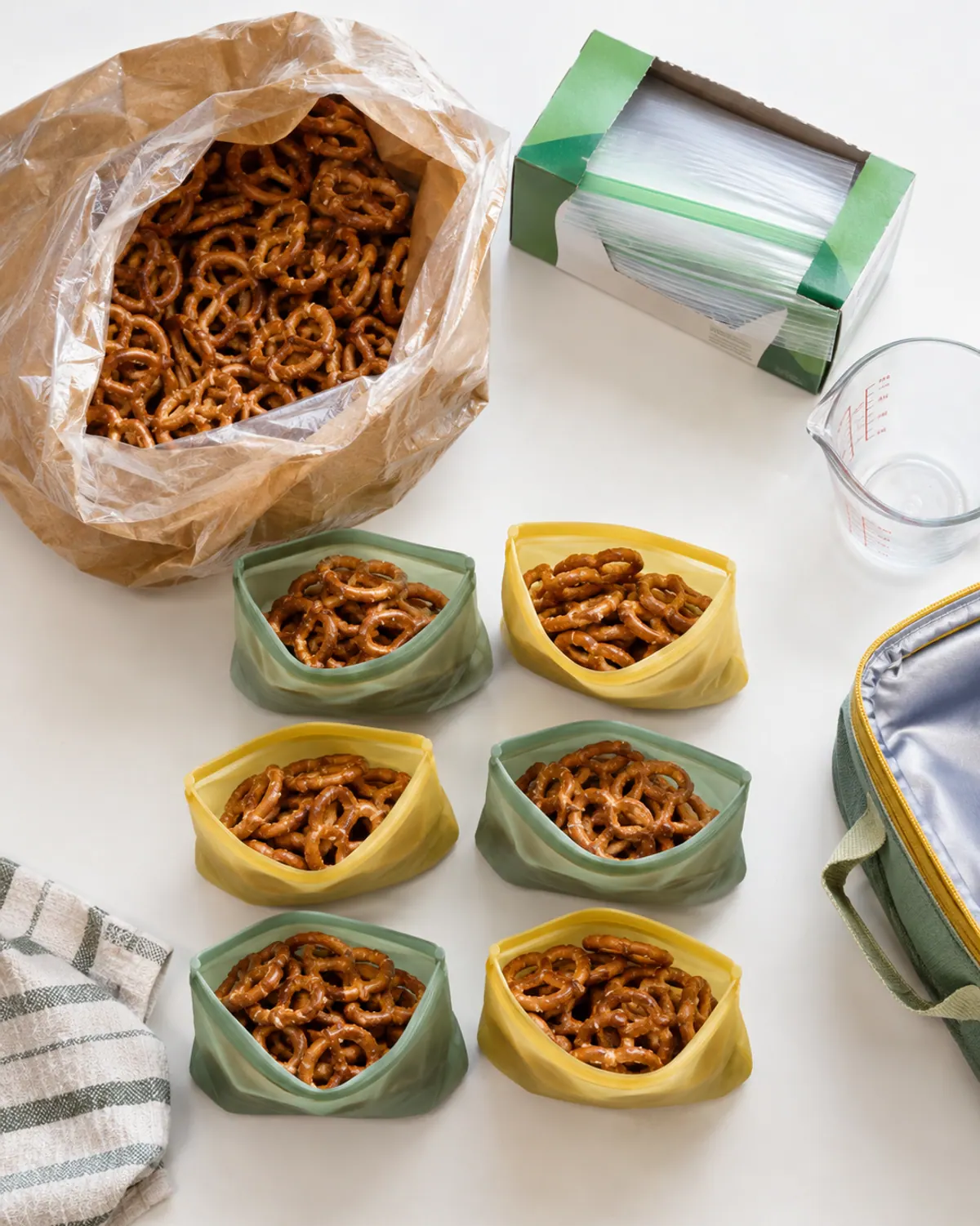
Single-serve snack packs. The 12-pack of chip bags costs two to three times the family-size bag per ounce. Buy the big bag and a box of sandwich bags, and portion on Sunday.
Drinks. Juice boxes, soda and bottled water can be $15 to $25 a week on their own. Water, a pitcher of tea and one carton of juice for the weekend brings that line under $5.
Convenience versions of things you already own. Pre-shredded cheese, cut fruit, instant oatmeal packets, microwave rice. Each costs double the block, whole or bag version, and the time saved is a few minutes.
The fourth trip. Every extra store run adds $20 to $40 of things that were not on the list. One shop plus one milk-and-fruit top-up is the rule, and the ways to save money on groceries that actually work list covers the rest of the habits.
What we like
- Cash envelope: the week ends when the envelope is empty, which is the easiest limit to keep
- Store-brand everything: the fastest 15% to 25% cut with no change in what you cook
- Whole chicken and dried beans: two dinners each for the price of one
Keep in mind
- Buying in bulk only saves money if you have the freezer space and actually use it
- A $50 week for four is a reset, not a routine; plan for the frugal tier instead
- Markdown meat needs to be cooked or frozen the same day
Track the Grocery Line in the Cozy Budget Planner 2027
The weekly number only sticks if it lives somewhere. Write it on the grocery line of the monthly budget, then write the real total under it every week. After four weeks you know your true average, and after three months the list almost writes itself.
Supplies that make a budget grocery week easier
-
Airtight dry goods container set
Typically $20 to $45
The 10-pound rice and 5-pound oats only save money if they stay fresh; a lidded set on the shelf keeps the bulk buy from going stale.
Check price on Amazon for Airtight dry goods container set -
Freezer bags and freezer labels
Typically $8 to $18
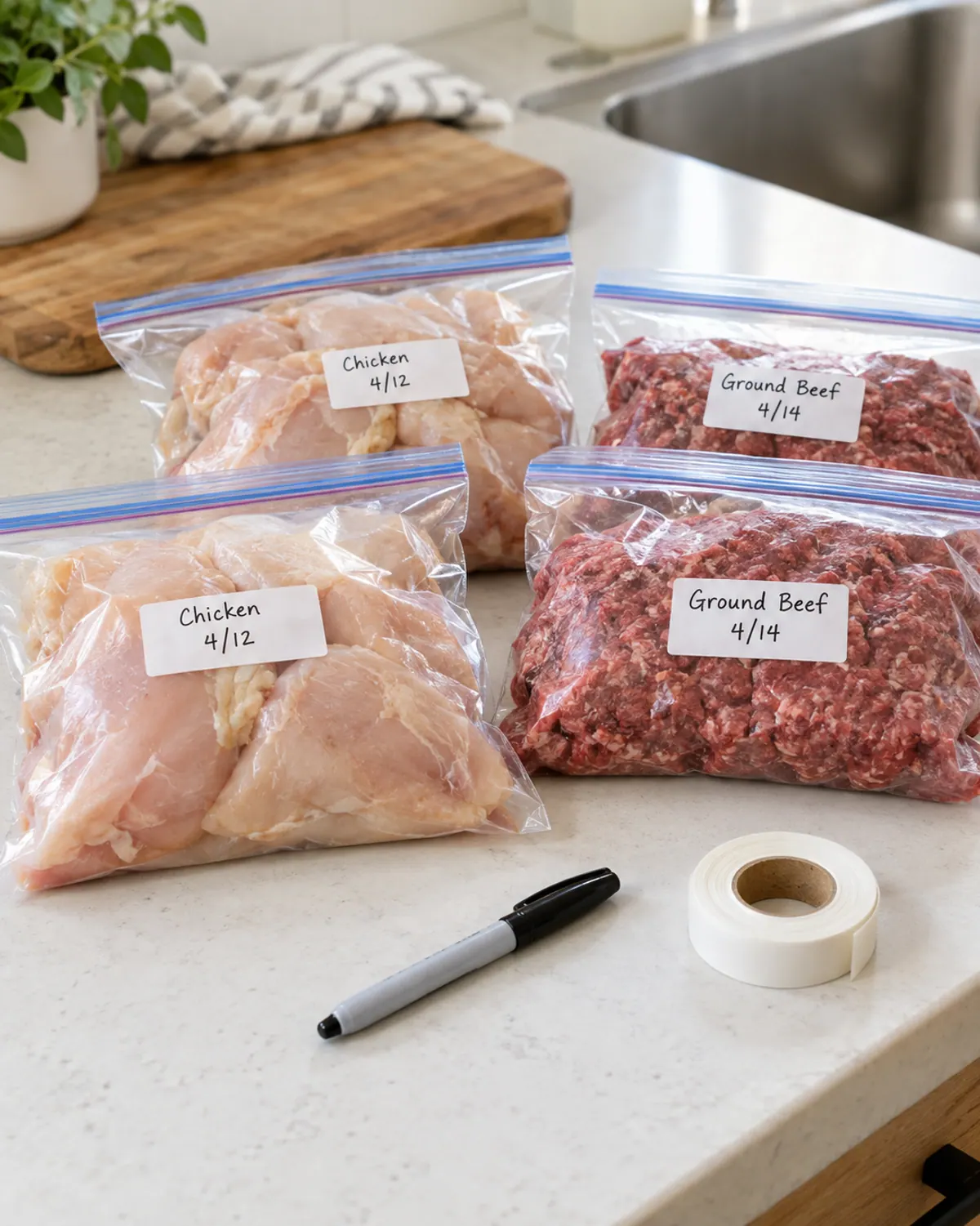
Portioning the whole chicken and the 2-pound beef pack on shopping day is what makes the cheap bulk protein last the week.
Check price on Amazon for Freezer bags and freezer labels -
Insulated grocery tote
Typically $12 to $25
Lets you take the markdown meat and the frozen bags home on the one big shop without a second trip.
Check price on Amazon for Insulated grocery tote -
Magnetic weekly meal planning pad
Typically $6 to $12
Seven dinner names on the fridge is the whole meal plan, and the tear-off list sheet goes to the store.
Check price on Amazon for Magnetic weekly meal planning pad -
Small digital kitchen scale
Typically $10 to $20
Splitting bulk meat and cheese into even portions by weight stops the first half of the week eating the second half's share.
Check price on Amazon for Small digital kitchen scale
If the grocery envelope is the one line you want to control first, the free Cozy Savings Challenge Pack below has the envelope chart, a 30 day no-spend tracker and a goal thermometer that fit on the fridge next to the list.
Set the number, write the list to hit it, and shop once. The rest of the week is just cooking what is already in the house.
Frequently asked questions
How much should a family of 4 spend on groceries per week?
It depends on your region, the kids' ages and how much you cook. The USDA Thrifty Food Plan for a reference family of four was $236.10 a week in June 2026, and a frugal family cooking from staples can plan an example week at $120 to $160. Treat any number as an example to plan from, not advice.
What is the USDA Thrifty Food Plan for a family of 4?
It is the lowest-cost of four USDA food plans and the basis for SNAP benefit amounts. For the reference family of four (two adults and two school-age children) it was $236.10 a week, about $1,023 a month, in June 2026. USDA updates the figure monthly on usda.gov.
What is a realistic grocery budget for a family of 4 in 2026?
For a frugal household that cooks at home, buys store brands and plans seven dinners by name, an example week of $120 to $160 is realistic. Households that buy more fresh meat and convenience items usually land near or above the USDA Thrifty figure of about $236 a week.
Can a family of 4 eat on $100 a week?
For a week or two, yes, by dropping to staples: rice, beans, eggs, oats, a whole chicken, frozen vegetables and bananas. As a year-round plan it is hard to keep, because fruit, milk and snacks for kids push most families to the $120 to $160 range. Use the $100 week as a reset.
What should be on a weekly grocery list for a family of 4?
One or two cheap proteins (a whole chicken, ground meat, eggs, dried beans), milk and block cheese, five or six produce items including bananas, onions and potatoes, pantry anchors like rice, pasta, oats and bread, two frozen bags for hard nights, and a small snacks-and-drinks line. The sample list above shows an example week at $140.
How do I cut my grocery bill for a family of 4?
Set the weekly number before you shop, switch to store brands, buy whole chickens and dried beans instead of cuts and cans, portion bulk packs on shopping day, and shop once a week with a single milk-and-fruit top-up. Snacks, drinks and single-serve packs are usually the biggest leak.
Save it for later
Pin this to your Grocery Savings board so it's there when you need it.
Save to Pinterest