This post contains affiliate links. As an Amazon Associate we earn from qualifying purchases, at no extra cost to you. Read our disclosure.
Safety first: This is general money education, not personalised financial advice. Please read our financial disclaimer before you start.
Key takeaways
- USDA Thrifty plan, September 2026: $236.30 a week ($1,024 a month) for a reference family of four; for five or six people, subtract 5 percent from the summed individual costs.
- Our worked example for five (two adults, children aged 4 to 5, 6 to 8 and 9 to 11) comes to about $266 a week, or $1,152 a month, on the Thrifty plan.
- Five people eating 21 meals a week is 105 plates: $100 is about $0.95 a plate, $150 about $1.43, $200 about $1.90 and $266 about $2.53.
- The Thrifty plan assumes every meal and snack is made at home, so planning and cooking do the heavy lifting.
- If the number is out of reach, SNAP, WIC, school meals, food banks and 211 are there for this; eligibility varies by state.
In this post10 sections
- How Much Does It Cost to Feed a Family of 5? The Quick Answer
- What a $100, $150 and $200 Week Really Buys for Five
- Why Blog Numbers and USDA Numbers Do Not Match
- 7 Ways to Feed Five for Less (Biggest Savings First)
- Cheap Dinner Ideas for Five (Names Only, No Recipes)
- A Sample $150 Week: Where the Money Goes
- When the Numbers Still Do Not Work: Programs That Help
- Mistakes That Make a Cheap Week Cost More
- Track It for Two Weeks, Then Adjust
- FAQ
Quick note: product links go to Amazon search results or our own shop, and we may earn a small commission if you buy, at no extra cost to you. Dollar figures are examples or quoted from the named source and year, and prices change by store, region and week.
How Much Does It Cost to Feed a Family of 5? The Quick Answer
The USDA publishes monthly food plan costs, and its Thrifty plan is the lowest of the four. For September 2026 it prices a reference family of four at $236.30 a week, or $1,024 a month (USDA Cost of Food Report, September 2026). For households of five or six, the USDA says to add up each person's cost and then subtract 5 percent.
| Figure | Amount | Where it comes from |
|---|---|---|
| Reference family of 4, Thrifty plan | $236.30 a week, $1,024 a month | USDA Cost of Food Report, September 2026 |
| Household-size rule for 5 or 6 people | Subtract 5% from the summed individual costs | Same USDA report |
| Example family of 5, Thrifty plan (two adults, children aged 4 to 5, 6 to 8 and 9 to 11) | About $266 a week, $1,152 a month | Our worked sum from USDA per-person figures, shown in the family of 4 grocery budget |
| What the Thrifty plan assumes | Every meal and snack is made at home | USDA Cost of Food Report |
| Cost of one plate at $266 a week | About $2.53 (21 meals x 5 people = 105 plates) | Our arithmetic |

Your real number moves with ages, region and what is already in the pantry. A teenager eats more than a preschooler, and a family with a full freezer starts the week ahead. Use the USDA figure as a planning reference, not a pass-or-fail score.
What a $100, $150 and $200 Week Really Buys for Five
Pinterest is full of "$100 a week for five" pins, so here is the same math laid out honestly. Five people eating three meals a day is 105 plates a week, so dividing a weekly budget by 105 shows what each plate can cost. The monthly column uses the USDA's 4.333 weeks a month.
| Weekly budget | Monthly | Per person per day | Per plate (105 a week) | Share of the $266 USDA example | What it asks of you (our example) |
|---|---|---|---|---|---|
| $100 | $433 | $2.86 | $0.95 | 38% | Almost everything from scratch, store brands only, little fresh fruit and a pantry that is already stocked. Often needs outside help too. |
| $150 | $650 | $4.29 | $1.43 | 56% | Seven planned dinners, two or three meatless, one breakfast-for-dinner night, mostly frozen and canned produce and one sale stock-up. |
| $200 | $867 | $5.71 | $1.90 | 75% | Room for fresh fruit and snacks, a meat anchor each week and a few brand-name picks. |
| $266 | $1,152 | $7.60 | $2.53 | 100% | The USDA Thrifty example: variety, bigger appetites and the occasional convenience item. |
A $100 week is 38 percent of the USDA example. It can happen in a good week with a stocked pantry, but it is a stretch, not a default. Most families land between tiers, so start at the one closest to what you spend now and step down one tier at a time.
To see where your week actually goes, the Budget Planner 2027 ($12, 38 pages) has a monthly page with an everyday spending line and a payday calendar, so groceries get a number instead of a guess.
Why Blog Numbers and USDA Numbers Do Not Match
YNAB's well-known post on a family of five reports $298 a month on groceries using 2019 numbers, plus $200 on dining out, and mentions three from-scratch dinners a week. The author notes that prices have risen sharply since (YNAB, published August 2019, updated November 2025).
A BuzzFeed post on feeding five raised its weekly budget from $100 to $120. The checkout came to $123.78, or $108.92 after a loyalty card and digital coupons, with taco night, oatmeal breakfasts, an egg bake and sheet pan quesadillas on the menu (BuzzFeed, January 2023). Those totals do not reconcile with the USDA figure, and both sides have a point.
| What you read | What is going on |
|---|---|
| "A family of 5 eats for $100 a week." | It can for one family in one week. Those posts show their own pantry, store and menu, while the USDA figure is a national planning benchmark. |
| "The USDA says $266, so $150 is impossible." | Not impossible. Sales, store brands and a stocked pantry bring real weeks below the benchmark, and teenagers push them above it. |
| "Older totals still apply." | Prices rose. The 2019 YNAB numbers are a floor to beat, not a promise. |
| "Coupons fix the bill." | They help on items you would buy anyway. The BuzzFeed example saved $14.86 ($123.78 minus $108.92), not half the cart. |
7 Ways to Feed Five for Less (Biggest Savings First)
-
Step 1: Plan seven dinners before you shop
Every item on the list should have a job. Plan dinners first, then fill breakfasts and lunches from the same staples. Unplanned buys are where a $150 week turns into $190.
-
Step 2: Build the week around three anchors
Pick two protein anchors, such as chicken thighs and a dozen-plus eggs, and one bean anchor. Repeat them in different dinners so nothing is bought for a single meal.
-
Step 3: Cook once, eat twice
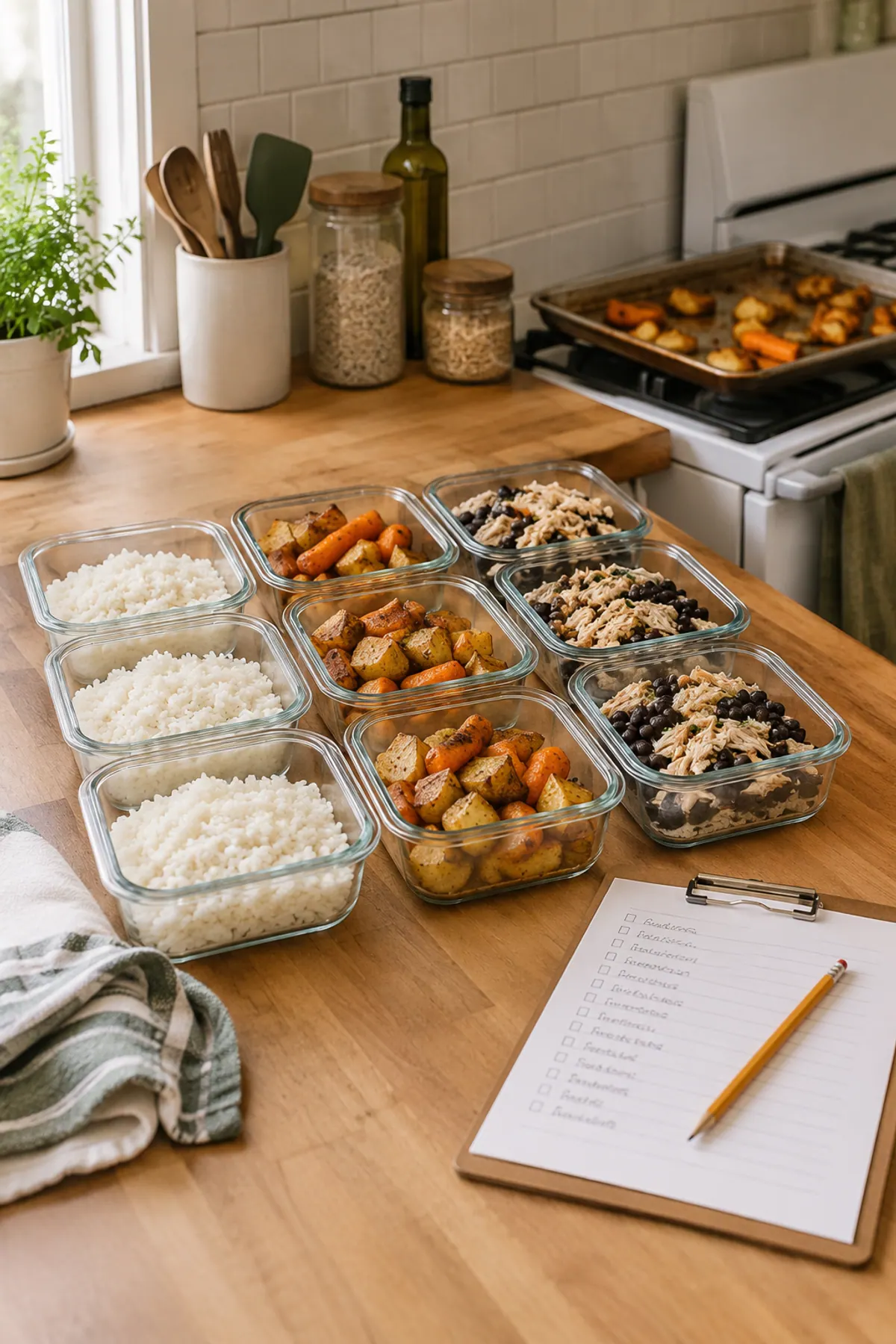
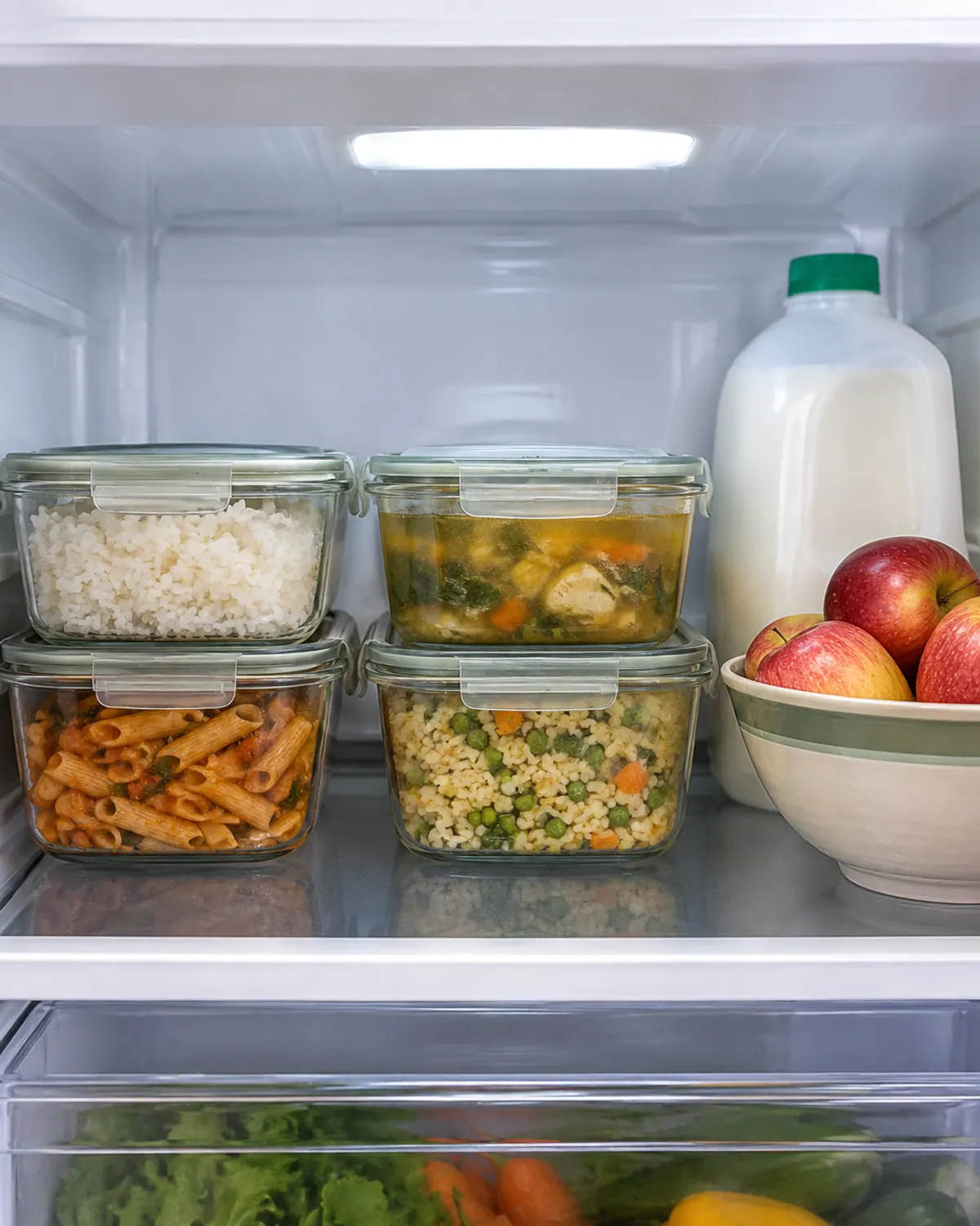
Make a bigger batch on night one and use the rest for lunches or night three. Refrigerate leftovers within 2 hours and eat them within 3 to 4 days, per USDA food safety guidance, or freeze them.
-
Step 4: Buy store brands and check the unit price
The shelf tag's price per ounce or per count is the real comparison. A bigger box is only cheaper if it is cheaper per unit and you will finish it.
-
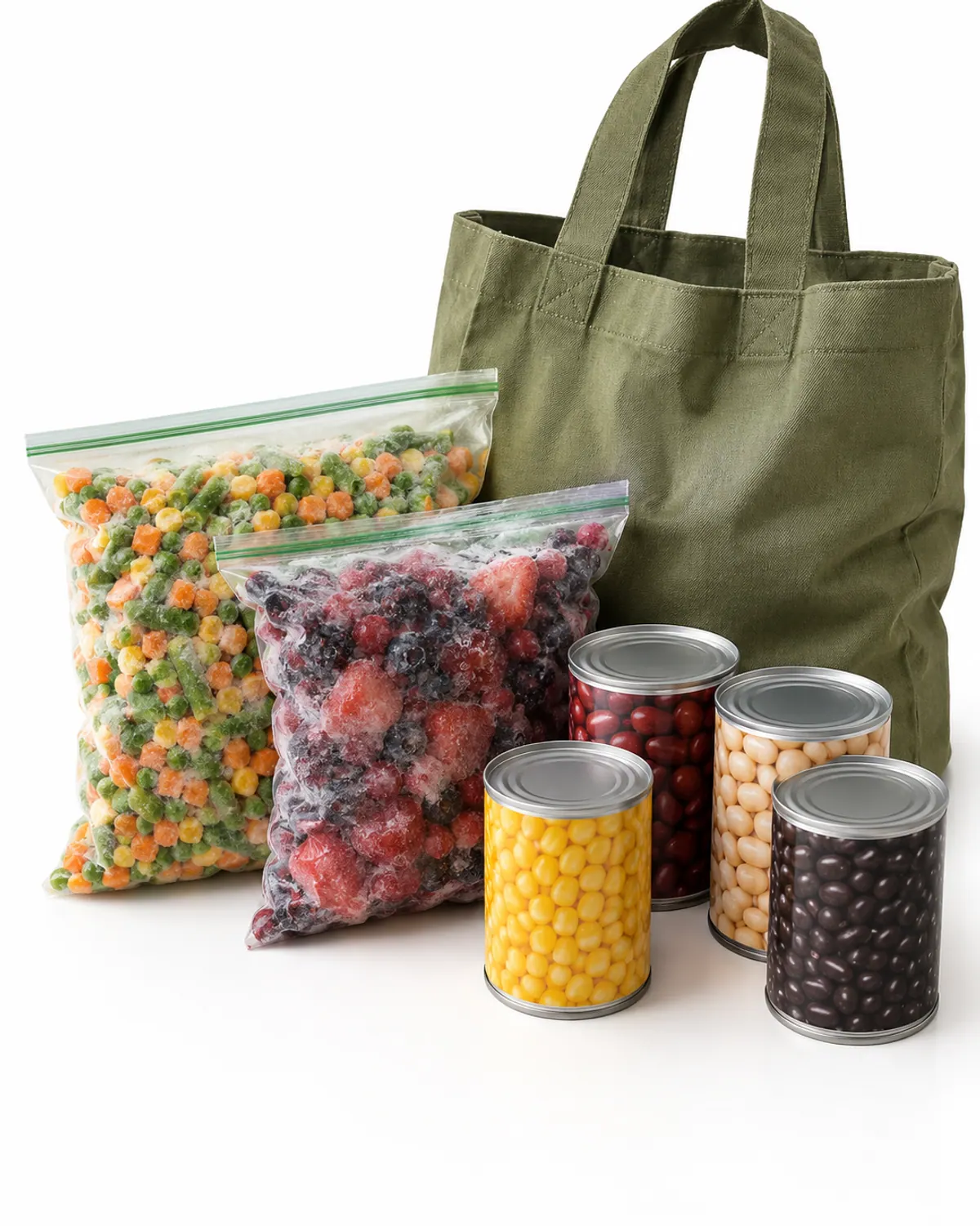
Step 5: Use frozen and canned produce for the bulk
Frozen vegetables and canned beans keep, cost less to waste and fit any dinner. Buy fresh for the one or two items your kids eat raw.
-
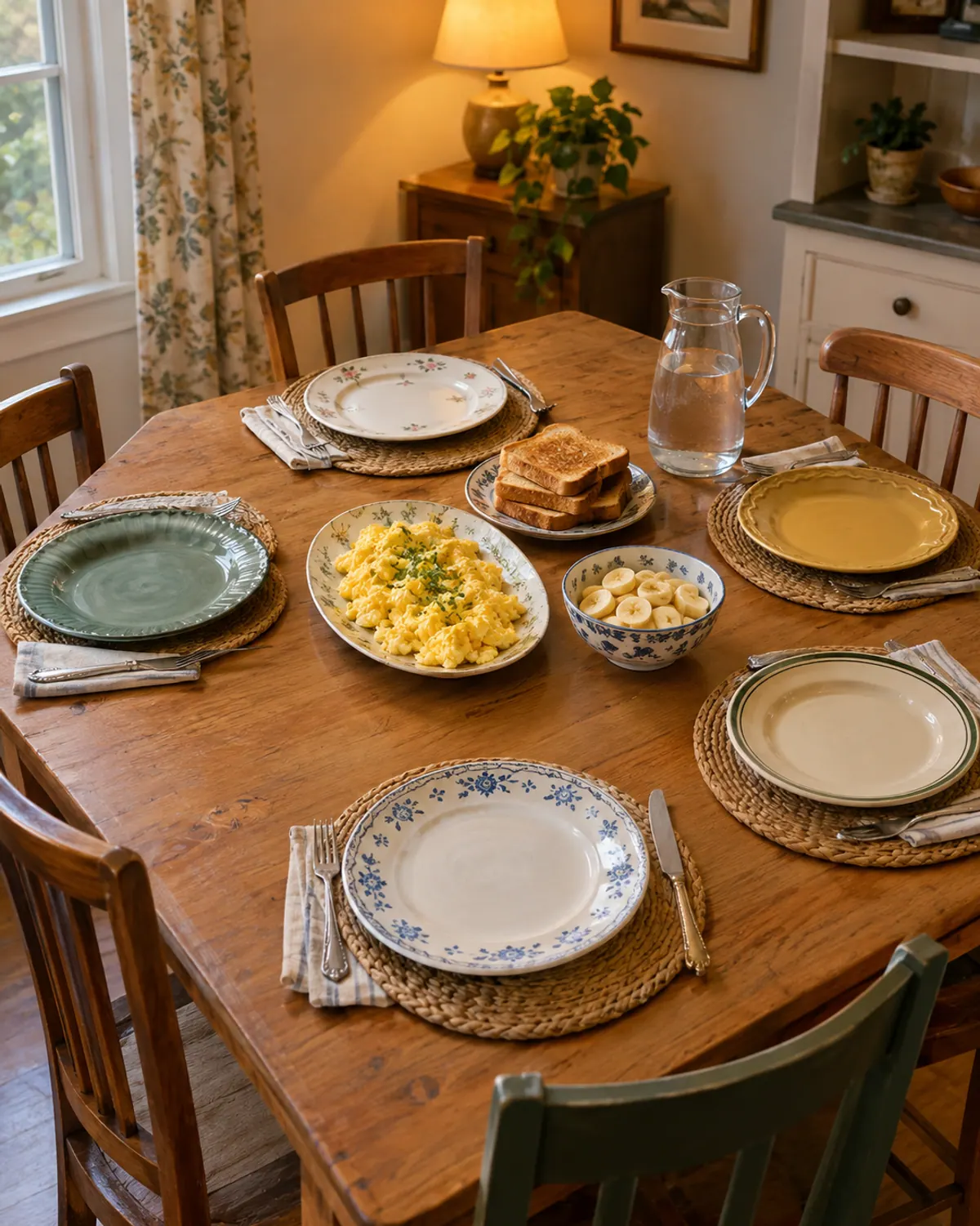
Step 6: Make one night breakfast for dinner
Eggs, toast and fruit feed five for a small share of a meat dinner and are a night most kids ask for.
-
Step 7: Shop once, then top up with a cap
In a $150 week that might be a $120 main shop and a $30 midweek top-up for milk and produce. When the cash is gone, the list is done.
Cheap Dinner Ideas for Five (Names Only, No Recipes)
These are meal names, not recipes, so cook them your family's way. Each one leans on the staples above and stretches to five plates with a side of rice, bread or frozen vegetables. For a full week with a shopping list, see our meal planning on a budget guide and the 4 week frugal meal plan.
14 dinners that stretch to five plates
A Sample $150 Week: Where the Money Goes
Here is one way to split a $150 week for five. It is our example, not a price quote, and prices change by store, region and week. Keep your receipts for two weeks and swap in your real numbers.
| Category | Example amount | Share | What goes in it |
|---|---|---|---|
| Protein | $40 | 27% | Chicken thighs, eggs, ground meat, canned tuna, dried or canned beans |
| Grains and bread | $25 | 17% | Rice, pasta, oats, bread, tortillas |
| Produce | $30 | 20% | Frozen and canned first, then bananas, apples, carrots, cabbage, onions |
| Dairy | $30 | 20% | Milk, cheese, yogurt |
| Cooking staples | $15 | 10% | Oil, tomato sauce, flour, spices, broth |
| Snacks and drinks | $10 | 7% | Popcorn kernels, crackers, one treat |
| Total | $150 | 100% | About $1.43 a plate |
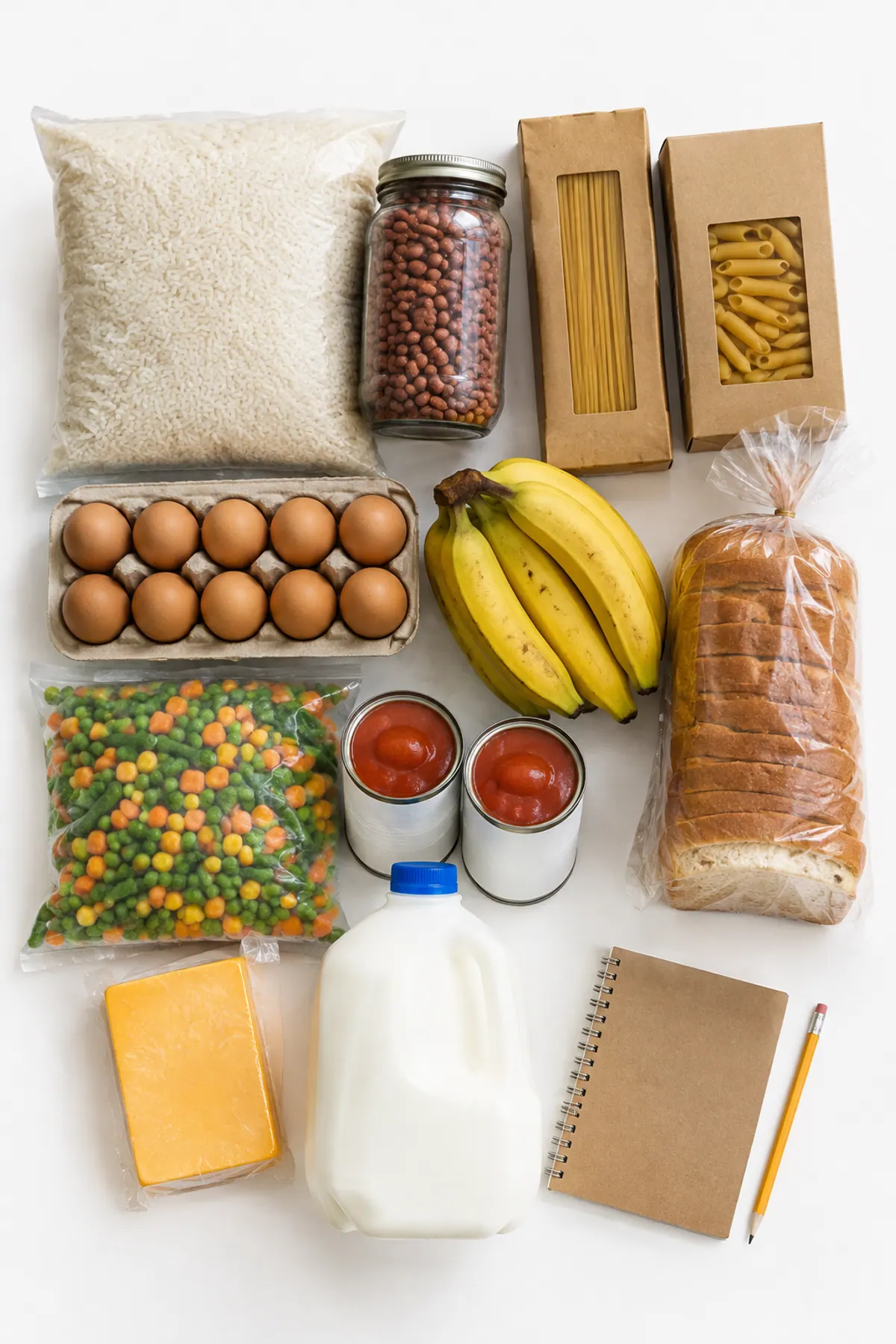
If you want a bigger shopping list to start from, the $50 a week staples list lays out the core items, and the pantry challenge shows how to cook down what you already own before you spend.
When the Numbers Still Do Not Work: Programs That Help
If groceries for five cost more than the household can carry, that is common and not a personal failure. These programs exist for exactly this. Eligibility depends on household size, income and state, so check the official pages rather than guessing.
Places to check
A budget is a plan for the money you have, not a verdict on the family you feed.
Mistakes That Make a Cheap Week Cost More
Watch for these
Track It for Two Weeks, Then Adjust
Write down what you spend on groceries for two weeks, divide by 105 and compare it with the tiers above. Then move one step: swap two dinners for cheaper ones, add a breakfast-for-dinner night or cut the snack line by $5. Small steps keep the family fed while the number comes down.
Three kitchen tools that pay for themselves
-
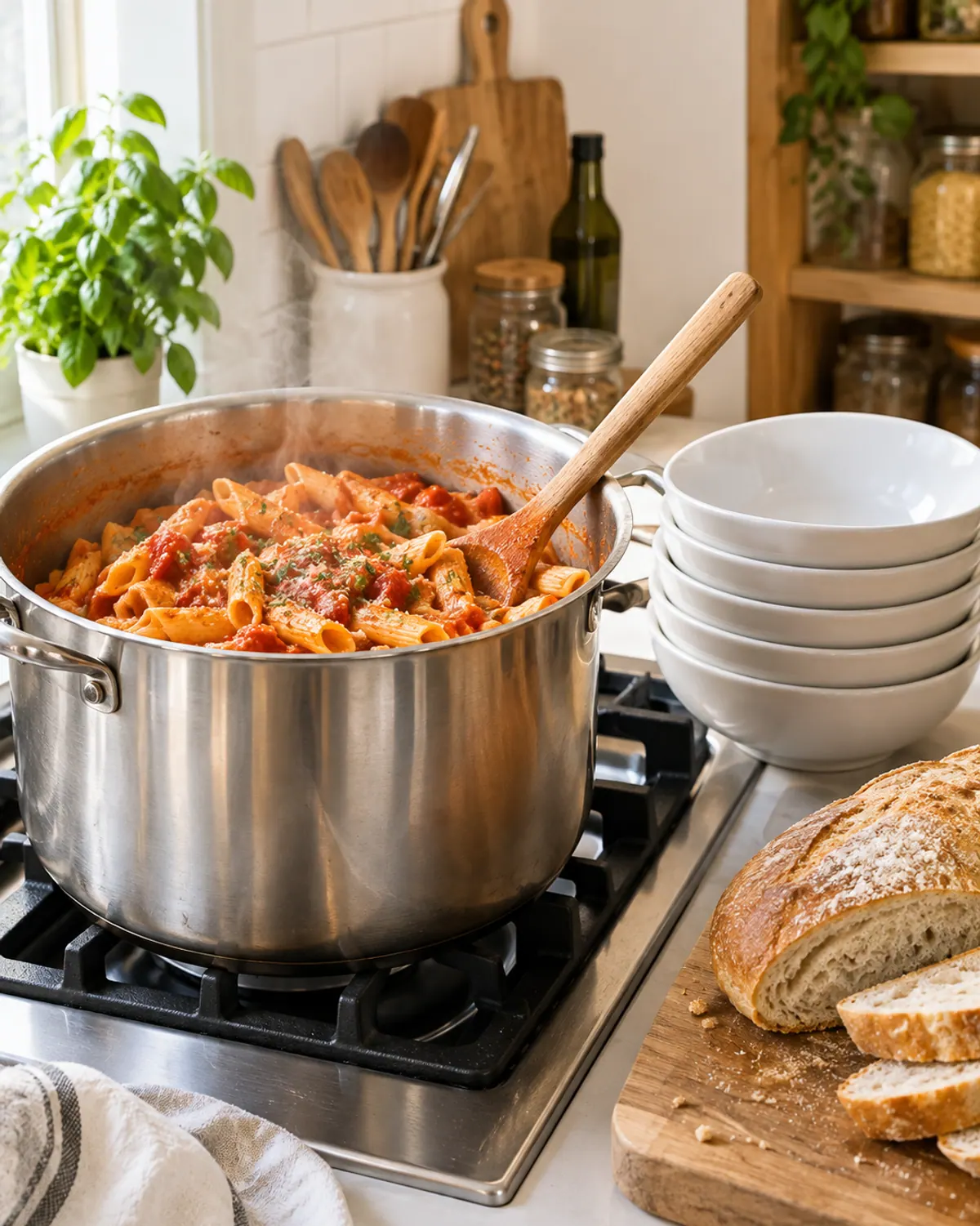
12-quart stainless stockpot
Typically $25 to $50
One pot of soup, chili or pasta feeds five with leftovers for lunch.
Check price on Amazon for 12-quart stainless stockpot -
Glass food storage containers with lids, 10 pack
Typically $18 to $35
Leftovers you can see get eaten; the ones lost in the back of the fridge get thrown out.
Check price on Amazon for Glass food storage containers with lids, 10 pack -
6-quart slow cooker
Typically $25 to $55
Cheap cuts and dried beans turn into dinner while you are at work.
Check price on Amazon for 6-quart slow cooker
Frequently asked questions
How much should a family of 5 spend on groceries?
The USDA's Thrifty plan for September 2026 prices a reference family of four at $236.30 a week, and our worked example for five (two adults and three children aged 4 to 11) comes to about $266 a week after the 5 percent household-size reduction. Real families spend more or less depending on ages, region and pantry. Example numbers, not financial advice.
Can you feed a family of 5 on $100 a week?
Some weeks, with a stocked pantry, store brands and mostly from-scratch meals. $100 is about $0.95 a plate and 38 percent of the USDA Thrifty example, so treat it as a stretch goal and check SNAP, WIC, school meals and food banks if it is not enough.
How do you feed a family of 5 on $200 a month?
$200 a month is about $46 a week, or $0.44 a plate, which is roughly 17 percent of the USDA Thrifty example. Planning alone will not get there. It usually takes food assistance, pantry help and very simple meals, so look at SNAP, WIC and a local food bank first.
How do you feed a family of 5 for $50 a week?
$50 a week is about $0.48 a plate, or 19 percent of the USDA Thrifty example. It is possible for a short stretch from a full pantry, but not a steady plan. Pair it with outside food help and the pantry challenge approach.
What is the cheapest way to feed a family?
Plan dinners before shopping, build them around rice, beans, pasta, eggs and frozen vegetables, cook double and eat leftovers within 3 to 4 days, and buy store brands by unit price. Those five habits cut waste, which is where most grocery money leaks.
Save it for later
Pin this to your Grocery Savings board so it's there when you need it.
Save to Pinterest