This post contains affiliate links. As an Amazon Associate we earn from qualifying purchases, at no extra cost to you. Read our disclosure.
Safety first: This is general money education, not personalised financial advice. Please read our financial disclaimer before you start.
Key takeaways
- Build your grocery list from flexible staples first, then add extras only if money is left.
- At low example prices, the 18 core staples come to about $39, leaving room for one or two pantry items each week.
- Rice, potatoes, onions and pasta often last longer than a week, so some weeks cost less than others.
- Prices vary a lot by region and store. Treat every number here as an example, not a quote.
In this post9 sections
- How This $50 Grocery List on a Budget Works
- The Core Grocery List: 18 Weekly Staples
- Why These Staples Made the List
- The Rotating Pantry List (Every 2 to 4 Weeks)
- Your Printable Grocery List Checklist
- Grocery List on a Budget for Two vs a Family
- 8 Ways to Keep the Total Under $50
- Before You Shop: A 5-Minute Routine
- FAQ
How This $50 Grocery List on a Budget Works
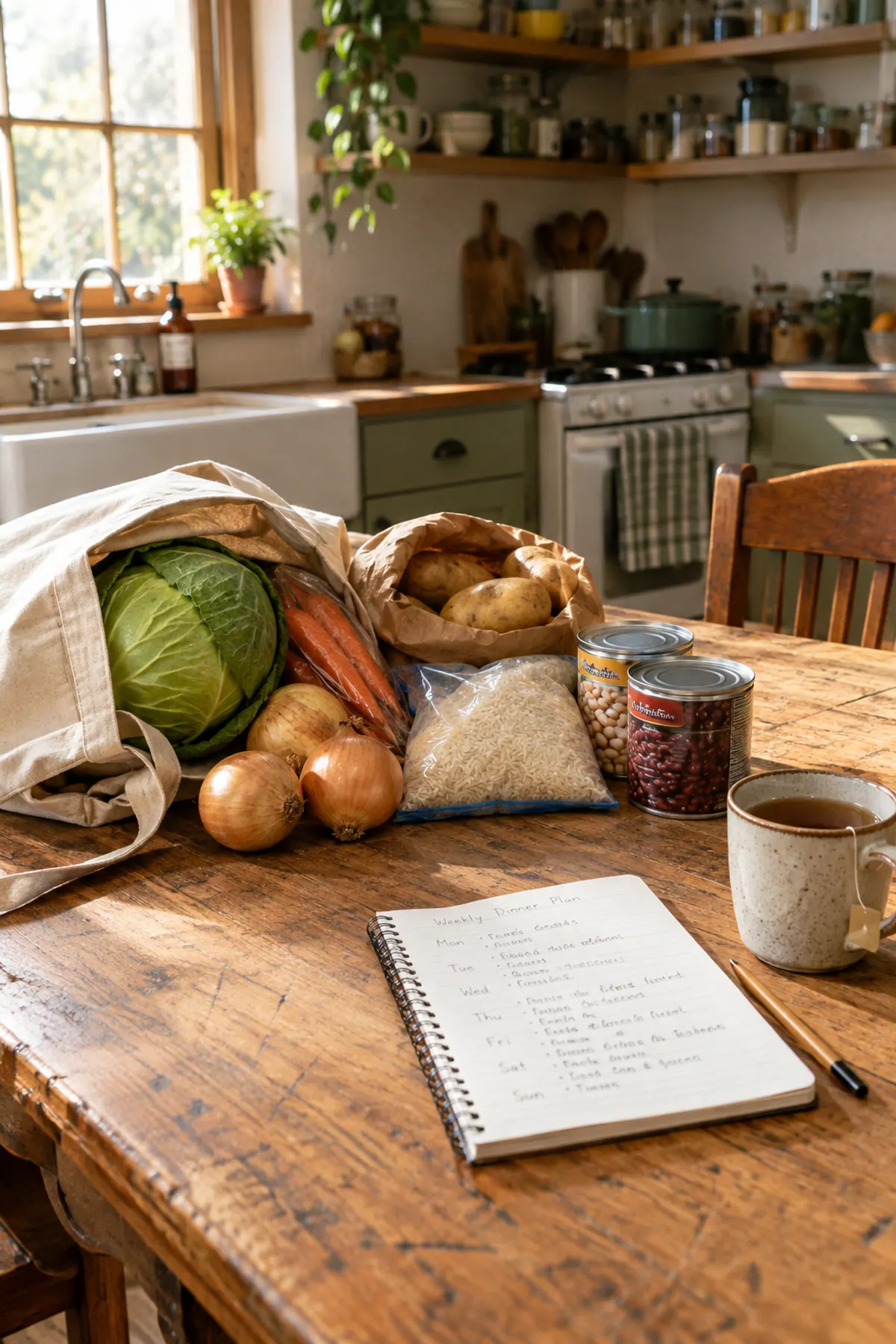
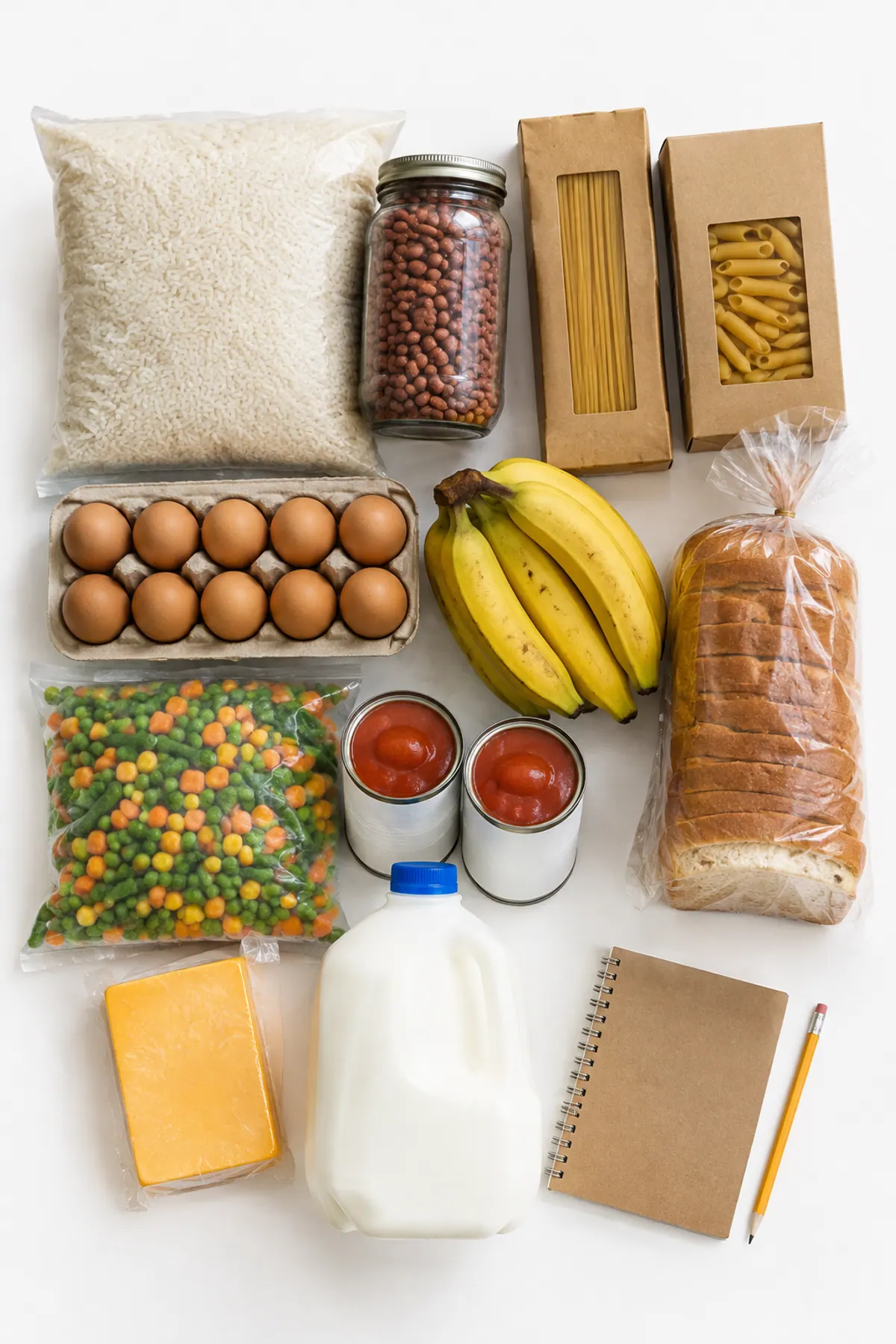
This list is a staples list, not a meal plan. It's the short set of foods that most budget kitchens lean on: eggs, rice, beans, potatoes, frozen vegetables, a little meat and a little dairy.
The idea is simple. You buy the same core items most weeks, then rotate in one or two longer-lasting pantry items when they run low. Staples like these mix and match into breakfast, lunch and dinner, so you're not buying ingredients for one recipe and throwing the rest away.
Who is $50 a week realistic for? For one or two adults, it can cover most meals, especially at a discount grocer. For a family of four, $50 is usually a tight week or a top-up week when the pantry is already stocked. That's okay, and the family section below shows what to double.
The Core Grocery List: 18 Weekly Staples
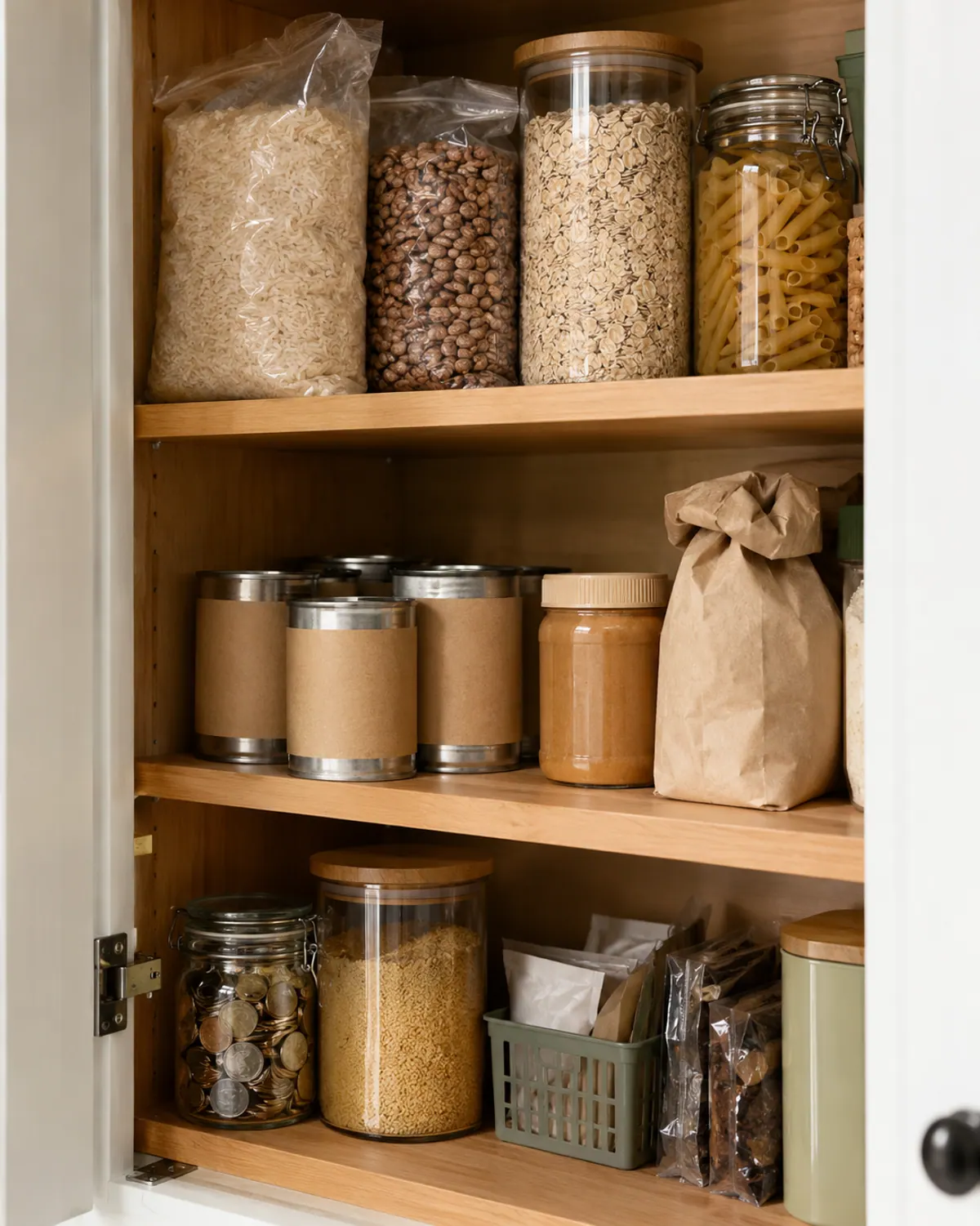
These are the items you'd buy most weeks. The table shows a sample size and an example price range for each one.
| Staple | Example size | Example price range |
|---|---|---|
| Eggs | 1 dozen | $2.00 to $4.50 |
| Milk | 1 gallon | $3.00 to $4.50 |
| Sandwich bread | 1 loaf | $1.50 to $3.00 |
| Bananas | about 2 lb | $1.00 to $1.50 |
| Apples | 3 lb bag | $3.00 to $5.00 |
| Carrots | 2 lb bag | $1.50 to $2.50 |
| Yellow onions | 3 lb bag | $2.50 to $4.00 |
| Russet potatoes | 5 lb bag | $3.00 to $5.00 |
| Green cabbage | 1 head | $1.50 to $3.00 |
| Frozen mixed vegetables | 2 bags | $2.00 to $4.00 |
| Chicken drumsticks or thighs | about 3 lb | $4.00 to $8.00 |
| Canned beans | 2 cans | $1.60 to $2.60 |
| Canned diced tomatoes | 2 cans | $1.60 to $2.60 |
| Long grain rice | 2 lb bag | $1.50 to $3.00 |
| Pasta | 2 boxes | $2.00 to $3.00 |
| Block cheese | 8 oz | $2.50 to $4.00 |
| Plain yogurt | 32 oz tub | $2.50 to $4.00 |
| Flour tortillas | 10 count | $2.00 to $3.50 |
| Example total | 18 items | $38.70 to $67.70 |
Here's the honest math. Add up the low end of every range and you get $38.70, which leaves about $11 for rotating pantry items. Add up the high end and you get $67.70, which is over budget.
Most real carts land somewhere in between, which is why the swaps further down matter. Also, a 5 lb bag of potatoes, a 2 lb bag of rice and a 3 lb bag of onions often stretch past one week. In the weeks you skip them, your bill drops by roughly $7 to $12.
Why These Staples Made the List
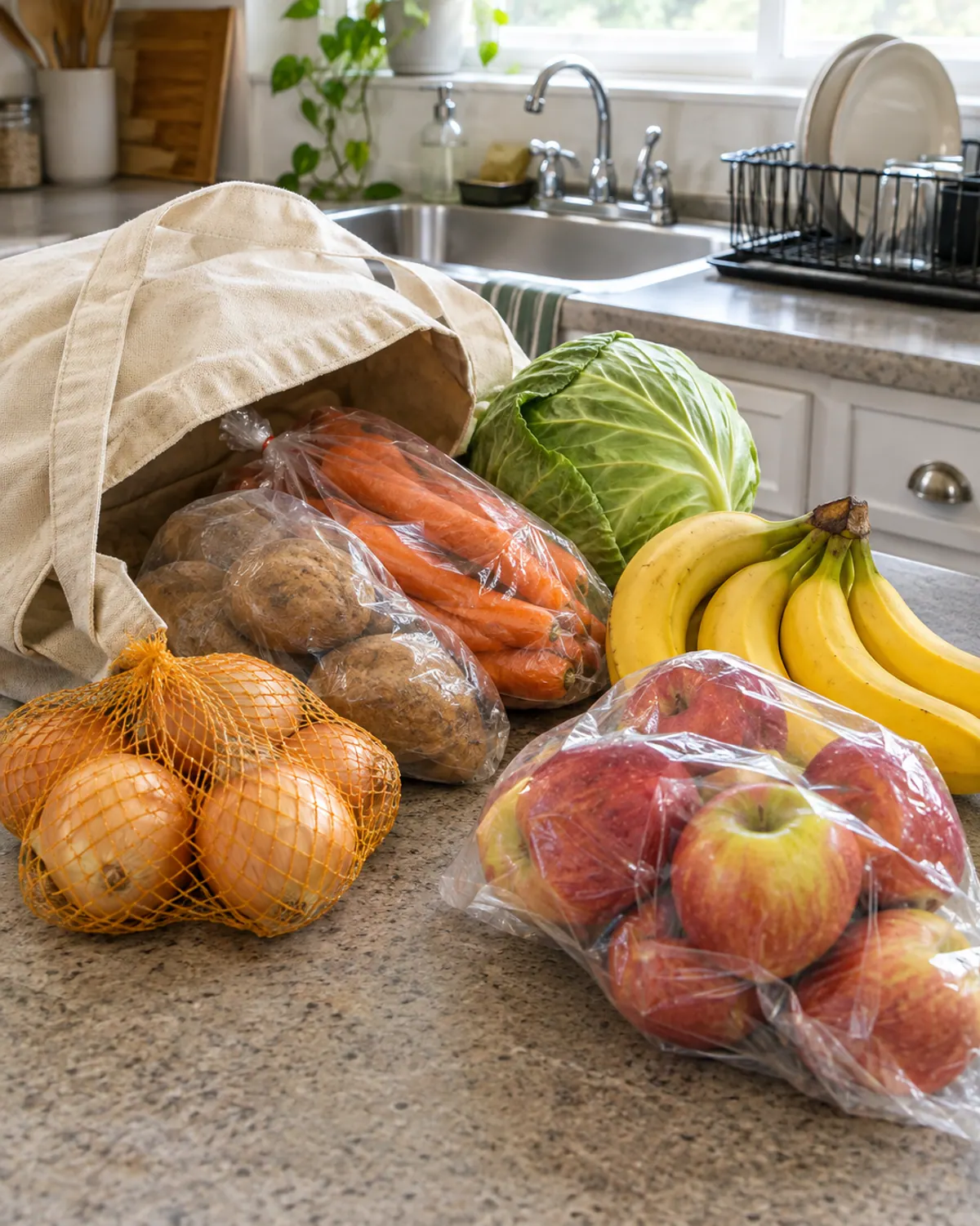
Produce that keeps. Onions, potatoes, carrots, cabbage and apples can last one to several weeks when stored well, so less of your money ends up in the trash. Bananas are the quick fruit for the first few days.
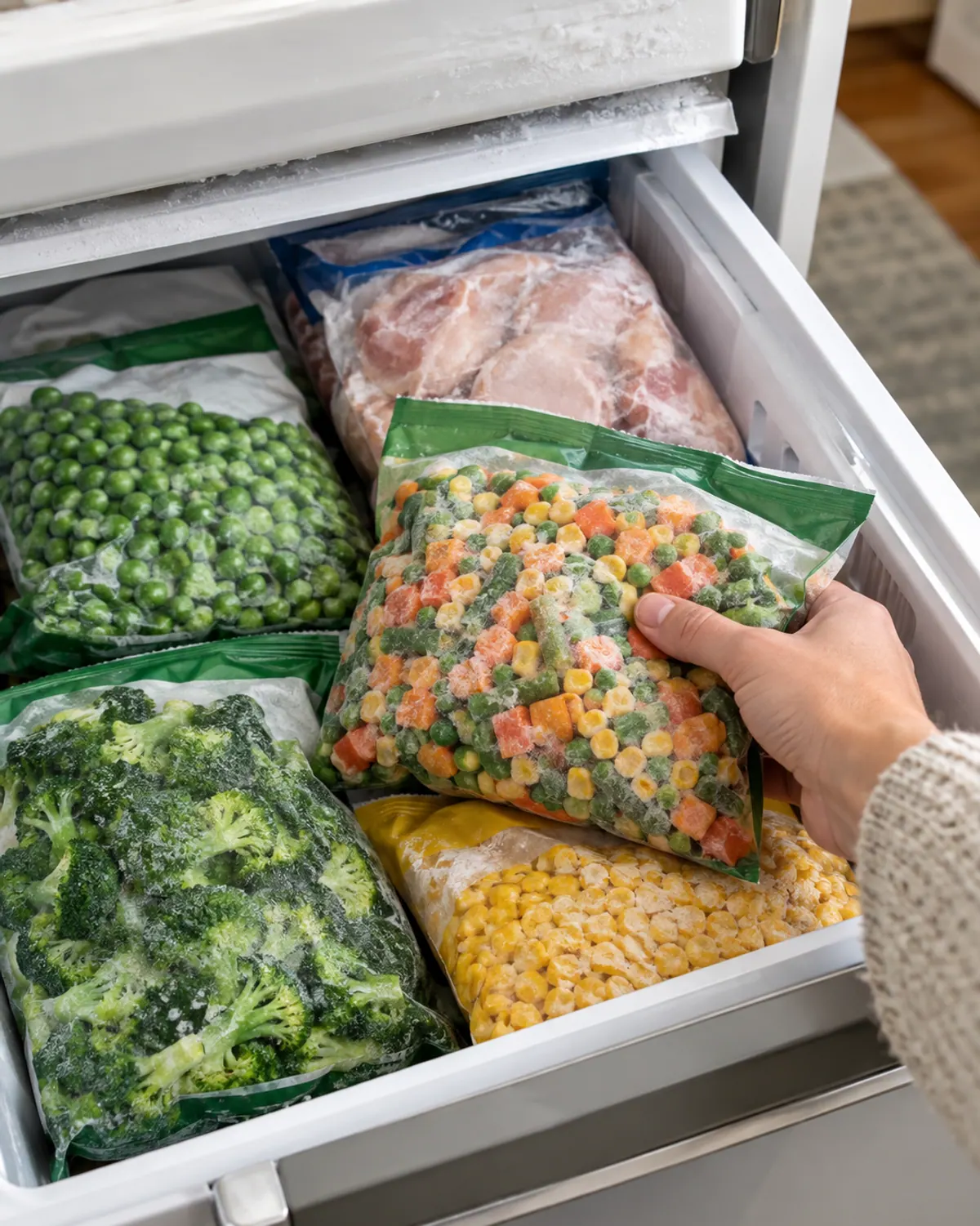
Frozen vegetables. They're picked and frozen in season, they don't wilt in the crisper drawer and you can use a handful at a time. Store-brand bags are often among the cheapest vegetables in the store per serving.
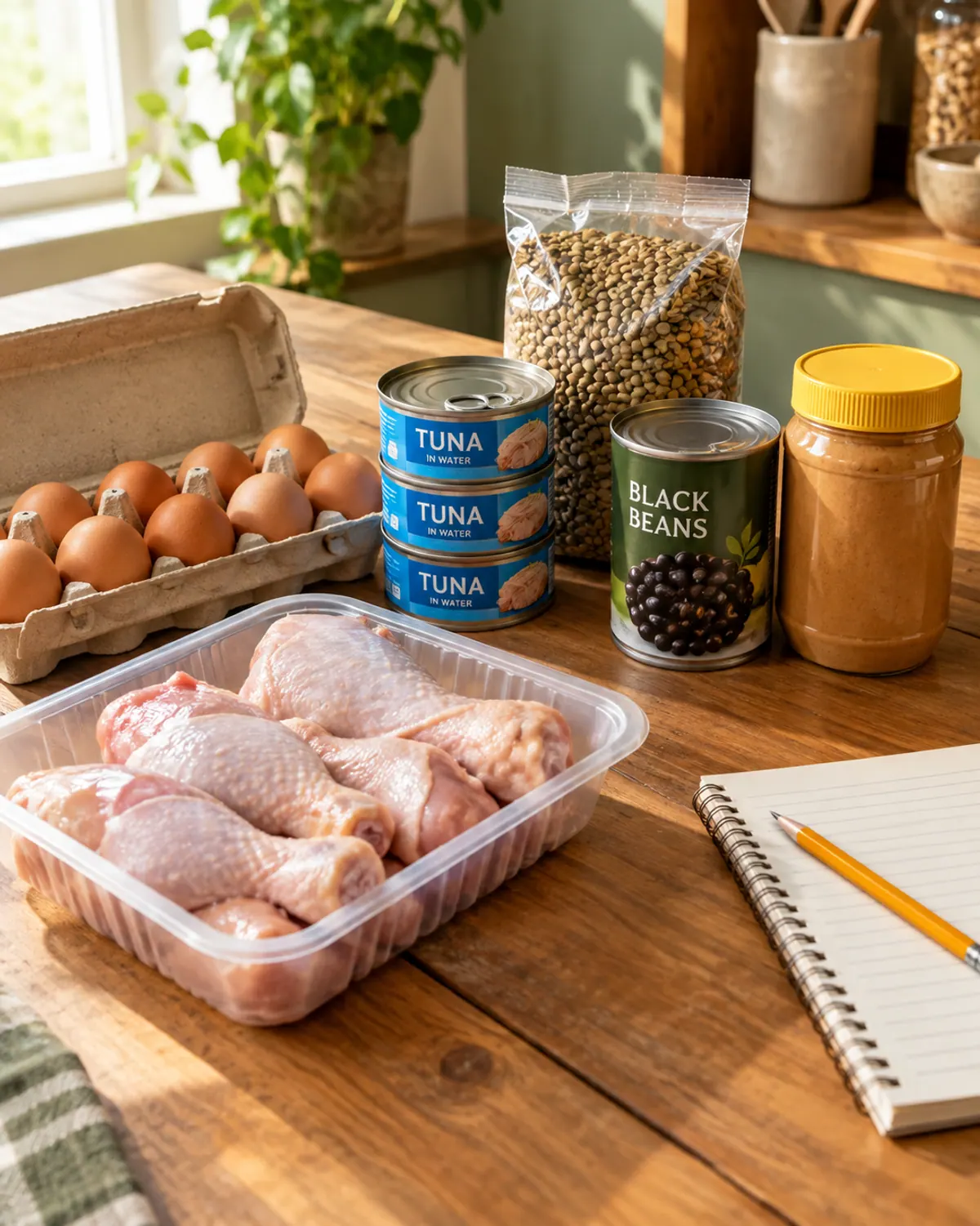
Cheap protein in a few forms. Eggs, canned beans and bone-in chicken pieces give you variety without a big meat bill. Drumsticks and thighs are usually cheaper per pound than boneless breasts.
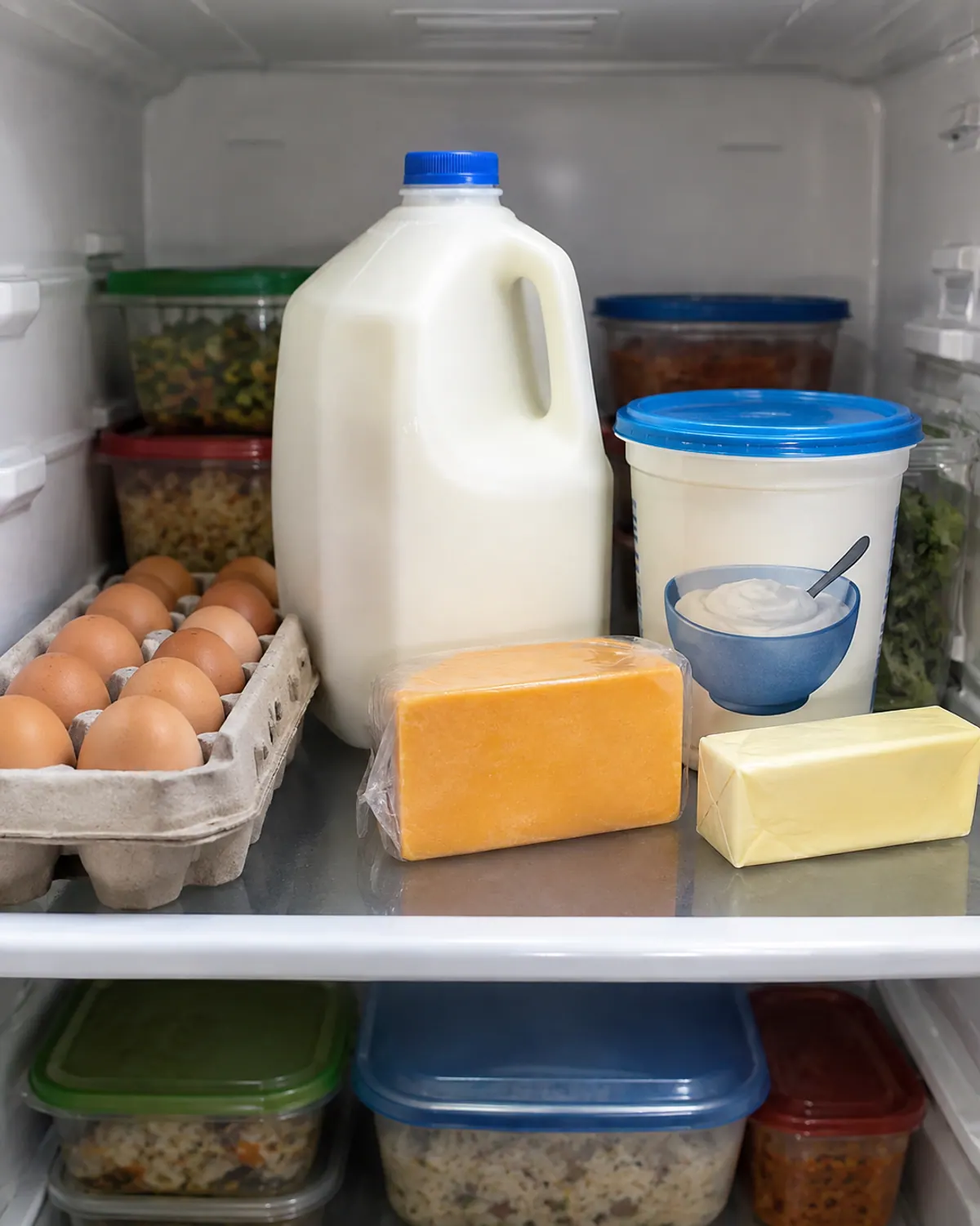
Dairy that goes far. A gallon of milk, a block of cheese and a big tub of plain yogurt cover breakfasts, snacks and toppings. Block cheese often costs less per ounce than shredded, and you can grate it yourself.
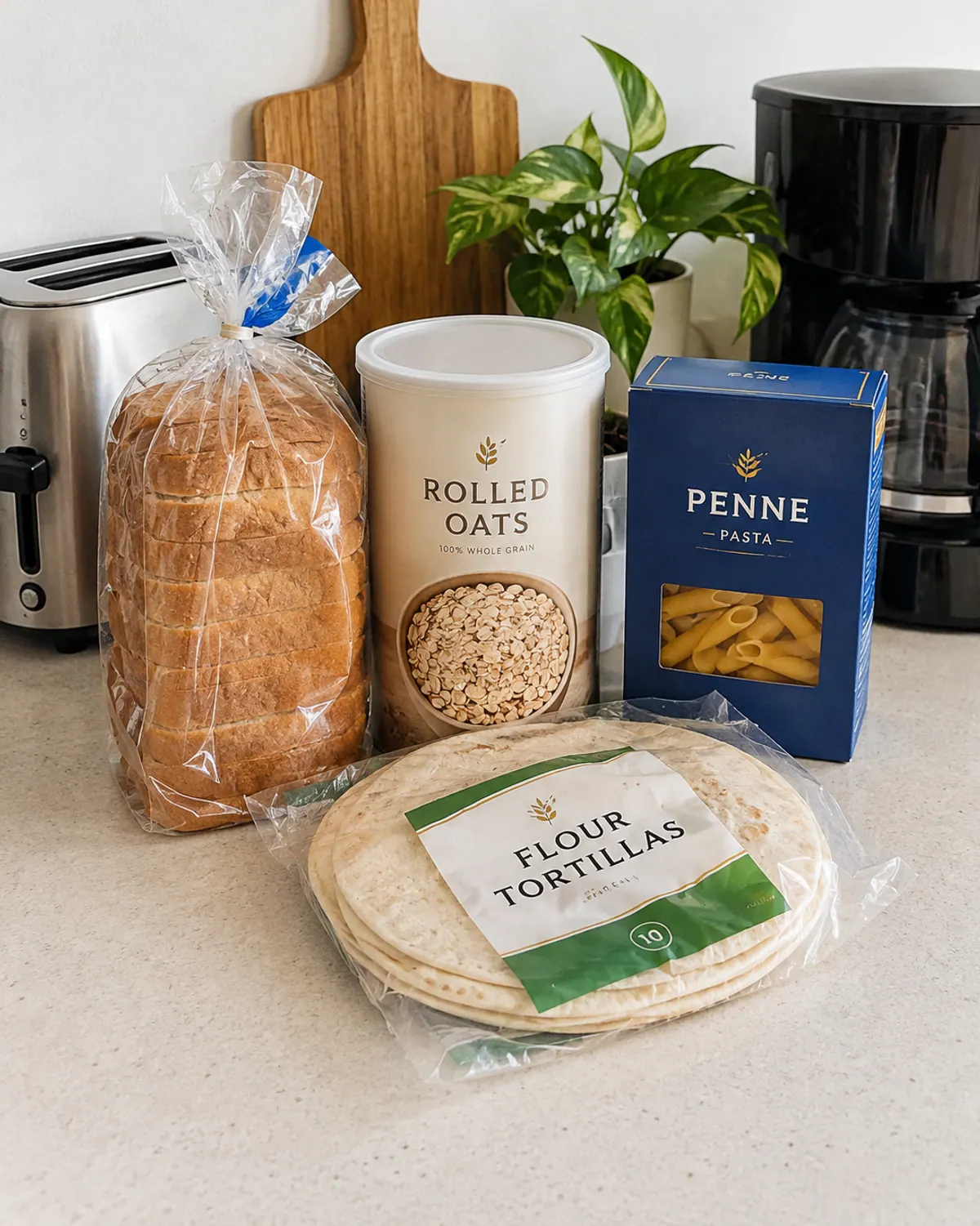
Grains for filling plates. Rice, pasta, bread and tortillas are the base that makes a little protein and vegetables feel like a full meal. They're also the easiest place to buy store brand, since plain staples tend to taste much the same across brands.
The Rotating Pantry List (Every 2 to 4 Weeks)
These items last longer than a week, so you don't buy them every trip. Pick one or two each week with whatever is left after the core list.
| Pantry item | Example size | Example price range |
|---|---|---|
| Rolled oats | 42 oz canister | $3.00 to $5.00 |
| Peanut butter | 16 to 28 oz jar | $2.50 to $4.50 |
| Dried beans or lentils | 1 lb bag | $1.25 to $2.50 |
| Canned tuna | 5 oz can | $1.00 to $1.75 |
| Vegetable oil | 48 oz bottle | $3.00 to $5.00 |
| All-purpose flour | 5 lb bag | $2.50 to $4.00 |
| Butter | 1 lb | $3.50 to $5.00 |
| Chicken bouillon | 1 jar | $1.00 to $3.00 |
| Garlic powder or a basic seasoning | 1 jar | $1.00 to $2.00 |
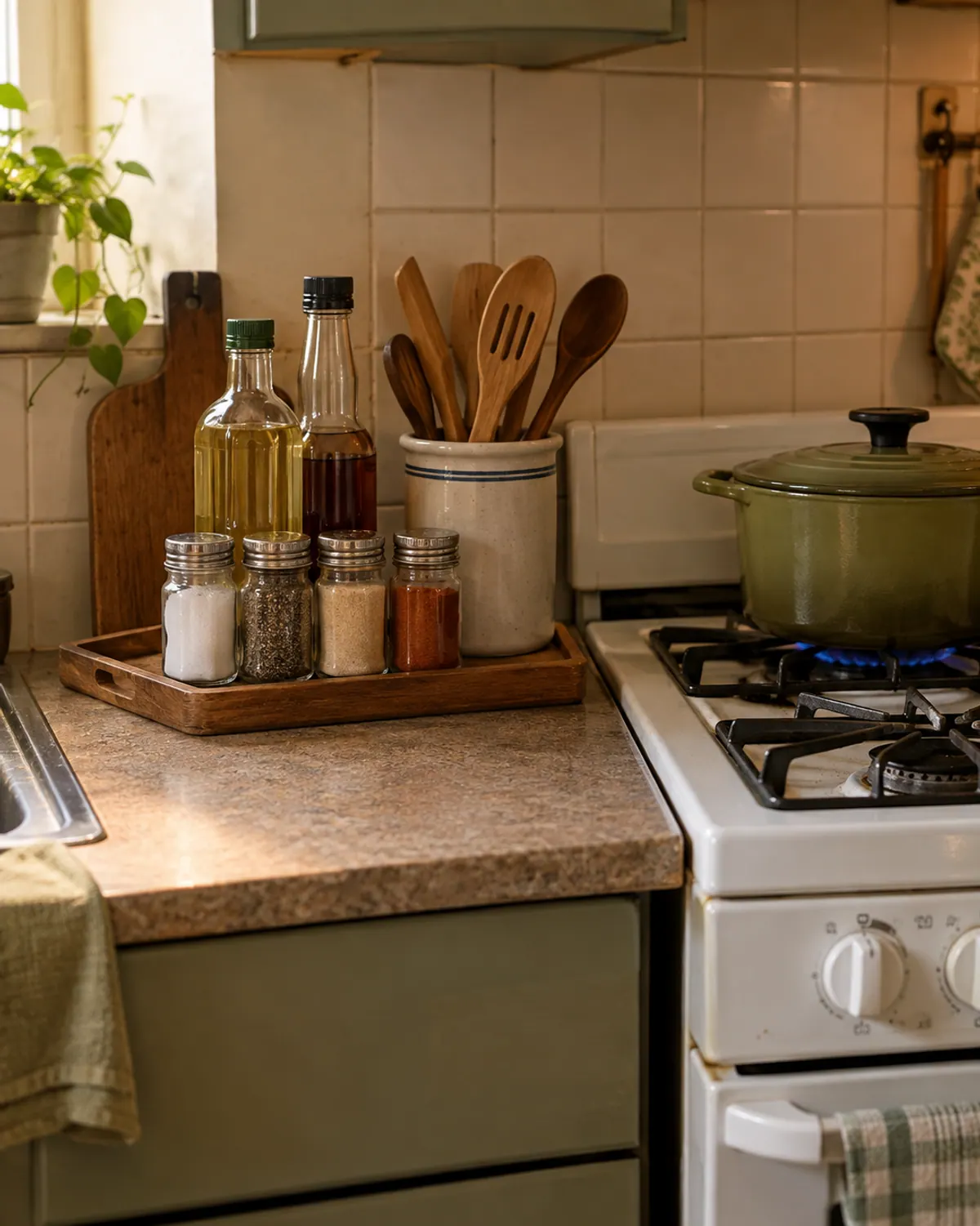
A small set of seasonings does a lot. Salt, pepper, garlic powder, chili powder and bouillon can make the same rice, beans and vegetables taste different from night to night.
Your Printable Grocery List Checklist
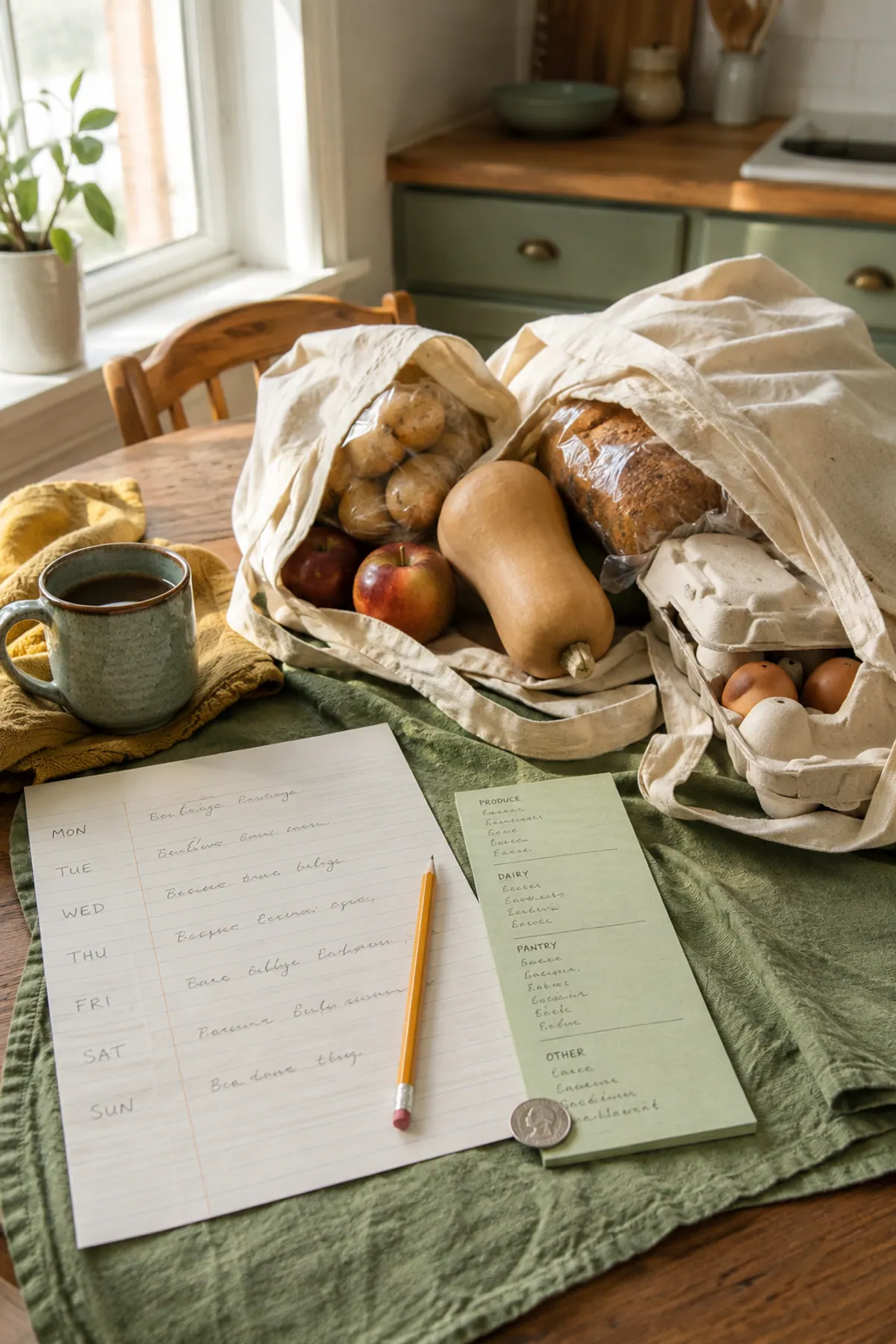
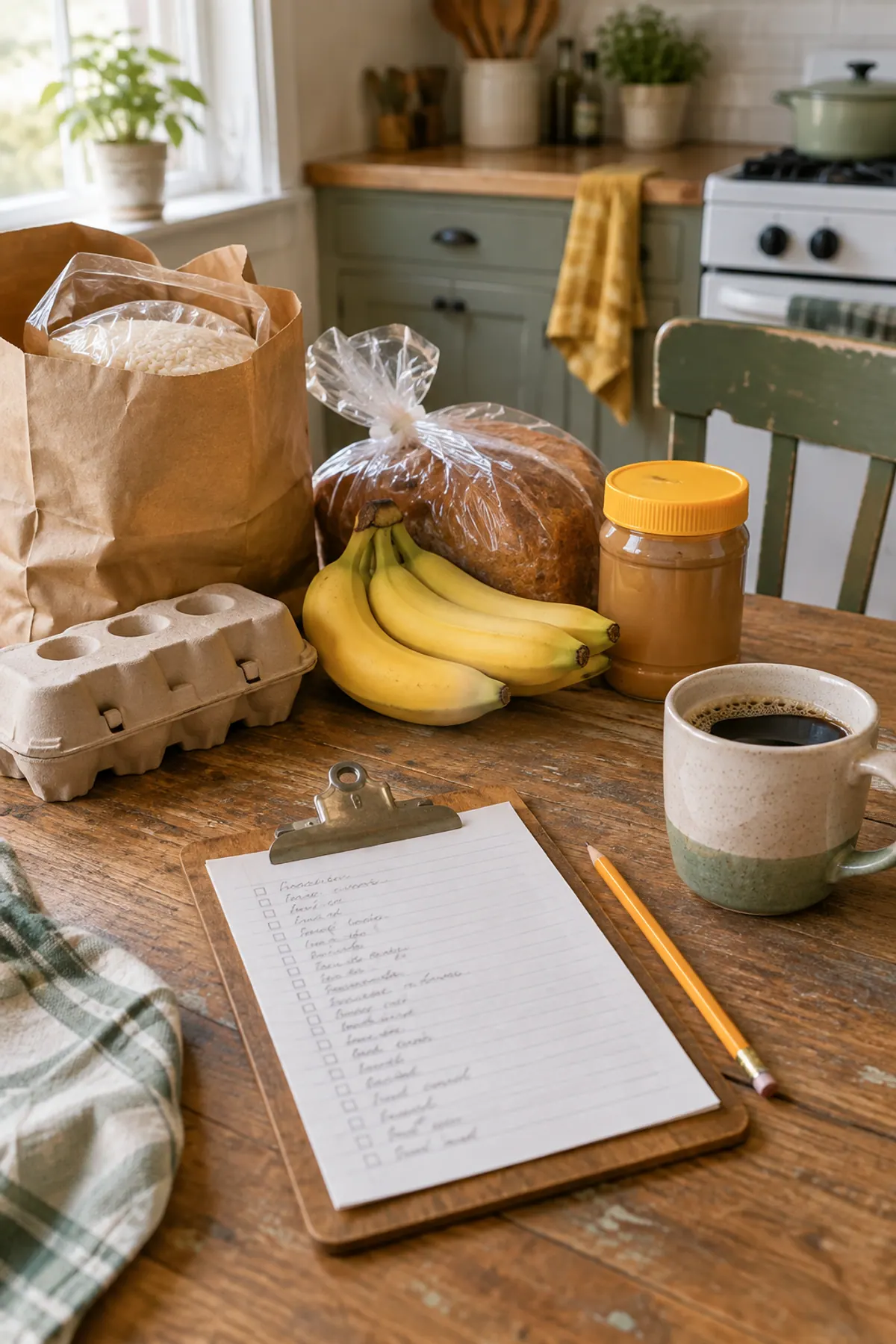
Print this page or copy the list into your phone's notes. Before you shop, walk through your fridge and pantry and cross off anything you already have.
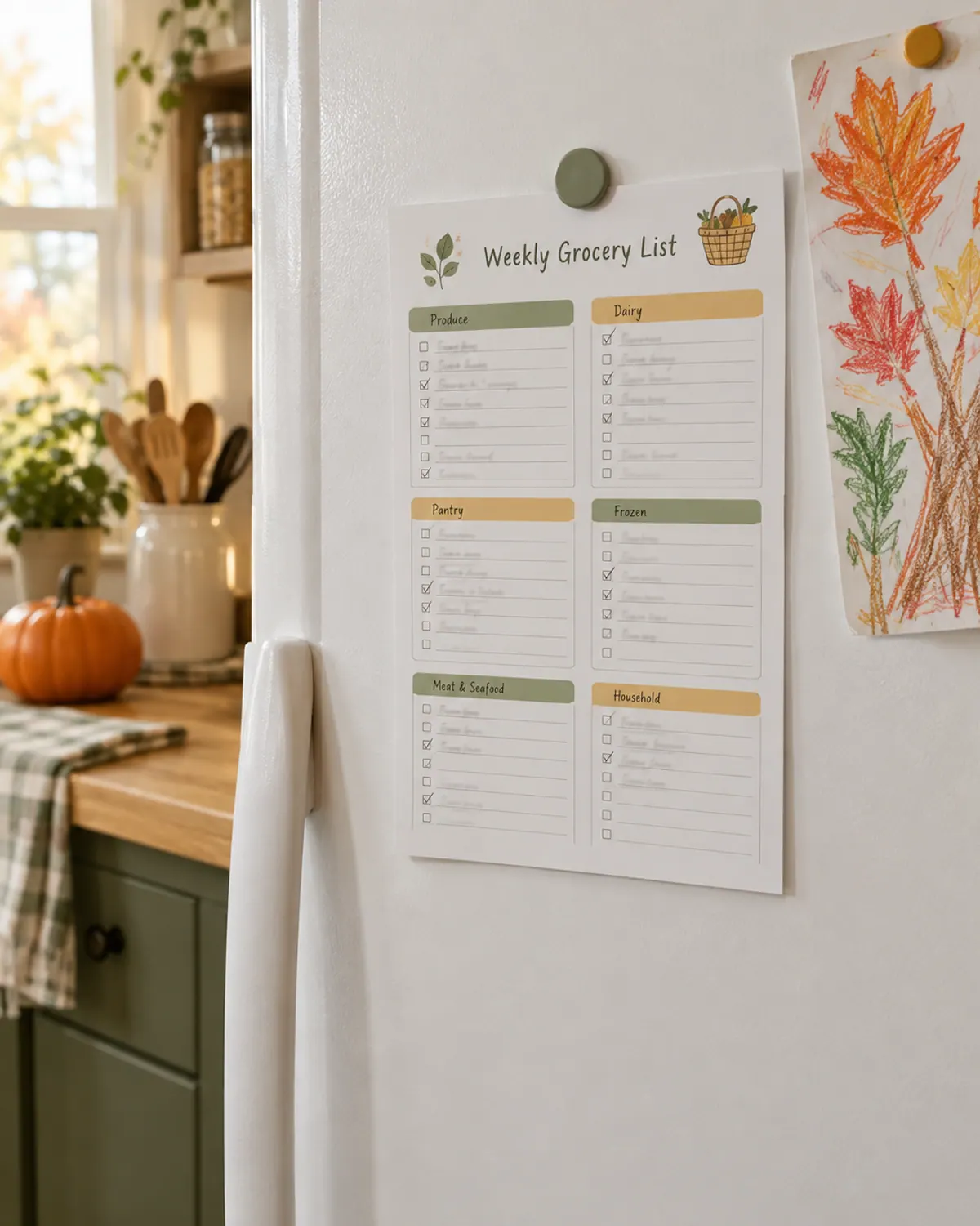
$50 a week grocery list on a budget
Need ideas for turning these staples into dinners? A few that use only this list: breakfast-for-dinner eggs and potatoes, bean and cheese tortillas, chicken with roasted potatoes and carrots, pasta with tomatoes and vegetables, and fried rice with cabbage and egg. Our cheap meals on a budget plan lays out a full week of dinners from one list.
Grocery List on a Budget for Two vs a Family
For two adults, the core list usually covers most meals for a week. You might skip the second box of pasta or the yogurt some weeks and put that money toward a pantry item.
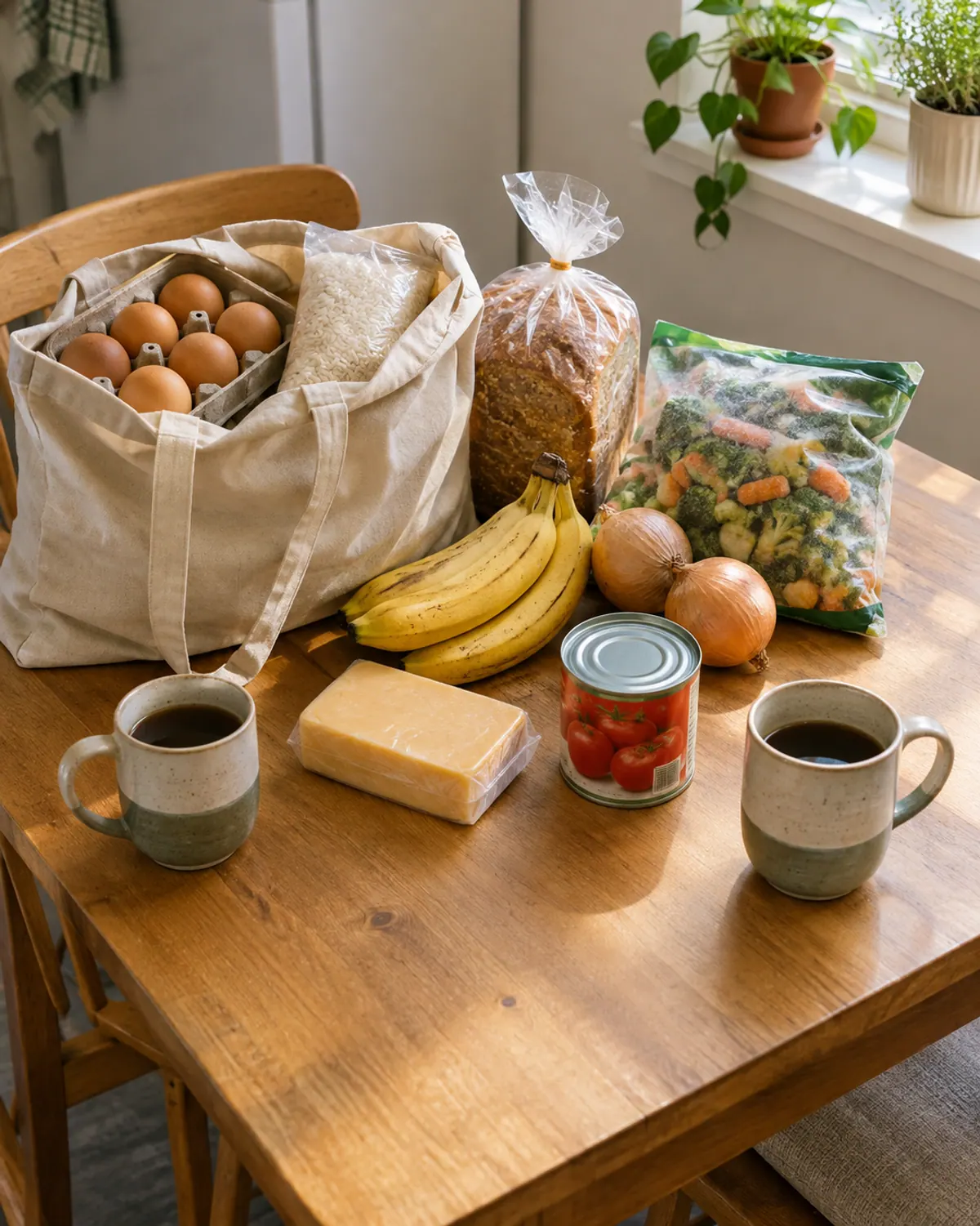
For a family of four, $50 a week is very tight. The items that usually need doubling are eggs, milk, bread, fruit and chicken. A more workable approach is to use this list as your base and set your real budget from what you spent over the last month.
The USDA publishes monthly food plan cost estimates for different household sizes, which can help you sanity-check your number. If your family needs more food than your budget allows, SNAP and WIC (if you qualify) and local food pantries exist for exactly this. Calling or texting 211 in the US can point you to help nearby.
8 Ways to Keep the Total Under $50
1. Shop your kitchen first. Cross off what you already have before you leave the house. It's the fastest way to cut the list.
2. Compare unit prices. The small number on the shelf tag shows the price per ounce or per pound. It's the honest way to compare a big bag against a small one.
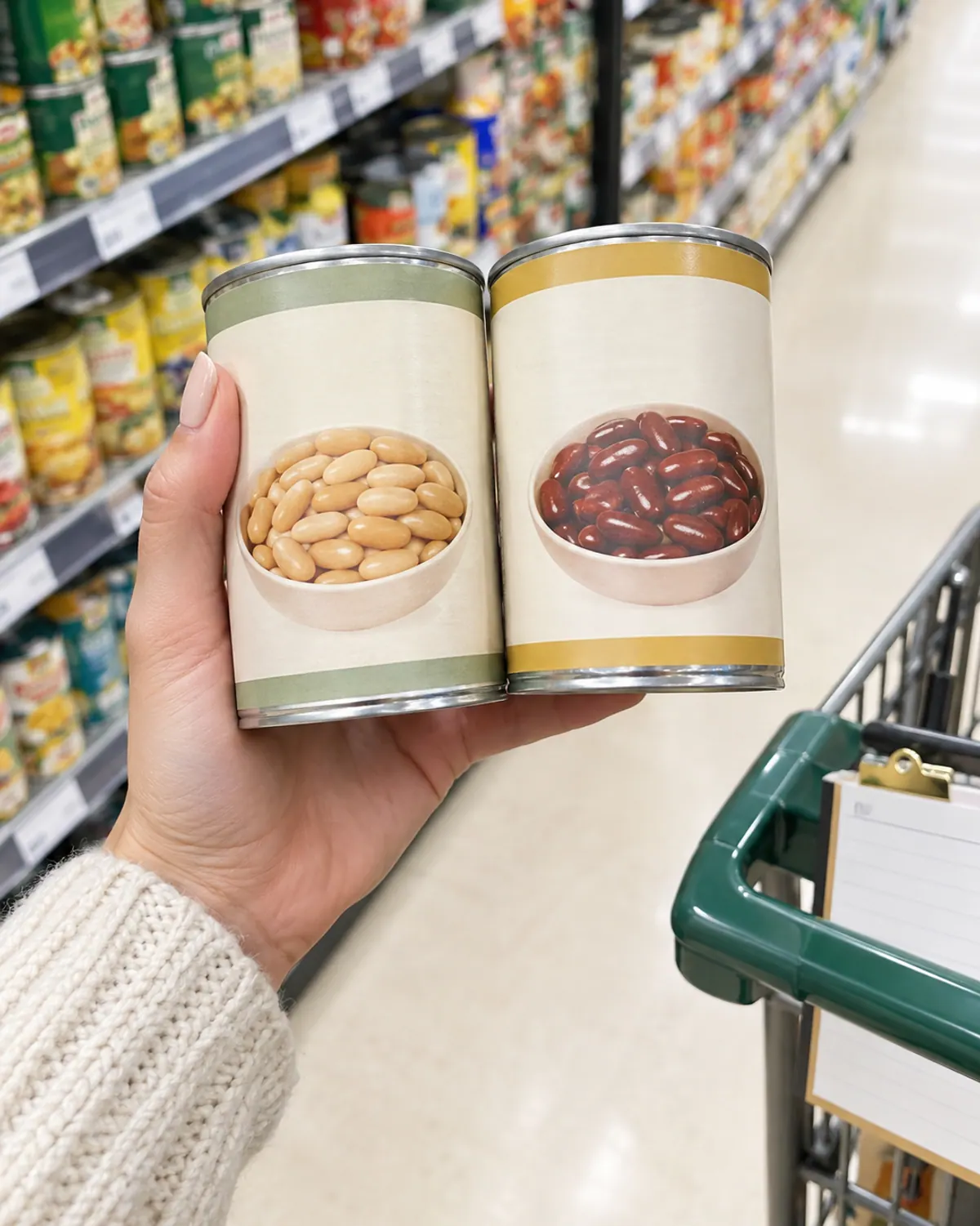
3. Buy store brand for plain staples. Rice, beans, flour, oats, canned tomatoes and frozen vegetables are easy swaps.
4. Swap the priciest items. If chicken is high this week, buy an extra dozen eggs or a bag of dried lentils instead. If apples are expensive, choose whatever fruit is on sale.
5. Bring cash in an envelope. Take $50 in cash and leave the cards at home. When the envelope is empty, the trip is done.
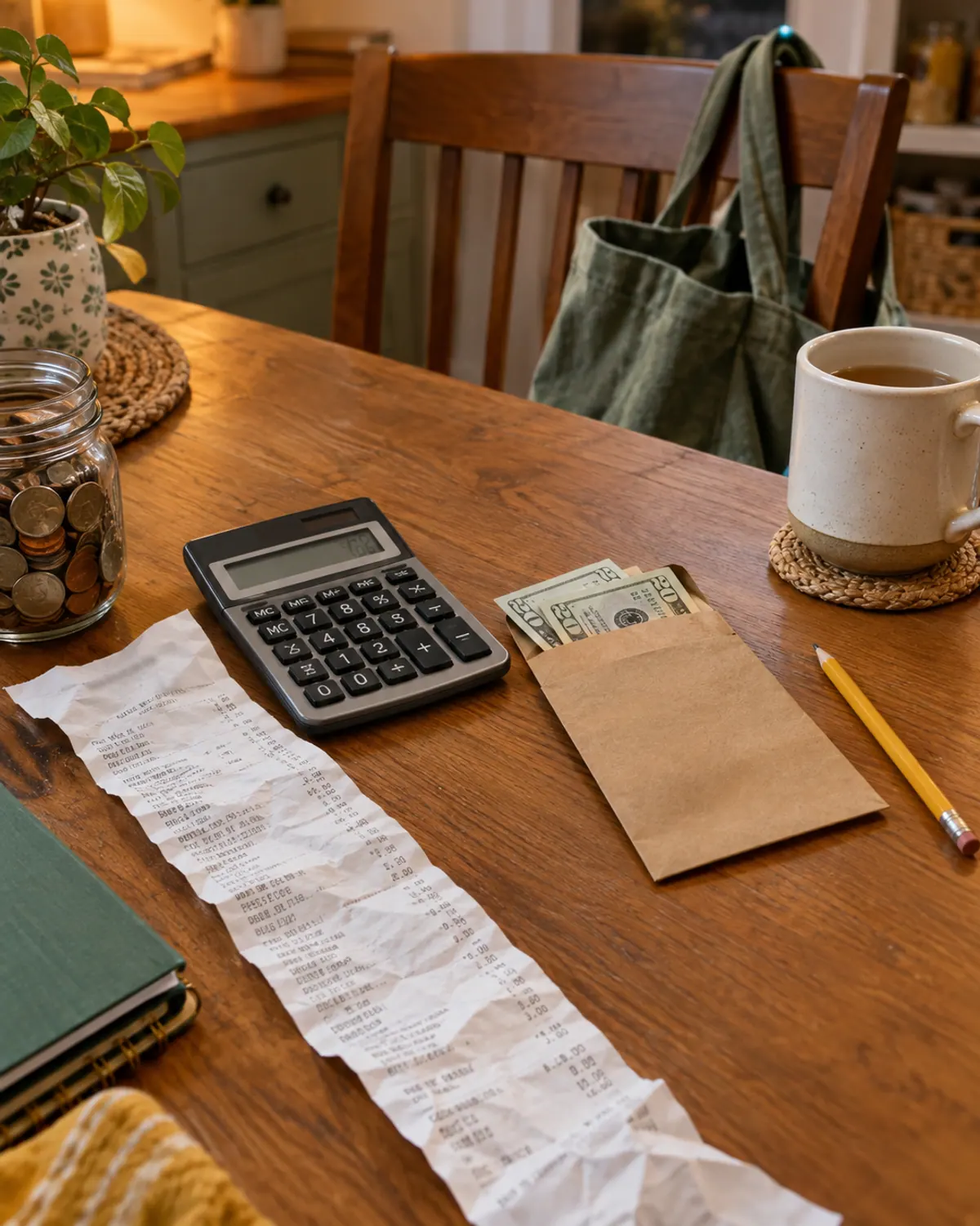
6. Use a calculator as you shop. Round each item up to the next dollar and keep a running total. Rounding up leaves a small cushion for tax or a surprise price.
7. Try a discount grocer or pickup order. Discount stores often price staples lower. Online pickup orders let you see the total before you pay, and they keep impulse buys out of the cart.
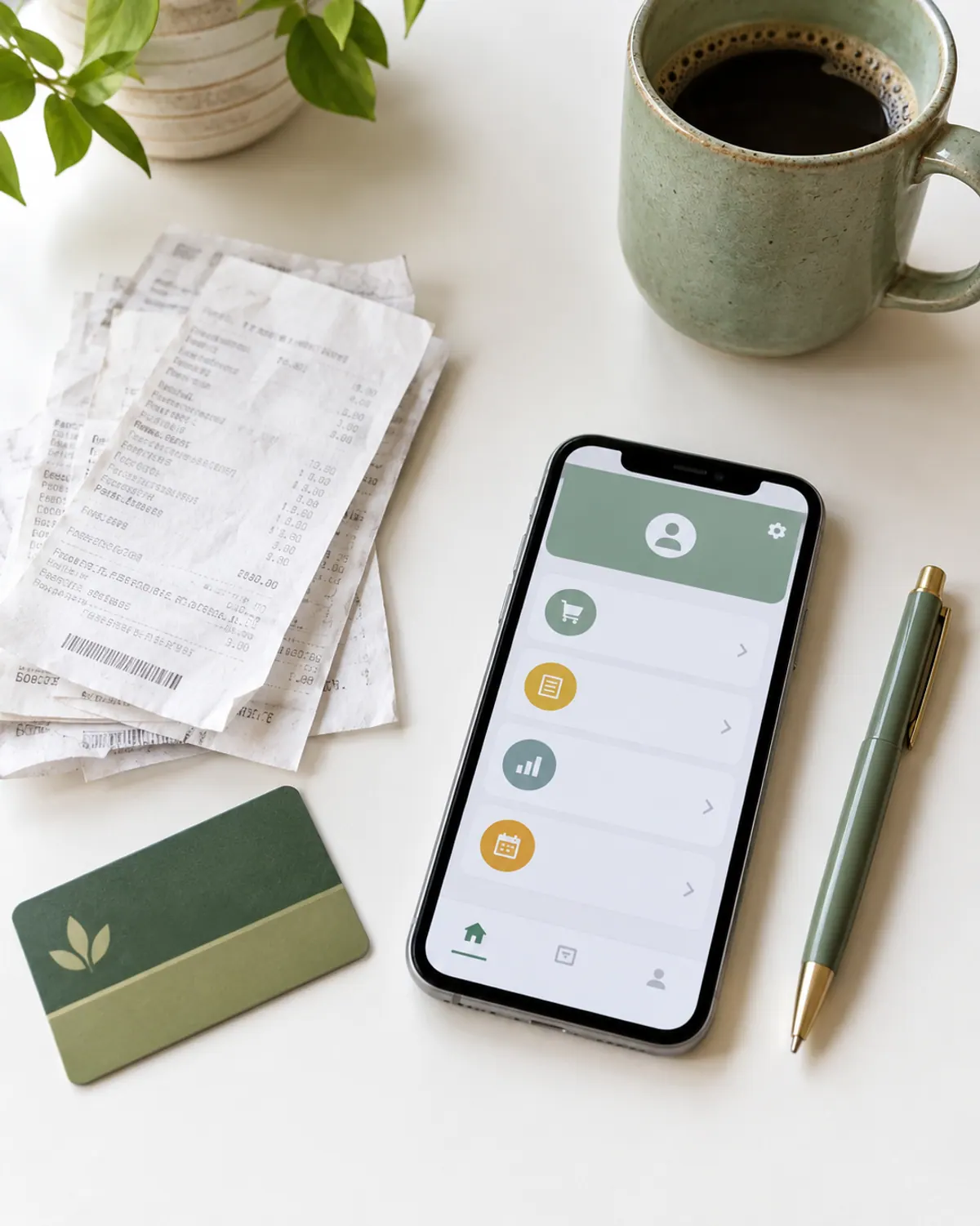
8. Scan receipts for cashback. Store loyalty programs and receipt apps like Ibotta or Fetch can give a little back on things you already buy. Treat it as a small bonus, never a reason to buy more.
Simple tools for budget grocery shopping
-
Magnetic grocery list notepad
Often around $6 to $12
Lives on the fridge so you can add items the moment they run out.
Check price on Amazon for Magnetic grocery list notepad -
Reusable grocery tote bags
Often around $10 to $20 for a set
Avoids bag fees in some areas and holds a full week of staples.
Check price on Amazon for Reusable grocery tote bags -
Airtight pantry storage containers
Often around $20 to $35 for a set
Keeps rice, oats and flour fresh and dry so bulk bags don't go to waste.
Check price on Amazon for Airtight pantry storage containers
Prices are rough ranges as of October 2026. Clean jars you already have work just as well as new containers.
Before You Shop: A 5-Minute Routine
-
Step 1: Check the fridge, freezer and pantry
Note what needs to be used up first and what you already have plenty of.
-
Step 2: Cross off what you have
Go down the printable list and strike every item you don't need this week.
-
Step 3: Look at the store flyer
Swap any staple for a cheaper one that's on sale, like pork instead of chicken or pears instead of apples.
-
Step 4: Write your total at the top
Write $50 (or your own number) at the top of the list so it's in front of you the whole trip.
-
Step 5: Track what you spent
After the trip, write the real total down. After four weeks you'll know your true grocery number.
If groceries are one piece of a bigger push to free up money, our list of 30 ways to save money fast before the holidays has more ideas. And when December comes, the Christmas on a budget plan covers holiday food without the holiday bill.
Every week you come in under your number is money you can move into savings. Our savings challenge printables give that leftover grocery money a cozy place to go. This is general education, not financial advice.
Frequently asked questions
What should be on a cheap grocery list?
Start with flexible staples: eggs, milk, bread, rice, pasta, potatoes, onions, carrots, cabbage, bananas, apples, frozen vegetables, canned beans, canned tomatoes and a family pack of chicken pieces. Add pantry items like oats, peanut butter and oil every few weeks.
Can you really buy groceries for $50 a week?
For one or two adults shopping at a discount store, often yes, especially in weeks when long-lasting items like rice and potatoes don't need restocking. For a family of four, $50 is usually a tight or top-up week. Prices vary a lot by region and store.
How do I make a grocery list on a budget for a family?
Start with the core staples, then double the items your family eats fastest, usually eggs, milk, bread, fruit and protein. Check what you already have before shopping, and set your budget from what you actually spent over the past month.
What groceries last the longest?
Rice, dried beans, pasta, oats, flour, canned goods and frozen vegetables last months when stored well. Onions, potatoes, carrots, cabbage and apples last one to several weeks in a cool, dry place or the fridge.
Is store brand food really cheaper?
Store brands are usually priced lower than name brands for plain staples like rice, beans, flour, canned tomatoes and frozen vegetables. Compare the unit price on the shelf tag to be sure, since sales on name brands can sometimes beat them.
Save it for later
Pin this to your Grocery Savings board so it's there when you need it.
Save to Pinterest