This post contains affiliate links. As an Amazon Associate we earn from qualifying purchases, at no extra cost to you. Read our disclosure.
Safety first: This is general money education, not personalised financial advice. Please read our financial disclaimer before you start.
Key takeaways
- Pick your total Christmas number first, then split it into gifts, food, decor and a small buffer.
- List every person you buy for, give each group a per-person cap and track what you actually spend.
- Homemade gifts, thrifted decor and nature finds keep the cozy feeling without the price tag.
- Starting in October spreads the cost over several paychecks instead of one.
In this post12 sections
- Step 1: Set Your Christmas on a Budget Number
- 1. Put Your Christmas Number on Paper
- Step 2: The Gift List Method
- 12 Budget Christmas Gifts: Cheap and DIY Ideas
- Wrapping That Costs Almost Nothing
- 8 Ideas for Christmas Decor on a Budget
- Holiday Food Without the Holiday Bill
- 10 Cheap Christmas Ideas That Cost Nothing
- Your October to December Christmas Budget Timeline
- Your Last 6 Weeks Before Christmas
- If Money Is Extra Tight This Christmas
- FAQ
Step 1: Set Your Christmas on a Budget Number
Your Christmas number is the most you'll spend on everything holiday related, from gifts to wrapping to the extra groceries. Pick it before you shop, because every store and ad in December is designed to raise it.
Start with money you actually have or can set aside. Add what's already saved to what you can put away from each paycheck between now and mid-December. For example, $40 from each of five paychecks plus $100 already saved gives you a $300 Christmas.
If you can, look back at last year's bank statements to see what Christmas really cost. Most people remember the gifts but forget the wrapping, shipping, teacher gifts, holiday baking and travel. The goal is a number that doesn't follow you into January.
1Put Your Christmas Number on Paper
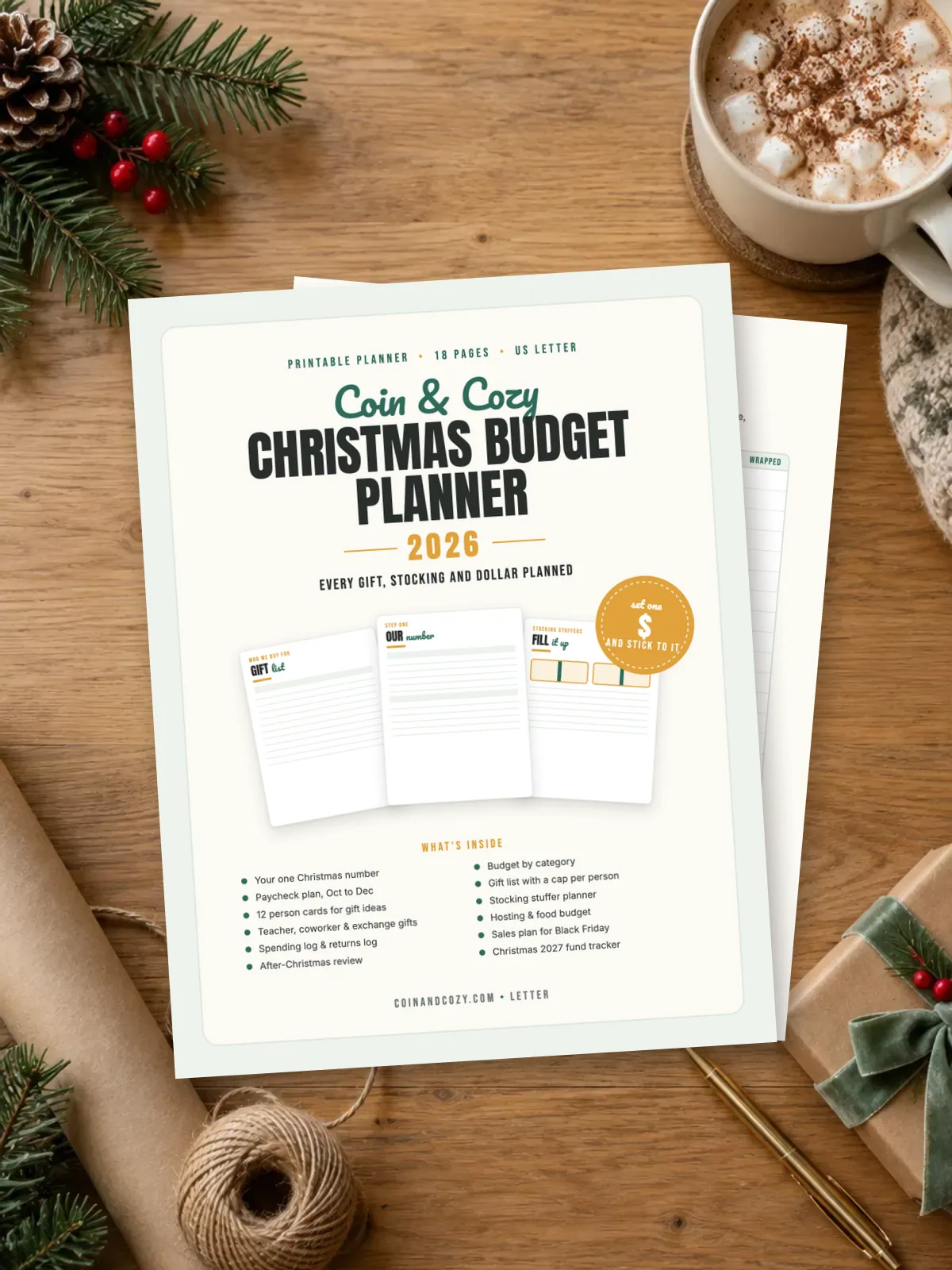
Once you have your number, the Christmas Budget Planner 2026 gives it a home. It has a worksheet for your one Christmas number, a budget by category with a buffer line, a paycheck plan to December, a gift list for 22 people with a cap next to each name, and a spending log that keeps a running total. Use it for Steps 1 and 2 of this guide.
One place for your total, your gift caps and every receipt, so December spending stays inside the number you set.
Want the math done for you? Enter what you have saved and what you can set aside each payday, and the calculator below gives you a total plus a category split.
Free calculator
Your Christmas number
Fill in what you have. The total updates as you type. Nothing you enter leaves this page.
Your Christmas number $0
| Category | Share | Amount |
|---|---|---|
| Gifts and stockings | 60% | $0 |
| Food and hosting | 20% | $0 |
| Decor, cards and wrap | 10% | $0 |
| Buffer for the things you forget | 10% | $0 |
The split above is an example to start from, not advice. Change the percentages to fit your family. Only count money you already have or will be paid before Christmas, not credit.
For example households, per-child amounts and a payday plan, see the full Christmas budget calculator guide. If you want to know what other families actually spend before you pick your number, our good Christmas budget for a family post has the 2025 survey figures by income and a $900 worked example.
| Category | Share | Example amount |
|---|---|---|
| Gifts | 50% | $200 |
| Holiday food and hosting | 20% | $80 |
| Wrapping, cards and shipping | 10% | $40 |
| Decor | 5% | $20 |
| Outings and traditions | 5% | $20 |
| Buffer for surprises | 10% | $40 |
The buffer matters more than it looks. There's almost always a forgotten gift exchange or an extra trip to the store, and the buffer catches it without breaking the plan. Our savings challenges can help you build a holiday fund for next year, too.
Step 2: The Gift List Method
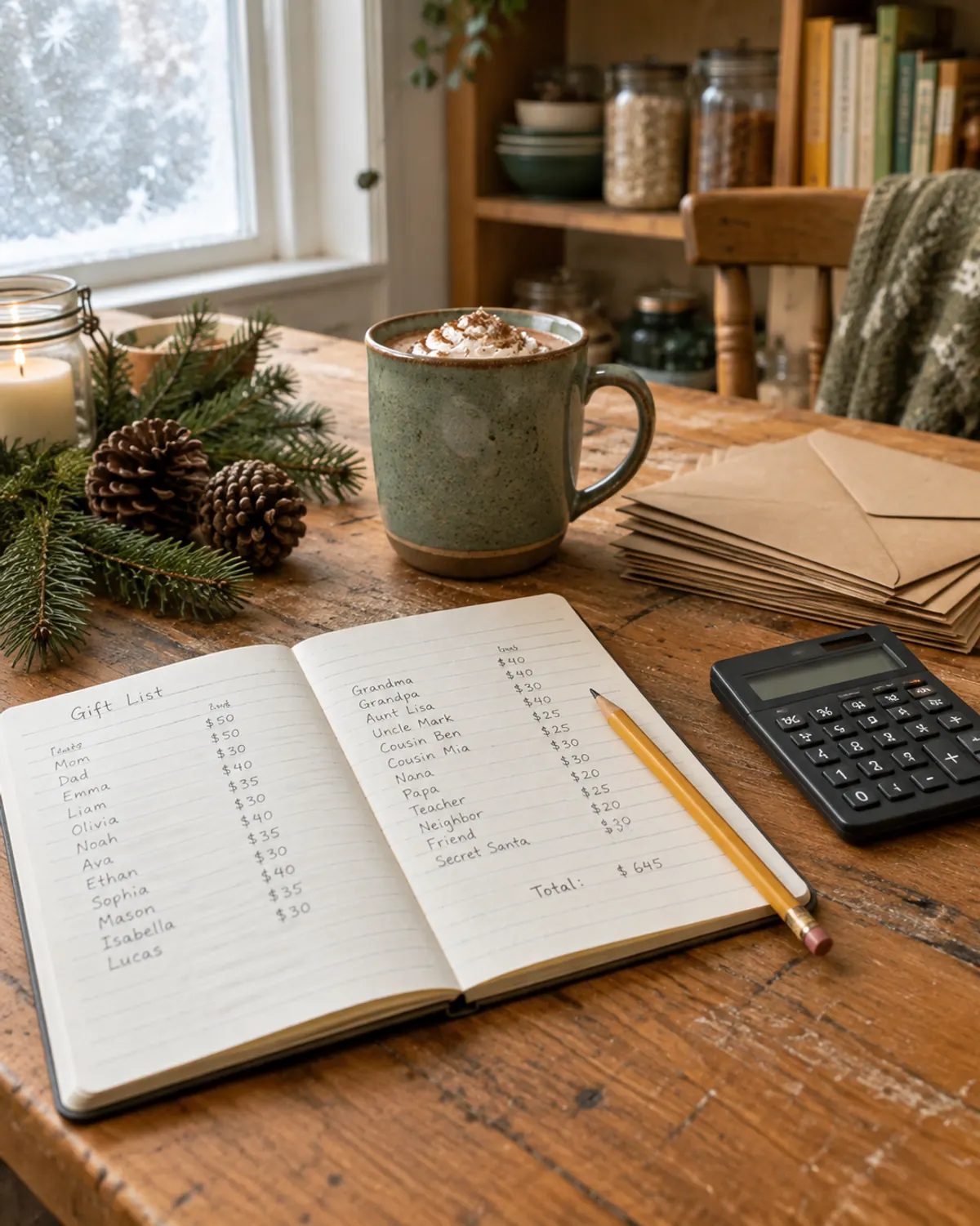
Write down every name. Include the easy-to-forget people: teachers, coworkers, a host you'll visit and the office gift exchange. A gift you didn't plan for is the fastest way to go over budget.
Sort names into tiers and give each tier a cap. Close family might get $25 to $40 each, friends and extended family $10 to $15, and "small thanks" people $5 or a homemade treat. These are examples, so set caps that fit your total.
Add two columns: idea and spent. Write a gift idea next to each name before you shop, then record what you actually paid. If one gift runs over, take it from the buffer and adjust another gift down.
Have the money talk early. October is a kind time to suggest a name draw for a big family, gifts for kids only, or a shared outing instead of presents. Raising it now gives everyone time to adjust before they start shopping.
12 Budget Christmas Gifts: Cheap and DIY Ideas
Thoughtful gifts don't need a big price tag. These ideas lean on time, skill and secondhand finds more than money. For work and neighbor lists, see our cheap Christmas gifts for friends and coworkers under $10, the Secret Santa ideas under $25 and the Christmas budget calculator to check your caps add up.
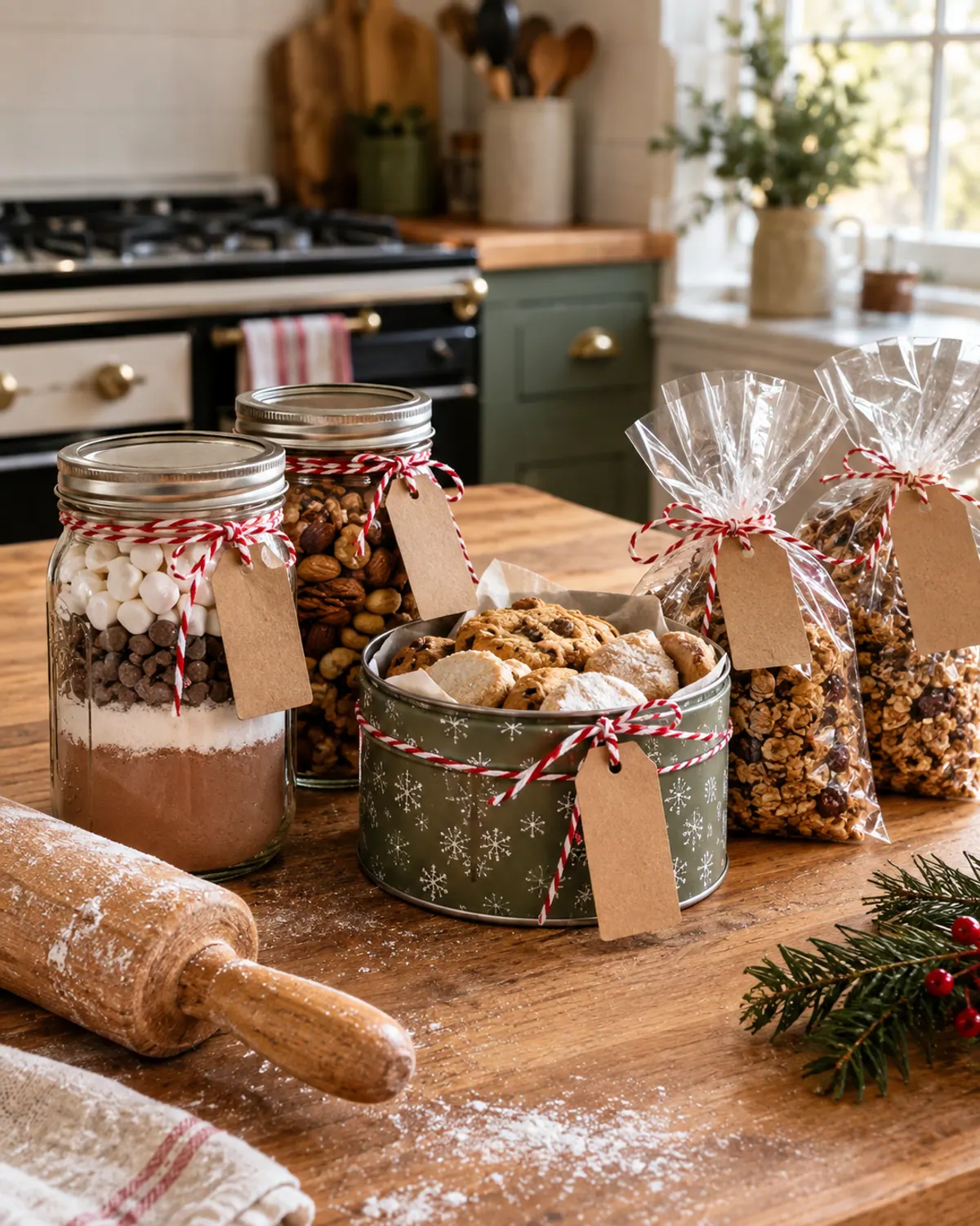
1. Homemade treats in jars or tins. Cookies, spiced nuts or a layered cocoa mix look lovely in a mason jar tied with twine. Stores often put baking staples on sale before the holidays, so stock up then.
2. A handwritten family recipe in a thrifted frame. A favorite recipe card in a grandparent's handwriting can mean more than anything from a store. Thrift stores usually have frames for a few dollars.
3. A cozy night in basket. Fill a thrifted basket with warm socks, a few tea bags, a secondhand paperback and a jar of popcorn kernels. It feels generous even when each piece is small.
4. Printed photos in a frame or small album. Most of our best photos live on our phones. Printing a handful and framing them is a cheap gift that families tend to keep for years.
5. A coupon book of your time. Offer a night of babysitting, a home-cooked dinner, a car wash or help with a project. For busy parents and older relatives, time is often the gift they want most.
6. Plant cuttings in thrifted pots. Pothos and spider plants grow easily from cuttings. Root a few in water this fall and pot them up in December.

7. A recorded story. Grandparents can record themselves reading a favorite picture book for faraway grandkids. It costs nothing and gets played again and again.
8. Secondhand books with a note inside. Pick a book you loved and write why on the inside cover. Library sales and thrift stores often price books at a dollar or two.
9. A thrifted mug, filled. Add cocoa packets, a candy cane and a handwritten tag to a mug that fits the person. It's a cheap, cheerful teacher or coworker gift.

10. A memory jar. Fill a jar with folded notes of favorite memories or reasons you love someone. It works well for a partner, a parent or a best friend.
11. A dress-up box for kids. Thrifted scarves, hats, old costumes and a few accessories in a decorated box can keep kids busy for hours. Kids often love open-ended play more than the newest toy.
12. One group gift. Instead of everyone buying small things, pool money for one item the person really wants. Fewer gifts, less wrapping and less waste.
Wrapping That Costs Almost Nothing
Plain brown kraft paper, cotton twine and a sprig of pine or rosemary look cozy and cost little. Kraft paper also works for kids' drawings, so little ones can decorate the wrap themselves.

Save gift bags, tissue and ribbon from this year, and fold them into a box for next year. Fabric scraps, old maps and sheet music pages from thrift stores make pretty wrap, too.
Simple supplies for a budget Christmas
-
Brown kraft wrapping paper roll
Often around $10 to $20
One big roll can wrap gifts, line shelves and become drawing paper for kids.
Check price on Amazon for Brown kraft wrapping paper roll -
Natural jute or cotton twine
Often around $5 to $10
Ties packages, hangs dried orange garland and lasts for several seasons.
Check price on Amazon for Natural jute or cotton twine -
Blank kraft gift tags
Often around $5 to $10 for a pack
Good for wrapped gifts and homemade treat jars, and easy to stamp or doodle on.
Check price on Amazon for Blank kraft gift tags -
Wide-mouth mason jars
Often around $12 to $25 for a case
Hold cocoa mix and cookies for gifts, then turn into candle or light jars for decor.
Check price on Amazon for Wide-mouth mason jars -
Warm white string lights
Often around $10 to $20
One strand in a jar, on a mantel or around a window does a lot of cozy work.
Check price on Amazon for Warm white string lights
Prices checked November 2026: these are typical ranges, not live quotes, and they change by store and week. Check what's already in your holiday bins before buying anything.
8 Ideas for Christmas Decor on a Budget
1. Bring nature inside. Pine branches, cedar, pine cones and bare twigs look beautiful on a mantel or table. Some tree lots give away trimmed branches, so it's worth asking.
2. Make a dried orange garland. Thin orange slices dried low and slow in the oven, strung with cinnamon sticks and pine cones, smell lovely and glow in a sunny window.

3. Thrift the warm pieces. Brass candlesticks, glass jars, baskets and old wooden boxes show up at thrift stores all year. Mismatched pieces look collected rather than cheap.
4. Use one strand of lights well. Coil warm white lights in a big glass jar, drape them along a window or tuck them into greenery. One glowing spot can make a whole room feel festive.

5. Restyle what you own. Move a lamp, stack books, fold a red throw over a chair and turn an old sweater sleeve into a stocking. Shop your own closets before any store.
6. Cut paper snowflakes. Printer paper and scissors turn into a window full of snow in one evening. It doubles as a free activity with kids.

7. Hang a kids' art gallery. Clip holiday drawings to a length of twine with clothespins. It's free, personal and changes as new art arrives.

8. Buy next year's decor after Christmas. Decor is often marked down after the holiday. Make a short list of what you missed this year and only buy what's on it.
Holiday Food Without the Holiday Bill
Holiday meals can quietly cost more than the gifts. Keep it simple: one main, two or three sides, one dessert and one special treat you look forward to all year.
Share the cooking. A potluck where each family brings a dish spreads the cost and the work. Assign dishes ahead of time so you don't end up with four pies and no vegetables.
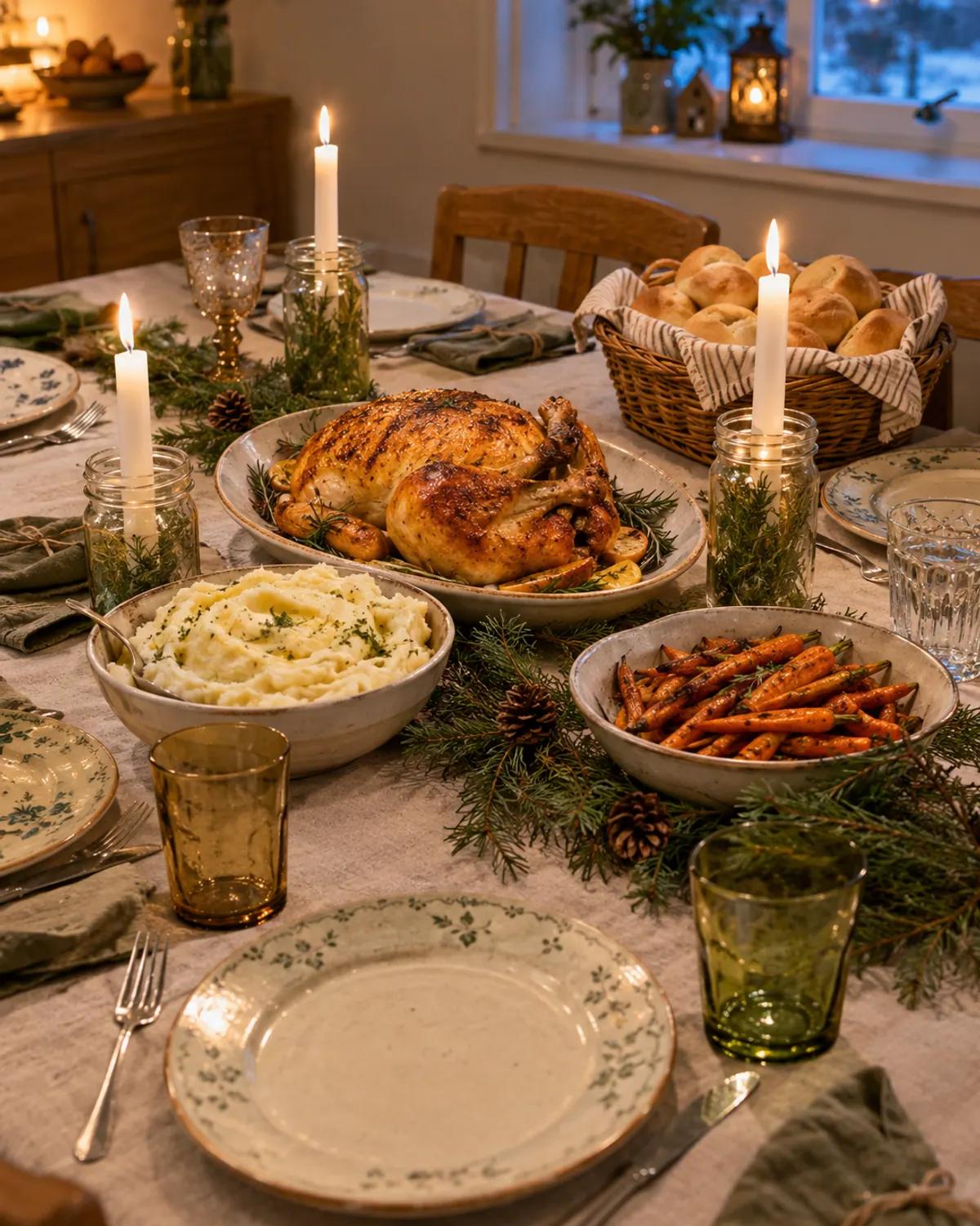
Shop the flyers early. Flour, sugar, butter and other baking staples often go on sale in November and December, and store brands work well for most of them. Plan leftovers into the next few days so nothing goes to waste.
For the weeks after the big day, our 7-day cheap meals on a budget plan turns one grocery list into a week of easy dinners. It's a gentle way to reset spending in January.
10 Cheap Christmas Ideas That Cost Nothing
Many of the moments people remember don't come with a receipt. These free traditions are worth starting this year.
1. A Christmas lights walk. Bundle up, fill a thermos with cocoa and walk the neighborhood to see the lights.
2. Library movie night. Borrow holiday movies and books for free and pile onto the couch.

3. Christmas Eve letters. Everyone writes a short note to each person in the family, and you read them together.
4. Caroling or a sing-along. Sing at a neighbor's door or just around the kitchen.
5. Free community events. Tree lightings, school concerts and library story times are often free.
6. A kindness countdown. Pick one small, free kind act for each day of December.

7. Game night with what you own. Dust off board games and cards for a Christmas Eve tournament.
8. A gratitude jar. Everyone adds notes through December, then you read them on Christmas Day.
9. A winter nature walk. Collect pine cones and branches for your decor along the way.
10. Paper crafts night. Make snowflakes, paper chains and ornaments from scrap paper with music on.
Your October to December Christmas Budget Timeline
Spreading the work and cost over three months is what makes Christmas on a budget feel calm. Tick these off as you go.
Christmas on a budget timeline
Your Last 6 Weeks Before Christmas
Christmas Day 2026 is a Friday, December 25, so the last 6 weeks start on Friday, November 13. Black Friday is November 27 and Cyber Monday is November 30. Here is the plan from now to the day.
Your 6 week countdown:
- Week of November 13: set your Christmas number, write every name on one list and put a cap beside each name.
- Week of November 20: check your holiday bins for decor and wrap, then buy only what is missing. Start slow gifts like plant cuttings.
- Week of November 27: Black Friday and Cyber Monday fall here. Write a target price for each gift first and buy only items already on your list.
- Week of December 4: finish any gift that has to ship, and check each store's shipping dates before you order.
- Week of December 11: plan the holiday menu, assign potluck dishes and make homemade treats.
- Week of December 18: wrap, do one grocery trip from a list and enjoy the free traditions. Write down what you spent for next year.
Want it all on one page? The Christmas Budget Planner 2026 has the paycheck plan, the gift caps and the spending log for these weeks. For more help with the number, see the Christmas budget calculator guide.
If Money Is Extra Tight This Christmas
Some years the number is very small, or zero, and that's okay. A smaller Christmas is still Christmas, and kids tend to remember time together more than the size of the pile.
Programs like Toys for Tots and the Salvation Army Angel Tree help families with gifts in many areas, and calling or texting 211 in the US can point you to local holiday help. Sign-up deadlines often fall in the fall, so check early.
Try not to let December create bills for January. If debt is already weighing on you, our financial disclaimer lists free and low-cost places to get personal help, including nonprofit credit counseling.
Want next Christmas to feel even easier? Starting a small holiday fund in January spreads the cost across the whole year. Browse our budgeting basics and frugal living tips for more cozy ways to keep spending in check.
Frequently asked questions
How much should I spend on Christmas?
There's no right number for everyone. Start with what you have saved plus what you can set aside before mid-December without missing bills, and make that your limit. Splitting it into gifts, food, decor and a buffer helps it last.
When should I start saving for Christmas?
The earlier the better, because more paychecks means smaller amounts from each one. October still works well for this year, and January is a good time to start a holiday fund for next year.
How do I tell my family I'm doing a budget Christmas?
Keep it simple and early. Suggest a specific idea, like a name draw, a price cap or gifts for kids only, so the conversation is about a fun plan rather than money worries.
What are good Christmas gifts under $10?
Homemade treats in a jar, a thrifted mug filled with cocoa, a secondhand book with a note, printed photos in a thrifted frame and plant cuttings in a small pot are all cheap Christmas ideas that feel personal.
How can I make Christmas special without spending money?
Lean on traditions: a lights walk, library movie nights, Christmas Eve letters, a kindness countdown and game nights. Free moments like these are often the ones families remember most.

Save it for later
Pin this to your Frugal Living Tips board so it's there when you need it.
Save to Pinterest