This post contains affiliate links. As an Amazon Associate we earn from qualifying purchases, at no extra cost to you. Read our disclosure.
Safety first: This is general money education, not personalised financial advice. Please read our financial disclaimer before you start.
Key takeaways
- Five bi weekly savings challenge charts cover $130 to $10,000, so you pick by paycheck size instead of forcing one number.
- Count your paychecks first: every two weeks is 26 (sometimes 27), twice a month is 24.
- Flat plans use 25 saving paydays plus a catch-up row, so one missed payday never breaks the chart.
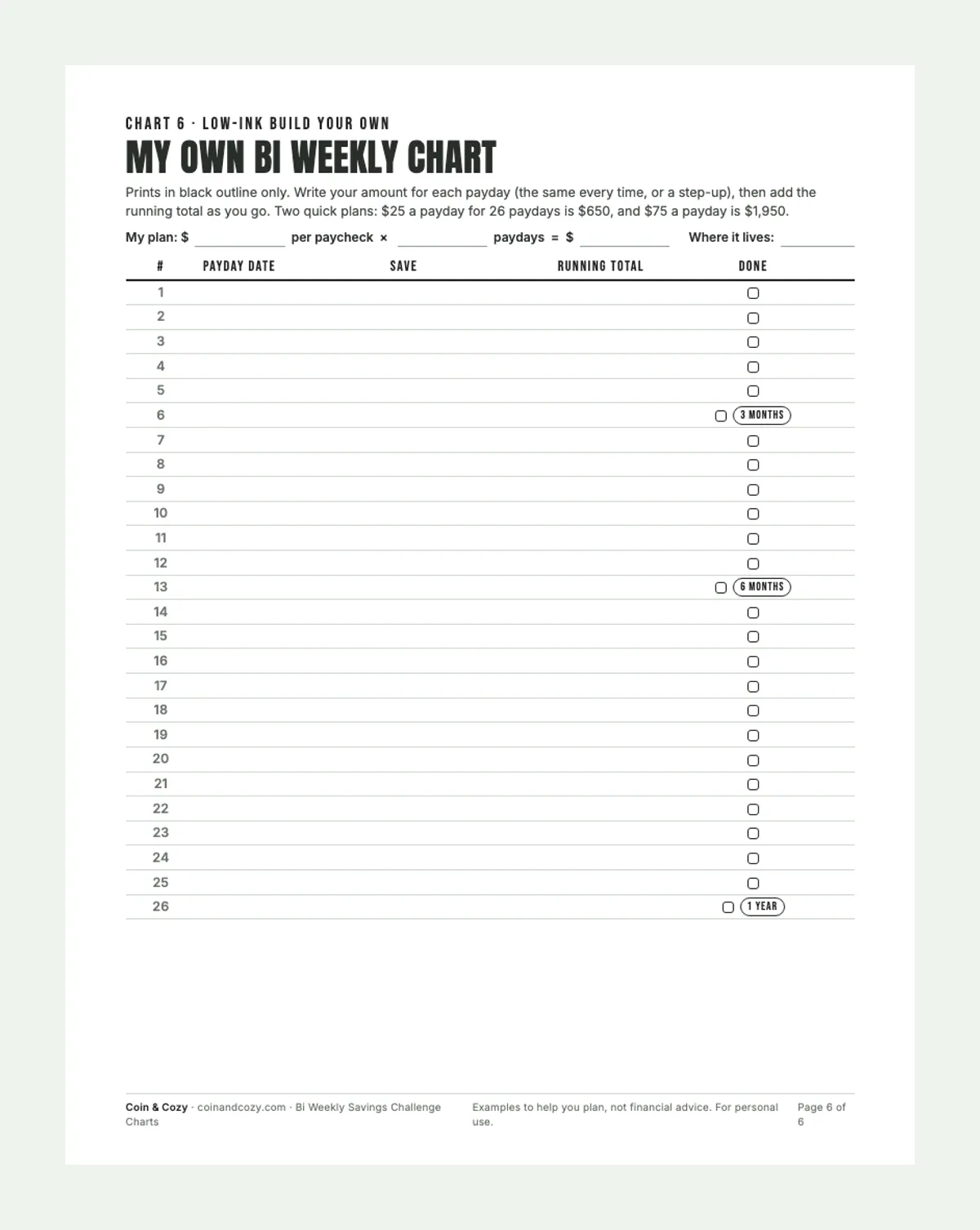
- Rows 6 and 13 are marked as 3 month and 6 month milestones for a shorter challenge.
- The free PDF has all five charts plus a low-ink build-your-own page.
In this post12 sections
- Bi Weekly Savings Challenge: 5 Charts for Every Paycheck
- 24, 26 or 27 Paychecks? Count Yours First (Example Math)
- The 5 Bi Weekly Savings Challenge Charts
- 1. Low Income Bi Weekly Savings Challenge: the $5 or $10 Flat Plan
- 2. The $1,000 Starter Emergency Fund ($40 a Paycheck)
- 3. The $2,600 Step-Up Challenge ($50 to $150)
- 4. Save $5,000 in 26 Paychecks ($200 a Paycheck)
- 5. Save $10k Bi Weekly ($400 a Paycheck): Who It Fits and Who Should Skip It
- Car and Holiday Fund Versions
- Bi Weekly Savings Challenge Mistakes That End the Chart by March
- Print the Charts: Free 100-Envelope Pack or the 2027 Bundle
- FAQ
Bi Weekly Savings Challenge: 5 Charts for Every Paycheck
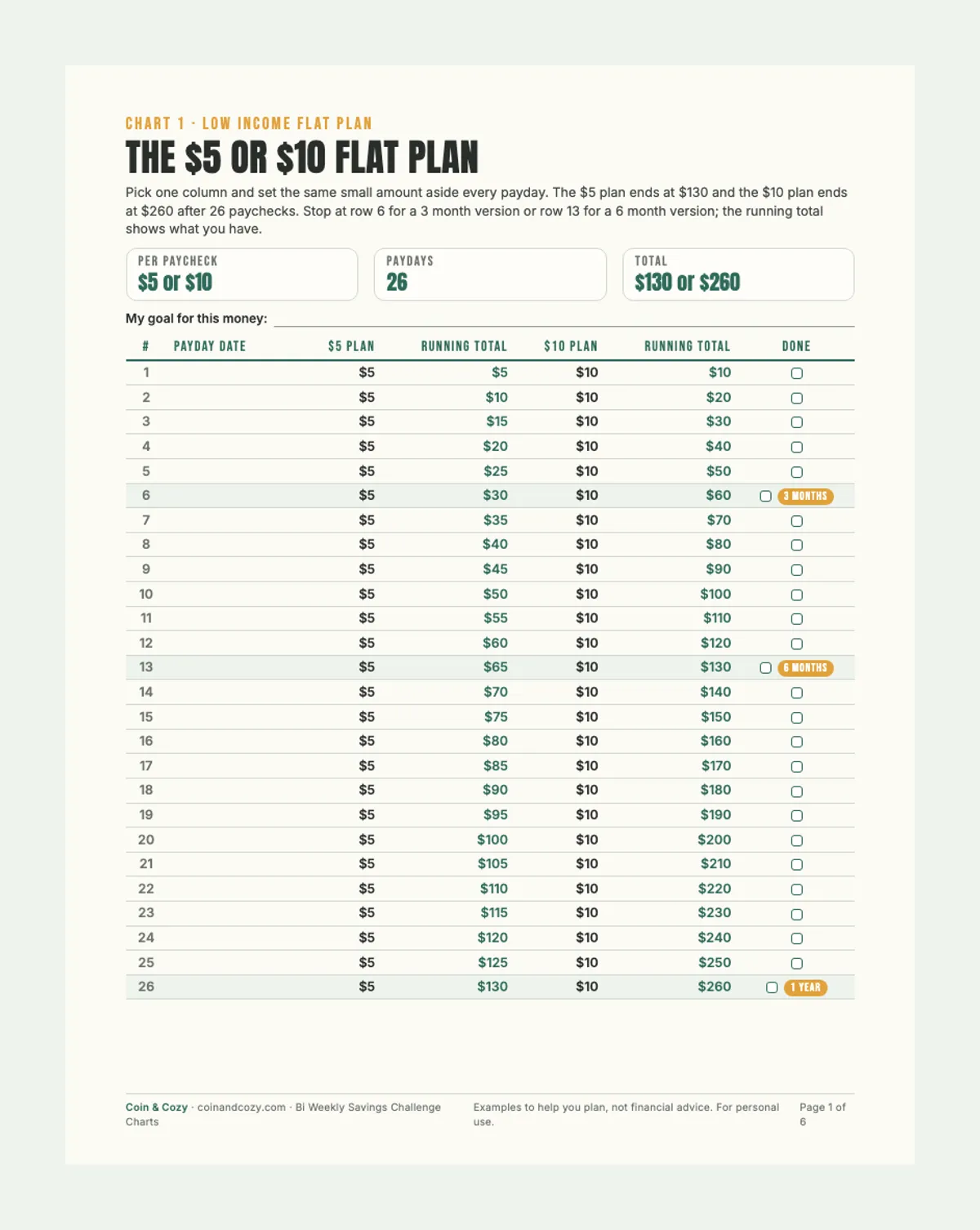
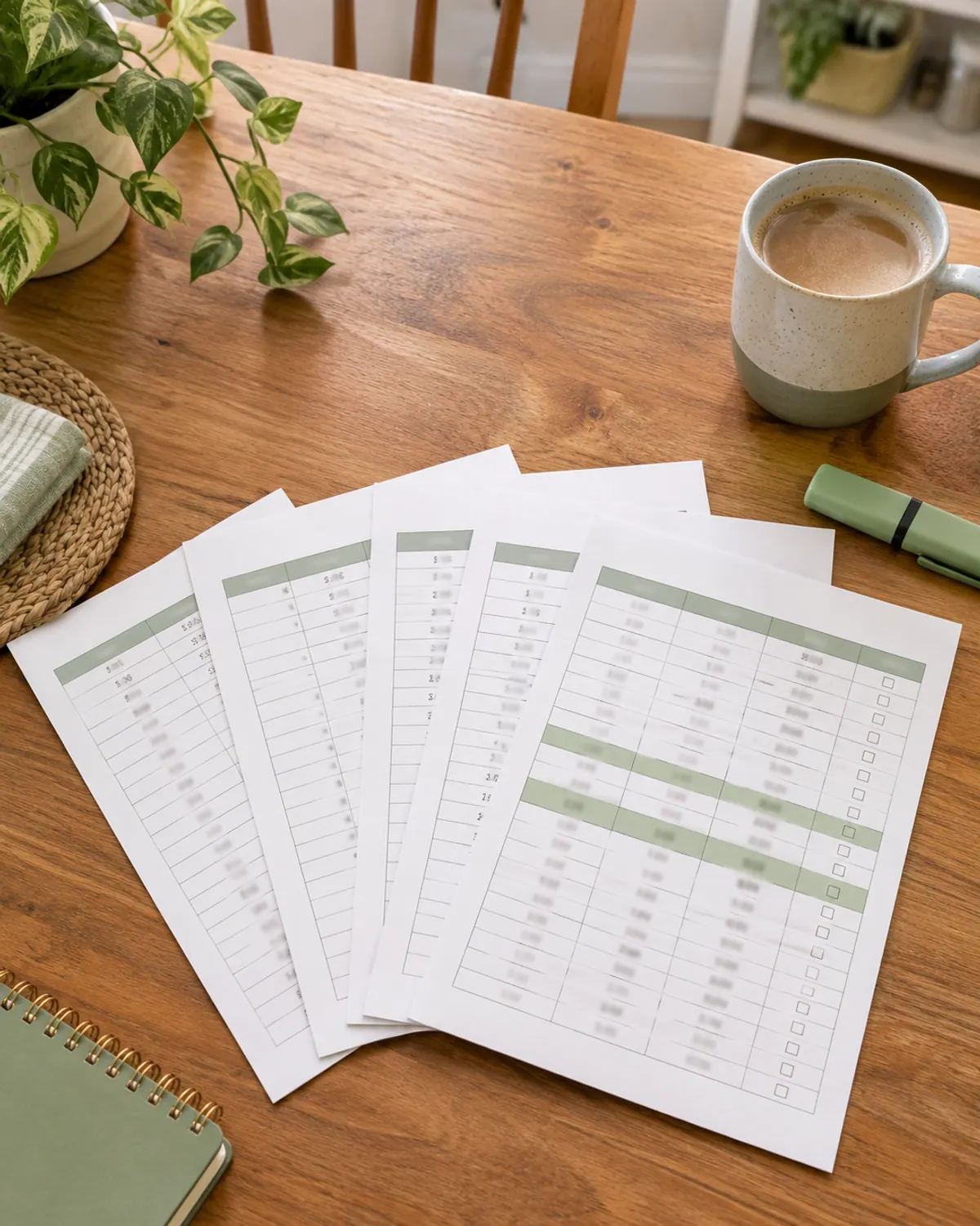
Here is the whole set in one place. Each chart has 26 paycheck rows, a blank for the payday date, the amount to save, the running total and a box to tick. The milestones at row 6 (3 months) and row 13 (6 months) let you run a shorter challenge on any chart without new math.
Download the free bi weekly savings challenge charts (PDF, 6 pages). No sign-up, prints on US Letter, and page 6 is a low-ink blank chart for a plan of your own.
| Chart | Per paycheck | Math | Total |
|---|---|---|---|
| 1. Low income flat plan | $5 or $10 | $5 x 26 or $10 x 26 | $130 or $260 |
| 2. Starter emergency fund | $40 | $40 x 25, plus a catch-up row | $1,000 |
| 3. Step-up challenge | $50 to $150 | $50 + $4 each payday, 26 rows | $2,600 |
| 4. Save $5,000 | $200 | $200 x 25, plus a catch-up row | $5,000 |
| 5. Save $10,000 | $400 | $400 x 25, plus a catch-up row | $10,000 |
If you already use the $5 step-up chart that saves $1,755, keep going with it. That one lives in our savings challenge printables post along with the 52 week and $10K versions, and we left it out here on purpose so the two pages don't repeat each other.
24, 26 or 27 Paychecks? Count Yours First (Example Math)
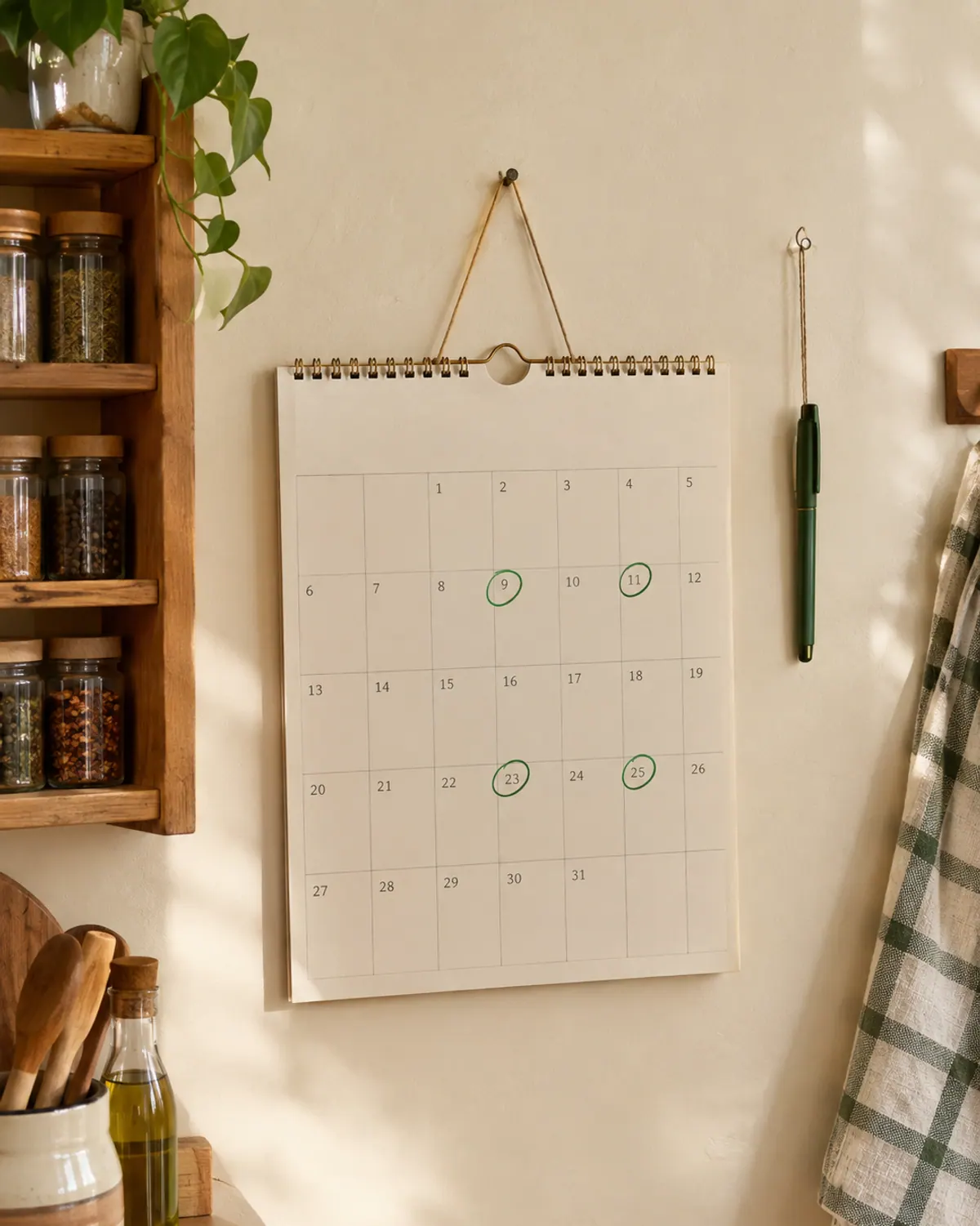
Before you pick a chart, check how many paychecks you really get in a year. "Bi weekly" means every two weeks, which is 26 checks most years and 27 in a year where the calendar lines up with an extra payday. "Semimonthly" means twice a month, on fixed dates like the 1st and 15th, which is always 24 checks.
| Pay schedule | Checks a year | $40 x checks | What to do on the chart |
|---|---|---|---|
| Every two weeks | 26 | $1,040 | Use all 26 rows; row 26 is your catch-up or bonus |
| Every two weeks, 27-check year | 27 | $1,080 | Add one extra deposit in the catch-up row |
| Twice a month (1st and 15th) | 24 | $960 | Use rows 1 to 24, then add the last deposit when you can |
| Every week | 52 | $2,080 | Save half the amount each week, or tick a row every second payday |
Your pay stub or payroll app will show the schedule. If you are paid every two weeks, count the Fridays between your first payday of the year and December 31. Two months a year will have three paydays, and that third check is the easiest extra deposit you will ever make.
The 5 Bi Weekly Savings Challenge Charts
1Low Income Bi Weekly Savings Challenge: the $5 or $10 Flat Plan
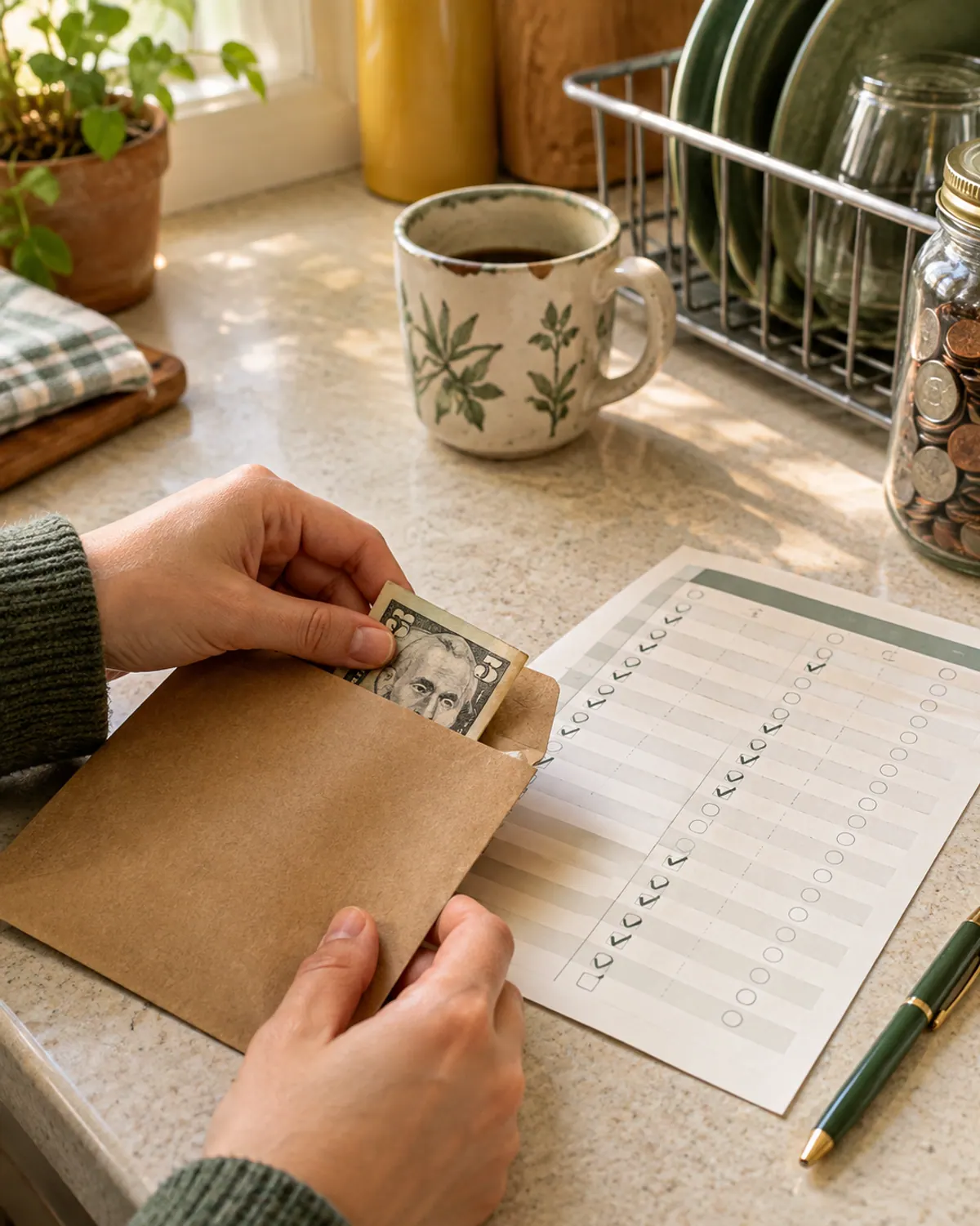
This is the chart for the months when the budget is already tight. You set the same small amount aside every payday, $5 or $10, and the chart does the rest. It sounds like nothing, and that is the point: a $5 deposit survives a car repair week, a birthday week and a week when the groceries ran high.
The chart has both columns side by side, so you can start on $5 and switch to $10 when a raise, a side gig or a paid-off bill opens up a little room. Stop at row 6 for a 3 month version or row 13 for 6 months, and the running total shows what you have.
- Total saved: $130 on the $5 plan, $260 on the $10 plan, after 26 paychecks (example).
- Per paycheck: $5 or $10, never more.
- Best for: anyone who has quit a bigger chart before. Finishing this one is the win.
A wallet with a labeled savings pocket keeps the $5 separate from grocery cash the moment you get paid.
2The $1,000 Starter Emergency Fund ($40 a Paycheck)

A $1,000 cushion is the goal most budgeting guides suggest first, because it covers the flat tire or the urgent-care visit that would otherwise go on a card. This chart gets there with $40 a payday for 25 paydays.
Row 26 is a catch-up row. If you missed a payday in July, you use row 26 to make it up. If you didn't miss one, you are done two weeks early. For twice-a-month pay, rows 1 to 24 take you to $960, and the last $40 can come from a refund or a no-spend week.
- Total saved: $1,000 after 25 deposits of $40 (example).
- Catch-up row: row 26, for a missed payday or an early finish.
- Where to keep it: a separate savings account, so a small emergency doesn't become a card balance. Our save $1,000 in 30 days plan is the fast version if you need the cushion sooner.
The zip pockets hold cash for the first few months, and the chart slides into the front sleeve where you see it on payday.
3The $2,600 Step-Up Challenge ($50 to $150)
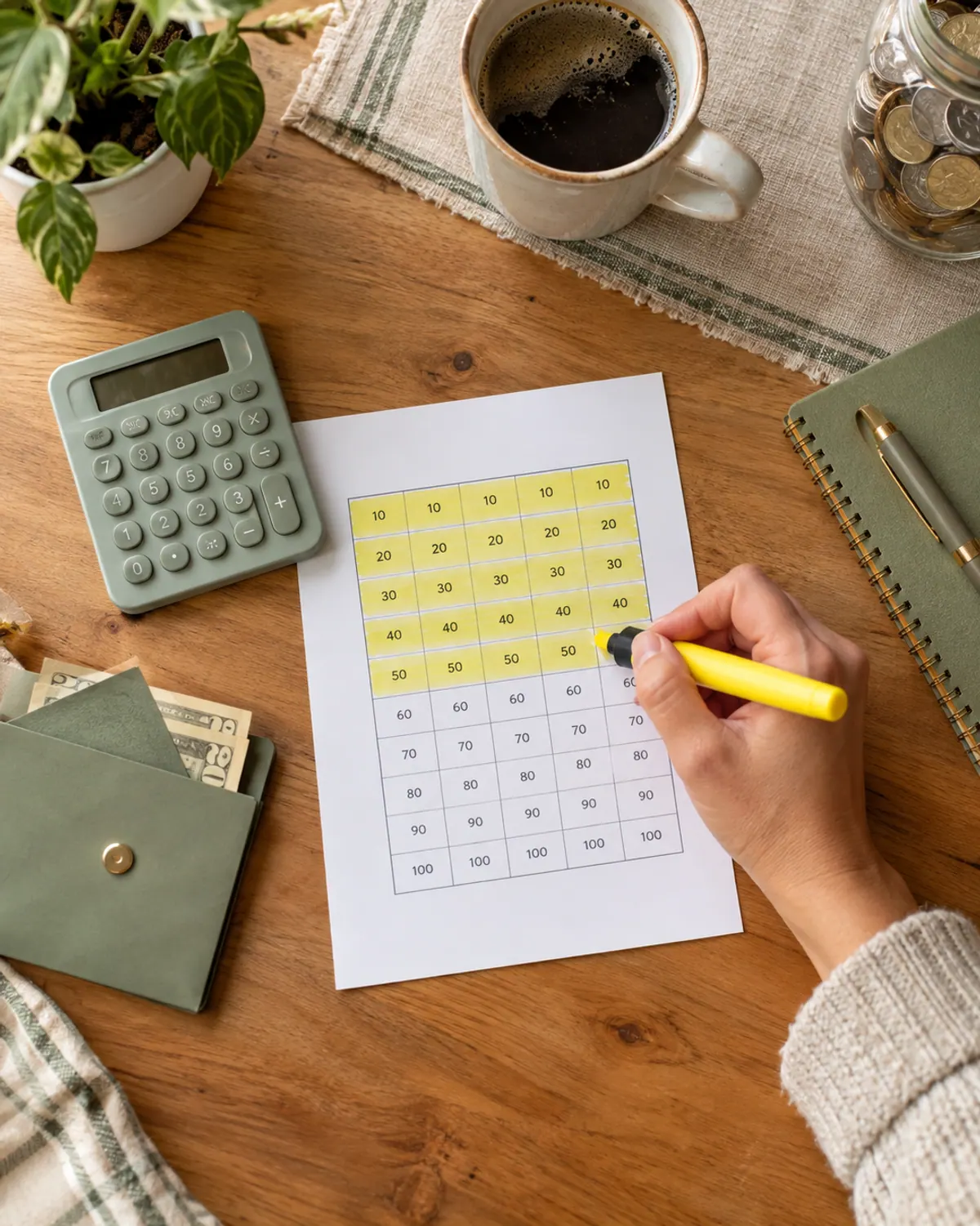
This is the only chart in the set where the amount grows. You start at $50 on payday 1 and add $4 every payday, so payday 2 is $54, payday 3 is $58, and payday 26 is $150. The 26 deposits add up to $2,600.
The math is a simple pattern: 26 x $50 is $1,300, and the $4 steps add 4 x (0 + 1 + 2 ... + 25), which is 4 x 325 = $1,300. Together that is $2,600. Step-ups work well for a raise year, or when you expect a bill like a car loan to end mid-year.
- Total saved: $2,600 after 26 deposits (example).
- Per paycheck: $50 at the start, $150 at the end, up $4 each time.
- If a bump feels too big: swap that row with an earlier one and keep going. The total doesn't change.
A dot on each finished row is faster than coloring and makes the chart readable from across the kitchen.
4Save $5,000 in 26 Paychecks ($200 a Paycheck)

This is the chart most people search for, and the honest version is $200 a payday for 25 paydays, with row 26 as the catch-up. $5,000 covers a used-car down payment, a move, or a real emergency fund for a family of four.
At this size, keep the money in a separate savings account rather than cash. It is too much to have in a drawer, and a high-yield savings account at an FDIC-insured bank keeps it safe while it grows a little. The chart still works the same: a row per payday, a running total, a tick.
- Total saved: $5,000 after 25 deposits of $200 (example).
- Catch-up row: row 26.
- Reality check: $200 a paycheck is $400 a month. If that number makes you wince, run chart 3 or chart 2 this year and come back to this one.
5Save $10k Bi Weekly ($400 a Paycheck): Who It Fits and Who Should Skip It

The $10k chart is $400 a payday for 25 paydays plus the catch-up row. It fits two-income households, anyone with a bill that just ended, or a family saving for a house down payment with a firm date.
It does not fit a budget that is already tight, and that is fine. The $5,000 chart run twice lands in the same place over two years, and the running total on this chart doubles as a 2 year tracker if you tick a row every other payday. The chart is in the free PDF either way, so you have it when the time is right.
- Total saved: $10,000 after 25 deposits of $400 (example).
- Per paycheck: $400, which is $800 a month.
- Skip it if: you would have to skip a bill or a grocery run to make a deposit. A smaller chart you finish beats a big one you quit.
Car and Holiday Fund Versions
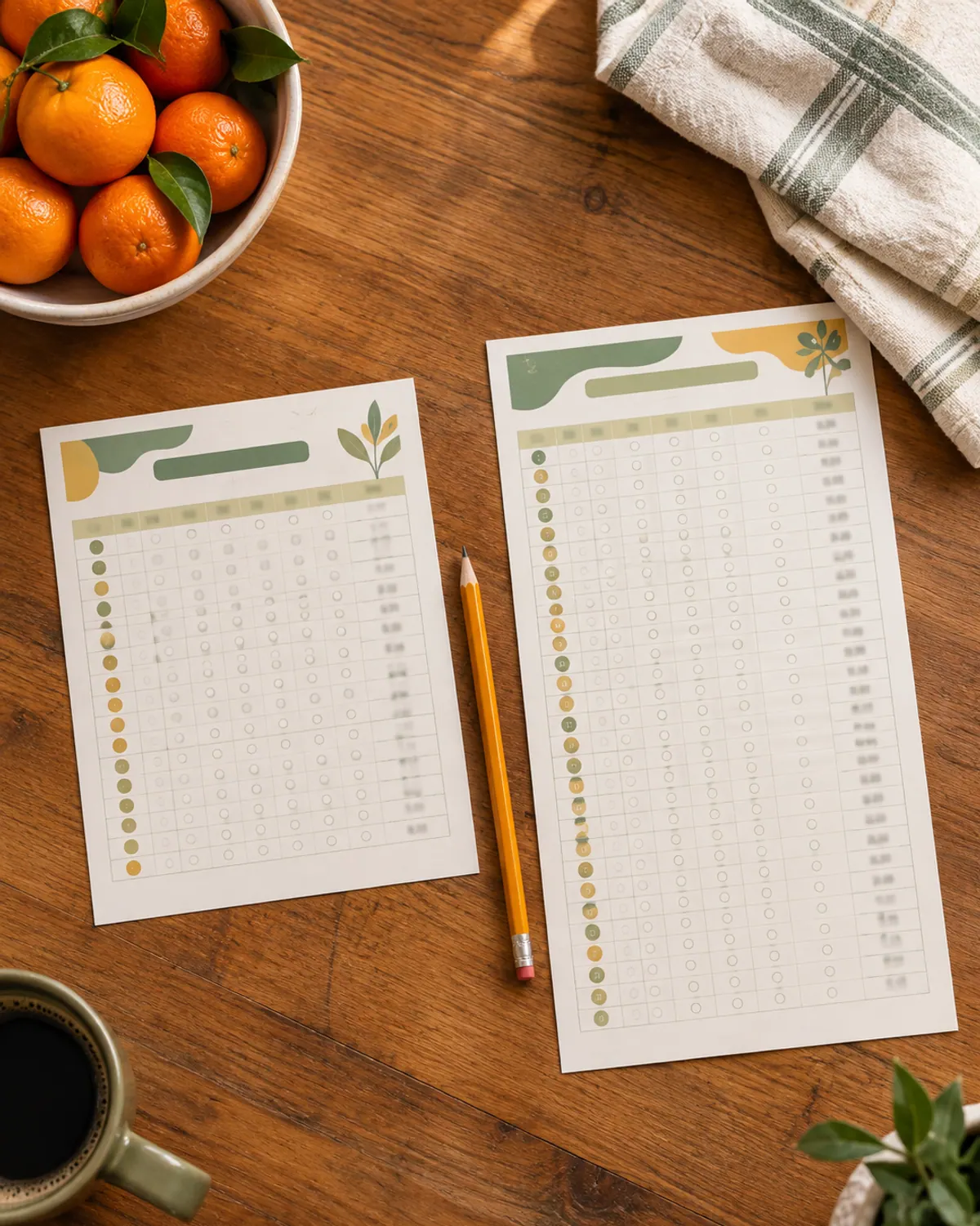
The five charts are not only for emergency funds. Write the goal on the line at the top of the chart and the same rows become a car fund, a Christmas fund or a vacation fund. The milestone rows make it easy to match a chart to a deadline.
| Goal | Chart | Stop at | You have |
|---|---|---|---|
| Christmas 2027 fund, starting in January | Chart 2 ($40) | Row 24, early December | $960 |
| Christmas fund on a tight budget | Chart 1 ($10) | Row 24 | $240 |
| Car repair cushion by summer | Chart 3 (step-up) | Row 13, 6 months | $962 |
| Used-car down payment in a year | Chart 4 ($200) | Row 25 | $5,000 |
| Spring break trip, 3 months out | Chart 2 ($40) | Row 6 | $240 |

If Christmas is the goal, start the chart in January and your December paychecks are free for the actual shopping. Our Christmas on a budget guide shows what a planned holiday looks like once the fund exists.
Bi Weekly Savings Challenge Mistakes That End the Chart by March
Counting 26 paychecks when you get 24. Twice-a-month pay means two fewer rows. Plan for 24 from the start and the chart still ends on time, just $80 lighter on the $40 plan.
Picking the chart by the total instead of the deposit. $5,000 looks great on a pin. $200 every other Friday is what you actually live with. Choose the deposit you could make in a bad month.
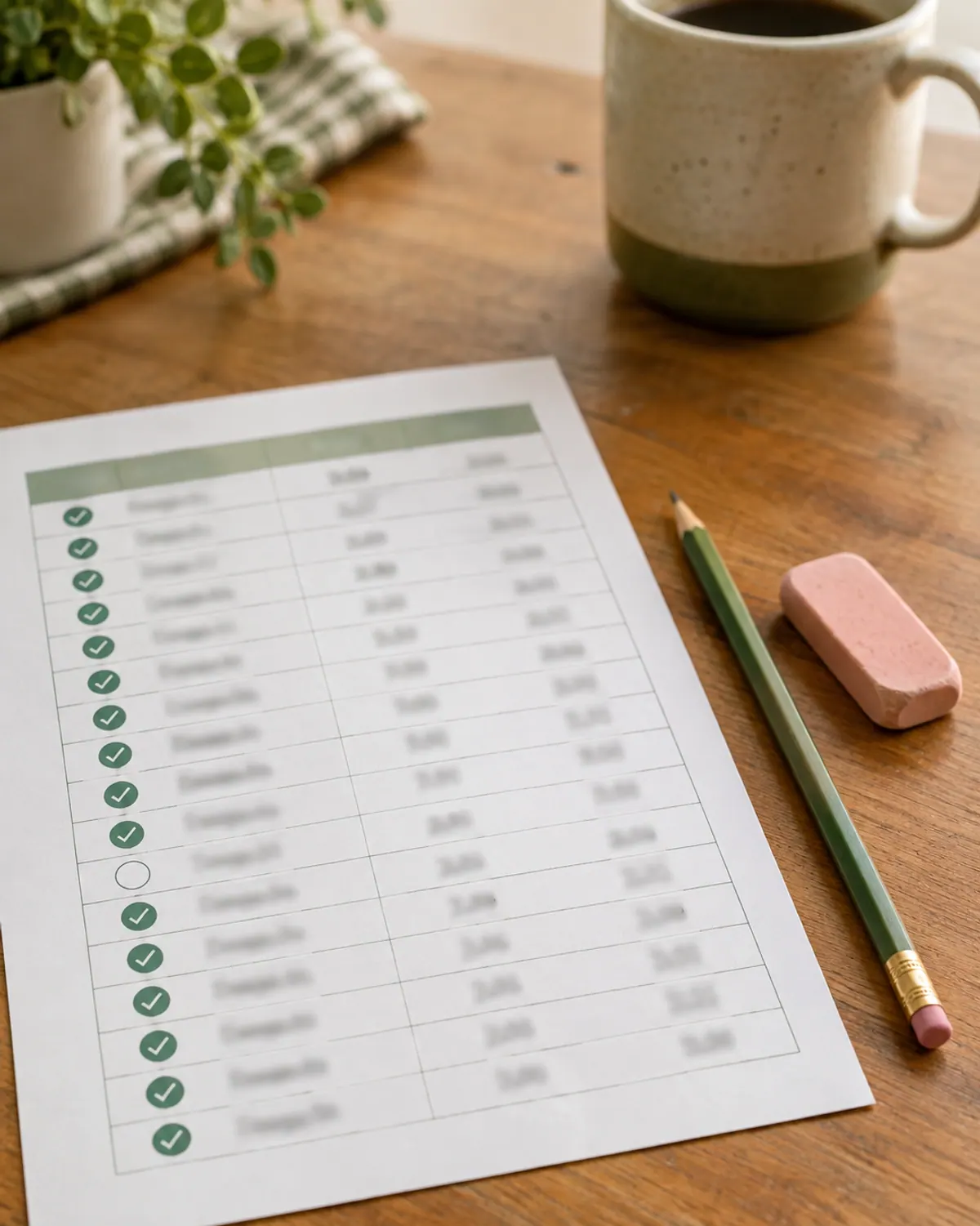
Restarting after a missed payday. Every flat chart in the set has a catch-up row for this. Skip the row, keep ticking, and fill it at the end.
Saving from what's left. Move the deposit on payday morning, before groceries and gas. On the small charts that is a $5 transfer; it takes ten seconds and it is the whole habit.
Bi weekly savings challenge starter checklist
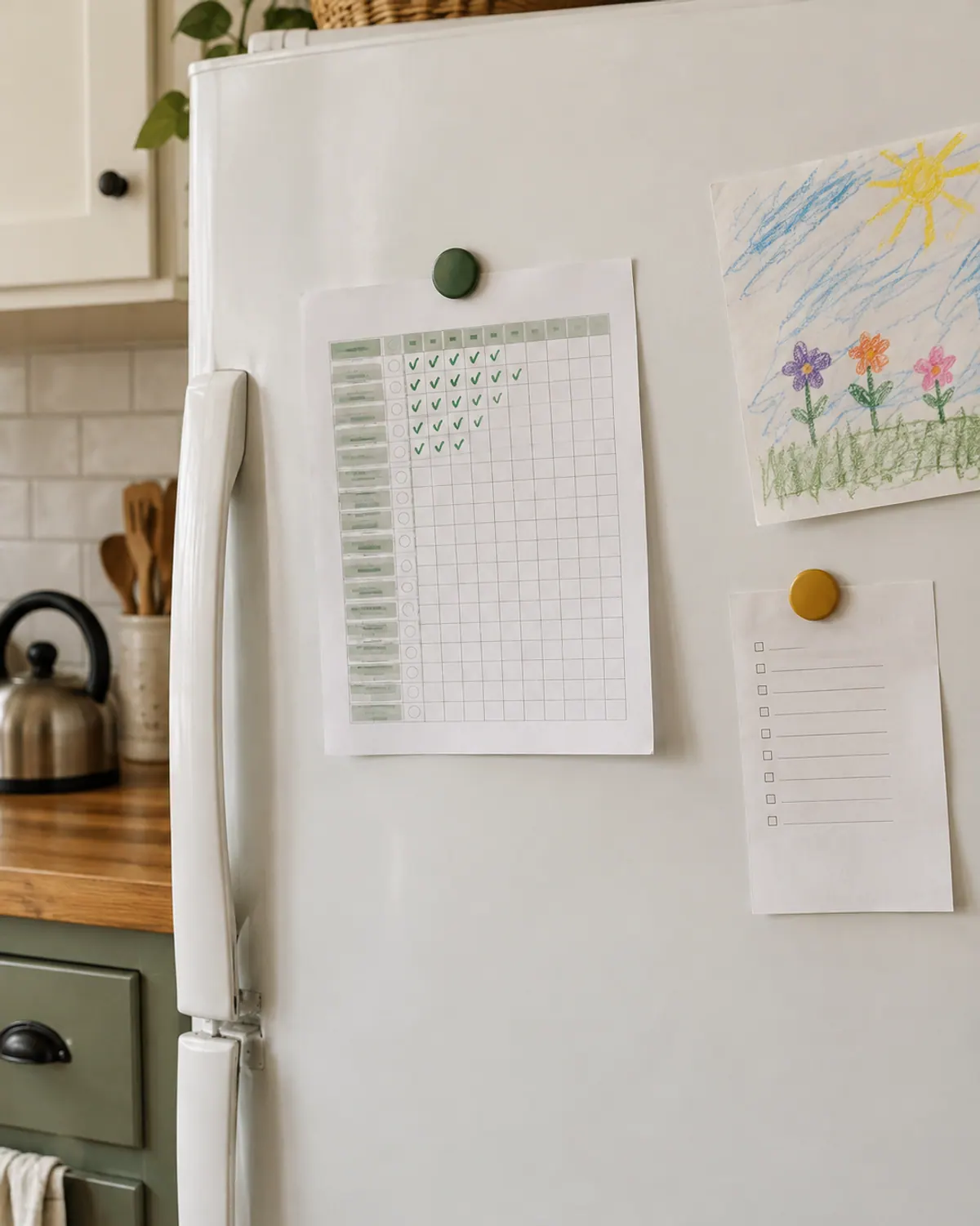
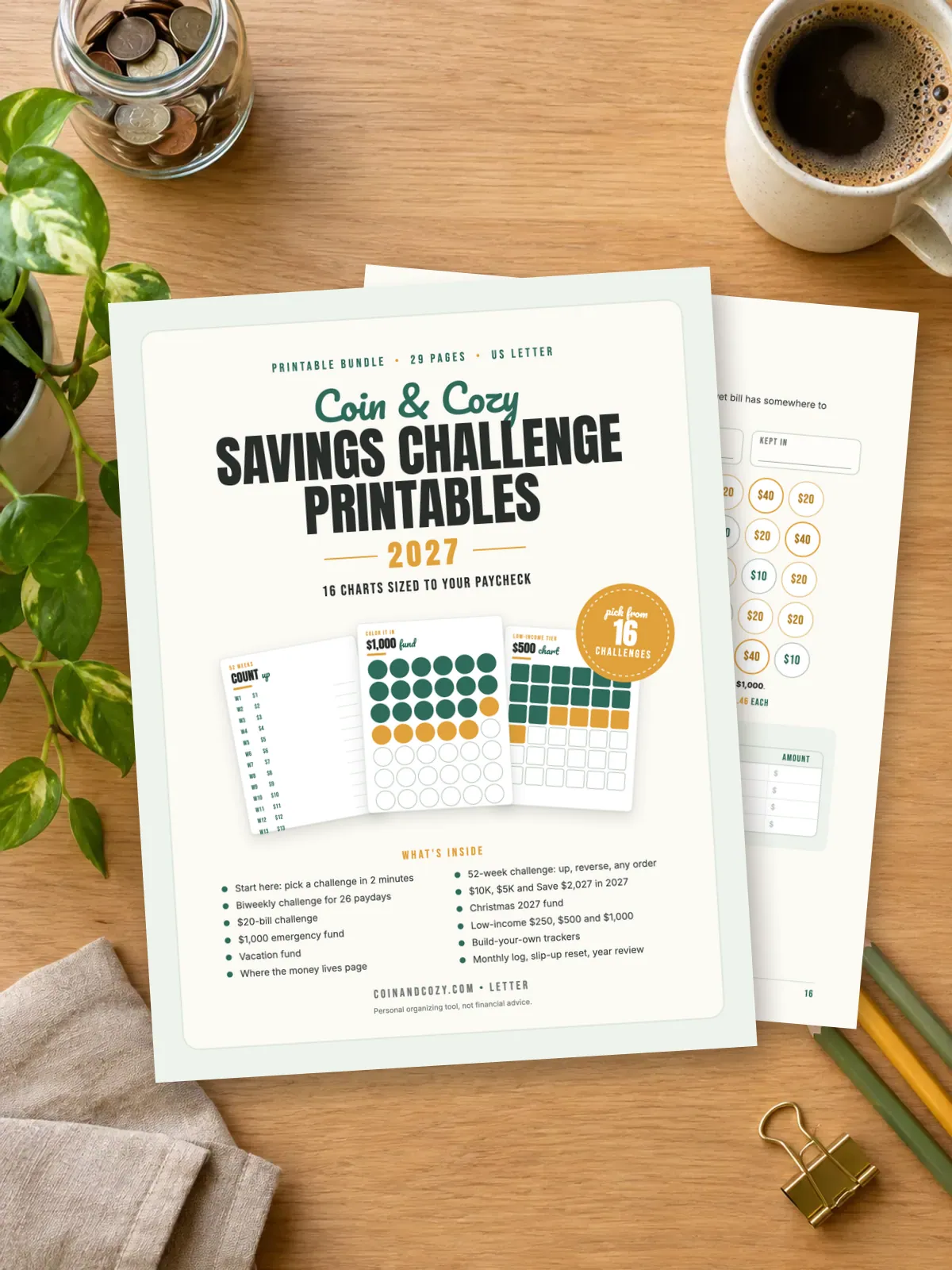
Want more than five? Our 2027 bundle has 20 charts, including the 52 week classic and reverse, $250, $500 and $1,000 small-box charts, a Christmas 2027 fund and a paycheck chooser that points you to the chart that fits. Paid bundles of three bi weekly charts sell for about the same price elsewhere; this one has 29 pages in four sizes, including A6 for planner inserts.
Print the Charts: Free 100-Envelope Pack or the 2027 Bundle
Print the free charts on plain paper from any home printer. The low-ink page prints in black outline, and every page fits US Letter; on A4, choose "fit to page". A clear sheet protector and a dry-erase marker turn one printout into a chart you can reuse for a second goal.
Simple supplies for a bi weekly savings challenge
-
Cash envelope wallet with labeled pockets
Typically $10 to $25
A wallet with a labeled savings pocket keeps the $5 separate from grocery cash the moment you get paid.
Check price on Amazon for Cash envelope wallet with labeled pockets -
A6 savings challenge binder with zip pockets
Typically $12 to $22
The zip pockets hold cash for the first few months, and the chart slides into the front sleeve where you see it on payday.
Check price on Amazon for A6 savings challenge binder with zip pockets -
Colored sticker dots for marking paydays
Typically $4 to $8
A dot on each finished row is faster than coloring and makes the chart readable from across the kitchen.
Check price on Amazon for Colored sticker dots for marking paydays -
Large glass coin jar with lid
Typically $10 to $20
For the $5 and $10 plans, a jar on the counter makes a small habit visible to the whole family.
Check price on Amazon for Large glass coin jar with lid

If you'd rather start with envelopes than rows, the free Cozy Savings Challenge Pack below has the 100 envelope chart ($5,050), a 50 envelope version ($1,275), a 30 day no-spend tracker and a goal thermometer. Pair it with the no spend January rules and the first few deposits find themselves.
Pick one chart, write the goal on the top line, and tick row 1 on your next payday. The chart will do the deciding after that.
Frequently asked questions
How much do you save with a bi weekly savings challenge?
It depends on the chart. In the free set here, the $5 flat plan saves $130, the $10 plan saves $260, the $40 plan saves $1,000, the $50 to $150 step-up saves $2,600, the $200 plan saves $5,000 and the $400 plan saves $10,000, all over 26 paydays. These are examples, not financial advice.
How many paychecks are in a biweekly year?
Paid every two weeks, you get 26 paychecks in most years and 27 in a year where the calendar adds an extra payday. Paid twice a month on set dates, you always get 24. Count yours before you pick a chart, and use the catch-up row to handle the difference.
What is the best bi weekly savings challenge for low income?
A flat plan with a small deposit you can make in a hard month, such as $5 or $10 every payday. It saves $130 or $260 in a year, and the habit of moving money on payday matters more than the total. You can switch to a bigger chart when there is room.
How do I save $5,000 in 26 paychecks?
Save $200 every payday for 25 paydays and use the 26th row as a catch-up for any missed deposit. That is $400 a month. If that is too much right now, the $2,600 step-up or the $1,000 chart gets the habit started, and you can run the $5,000 chart over two years by ticking a row every other payday.
What is the 26 week savings challenge?
It is another name for a bi weekly savings challenge: one deposit every two weeks for a year, which is 26 deposits. Any of the five charts on this page is a 26 week challenge, and the milestone rows at 6 and 13 give you 3 month and 6 month versions.
Is biweekly or semimonthly pay 26 or 24 checks?
Biweekly (every two weeks) is 26 checks a year, occasionally 27. Semimonthly (twice a month, like the 1st and 15th) is 24 checks. The charts work for both; semimonthly savers use rows 1 to 24 and add the last deposit when they can.
Save it for later
Pin this to your Savings Challenges board so it's there when you need it.
Save to Pinterest