This post contains affiliate links. As an Amazon Associate we earn from qualifying purchases, at no extra cost to you. Read our disclosure.
Safety first: This is general money education, not personalised financial advice. Please read our financial disclaimer before you start.
Key takeaways
- Pick the challenge by the amount you can spare on a bad week, not a good one; $5 a week kept for a year beats $50 a week abandoned in March.
- Flat-amount challenges ($1 a day, $25 a paycheck) are easier on a tight budget than climbing charts, which get heavy at the end.
- Biweekly challenges fit most hourly pay: $25 every paycheck is $650 a year, and $600 of it is in hand before December 1.
- Short challenges with a visible finish ($100 in 12 weeks, $250 in 10 weeks) build the habit before you try a year-long chart.
- Keep the money out of checking: a jar, a labeled envelope or a bank bucket with no debit card attached.
In this post26 sections
- How to Pick a Savings Challenge on a Low Income (Start With the Amount, Not the Goal)
- Daily Challenges Under $5 a Day
- 1. The $1 a Day Challenge ($365 a year)
- 2. The Penny Challenge ($667.95 in a year)
- 3. The $5 Weekday Challenge ($1,300 a year)
- Weekly Savings Challenges for Low Income ($5 to $20 a Week)
- 4. The $5 a Week Challenge ($260 a year)
- 5. The $10 a Week Challenge ($520 a year)
- 6. The Low Income 52 Week Challenge, Capped at $26 ($702)
- 7. The 12 Week $100 Challenge ($8.33 a week)
- Per-Paycheck Challenges (Bi Weekly and Monthly)
- 8. The $25 Biweekly Challenge ($650 a year, $600 by December 1)
- 9. The $50 Biweekly Challenge ($1,300 a year)
- 10. The $10 Step Monthly Challenge ($780 a year)
- Mini Challenges: $100, $250 and $500 Goals
- 11. $250 in 10 Weeks ($25 a week)
- 12. The 50 Envelope Challenge ($1,275)
- 13. $500 in 100 Days ($5 a day)
- Low Income Christmas Savings Challenge and the Spare Change Jar
- 14. The Low Income Christmas Challenge ($12.50 biweekly, $300 by December 1)
- 15. The Round-Up and Spare Change Jar (about $15 to $40 a month)
- Which Challenge Fits Which Budget (Comparison Table)
- Savings Challenge Mistakes on a Tight Budget
- Bonus: The Chart Math at a Glance
- Print the Low Income Versions: Free Pack or the 2027 Bundle
- FAQ
How to Pick a Savings Challenge on a Low Income (Start With the Amount, Not the Goal)
Most savings challenge charts start from a goal ($1,000, $5,000) and work backward to a weekly amount that quietly assumes slack you may not have. On a low income the order is reversed: start with the amount that survives your worst week, then see what it adds up to. If $5 a week is the honest number, there is a challenge here for it, and the total is still real money.
The 15 challenges are grouped by rhythm: daily, weekly, per paycheck, short mini goals, and two for Christmas and spare change. Each one lists the amount, the total and who it fits. Where a sister post already has the full chart, we link to it instead of repeating the math.

Daily Challenges Under $5 a Day
1The $1 a Day Challenge ($365 a year)

One dollar into a jar every day. It sounds too small to matter, and that is exactly why it works on a tight budget: nobody misses a dollar, and the jar holds $365 by the end of the year. If you are paid in cash, drop the bill in when you get home; if not, move $7 once a week instead.
- Use a tracker with 365 boxes or a calendar and cross off each day; the streak is the motivator, not the amount.
2The Penny Challenge ($667.95 in a year)

Save one cent on day 1, two cents on day 2, and so on, adding a penny each day. Day 365 is $3.65 and the year totals $667.95. The first six months cost almost nothing (under $1 a day until day 100), which makes it one of the easiest savings challenges to start on a low income. The last month is $3.36 to $3.65 a day, so plan for it to feel heavier in December.
- Move it to a bank bucket weekly so you are not storing hundreds of coins; the chart still works in digital cents.
3The $5 Weekday Challenge ($1,300 a year)
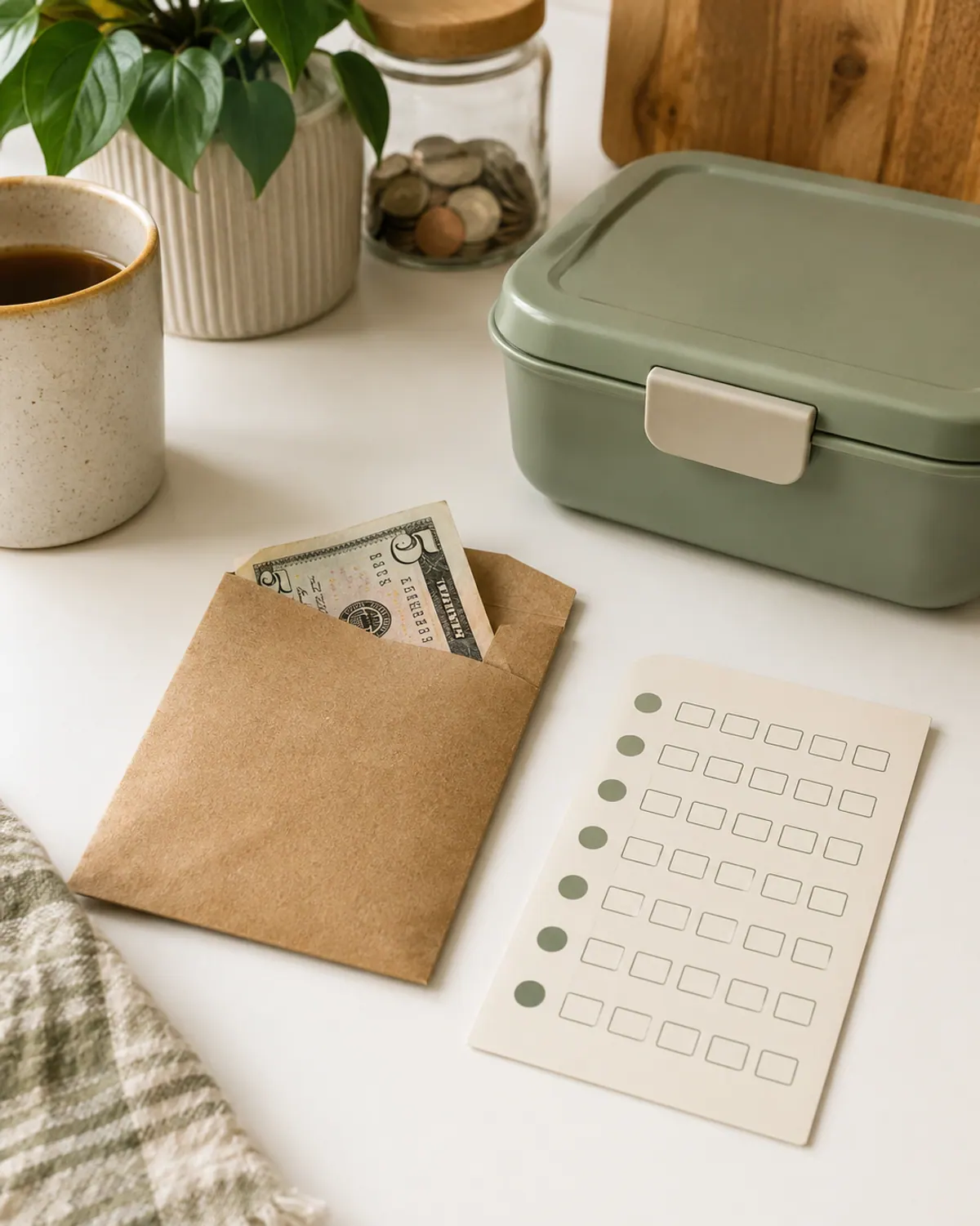
Save $5 on each weekday and nothing on weekends: $25 a week, $1,300 in 52 weeks. This is the top end of under $5 a day, so it suits a household that has already cut the three leaks (subscriptions, fees, convenience food) and wants the biggest total on this list. If a week gets tight, skip the Friday and keep going rather than quitting.
- Pair it with a packed lunch rule: the $5 that used to go to the gas station lunch is the $5 that goes in the envelope.
Weekly Savings Challenges for Low Income ($5 to $20 a Week)
4The $5 a Week Challenge ($260 a year)
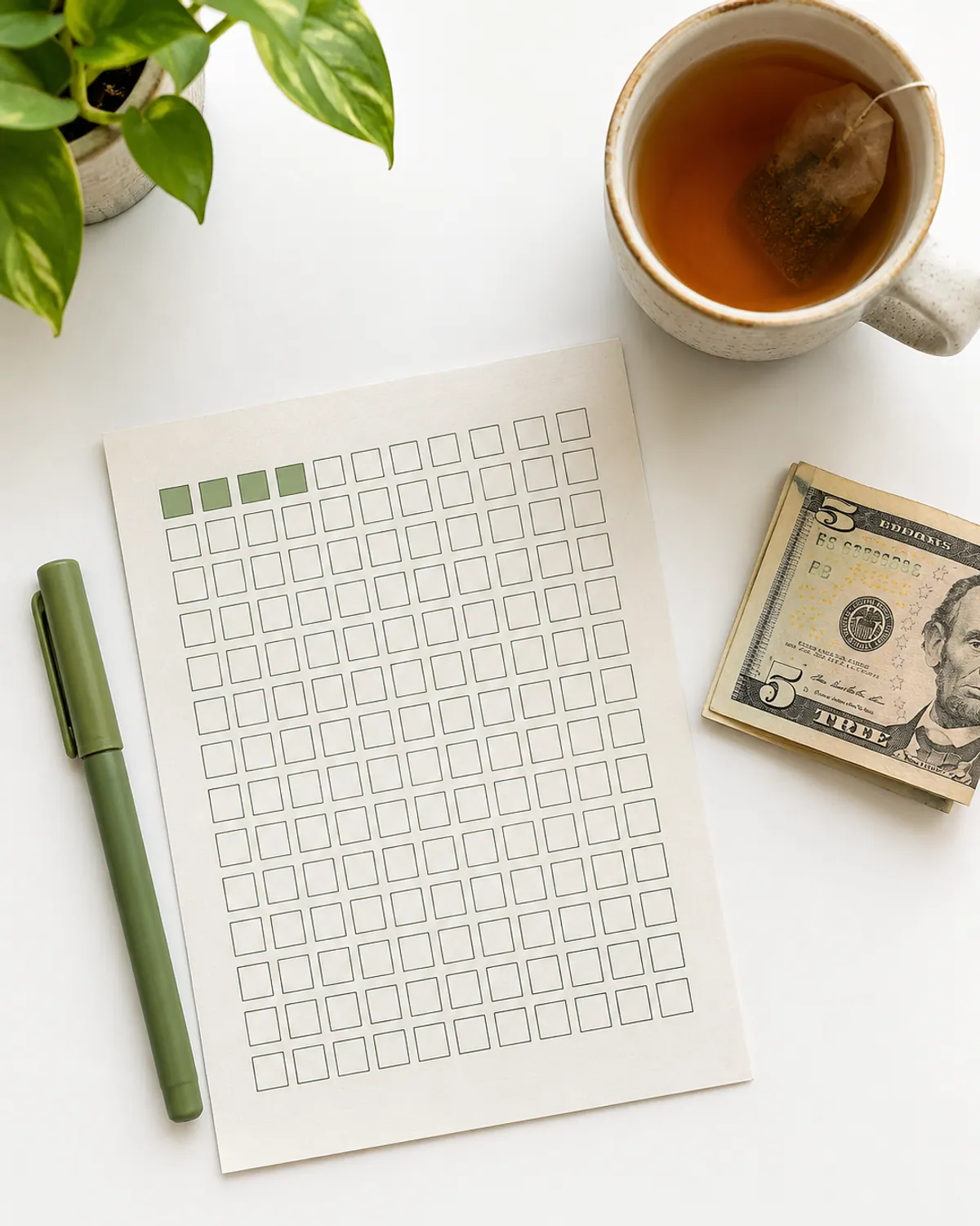
The honest floor. Five dollars a week is the challenge for the months when every other plan has failed, and $260 at the end of a year is a car registration, a winter coat or the start of a $500 starter fund. The point is not the total; it is proving to yourself that a chart can survive your budget for 52 weeks.
- Color the box on the same day each week, right after payday, before groceries.
5The $10 a Week Challenge ($520 a year)

Double the floor and the total doubles to $520, which clears the $500 starter emergency fund with a little left over. A flat $10 is easier to keep than a climbing chart that averages $10 because it never asks for $26 in a week you do not have it.
- If you get a third paycheck month, drop $50 in and skip the next five weeks guilt-free; the total stays on track.
6The Low Income 52 Week Challenge, Capped at $26 ($702)

The classic 52 week challenge climbs to $52 a week and ends at $1,378, which is out of reach for many budgets in December. The low income version runs $1 to $26 over 26 weeks, then starts over at $1 for the second half: $351 twice, $702 for the year, and the biggest week is $26. Our 52 week savings challenge guide has four more ways to resize it.
- Do the second half in reverse ($26 down to $1) so the year ends light, right when Christmas spending starts.
7The 12 Week $100 Challenge ($8.33 a week)
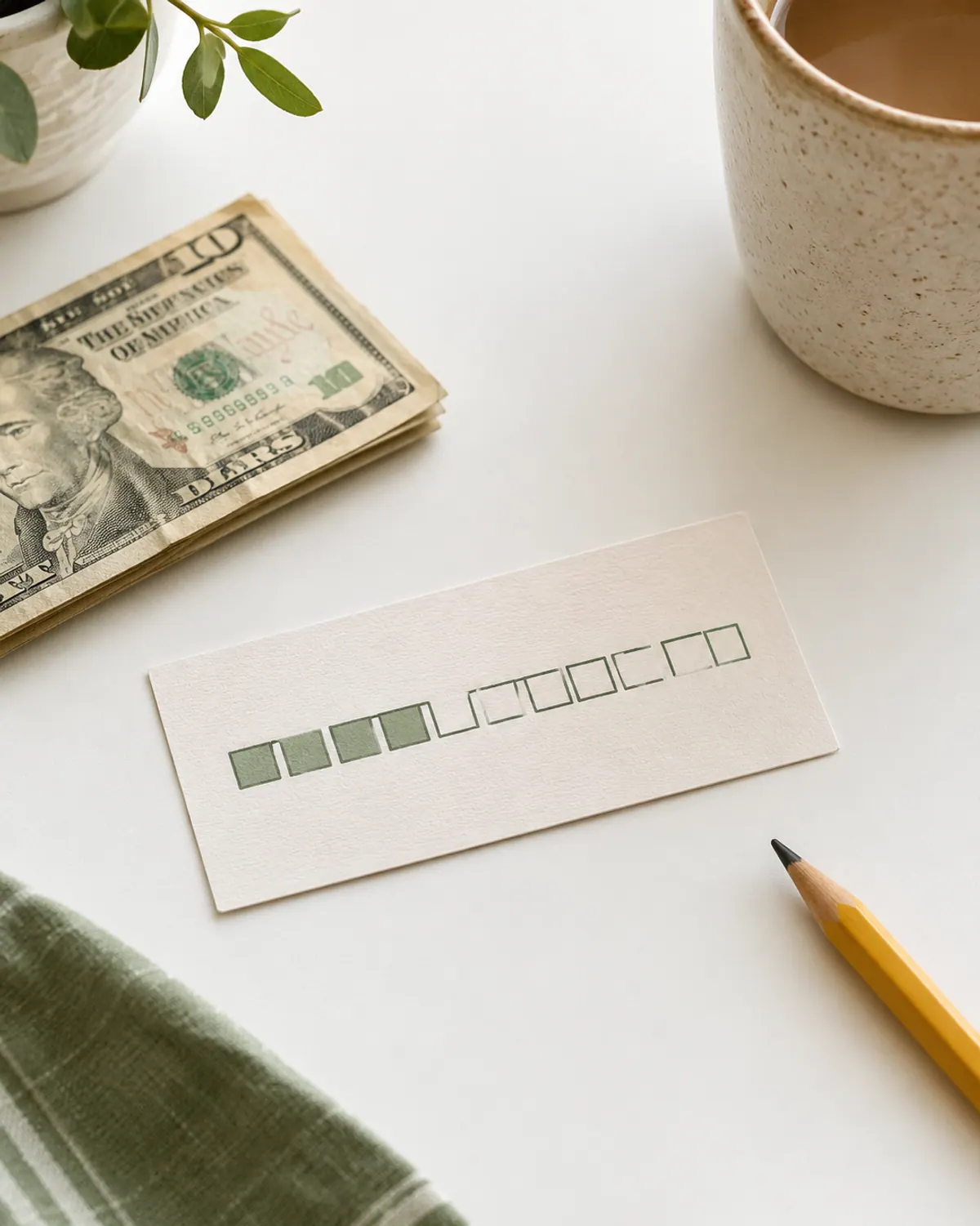
Three months, $100, done. Save $8.33 a week (or $8 and a final $12) and finish with a clean round number before the habit has time to fade. This is the challenge to run first if you have never finished one, because 12 weeks is short enough to see the end from the start.
- Run it four times in a row and you have $400 by the end of the year without ever committing to a 52 week chart.
Per-Paycheck Challenges (Bi Weekly and Monthly)
8The $25 Biweekly Challenge ($650 a year, $600 by December 1)
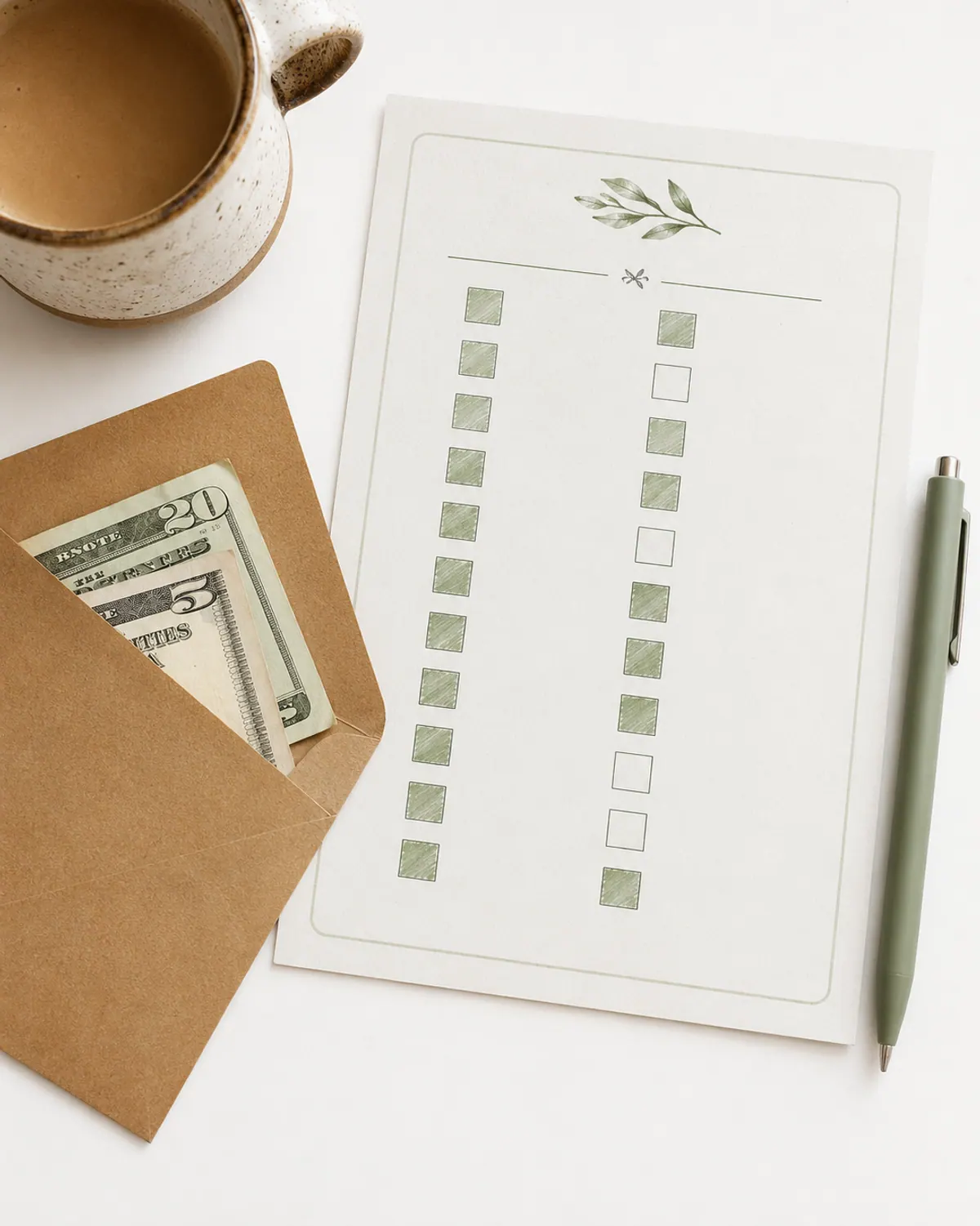
If you are paid every two weeks, this is the bi weekly savings challenge for a low income that fits most budgets: $25 on each of 26 paychecks is $650 a year, and 24 of those paydays land before December 1, which puts $600 in hand for Christmas. The amount never changes, so it can be a scheduled transfer on payday morning.
- Ask for the transfer to run the morning of payday, before the money feels like yours.
9The $50 Biweekly Challenge ($1,300 a year)

Same rhythm, double the amount, and $1,300 by the end of the year. This is the biweekly challenge for a household that has moved one bill off the overloaded paycheck and found $25 more per check. The full set of per paycheck charts, with the math for 24, 26 or 27 paydays, is in our bi weekly savings challenge charts post.
- Start at $25 and move to $50 only after six paychecks in a row have worked.
10The $10 Step Monthly Challenge ($780 a year)

Save $10 in January, $20 in February, and add $10 each month up to $120 in December: $780 for the year. The monthly savings challenge suits people paid once a month or on irregular income, because there is only one decision to make per month. If December's $120 is too much, flip the chart and start at $120 in January when the money reset has you motivated.
- Write the twelve amounts on one index card and cross them off; no chart needed.
Mini Challenges: $100, $250 and $500 Goals
11$250 in 10 Weeks ($25 a week)
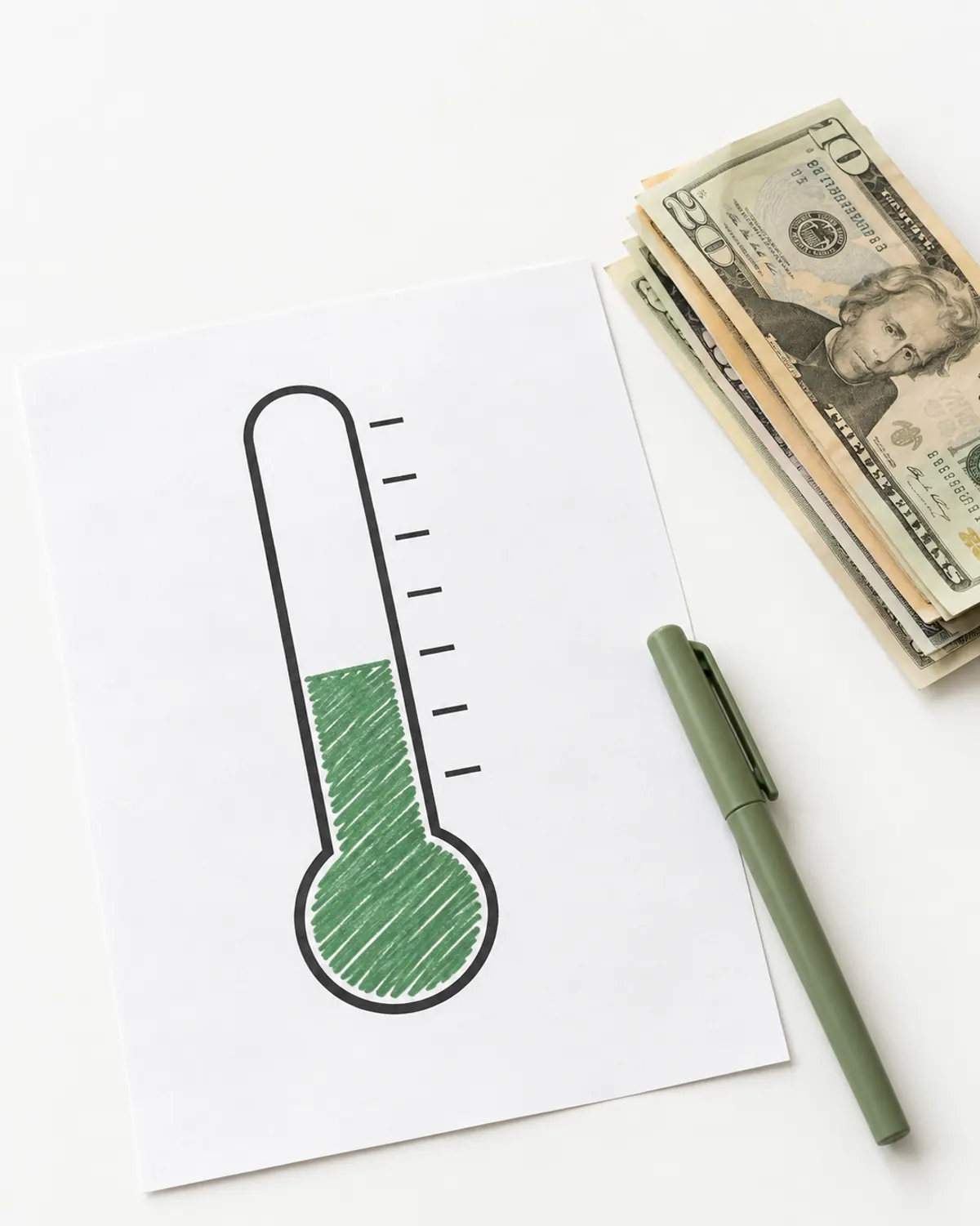
Ten weeks at $25 is $250, which covers a car insurance deductible, a school supply run or one month of a utility bill. The amount is the same as the $5 weekday challenge, just with a finish line you can see. Use it when a specific bill is coming and you want it paid in cash.
- Name the goal on the tracker (car registration, winter boots); a named $250 survives longer than a vague one.
12The 50 Envelope Challenge ($1,275)

The 100 envelope challenge saves $5,050 and asks for $100 in a single envelope, which is not realistic for most low income weeks. The 50 envelope version caps every envelope at $50 and totals $1,275. Pull one envelope a week for a year or two a week for six months, and skip the high numbers in tight weeks. It is included in our free 100 envelope challenge pack as the low income version.
- Pull two envelopes a week and pair a high number with a low one so no week is over $55.
For the 50 envelope challenge and keeping the Christmas fund separate from the emergency jar.
13$500 in 100 Days ($5 a day)
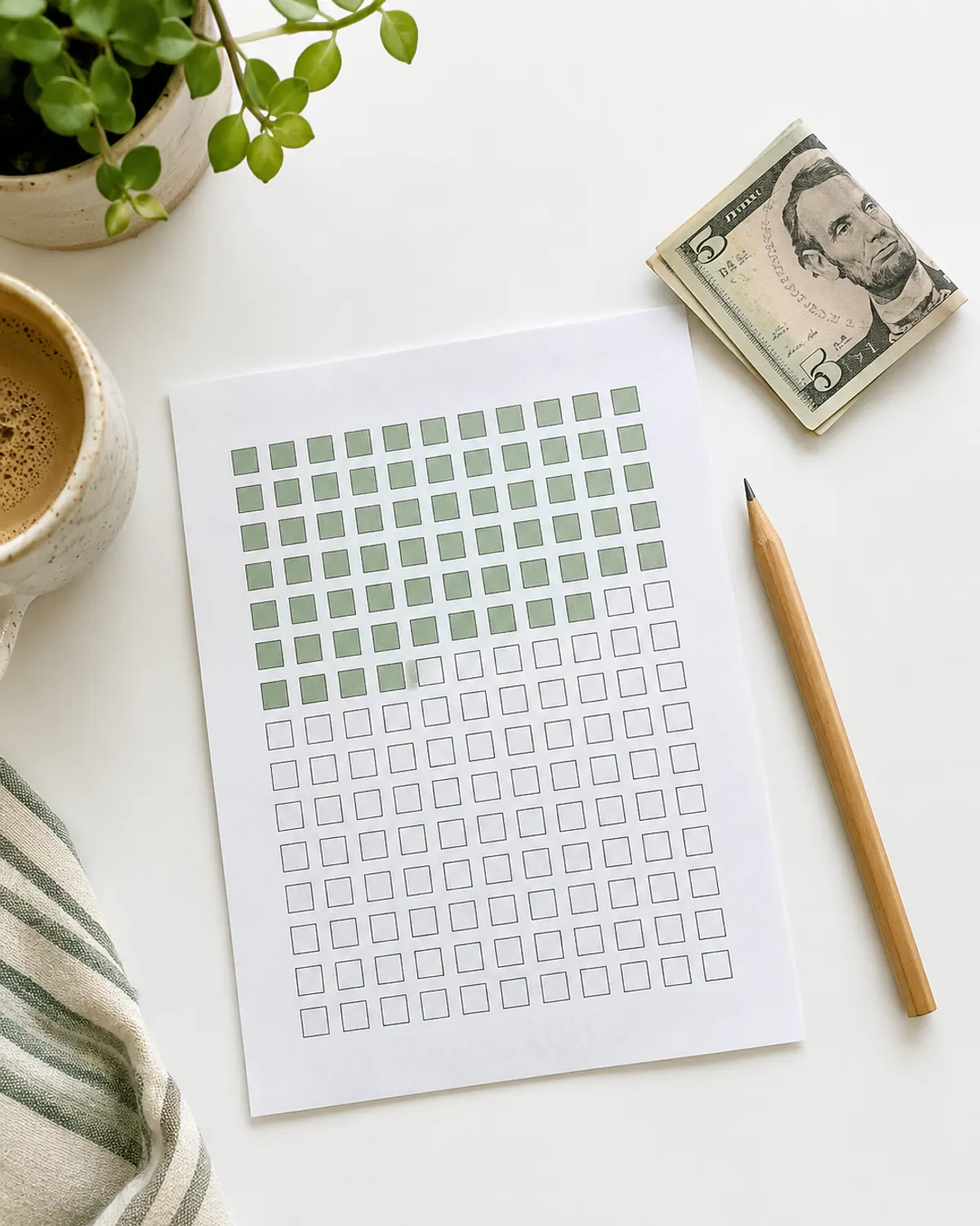
Five dollars a day for 100 days is $500, the starter emergency fund in a little over three months. It is the daily version of the $25 a week mini challenge and the right pick for anyone who gets paid in cash tips or runs a cash budget. If a day gets missed, do not double up; just keep going and let it take 105 days.
- Keep this one in a separate jar from spending cash; the $500 only works if it is still there on day 100.
Low Income Christmas Savings Challenge and the Spare Change Jar
14The Low Income Christmas Challenge ($12.50 biweekly, $300 by December 1)

A $300 Christmas, paid in cash, is $12.50 on each of the 24 biweekly paydays between January 1 and December 1, 2027, or $6.25 a week. Starting in June it is $24 a paycheck. The full table for $300 to $2,000 and every pay schedule is in our Christmas savings plan guide.
- Keep the Christmas envelope separate from the emergency jar; the two get raided for each other otherwise.
15The Round-Up and Spare Change Jar (about $15 to $40 a month)
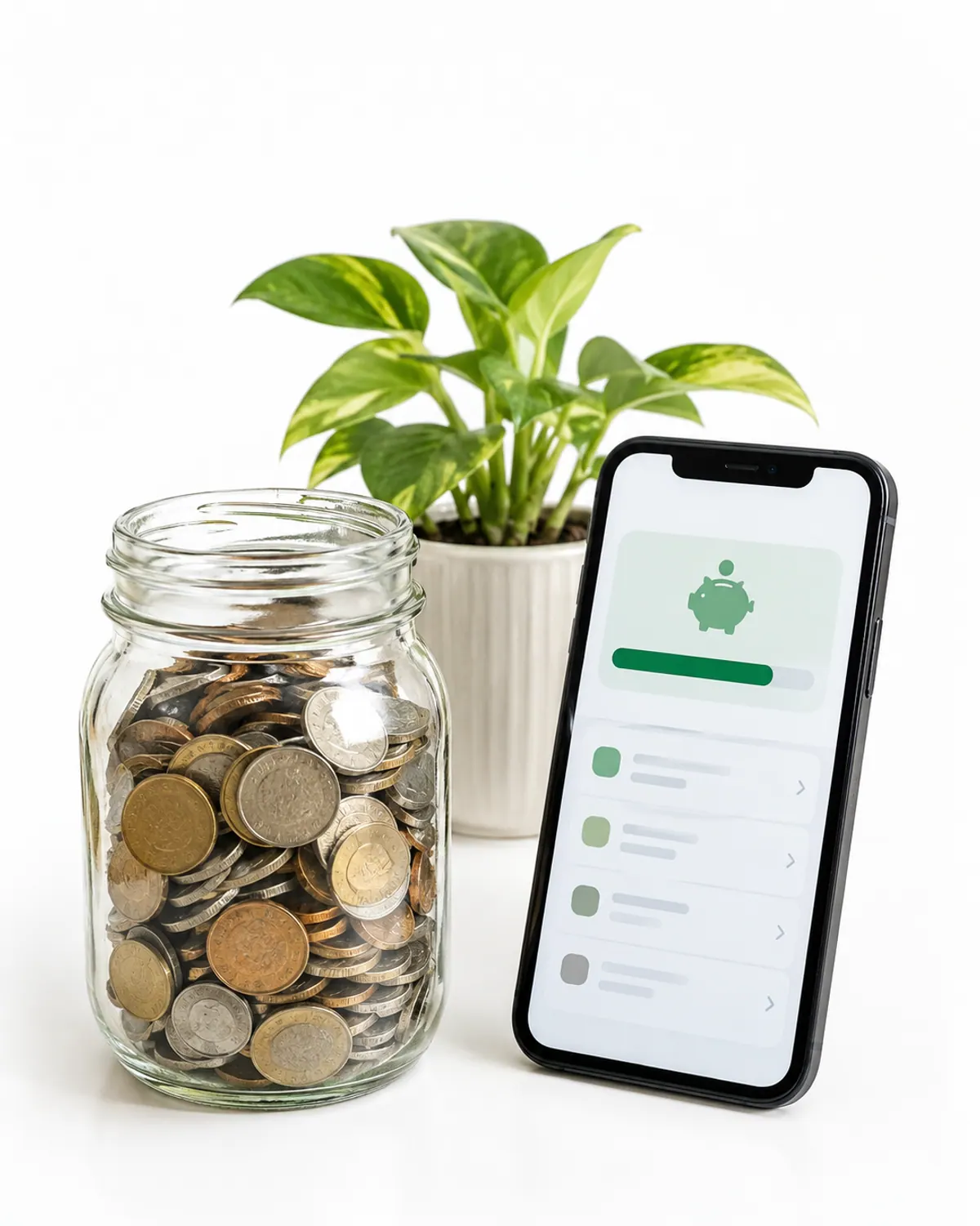
Round every purchase up to the next dollar and save the difference, either with coins in a jar for cash spending or with a bank round-up feature for card spending. Most people land between $15 and $40 a month depending on how many small purchases they make. It is the only challenge here with no fixed amount, which makes it a good add-on, not a main plan.
- Count the jar on the first of the month and write the total on the tracker so it feels like a challenge, not loose change.
Which Challenge Fits Which Budget (Comparison Table)
Here are all 15 side by side, sorted by the most you will ever need in one week. Pick from the top rows if the honest spare amount is under $10 a week, and from the lower rows once a few challenges have finished.
| Challenge | Amount | Biggest single week | Total | Best for |
|---|---|---|---|---|
| $5 a week | $5 weekly | $5 | $260 a year | The honest floor |
| $1 a day | $1 daily | $7 | $365 a year | Cash budgets, habit building |
| 12 week $100 | $8.33 weekly | $9 | $100 in 12 weeks | First challenge ever |
| Penny challenge | 1 cent rising | $25 (last week) | $667.95 a year | Nearly free start, heavy December |
| $10 a week | $10 weekly | $10 | $520 a year | Starter emergency fund |
| $25 biweekly | $25 per paycheck | $25 | $650 a year | Biweekly pay, Christmas cash |
| Christmas $300 | $12.50 per paycheck | $12.50 | $300 by December 1 | Cash Christmas on a tight budget |
| Capped 52 week | $1 to $26 twice | $26 | $702 a year | Chart lovers who hate December |
| $250 in 10 weeks | $25 weekly | $25 | $250 in 10 weeks | One named bill |
| $5 weekday | $5 each weekday | $25 | $1,300 a year | After the leaks are plugged |
| $500 in 100 days | $5 daily | $35 | $500 in 100 days | Cash tips, fast starter fund |
| $10 step monthly | $10 to $120 monthly | $120 (one month) | $780 a year | Monthly or irregular pay |
| $50 biweekly | $50 per paycheck | $50 | $1,300 a year | After $25 has worked for 6 paychecks |
| 50 envelope | $1 to $50 per envelope | $55 (two envelopes) | $1,275 | Envelope fans on a budget |
| Round-up jar | Spare change | Varies | About $15 to $40 a month | An add-on to any of the above |
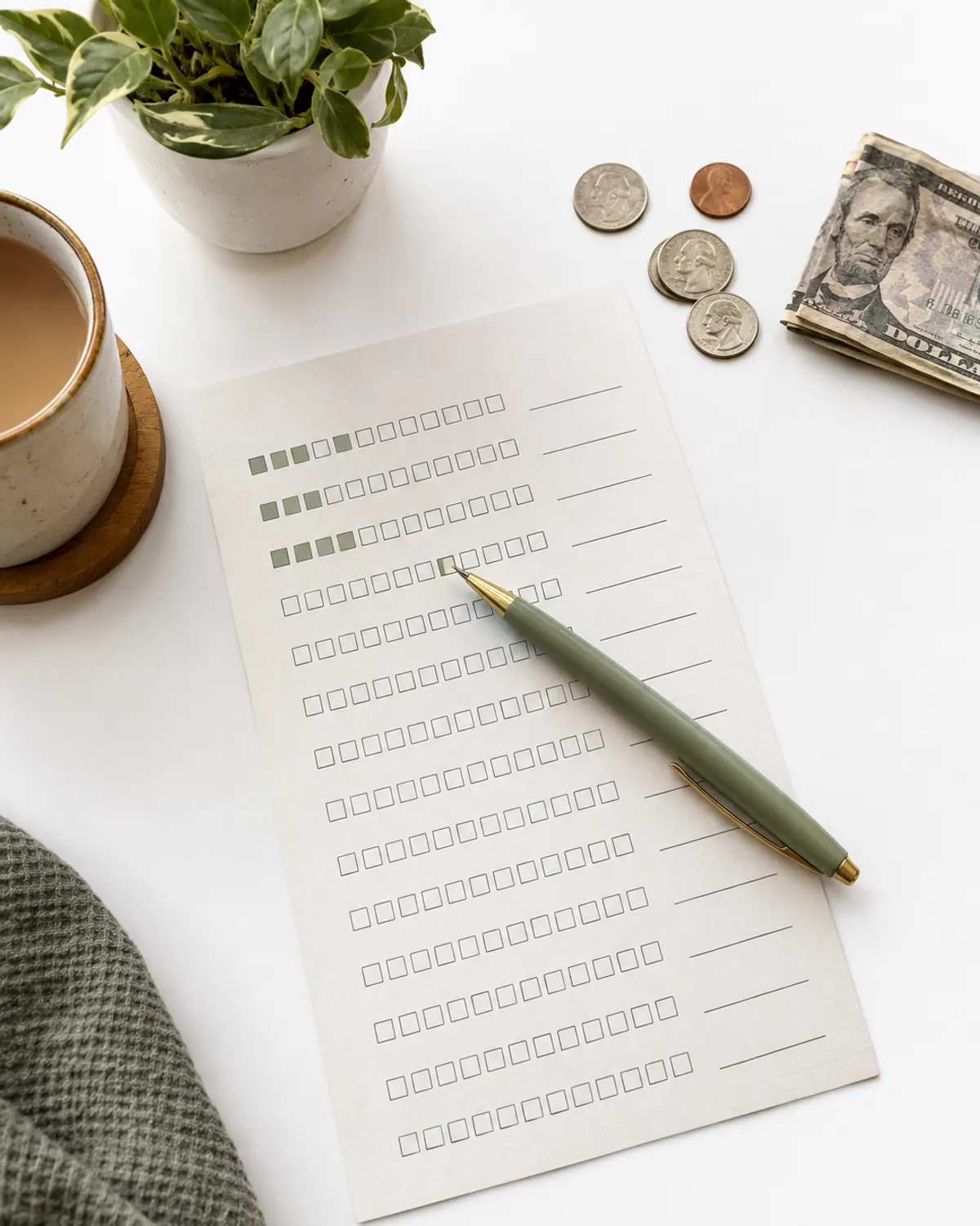
The best savings challenge on a low income is the one still running in March.
Savings Challenge Mistakes on a Tight Budget
Five ways a low income savings challenge ends early
The one that catches most people is the first. A $1,378 chart that dies in February saved less than a $5 a week chart that ran all year. If you are not sure which amount survives your worst week, our how to stop living paycheck to paycheck guide starts with a 30 day tracking month that gives you the honest number.
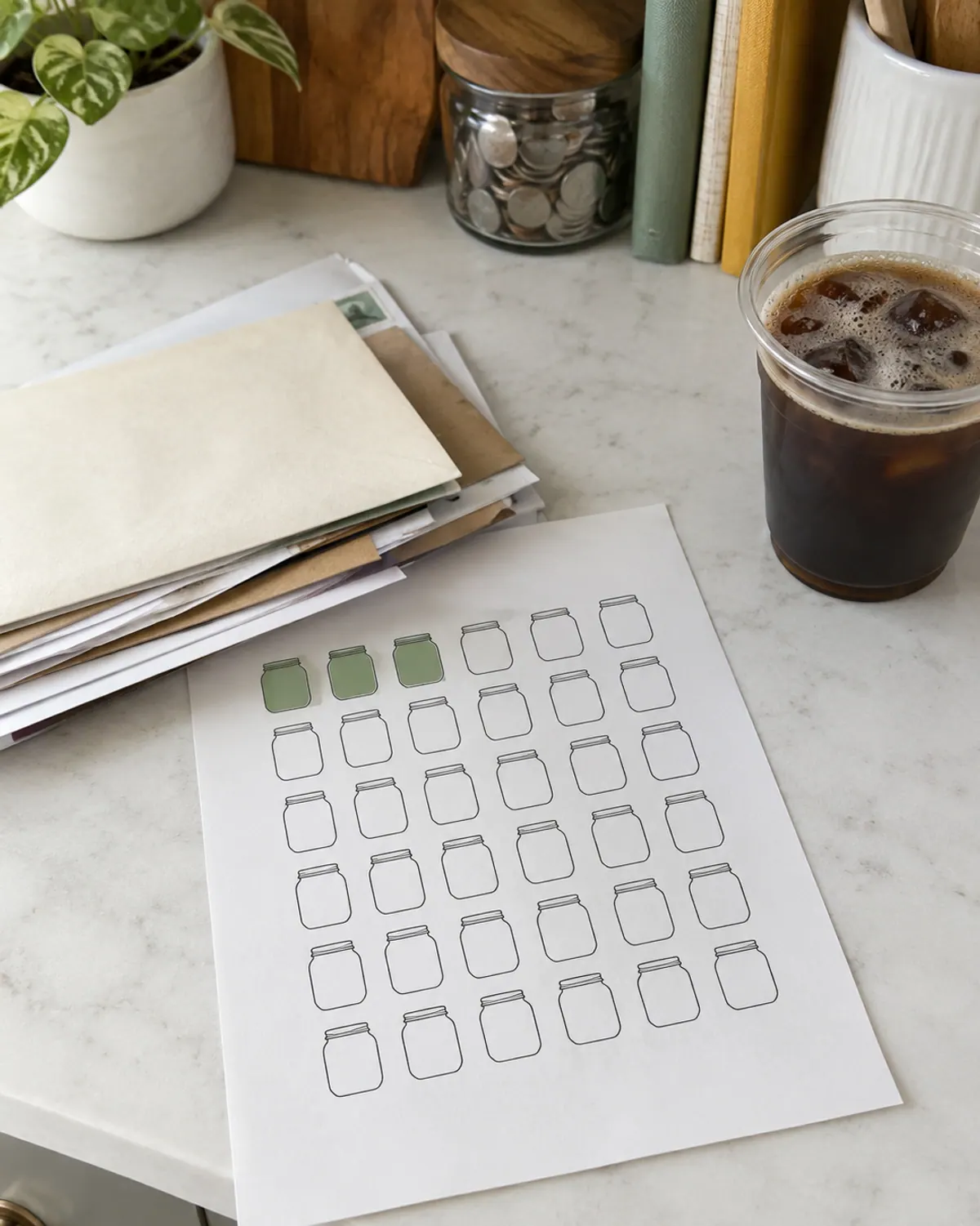
Bonus: The Chart Math at a Glance
You do not need a printable to build any of these. Three formulas cover the whole list. A flat challenge is amount times deposits: $25 times 26 paychecks is $650. A climbing chart that goes from $1 to any number N totals N times (N plus 1) divided by 2: $1 to $26 is 26 times 27 divided by 2, or $351. And a goal with a deadline is goal divided by deposits: $300 divided by 24 paydays is $12.50.
Print the Low Income Versions: Free Pack or the 2027 Bundle
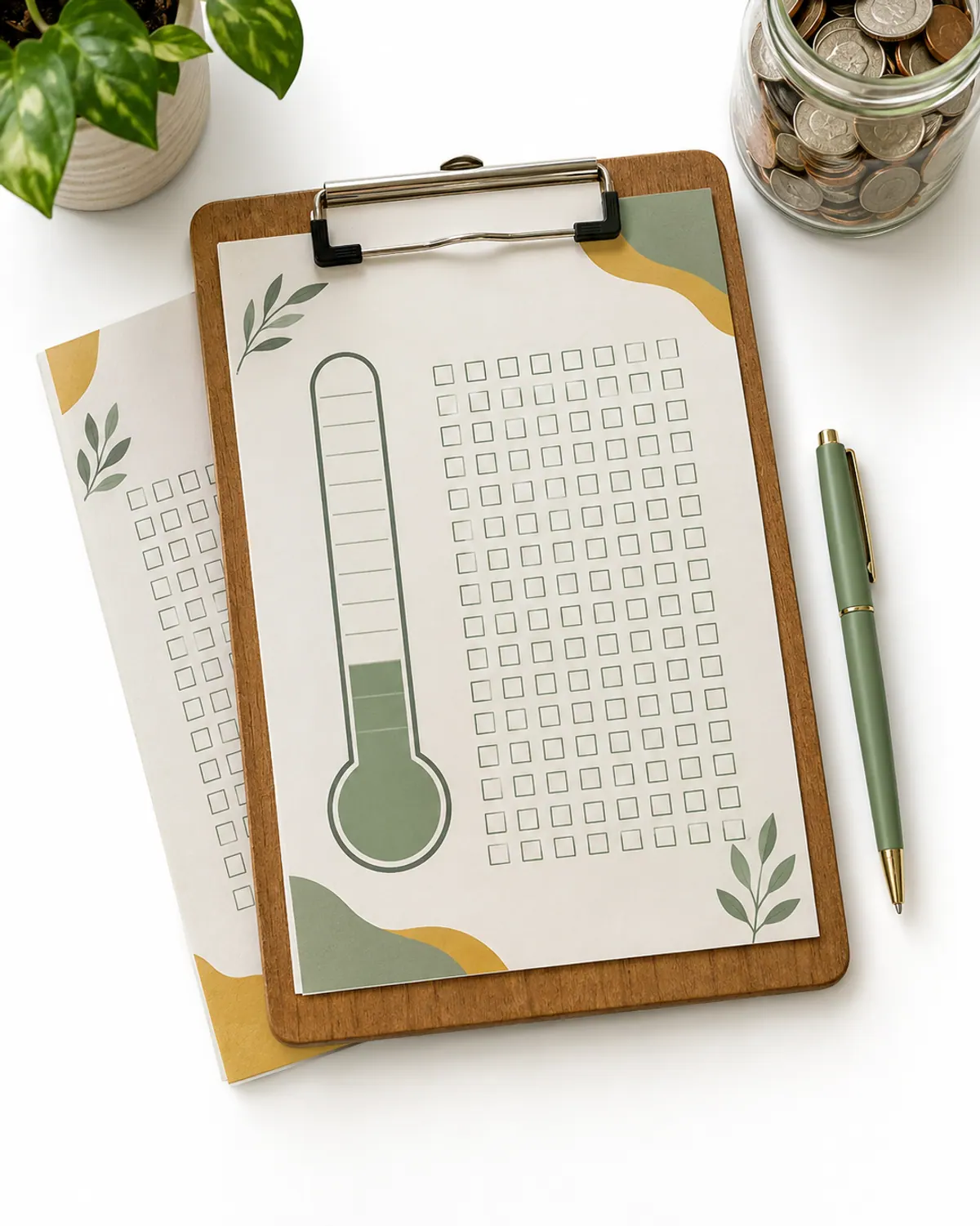
The free 100 Envelope Savings Challenge pack includes the 50 envelope low income version ($1,275), a 30 day no-spend tracker and a goal thermometer that works for the $100, $250 and $500 mini challenges. The free bi weekly savings challenge charts (PDF, 6 pages) cover the $25 and $50 per paycheck challenges with 26 rows each; no sign-up needed for either.
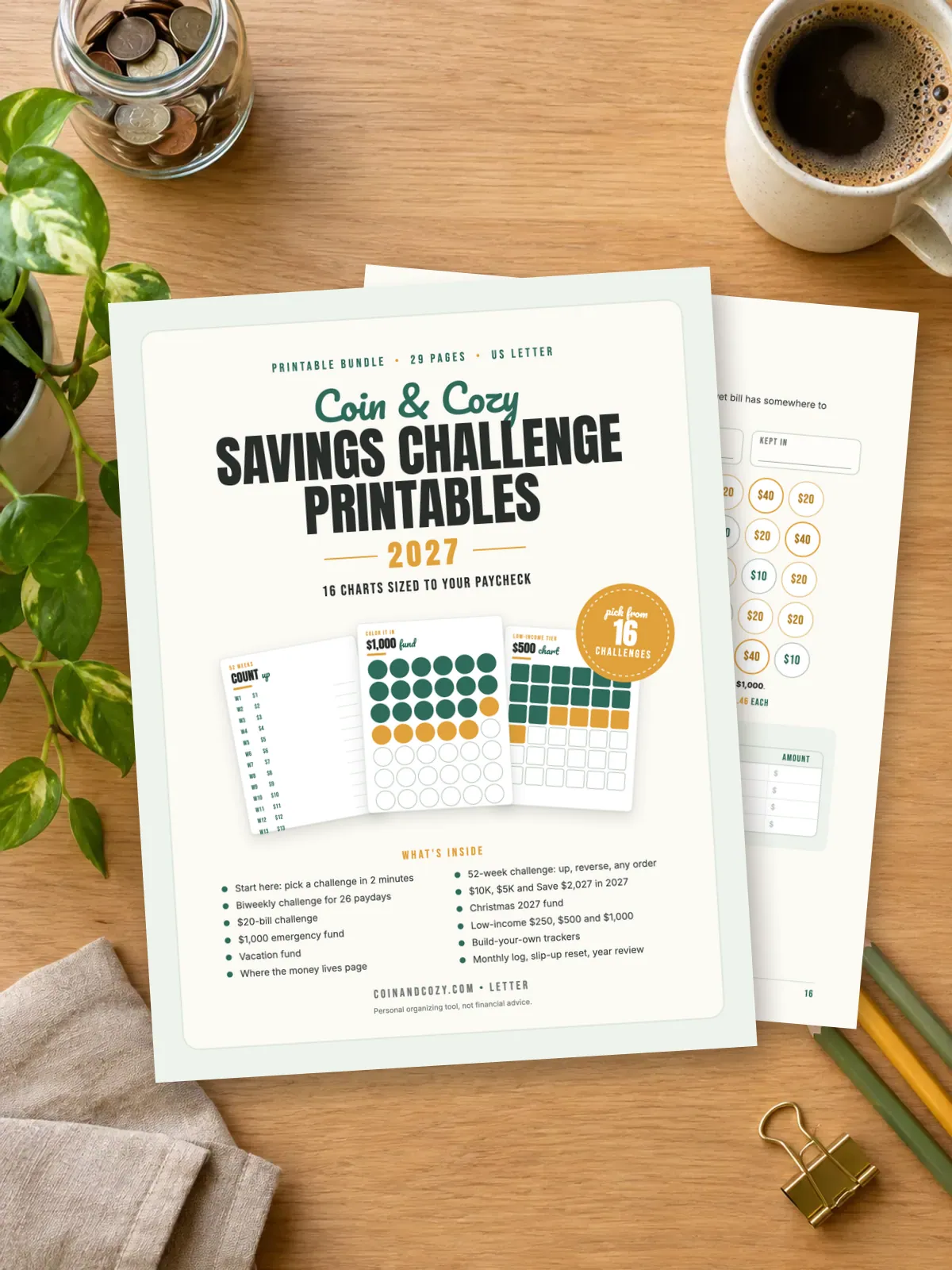
If you want the whole list in one printed set with 2027 dates, the Savings Challenge Bundle 2027 has the $250, $500 and $1,000 small-budget charts, the 26 payday biweekly chart, the $600 Christmas 2027 fund chart, a $1,000 emergency fund chart and a chooser page for picking the one that fits. It is $7 and prints on US Letter at home.
Helpful, not required
-
Cash envelopes for savings challenges
Typically $6 to $15
For the 50 envelope challenge and keeping the Christmas fund separate from the emergency jar.
Check price on Amazon for Cash envelopes for savings challenges -
A6 budget binder with zipper pockets
Typically $8 to $20
Holds the tracker card and a few challenge envelopes in one place.
Check price on Amazon for A6 budget binder with zipper pockets -
Glass savings jar with lid
Typically $8 to $18
For the $1 a day, penny and spare change challenges.
Check price on Amazon for Glass savings jar with lid -
Label maker
Typically $20 to $40
Named jars and envelopes survive longer than unlabeled ones.
Check price on Amazon for Label maker
Fifteen money saving challenges for low income budgets, every one under $5 a day, and every one with a total you can check against your own worst week. Pick one main plan, add the round-up jar if you like, and keep the money somewhere you will not see it. The figures here are examples for planning and not financial advice.
Frequently asked questions
What is the best savings challenge for low income?
The one whose biggest week fits your worst week. For most tight budgets that is a flat challenge: $5 or $10 a week, $1 a day, or $25 per biweekly paycheck. Flat amounts never ask for more in December than in January, which is where climbing charts fail. This is general information, not financial advice.
How can I save money on a low income?
Start with the smallest amount that survives a bad week, automate it on payday morning into a separate account or jar, and plug the three common leaks (subscriptions, fees, convenience food) to raise it later. Short challenges with a visible finish, like $100 in 12 weeks, build the habit before a year-long chart.
Can you do the 100 envelope challenge on a low income?
The full version asks for $5,050 in 100 envelopes, with single envelopes up to $100, which is hard on a tight budget. The 50 envelope version caps every envelope at $50 and totals $1,275; pull one a week for a year and skip high numbers in tight weeks. It is in our free 100 envelope pack.
What is a good bi weekly savings challenge for low income?
A flat $25 on each of 26 paychecks saves $650 a year, and $600 of it lands before December 1. Move to $50 per paycheck ($1,300 a year) only after six paychecks in a row have worked at $25.
Is there a free low income savings challenge printable?
Yes. The free 100 envelope pack on this site includes the 50 envelope low income version and a goal thermometer, and the free bi weekly savings challenge charts PDF covers the $25 and $50 per paycheck challenges. Both download without a sign-up. The Savings Challenge Bundle 2027 is the paid dated set.
Save it for later
Pin this to your Savings Challenges board so it's there when you need it.
Save to Pinterest