This post contains affiliate links. As an Amazon Associate we earn from qualifying purchases, at no extra cost to you. Read our disclosure.
Safety first: This is general money education, not personalised financial advice. Please read our financial disclaimer before you start.
Key takeaways
- 100 envelopes numbered $1 to $100 add up to $5,050 (100 x 101 / 2).
- One envelope a day takes 100 days but averages about $353 a week, which is too fast for most paychecks.
- At $50 a week the full challenge takes about 101 weeks; the 50-envelope version ($1,275) takes about 26.
- Pick your pace by what you can set aside each week, not by the 100-day promise.
- All numbers are examples, not financial advice.
In this post11 sections
- 100 Envelope Challenge: How It Works (and the $5,050 Math)
- What You Need: DIY Envelopes, a Binder or Just the Free Tracker
- How to Start the 100 Envelope Challenge in 5 Steps
- Four Ways to Pace the 100 Envelope Challenge
- 100 Envelope Challenge on a Low Income: The $1,275 Version
- The 10k Version and Who It Actually Fits
- Where to Keep the Cash (Envelopes, Jar or Savings Account)
- 100 Envelope Challenge Tracker Free Printable
- Mistakes That End the Challenge by Envelope 40
- Get the Free 100 Envelope Challenge Pack
- FAQ
100 Envelope Challenge: How It Works (and the $5,050 Math)
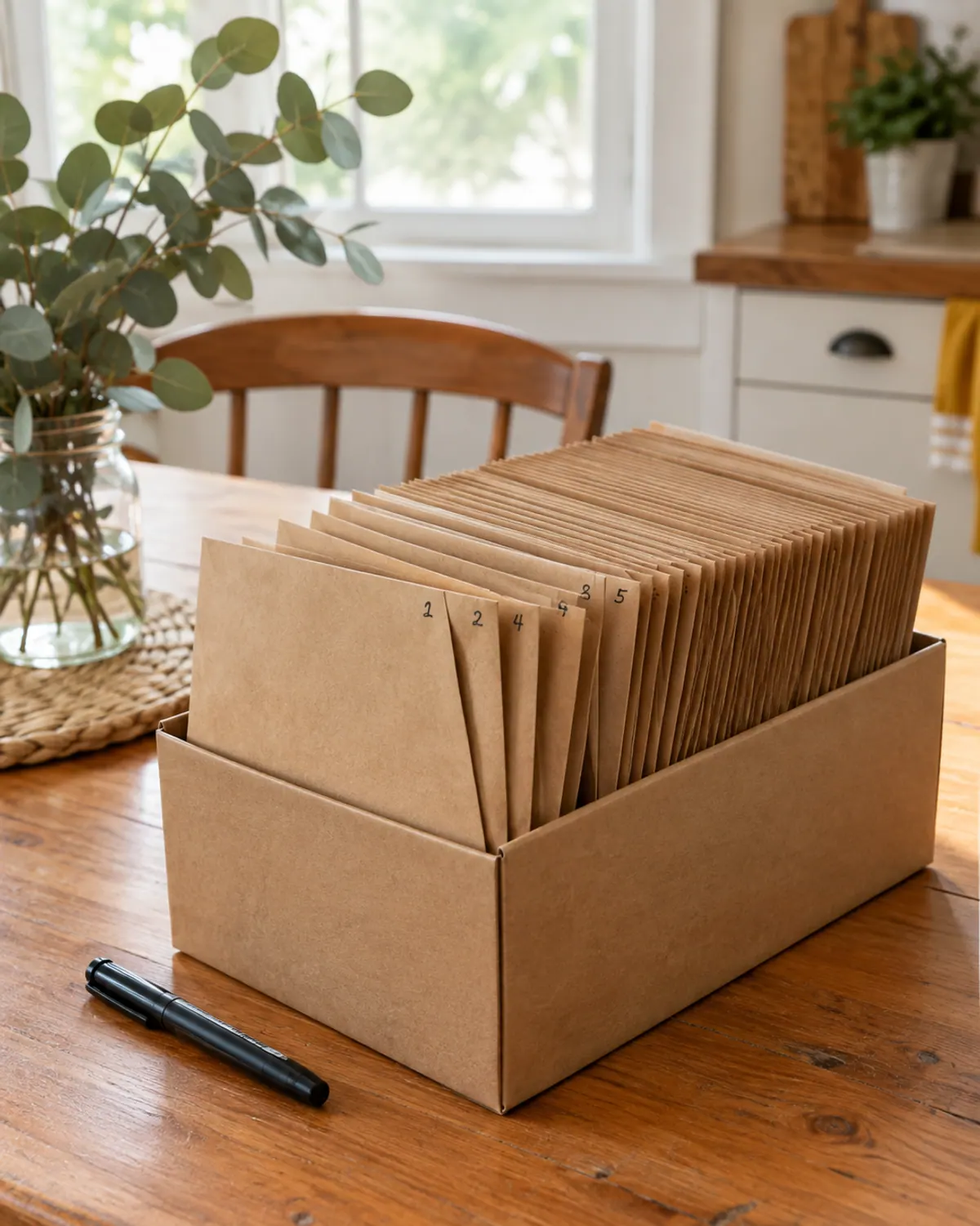
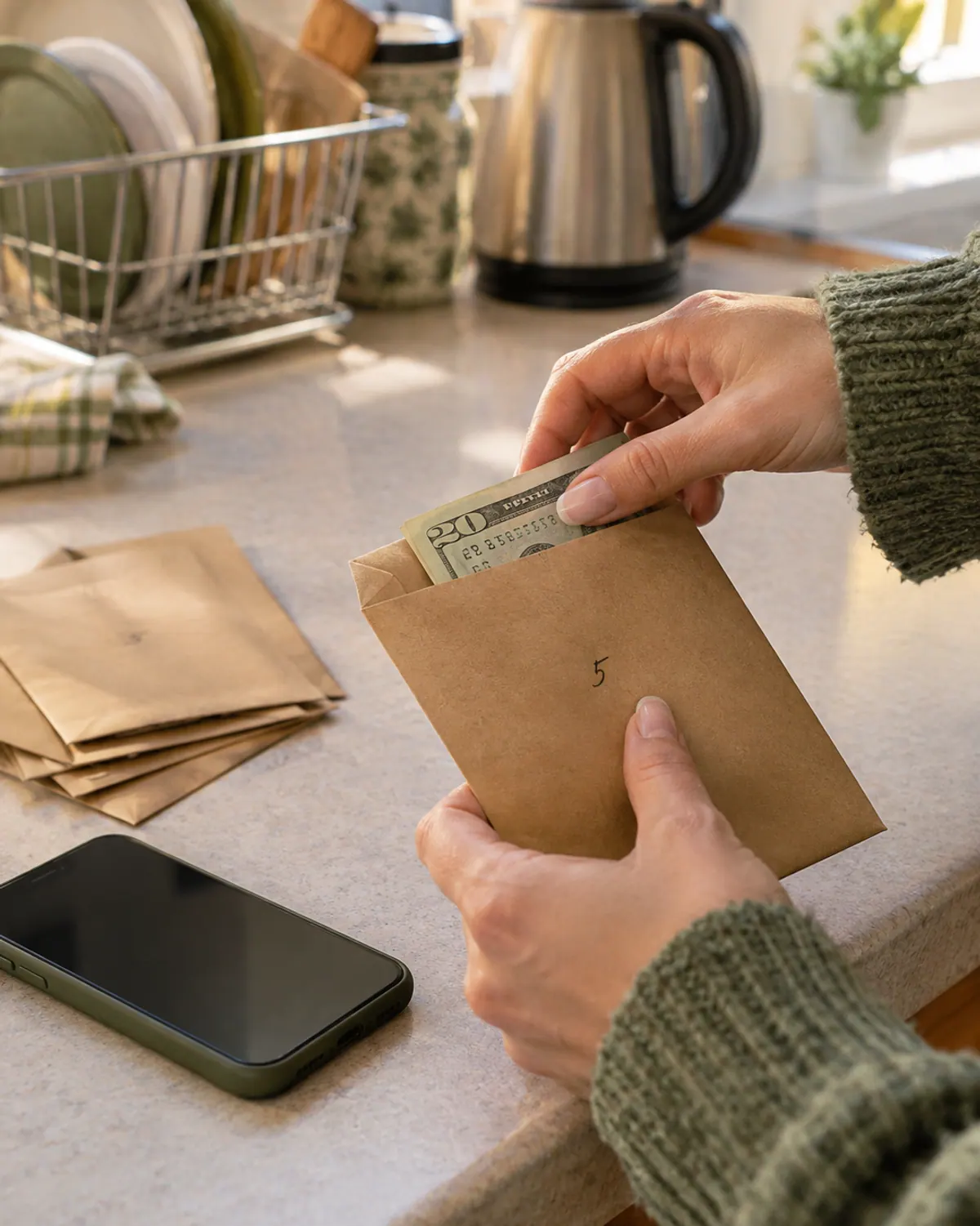
You need 100 envelopes, each marked with one number from 1 to 100. The number on the envelope is the dollar amount that goes inside, so envelope 7 gets $7 and envelope 82 gets $82.
You choose which envelope to fill and when. Most people shuffle the stack, pull one or two, and fill them on payday. When all 100 are full, you've saved $5,050.
Where does $5,050 come from? Adding 1 + 2 + 3 all the way up to 100 equals 100 x 101 / 2, which is 5,050. You can check it on a phone calculator in a few seconds.
All numbers here are examples for planning, not financial advice. Our financial disclaimer has the details.
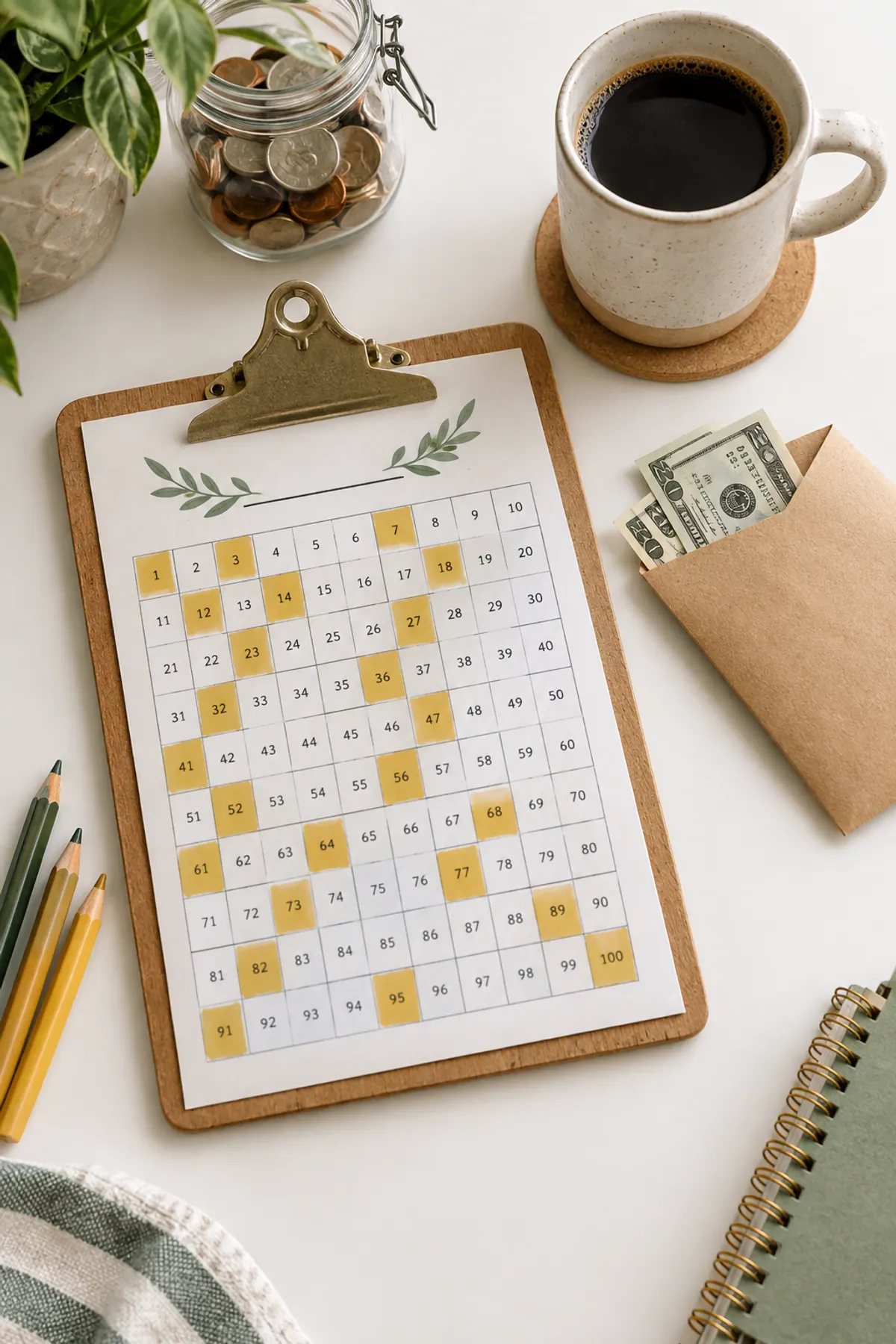
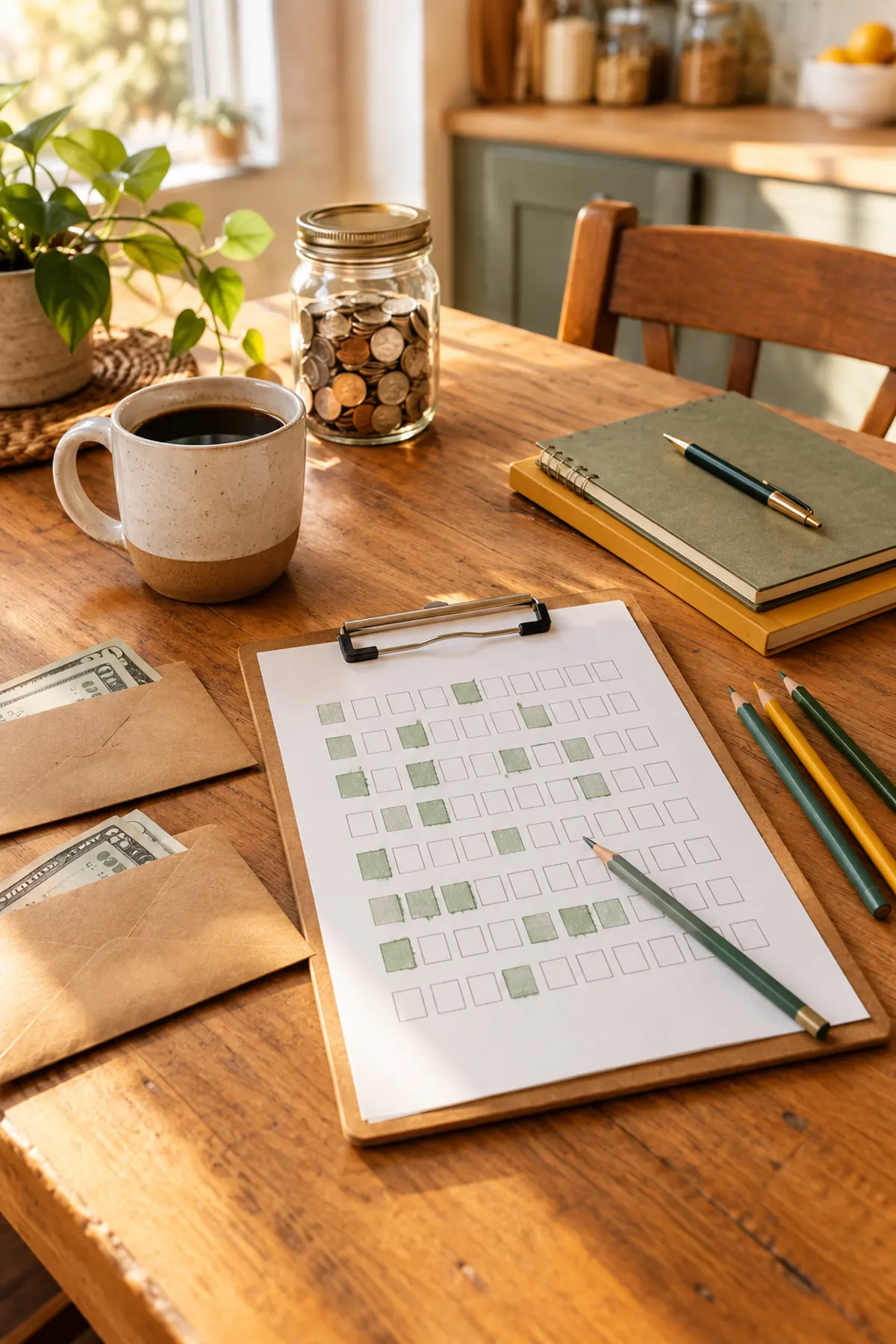
Don't want to number a hundred envelopes before you start? Our free Cozy Savings Challenge Pack has a 100-envelope chart ($1 to $100, $5,050) and a gentler 50-envelope chart ($1,275). Color in a box each time you fill an envelope.
What You Need: DIY Envelopes, a Binder or Just the Free Tracker
You don't need to buy a kit. There are three common setups, and the cheapest costs almost nothing if you already have envelopes in a drawer.
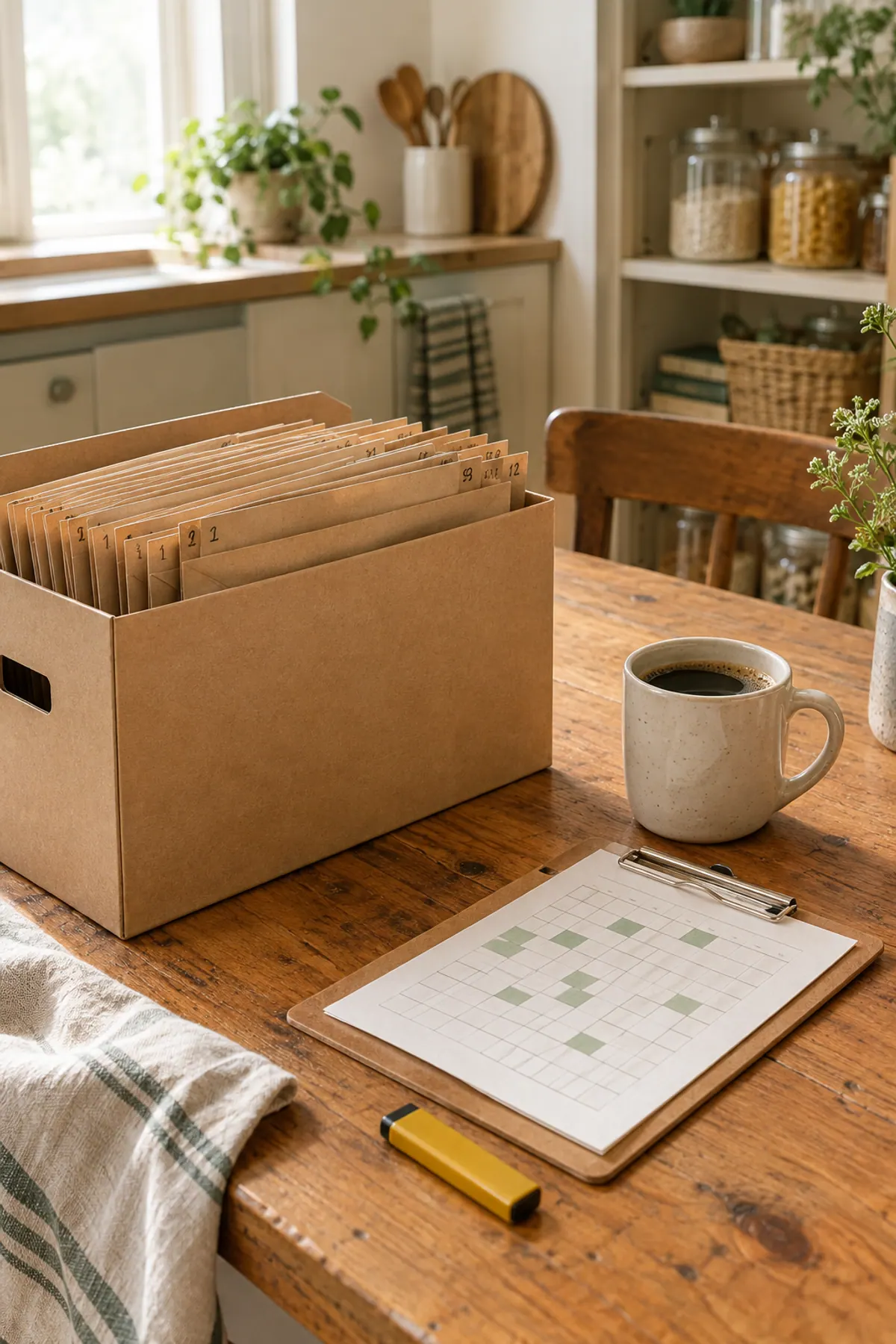
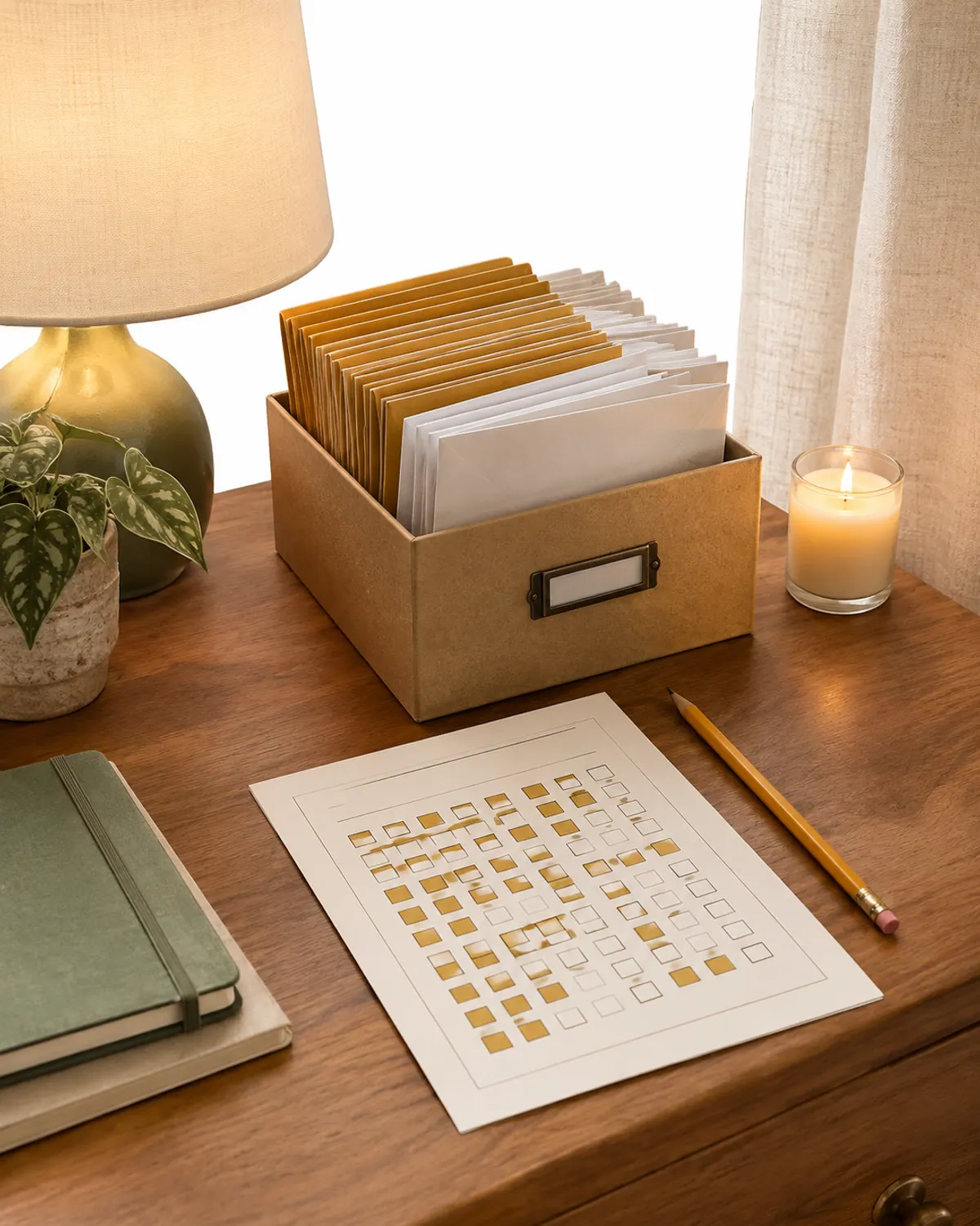
DIY envelopes. A pack of plain envelopes, a marker, and a shoebox or file box to stand them in. Number them 1 to 100 and you're set up in about 20 minutes.
A challenge binder. Many sellers make A5 binders with 100 numbered zip envelopes and a printed tracker inside. They're tidy and easy to tuck in a drawer, and typically cost $7 to $20.
Tracker only. If your savings live in a bank account, skip the envelopes. Move the money by transfer and color in a printed chart instead. It's the same game with no cash in the house.

Supplies for the 100 envelope challenge
-
100 envelope challenge binder (A5, numbered)
Typically $7 to $20
Numbered zip envelopes and a tracker in one binder, if you'd rather not make your own.
Check price on Amazon for 100 envelope challenge binder (A5, numbered) -
A6 budget binder with zip envelopes
Typically $8 to $30
Smaller and lighter, and it works for cash stuffing after the challenge ends.
Check price on Amazon for A6 budget binder with zip envelopes -
Paper cash envelopes, 100 pack
Typically $8 to $22
The low-cost DIY route. Number them with a marker and stand them in a box.
Check price on Amazon for Paper cash envelopes, 100 pack -
Pastel highlighter set
Typically $4 to $17
For coloring in the tracker boxes as each envelope fills.
Check price on Amazon for Pastel highlighter set -
Coin counting jar
Typically $7 to $14
A spot for loose change while you wait to swap it for bills.
Check price on Amazon for Coin counting jar
How to Start the 100 Envelope Challenge in 5 Steps
-
Step 1: Pick your version
Choose the full 100 envelopes ($5,050), the 50-envelope version ($1,275) or a half-amount chart ($2,525). Use the pace table below to see how long each takes at your weekly amount.
-
Step 2: Set up envelopes or a tracker
Number 100 envelopes, open a binder kit, or print the free tracker on this page. Write the goal at the top.
-
Step 3: Choose where the money lives
Decide now whether cash stays in envelopes or moves to a separate savings account each week. Both work; mixing them without a plan is how money goes missing.
-
Step 4: Pick a money day
Match it to payday. Fill your envelopes the morning the money lands, before groceries and gas, so you're not saving whatever is left.
-
Step 5: Color the box
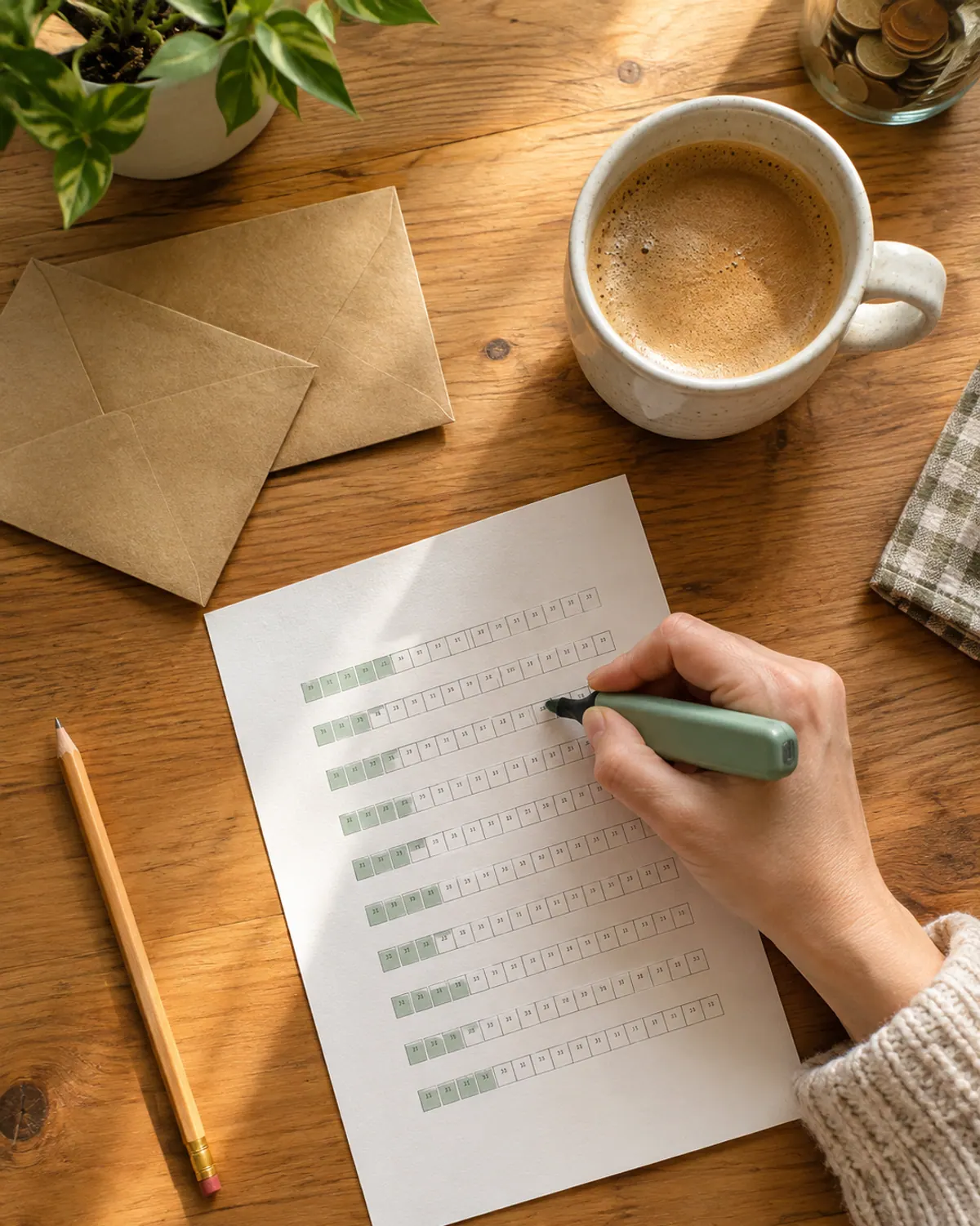
Every time an envelope is filled, color in its number. Once a month, add up the colored boxes and check the total against what's actually saved.
Four Ways to Pace the 100 Envelope Challenge
Pinterest makes it look like everyone finishes in 100 days. Here are four paces, from fastest to most flexible.
1. One envelope a day (100 days). This averages $50.50 a day, or about $353 a week. It fits a tax refund, a bonus or a second income better than a regular paycheck.
2. One envelope every other day (200 days). About $177 a week on average, finished in roughly six and a half months. Still a stretch for most families, but doable with a clear deadline.
3. A set amount per payday. Decide what you can save each payday, then pull envelopes that add up to about that much. If you're paid every two weeks, our bi weekly savings challenges show how to match a chart to each check.
4. Random draw. Write 1 to 100 on slips of paper and keep them in a jar. Draw one or two each week and fill those envelopes. If you pull $96 in a tight week, it's fine to put it back and draw again.

| You set aside each week | 100 envelopes ($5,050) | 50 envelopes ($1,275) |
|---|---|---|
| $10 | 505 weeks (about 9.7 years) | 128 weeks (about 2.5 years) |
| $20 | 253 weeks (about 4.9 years) | 64 weeks (about 15 months) |
| $25 | 202 weeks (about 3.9 years) | 51 weeks (about 1 year) |
| $50 | 101 weeks (about 23 months) | 26 weeks (about 6 months) |
| $100 | 51 weeks (about 1 year) | 13 weeks (about 3 months) |
| $200 | 26 weeks (about 6 months) | 7 weeks |
| One envelope a day | 100 days (about $353 a week) | 50 days (about $179 a week) |
To use the table, fill envelopes that add up to roughly your weekly amount. With $50, that might be envelopes 20 and 30 one week, then 12, 15 and 23 the next. Some weeks land a few dollars over or under, and it evens out.
100 Envelope Challenge on a Low Income: The $1,275 Version
If $20 or $25 a week is already a stretch, a smaller chart isn't giving up. It's picking a finish line you can actually reach this year.
The 50-envelope version runs from $1 to $50 and totals $1,275 (50 x 51 / 2). Another option is to halve every envelope, so envelope 40 gets $20 and envelope 100 gets $50, for a total of $2,525.
| Version | Envelope amounts | Total | At $20 a week |
|---|---|---|---|
| Full challenge | $1 to $100 | $5,050 | about 253 weeks |
| Half amounts | $0.50 to $50 | $2,525 | about 127 weeks |
| 50 envelopes | $1 to $50 | $1,275 | about 64 weeks |
| 25 envelopes | $1 to $25 | $325 | about 17 weeks |
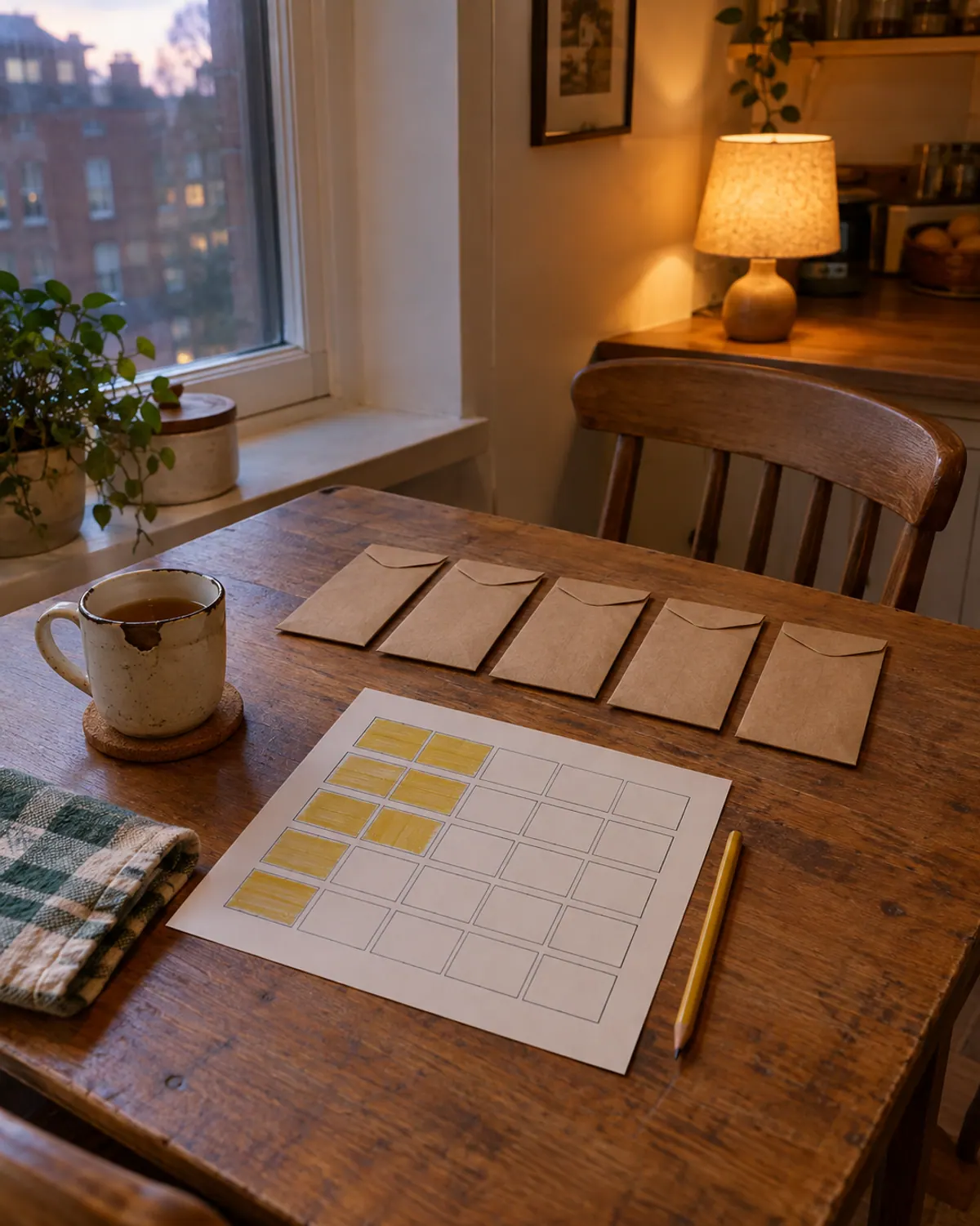
A finished $325 cushion is worth more than a $5,050 chart you quit in March. You can always print the bigger chart once the small one is done.
Need to find the first $20? Our money saving tips that add up every month list small, specific cuts, and many of them free up a few dollars a week without much effort.
The 10k Version and Who It Actually Fits
The "10k 100 envelope challenge" pins you'll see usually double every envelope, so they run from $2 to $200. That totals $10,100.
At two envelopes a week it takes 50 weeks and averages $202 a week, or about $404 per two-week paycheck. At one envelope a day, it averages $101 a day.
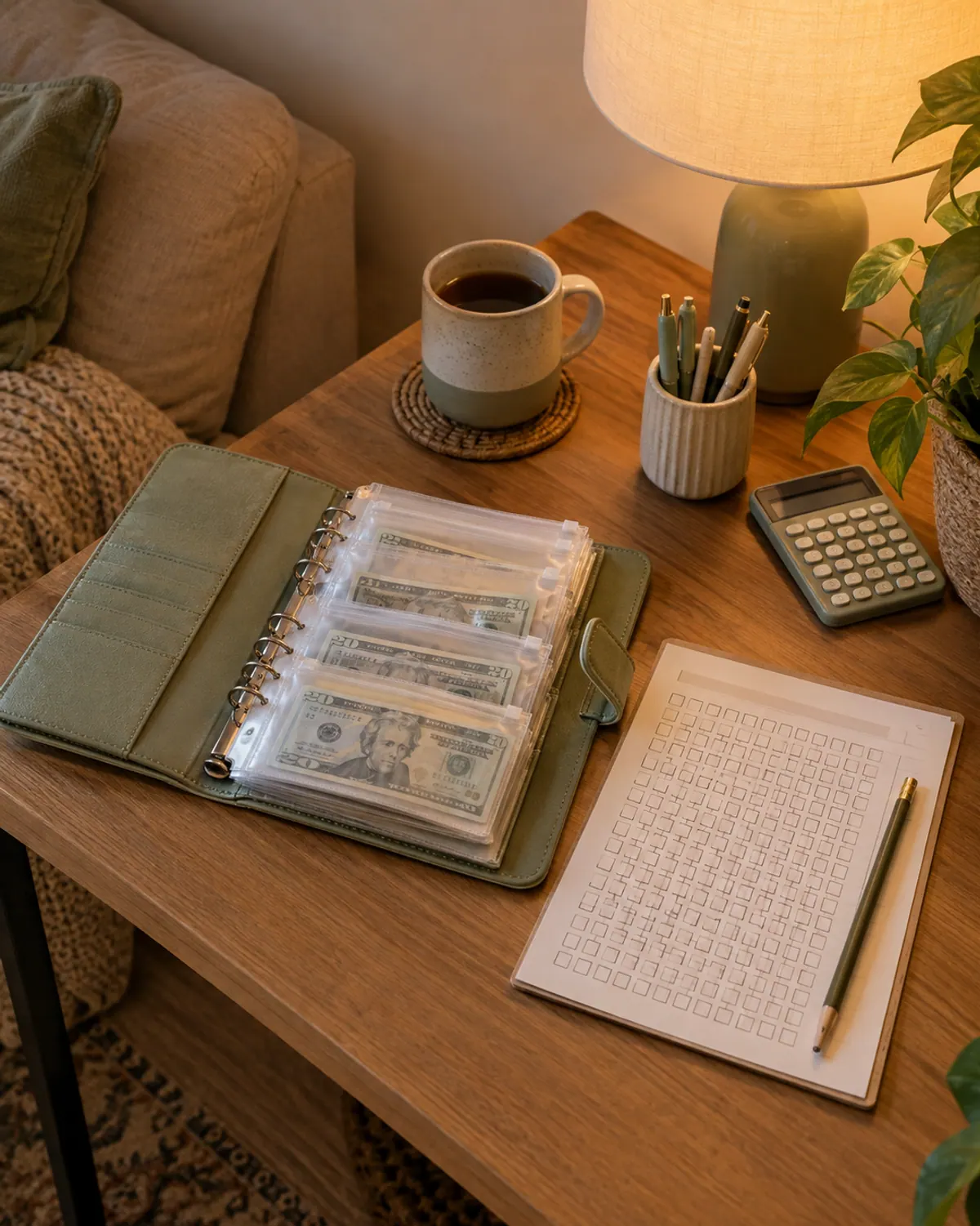
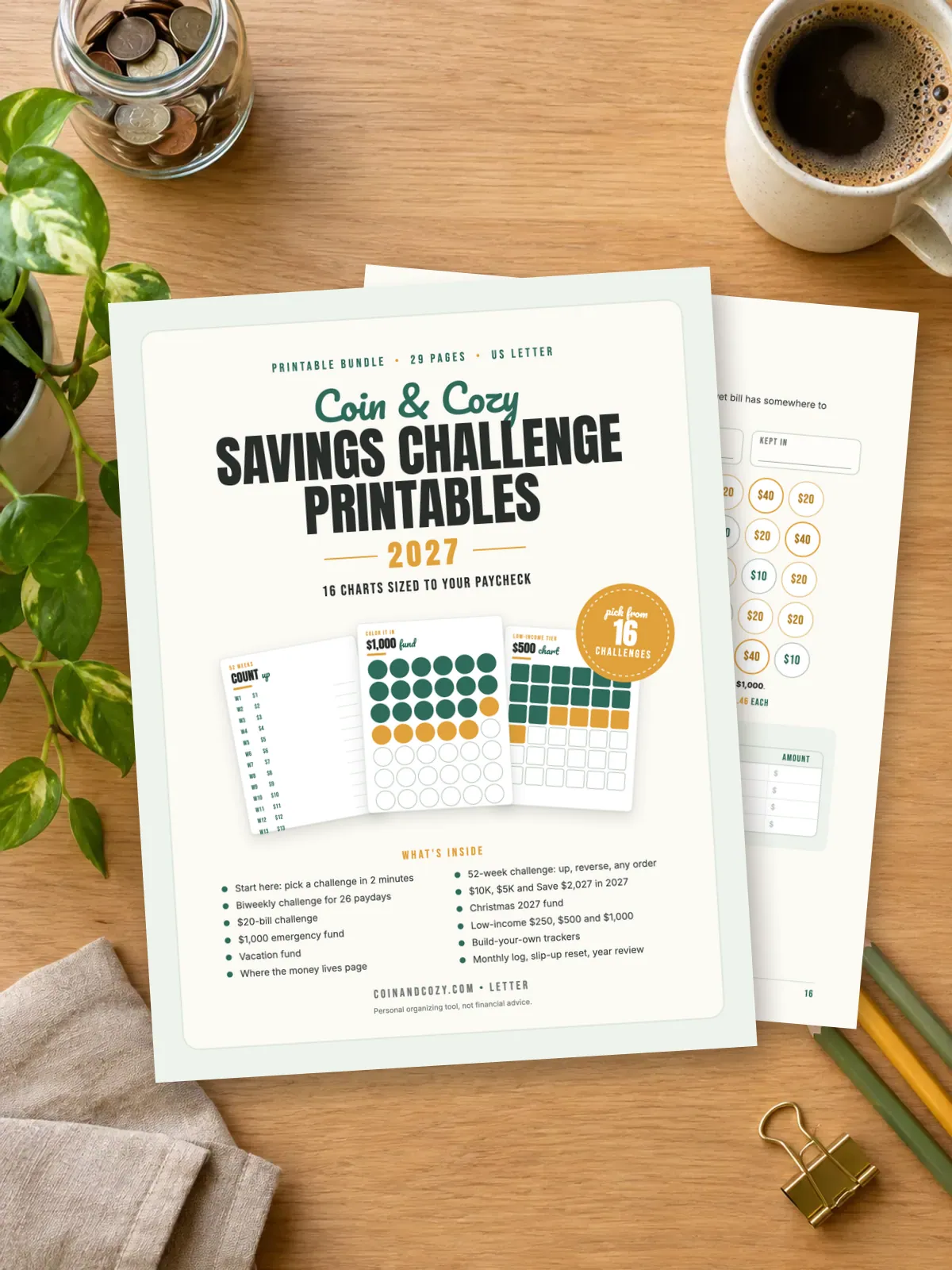
Want a $10K chart without doubling numbers in your head? The Cozy Savings Challenge Bundle 2027 has $10K and $5K charts, smaller $250, $500 and $1,000 charts, a paycheck chooser that points you to the one that fits, and an A6 version for budget binders.
Where to Keep the Cash (Envelopes, Jar or Savings Account)
Cash in envelopes feels real. You can feel the box get heavier, and that's a big part of why the challenge works for so many people.
The trade-off is that cash at home earns nothing, can be lost, and is easy to borrow from on a hard week. Many people fill envelopes for a month, then deposit the total into a separate savings account and keep coloring the tracker.

At a bank insured by the FDIC, deposits are covered up to $250,000 per depositor, per bank, for each ownership category. Federally insured credit unions have the same $250,000 coverage through the NCUA. Cash in a shoebox has no protection like that, so compare savings account fees and rates yourself, since they change often.
100 Envelope Challenge Tracker Free Printable
Here's a free tracker you can print straight from this page. Cross off or color each amount as you fill that envelope, and use the running total to see how far you've come.
| Envelopes | Amounts (color in) | Row total | Running total |
|---|---|---|---|
| 1 to 10 | $1 $2 $3 $4 $5 $6 $7 $8 $9 $10 | $55 | $55 |
| 11 to 20 | $11 $12 $13 $14 $15 $16 $17 $18 $19 $20 | $155 | $210 |
| 21 to 30 | $21 $22 $23 $24 $25 $26 $27 $28 $29 $30 | $255 | $465 |
| 31 to 40 | $31 $32 $33 $34 $35 $36 $37 $38 $39 $40 | $355 | $820 |
| 41 to 50 | $41 $42 $43 $44 $45 $46 $47 $48 $49 $50 | $455 | $1,275 |
| 51 to 60 | $51 $52 $53 $54 $55 $56 $57 $58 $59 $60 | $555 | $1,830 |
| 61 to 70 | $61 $62 $63 $64 $65 $66 $67 $68 $69 $70 | $655 | $2,485 |
| 71 to 80 | $71 $72 $73 $74 $75 $76 $77 $78 $79 $80 | $755 | $3,240 |
| 81 to 90 | $81 $82 $83 $84 $85 $86 $87 $88 $89 $90 | $855 | $4,095 |
| 91 to 100 | $91 $92 $93 $94 $95 $96 $97 $98 $99 $100 | $955 | $5,050 |
Mistakes That End the Challenge by Envelope 40
Choosing the 100-day pace on a paycheck budget. It averages $353 a week. If that's not in your budget, the challenge ends in week three. Start with the pace table, not the pin.
Saving what's left. Fill envelopes on payday morning. Money that waits until Sunday usually turns into takeout or a grocery top-up.
Saving the big envelopes for last. If you only pick small numbers on tight weeks, envelopes 81 to 100 add up to $1,810 and all land at the end. Pair one big and one small envelope each week instead.
Restarting after a missed week. Don't. Skip it, keep going, and add a week at the end. Finishing late still gets you every dollar.
Dipping in for regular bills. If the box keeps getting raided, the budget needs a buffer line. Our monthly budget for beginners shows how to build one before the challenge starts.
100 envelope challenge starter checklist
Get the Free 100 Envelope Challenge Pack
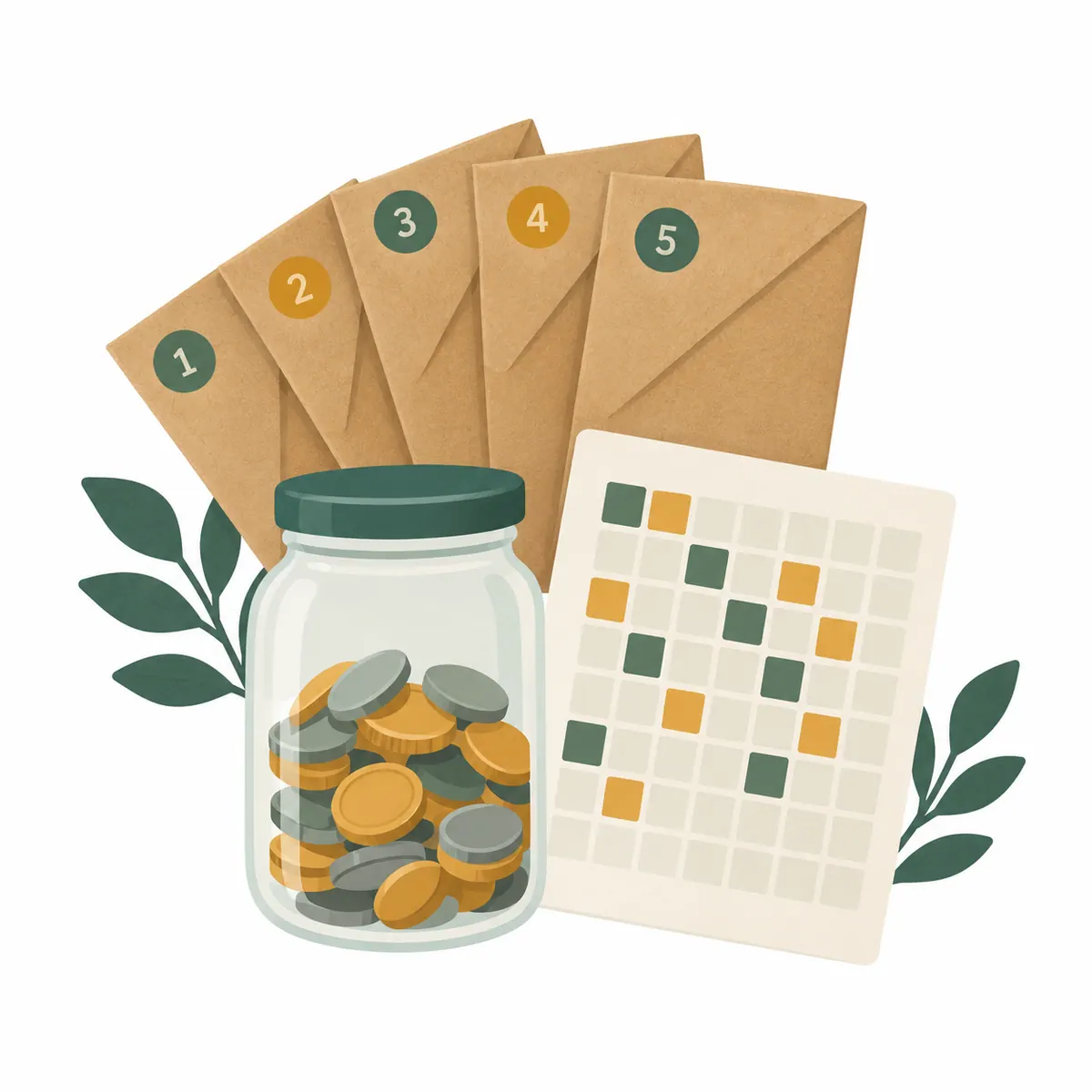
If you'd rather print a finished chart than draw your own, the free Cozy Savings Challenge Pack includes the 100-envelope chart ($5,050), the 50-envelope chart ($1,275), a goal thermometer, a 30-day no-spend tracker and a short guide to where to keep envelope savings. Pair it with no spend January if you want a month of extra deposits to start.
More charts to compare? Our savings challenge printables cover the 52 week, bi weekly and $10K versions with every total shown. Start with one envelope this week, and let the box do the remembering.
Frequently asked questions
How does the 100 envelope challenge work?
Number 100 envelopes from 1 to 100. Each envelope gets the dollar amount on it, so envelope 25 gets $25. Fill them in any order, on any schedule, and color in a tracker as you go. When all 100 are full, you've saved $5,050.
How much money do you save with the 100 envelope challenge?
$5,050, because 1 + 2 + 3 up to 100 equals 100 x 101 / 2. The 50-envelope version saves $1,275, a half-amount version saves $2,525, and the doubled 10k version saves $10,100.
How long does the 100 envelope challenge take?
It depends on your pace. One envelope a day takes 100 days, $100 a week takes about 51 weeks, and $50 a week takes about 101 weeks. These are example numbers to help you plan.
Can you do the 100 envelope challenge on a low income?
Yes, with a smaller version. The 50-envelope chart ($1,275) takes about 64 weeks at $20 a week, and a 25-envelope chart ($325) takes about 17. A smaller chart you finish beats a big one you quit.
Can you do the 100 envelope challenge with a savings account instead of cash?
Yes. Transfer the envelope amount to a separate savings account and color in the matching box on a printed tracker. Deposits at FDIC-insured banks and NCUA-insured credit unions are covered up to $250,000 per depositor, per institution, per ownership category.
Is there a free printable 100 envelope challenge tracker?
Yes. The tracker on this page prints from your browser, and the free Cozy Savings Challenge Pack adds a 100-envelope chart, a 50-envelope chart and a goal thermometer on US Letter or A4.
Save it for later
Pin this to your Savings Challenges board so it's there when you need it.
Save to Pinterest