This post contains affiliate links. As an Amazon Associate we earn from qualifying purchases, at no extra cost to you. Read our disclosure.
Safety first: This is general money education, not personalised financial advice. Please read our financial disclaimer before you start.
Key takeaways
- Sorted by bill: easy wins, utilities, food, recurring leaks, low-income resources, bi-weekly pay, and fun and gifts.
- Every dollar figure is an example range. Your bills, region and family size decide the real number.
- A household that picks ten of these tips lands somewhere in the low hundreds a month in the example tally below, which is why a place to put the money matters.
- The bi-weekly section is about timing: two months a year have three paychecks, and that third check is the easiest saving you will ever do.
- If you only do five, do the five in the box near the end. They take under an hour total.
In this post53 sections
- How These 40 Money Saving Tips Add Up (A Monthly Tally Example)
- Easy Money Saving Tips to Start This Week (Tips 1-8)
- 1. Write every bill and its due date on one page
- 2. Set one weekly "everything else" amount in cash or on a debit card
- 3. Give anything over $20 a 24-hour pause
- 4. Cancel one thing today
- 5. Carry a water bottle and stop buying drinks out
- 6. Use the library for more than books
- 7. Round down every grocery total and move the change
- 8. Unsubscribe from store emails and delete the shopping apps
- Money Saving Tips for Utilities and Home Bills (Tips 9-15)
- 9. Turn the thermostat down 2 degrees in winter and up 2 in summer
- 10. Swap the five most-used bulbs to LED
- 11. Block drafts with stoppers and window film
- 12. Run full loads, and run them off-peak if your utility has time-of-use rates
- 13. Put the TV, console and chargers on a power strip and switch it off
- 14. Shorter showers and a low-flow showerhead
- 15. Ask your utility about budget billing and assistance programs
- Money Saving Tips for Food Without Giving Up Takeout Entirely (Tips 16-22)
- 16. Plan five dinners, not seven
- 17. Keep takeout, but switch from delivery to pickup
- 18. Eat breakfast at home, even if it is just oats and an egg
- 19. When you do eat out, use kids-eat-free nights and skip the drinks
- 20. Turn the freezer into your takeout replacement
- 21. Buy store-brand snacks and drinks
- 22. Make coffee the cozy ritual, not the purchase
- Subscriptions, Phone and Insurance: The Recurring Leaks (Tips 23-28)
- 23. Rotate streaming: one service at a time
- 24. Move to a prepaid or low-cost phone plan
- 25. Re-shop insurance once a year and ask about discounts
- 26. Check your internet speed tier
- 27. Cancel the device protection plans you never use
- 28. Stop paying bank fees
- Money Saving Tips for Low Income Households (Tips 29-34)
- 29. Do a 20-minute benefits check once
- 30. Ask about hardship programs on medical and utility bills
- 31. Sign up for free and reduced school meals and summer meal sites
- 32. Use Buy Nothing groups and community closets for kids' clothes and gear
- 33. Move your due dates to land right after paydays
- 34. Skip rent-to-own and payday loans; call 211 first
- Money Saving Tips When You're Paid Bi-Weekly (Tips 35-38)
- 35. Budget by paycheck, not by month
- 36. Circle the two three-paycheck months now
- 37. Auto-move a small fixed amount every payday
- 38. Set aside half the rent from every check
- Fun, Kids and Gifts on Less (Tips 39-40)
- 39. Keep a free family fun list on the fridge
- 40. Give every gift a cap and start a gift sinking fund
- The 5 Best Money Saving Tips If You Only Do a Few
- Weekly and Monthly Money Saving Routine (10 Minutes a Week)
- Where to Put the Money You Save: The 100-Envelope Challenge
- Track It All Year: Cozy Savings Challenge Bundle 2027
- FAQ
How These 40 Money Saving Tips Add Up (A Monthly Tally Example)
Saving on a tight budget rarely comes from one big move. It comes from a handful of small changes that repeat every month without you thinking about them. Here is what that looks like for an example family of three renting an apartment, paid every two weeks.
| Tip | Example monthly range |
|---|---|
| Thermostat down 2 degrees in winter (tip 9) | $5 to $15 |
| Five most-used bulbs to LED (tip 10) | $3 to $8 |
| Plan 5 dinners, not 7 (tip 16) | $20 to $40 |
| Pickup instead of delivery (tip 17) | $15 to $40 |
| Breakfast at home (tip 18) | $20 to $60 |
| One streaming service at a time (tip 23) | $15 to $30 |
| Prepaid phone plan (tip 24) | $20 to $50 |
| Move due dates to paydays, no late fees (tip 33) | $0 to $35 |
| Auto-move $15 per paycheck (tip 37) | $30 (two checks) |
| Free family fun list (tip 39) | $20 to $50 |
| Example total | About $150 to $360 a month |

That example household did not clip a coupon or take a second job. It changed ten small things and wrote them down. The tally is the part most people skip, and it is the reason the savings disappear by the 20th.
Easy Money Saving Tips to Start This Week (Tips 1-8)
No calls, no cancellations, no spreadsheets. Each of these takes under 15 minutes once, and then it runs on its own.
1Write every bill and its due date on one page

Late fees are the most avoidable expense in any budget. One page on the fridge, bills in date order, ticked off as paid, stops most of them.
Add the amount next to each one and you have the start of a budget without calling it that.
- Example: one avoided late fee is often $25 to $35, and many households pay a few a year.
2Set one weekly "everything else" amount in cash or on a debit card
Groceries, gas and bills have their own lines. Everything else (snacks, drive-thru, small online orders) gets one weekly number. When it is gone, it is gone until next week.
Cash in an envelope makes it visible; a separate debit card does the same without the ATM trip.
- Example: families who try this often find $20 to $60 a month of "where did that go" spending.
One wallet with labeled pockets holds the weekly cash so the system survives a busy week.
3Give anything over $20 a 24-hour pause
Put it in the cart, close the app, decide tomorrow. Most of the time the want fades, and when it does not, you buy it without guilt.
This is the gentlest impulse-spending fix there is, and it works at the store if you take a photo instead of the item.
- Example: one skipped $25 purchase a week is about $100 a month.
4Cancel one thing today
Not an audit, not a spreadsheet. Open your phone, find one subscription you have not used in a month, and cancel it before you finish your coffee.
The full subscription sweep is in the recurring leaks section; this is just the first domino.
- Example: $8 to $20 a month, and it takes two minutes.
5Carry a water bottle and stop buying drinks out

Bottled water, gas station coffee and a soda with lunch are small, daily and forgettable. A filled bottle and a thermos in the car take the decision away.
This is not about never having a treat. It is about the automatic ones.
- Example: $15 to $40 a month for one adult; more with kids.
Pays for itself in a few weeks of skipped store drinks and lasts for years.
6Use the library for more than books
Most public libraries lend movies, audiobooks, museum passes, kids' kits, tools and even cake pans. Many have free streaming apps with your card.
One trip a month replaces a surprising number of small purchases.
- Example: $10 to $30 a month in books, movies and outings for a family.
7Round down every grocery total and move the change
Spent $87.40? Move $2.60 to a jar or a savings account, so the receipt reads $85 in your head. It is painless and it builds the habit of moving money the same day you spend it.
The 100-envelope challenge below is built for exactly this kind of small, frequent deposit.
- Example: $10 to $30 a month, depending on how often you shop.
8Unsubscribe from store emails and delete the shopping apps
You cannot be tempted by a sale you never see. Ten minutes of unsubscribing and deleting apps removes dozens of small nudges a week.
Keep the one store app you actually use for grocery offers; delete the rest.
- Example: $20 to $60 a month in "it was on sale" purchases.
Money Saving Tips for Utilities and Home Bills (Tips 9-15)
Utilities are the bills renters think they cannot change. You can change the usage, and in winter that is where the money is.
9Turn the thermostat down 2 degrees in winter and up 2 in summer

The U.S. Department of Energy says setting the thermostat back 7 to 10 degrees for 8 hours a day can save up to about 10% a year on heating and cooling. Two degrees all day, with a blanket and socks, is the cozy version.
Drop it further at night and when the house is empty.
- Example: $5 to $15 a month on a typical apartment bill; more in a drafty house.
10Swap the five most-used bulbs to LED
Kitchen, living room, bathroom, porch, bedroom lamp. LEDs use a fraction of the electricity of old bulbs and last years, so you buy five once and forget them.
Do not replace every bulb in the house; just the ones that are on for hours.
- Example: $3 to $8 a month, and the bulbs often pay for themselves in the first winter.
One pack covers the five most-used fixtures.
11Block drafts with stoppers and window film
A rolled towel or a fabric draft stopper at the door, plastic shrink film on the leakiest window, and foam gaskets behind outlet covers. All renter-safe, all under $30 total.
Do it in October and it works all winter.
- Example: $10 to $30 a month in the cold months for an older apartment.
Renter-safe and reusable every winter.
12Run full loads, and run them off-peak if your utility has time-of-use rates
A half-full dishwasher or washer costs the same water and most of the same power as a full one. Wait for full. If your electric bill shows peak and off-peak hours, run them after 8 p.m. or whenever the cheap window is.
Check your bill or the utility's site; not every area has time-of-use pricing.
- Example: $5 to $15 a month for a family doing daily loads.
13Put the TV, console and chargers on a power strip and switch it off

Standby power from a TV, game console, cable box and a nest of chargers is small per device and real in total. One strip, one switch, off at bedtime.
A smart strip does it on a schedule if nobody remembers.
- Example: $3 to $10 a month, depending on how much is plugged in.
Turns the entertainment corner off on a schedule without anyone crawling behind the TV.
14Shorter showers and a low-flow showerhead
Hot water is a big share of most energy bills. A $15 low-flow showerhead and a four-song shower limit for the kids cut both the water and the gas or electric that heats it.
It screws on by hand, so it is renter-safe; keep the old one to swap back.
- Example: $5 to $20 a month for a family of four.
15Ask your utility about budget billing and assistance programs
Budget billing averages your yearly cost into equal payments, so January does not bring a $300 surprise. It does not lower the total, but it stops the spike that leads to a late fee or a credit card.
While you are on the phone, ask whether there is an assistance or hardship program; most utilities have one and few people ask.
- Example: avoiding one winter spike can mean no late fee and no interest; the value is in the timing.
Money Saving Tips for Food Without Giving Up Takeout Entirely (Tips 16-22)
The grocery bill has its own full guide: 25 ways to save money on groceries. This section is about the other food money, the kind that goes to drive-thrus, delivery apps and the gas station.
16Plan five dinners, not seven
Real weeks have a leftover night and a clean-out-the-fridge night. Planning seven dinners means two of them get thrown out or replaced by takeout.
Five planned, two flexible, and the grocery list gets shorter too.
- Example: $20 to $40 a month in food that no longer goes in the trash.
17Keep takeout, but switch from delivery to pickup
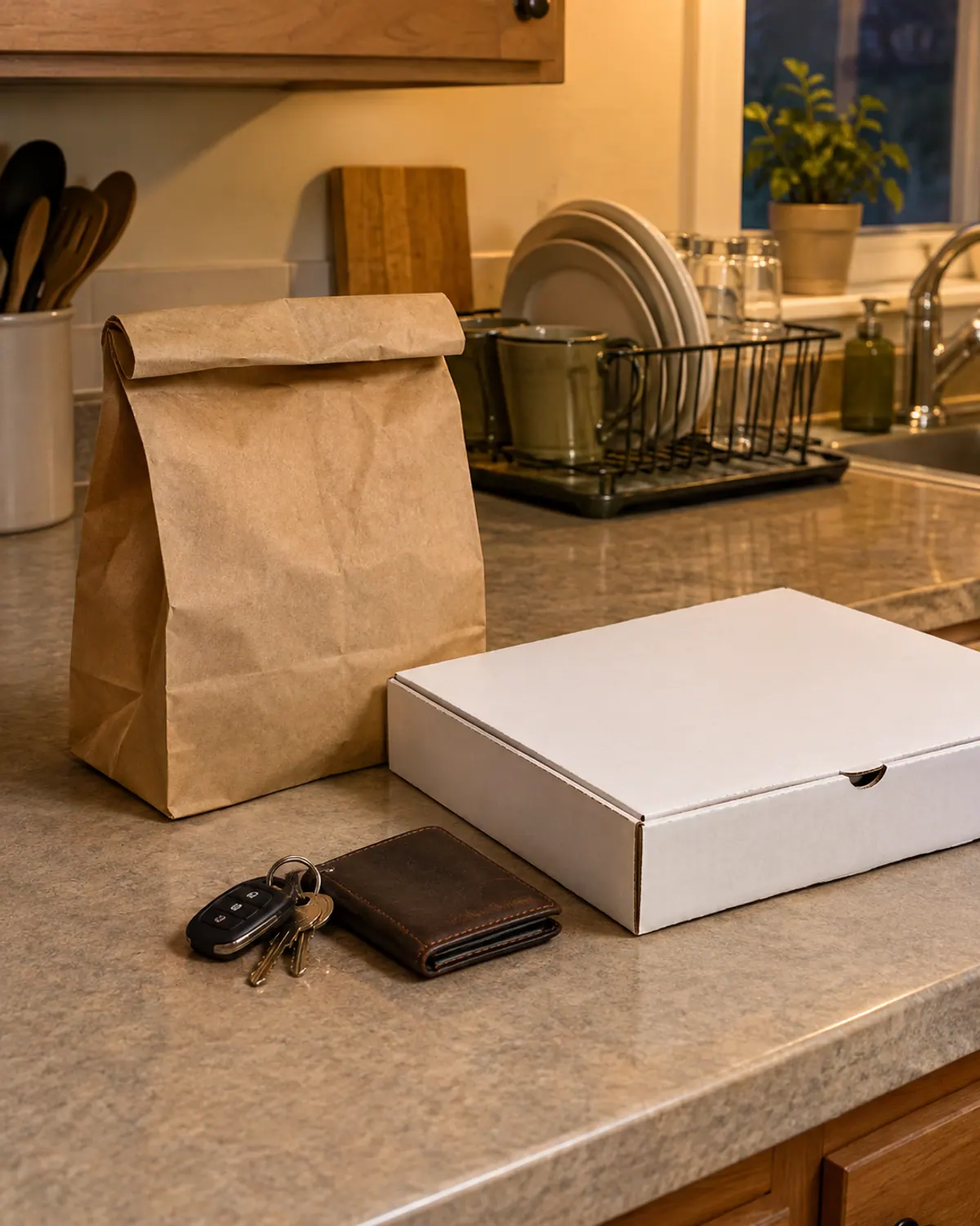
Delivery apps add service fees, delivery fees, a tip and often a higher menu price. Ordering direct and picking up keeps the treat and drops the extras.
Pick one takeout night a week and put it in the budget on purpose. Guilt-free beats white-knuckle.
- Example: $15 to $40 a month in fees and tips for one order a week.
18Eat breakfast at home, even if it is just oats and an egg
The morning drive-thru is the most expensive meal of the day per calorie. A canister of oats, a dozen eggs and a bunch of bananas cover a week of breakfasts for one adult.
Prep it the night before if mornings are chaos: overnight oats in a jar takes two minutes.
- Example: $20 to $60 a month per adult who stops the morning stop.
19When you do eat out, use kids-eat-free nights and skip the drinks
Many family restaurants have a weeknight where kids eat free with an adult meal. Drinks and appetizers are the high-margin items, so water and a shared starter keep the bill honest.
Going out is still allowed. Going out blind is what costs.
- Example: $10 to $25 a month for a family that eats out twice a month.
20Turn the freezer into your takeout replacement
Double one cheap dinner a week and freeze the second batch in single portions. On the night you would have ordered in, it is already made.
Soup, chili, pasta sauce and shredded chicken freeze best. The 4-week frugal meal plan builds this in on purpose.
- Example: $30 to $60 a month if it replaces two takeout nights.
Single-portion containers make the freezer dinner as easy as the delivery app.
21Buy store-brand snacks and drinks
Chips, crackers, cereal, juice and sparkling water are where the name-brand markup is widest. Kids rarely notice when the box changes.
If one brand matters to someone, keep that one and swap the rest.
- Example: $10 to $25 a month for a family with school lunches.
22Make coffee the cozy ritual, not the purchase
A bag of ground coffee and a thermos replace the daily stop. Keep the weekend coffee-shop visit if you love it; drop the weekday habit.
The ritual is the part people miss, so make it nice at home: a favorite mug, a quiet five minutes.
- Example: $20 to $50 a month per daily buyer.
Subscriptions, Phone and Insurance: The Recurring Leaks (Tips 23-28)
These six are the bills that quietly climb. They take a phone call or ten minutes in an app, and the saving repeats every month after. If you want the full "call and ask" version, the 30 ways to save money fast before the holidays sprint has it.
23Rotate streaming: one service at a time

Subscribe to one, watch what you wanted, cancel, move to the next. Most services let you resubscribe in two taps, so nothing is lost.
Write the rotation on the fridge so the whole family knows what is on this month.
- Example: $15 to $30 a month compared with three or four services running at once.
24Move to a prepaid or low-cost phone plan
The big carriers' budget brands and prepaid plans run on the same towers for a fraction of the price. Check your actual data use in your phone settings first; most people use far less than their plan.
Keep your number, keep your phone, change the plan.
- Example: $20 to $50 a month per line, depending on the plan you leave.
25Re-shop insurance once a year and ask about discounts
Car and renters insurance quotes change every year, and bundling, low-mileage, paid-in-full and good-student discounts often go unclaimed because nobody asked.
Set a calendar reminder for your renewal month. Twenty minutes, once a year.
- Example: $10 to $40 a month; this is general information, not insurance advice.
26Check your internet speed tier
Most homes pay for more speed than they use. Streaming and video calls for a family rarely need the top tier, and a downgrade is a five-minute chat.
While you are there, ask whether the current new-customer price can be applied to your account.
- Example: $10 to $30 a month.
27Cancel the device protection plans you never use
Phone insurance, extended warranties and protection plans on appliances add up to a monthly line most people cannot name. Keep one if a device is new and expensive; drop the rest.
Put the money in a small "repair fund" envelope instead.
- Example: $5 to $20 a month.
28Stop paying bank fees
Monthly maintenance fees, overdraft fees and out-of-network ATM fees are money for nothing. Ask your bank which account has no monthly fee, turn off overdraft "coverage" if it is costing you, and use your own bank's ATMs.
This is a question for your bank, not a recommendation of any bank.
- Example: $5 to $35 a month for households that pay one fee a month.
Money Saving Tips for Low Income Households (Tips 29-34)
When income is low, the biggest "savings" are often resources you qualify for and have not claimed. None of this is charity; these programs exist for exactly this situation.
29Do a 20-minute benefits check once

SNAP, WIC, LIHEAP (heating help), Lifeline (phone and internet), free and reduced school meals and state child-care subsidies all have income limits that are higher than many people assume. Benefits.gov and your local 211 line can screen you in minutes.
Check once a year or whenever income changes.
- Example: this can be worth more than every other tip on the page combined; the amount depends entirely on your household.
30Ask about hardship programs on medical and utility bills
Hospitals have financial assistance policies, and most utilities have hardship or payment-plan programs. They are rarely offered unless you ask, and asking does not hurt anything.
A short, polite call: "Do you have a financial assistance or hardship program I could apply for?"
- Example: varies widely; a reduced medical bill or a waived reconnection fee can be hundreds.
31Sign up for free and reduced school meals and summer meal sites
If your kids qualify, breakfast and lunch at school cover ten meals a week per child. Summer meal sites continue it in July and August in most districts.
The form is short, and in many districts it also unlocks fee waivers for sports and field trips.
- Example: $40 to $100 a month per child in packed lunches and breakfasts, as an illustration.
32Use Buy Nothing groups and community closets for kids' clothes and gear
Local Buy Nothing groups, school clothing closets and church swaps move coats, boots, car seats and toys between families for free. Kids outgrow things in months; buying new every time is the expensive habit.
Give back when your kids grow out of things and the loop keeps working.
- Example: $20 to $50 a month for a family with growing kids.
33Move your due dates to land right after paydays
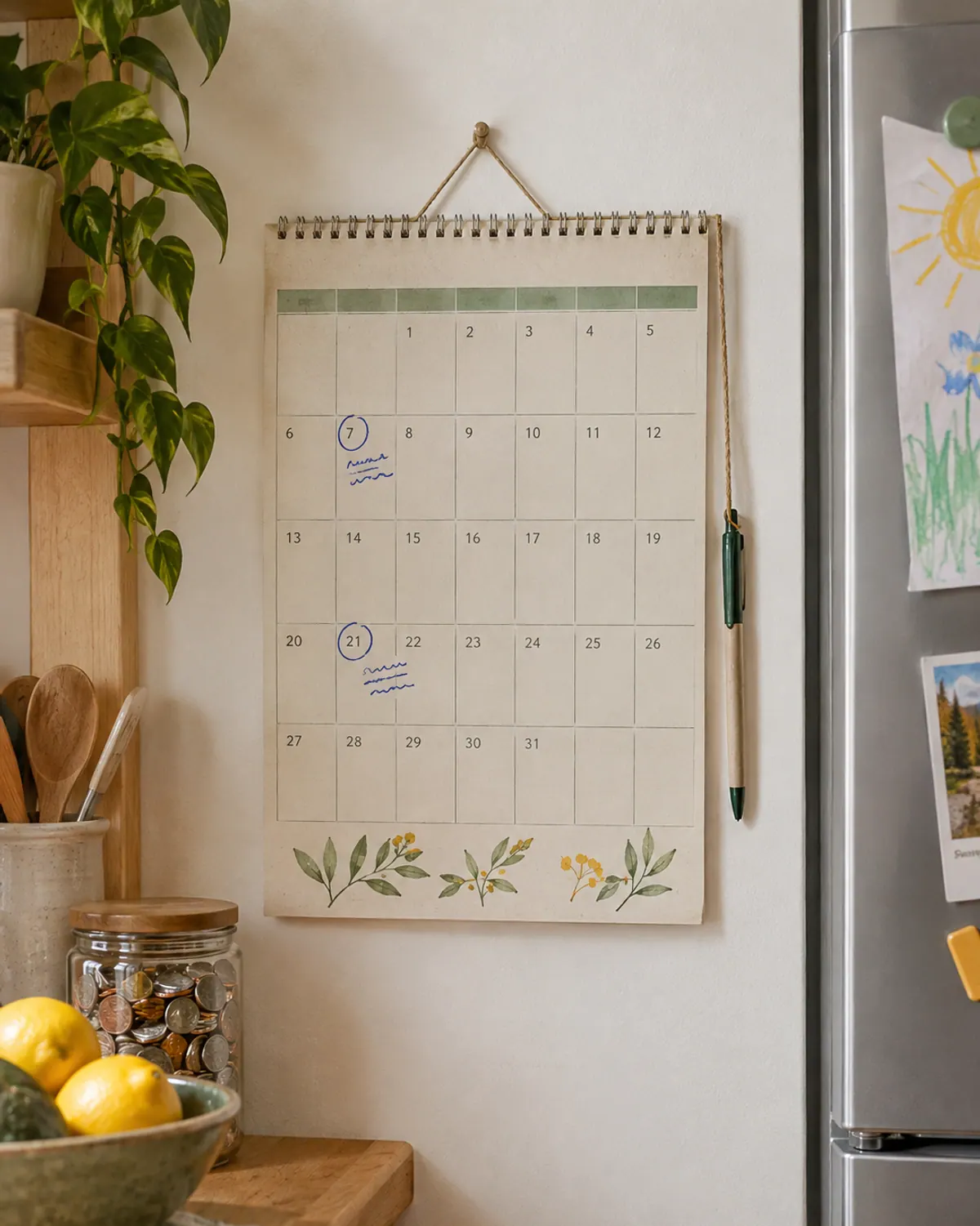
Most providers will change your due date if you call. Put rent and the biggest bills right after the first check of the month, the smaller ones after the second, and the late fees stop.
This is the single most useful call for a household living check to check.
- Example: $0 to $35 a month, which is the late fees you no longer pay.
34Skip rent-to-own and payday loans; call 211 first
Rent-to-own furniture, payday loans and "buy now, pay later" on groceries cost far more than the item over time. The Consumer Financial Protection Bureau has plain explanations of each on its site.
When a bill cannot be paid, 211 (phone or web) connects you to local rent, utility and food help before the expensive options.
- Example: the saving is the fees and interest you never pay, which can be large. Not financial advice; a counselor through 211 can look at your real numbers.
Money Saving Tips When You're Paid Bi-Weekly (Tips 35-38)
Bi-weekly pay is 26 checks a year, and monthly bills do not line up with it. These four are about timing, and timing is where bi-weekly households lose or find the most money.
35Budget by paycheck, not by month
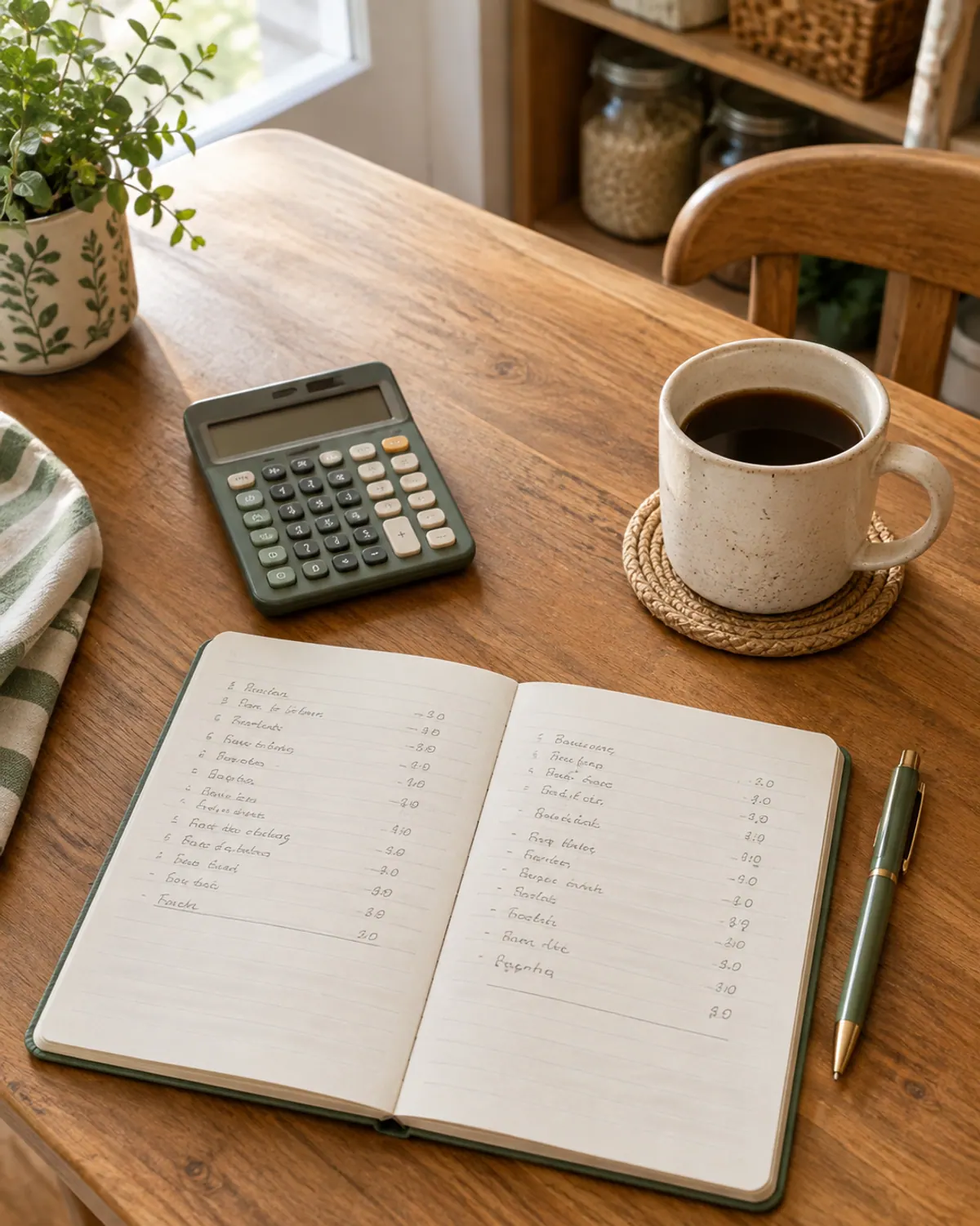
Write two columns: check 1 and check 2. Assign every bill to one of them so each check covers its own list. Rent and groceries might split across both.
No more "the money was there on the 1st but not on the 15th."
- Example: the saving is in avoided overdrafts and late fees; many bi-weekly households find one or two a month.
36Circle the two three-paycheck months now
Bi-weekly pay gives you two months a year with three checks. Find them on a calendar today (count 14 days from your last payday and look for months with three).
Decide now where the third check goes: an emergency fund, a bill paid ahead or the holiday fund. If you decide in the moment, it gets spent.
- Example: one full extra check twice a year, which is the biggest single number on this page for most people.
37Auto-move a small fixed amount every payday
Set a transfer of $10 to $25 to a separate savings account for the morning after each payday. Small enough that you never feel it, automatic so you never skip it.
Raise it by $5 whenever a bill goes away.
- Example: $15 per check is about $390 a year. No rate or return is assumed here; it is just the deposits.
38Set aside half the rent from every check
Rent is the bill that does not care which week it is. Move half of it to a separate account from every paycheck, and the full amount is always sitting there on the 1st.
It turns the scariest bill into a boring one.
- Example: no dollar saving, but it removes the most common reason for an overdraft or a late fee.
Fun, Kids and Gifts on Less (Tips 39-40)
39Keep a free family fun list on the fridge
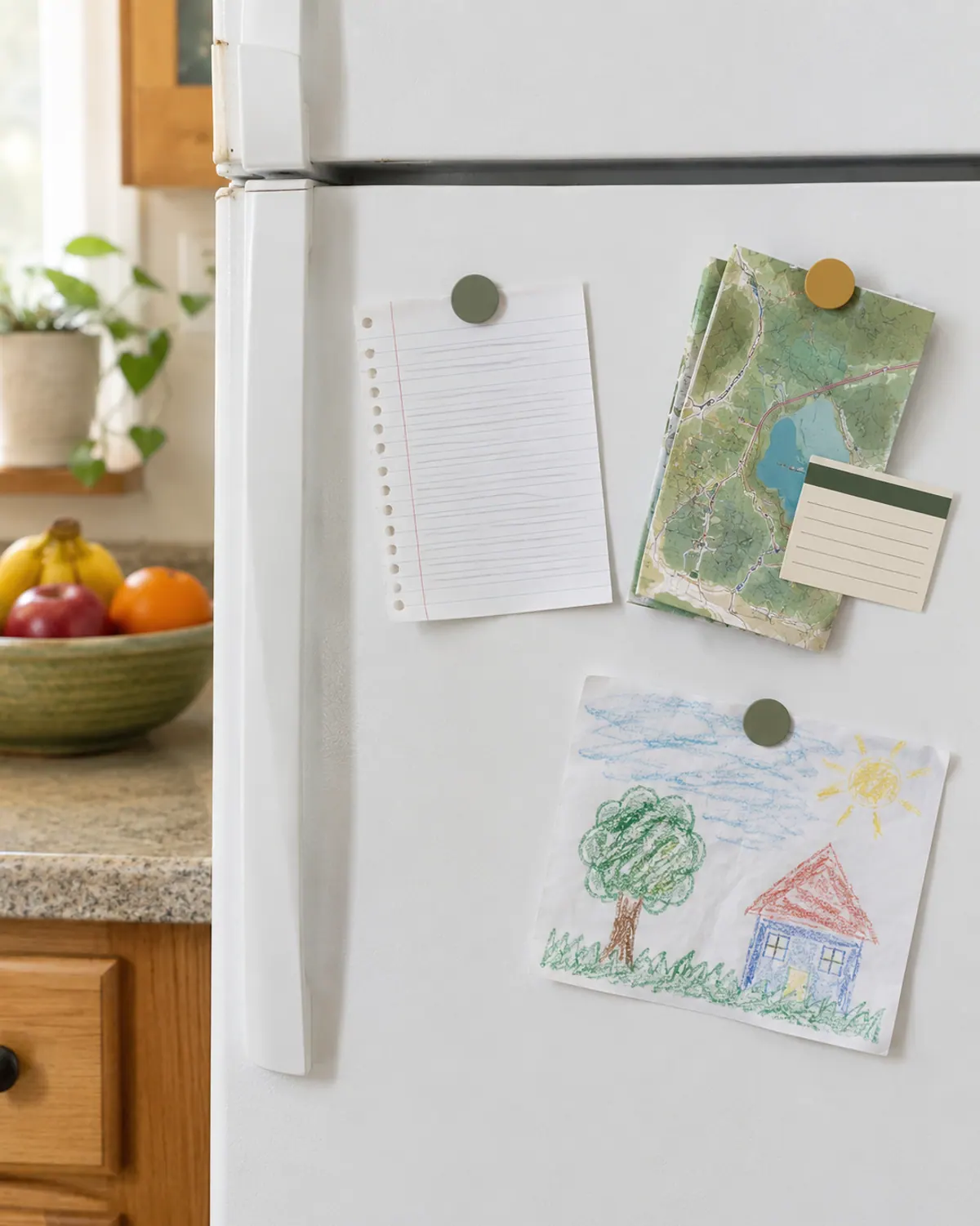
Library story time, the park with a thermos, a board game night, a free museum day, a walk to look at lights. When the weekend question comes up, the list answers before the wallet does.
Boredom is what turns Saturday into a $60 trip. The list fixes boredom.
- Example: $20 to $50 a month for a family that used to default to paid outings.
40Give every gift a cap and start a gift sinking fund
Birthdays, teacher gifts, baby showers and Christmas arrive on a schedule, so they are not emergencies. Set a cap per person and move a little into a gift envelope each payday.
The Christmas gift savings guide goes deeper on caps and the gift talk.
- Example: $15 to $40 a month set aside, which stops gifts from landing on a credit card.
The 5 Best Money Saving Tips If You Only Do a Few
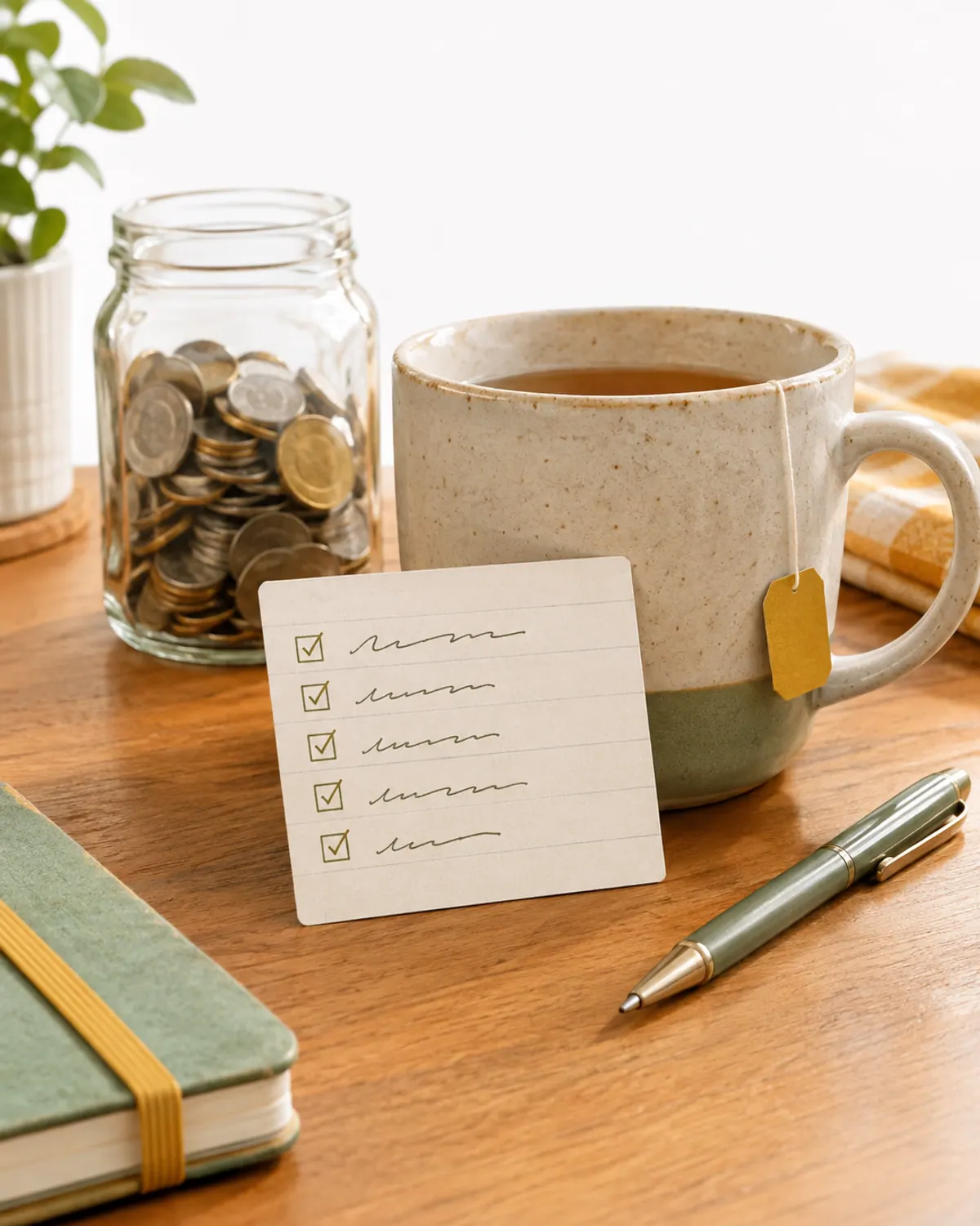
Forty is a menu, not a to-do list. If this week is all you have, do these five. Together they take under an hour and they cover the biggest leaks.
First 5 to do this week
Weekly and Monthly Money Saving Routine (10 Minutes a Week)
The tips only add up if someone adds them. This is the whole routine.
-
Step 1: Payday (5 minutes)
Check the auto-transfer went through. Move half the rent (tip 38). Tick the bills assigned to this check (tip 35).
-
Step 2: Sunday (5 minutes)
Set the weekly "everything else" amount (tip 2). Plan five dinners (tip 16). Round down the week's grocery receipts and move the change (tip 7).
-
Step 3: Last day of the month (10 minutes)
Write the tally: which tips you did, and your best honest estimate of what each was worth. Compare the month's bills to last month's. Pick one new tip for next month.
Where to Put the Money You Save: The 100-Envelope Challenge
Saved money that stays in checking gets spent by the 20th. The free Cozy Savings Challenge Pack gives it somewhere to go: a 100-envelope chart with a numbered box for every amount from $1 to $100, plus a 50-envelope version if the full chart is too much right now, and a 30-day no-spend tracker.
The round-down change from tip 7, the skipped purchase from tip 3, the third paycheck from tip 36: each one colors in a box. If you are starting your first budget from scratch, how to build a monthly budget as a beginner is the companion read.

Track It All Year: Cozy Savings Challenge Bundle 2027
If the envelope chart clicks and you want a year of it, the Cozy Savings Challenge Bundle 2027 starts with a two-minute chooser that matches a chart to what you can set aside per paycheck, including a biweekly version for 26 paydays and small-budget charts for $250, $500 and $1,000. The Cozy Budget Planner 2027 adds the paycheck budget pages from tip 35 and a bills grid for the whole year.
Every dollar figure in this article is an example, and the programs mentioned have their own rules that change. This is frugal living, not financial advice; for your real numbers, a nonprofit credit counselor through 211 can help.
Frequently asked questions
What is the 50/30/20 rule?
It's a rough guideline that splits take-home pay into about 50% for needs (rent, utilities, groceries), 30% for wants and 20% for savings and debt payments. On a low income, needs often take far more than half, so treat it as a direction to lean toward, not a rule you've failed.
How can I save money on a low income?
Start with what you qualify for: a benefits check (SNAP, WIC, LIHEAP, Lifeline, school meals) and hardship programs on utility and medical bills. Then move due dates to land after paydays to end late fees, set a small automatic transfer each payday, and pick the five-tip shortlist above. Small and repeated beats big and once.
What is the 30-day rule for saving money?
Wait 30 days before buying anything you don't need. If you still want it after a month, buy it; most of the time the urge passes. The 24-hour version (tip 3) is the same idea for smaller purchases and is easier to keep up.
How much should I save each month?
There's no single right number. Common guidelines suggest around 10% to 20% of take-home pay, but on a tight budget a steady $10 to $25 per paycheck that actually happens beats a bigger goal you skip. Automate a small amount first, then raise it when a bill goes away. Not financial advice.
What is the fastest way to save money?
Cut the recurring leaks first (streaming, phone plan, bank fees, unused protection plans), because they repeat every month without more effort. For a one-month sprint, the 30 ways to save money fast before the holidays list is built for that. For a lasting change, the monthly habits here add up more over a year.
How do I stop impulse spending?
Give anything over $20 a 24-hour pause, unsubscribe from store emails and delete shopping apps, and set one weekly "everything else" amount in cash or on a separate debit card. Removing the nudge works better than relying on willpower at 9 p.m.

Save it for later
Pin this to your Frugal Living Tips board so it's there when you need it.
Save to Pinterest