This post contains affiliate links. As an Amazon Associate we earn from qualifying purchases, at no extra cost to you. Read our disclosure.
Safety first: This is general money education, not personalised financial advice. Please read our financial disclaimer before you start.
Key takeaways
- Pick two or three hacks and try them for a month.
- Scraps, stale bread and jars are the easiest zero-cost starts.
- Mending and secondhand buys pay off most on quality items.
- Cash envelopes and a 30-day wait list slow down spending.
- Some old hacks backfire; time and waste count as costs.
In this post24 sections
- Old-Fashioned Frugal Hacks Worth Keeping
- Frugal Hacks for the Kitchen
- 1. Make Broth From Vegetable Scraps
- 2. Turn Stale Bread Into Croutons and Breadcrumbs
- 3. Stock a Pantry of Dried Beans, Rice and Oats
- 4. Cook Big and Freeze in Portions
- 5. Reuse Glass Jars for Storage
- Frugal Hacks for Clothes and Mending
- 6. Darn Socks Instead of Tossing Them
- 7. Keep a Sewing Basket With Buttons and Thread
- 8. Mend Before You Buy New
- 9. Buy Coats and Knitwear Secondhand
- 10. Line-Dry Laundry When You Can
- Frugal Hacks for Cleaning and Home
- 11. Mix a Simple Vinegar Cleaning Spray
- 12. Use Cloth Napkins and Kitchen Towels
- 13. Grow Herbs on a Windowsill
- Frugal Hacks for Money and Fun
- 14. Use Cash Envelopes for Spending Categories
- 15. Borrow Instead of Buy: Use the Library
- 16. Wait 30 Days Before a Big Purchase
- Bonus: When an Old Frugal Hack Backfires
- How to Start: Pick Three This Week
- FAQ
Old-Fashioned Frugal Hacks Worth Keeping
Most frugal hacks from grandma work for one reason: they stretch what you already own. Sixteen are collected below, grouped by room, with a rough idea of what each one saves and a plain note on when it is not worth the effort. Savings depend on your home and prices, so treat every number here as an example and not financial advice.
If you are brand new to frugal living, start with the beginner's guide to frugal living and come back for the old-school extras.
Frugal Hacks for the Kitchen
1Make Broth From Vegetable Scraps
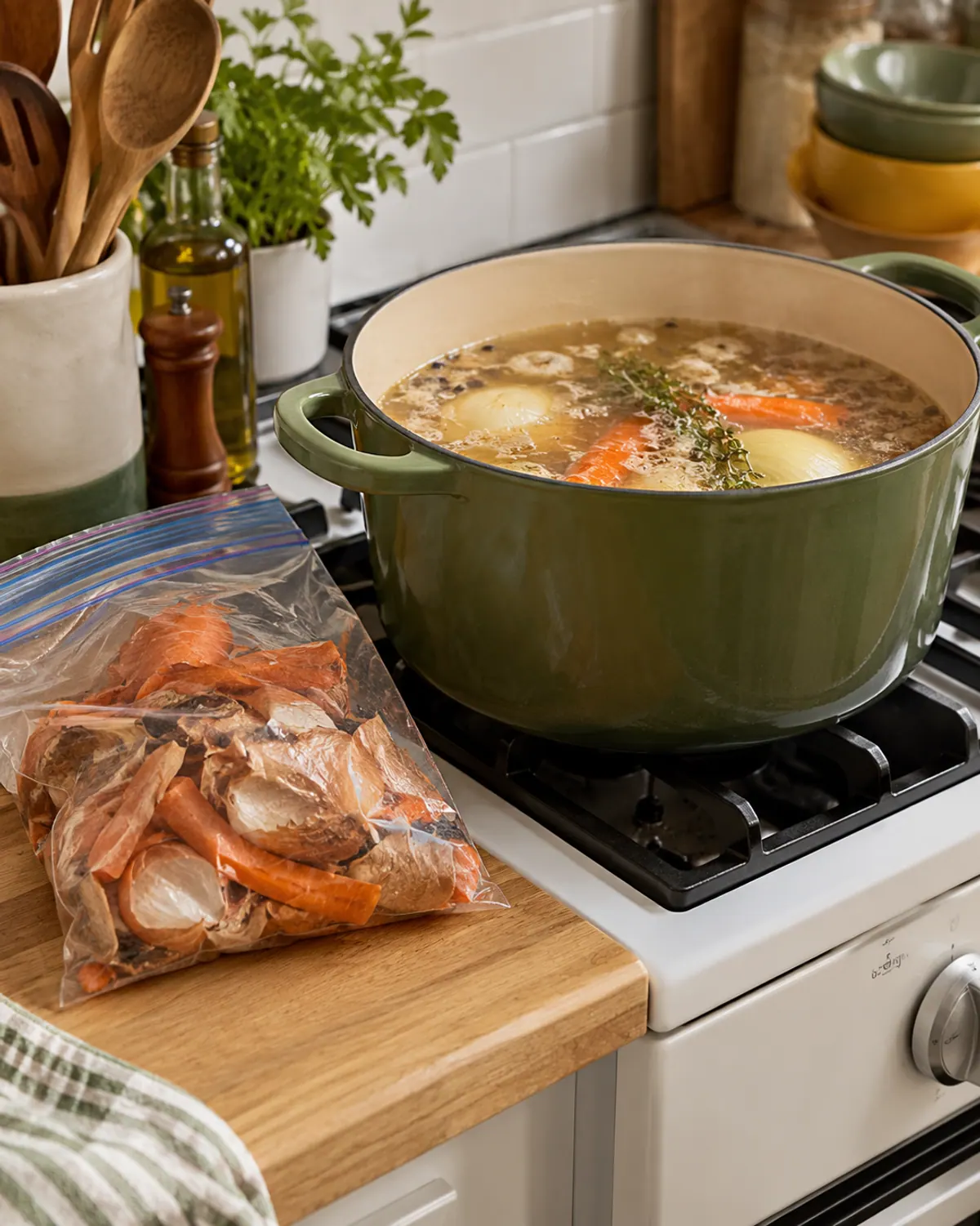
Keep a bag in the freezer for carrot ends, celery tops and onion skins, then simmer them in water for an hour. The broth replaces store-bought cartons. The USDA says food waste is an estimated 30 to 40 percent of the food supply (a loose range based on 2010 data, USDA), so using scraps is a real place to save.
- Skip scraps from cabbage or broccoli stems if you dislike a strong taste.
2Turn Stale Bread Into Croutons and Breadcrumbs

Stale bread bakes into croutons, makes breadcrumbs and soaks up the last of a soup. Cube it, toss it with a little oil and bake until dry. Freezing the heels in a bag keeps them ready for later.
- Freeze bread when it is fresh and you stop throwing away the last third of a loaf.
3Stock a Pantry of Dried Beans, Rice and Oats
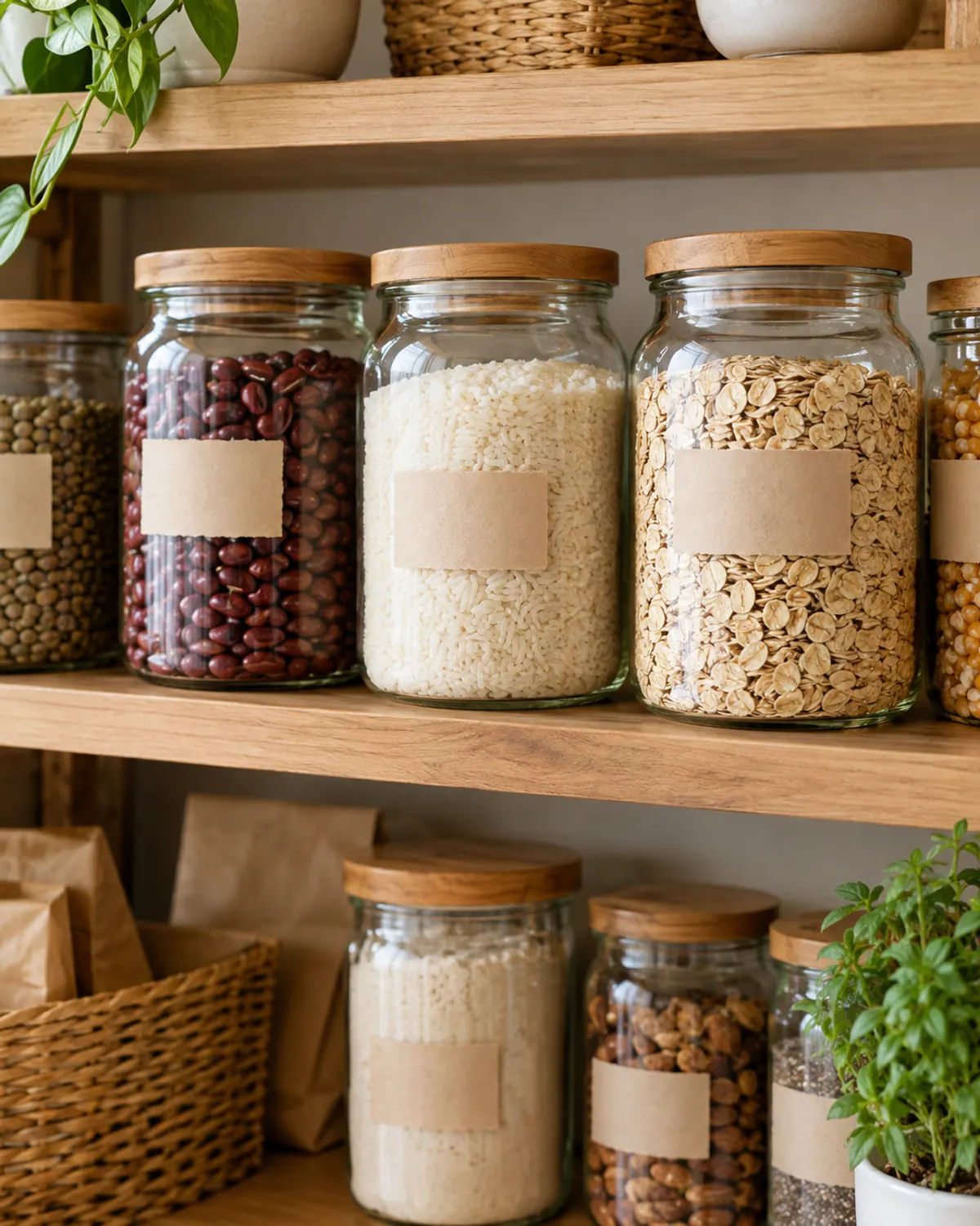
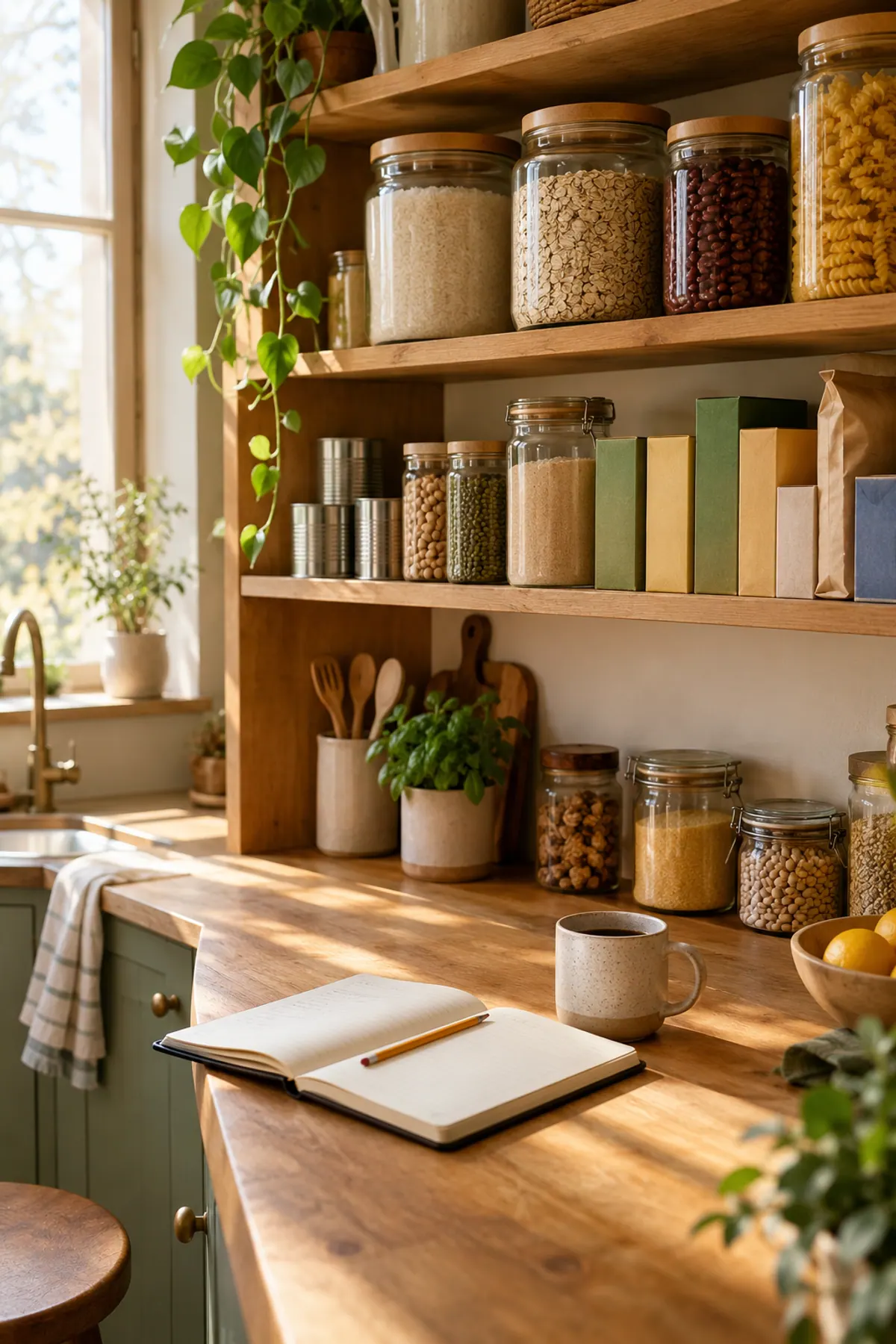
Dry staples usually cost less per serving than canned or boxed versions, and they keep for a long time in sealed jars. Build a pantry slowly, a bag or two a week, rather than in one big trip. The pantry challenge shows how to cook from it.
- Buy only what you will eat within a few months so bulk buying does not become waste.
Keeps dry staples fresh and easy to see.
4Cook Big and Freeze in Portions
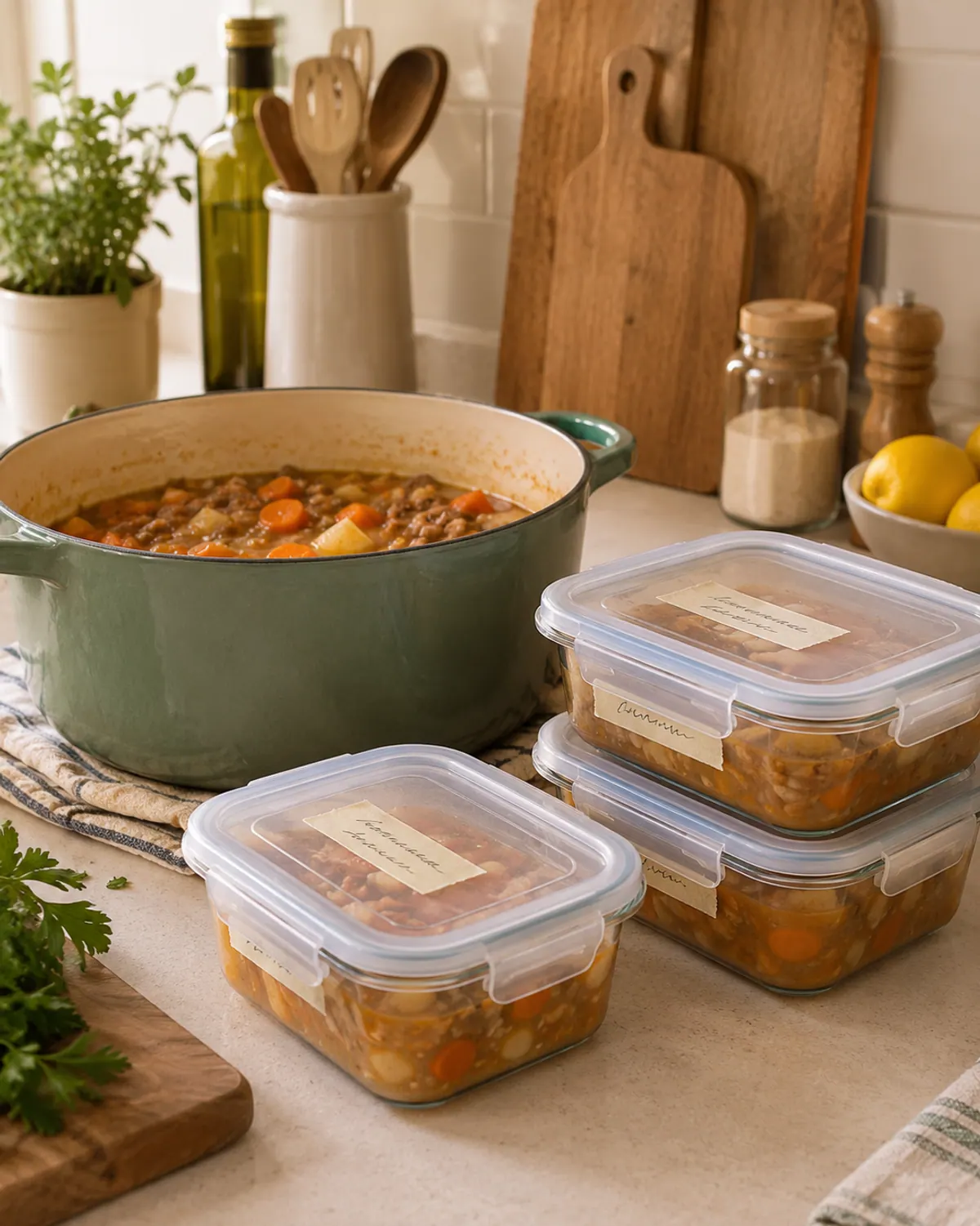
One big pot of soup or stew becomes four to six quick dinners. Cool it, portion it into containers and label it with the date. Reheating a frozen meal is cheaper than a takeout night. Our meal prep on a budget guide has a full weekly plan.
- Label every container with a date so freezer food does not get lost.
Reusable and stackable for batch cooking.
5Reuse Glass Jars for Storage
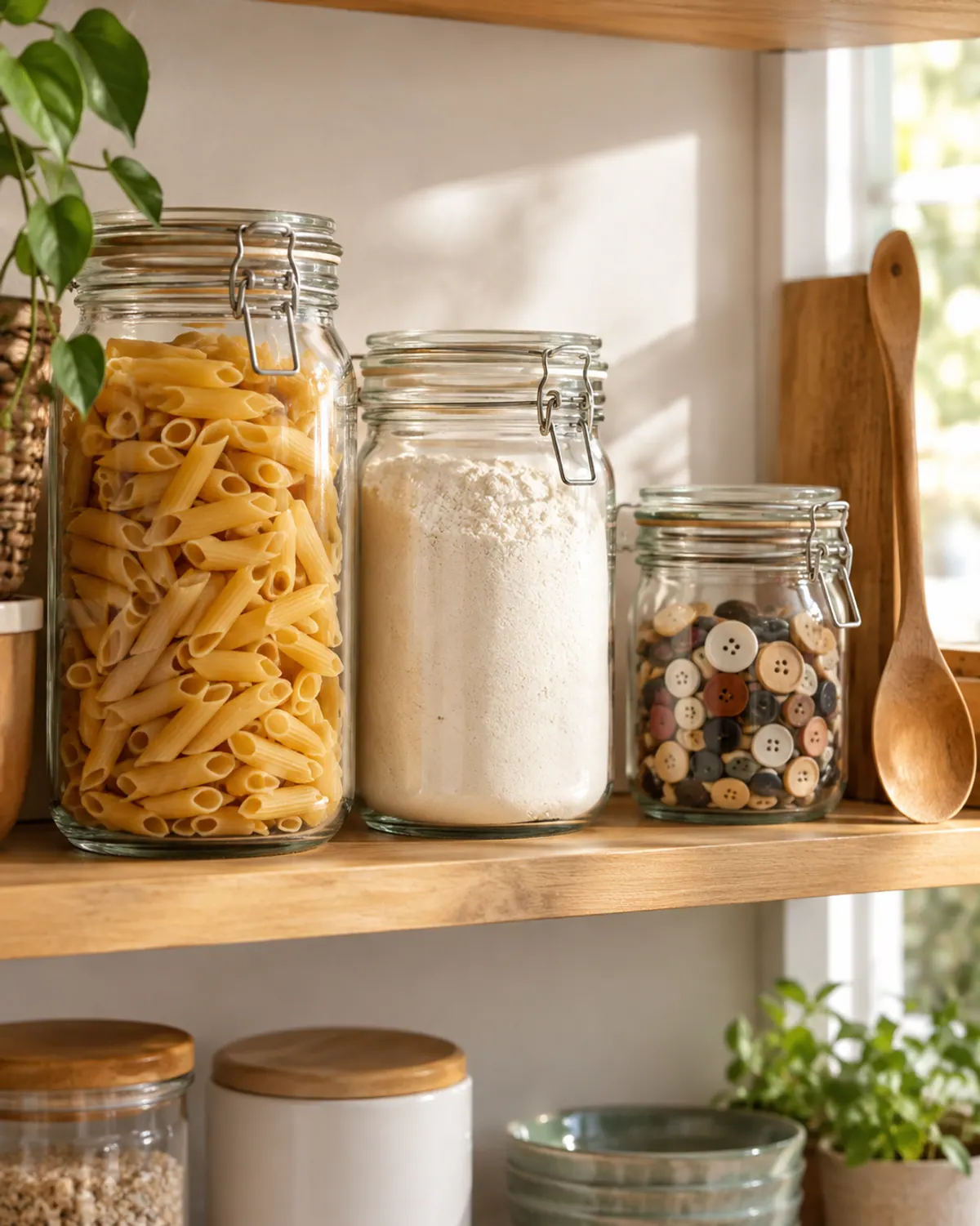
Pasta sauce and pickle jars wash up well and hold leftovers, dry goods, buttons and screws. Soak off the labels in warm water and keep a few in a cupboard. It costs nothing and cuts down on buying storage containers.
- Use jars only for cold storage unless they are labeled as heat-safe.
Frugal Hacks for Clothes and Mending
6Darn Socks Instead of Tossing Them
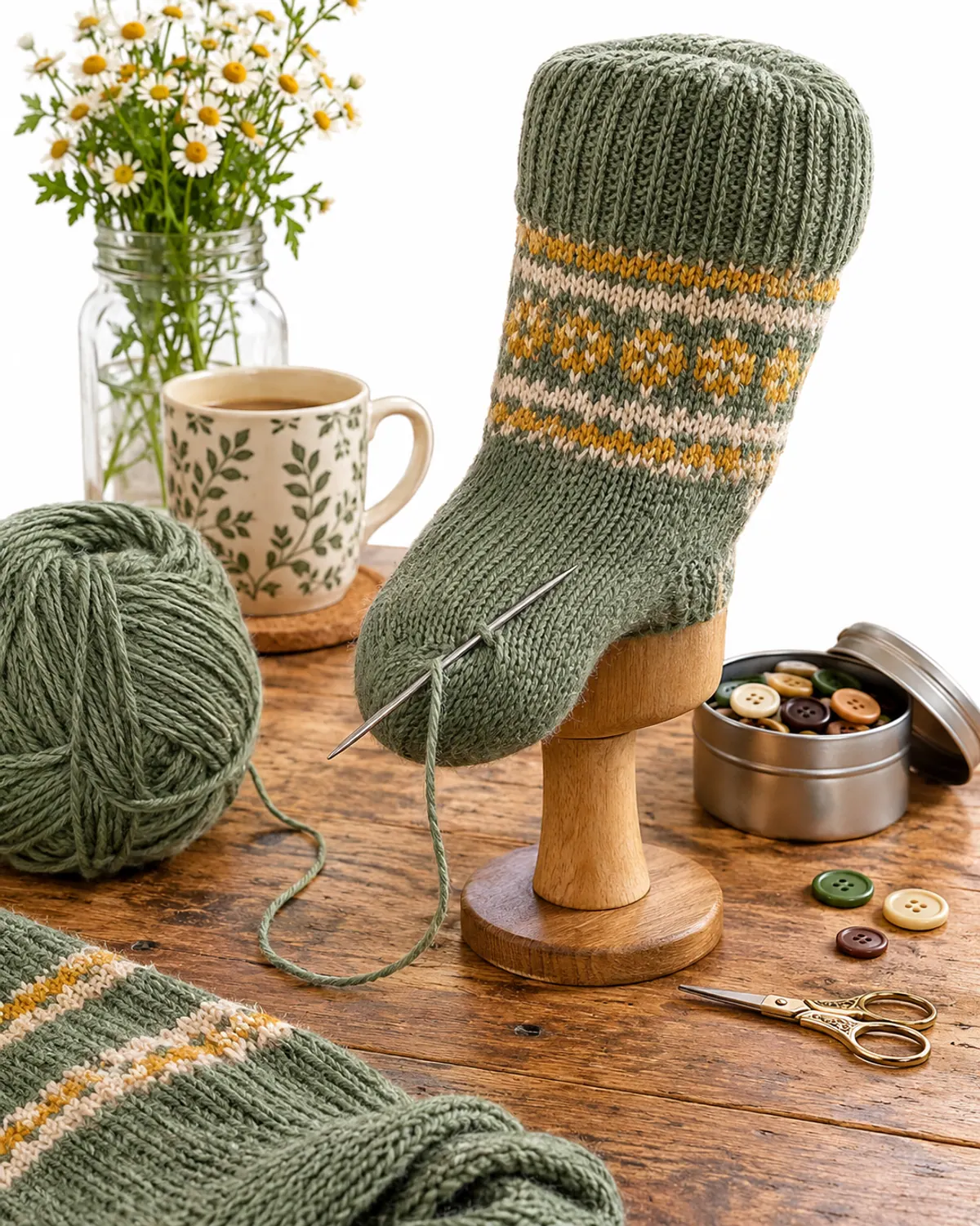
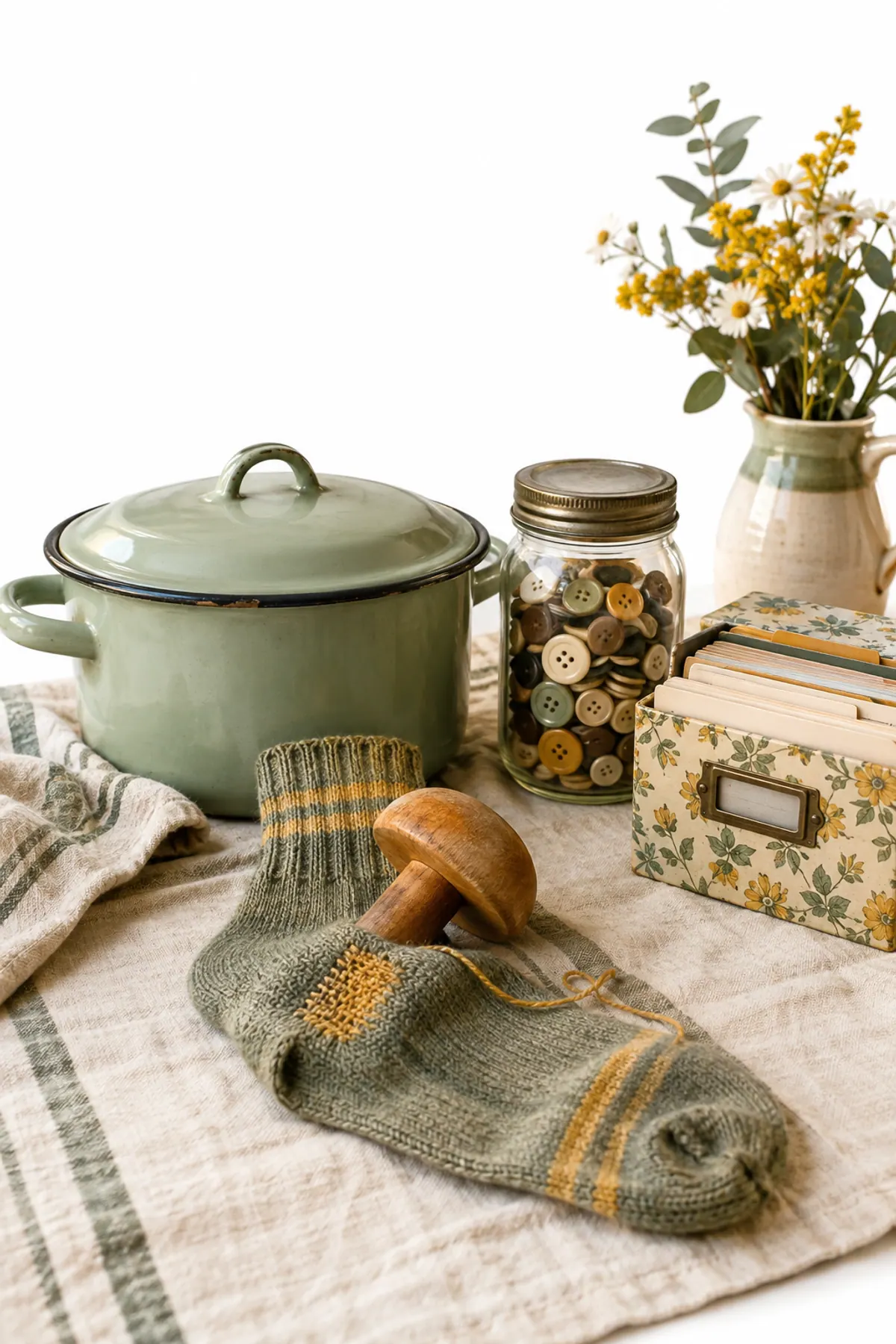
Darning is weaving thread across a hole so it fills with new fabric. A small mushroom or a lightbulb inside the sock makes it easier. Wool and thick cotton socks repay the effort the most.
- Mend a hole when it is small; a large hole is much slower to fix.
Everything needed to mend socks and sweaters.
7Keep a Sewing Basket With Buttons and Thread
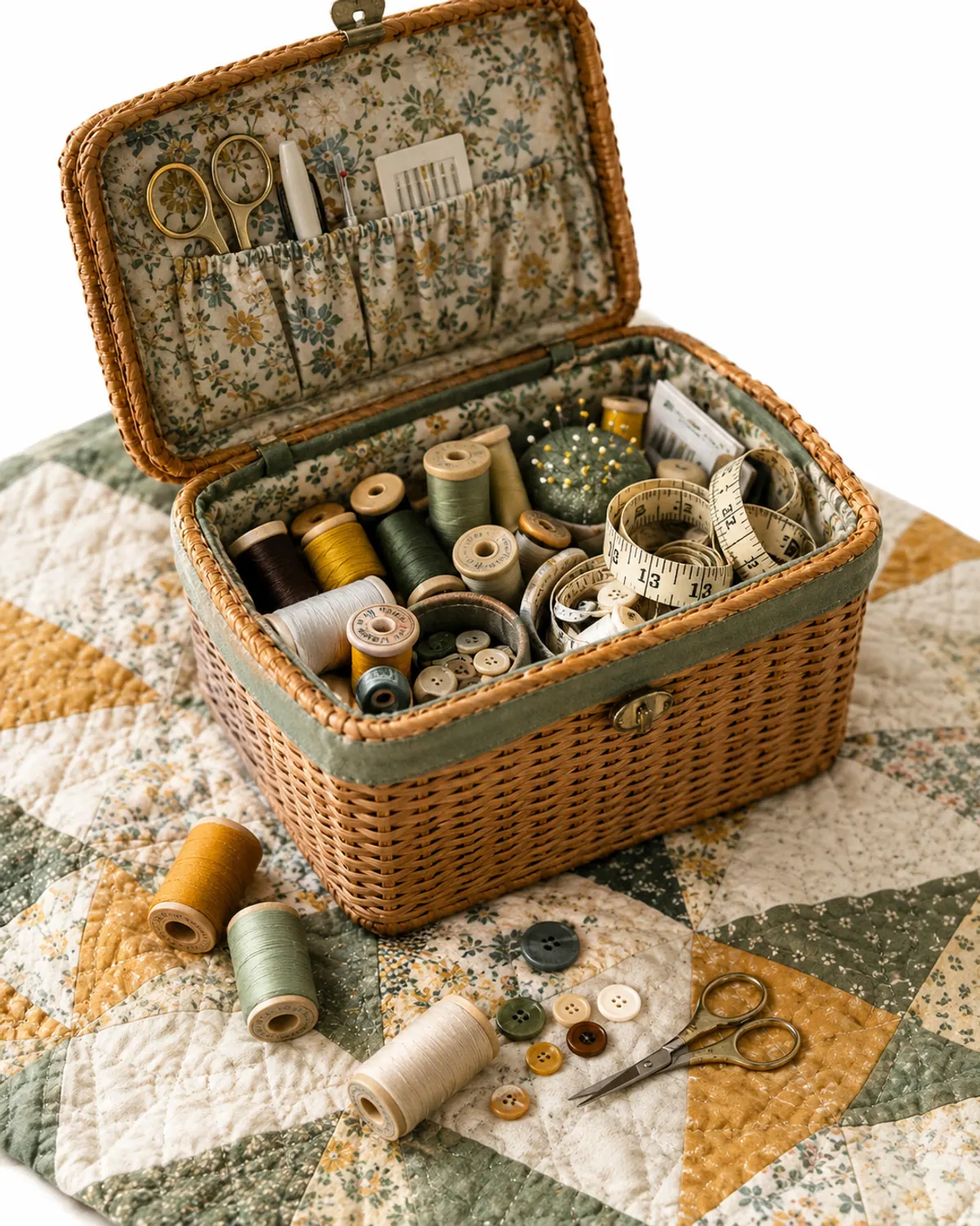
Cut buttons off worn-out shirts before you toss them. A loose button or a ripped hem takes minutes to fix, but it costs a new garment if ignored. A basic kit with a few thread colors covers most repairs.
- Learn two stitches (a running stitch and a backstitch) and you can fix most seams.
Needles, thread and scissors in one box.
8Mend Before You Buy New
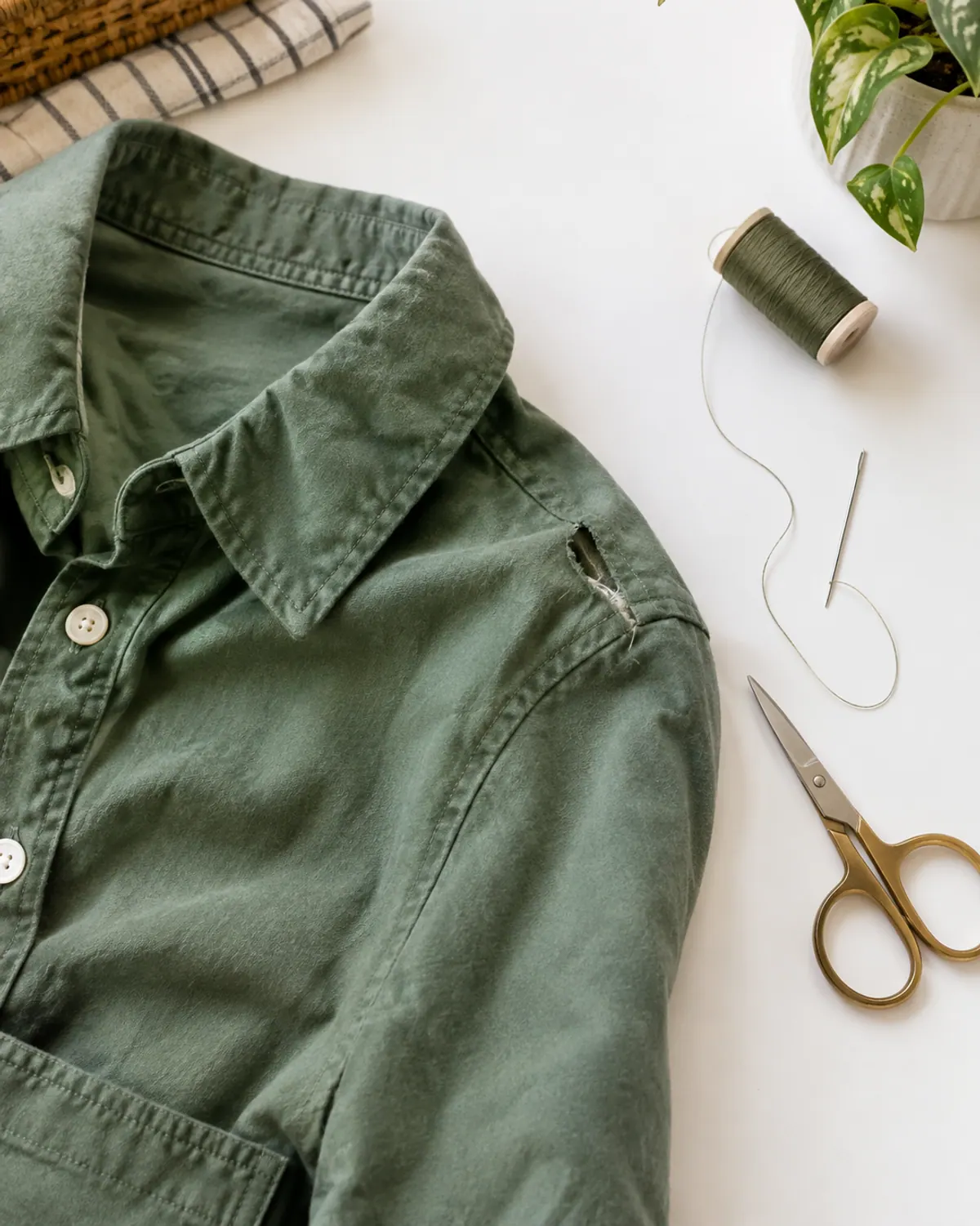
Before replacing a shirt with a small tear, ask whether a ten-minute fix would work. A cheap patch or a few stitches often does. The rule gives you a pause before spending, which is also a saving.
- Set a rule: if it can be mended in 15 minutes, mend it first.
9Buy Coats and Knitwear Secondhand

Coats, wool sweaters and boots are good secondhand buys because quality items last for years. Check seams, zippers and lining, and try them on. Thrift stores often have the best selection right after the seasons change.
- Check the tag for fiber content: wool and cotton last longer than thin synthetics.
10Line-Dry Laundry When You Can
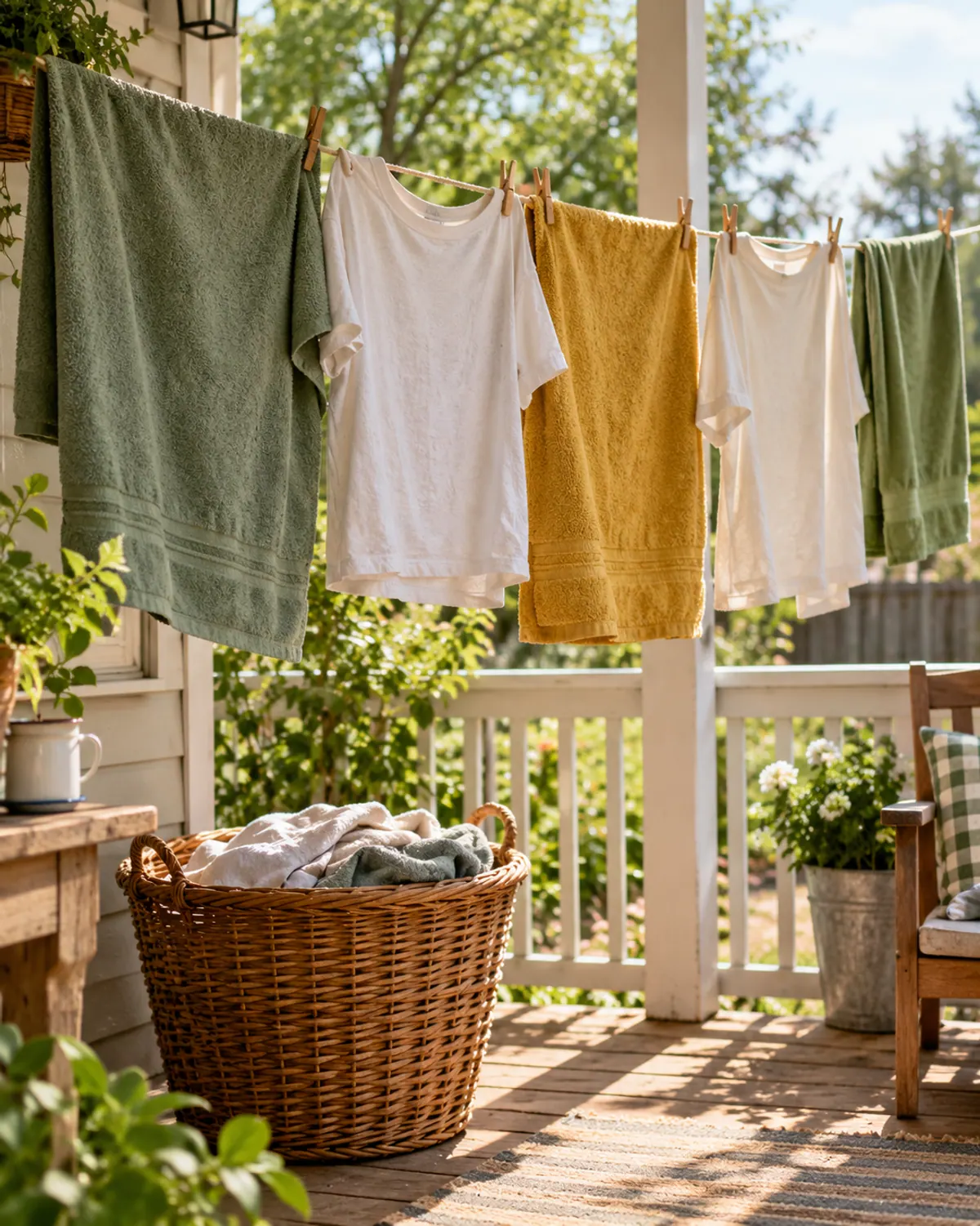
A dryer is one of the bigger electricity users in many homes. Hanging even a few loads a week on a line or a drying rack trims the bill, and it is gentler on fabrics. A rack by a window works indoors in winter.
- Hang jeans and towels last; they take the longest to dry.
Works indoors in winter and on a porch in summer.
Frugal Hacks for Cleaning and Home
11Mix a Simple Vinegar Cleaning Spray
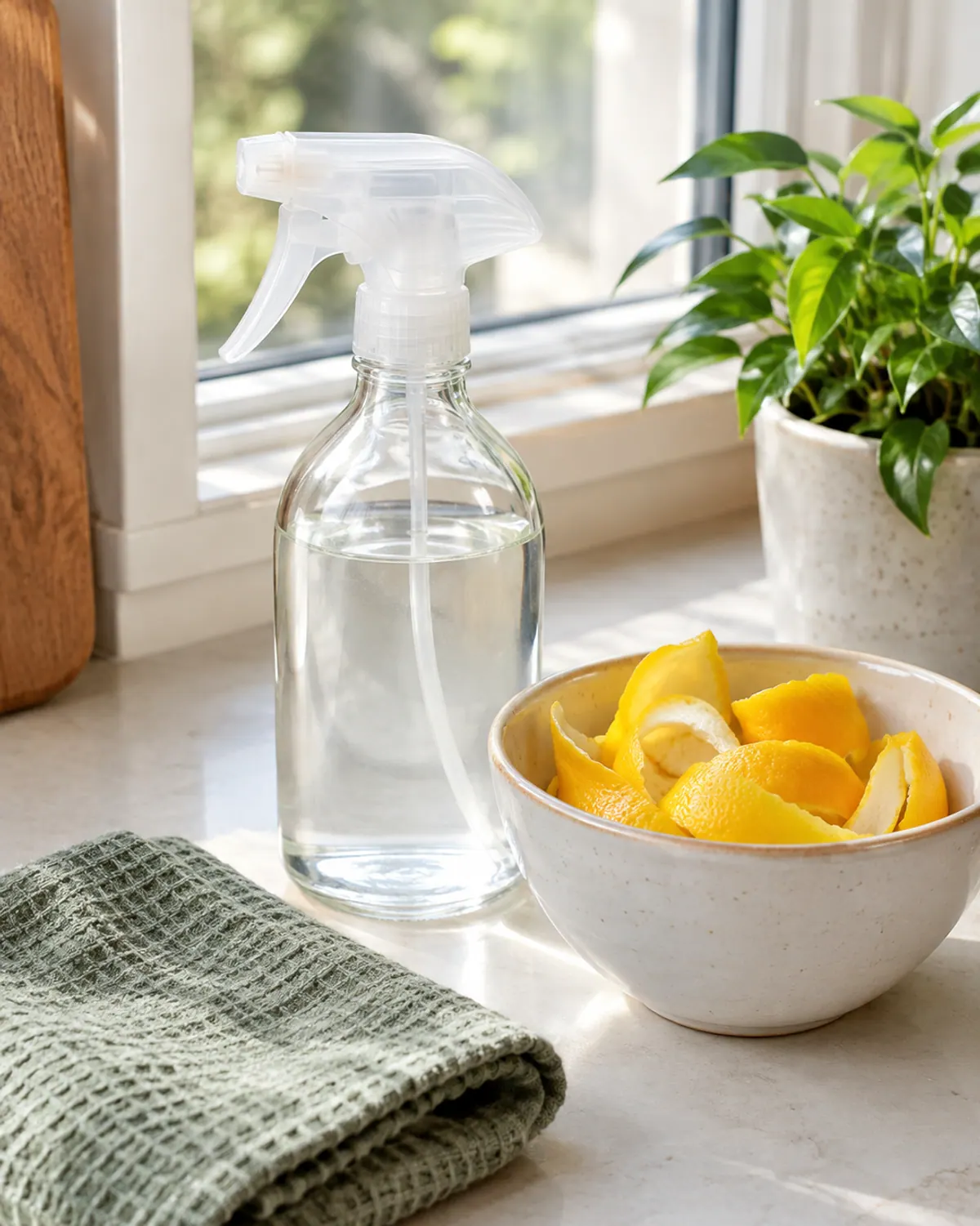
A half-and-half mix of white vinegar and water cleans glass and counters. Never mix vinegar with bleach, and skip it on natural stone, which acid can damage. Label the bottle clearly and keep it away from children and pets.
- Test on a small hidden spot first.
Reusable and easy to label.
12Use Cloth Napkins and Kitchen Towels
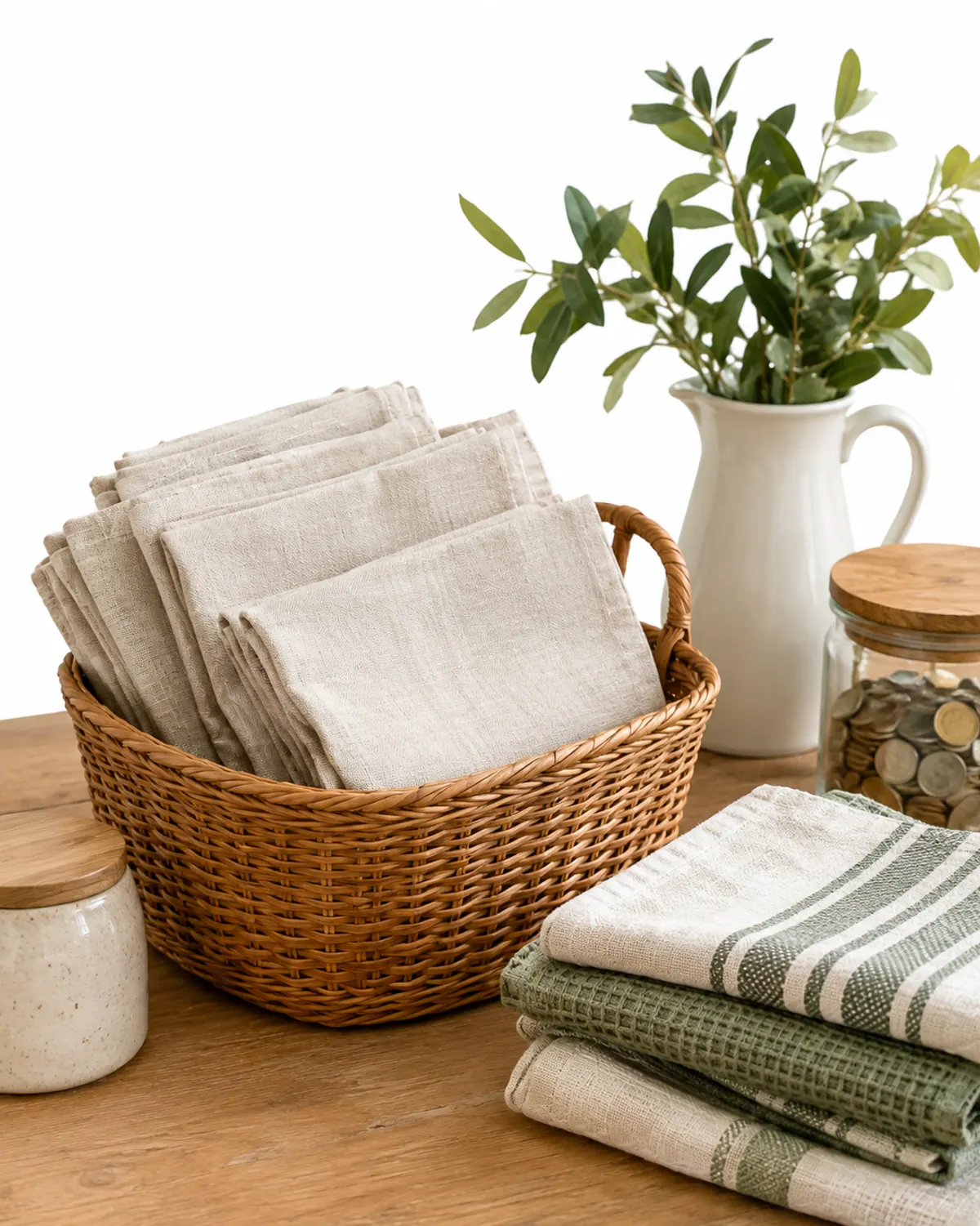
A basket of cloth napkins that you wash with regular laundry replaces rolls of paper towels. Start with a few and use old T-shirts cut into squares as cleaning rags. The savings are small each week and add up over a year.
- Keep a basket under the sink for dirty rags and wash them weekly.
13Grow Herbs on a Windowsill

A small herb plant can cost about as much as one fresh herb package at some stores, and it keeps growing, so prices vary by store and season. Chives and parsley are forgiving for beginners. Water when the top of the soil feels dry.
- Pinch leaves from the top so the plant grows bushy.
A set for three herbs.
Frugal Hacks for Money and Fun
14Use Cash Envelopes for Spending Categories
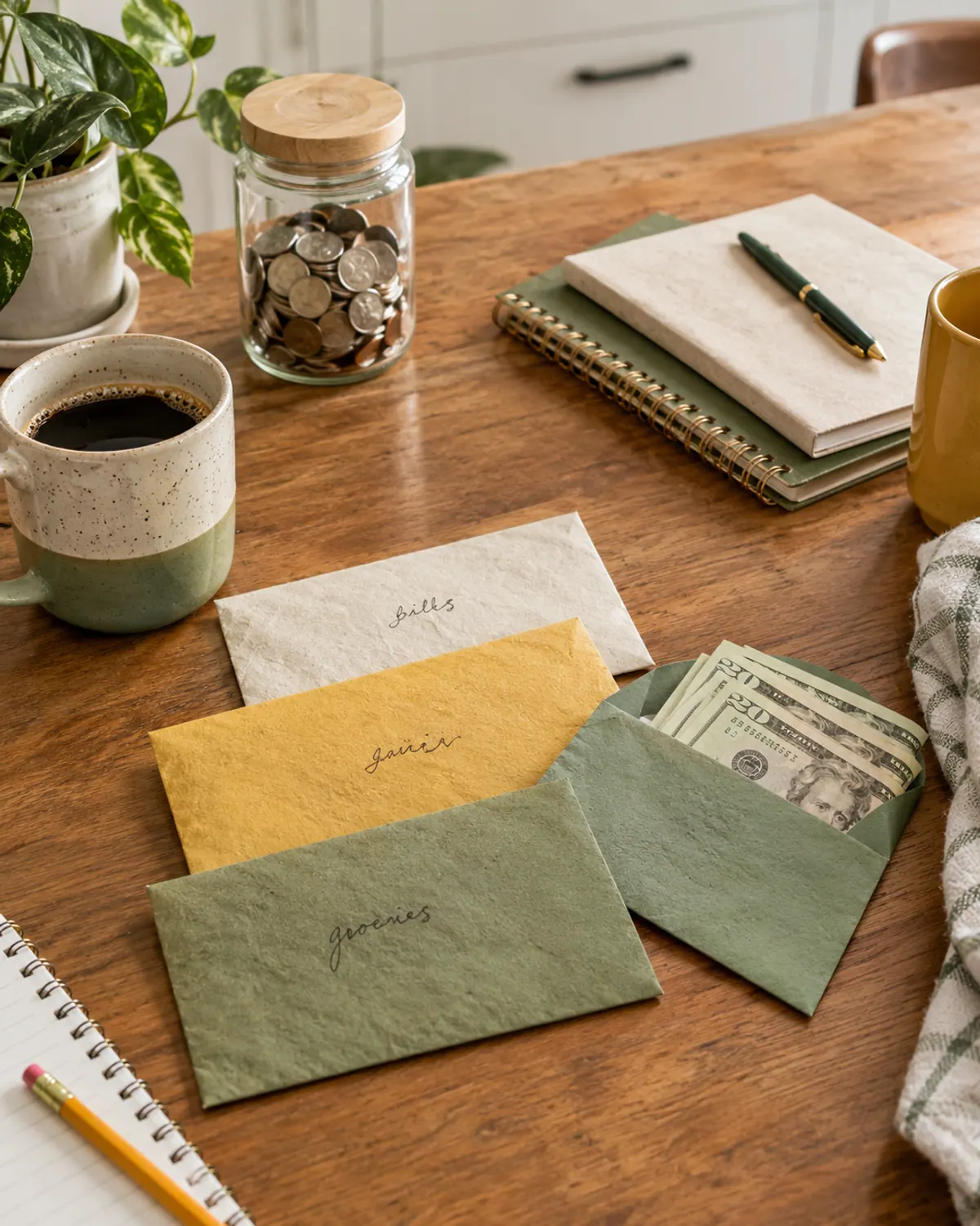
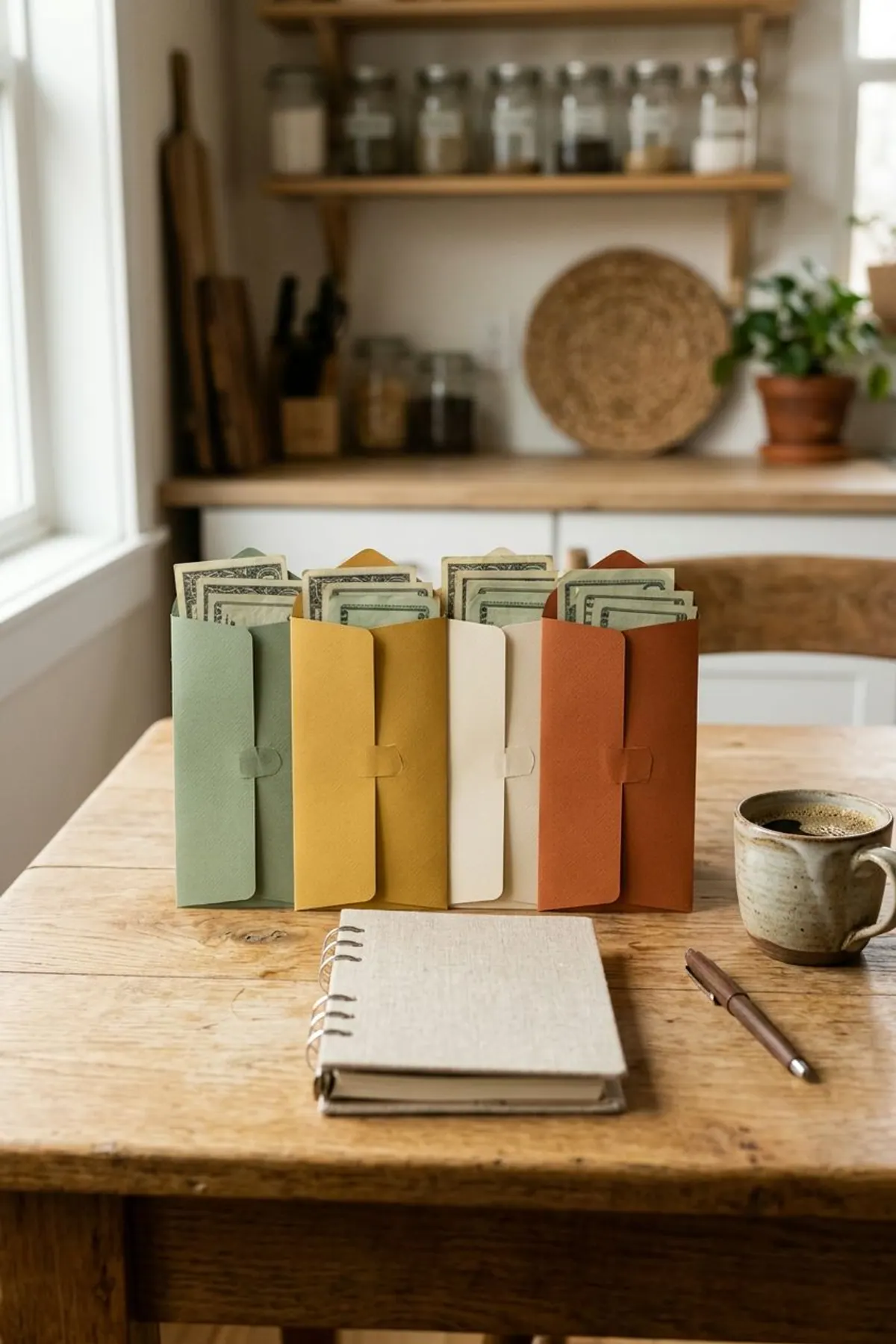
Grandma often kept cash in envelopes for groceries, gas and fun. When an envelope is empty, spending in that category stops. It is the same idea as modern cash stuffing, and our cash envelope guide shows how to start with only three or four envelopes.
- Begin with groceries and fun only; add more later.
15Borrow Instead of Buy: Use the Library

Most public libraries lend books, audiobooks, movies and often museum passes or tools. A card is usually free for residents of the area, but check your local library. Replacing a few streaming subscriptions or book purchases with a library card is an easy cut.
- Use the library app to place holds from your couch.
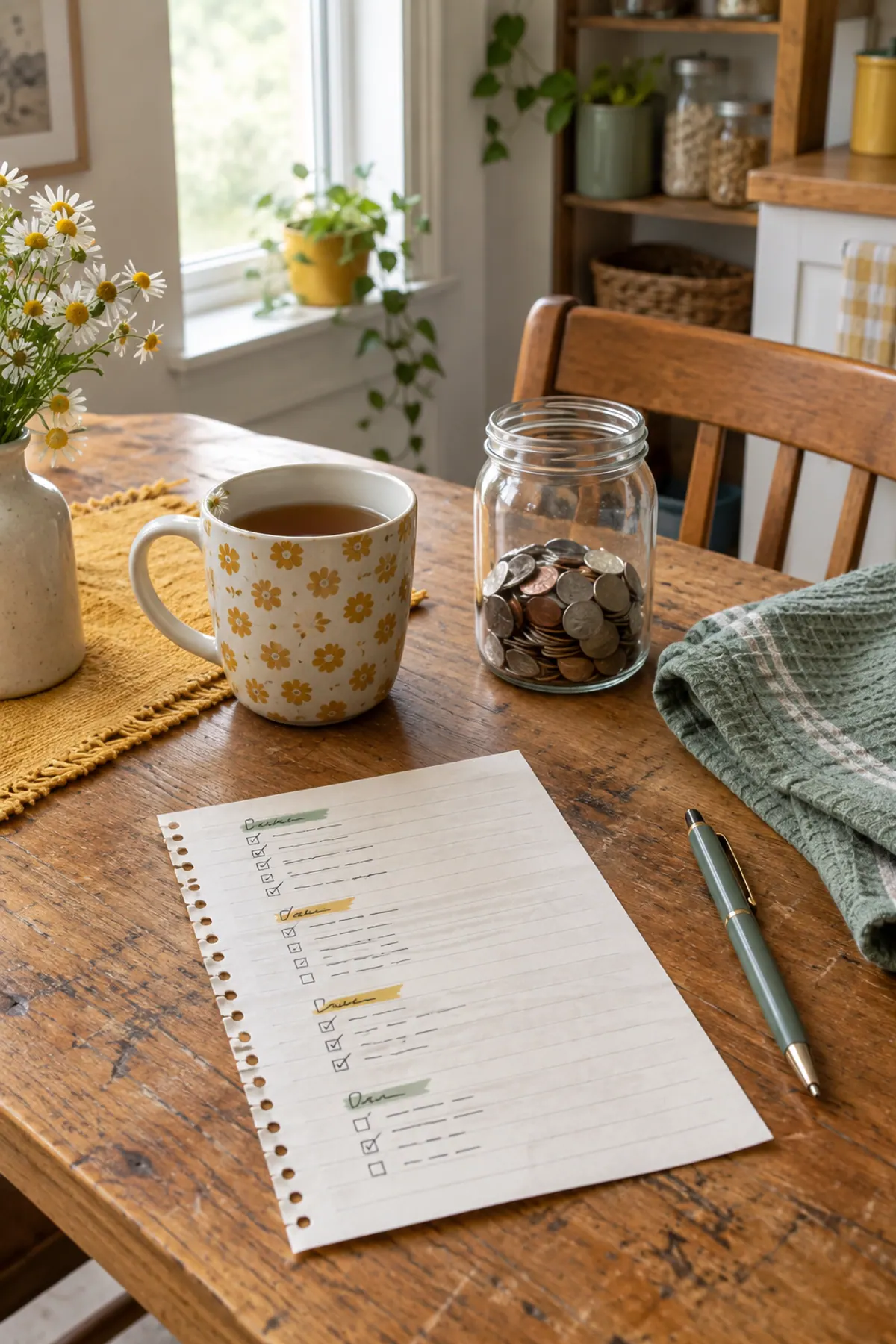
16Wait 30 Days Before a Big Purchase

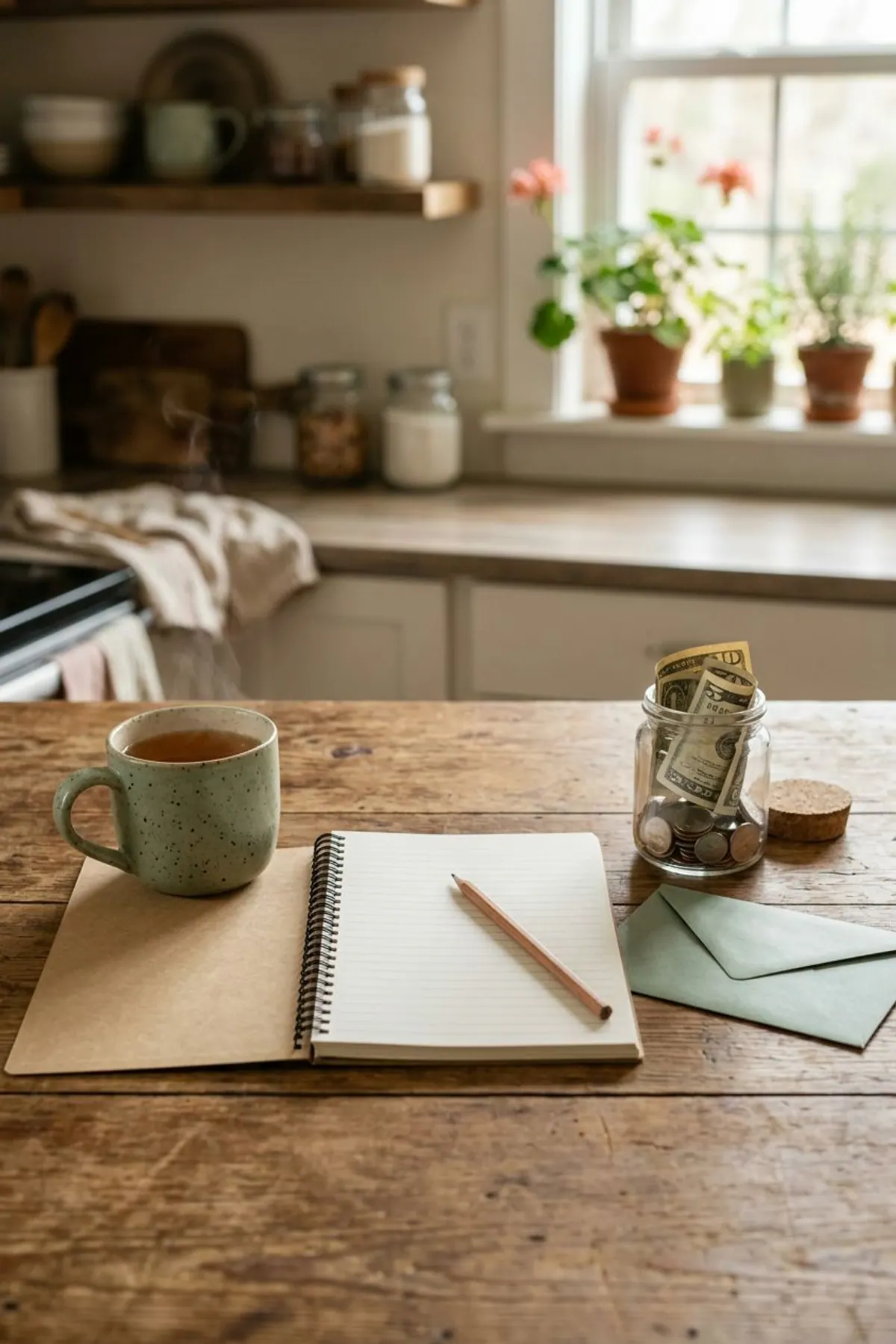
Write the item and its price on a list and wait 30 days. Many wants fade. If you still want it, buy it, knowing it was a choice. Put the money you did not spend into a savings jar or sinking fund.
- Add the date and price to the list so you can see what you skipped.
Bonus: When an Old Frugal Hack Backfires
Not every old habit saves money today. Time has a price too, and some tips came from a time when food, clothing and labor cost very different amounts. Use this table to decide when a hack is worth it.
| Hack | Works when | Backfires when |
|---|---|---|
| Buying in bulk | You will use it before it expires and you have space | Food spoils or it pushes you to overspend |
| Buying the cheapest option | The item is used rarely | It breaks and needs replacing soon |
| Mending clothes | The garment is good quality | The repair takes longer than it is worth |
| Cooking from scratch | You enjoy it and have time | It adds stress or leads to takeout |
| Line-drying | You have space and a drying window | Damp laundry stays in the house |
Frugal is not the same as cheap. It is making what you already have go further.
How to Start: Pick Three This Week
A starter set of old-school hacks
To see where your money goes, a bills tracker shows your monthly bills, and the money saving tips that add up every month guide has more ideas. For a bigger plan, see the cozy frugal living guide. This post is general information, not financial advice.
Frequently asked questions
What are some old-fashioned frugal hacks that still work?
Making broth from vegetable scraps, mending clothes, line-drying laundry, cooking big batches, using cash envelopes and borrowing from the library all still work. They stretch what you already own.
What did people do to save money in the past?
Many households mended and reused items, cooked from basic staples, grew some food and paid with cash. Some of those habits fit modern life and some are not worth the time today.
Are frugal hacks worth the time?
Some are and some are not. A ten-minute repair or a batch of soup can save real money, but a hack that takes hours for a few cents may not be worth it.
How do I start living frugally?
Choose two or three habits, such as a scrap bag for broth, a library card and a 30-day wait list for purchases, and try them for a month before adding more.
Is it safe to clean with vinegar?
Vinegar is fine on glass and many counters, but never mix it with bleach and avoid using it on natural stone. Keep cleaners away from children and pets.
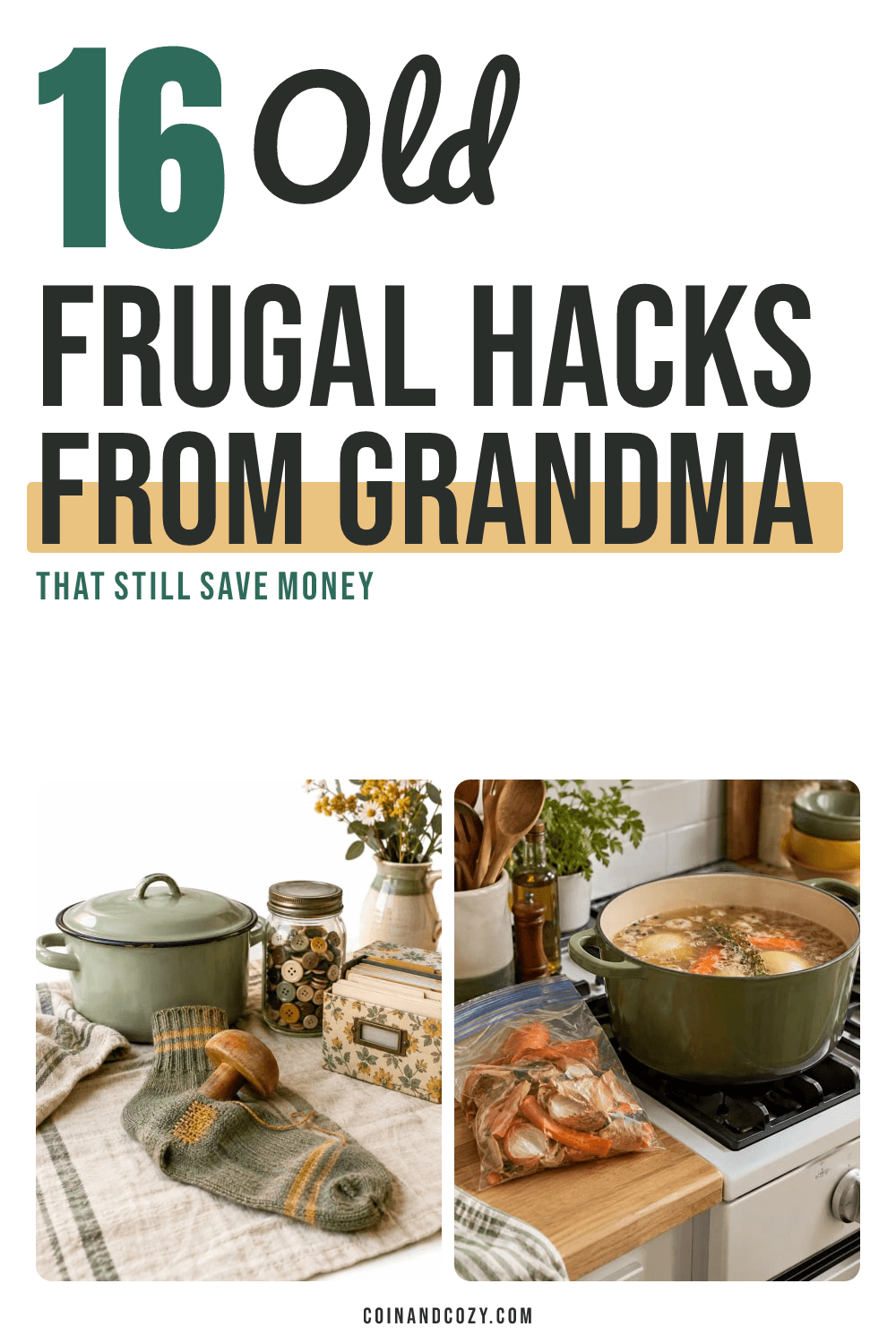
Save it for later
Pin this to your Frugal Living Tips board so it's there when you need it.
Save to Pinterest