This post contains affiliate links. As an Amazon Associate we earn from qualifying purchases, at no extra cost to you. Read our disclosure.
Safety first: This is general money education, not personalised financial advice. Please read our financial disclaimer before you start.
Key takeaways
- Start with 4 envelopes: groceries, gas, household and fun money. Add more only after a month that works.
- Fill envelopes by paycheck. If you are paid every two weeks, each envelope gets a two-week amount, not a monthly one.
- Bills paid online (rent, utilities, phone) stay in the bank. Cash is for the categories you swipe for without thinking.
- Sinking funds turn yearly bills into small paycheck amounts: a $780 Christmas is $30 a paycheck over 26 paychecks.
- Our worked example moves $420 into spending envelopes and $90 into sinking funds from each $1,600 paycheck. Example numbers only.
In this post10 sections
- What a Cash Envelope System Is (and What It Is Not)
- Supplies: What You Need Before Your First Cash Withdrawal
- How to Start a Cash Envelope System in 6 Steps
- Cash Envelope System Categories: Start Here, Add Later
- How to Add Sinking Fund Envelopes by Paycheck
- A Worked Example: One Month on Two Biweekly Paychecks
- Cash Envelope System Mistakes That Make People Quit
- Variations: Digital, Hybrid and Wallet Systems
- Get the Printables for Your Cash Envelope System
- FAQ
Quick note: product links go to Amazon search results or our own shop, and we may earn a small commission if you buy, at no extra cost to you. Every dollar amount on this page is an example to show the math; personal organizing tool, not financial advice.
What a Cash Envelope System Is (and What It Is Not)
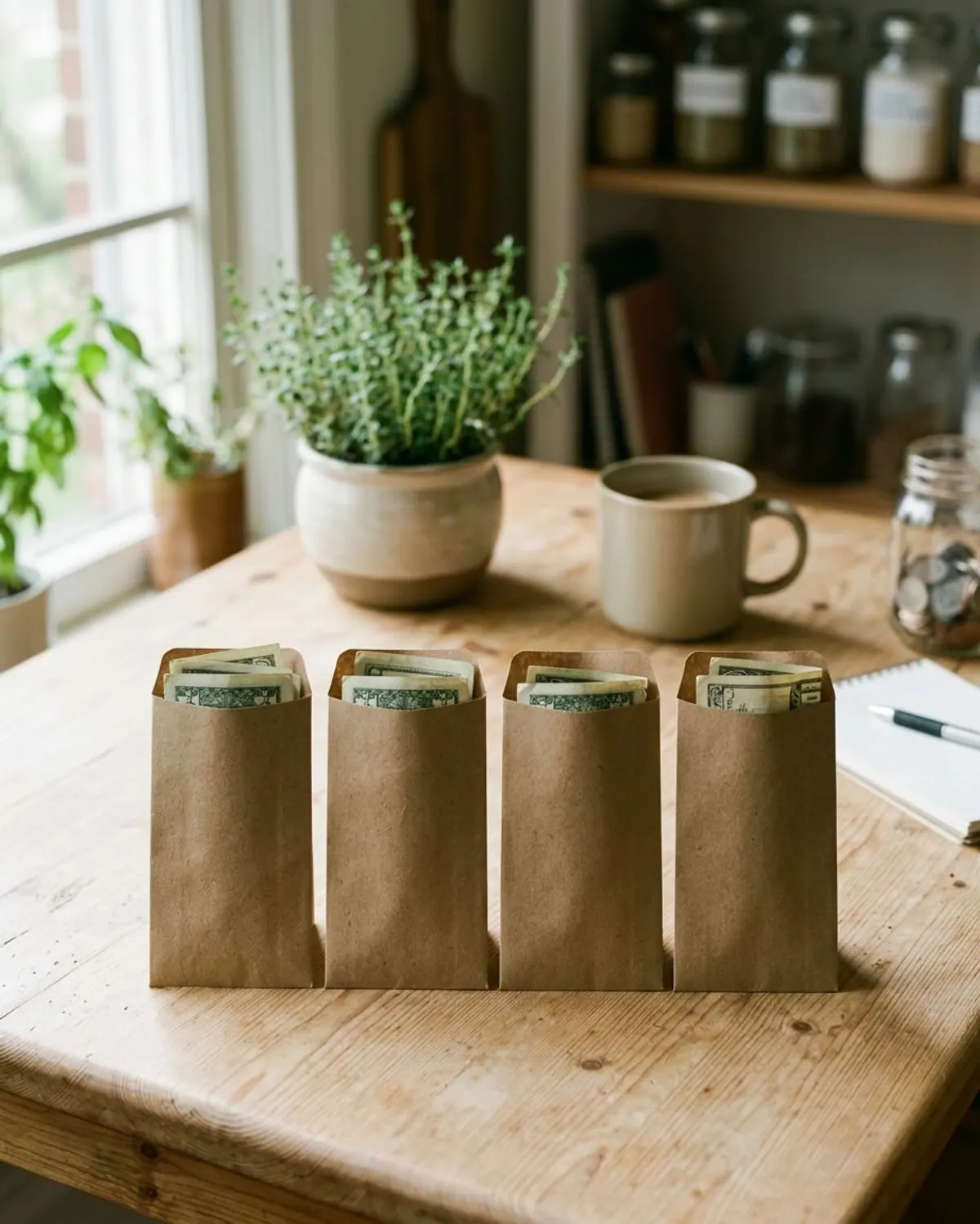
A cash envelope system gives each spending category its own envelope of cash. When the grocery envelope is empty, grocery shopping is done until the next payday. The limit is physical, which is why it works for people who overspend on a card without noticing.
It is not a system for every bill. Rent, utilities, insurance and loan payments go out of your bank account as usual. Cash only covers the categories that change week to week, plus the sinking funds you are saving for. If you are still deciding whether cash suits you at all, read is cash stuffing worth it first; this guide is the setup.
Supplies: What You Need Before Your First Cash Withdrawal
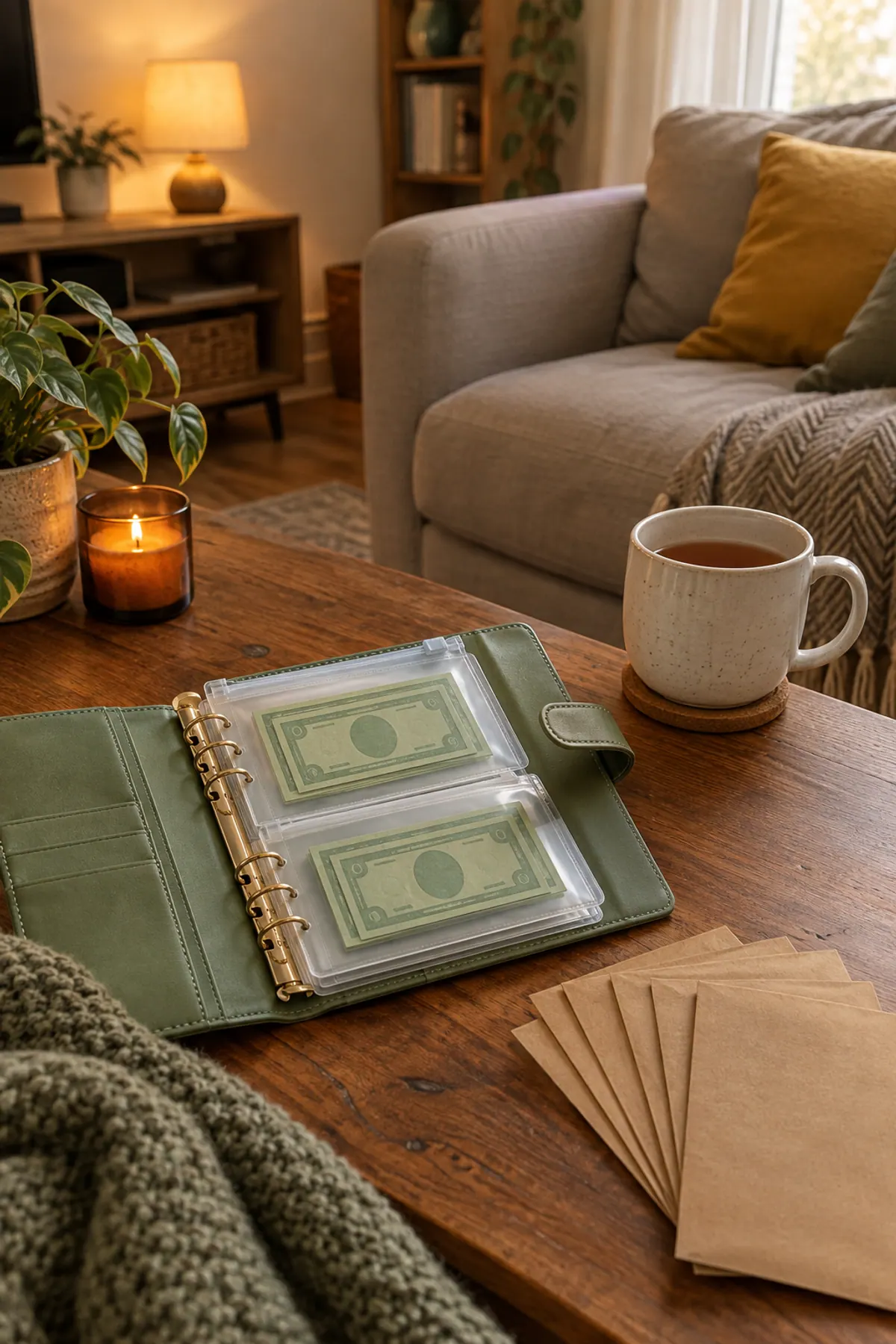
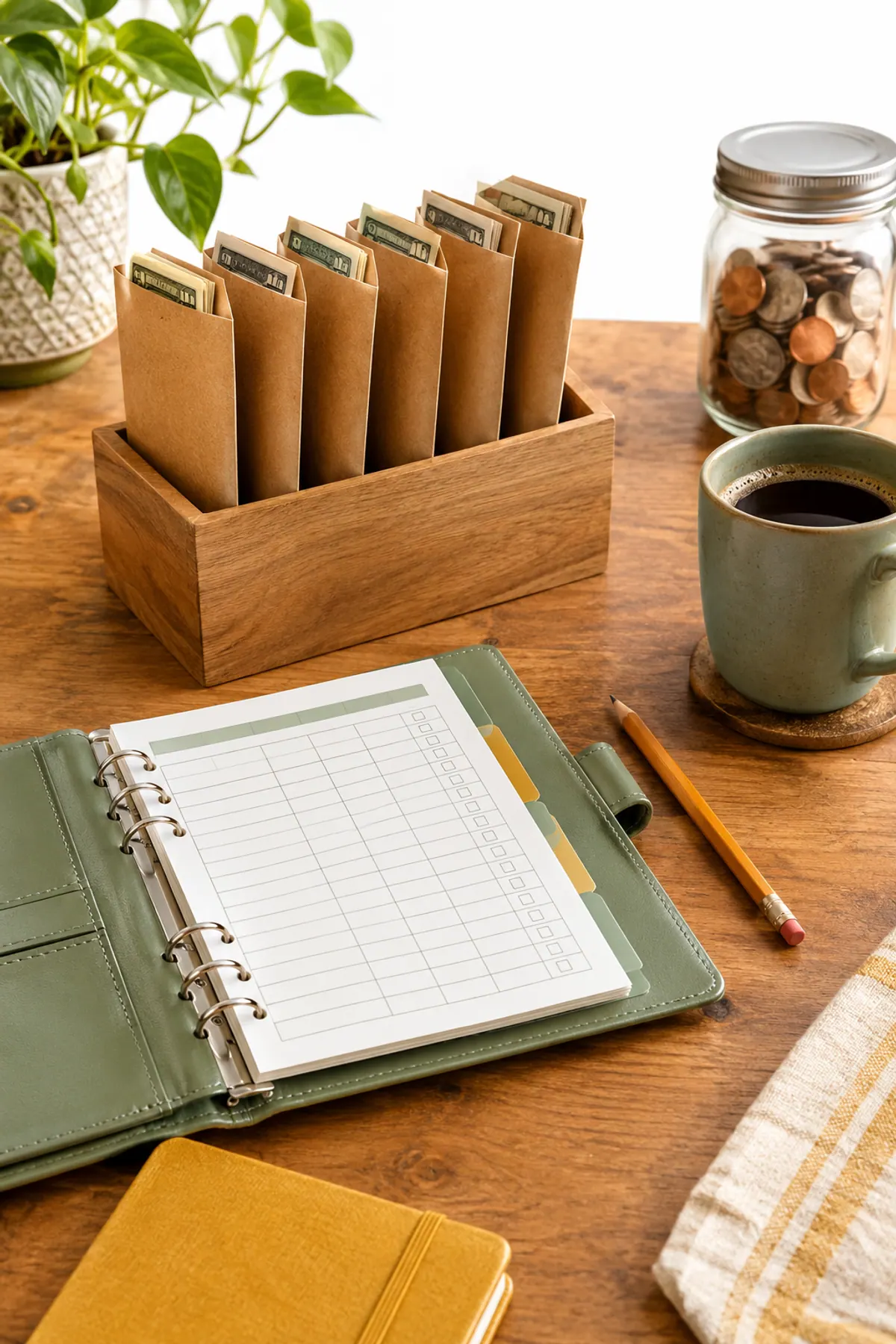
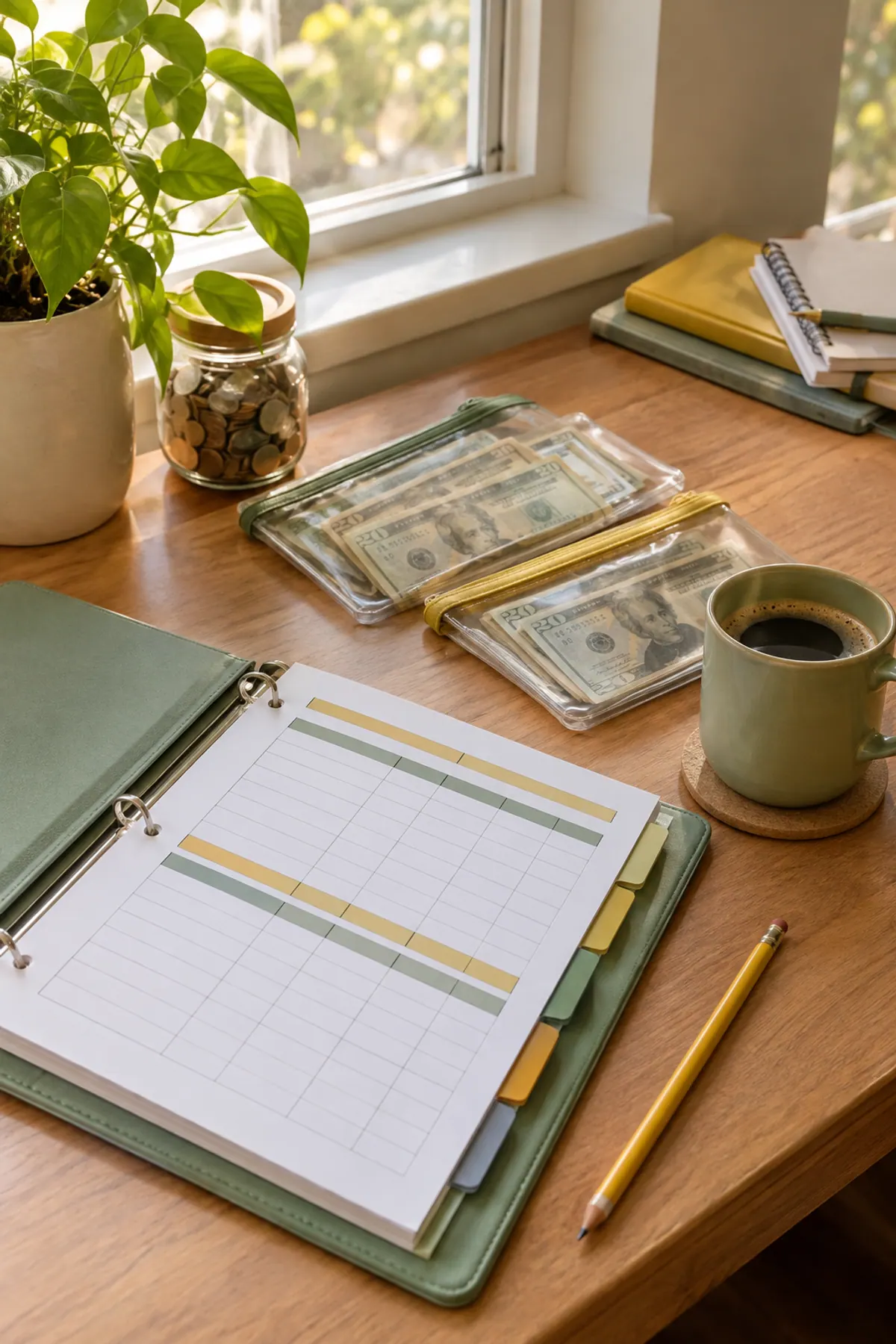
You can start with paper envelopes from a kitchen drawer. A binder and printed trackers help once the habit sticks, because they show what you spent and what is left.
Cash envelope system supplies
How to Start a Cash Envelope System in 6 Steps
-
Step 1: List your paydays and the bills that stay in the bank
Write down your next 4 pay dates. Then list every bill that is paid online or by autopay, with its due date. Match each bill to the paycheck that lands before it. This is the part people skip, and it is why envelopes run dry: the cash plan only works once the bank bills are covered. The biweekly budget guide walks through matching bills to paychecks.
-
Step 2: Pick your first 4 envelopes
Start with the categories you spend on in person and lose track of: groceries, gas, household and pharmacy, and fun money (eating out, coffee, small treats). Four is enough to change how a month feels. Fifteen envelopes on day one is the fastest way to quit.
-
Step 3: Set a per-paycheck amount for each envelope
Look at the last 4 to 6 weeks of bank statements for each category and write the average. Then set the envelope amount a little below it. If you are paid every two weeks, set a two-week amount. Example: groceries averaged $560 a month, so the envelope gets $250 per paycheck: $500 in a two-paycheck month, $60 below the old habit.
-
Step 4: Withdraw the cash and fill on payday
On payday, pay the bank bills first, then withdraw the envelope total in small bills (fives, tens and twenties) and fill each envelope. Write the amount on the tracker. Filling on payday, every payday, is what makes this a habit and not a project.
-
Step 5: Spend only from the envelope and track it
Take the envelope to the store. Pay from it, put the change back, and write the purchase on the tracker. If an envelope runs out, you have two choices: wait for payday, or move money from another envelope and write that down too.
-
Step 6: Add sinking fund envelopes after the first month
Once the 4 envelopes have lasted a full month, add envelopes for the non-monthly bills. That is the next section.

Cash Envelope System Categories: Start Here, Add Later
Most cash envelope system categories fall into three groups. Use the first column now and add the others when the first month has worked.
| Start now (spending) | Add in month 2 (sinking funds) | Optional later |
|---|---|---|
| Groceries | Car repairs and maintenance | Clothing |
| Gas | Christmas and birthdays | Kids' activities |
| Household and pharmacy | Car registration and yearly insurance | Haircuts |
| Fun money and eating out | Back to school | Pet care and vet visits |
| Annual subscriptions | Gifts for friends and teachers |
For the full list of sinking fund categories with suggested monthly amounts, see sinking funds categories and monthly amounts.
How to Add Sinking Fund Envelopes by Paycheck
A sinking fund is money you set aside in small amounts for a cost you know is coming. Add up what each yearly expense cost you last year, then divide by the number of paychecks you get in a year: 26 if paid every two weeks, 24 if twice a month, 52 if weekly.
| Sinking fund | Yearly cost (example) | Per paycheck | Where it lives |
|---|---|---|---|
| Car repairs | $650 | $25 | Savings account, tracked on paper |
| Christmas | $780 | $30 | Envelope until about $200, then savings |
| Car registration and insurance renewal | $520 | $20 | Savings account |
| Back to school and kids | $390 | $15 | Envelope |
| Total | $2,340 | $90 |
The money does not have to sit in a paper envelope. Cash at home can be lost or stolen and is not insured, so many people keep bigger sinking funds in a separate savings account and track each one on its own page. The envelope is the label; the bank is the safe.

A Worked Example: One Month on Two Biweekly Paychecks
Here is one month for a household taking home $1,600 every two weeks ($3,200 for the month). Rent is $1,250, so each paycheck saves half of it. This is an example to show the math, not a recommended budget.
| Line | Paycheck 1 | Paycheck 2 | Paid by |
|---|---|---|---|
| Rent ($1,250 a month) | $625 | $625 | Bank |
| Utilities | $150 | Bank | |
| Phone | $60 | Bank | |
| Car insurance | $110 | Bank | |
| Internet | $60 | Bank | |
| Credit card minimum | $120 | Bank | |
| Groceries envelope | $250 | $250 | Cash |
| Gas envelope | $80 | $80 | Cash |
| Household and pharmacy envelope | $40 | $40 | Cash |
| Fun money envelope | $50 | $50 | Cash |
| Sinking funds (4 funds above) | $90 | $90 | Savings + envelopes |
| Left over to emergency savings | $255 | $175 | Savings |
| Total | $1,600 | $1,600 |
Each payday the cash withdrawal is the same: $420. That repetition matters. You stop thinking about the budget and just fill the envelopes. In the two months a year with a third paycheck, give the extra check a job ahead of time, such as the emergency fund or a debt.

The envelope is the label; the bank is the safe. Fill on payday, every payday.
Cash Envelope System Mistakes That Make People Quit
Do this
- Start with 4 envelopes
- Fill on payday with two-week amounts if paid biweekly
- Write down every move between envelopes
- Keep big sinking funds in a savings account
- Give a new envelope one full month before judging it
Skip this
- Starting with 15 or more envelopes
- Filling monthly amounts from a biweekly paycheck
- Paying online bills in cash
- Keeping hundreds of dollars in a drawer
- Quitting after the first week an envelope ran out
The most common fail is the first overspent week. That is the system working: the empty envelope showed you the real number. Raise that envelope a little next payday, take the money from fun money, and keep going.

Variations: Digital, Hybrid and Wallet Systems
Hybrid: cash for groceries and fun money, debit card for gas and online orders. This is the most common setup and keeps the cash amount small.
Digital envelopes: some banks let you split savings into named buckets, and envelope-style budgeting apps do the same with your card spending. See the best budgeting apps for beginners if you would rather not carry cash.
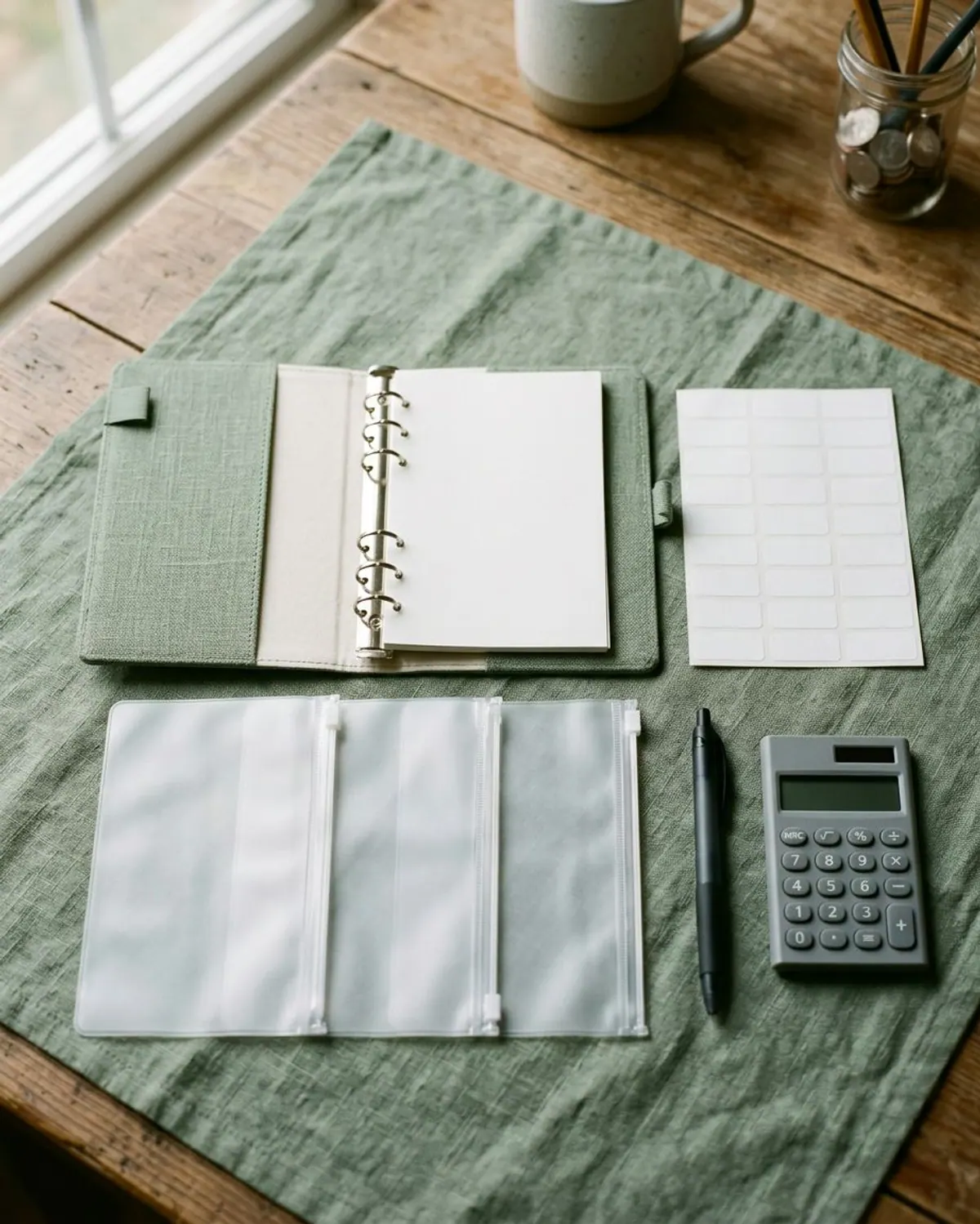
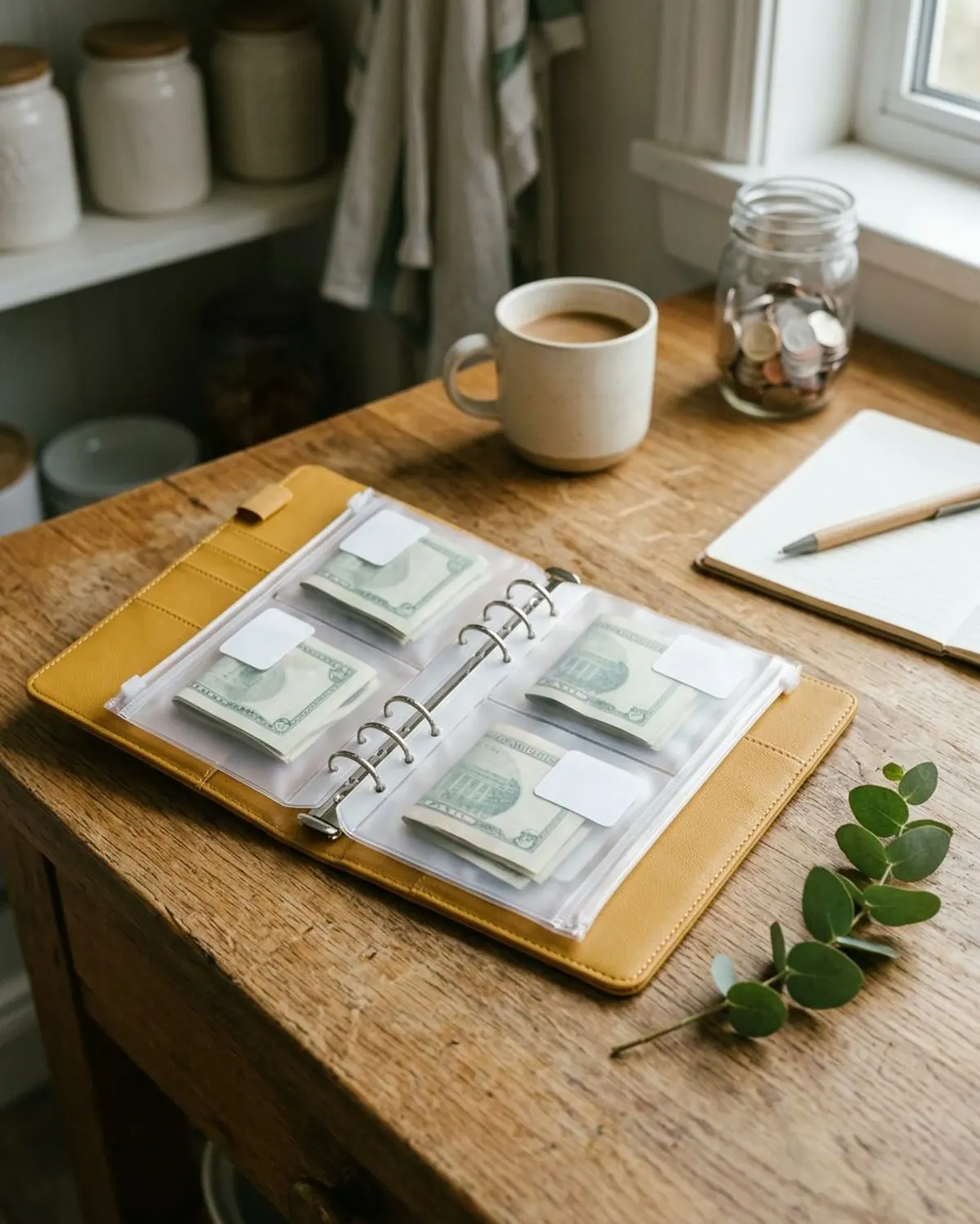
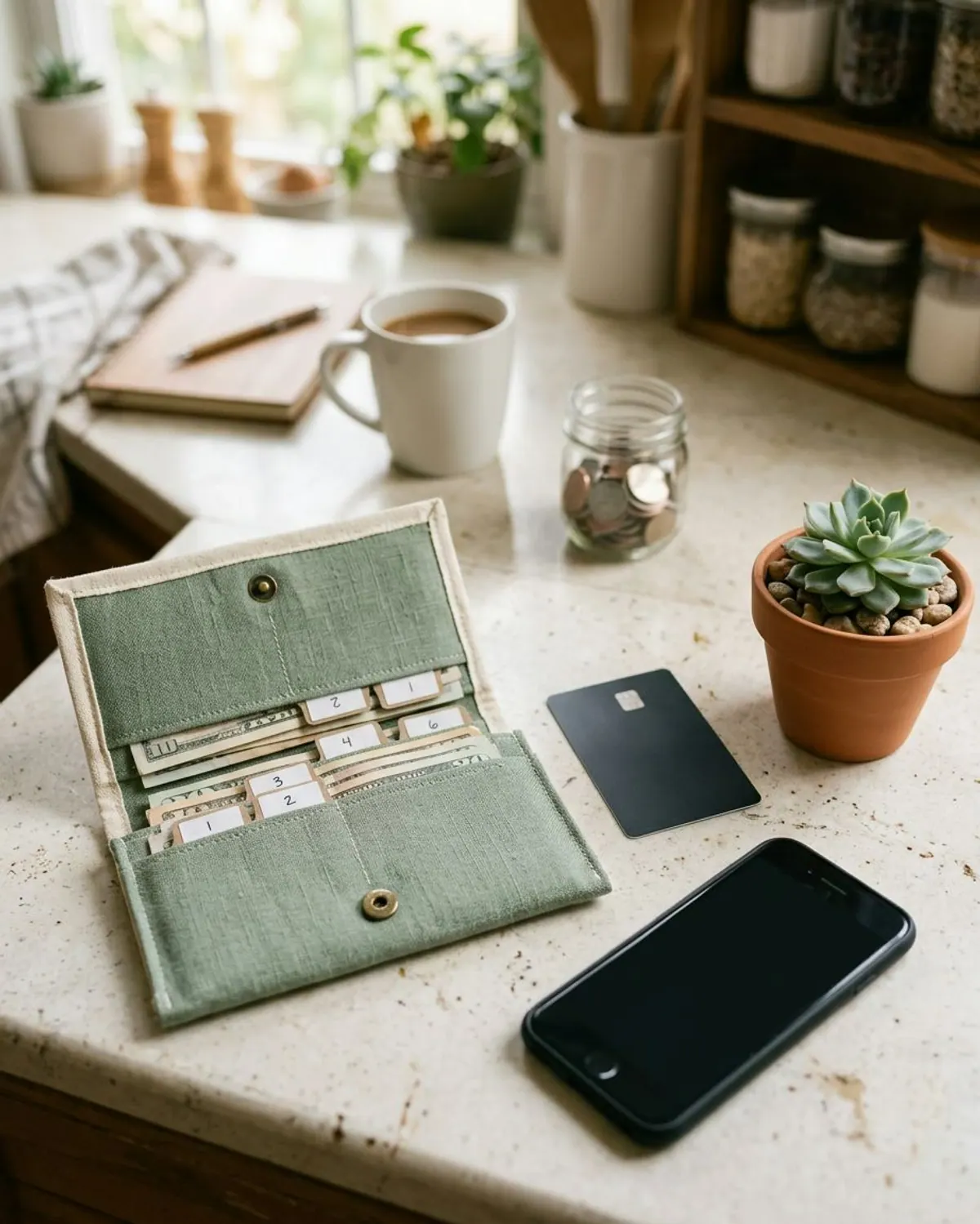
Wallet or binder: a cash wallet fits in a purse; an A6 binder holds more envelopes and the trackers. Many people keep the binder at home and carry only that week's envelopes. For binder layouts, see budget binder ideas.
Get the Printables for Your Cash Envelope System
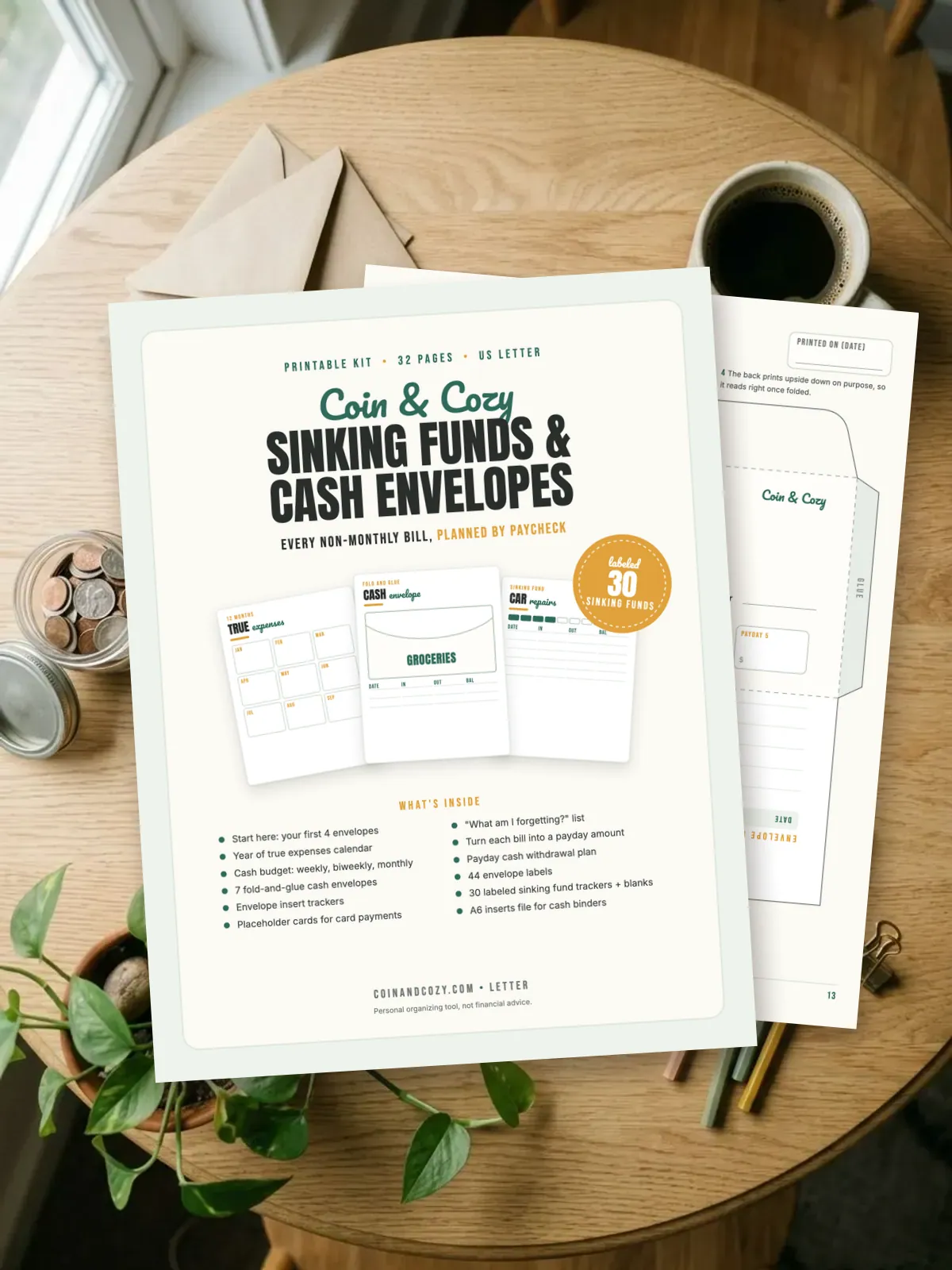
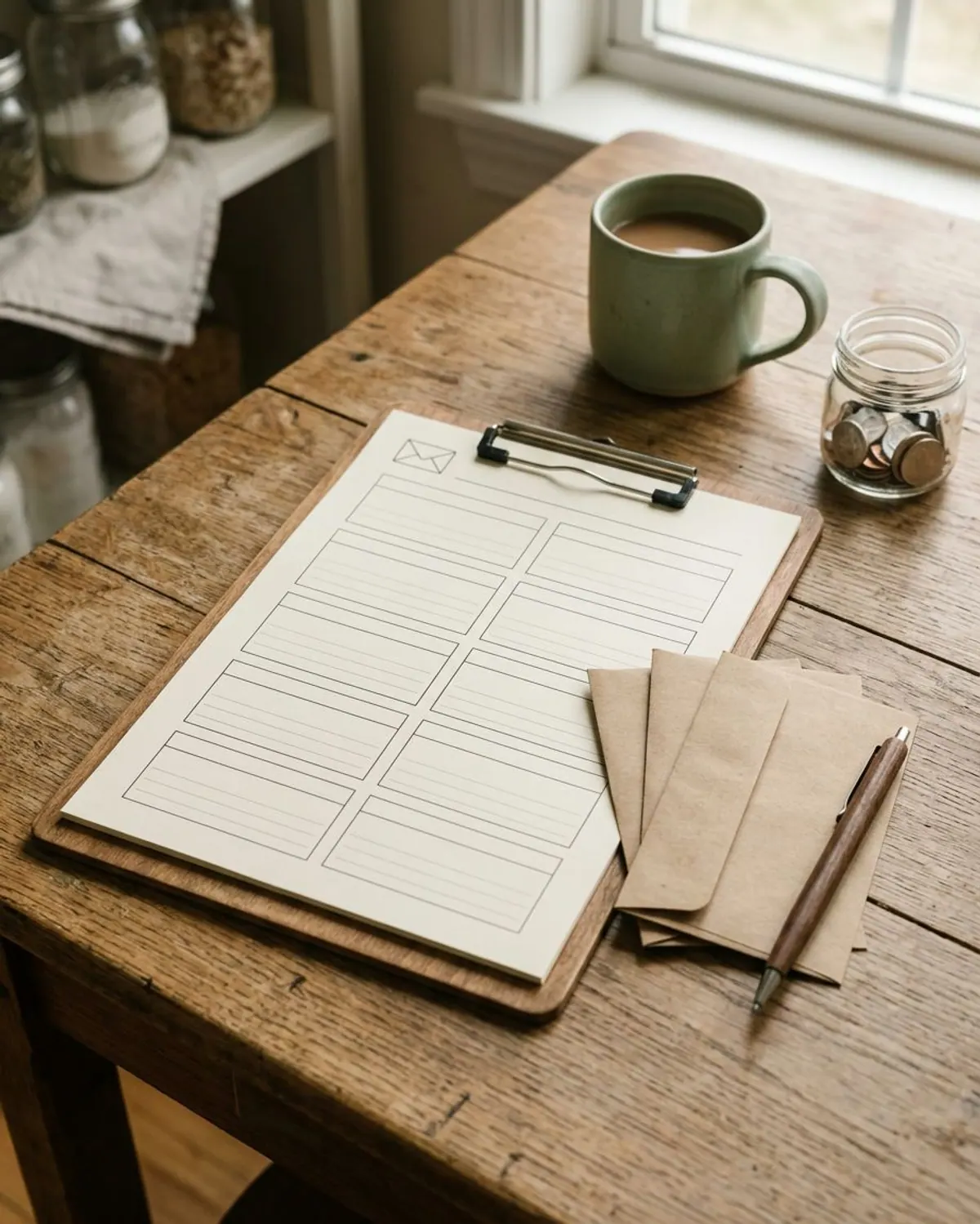
If you want the pages done for you, the Cash Stuffing and Sinking Funds Kit has a first-4-envelopes start page, a cash budget by paycheck in weekly, biweekly and monthly versions, fold-and-glue envelope templates, A6 trackers and 30 labeled sinking fund trackers. It is the setup in this guide, printed. Personal organizing tool, not financial advice.
Cash envelope system supplies
-
Cash envelope wallet with tabbed envelopes
Typically $10 to $18
Holds the 4 starter envelopes in a purse, with tabs you can label.
Check price on Amazon for Cash envelope wallet with tabbed envelopes -
A6 budget binder with zipper envelopes
Typically $8 to $16
Fits printed A6 trackers and keeps sinking fund envelopes in one place.
Check price on Amazon for A6 budget binder with zipper envelopes -
Blank label stickers for envelopes
Typically $5 to $10
Rename an envelope in seconds when your categories change.
Check price on Amazon for Blank label stickers for envelopes
Frequently asked questions
How do I start a cash envelope system?
List your paydays and the bills paid from the bank, pick 4 envelopes (groceries, gas, household, fun money), set a per-paycheck amount a little below what you spend now, withdraw that cash on payday, and track every purchase. Add sinking fund envelopes after a month that works.
What are the categories for the cash envelope system?
Start with groceries, gas, household and pharmacy, and fun money. Add sinking funds next: car repairs, Christmas and birthdays, yearly insurance and registration, back to school. Leave online bills like rent and utilities in the bank.
How much money should I put in each envelope?
Average the last 4 to 6 weeks of spending in that category from your bank statements, then set the envelope a little below it. If you are paid every two weeks, use a two-week amount. Example: $560 a month on groceries becomes $250 per paycheck, or $500 in a two-paycheck month.
Is it safe to keep sinking funds in cash?
Small amounts are fine. Cash at home can be lost or stolen and is not insured, so many people move a sinking fund to a separate savings account once it grows and track it on paper. The envelope stays as the label.
Can I use the cash envelope system with a debit card?
Yes. A hybrid setup uses cash for the categories you overspend on and a debit card for the rest. Digital envelopes in a bank or an envelope-style budgeting app work the same way without cash.
Save it for later
Pin this to your Budgeting Basics board so it's there when you need it.
Save to Pinterest