This post contains affiliate links. As an Amazon Associate we earn from qualifying purchases, at no extra cost to you. Read our disclosure.
Safety first: This is general money education, not personalised financial advice. Please read our financial disclaimer before you start.
Key takeaways
- Start with 8 broad budget categories, not 40.
- Split a category only when it holds three or more kinds of spending.
- Give irregular costs like gifts and repairs a sinking fund.
- 50/30/20, zero based and cash envelopes use different numbers of categories.
- Protect housing, groceries and insurance first; look at takeout and subscriptions for room.
In this post14 sections
- How Many Budget Categories Do You Need?
- Start With These 8 Budget Categories
- Housing and Utilities Budget Categories
- Food Budget Categories
- Transportation Budget Categories
- Health and Insurance Budget Categories
- Family and Kids Budget Categories
- Debt and Savings Budget Categories
- Personal and Lifestyle Budget Categories
- Giving and Irregular Budget Categories
- Budget Categories by Method
- Which Budget Categories to Cut First
- Budget Categories for a Family
- FAQ
| Question | Short answer |
|---|---|
| How many categories to start | 8 broad categories |
| How many in a detailed budget | 15 to 25, grown over a few months |
| What to track first | Housing, utilities, groceries, transportation, insurance and health, debt, savings, fun money |
| Where irregular costs go | Sinking funds, not the monthly categories |
| How to know a category is too big | It holds three or more different kinds of spending |
How Many Budget Categories Do You Need?
Start with 8 budget categories, then split one only when it hides something you want to see. A budget with 40 lines on day one is the fastest way to stop budgeting by day ten. This guide lists 50 budget categories in 8 groups, so you can pick the ones that match your life and ignore the rest.
Think of the list as a menu. Every household uses housing and groceries; only some use childcare, pet costs or tolls. If you are brand new, read the beginner budget planner guide after this one for the step-by-step.
Start With These 8 Budget Categories
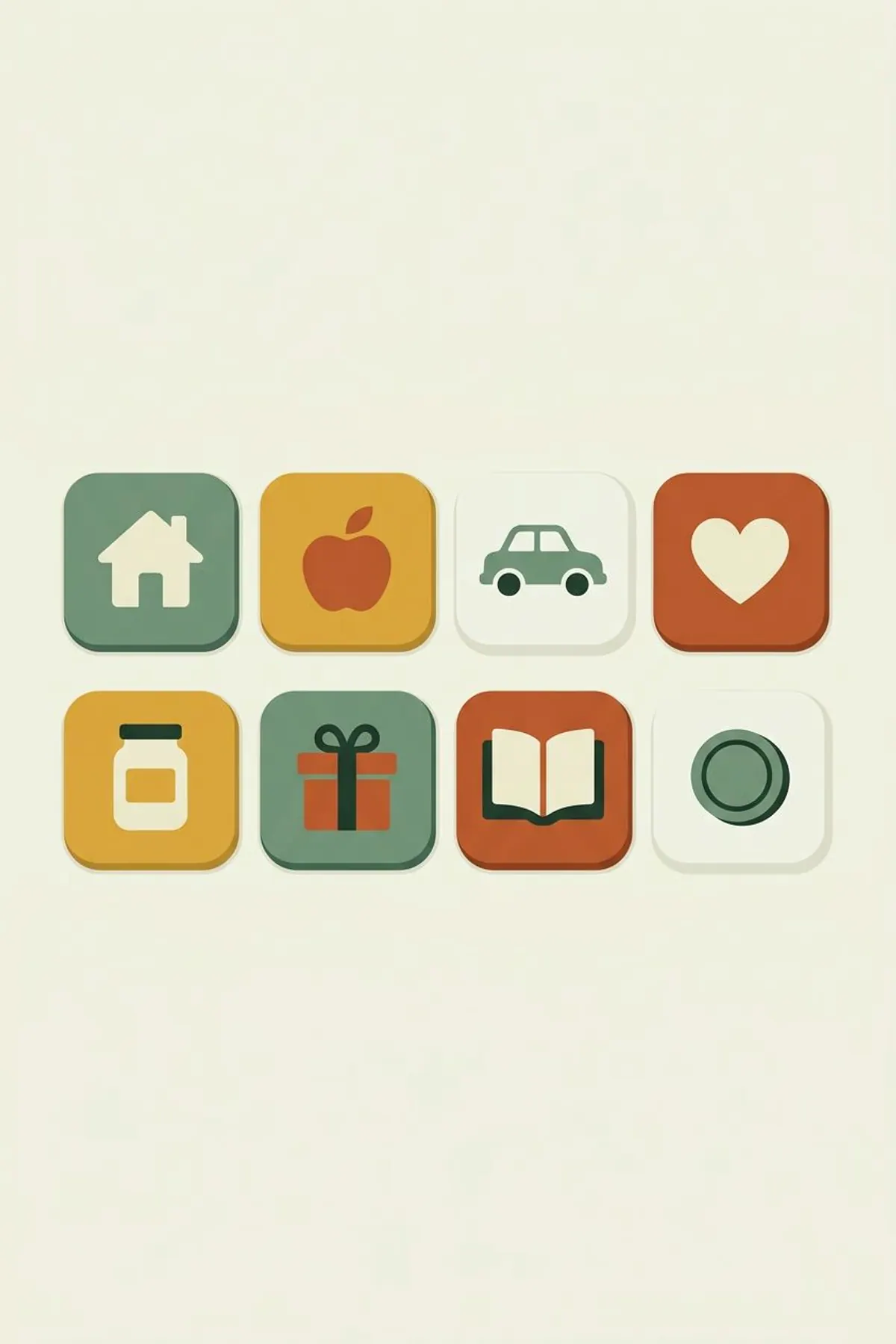
Your first 8 categories
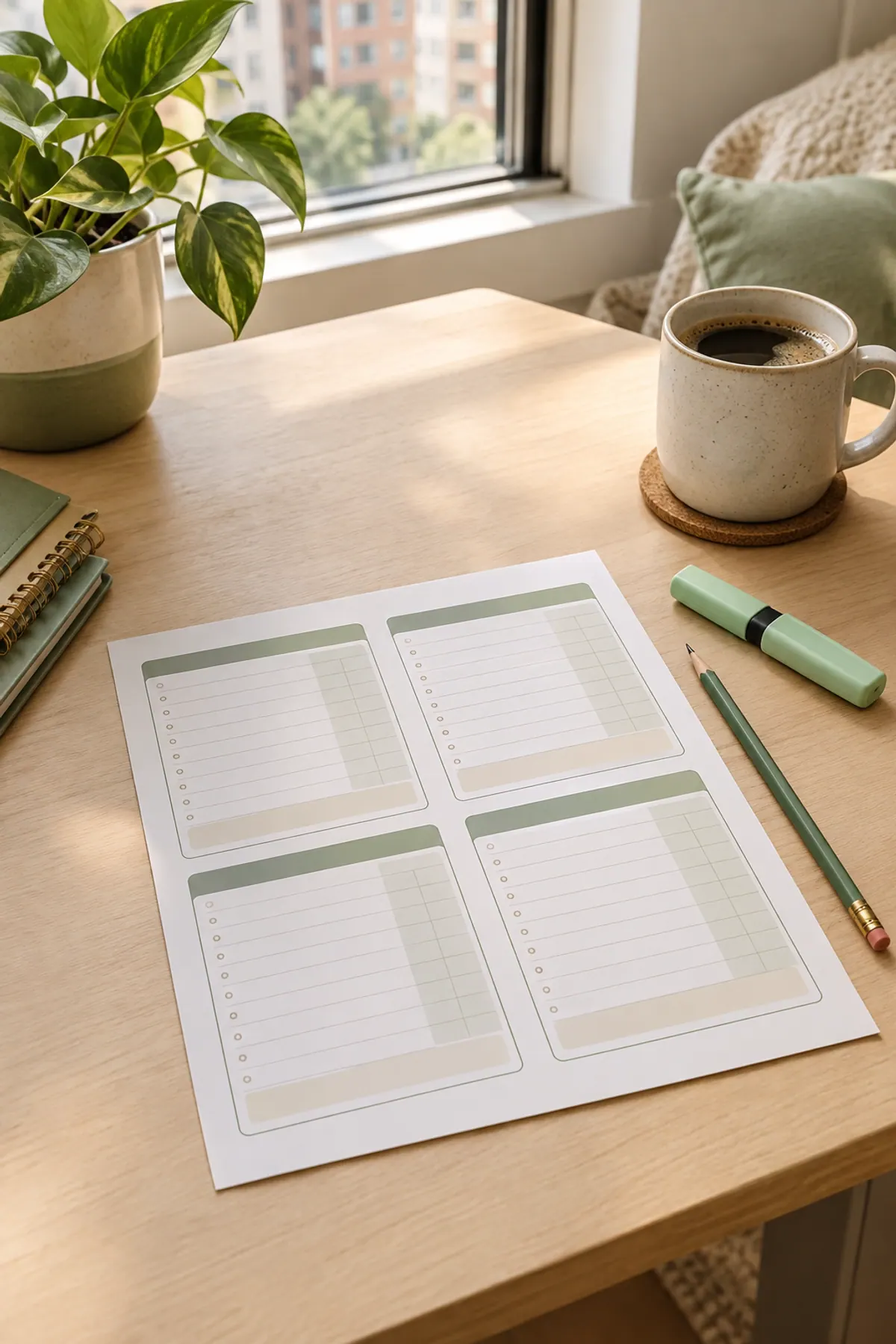
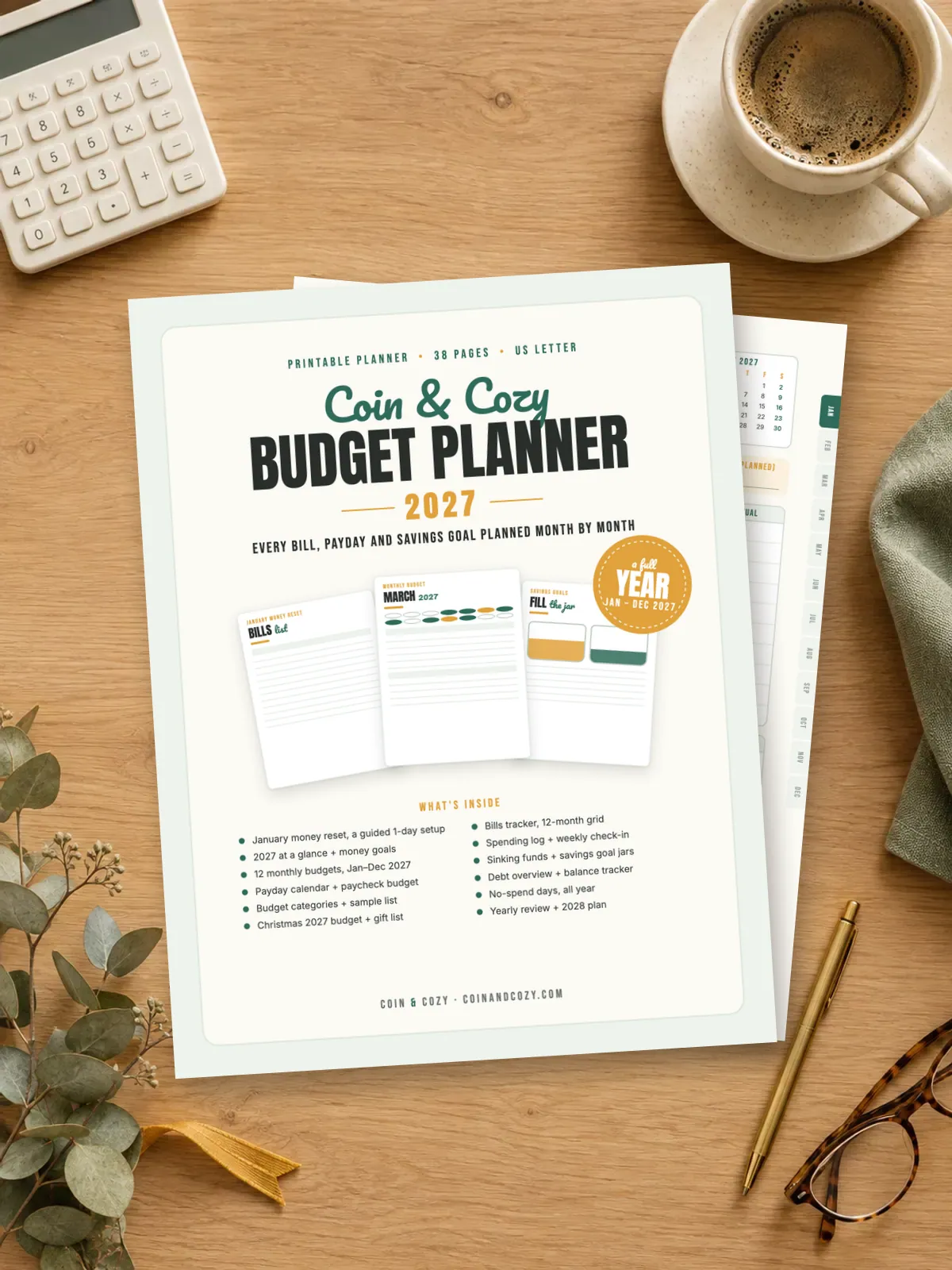
Use these 8 for your first two months. Then look at where the money went and split any category that surprised you. If groceries and household items are mixed together, give household its own line. The free monthly budget sheet has room for these lines, and the paid Cozy Budget Planner 2027 has a budget categories page with every group below.
Housing and Utilities Budget Categories
These are usually the biggest and the least flexible, so they go first.
| Category | What goes in it |
|---|---|
| Rent or mortgage | The payment to your landlord or lender |
| Property tax or HOA dues | Only if not already in the mortgage payment |
| Renters or home insurance | Monthly or the monthly share of an annual bill |
| Electric | Power bill |
| Gas or heating oil | Heating and cooking fuel |
| Water, sewer and trash | City or utility billed services |
| Internet | Home internet |
| Phone | Cell plans and phone payments |

Food Budget Categories
Food is the category most people overspend without noticing, so a few extra lines can help.
| Category | What goes in it |
|---|---|
| Groceries | Food and drinks you cook at home |
| Restaurants and takeout | Sit-down meals, delivery and fast food |
| Coffee and treats | Cafes, bakery, vending machines |
| Work lunches | Lunches bought on workdays |
| School lunches | Lunch accounts and school snacks |

Transportation Budget Categories
Split fixed costs from the ones that vary, so you can see what you can change.
| Category | What goes in it |
|---|---|
| Car payment | The loan or lease |
| Fuel | Gas or charging |
| Car insurance | Monthly or the monthly share of a 6-month bill |
| Maintenance and repairs | Oil changes, tires, repairs; good for a sinking fund |
| Parking and tolls | Work parking, tolls, meters |
| Public transit | Bus, train and rideshare |
Health and Insurance Budget Categories
Health costs come in small regular bills and rare big ones; separate them.
| Category | What goes in it |
|---|---|
| Health insurance | Premiums not taken from your paycheck |
| Doctor and prescriptions | Copays and monthly medicines |
| Dental and vision | Checkups, glasses, contacts |
| Pharmacy and over-the-counter | Cold medicine, first aid, vitamins |
| Therapy and wellness | Counseling, gym, classes |

Family and Kids Budget Categories
Only add the ones that apply to your household.
| Category | What goes in it |
|---|---|
| Childcare | Daycare, nanny, after-school care |
| School supplies and fees | Supplies, field trips, fundraisers |
| Kids activities | Sports, lessons, clubs |
| Kids clothing | Clothes and shoes as they grow |
| Diapers and baby supplies | Diapers, wipes, formula |
| Pet food and vet | Food, treats, checkups |

Debt and Savings Budget Categories
These move you forward. Many budgets list them last and run out before they are paid; try listing them right after the basics.
| Category | What goes in it |
|---|---|
| Credit card payments | At least the minimums |
| Student loans | Required monthly payment |
| Personal or other loans | Any other fixed payment |
| Emergency fund | A small amount to a starter fund; see how to build one on a low income |
| Sinking funds | Saving for irregular bills; see sinking fund categories |
| Retirement contributions | Contributions you make outside payroll |

Personal and Lifestyle Budget Categories
This group is where a budget feels like your life, not a punishment.
| Category | What goes in it |
|---|---|
| Clothing | Clothes and shoes for adults |
| Haircuts and beauty | Salon, nails, products |
| Subscriptions | Streaming, apps, memberships billed monthly |
| Hobbies | Craft supplies, books, games |
| Entertainment | Movies, concerts, nights out |
| Fun money | Spending you do not have to explain |
| Home goods and decor | Small household and decor purchases |

Giving and Irregular Budget Categories
These are the costs that wreck a month because they show up unplanned. Plan for them in a sinking fund.
| Category | What goes in it |
|---|---|
| Gifts | Birthdays, weddings, thank-you gifts |
| Holidays and Christmas | See the Christmas budget planner |
| Birthdays and parties | Cakes, venue, supplies |
| Charity and donations | Giving you plan |
| Annual fees and memberships | Yearly subscriptions and registrations |
| Travel and vacation | Trips and getaways |
| Car registration and taxes | Yearly fees, local taxes |
| Miscellaneous buffer | A small cushion for the unplanned |

Budget Categories by Method
The method you use changes how many categories you need. These are example numbers, not financial advice. Using a $3,000 monthly take-home as an example, 50/30/20 sets $1,500 for needs, $900 for wants and $600 for savings and debt.
| Method | Categories to track | Learn more |
|---|---|---|
| 50/30/20 | 3 big buckets (needs, wants, savings and debt) with your 8 categories inside them | What is the 50/30/20 rule |
| Zero based budget | All 8 categories, then split until every dollar has a job | Zero based budget guide |
| Cash envelope | Only the categories you spend on in person, usually 4 to start | Start a cash envelope system |

Which Budget Categories to Cut First
When money is short, do not cut randomly. Cut in this order, and keep the first two safe.
Protect these first
- Housing and utilities
- Groceries (not eating out)
- Transportation to work
- Insurance and health
- Minimum debt payments
Look here first for room
- Restaurants and takeout
- Subscriptions you forgot
- Coffee and treats
- Impulse home goods
- Entertainment you do not enjoy
A good category tells you where your money went in one glance. If you have to guess, split it.
Budget Categories for a Family
A family budget needs the same 8 categories plus a few from the family group. The family budget planner guide shows a worked example for 4 people. Keep kid costs together in one or two lines, like clothing and activities, so you can compare them month to month.
Supplies for sorting your budget categories
-
Tab dividers for a budget binder
Typically $6 to $12
One tab per category group keeps the binder easy to flip.
Check price on Amazon for Tab dividers for a budget binder -
Sticky index tabs
Typically $4 to $9
Color-code your 8 starter categories on the page.
Check price on Amazon for Sticky index tabs -
A5 budget notebook
Typically $8 to $15
Room to list each category and its monthly amount.
Check price on Amazon for A5 budget notebook
Frequently asked questions
What are the main budget categories?
Most budgets group spending into housing, utilities, food, transportation, insurance and health, debt, savings and personal spending. Eight broad categories is a good start for a simple budget.
How many budget categories should I have?
Start with 8 and grow to 15 to 25 only if you need the detail. Too many lines make a budget hard to keep up.
What are the 5 main budget categories?
Housing, food, transportation, debt and savings, and personal spending. Insurance and health is the one most people add as a sixth.
What is a simple budget categories list for beginners?
Housing, utilities, groceries, transportation, insurance and health, debt payments, savings and fun money. You can print the monthly budget sheet and fill it in.
Where do irregular expenses like gifts and car repairs go?
Into sinking funds, which are small monthly savings for bills that arrive once or twice a year. That way they do not wreck a single month.
Save it for later
Pin this to your Budgeting Basics board so it's there when you need it.
Save to Pinterest