This post contains affiliate links. As an Amazon Associate we earn from qualifying purchases, at no extra cost to you. Read our disclosure.
Safety first: This is general money education, not personalised financial advice. Please read our financial disclaimer before you start.
Key takeaways
- Income minus everything you assign equals $0; savings and debt payments are lines, not leftovers.
- Assign in order: must-pays first, then savings and debt, then everyday spending, then a buffer.
- Write what's left to assign after each step so you always know how much is still unplanned.
- Paid every two weeks? Build two small zero-based budgets, one per paycheck.
- When a bill surprises you, move dollars between lines so the total goes back to $0.
In this post13 sections
- Zero Based Budgeting in Plain Words
- Step 1: Write Your Take-Home Pay ($2,800 Example)
- Step 2: Assign the Must-Pays First
- Step 3: Make Savings and Debt Line Items
- Step 4: Assign Everyday Spending Until You Reach $0
- The Example Budget Filled In ($2,800 Take-Home)
- Biweekly Zero Based Budget: Two Paychecks, Two Mini Budgets
- When Income Changes or a Bill Surprises You
- Zero Based Budgeting Template: Free Printable
- Zero Based Budget Mistakes Beginners Make
- Give Every Dollar a Job Even on a Small Paycheck: A $1,900 Example
- Keep It Going Every Month
- FAQ
Zero Based Budgeting in Plain Words
Most budgets ask "what did I spend?" A zero based budget asks "what is each dollar for?" before the month starts. Fidelity describes it as a method that "assigns a job to every dollar of your take-home pay."
The formula is short: income minus assigned dollars equals zero. If you have $40 left at the end of your planning, you haven't failed. You just haven't given that $40 a job yet. Put it on a savings line, an extra debt payment or a buffer.
| Simple monthly budget | Zero based budget | |
|---|---|---|
| Starting point | Last month's spending | This month's take-home pay |
| Leftover money | Whatever is left at month end | Assigned before the month starts |
| Savings | Often what's left over | A line, planned like a bill |
| When income changes | Often ignored until later | Re-assign so the total is $0 again |
Step 1: Write Your Take-Home Pay ($2,800 Example)
Use the amount that actually lands in your account after taxes and deductions, not your salary. If your pay changes month to month, use your lowest month from the last three. In our example, the household brings home $2,800 a month.
Step 2: Assign the Must-Pays First
Must-pays are the things that keep a roof over your head, the lights on, food on the table and you getting to work, plus the minimum payment on any debt. In the example they add up to $2,060.

| Line | Planned |
|---|---|
| Rent | $1,050 |
| Utilities | $160 |
| Phone | $55 |
| Internet | $50 |
| Car insurance | $110 |
| Gas | $140 |
| Groceries | $420 |
| Credit card minimum | $75 |
| Must-pays total | $2,060 |
| Left to assign | $740 |
Step 3: Make Savings and Debt Line Items
This is the step that makes zero based budgeting different. Savings come out before everyday spending, not after. In the example: $100 to the emergency fund, $90 to sinking funds (car repairs, Christmas, birthdays) and $100 extra on the credit card.

| Line | Planned |
|---|---|
| Emergency fund | $100 |
| Sinking funds | $90 |
| Extra credit card payment | $100 |
| Step 3 total | $290 |
| Left to assign | $450 |
Step 4: Assign Everyday Spending Until You Reach $0
Now give the remaining $450 jobs: household items, kids, a pet, clothing, personal spending, eating out, subscriptions, medical copays and a small buffer for the things you forget.

The Example Budget Filled In ($2,800 Take-Home)
| Step | Line | Planned | Left to assign |
|---|---|---|---|
| Income | Take-home pay | $2,800 | $2,800 |
| 1 Must-pays | Rent, utilities, phone, internet, insurance, gas, groceries, card minimum | $2,060 | $740 |
| 2 Savings and debt | Emergency fund $100, sinking funds $90, extra on card $100 | $290 | $450 |
| 3 Everyday | Household $60, kids $60, pet $35, clothing $40, personal $70, eating out $40, subscriptions $25, medical $40 | $370 | $80 |
| 4 Buffer | Buffer for the things you forget | $80 | $0 |
The last column is the heart of it. When it reads $0, every dollar has a job. If it goes negative, trim a line in step 3 or 4 before you touch the must-pays.
Biweekly Zero Based Budget: Two Paychecks, Two Mini Budgets
If you're paid every two weeks, a single monthly plan can leave you short before the second check arrives. Split the same $2,800 into two $1,400 paychecks and give each bill to the paycheck that lands before its due date.
| Paycheck A ($1,400) | Amount | Paycheck B ($1,400) | Amount |
|---|---|---|---|
| Rent | $1,050 | Utilities, phone, car insurance | $325 |
| Half of groceries | $210 | Credit card minimum | $75 |
| Half of gas | $70 | Half of groceries and gas | $280 |
| Internet | $50 | Emergency fund, sinking funds, extra on card | $290 |
| Personal | $20 | Everyday lines and buffer | $430 |
| Left to assign | $0 | Left to assign | $0 |
Paid every two weeks means 26 paydays a year, so two months get a third paycheck. Decide its job ahead of time (savings, a sinking fund or extra on debt) so it doesn't quietly disappear.
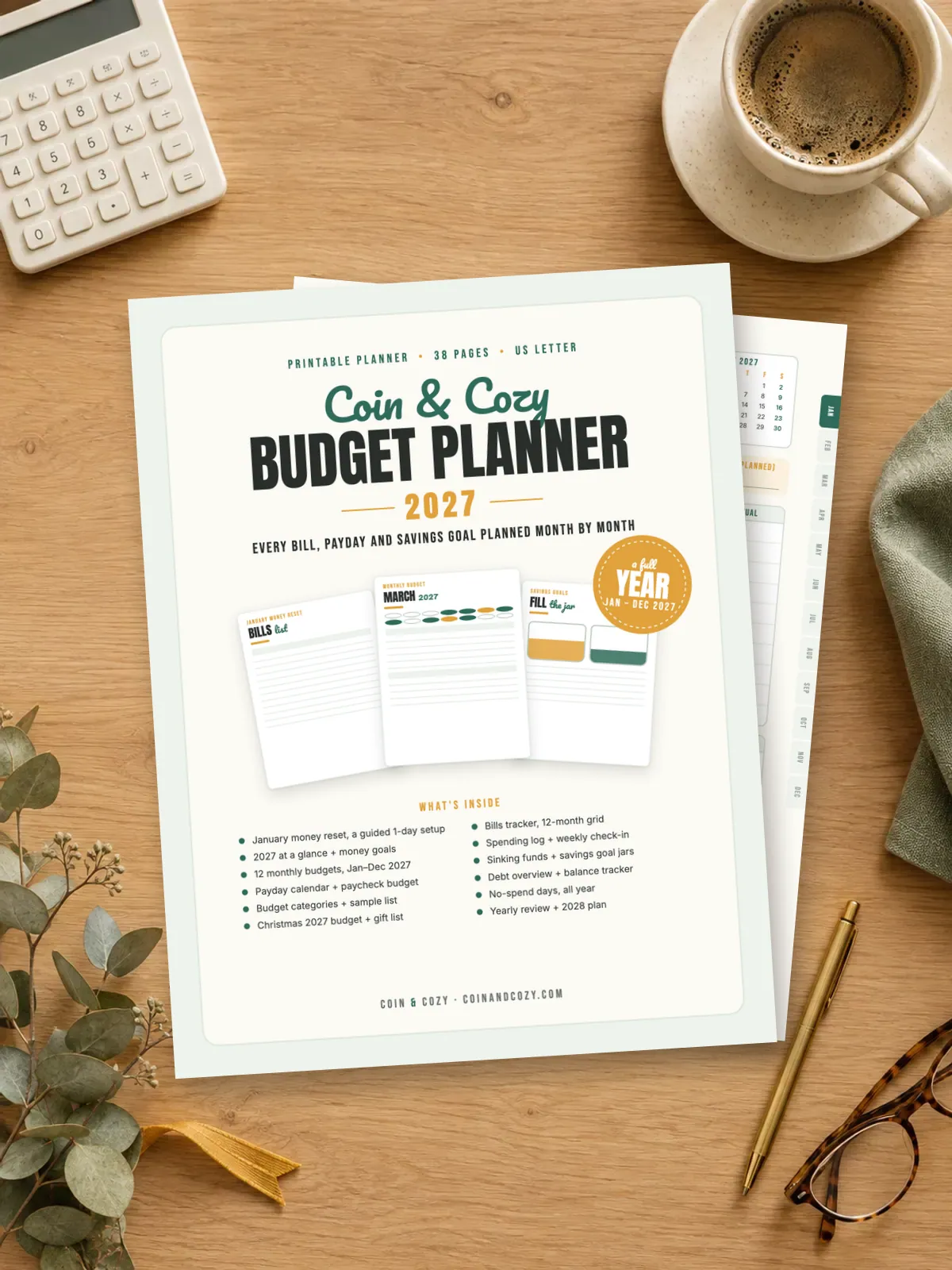
If you want this split laid out for all twelve months, The Cozy Budget Planner 2027 has a biweekly paycheck budget page and a payday calendar next to each monthly budget, plus sinking fund and debt trackers.
When Income Changes or a Bill Surprises You
A zero based budget is a plan, not a promise. When a $90 vet bill shows up, move $90 from another line (eating out, the buffer, the pace of savings) to a new vet line. Left to assign goes back to $0 and the month still adds up. If your income runs lower, trim in this order: buffer, fun and personal spending, extra debt and savings pace, and only then call a company before skipping a must-pay.

Zero Based Budgeting Template: Free Printable
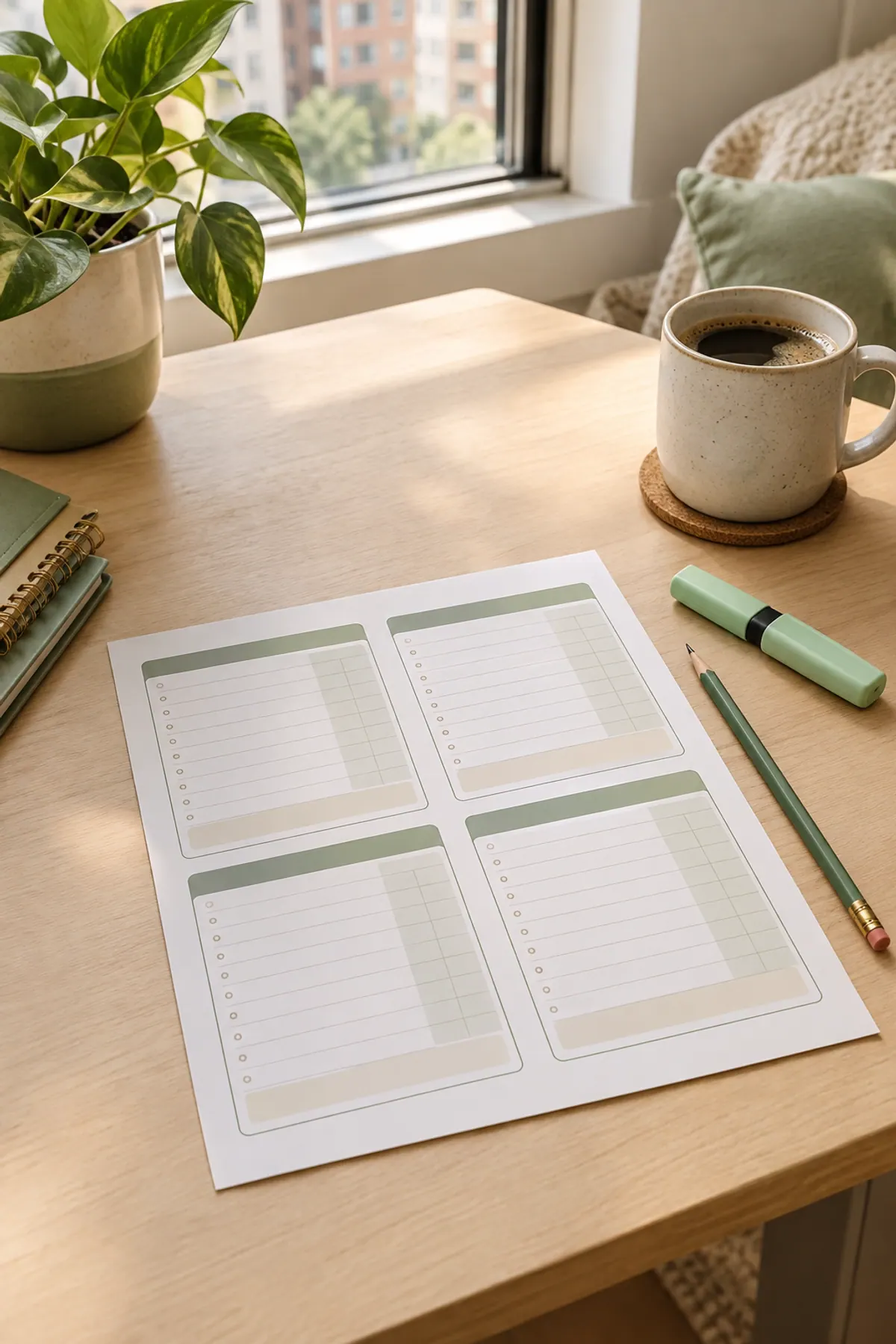
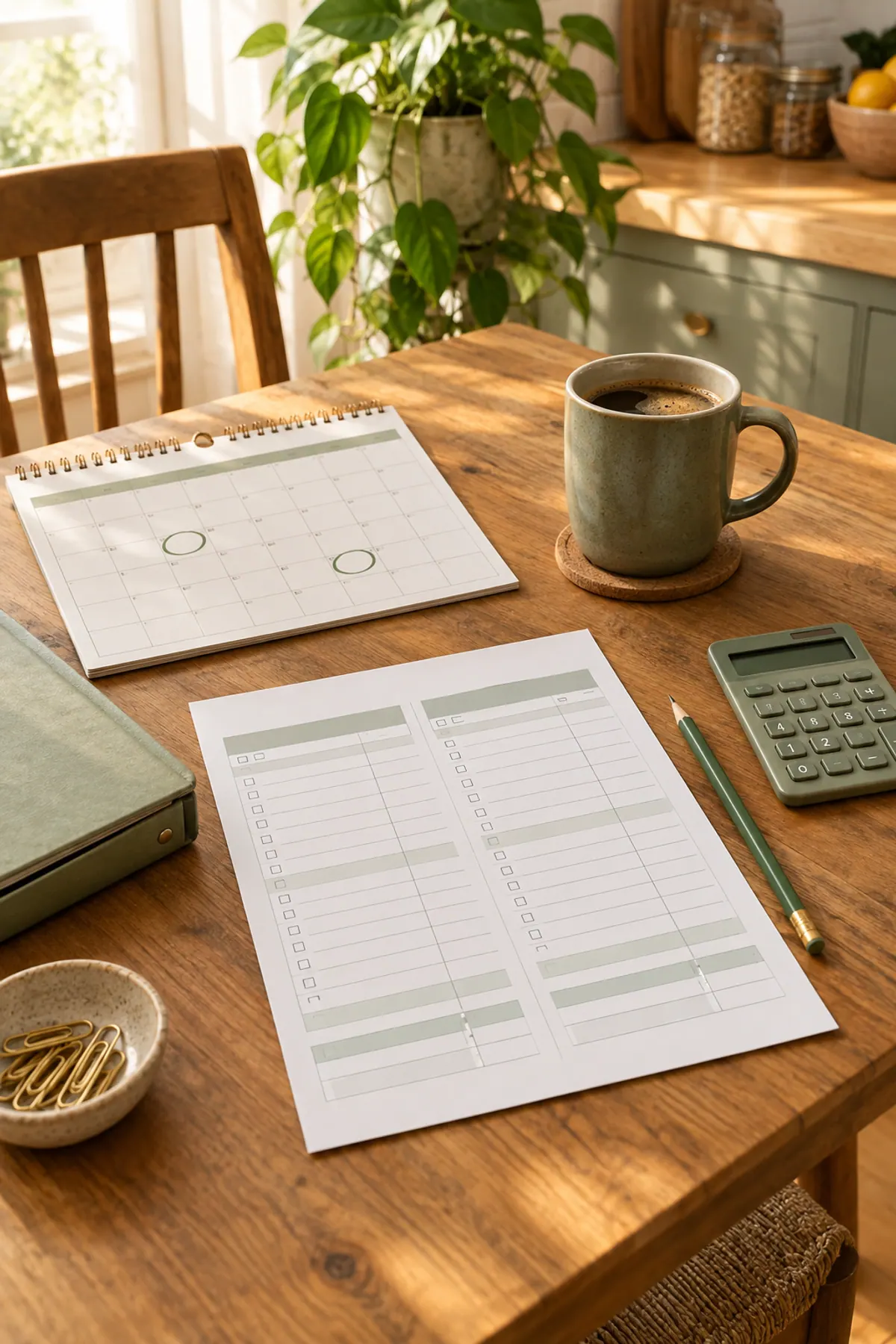
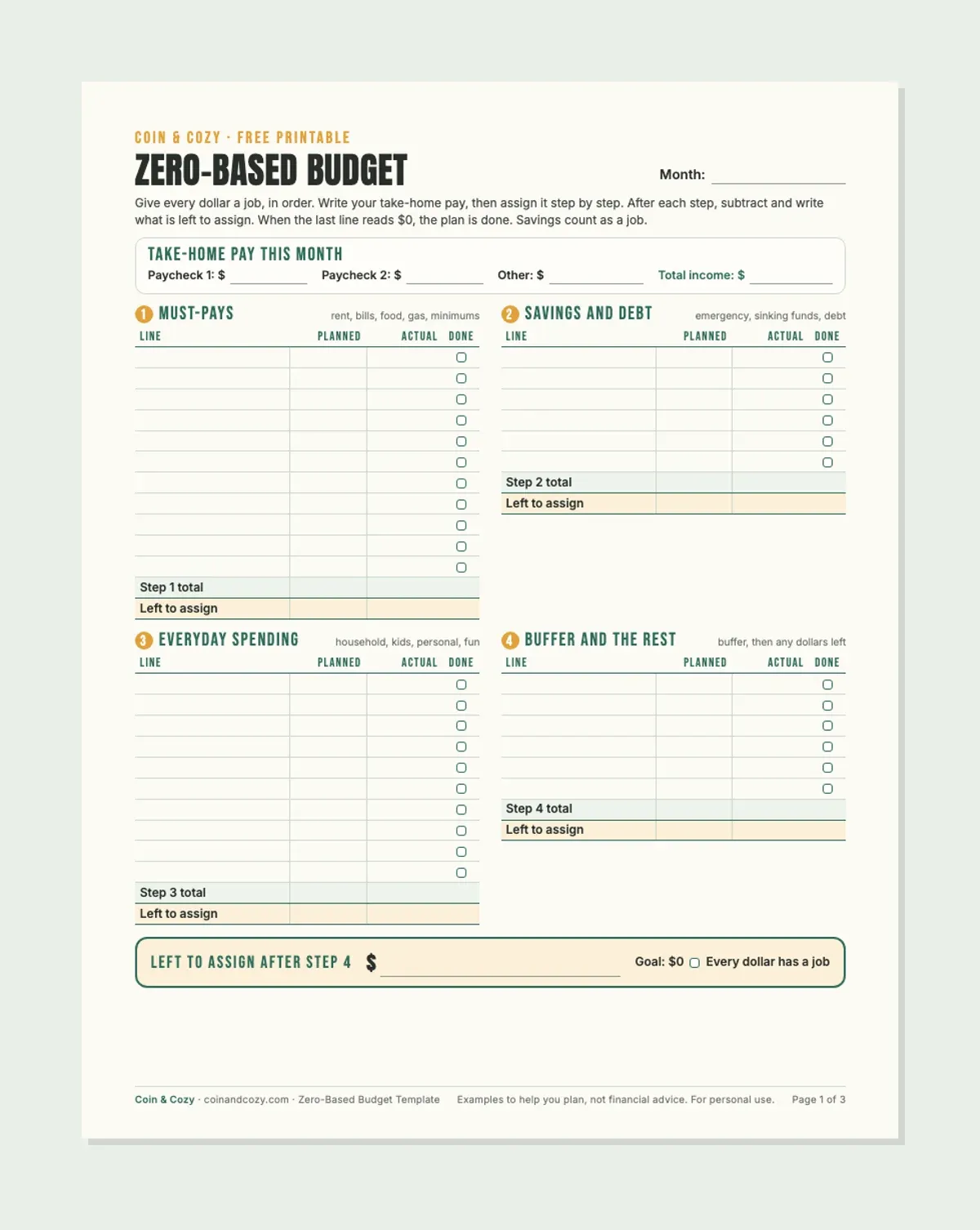
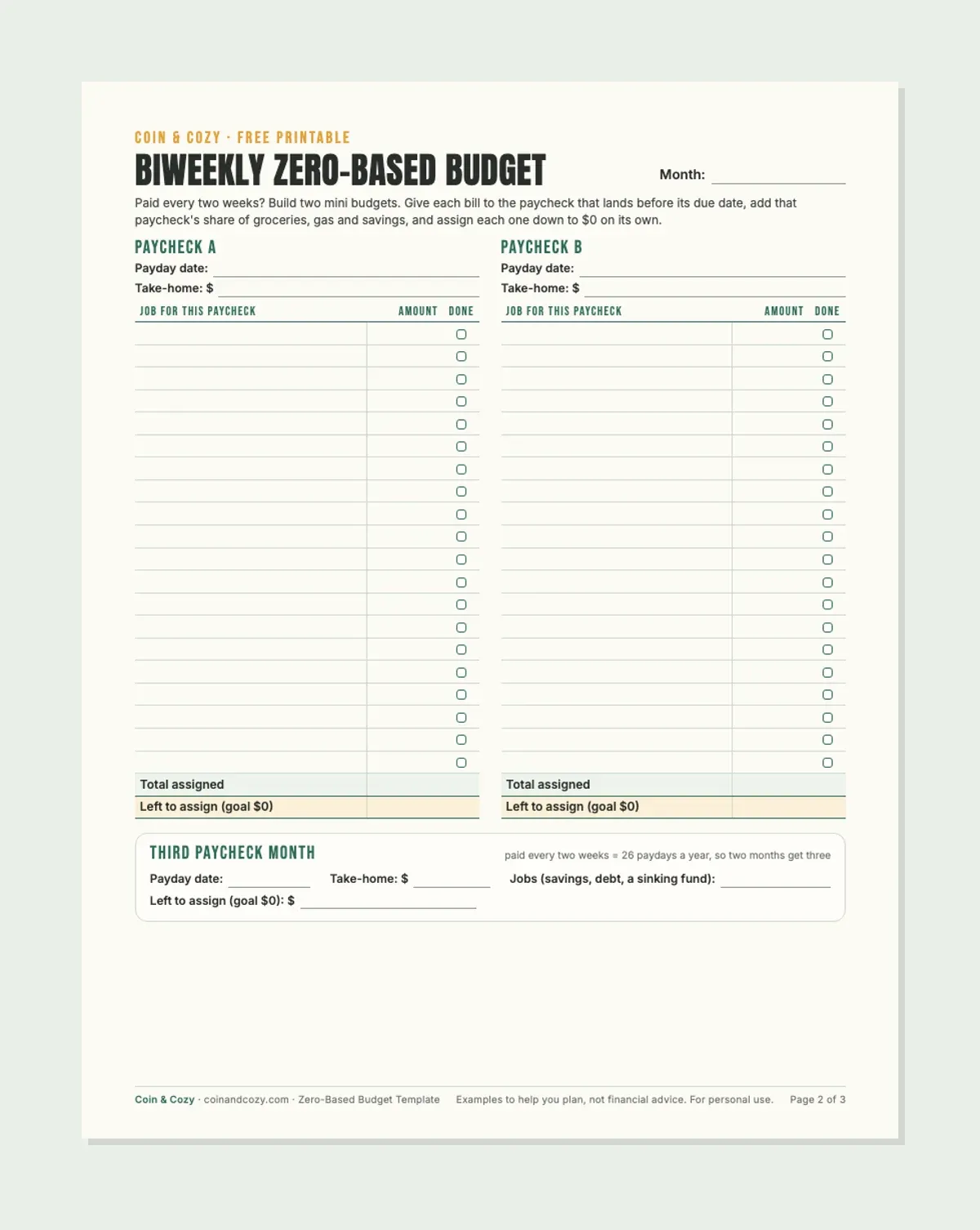
Download the free zero based budget template (PDF, 3 pages). No sign-up needed. It prints on US Letter; on A4, choose "fit to page." It's different from our simple monthly budget sheet: page 1 walks you through the four steps with a left to assign line after each one, page 2 is a biweekly page where each paycheck is assigned to $0 on its own, and page 3 is a "when the month changes" log for moving dollars between lines.
Prefer a spreadsheet? Copy the same four steps into Google Sheets: one column for planned, one for actual, and a cell that subtracts every assigned line from income. When that cell shows 0, you're done.
Helpful, not required
-
Undated budget planner notebook
Typically $8 to $18
A place to keep each month's plan together.
Check price on Amazon for Undated budget planner notebook -
Basic desk calculator
Typically $6 to $12
Faster than a phone for adding a page of lines.
Check price on Amazon for Basic desk calculator -
Mild highlighters and pens
Typically $4 to $12
One color for must-pays, one for savings.
Check price on Amazon for Mild highlighters and pens
Zero Based Budget Mistakes Beginners Make
Do this
- Plan from take-home pay, using your lowest recent month
- Give savings and extra debt their own lines
- Keep a small buffer line for forgotten costs
- Check the plan once a week for ten minutes
Skip this
- Planning from your salary before taxes
- Leaving "extra" money unassigned
- Forgetting yearly costs like car registration or birthdays
- Quitting after one messy month
Fidelity also lists the downsides honestly: it takes more planning up front, it can feel cumbersome if your income varies, and it asks you to keep an eye on purchases. The four-step template is meant to make that first setup faster.
Give Every Dollar a Job Even on a Small Paycheck: A $1,900 Example
Zero based budgeting matters most when money is tight, because there's no room for dollars to drift. Here's the same method on a $1,900 month.
| Step | Lines | Planned | Left to assign |
|---|---|---|---|
| Income | Take-home pay | $1,900 | $1,900 |
| 1 Must-pays | Rent $850, utilities $110, phone $45, car insurance $90, gas $110, groceries $300, card minimum $50 | $1,555 | $345 |
| 2 Savings and debt | Emergency fund $40, sinking funds $25, extra on card $60 | $125 | $220 |
| 3 Everyday | Household $40, personal $30, medical $30, laundry $25, clothing $25, eating out $20, subscriptions $10 | $180 | $40 |
| 4 Buffer | Buffer | $40 | $0 |
Even $40 for emergencies is a job. Over a year it adds up to $480 you didn't have before. For more on building the first budget, see our budget planner for beginners guide.
Keep It Going Every Month
A zero based budget is rebuilt each month, which takes about 30 minutes once you've done it twice. Pick a day before the month starts, copy last month's lines, adjust for birthdays, holidays and bills that only come once a year, and assign until you hit $0.

The goal isn't a flawless month. It's a month where every dollar had a plan before it had a chance to wander off.
If you'd like everything in one place (the planner, the trackers and the savings charts), the Cozy Money Binder bundle below gathers them together.
Frequently asked questions
What is a zero based budget in simple terms?
It's a monthly plan where take-home pay minus every dollar you assign equals zero. Bills, spending, savings and debt payments each get a line until nothing is left unplanned.
Does zero based budgeting mean I spend everything?
No. Savings and extra debt payments are lines in the budget, so reaching $0 can mean hundreds of dollars went to savings.
How do I do a zero based budget with biweekly pay?
Build a small zero-based plan for each paycheck. Give each bill to the paycheck that arrives before its due date, then add that check's share of groceries, gas and savings until it reaches $0.
What if my income changes every month?
Plan from your lowest month in the last three. When more comes in, assign the extra to savings or debt with the same left to assign line.
Is there a free zero based budget template?
Yes. The free 3-page PDF above has a four-step monthly page with a left to assign line, a biweekly page and a mid-month change log.
Save it for later
Pin this to your Budgeting Basics board so it's there when you need it.
Save to Pinterest