This post contains affiliate links. As an Amazon Associate we earn from qualifying purchases, at no extra cost to you. Read our disclosure.
Safety first: This is general money education, not personalised financial advice. Please read our financial disclaimer before you start.
Key takeaways
- Start from take-home pay, not salary, and use your lowest month if your income changes.
- List bills by due date so you can see which paycheck covers which bill.
- Divide yearly costs by 12 and save that amount monthly in sinking funds.
- A 15-minute weekly check-in matters more than which budgeting method you pick.
- Plan for 5-week months and 3-paycheck months before they show up.
In this post12 sections
- What a Budget Planner Actually Does
- What You'll Need
- How to Build a Monthly Budget in 10 Steps
- A Beginner Monthly Budget Example
- Which Budgeting Method Is Best for Beginners?
- Setting Up Your Monthly Budget Planner Pages
- Budgeting Mistakes Beginners Make
- Variations for Different Situations
- Bonus: Your Budget Has a Calendar Problem
- Simple Budget Planner Supplies
- Ready to Put the Budget to Work?
- FAQ
What a Budget Planner Actually Does
Most beginner budgets fail for one reason: they're built from guesses. You write $400 for groceries because it sounds right, then spend $610 and feel like you failed.
A working monthly budget planner is built from what you really spent last month, then adjusted. It answers three questions: what's coming in, what has to go out, and what's left to decide on.
This guide walks through building one by hand, in a notebook or a printable. The steps are the same on a spreadsheet or a free app.
What You'll Need
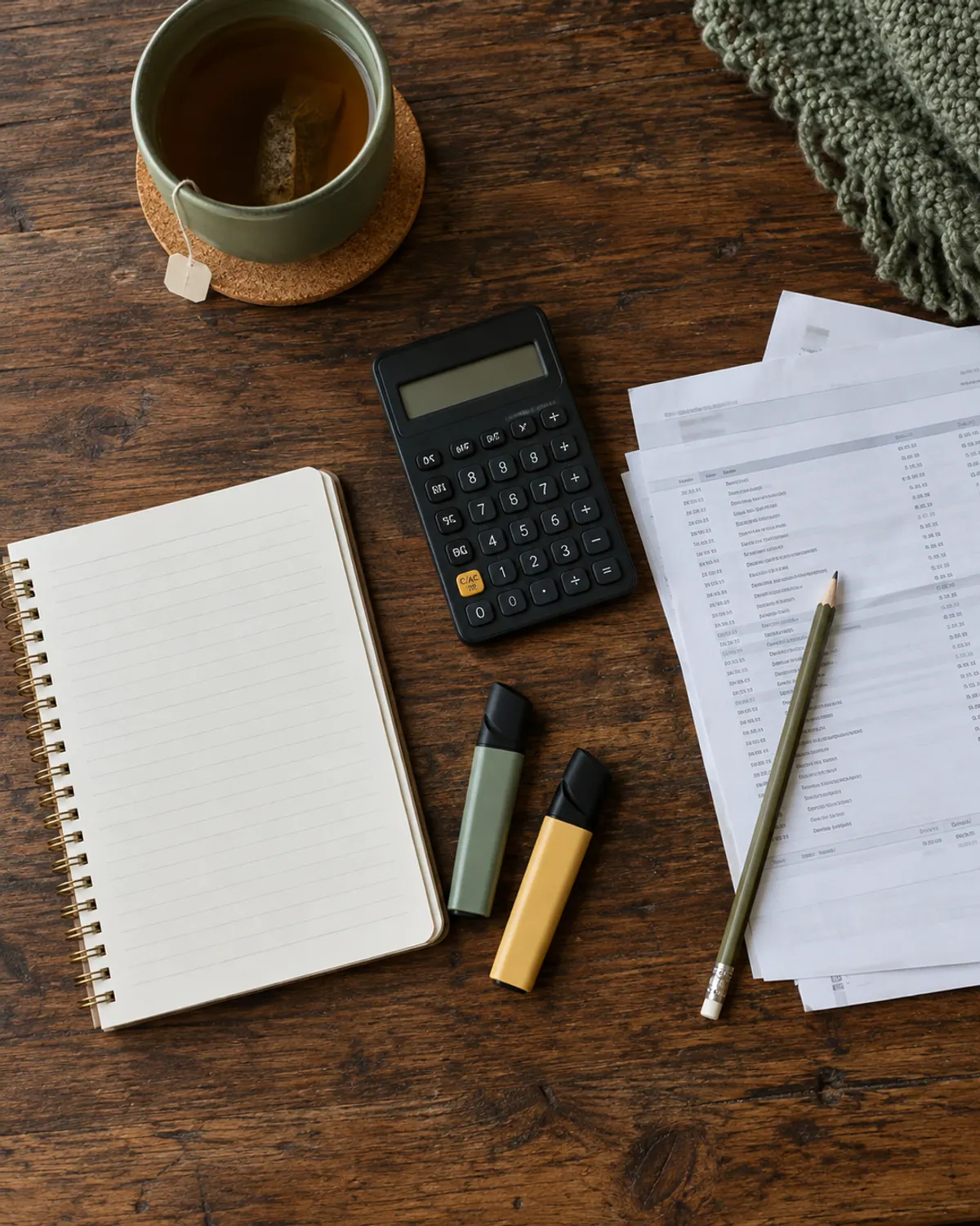
Supplies
How to Build a Monthly Budget in 10 Steps
-
Step 1: Gather last month's statements
Print or open every account you spend from: checking, credit cards, cash apps and store cards. Highlight fixed bills in one color and everyday spending in the other. This takes about 20 minutes and shows you where the money really went.
-
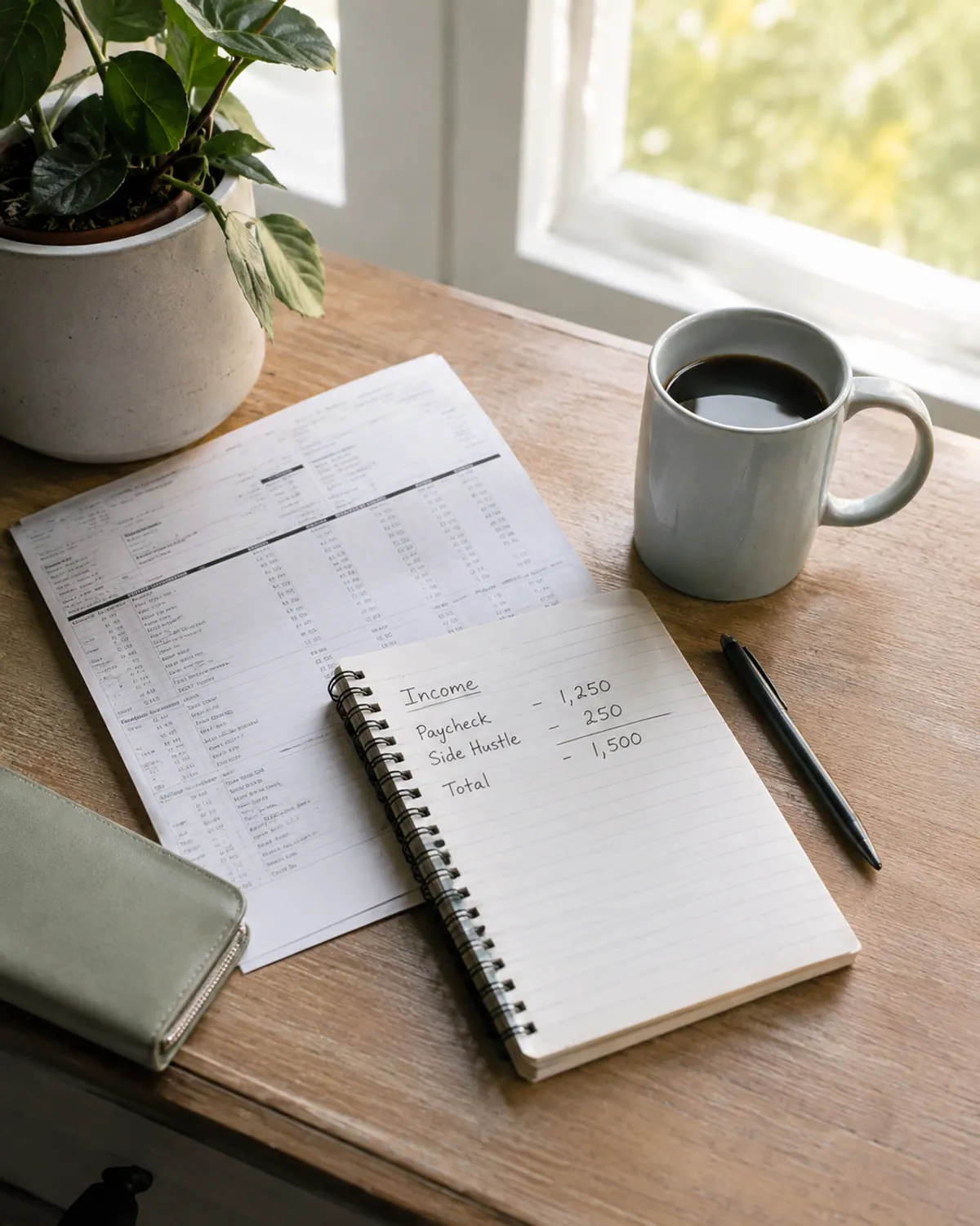
Step 2: Write down your take-home income
Use the amount that actually lands in your account after taxes and deductions. If your income changes month to month, look back over the last six months and plan around the lowest month. Anything above that becomes a bonus you assign later.
-
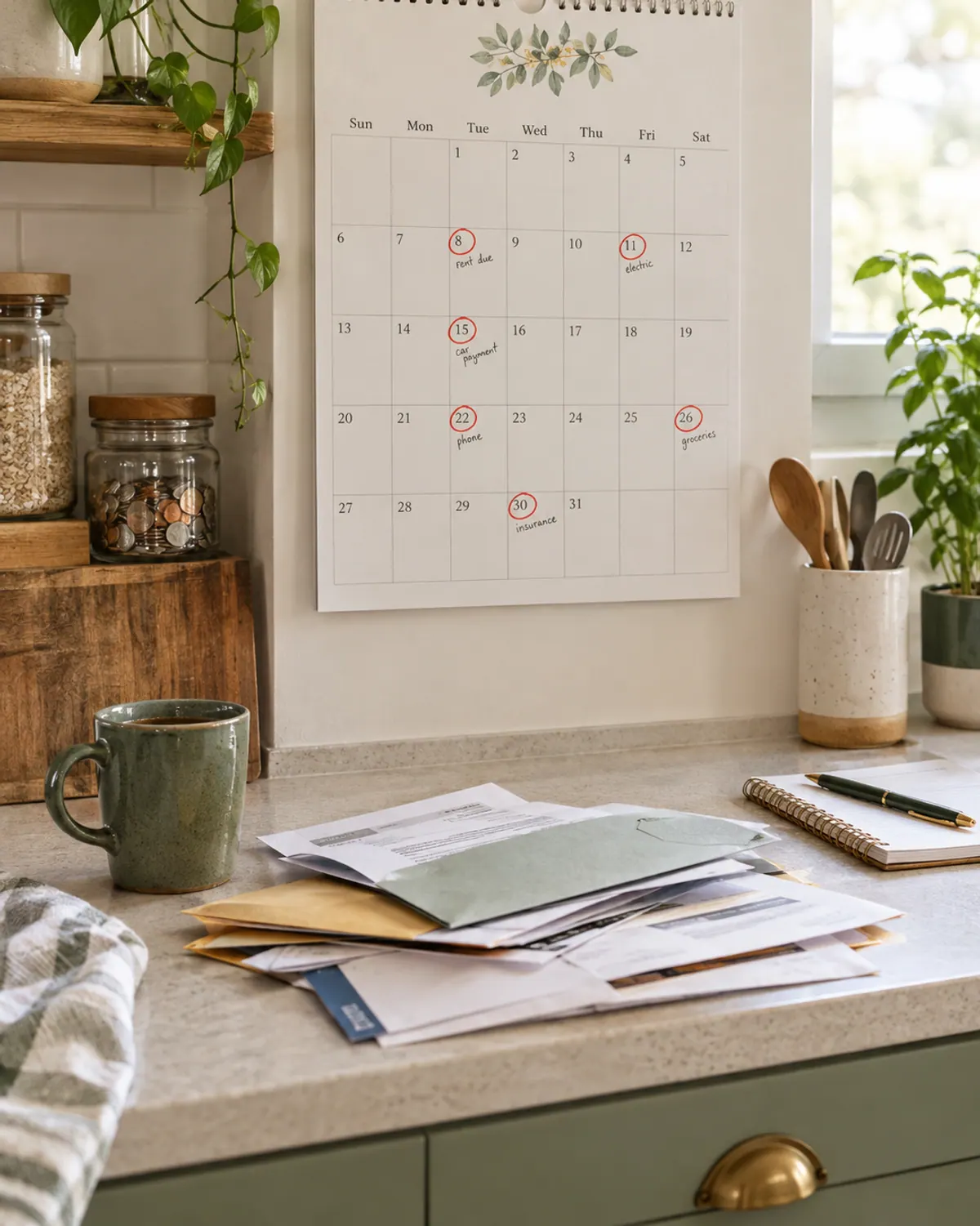
Step 3: List fixed bills with their due dates
Rent, utilities, phone, insurance, car payment, minimum debt payments and subscriptions. Write the due date next to each one. Seeing the dates tells you whether your first or second paycheck has to cover each bill, which is where a lot of overdraft fees start.
-
Step 4: Total your variable spending
Add up groceries, gas, household items, eating out and kids' costs from your statements. Don't trim yet. Write the real number first so your first budget starts from the truth.
-
Step 5: Add sinking funds for yearly costs
List costs that don't hit every month: car registration, Christmas, birthdays, car repairs, school supplies, the vet. Divide each yearly total by 12 and budget that amount every month. A $600 Christmas becomes $50 a month.
-
Step 6: Give savings and extra debt payments a line
Even $25 counts. Putting savings on the page as a bill makes it happen before the month gets busy. If you have debt, decide whether any extra goes to it after the minimums are covered.
-
Step 7: Pick one method
Choose one way to organize the plan (the options are compared below). Beginners often start with zero-based budgeting, where income minus every line equals $0, because it forces every dollar to have a job.
-
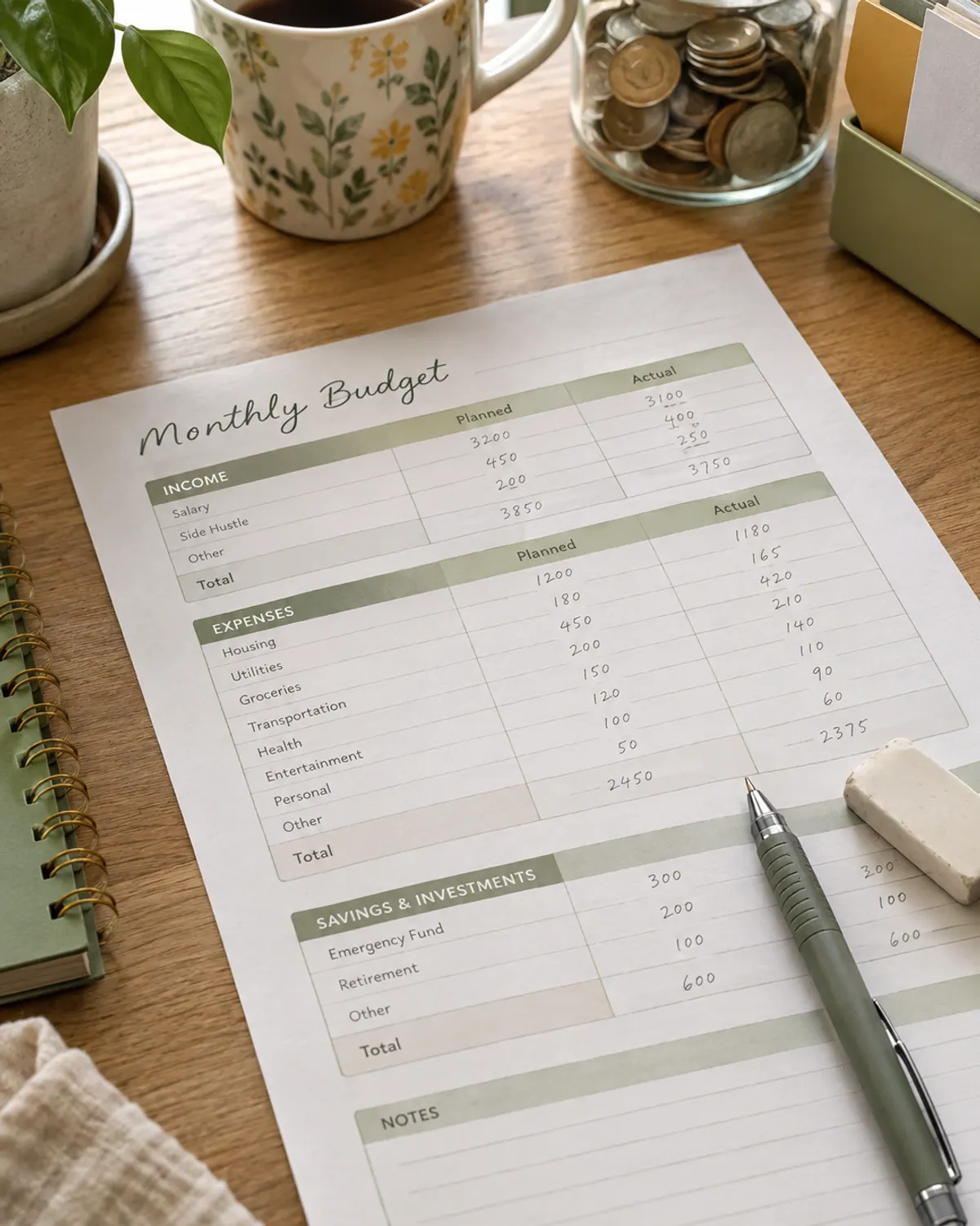
Step 8: Fill in your budget page
Write income at the top, then fixed bills, sinking funds, savings and variable spending. Subtract. If the result is negative, trim variable lines first, then look at subscriptions and bills you can renegotiate.
-
Step 9: Check in once a week
Pick a day, like Sunday night. Add up what you spent in each variable category and compare it with the plan. This 15-minute habit is what makes a budget work.
-
Step 10: Review at month end and adjust
Compare planned with actual for every line. Raise a category that ran over three months in a row, because that's your real number. Then copy the page and start next month.



A Beginner Monthly Budget Example
Here's a zero-based budget for an example family bringing home $3,200 a month. It isn't a target, just a way to see how the lines fit together.
| Category | Type | Planned |
|---|---|---|
| Rent | Fixed | $1,250 |
| Utilities | Fixed | $180 |
| Phone and internet | Fixed | $110 |
| Car payment | Fixed | $260 |
| Car insurance | Fixed | $120 |
| Groceries | Variable | $560 |
| Gas | Variable | $160 |
| Household and toiletries | Variable | $60 |
| Fun and eating out | Variable | $50 |
| Sinking funds | Saving | $230 |
| Emergency savings | Saving | $120 |
| Extra debt payment | Saving | $100 |
| Total | $3,200 (left to assign: $0) |
Groceries are the biggest line most families can move. Our $50 a week grocery list and these cheap meals on a budget show where that line can come down.
| Fund | Yearly cost (example) | Monthly |
|---|---|---|
| Christmas | $600 | $50 |
| Car repairs | $600 | $50 |
| Clothing | $360 | $30 |
| Medical copays | $300 | $25 |
| Birthdays | $240 | $20 |
| Pet and vet | $240 | $20 |
| School supplies | $180 | $15 |
| Car registration | $120 | $10 |
| Yearly subscriptions | $120 | $10 |
| Total | $2,760 | $230 |
The Christmas line is the one most beginners forget until November. If this year's holiday is already close, build a short Christmas budget planner now and start the $50 a month in January.
Which Budgeting Method Is Best for Beginners?
There's no single right answer. The best method is the one you'll still be using in March.
| Method | How it works | Good fit if you | Watch out for |
|---|---|---|---|
| Zero-based | Income minus all planned lines equals $0 | Want a plan for every dollar | Takes more time to set up |
| 50/30/20 | About 50% needs, 30% wants, 20% savings and debt | Want a quick starting point | Needs often run above 50% when rent is high |
| Cash envelopes | Cash for variable categories goes in labeled envelopes | Overspend with cards | Carrying cash and online bills don't mix |
The 50/30/20 split is a common rule of thumb, not a requirement. Plenty of households pay more than half their income for rent alone, and that's a starting point to adjust, not a failure. This post is general education, not financial advice. For a worked $4,000 example and where the split breaks, see what the 50/30/20 rule is.
Setting Up Your Monthly Budget Planner Pages
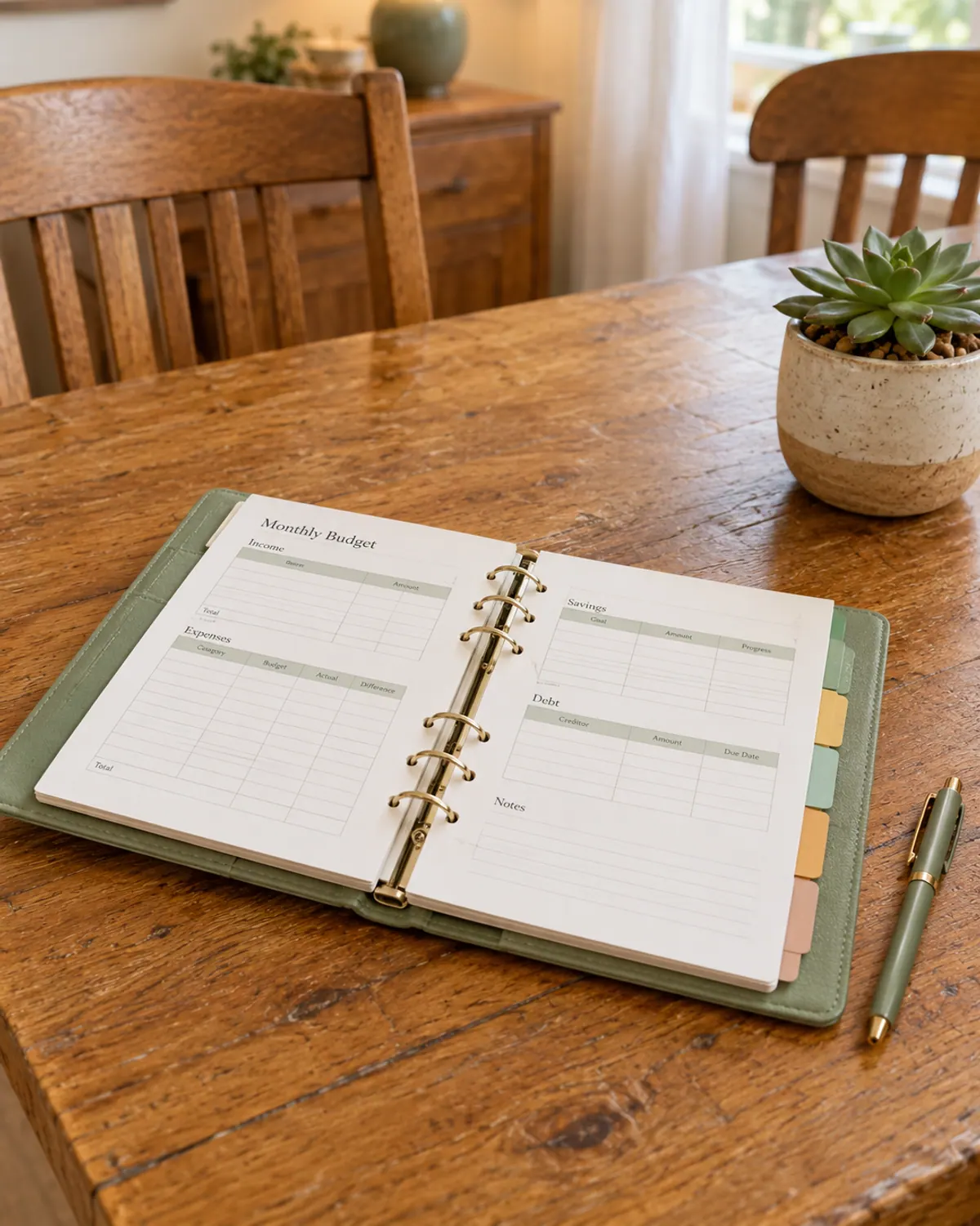
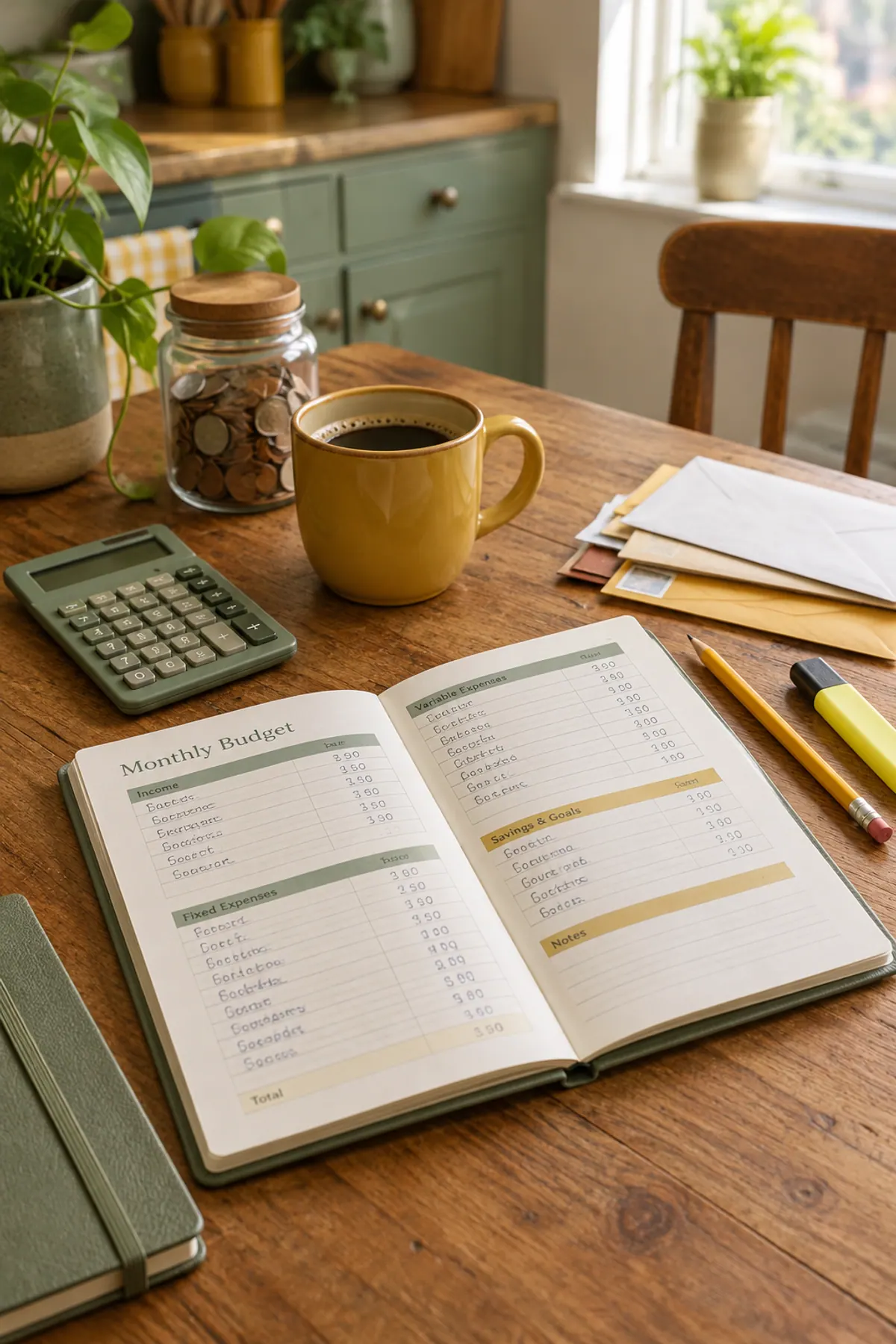
A simple binder with tabs keeps everything in one spot. Use four sections: a monthly budget page, a bill calendar, a sinking funds tracker and a weekly spending log. Add a debt page if you're paying anything down.
Keep the planner where you'll see it, like the kitchen counter, not a drawer. If paper isn't your thing, the same four sections work as four tabs in a spreadsheet.

A budget you check every week beats a flawless budget you never open again.
Budgeting Mistakes Beginners Make
| Mistake | Why it hurts | Fix |
|---|---|---|
| Budgeting from gross salary | Taxes and deductions vanish before you see them | Use the deposit amount |
| Guessing variable costs | Real spending blows past the guess | Pull numbers from statements |
| No sinking funds | Yearly costs feel like emergencies | Divide yearly costs by 12 |
| No fun money at all | The plan feels like punishment and gets dropped | Give yourself a small, guilt-free line |
| Quitting after one bad month | The first month is a draft, not a test | Adjust and keep going |
Variations for Different Situations
Paid biweekly: split the month into two mini budgets, one per paycheck, and assign each bill to the paycheck that arrives before its due date.
Irregular income: budget on your lowest recent month. When a bigger month comes, fill a buffer worth one month of expenses first, then use extra for goals.
Couples: sit down together once a month. Agree on shared lines and give each person a small personal spending amount that no one has to explain.
Single parents: add a line for kids' costs that pop up mid-month, like field trips and school pictures. A small "kids' extras" sinking fund keeps those from landing on the grocery line.
Bonus: Your Budget Has a Calendar Problem

Most budget templates assume every month is the same. They aren't, and two calendar quirks trip up a lot of beginners.
Five-week months. If you shop for groceries weekly, some months have five shopping weeks, not four. At an example $130 a week, that's $650 instead of $520. Count how many Fridays (or your shopping day) are in the month before you set the grocery and gas lines.
Three-paycheck months. Paid every two weeks? You get 26 paychecks a year, so two months each year bring a third check. Build your regular budget on two paychecks, then decide ahead of time where the third one goes: sinking funds, savings or a debt you're paying down.
Look at next year's calendar now and circle those months in your budget planner. It's five minutes of work that keeps a five-week month from feeling like a failure.
Simple Budget Planner Supplies
Helpful, not required
-
Undated monthly budget planner
about $10 to $20
Start any month without wasting pages.
Check price on Amazon for Undated monthly budget planner -
Basic desk calculator
about $6 to $12
Faster than a phone for adding a page of numbers.
Check price on Amazon for Basic desk calculator -
Mild highlighters
about $5 to $10
Color-code fixed bills and everyday spending on statements.
Check price on Amazon for Mild highlighters -
1-inch binder with tab dividers
about $8 to $15
Keeps budget, bills, sinking funds and logs in one place.
Check price on Amazon for 1-inch binder with tab dividers -
Cash envelope wallet
about $8 to $15
Handy if you use envelopes for groceries or fun money.
Check price on Amazon for Cash envelope wallet
Ready to Put the Budget to Work?
Once the plan exists, a short challenge gives it momentum. A no-spend challenge in January shows how much your variable lines can shrink, and a bi weekly savings challenge turns small amounts into a real fund.
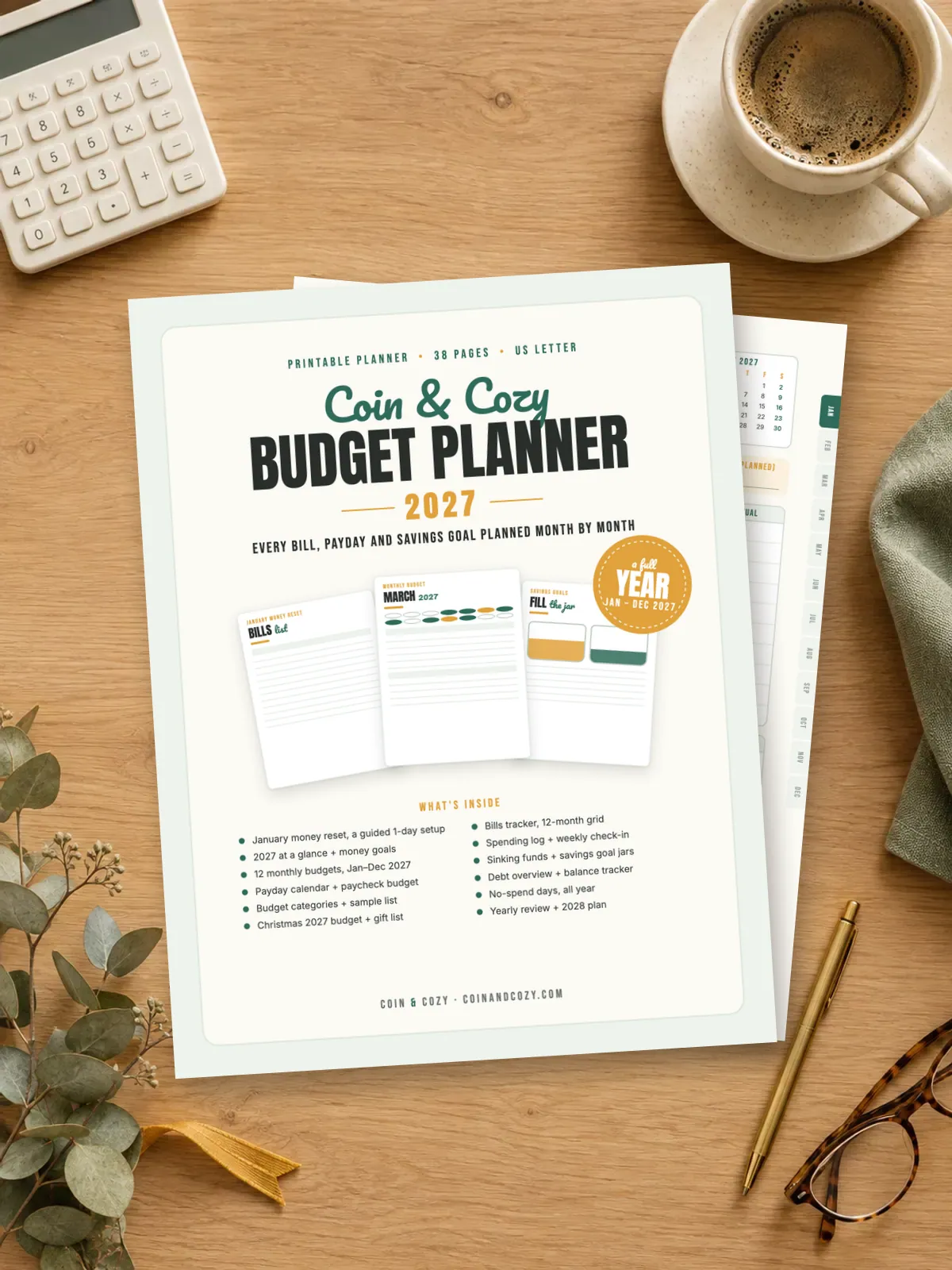
If you'd like the pages already laid out, the Cozy Budget Planner 2027 has monthly budgets, a bills tracker, sinking funds and a debt page for the whole year.
Frequently asked questions
How do I start a budget for the first time?
Gather last month's statements, write your take-home pay, list fixed bills with due dates, add up your real variable spending, then build a plan where income minus every line equals zero. Check it weekly.
What should be in a monthly budget planner?
Income, fixed bills with due dates, variable spending like groceries and gas, sinking funds for yearly costs, savings and any extra debt payments. A weekly spending log helps you compare plan and reality.
What is the 50/30/20 rule?
It's a rule of thumb that puts about 50% of take-home pay toward needs, 30% toward wants and 20% toward savings and debt. It's a starting point, not a requirement, and many households need different numbers.
How do I budget with irregular income?
Plan around your lowest month from the last six. When you earn more, build a buffer worth about one month of expenses before spending the extra on goals.
Is a paper budget planner better than an app?
Neither is better for everyone. Paper helps some people notice spending because they write it by hand, while apps save time. Pick the one you'll open every week.
Save it for later
Pin this to your Budgeting Basics board so it's there when you need it.
Save to Pinterest