Safety first: This is general money education, not personalised financial advice. Please read our financial disclaimer before you start.
Key takeaways
- Write three lists before January 1: always allowed, paused for the month and a gray zone with one rule for deciding.
- Prep in late December: pause subscriptions you don't use, remove saved cards from shopping apps and plan January meals.
- Track every day on a calendar and note what you skipped, not just what you spent.
- Decide before you start where the saved money goes, so it doesn't vanish in a February splurge.
In this post9 sections
- What a No Spend Challenge Is (and Isn't)
- No Spend Challenge Rules: Write Your Three Lists
- Get Ready in the Last Week of December
- How to Track a No Spend January
- The No Spend Survival List: 31 Free Things to Do
- Finish a No Spend Month Even With Kids
- When You Slip (You Probably Will)
- Bonus: Plan Your February Before January Starts
- FAQ
What a No Spend Challenge Is (and Isn't)
A no spend month doesn't mean spending nothing. Rent, utilities, groceries, gas, medicine and minimum debt payments all keep going. What stops is the optional spending: takeout, online shopping, new clothes, decor and "just because" trips to the store.
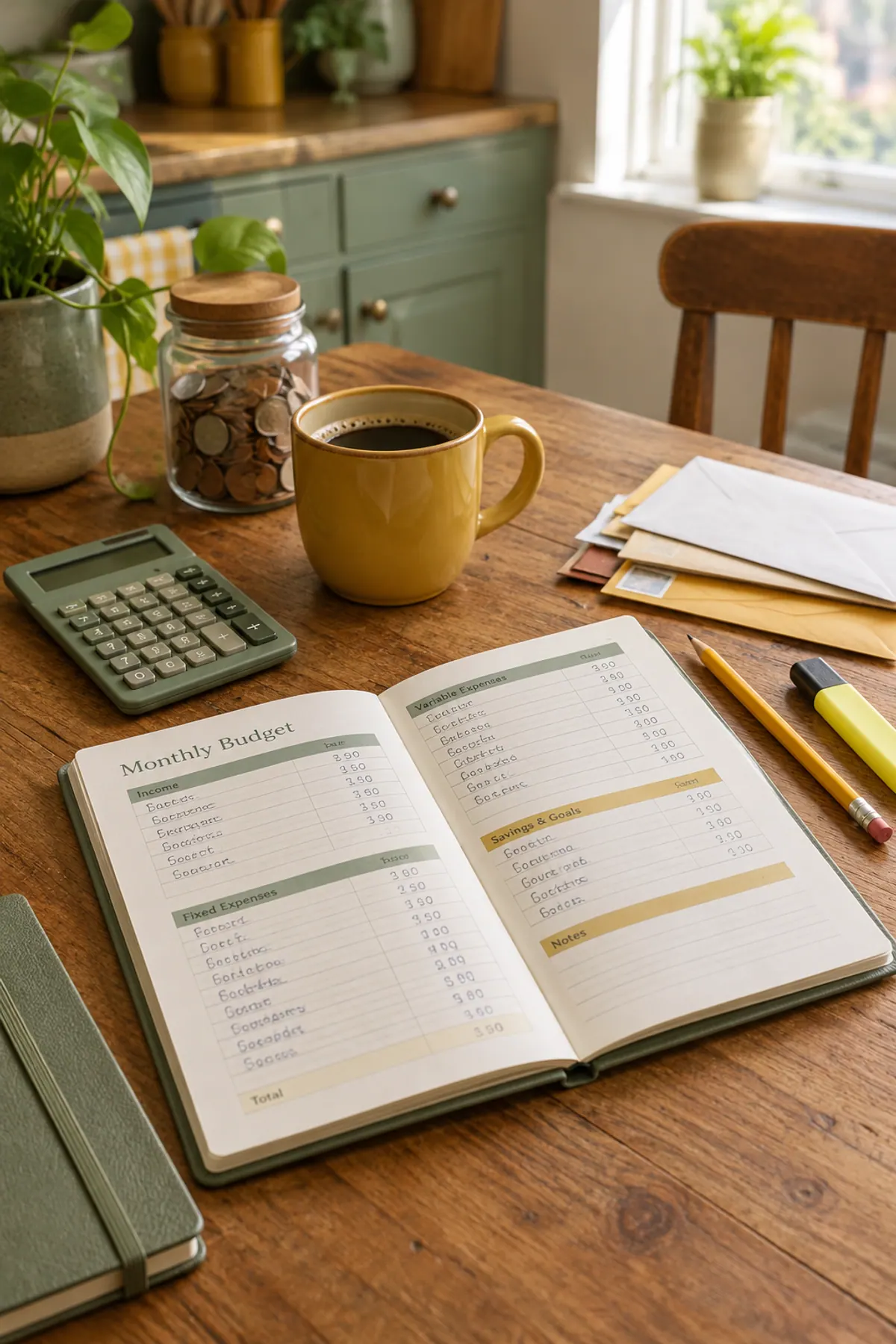
January suits a no spend challenge because December spending often leaves the budget stretched, and the month has fewer birthdays and events for many families. It's also a natural restart point if you're setting up a budget planner for beginners at the same time.
If a full month feels like too much, a low spend month is a gentler version. You set a small weekly allowance for fun spending, such as $20, instead of zero.
No Spend Challenge Rules: Write Your Three Lists
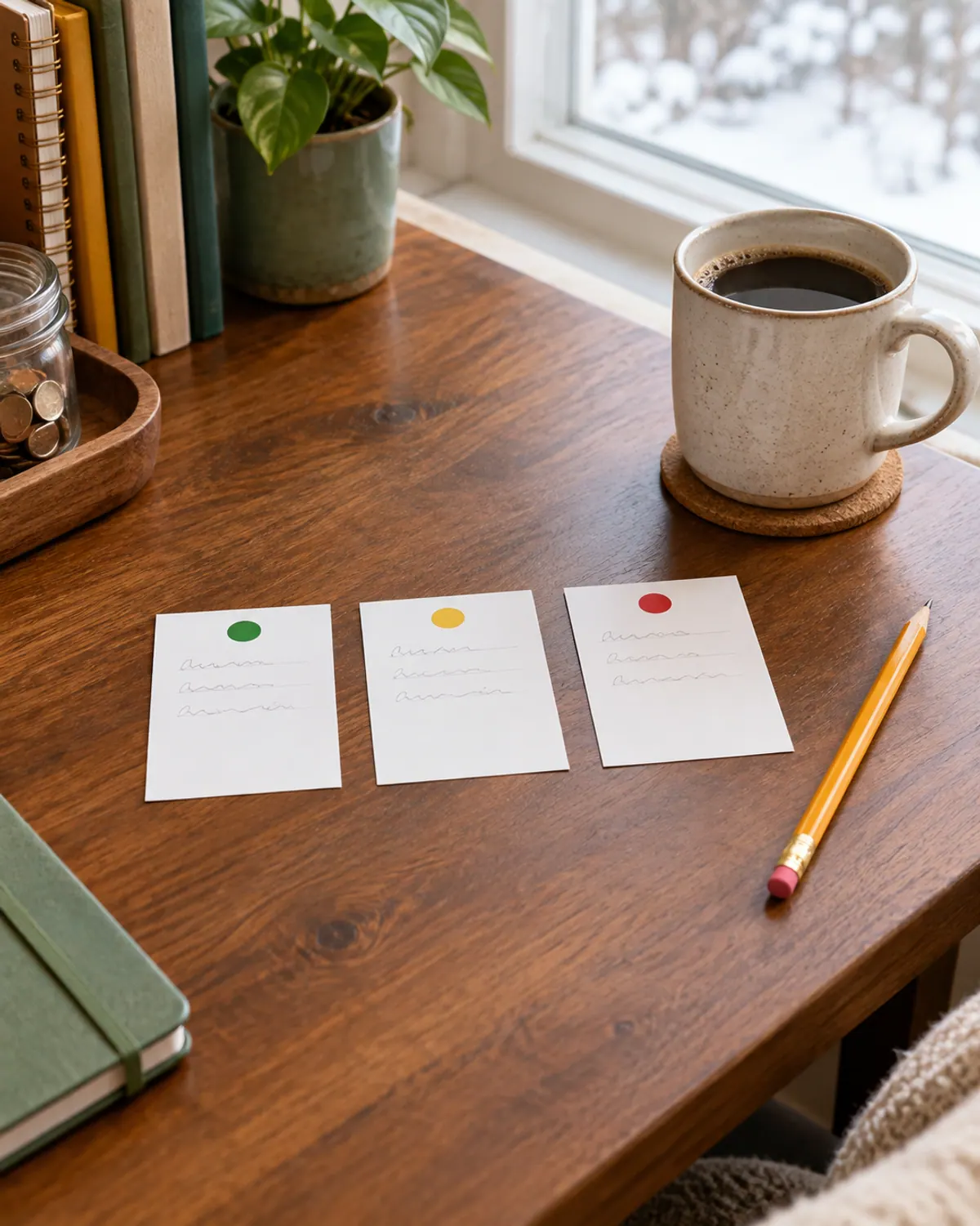
Rules work best when they're decided on a calm day, not at the checkout. Write three short lists and stick them where you'll see them.
Green list: always allowed. Housing, utilities, phone, insurance, debt minimums, groceries from your list, gas for work and school, medicine and anything your kids need for school.
Red list: paused for January. Takeout and coffee runs, online shopping, clothes, decor, hobby supplies, beauty extras and new subscriptions.
Yellow list: the gray zone. Things like a birthday gift, a replacement for something that broke, or a friend's dinner invite. Give the yellow list one rule, such as "wait 48 hours, then buy only if it's still needed and under $25."
| Household | Green (allowed) | Red (paused) | Yellow rule |
|---|---|---|---|
| Single, renting | Rent, bills, groceries list, bus pass | Takeout, clothes, apps | One $15 outing a week |
| Couple, no kids | Bills, groceries, gas, gym already paid | Dining out, online shopping, decor | Both agree before any buy over $20 |
| Family with kids | Bills, groceries, school needs, kids' activities already paid | Toys, takeout, new clothes unless outgrown | Birthday gifts from the gift drawer or under $15 |
| Low spend version | All of the above | Most extras | $20 a week of fun money, cash only |
Get Ready in the Last Week of December
A few small tasks before January 1 remove most of the temptation. Think of it as making the easy choice the default.
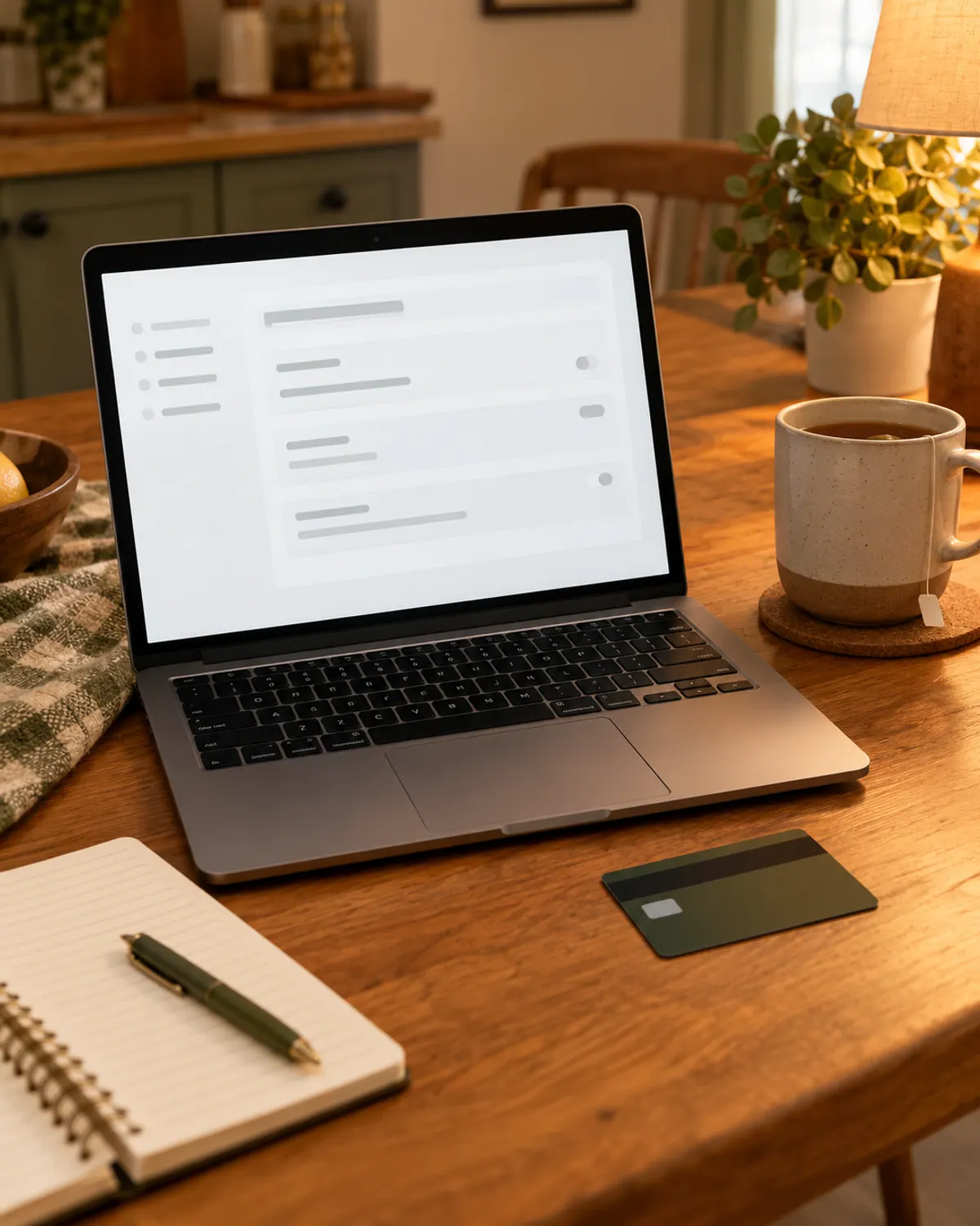
No spend January prep list

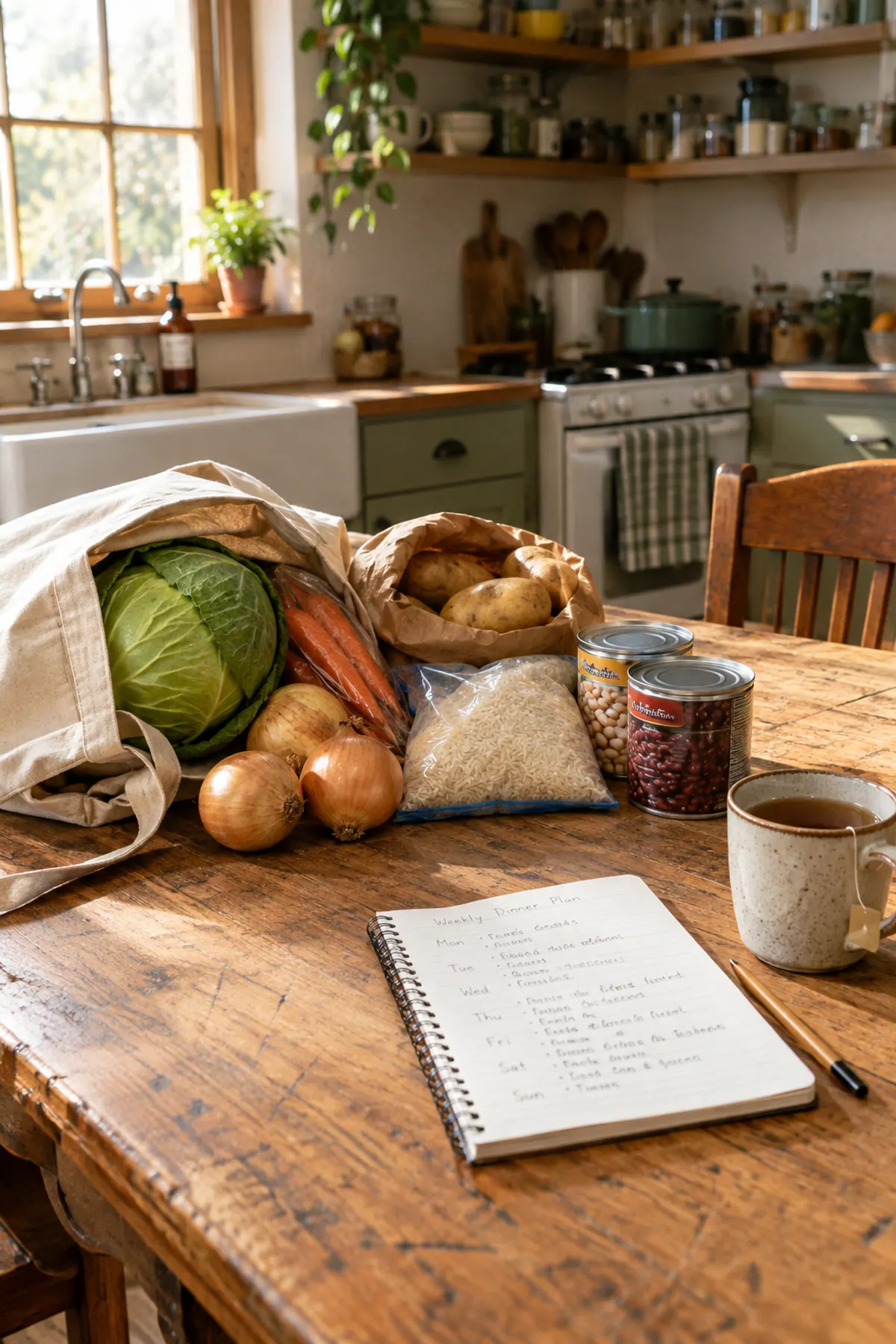
Be careful with "stocking up" before the challenge. Buying a month of extras on December 31 just moves the spending, it doesn't cut it. Plan meals around what's already in the house, and use a simple plan like our cheap meals on a budget week for the gaps.
How to Track a No Spend January
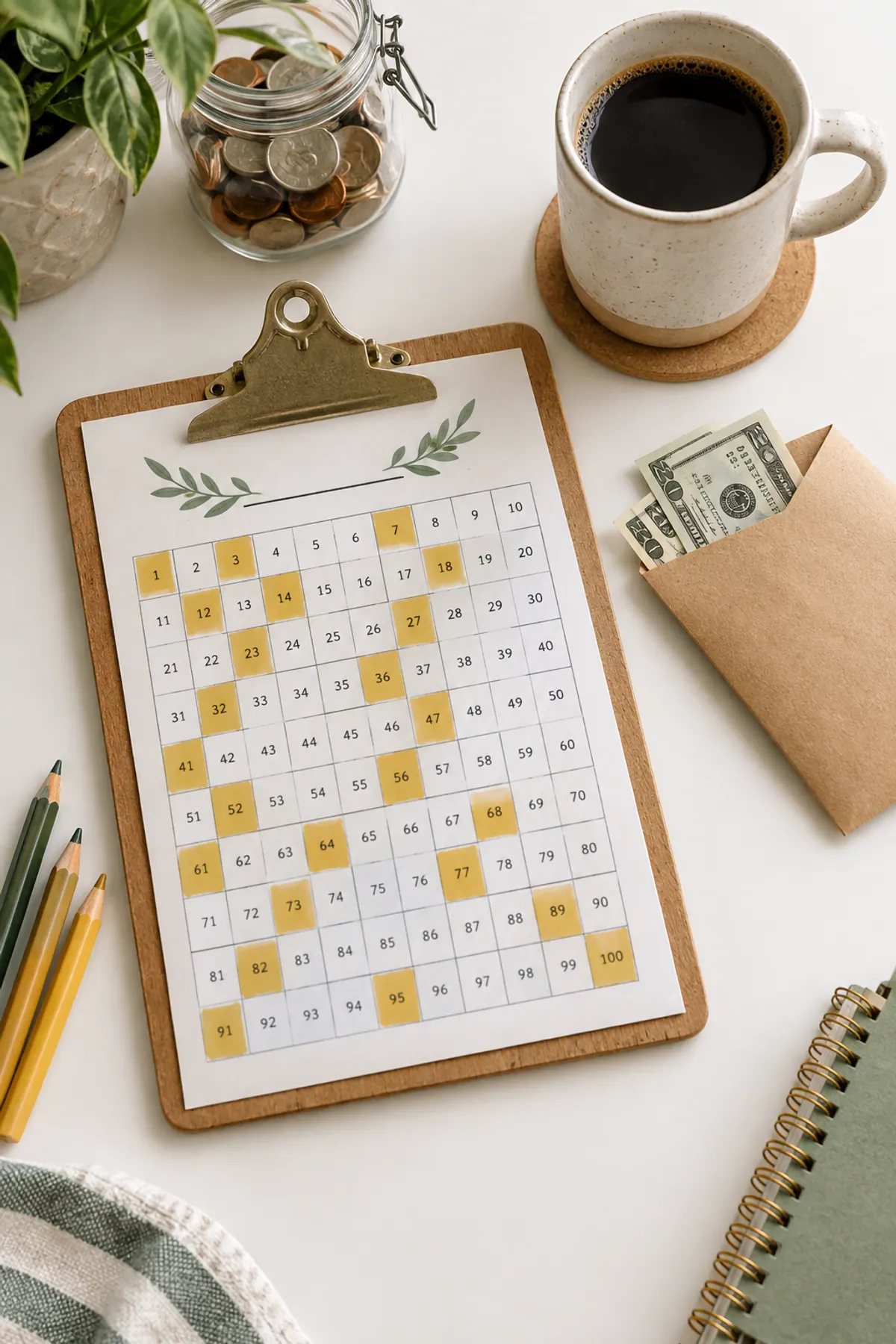
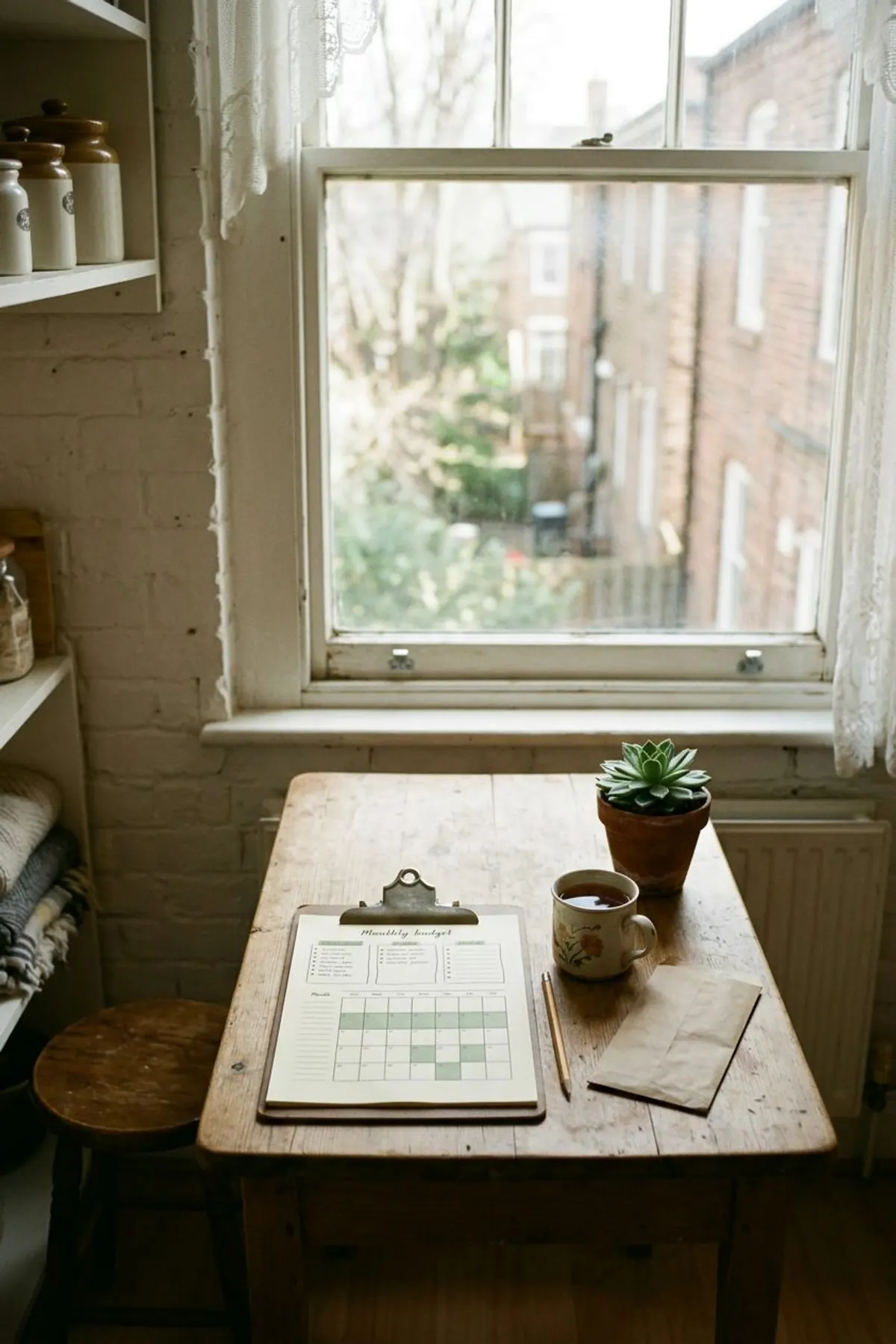
Use a 31-day calendar on the fridge or in your planner. Color in a no spend day, mark a day with planned essential spending differently, and circle any day you broke a rule.
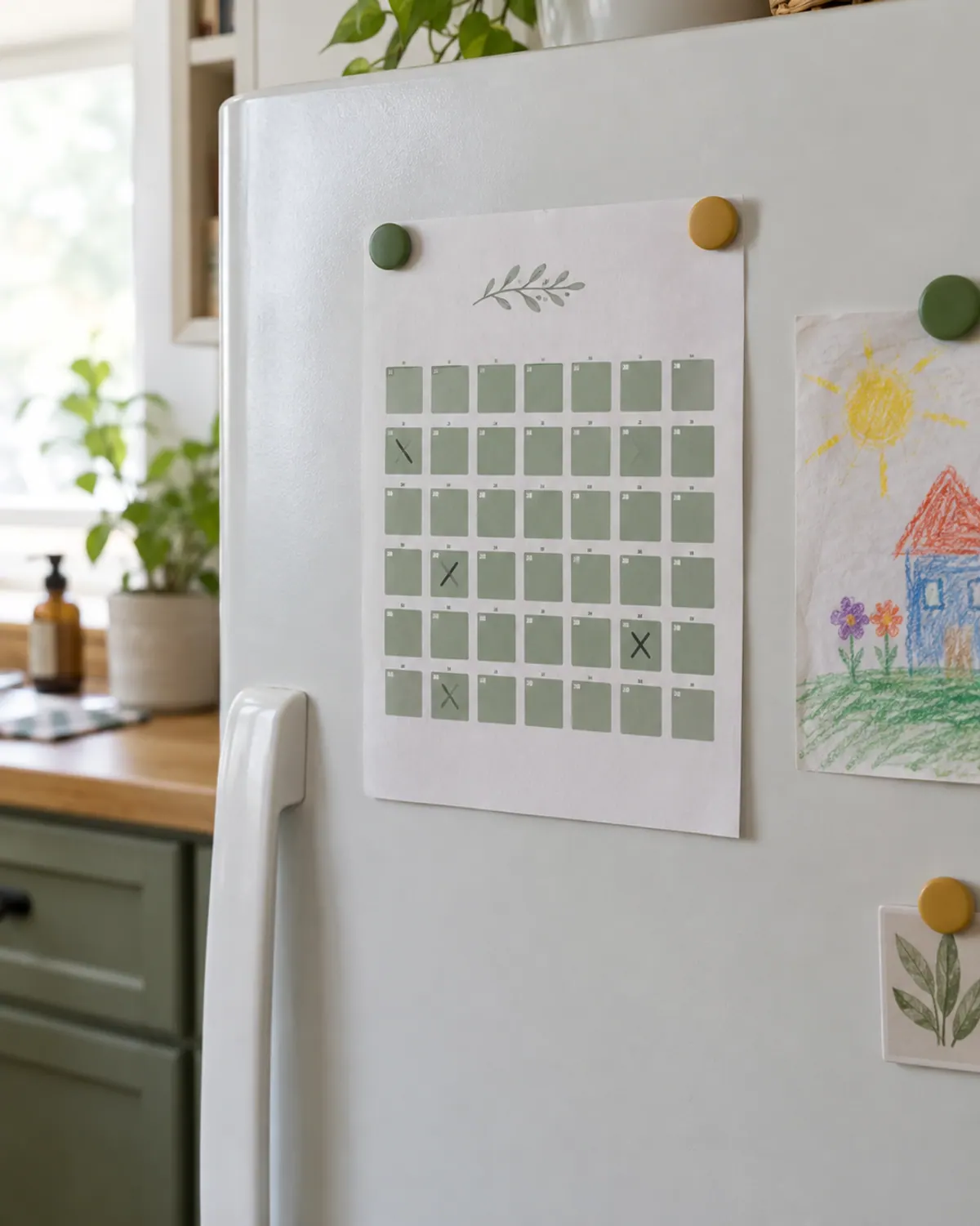
Add one more line to each day: what you skipped. Writing "skipped $6 latte" or "skipped $40 takeout" turns the challenge into a running total you can see, which is far more motivating than a blank square.
| Day | Spent (essentials) | Skipped | Running skipped total |
|---|---|---|---|
| Jan 1 | $0 | Post-holiday sale browsing | $0 |
| Jan 2 | $48 groceries | Takeout pizza, $28 | $28 |
| Jan 3 | $0 | Coffee run, $6 | $34 |
| Jan 4 | $35 gas | New throw pillow, $22 | $56 |
| Jan 5 | $0 | Lunch out, $14 | $70 |
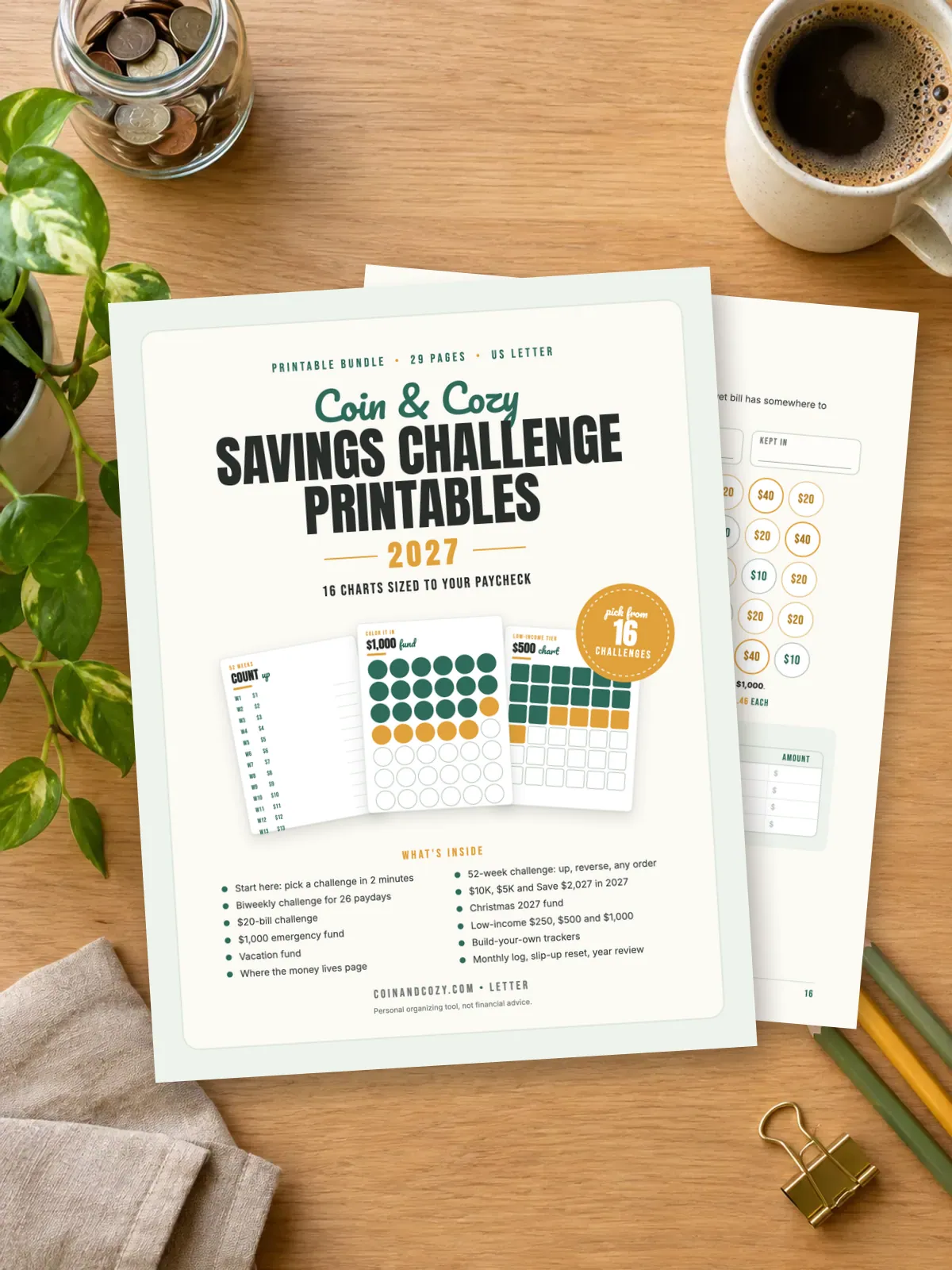
The free Cozy Savings Challenge Pack includes a 30-day no spend tracker and a planning page for your allowed and not-allowed lists, if you'd like a printed version.
The No Spend Survival List: 31 Free Things to Do
Most no spend challenges end on a bored Friday night. Keep this list on the fridge and pick one when the urge to shop hits.
At home:
- Library movie night.
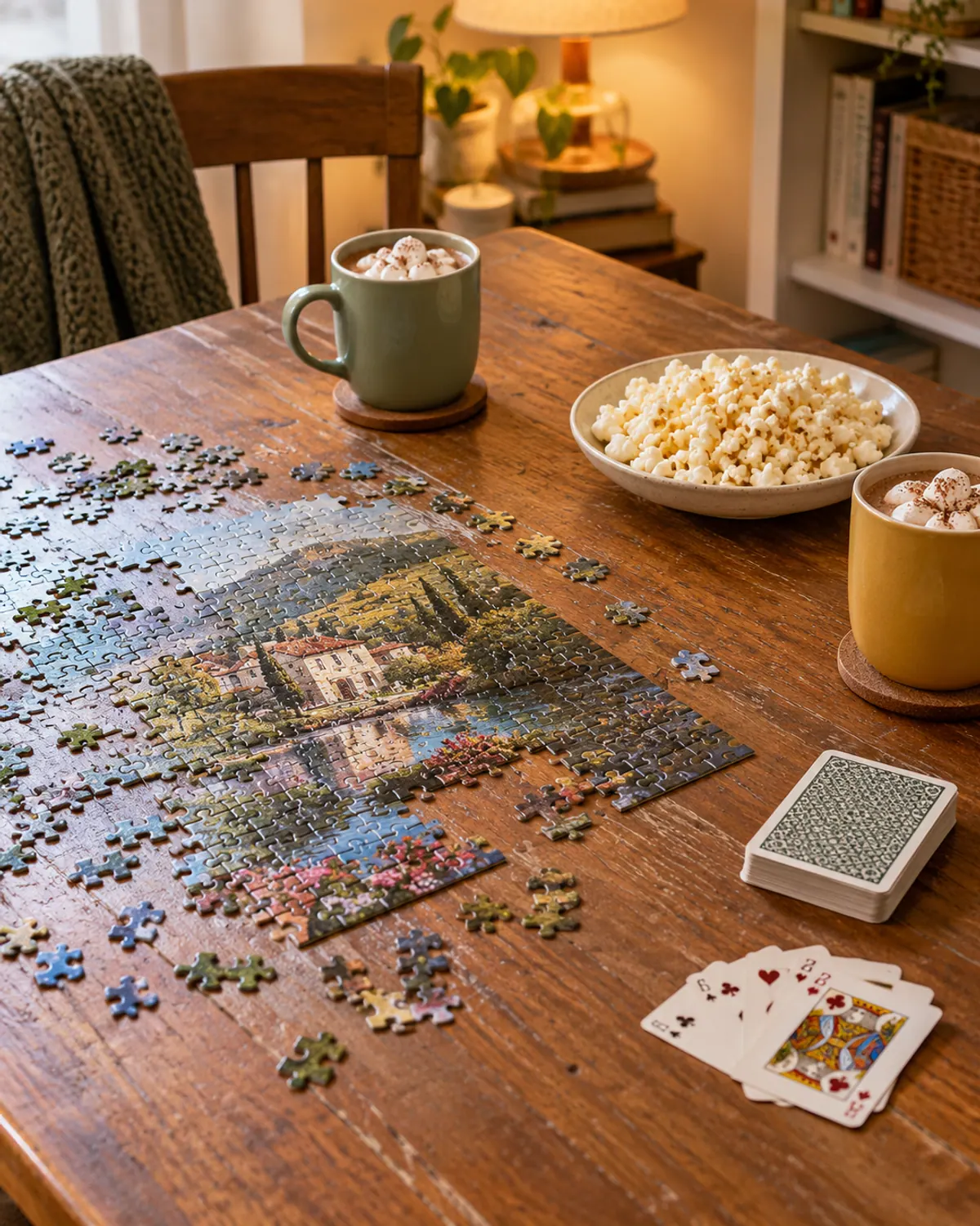
- A jigsaw puzzle that stays out all month.
- Soup night from pantry leftovers.
- A closet clear-out with a sell pile.
- A long bath with the candle you already own.
- Rearrange one room.
- Write letters to faraway friends.
- Learn a skill from free online videos.
- Card game tournament.
- Bake from the pantry.
- Plan a garden from saved seeds.
Out and about:
- A winter walk with a thermos.
- Library story time or free events.
- Free museum days (many museums offer them, so check local listings).
- A park sledding afternoon.
- Window shopping only if it doesn't tempt you.
- A visit to a friend with a pot of tea.
- Volunteer for a morning.

With kids:
- Paper snowflakes.
- A blanket fort movie day.
- A scavenger hunt around the house.
- Library craft kits.
- A backyard or balcony snow day.
- Dance party in the kitchen.
- A family "restaurant" night where kids make the menu.

Money-positive tasks:
- Sell one thing you don't use.
- Call one provider to ask about a lower rate.
- Set up next month's budget.
- Make a list of what you actually missed.
- Write next year's savings goal.
- Count the skipped total and celebrate with something free.

Finish a No Spend Month Even With Kids
Kids don't need to know the budget details, but they do better with a simple reason, like "we're saving for a summer trip." Let them color in the tracker, so the challenge feels like a team game.
Plan ahead for school costs, class birthday parties and outgrown shoes, and put them on the green list. A small gift drawer with things bought on sale earlier helps with surprise party invites.
When You Slip (You Probably Will)
One takeout night doesn't end the challenge. Circle the day, write what happened and what you'll do differently, then keep going tomorrow.

Most slips have a pattern: a tired evening, a stressful workday or an empty fridge. If the same trigger shows up twice, fix the trigger. A freezer meal for tired nights often works better than more willpower.
A no spend month is practice, not a test. The goal is to notice your spending, not to get a flawless score.
Bonus: Plan Your February Before January Starts
The part almost nobody talks about is what happens on February 1. After a month of saying no, it's easy to make up for it in one weekend, and the savings disappear.
Before January starts, decide two things. First, where the saved money goes: an emergency fund, a debt payment or a savings challenge. Second, one planned treat for February with a set price, like a $25 dinner out, so the reward is chosen ahead of time.

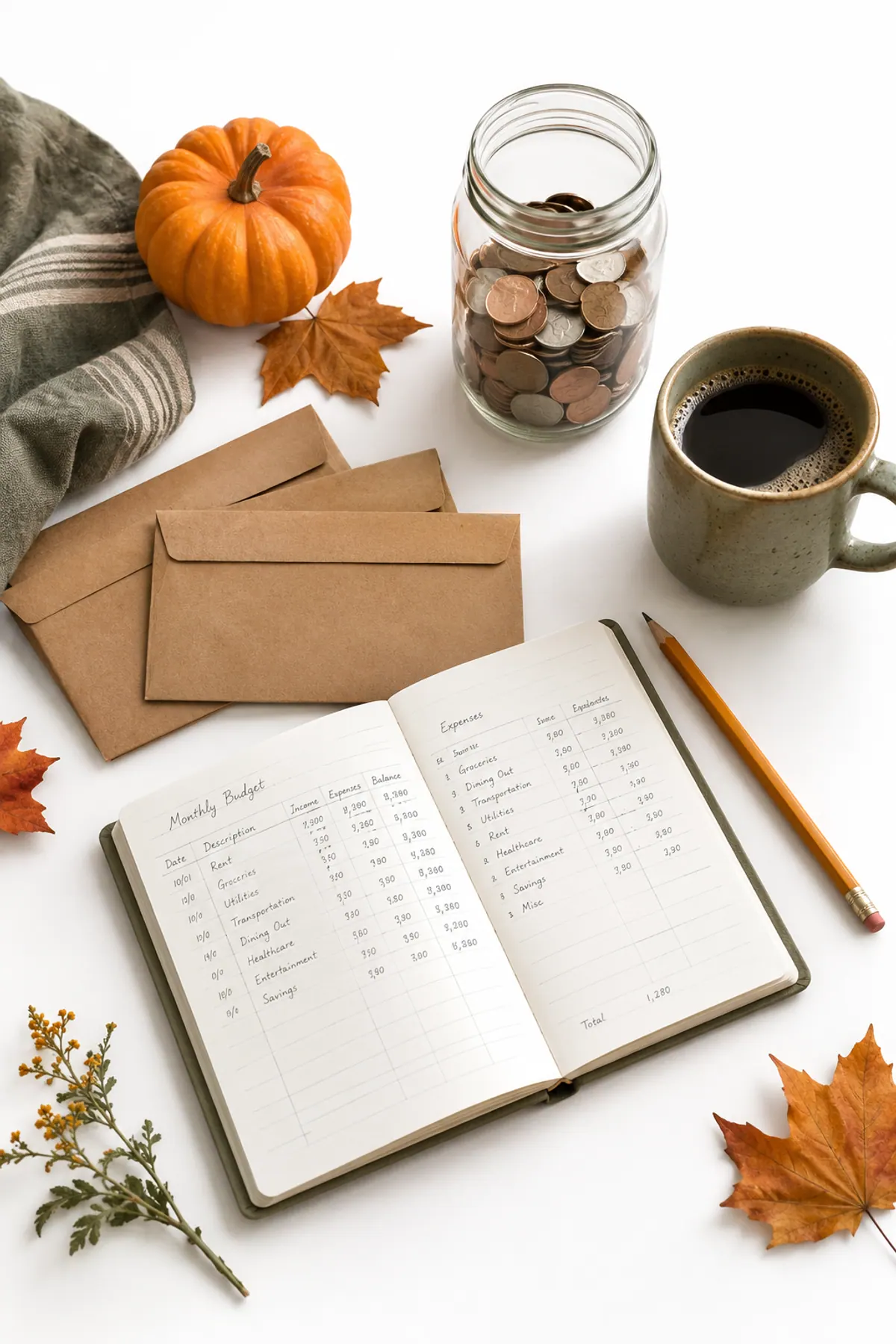
Move the money the same week you skip it, not at the end of the month. Our savings challenge printables give the money a visible home, and our list of ways to save money has ideas for keeping the habit going after January.
Also watch for January renewals. Annual subscriptions, memberships and some insurance premiums renew in January for many people, and they count as spending even during a challenge. Put them on the green list so they don't feel like a failure.
Frequently asked questions
What are the rules of a no spend challenge?
You set them yourself. Most people allow essentials like housing, bills, groceries, gas and medicine, pause extras like takeout, shopping and new subscriptions, and set one rule for gray-zone purchases such as gifts or replacements.
Can you buy groceries during a no spend challenge?
Yes. Groceries are an essential in almost every version. Shop from a set list and budget, and try to use up the pantry and freezer first.
How much can you save with a no spend January?
It depends on how much optional spending you had before. Tracking what you skipped each day shows your own number. Some people find it's a few dollars a day; for others, takeout alone adds up to much more.
What if I have a birthday or event during a no spend month?
Plan for it before you start. Put the gift on your allowed list with a price cap, use a gift drawer, or give a homemade or experience gift.
Is a low spend month better than a no spend month?
For many families, yes. A small weekly fun allowance, like $20 in cash, can be easier to stick with than zero, and it still cuts spending a lot.
Save it for later
Pin this to your No-Spend Challenges board so it's there when you need it.
Save to Pinterest