Safety first: This is general money education, not personalised financial advice. Please read our financial disclaimer before you start.
Key takeaways
- Write your rules before November 1: essentials, a grocery number, and what's paused.
- Decide the gray areas now, including Thanksgiving (Nov 26, 2026) and Black Friday (Nov 27, 2026).
- Track what you skipped each day, not just what you spent, so you can see the Christmas money grow.
- Move the skipped money every week into a Christmas fund, so it can't drift into other spending.
In this post9 sections
- What Is a No Spend November Challenge?
- No Spend November Rules: Set Them Up in 6 Steps
- The No Spend November Gray-Area List
- Black Friday During a No Spend Month
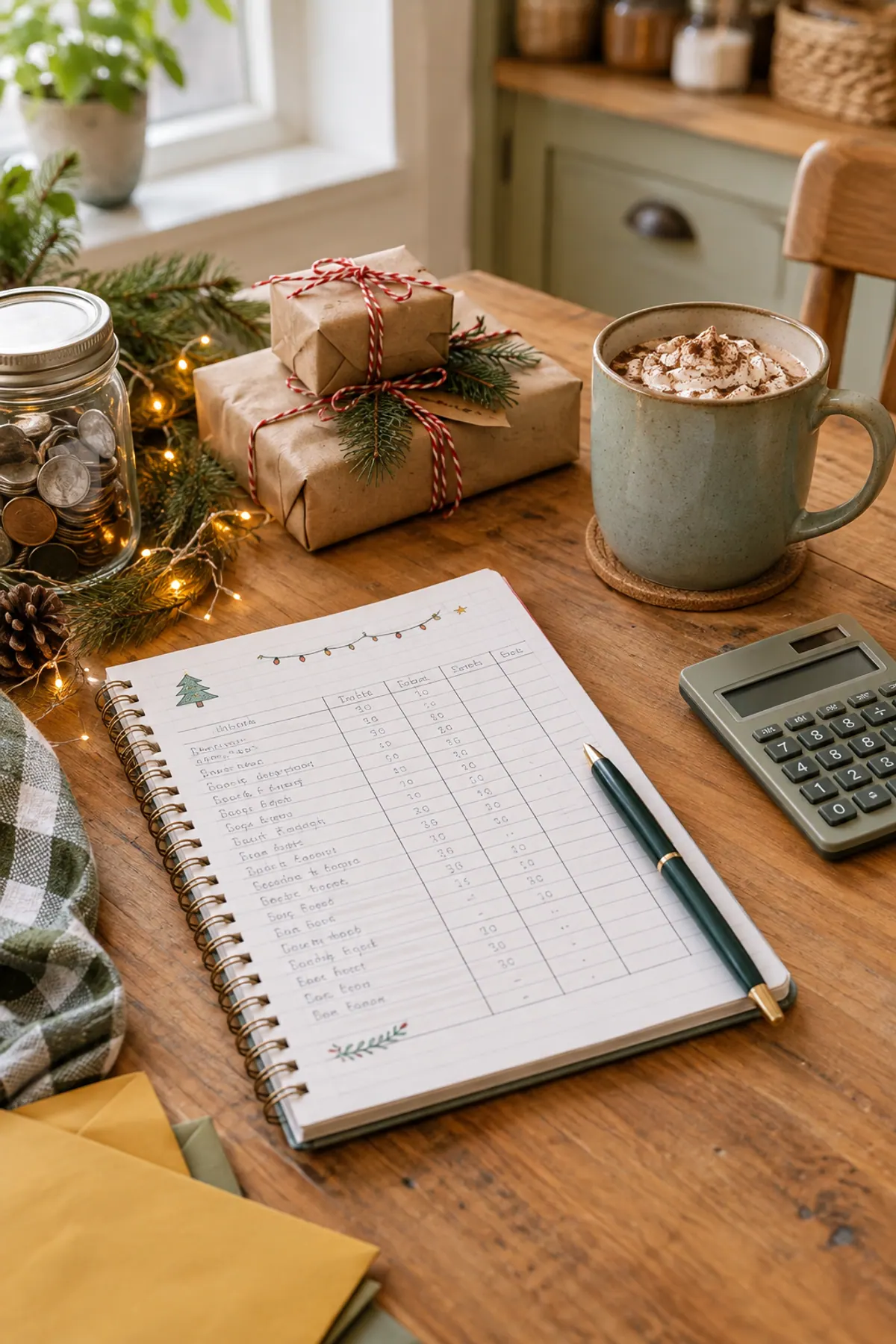
- How to Track No Spend November (Printable or Bullet Journal)
- Free No Spend November Activities
- The Money You Don't Spend Funds Christmas
- Low Spend November and Common Mistakes
- FAQ
What Is a No Spend November Challenge?
A no spend November challenge doesn't mean spending nothing. Rent, bills, a set grocery budget, gas and medicine all keep going. What stops is the optional stuff: takeout, online shopping, coffee runs, new clothes and "just because" store trips.
November is a smart month for it because December is right behind it. Every dollar you skip in November is a dollar you don't have to put on a card in December. If you've already read our no spend challenge for January, this is the same idea with a holiday twist: the gray areas are different, and the goal is Christmas.
No Spend November Rules: Set Them Up in 6 Steps
Rules work best when you write them on a calm October evening, not at the checkout. Give yourself about an hour with a notebook and last month's bank statement.

-
Step 1: Name what the money is for
Write one line at the top of your rules page, such as "November pays for Christmas gifts." A clear goal makes saying no easier. If you haven't set a Christmas number yet, our Christmas on a budget plan walks through it.
-
Step 2: List your essentials
Housing, utilities, phone, insurance, debt minimums, gas for work and school, medicine and childcare. These are always allowed, so the challenge never puts a bill at risk.
-
Step 3: Give groceries a number
"Groceries are allowed" is where many challenges leak. Write a weekly amount, for example $100 a week for a family of four, and shop from a list. Food at home prices rose 2.2% over the 12 months ending in August 2026, according to the BLS Consumer Price Index, so base your number on your own recent receipts.
-
Step 4: Write the paused list
Takeout and delivery, coffee runs, online shopping, clothes, decor, beauty extras, hobby supplies and new subscriptions. Keep it short and specific so there's no arguing with yourself later.
-
Step 5: Pause subscriptions and promo emails
Go through your statement and pause or cancel anything you won't use in November. Then unsubscribe from store emails and turn off shopping app alerts. Fewer "sale ends tonight" messages means fewer slips.
-
Step 6: Plan meals from the pantry
Count what's already in the pantry and freezer, and build your first week of dinners around it. A plain list like our $50 a week grocery list fills the gaps without extra trips.
The No Spend November Gray-Area List
Most challenges fail in the gray areas, not on takeout. November has more of them than most months, because Thanksgiving, holiday sales and early gift shopping all land at once. Decide each one now and write the answer down.
| Gray area | Example rule | Why it helps |
|---|---|---|
| Christmas gifts already budgeted | Allowed only if the person and the cap are on your gift list | Buying early on sale is fine; random extras are not |
| Doctor co-pays and prescriptions | Always allowed | Health spending is never a challenge failure |
| Car repairs | Allowed if it's a safety or must-get-to-work repair | Pay from savings or an emergency fund, then note it |
| Kids' school costs | Allowed: field trips, school photos, fundraiser minimums you agreed to | Kids shouldn't feel the challenge at school |
| Thanksgiving dinner (Nov 26) | Allowed with its own set amount | Keeps one big meal from eating the grocery budget |
| Black Friday (Nov 27) and Cyber Monday (Nov 30) | Only items already on your gift list, at or below a target price | Turns a sale weekend into a planned shopping trip |
| Birthdays and invites | One set amount, for example $15 a gift, or a homemade gift | You can still say yes to people |
| Something breaks | Wait 48 hours, then replace only if still needed | Many "emergencies" can wait until December |
A good gray-area rule has a number or a test in it. "Only if it's on the list" or "under $15" is easy to follow when you're tired. "Only if I really need it" is not.
Black Friday During a No Spend Month
Black Friday falls on November 27, 2026, right inside your challenge. You don't have to skip it, but you do have to shop it differently. The rule is simple: list first, sale second.

Black Friday rules for no spend November
If a deal tempts you that isn't on the list, write it on a "maybe" page and look at it again on December 1. Most of those wants fade within a week. Our guide to ways to save money on Christmas gifts covers price tracking and cashback for the items that do make your list.
How to Track No Spend November (Printable or Bullet Journal)
November 2026 starts on a Sunday and has 30 days, so it fits neatly into a five-row calendar. Use a printable tracker on the fridge or draw one in your bullet journal.
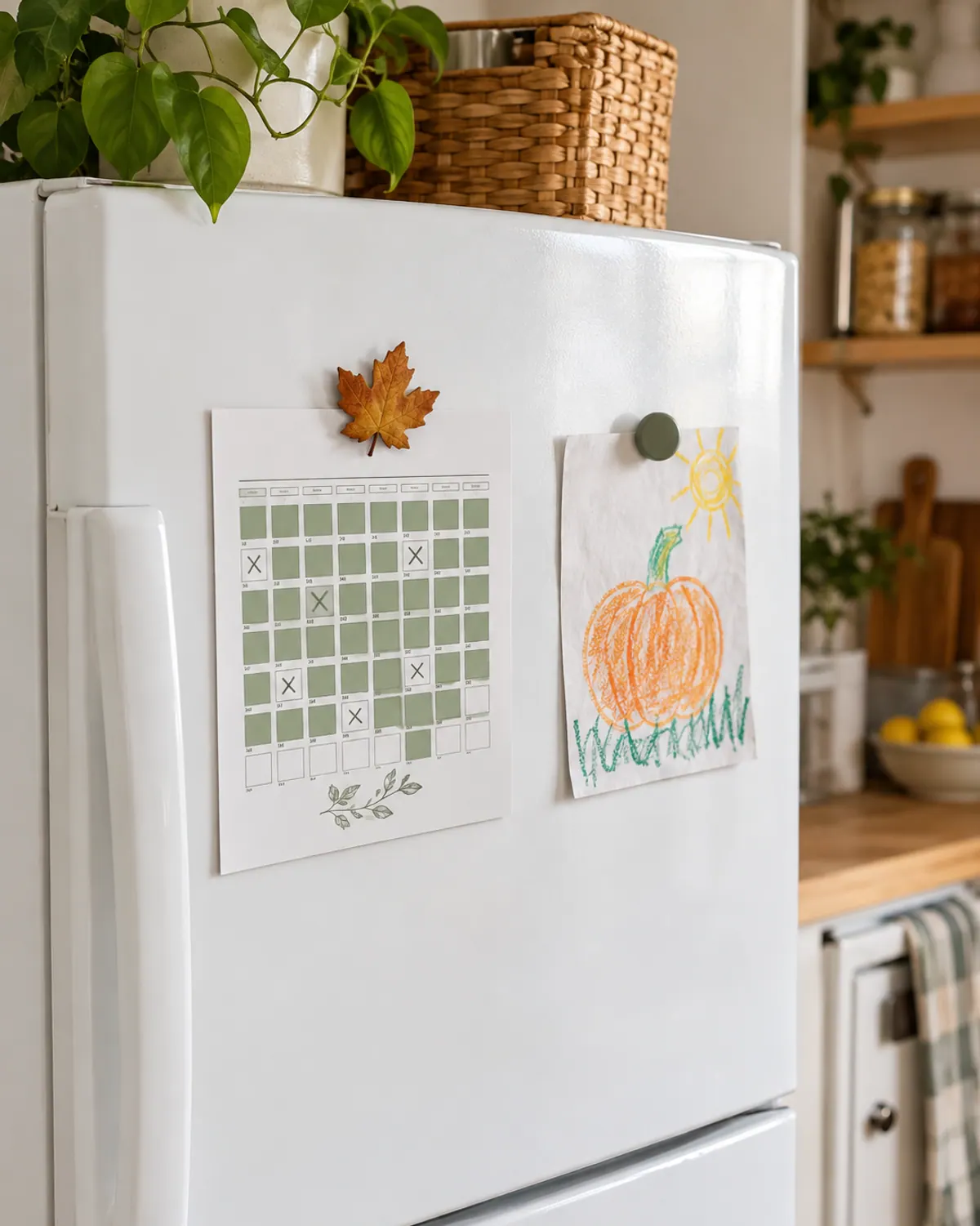
Color in each no spend day. Add a second line for what you skipped and what it would have cost. That running total is the part that keeps you going, because it shows your Christmas money growing.
| Day | Spent (essentials) | Skipped | Christmas fund total |
|---|---|---|---|
| Sun Nov 1 | $0 | Weekend takeout, $32 | $32 |
| Mon Nov 2 | $95 groceries (planned) | Coffee run, $6 | $38 |
| Tue Nov 3 | $0 | New fall sweater, $28 | $66 |
| Wed Nov 4 | $40 gas | Lunch out, $13 | $79 |
| Thu Nov 5 | $0 | Candle on sale, $12 | $91 |
| Fri Nov 6 | $0 | Pizza night, $30 | $121 |
| Sat Nov 7 | $20 co-pay (gray area, allowed) | Store browsing trip | $121 |
The free Cozy Savings Challenge Pack includes a 30-day no spend tracker and a rules page, so you can print it instead of drawing one. It works for any month, not just January.
Free No Spend November Activities
Boredom is the biggest threat to a no spend month, and November evenings are long. Keep this list on the fridge and pick one the moment the urge to shop hits.
Outside:
- A leaf walk with a thermos of cocoa.
- A local park or trail you haven't tried.
- Free museum days (many museums offer them, so check local listings).
- A Veterans Day parade or community event on November
- A town tree lighting late in the month.

At home:
- Library movie night with popcorn.
- A board game or puzzle that stays out all month.
- Bake from the pantry.
- Write Christmas cards with what's in the craft drawer.
- A closet clear-out with a sell pile.
- Learn one skill from free videos.
- A long bath with the candle you already own.

With kids:
- A paper leaf garland.
- A gratitude jar for Thanksgiving.
- Library story time.
- A blanket fort and a library DVD.
- Homemade Christmas ornaments from salt dough or paper.
- A family walk to count holiday lights.

Money-positive:
- Sell one thing you don't use and add it to the Christmas fund.
- Call one provider and ask about a lower rate.
- Write your Christmas gift list with caps.
- Host a potluck Friendsgiving where everyone brings one dish.
The Money You Don't Spend Funds Christmas
This is the part most no spend November posts skip: they tell you to stop spending but never say where the money goes. If it just sits in checking, it tends to vanish into December.

Here's an example. Say you usually spend about $10 a day on small extras like coffee, lunches and online orders. Skip that for 30 days and that's about $300.
Even half of that, $150, covers a lot of gifts on a careful list.
| Christmas line | Example amount |
|---|---|
| Gifts for kids and close family | $150 |
| Stockings | $40 |
| Christmas dinner groceries | $50 |
| Teacher, coworker and neighbor gifts | $30 |
| Buffer for things you forgot | $30 |
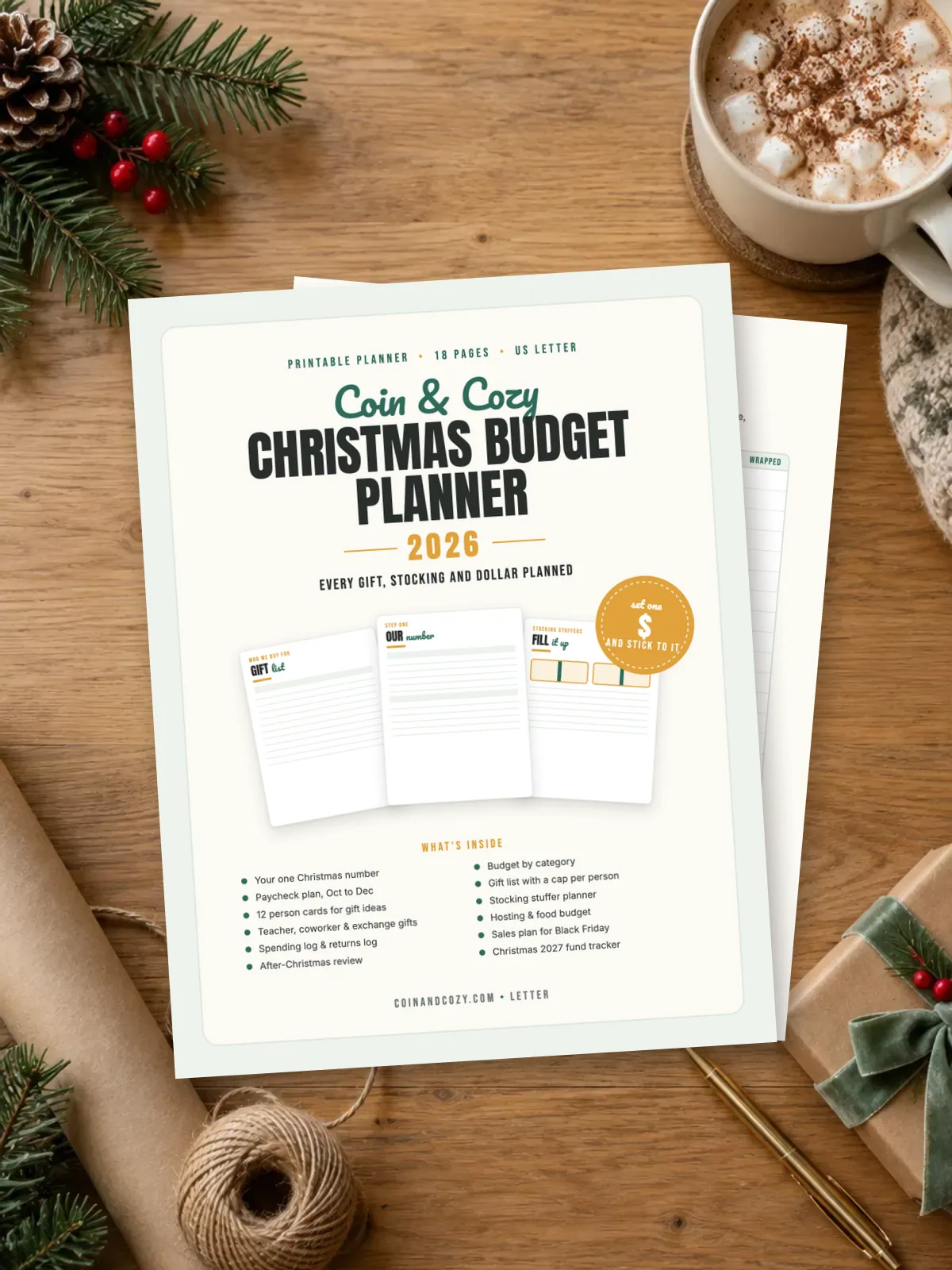
Move the skipped total every Sunday, not at the end of the month. A separate savings account, a labeled envelope or a jar all work. Our Christmas budget planner guide shows how to split that number across every person, and a $50 Christmas dinner menu plan shows how far a small food line can go.
Low Spend November and Common Mistakes
If zero feels like too much, try low spend November. Keep the same rules but give yourself a small weekly fun amount, such as $20 in cash. Many families find it easier to finish, and it still frees up money for December.
What we like
- Rules written before November 1
- A grocery number, not just "groceries are fine"
- Gray areas decided ahead, including Black Friday
- Skipped money moved every Sunday
- A free activity list on the fridge
Keep in mind
- Stocking up on October 31 so November looks clean
- Calling a sale "saving money" when the item wasn't on the list
- Quitting after one slip instead of circling the day and going on
- Leaving the saved money in checking
- A December splurge to make up for November

One slip doesn't end a no spend month. Circle the day, write what happened and keep going tomorrow.
If the same trigger trips you twice, like a tired Friday or an empty fridge, fix the trigger. A freezer meal for busy nights usually works better than more willpower. Planning Thanksgiving early helps too, and our Thanksgiving dinner on a budget menu plan keeps that one big meal inside its own number.
Frequently asked questions
What are the rules for no spend November?
You set them yourself. Most people allow essentials like housing, bills, a set grocery budget, gas and medicine, pause extras like takeout and online shopping, and decide gray areas like gifts, Thanksgiving and Black Friday before November 1.
Can I shop Black Friday during no spend November?
You can if you plan it. A common rule is to buy only gifts already on your gift list, at or below a target price you wrote down before the sale.
Do Christmas gifts count in a no spend November challenge?
Only if you decide they do. Many people allow gifts that are already budgeted and on a list with a cap, since buying them on sale in November can save money in December.
How much can you save with no spend November?
It depends on how much optional spending you had before. Track what you skip each day to find your own number. For example, skipping $10 a day of extras for 30 days adds up to about $300.
What is low spend November?
It's a gentler version where you keep the same rules but allow a small weekly fun budget, such as $20 in cash. It's easier to stick with for many families.
Save it for later
Pin this to your No-Spend Challenges board so it's there when you need it.
Save to Pinterest