This post contains affiliate links. As an Amazon Associate we earn from qualifying purchases, at no extra cost to you. Read our disclosure.
Safety first: This is general money education, not personalised financial advice. Please read our financial disclaimer before you start.
Key takeaways
- A low spend month adds a small written allowance to a no spend month, which makes it easier to finish.
- 21 rules in three groups: setup, daily and safety net.
- Plan for slips: surprise essentials are paid and logged, small slips get one line and a fresh start tomorrow.
- Keep the sheet to one page with three lists, the allowance, the finish date and the slip plan.
- Works in any month, including December, when the gift budget is set first.
In this post9 sections
- What a Low Spend Month Is, and How It Differs From a No Spend Month
- Supplies for a Low Spend Month
- How to Plan a Low Spend Month in 6 Steps
- 21 Low Spend Month Rules
- The Slip Plan: What to Do When You Spend Anyway
- Printable Low Spend Month Rules Sheet and Tracker
- Common Low Spend Month Mistakes
- Variations: Short, Family and Christmas Versions
- FAQ
Quick note: product links go to Amazon search results, and we may earn a small commission if you buy, at no extra cost to you. We haven't tested these products ourselves; prices are typical ranges and change often. This is general information, not financial advice.
What a Low Spend Month Is, and How It Differs From a No Spend Month
A no spend month freezes everything except essentials. A low spend month keeps the same essentials but adds a small, written allowance for the gray zone, so it is easier to finish. If you want the strict version, see our no spend challenge for January or the no spend November rules and tracker.
Clever Girl Finance suggests a 30-day challenge and lists dining out, new clothing and gadgets, impulse buys and in-app purchases as common cuts, in its no spend month guide. The Financial Diet's five steps for a low spend month add a weekly check-in and an accountability partner. The rules below build on both.

Supplies for a Low Spend Month
Everything you need before day one
Optional supplies
-
Cash envelopes with labeled pockets
Typically $10 to $25
Holds the gray-zone allowance so the limit is physical.
Check price on Amazon for Cash envelopes with labeled pockets -
Dot stickers for a calendar
Typically $4 to $8
Color a day in one second and see the month fill in.
Check price on Amazon for Dot stickers for a calendar -
Dry erase monthly wall calendar
Typically $8 to $20
Makes the month visible from across the room.
Check price on Amazon for Dry erase monthly wall calendar
How to Plan a Low Spend Month in 6 Steps
-
Step 1: Pick the month and the finish line
Choose 30 days, a calendar month or a pay period. Write both dates on the sheet. Avoid months with a trip or a wedding unless you plan around them.
-
Step 2: List your essentials
Housing, utilities, phone, minimum debt payments, groceries, transport, medicine and childcare. These keep going. Be specific about groceries so they do not hide extras.
-
Step 3: Write the pause list
Dining out, new clothes and gadgets, impulse buys, in-app purchases and new subscriptions. Pick the ones that leak your money, not every item you could cut.
-
Step 4: Set a gray-zone allowance
Choose an amount for everything left over, such as $40 for the month in our example. Put it in an envelope. When it is empty, the gray zone is closed.
-
Step 5: Set up the tracker
Use a calendar grid and note what you skipped, like "skipped $12 lunch out". Aim for the Clever Girl Finance milestones of $100, $250 or $500 skipped, if they fit your budget.
-
Step 6: Add a weekly check-in
Ten minutes, same day each week. Review the tracker, move anything over the allowance to next week and decide the next seven days.

21 Low Spend Month Rules
Print these as your rules sheet, or copy the ones that fit. Skip any that do not match your household; fewer rules you follow beat more you ignore.
Setup rules (before day one)
Daily rules (during the month)
Safety-net rules (for when it gets hard)
The Slip Plan: What to Do When You Spend Anyway
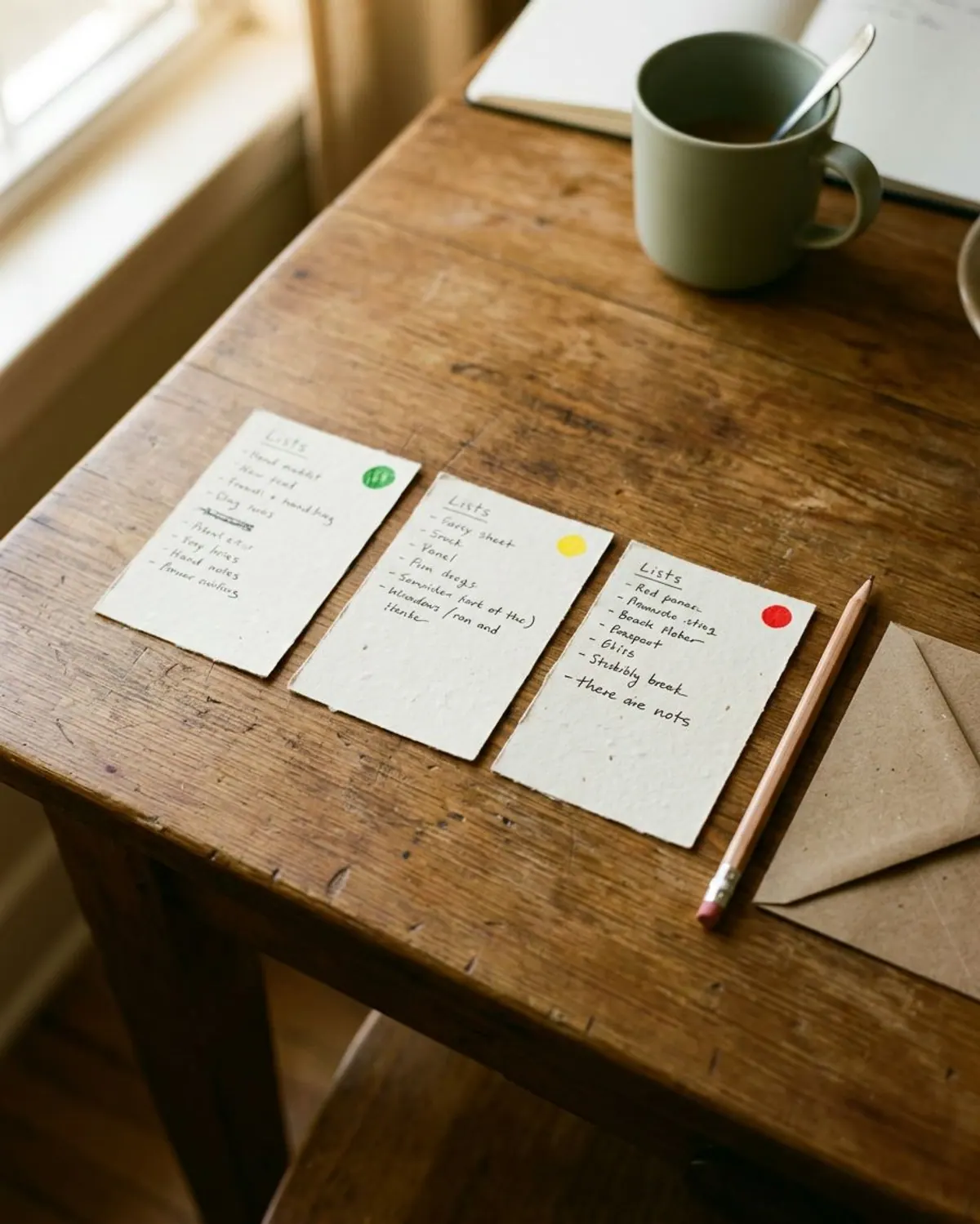
Most low spend month advice stops at willpower. Real months include a flat tire, a birthday and a bad day at the checkout. Decide what each looks like before it happens.
| What happened | What it counts as | What to do |
|---|---|---|
| Car repair, $180 | Surprise essential | Pay it, log it, do not count it as a slip |
| Birthday gift, $25 | Planned event | Pay from the events set-aside |
| Impulse coffee, $6 | Small slip | Log one line, return to plan tomorrow |
| Online order, $48 | Larger slip | Return it if you can, log it, talk at the check-in |
| Three slips in a week | Signal to adjust | Shrink the pause list or raise the allowance, keep the month going |

A sinking fund for car repairs and gifts keeps those costs from feeling like slips. Our sinking fund categories guide lists common ones with example amounts.
Printable Low Spend Month Rules Sheet and Tracker
Your rules sheet should fit on one page: your three lists (essentials, paused, gray zone), the allowance, the finish date and the slip plan. The tracker is a month grid with a skipped line for each day. Both are in the free Cozy Savings Challenge Pack, which has a no-spend planning page, a 30-day tracker and a list of free cozy ideas.
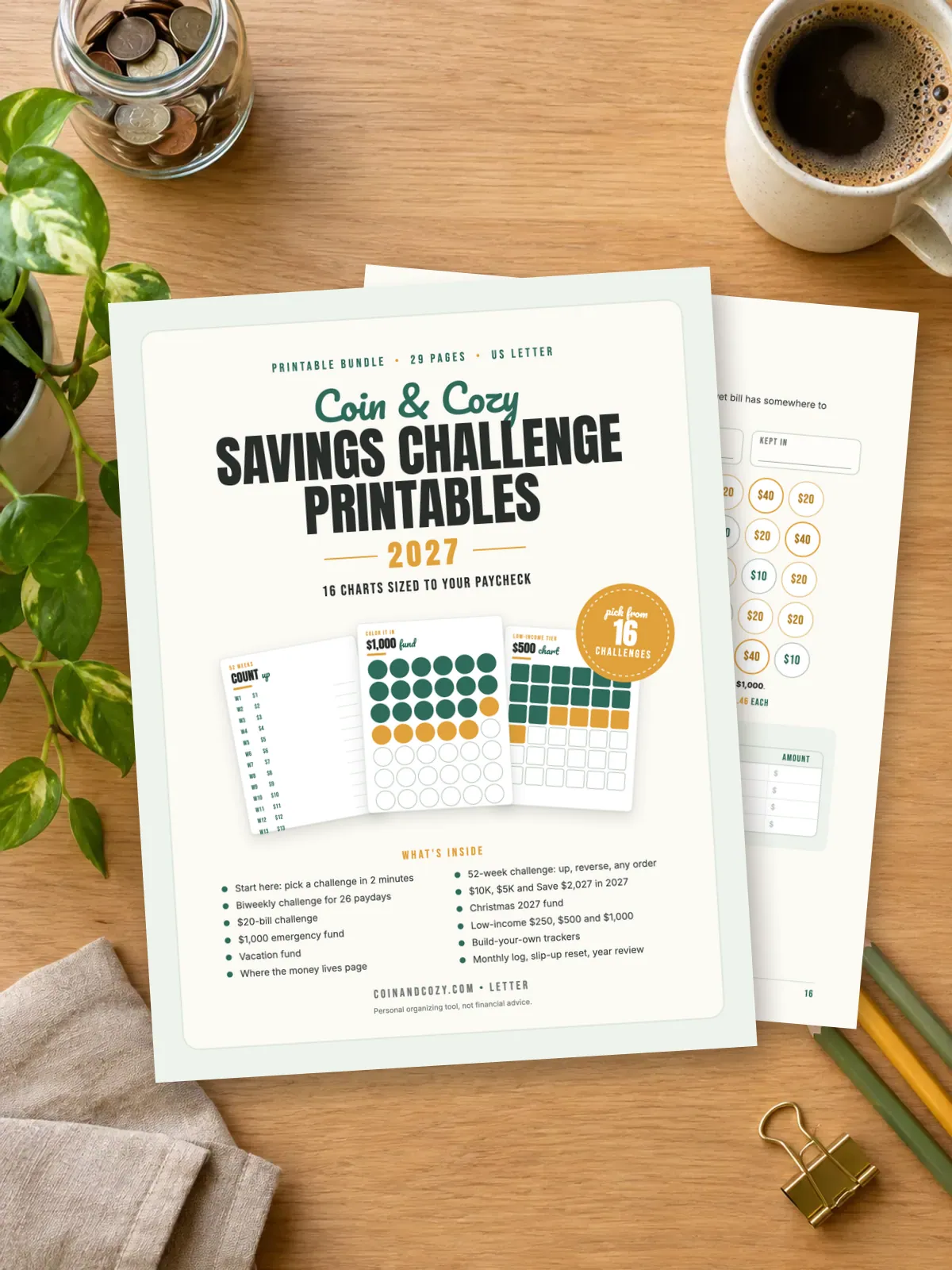
If you want more room, the Cash Stuffing and Sinking Funds Kit helps with surprise costs, and the Savings Challenge Bundle 2027 has a monthly log and a slip-up reset page.
| Day | Spent (essentials) | Gray-zone spent | Skipped |
|---|---|---|---|
| Mon | $0 | $0 | Coffee out, $6 |
| Tue | $42 groceries | $0 | Lunch out, $14 |
| Wed | $0 | $8 (library fine) | New candle, $12 |
| Thu | $30 gas | $0 | Takeout, $28 |
| Fri | $0 | $0 | Online sale, $20 |
Common Low Spend Month Mistakes
What we like
- Write rules on a calm day
- Keep an allowance for the gray zone
- Log the $0 days
- Plan for surprises
Keep in mind
- Making the pause list too long
- Counting a real emergency as failure
- Restarting the month after one slip
- Stocking up on December 31 or the day before
The biggest one is restarting. One slip in week one does not erase the other 28 days, and you still get the habits the month was meant to build.

Variations: Short, Family and Christmas Versions
| Version | Change | Good for |
|---|---|---|
| Low spend week | 7 days, same rules sheet | A first try |
| Family version | Add a kids allowance and one family treat | Households with kids |
| Low spend December | Set a gift cap first, then run the rules around it | Holiday months |
| Payday-to-payday | Run it from one payday to the next | Irregular budgets |
Can you do a no spend month at Christmas? You can, if the gifts are planned. Set a number with our Christmas budget calculator, then fill the pause list around it, and see our no spend December activities for free things to do.
A rule you can keep beats a rule that looks strict.
Frequently asked questions
What is a low spend month?
A low spend month is a set period when you spend only on essentials and a small written allowance. It is more flexible than a no spend month, which freezes everything except essentials.
What are the rules for a low spend month?
Write the dates, list essentials, list what is paused, set a small allowance, track every day and hold a weekly check-in. This article has 21 rules in setup, daily and safety-net groups.
What if I spend money during a low spend month?
Log it in one line, return the item if you can and carry on the next day. A surprise essential is paid and logged, not counted as a slip.
Can you do a no spend month at Christmas?
Yes, if gifts and events are budgeted first. Set a number, keep the rest of the pause list and use the allowance for the gray zone.
How much can you save in a low spend month?
It depends on how much of your spending is optional. Track what you skip and set milestones such as $100, $250 or $500, which Clever Girl Finance suggests.
Save it for later
Pin this to your No-Spend Challenges board so it's there when you need it.
Save to Pinterest