This post contains affiliate links. As an Amazon Associate we earn from qualifying purchases, at no extra cost to you. Read our disclosure.
Safety first: This is general money education, not personalised financial advice. Please read our financial disclaimer before you start.
Key takeaways
- A money reset is a short to-do list with an end date, not a mindset ritual.
- Days 1 to 10 find the facts; Days 11 to 20 turn them into a January budget.
- Days 21 to 27 are a spending-freeze week: needs only, savings to one goal.
- Days 28 to 30 automate transfers and set up a 15-minute Sunday money reset.
- Example numbers only; this is not financial advice.
In this post9 sections
- What a Money Reset Is (and What It Isn't)
- Before Day 1: Gather What You Need
- Days 1 to 10: Find Where Your Money Goes
- How to Reset Your Finances After Christmas
- Days 11 to 20: Build Your January Budget
- Days 21 to 27: A Spending-Freeze Week
- Days 28 to 30: Automate and Start a Sunday Money Reset
- Money Reset Planner: Free or Printed
- FAQ
What a Money Reset Is (and What It Isn't)
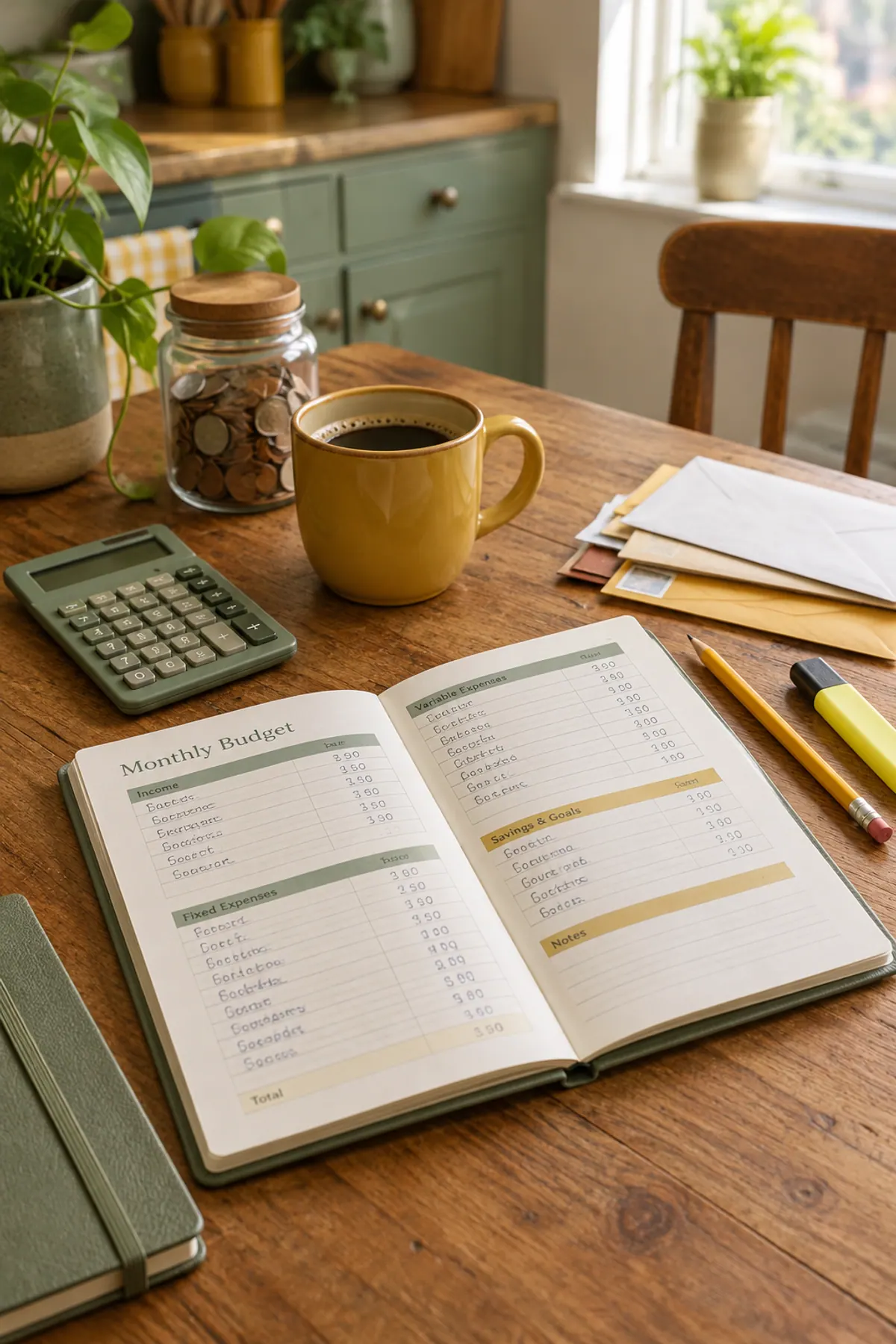
A money reset is a short, planned stretch where you look at every part of your money, fix what's drifted, and set up a budget you can keep. It's not a new diet for your wallet or a mindset ritual. It's a to-do list with an end date.
Thirty days works well for a January reset. It's long enough to catch every bill that comes once a month, and short enough to finish before the fresh-start feeling fades.
| Days | Focus | You finish with |
|---|---|---|
| Before Day 1 | Gather statements and logins | One folder or one note with everything |
| 1 to 10 | Find it: income, bills, debts, accounts | A full list of what comes in and goes out |
| 11 to 20 | Plan it: bills calendar, sinking funds, January budget | A written budget for each paycheck |
| 21 to 27 | Freeze it: a spending-freeze week | Seven days of needs only, and money saved |
| 28 to 30 | Keep it: automate and set a weekly reset | Transfers on autopilot and a Sunday routine |

Everything here is general education with example numbers, not financial advice. See our financial disclaimer for more.
Before Day 1: Gather What You Need
Set aside one evening before you start. Pull together the last statement or a login for every account, so the first ten days are about reading, not hunting.
Money reset gather list
A free credit report is also worth pulling once. You can get yours from each of the three bureaus at AnnualCreditReport.com, the official site named by the FTC.
If you'd like a printed tracker for the spending-freeze week later on, grab our free savings challenge pack now. It includes a 30-day no-spend tracker, a no-spend planning page and a list of 30 free cozy ideas.
Days 1 to 10: Find Where Your Money Goes
These ten days are for getting the facts down. Do one small task a day so it never takes more than about 30 minutes.
-
Step 1: Days 1 and 2: Write down your income
List each paycheck by date and take-home amount. If you're paid every two weeks, note which months have three paydays.
-
Step 2: Days 3 and 4: List every bill
Write each bill with its amount and due date. Look at last month's statements to catch the ones that are easy to forget, like car insurance paid every six months.
-
Step 3: Day 5: Find every subscription
Scan two months of card and bank statements. Cancel or pause anything you didn't use in December.
-
Step 4: Days 6 and 7: Total up December
Add up what the holidays cost, including gifts, travel, food and anything still on a card. No judging, just one honest number.
-
Step 5: Days 8 to 10: List debts and accounts
Write every debt with balance, rate and minimum, and every savings account with its balance. This is your starting line.
If the December total stings, you're not alone. Many households start January with a card balance from the holidays, and the next section shows what different payments do to it.
How to Reset Your Finances After Christmas
Here's an example card balance of $1,800 at 24% APR, with no new charges. These are example numbers to show the pattern, not a quote from any card.
| Monthly payment | Months to pay off | Interest paid, about |
|---|---|---|
| $75 | 34 | $677 |
| $100 | 23 | $454 |
| $150 | 14 | $279 |
| $200 | 11 | $204 |
The jump from $75 to $150 a month cuts the time by more than half and saves about $400 in interest. That's why finding even $50 more in the budget during Days 11 to 20 is worth the effort.
If you have more than one debt, our debt snowball worksheet shows how to line them up and roll each payment into the next.

Days 11 to 20: Build Your January Budget
Now you turn the list into a plan. This is the part most money reset planners focus on, and it's where the free and paid versions overlap.
Days 11 and 12: Make a bills calendar.
Write each bill on the payday that will cover it. On bi-weekly pay, the first check might carry rent and the second carries utilities, phone and the card payment.
Days 13 to 15: Set up sinking funds.
Pick the big costs that sneak up on you, like car repairs, school fees, birthdays and next Christmas. Divide each by the number of months until it's due, and save that amount monthly.
Days 16 to 18: Write the January budget.
Give every dollar of each paycheck a job: bills, food, gas, debt, savings and a small fun line. Our monthly budget for beginners walks through it line by line.
Days 19 and 20: Pick one savings goal.
Choose one goal for the next 90 days. A starter emergency fund is a common first pick, and our plan to save $1,000 in 30 days breaks it into small weekly steps.
Days 21 to 27: A Spending-Freeze Week
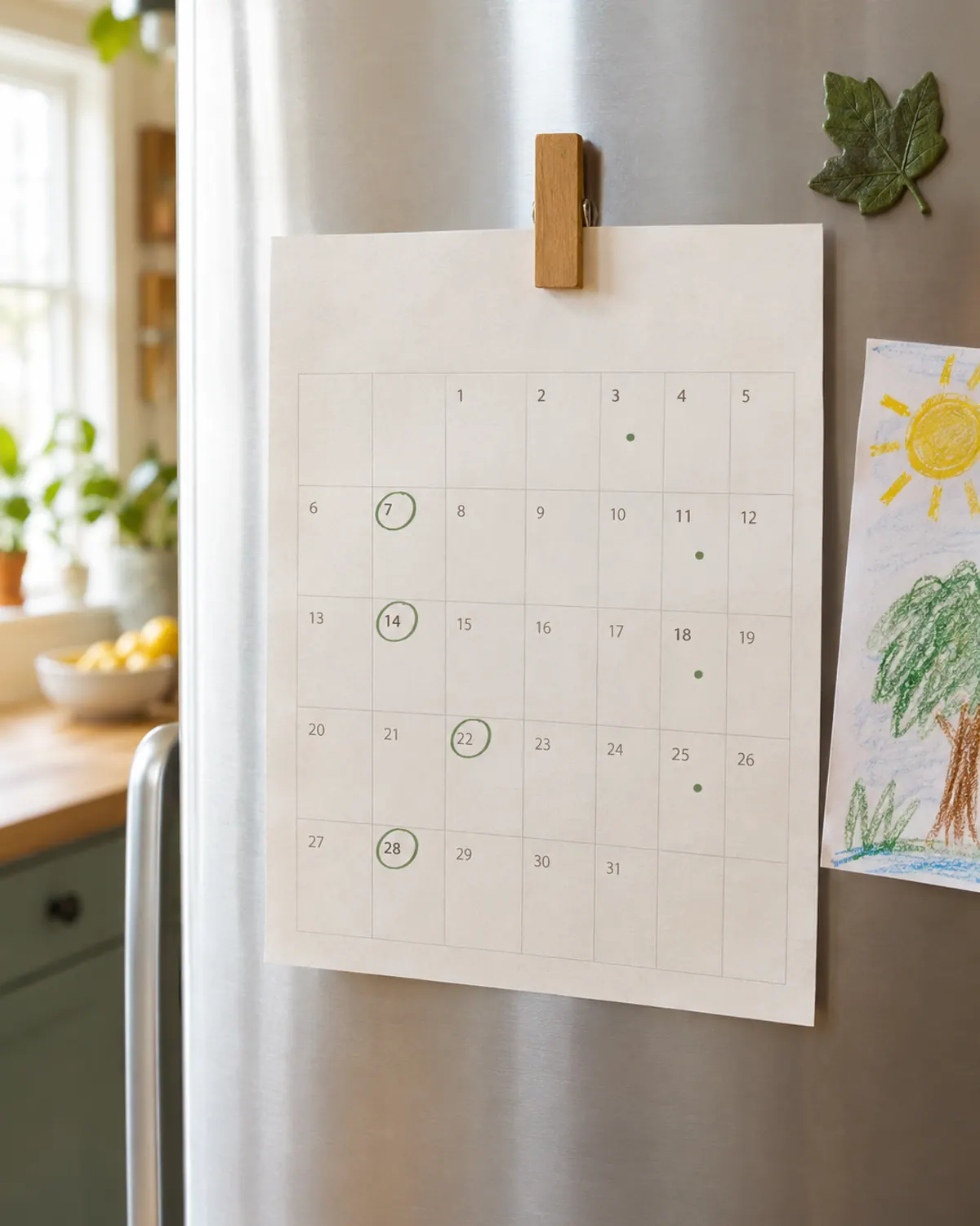
This is the part people pin. A spending freeze means seven days of buying needs only: groceries from a list, gas, medicine, and bills that are due. Everything else waits.
One week is easier to stick to than a whole No Spend January, and it fits right after the budget is written. You see what a lean week really costs, and the money you don't spend goes straight to your one goal.
Still buy during the freeze
- Groceries from a written list
- Gas for work and school
- Bills and debt payments due this week
- Medicine and basic toiletries you're out of
- Free fun: library, walks, game night
Pause for the week
- Takeout and coffee runs
- Online shopping and "just browsing"
- New clothes, decor or gadgets
- Subscriptions you already paused
- Store trips without a list
Before the week starts, plan around it. Shop on Day 20 with a list, fill the gas tank and plan seven simple dinners from what's in the pantry.

At the end of the week, add up what you didn't spend compared with a normal week and move it to savings or the card. Write the number down; it's a good reminder for the rest of the year.
Want to stretch it to a full month? Our No Spend January rules, tracker and survival list has the full version, with what counts and what doesn't.

Days 28 to 30: Automate and Start a Sunday Money Reset
The last three days make the reset stick. Set up one automatic transfer to savings on each payday, even a small one, and turn on autopay for the minimum on each card.
Then pick a time for a weekly money reset. Sunday evening works for a lot of families because the week ahead is still a blank page.
Sunday money reset checklist (15 minutes)

A money reset is mostly about habits, not mindset. If money talk feels heavy, keep the weekly check short and kind. Fifteen minutes on a Sunday is enough to keep January's work from slipping.
Money Reset Planner: Free or Printed
You can do the whole reset with a notebook and this page. If you'd like it laid out for you, a printed planner keeps every list in one place.
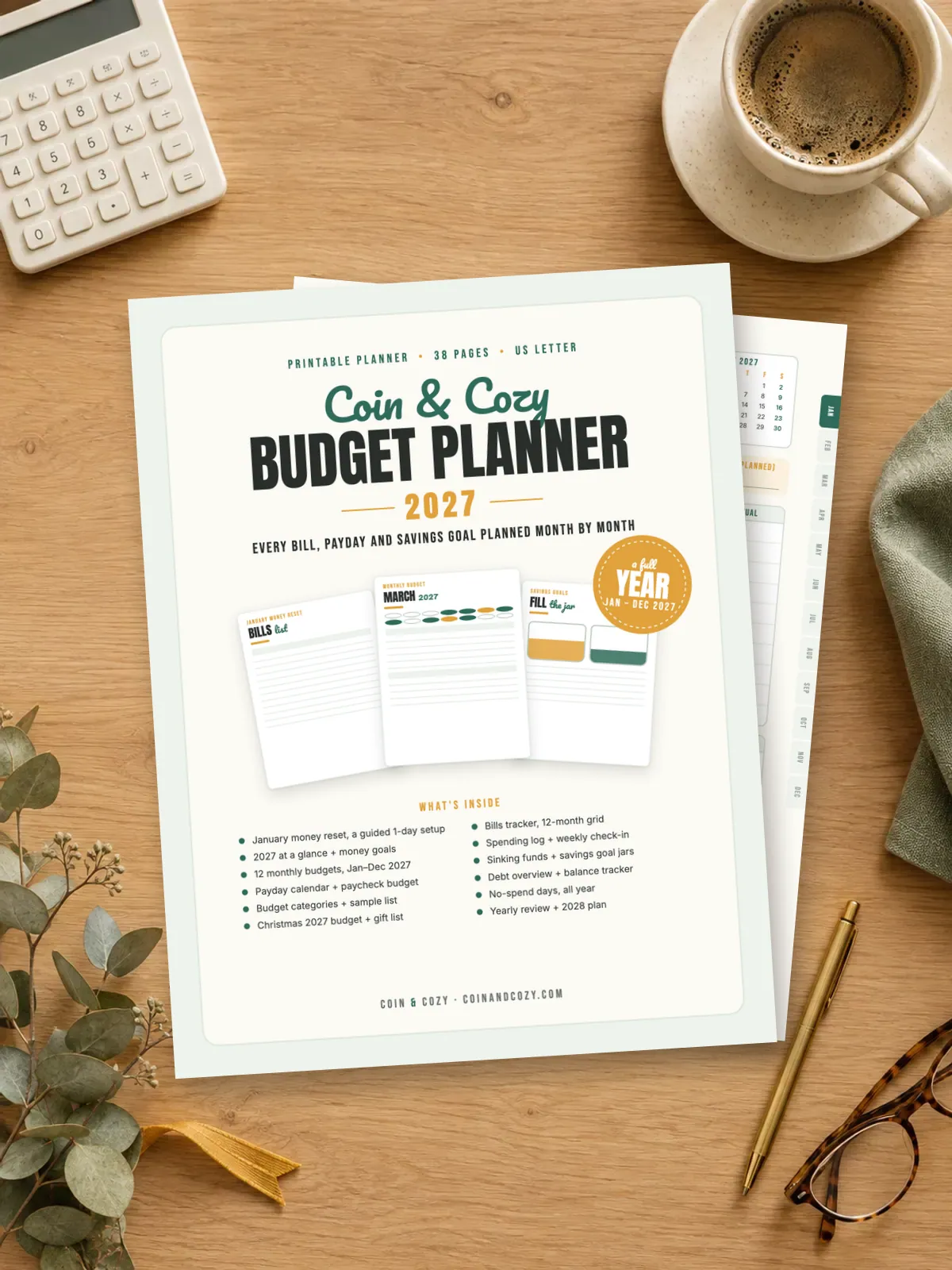
The Cozy Budget Planner 2027 opens with a guided January money reset in five steps: income, bills, accounts, up to three goals and your first budget. It also has 12 dated monthly budget pages, a payday calendar, a biweekly paycheck budget, a bills tracker, sinking funds pages, a debt overview and a year no-spend grid. It's a printable for US Letter.
Simple supplies for a money reset
-
A5 budget binder or planner
Typically $8 to $30
Holds your bills calendar, budget and statements together.
Check price on Amazon for A5 budget binder or planner -
Accordion bill organizer
Typically $10 to $25
One pocket per bill makes Days 3 and 4 much faster.
Check price on Amazon for Accordion bill organizer -
Paper cash envelope pack
Typically $8 to $22
Useful for groceries and gas during the spending-freeze week.
Check price on Amazon for Paper cash envelope pack -
Pastel highlighter set
Typically $4 to $17
For marking subscriptions and paid bills.
Check price on Amazon for Pastel highlighter set
Pick your Day 1 on the calendar tonight. Thirty days from now you'll have a budget, one goal in motion and a Sunday habit to keep it going.
Frequently asked questions
What is a money reset?
It's a short, planned stretch where you review every part of your money, fix what has drifted and set up a budget you can keep. This version takes 30 days and ends with a weekly habit.
How do I do a 30 day financial reset?
Spend Days 1 to 10 listing income, bills, subscriptions, debts and accounts. Use Days 11 to 20 for a bills calendar, sinking funds and a January budget. Take a spending-freeze week on Days 21 to 27, then automate savings on Days 28 to 30.
What should be on a January money checklist?
Income by payday, every bill and due date, subscriptions to cancel, the December total, every debt and account, a written budget, one savings goal and an automatic transfer.
What is a weekly or Sunday money reset?
It's a 15-minute check once a week: look at balances, bills due, last week's spending and your goal, then plan meals. Sunday works well because the week is still ahead.
Is there a free money reset planner?
This page works as one: the gather list, the 30-day steps and the Sunday checklist can all be printed from your browser. Our free savings challenge pack adds a 30-day no-spend tracker for the freeze week.
Is a spending freeze the same as a no-spend challenge?
They're close. A spending freeze here means one week of needs only, while a no-spend challenge often runs a full month. Both pause extras and keep bills, groceries and gas paid.
Save it for later
Pin this to your Budgeting Basics board so it's there when you need it.
Save to Pinterest