This post contains affiliate links. As an Amazon Associate we earn from qualifying purchases, at no extra cost to you. Read our disclosure.
Safety first: This is general money education, not personalised financial advice. Please read our financial disclaimer before you start.
Key takeaways
- Start from take-home pay, not salary.
- Fixed bills first, then groceries, then kid costs, then savings and fun.
- Kid costs like birthdays, school fees, activities and clothes need monthly sinking funds.
- Leave a small buffer line so one surprise does not break the month.
- A 20-minute monthly family money meeting keeps the plan real.
In this post7 sections
What You Need Before You Start
Set aside about an hour, with your partner if you share money. Gather these first so you're working from facts, not memory.
Family budget supplies
No planner yet? Print the free monthly budget sheet (PDF, 3 pages). No sign-up needed. It has a monthly page and a paycheck page.
How to Budget for a Family of 4 in 8 Steps
Our example family has two parents and two kids, ages 6 and 10. They bring home $5,600 a month between them. That's an example to show the math, not an average or a target. For national averages by category, see what a family of 4 spends per month in BLS 2024 data.
-
Step 1: Write down your real take-home pay
Use what lands in your bank account after taxes, insurance and retirement deductions. If one parent is paid every two weeks, multiply one paycheck by 26 and divide by 12 to get a monthly number. In our example, one parent brings home $3,400 a month and the other $2,200, for $5,600.
-
Step 2: List the fixed bills
Rent or mortgage, utilities, phones, internet, insurance, car payments and minimum debt payments go first. Write each one with its due date. These are the bills you have to pay no matter what, so they set the shape of the rest of your family budget planner.
-
Step 3: Set a grocery and household number
Look at what you really spent on food and household items the last two months, then pick a number you can keep. Our example uses $750 a month for groceries, toiletries and cleaning supplies. For example weeks and a sample list, see our grocery budget for a family of 4.
-
Step 4: Add the kid costs most templates forget
Birthdays, school fees, sports, lessons, clothes and shoes don't come every month, so they surprise families. Add up a year of them, divide by 12, and save that amount monthly. The table below shows the example family's version.
-
Step 5: Map irregular costs on a calendar
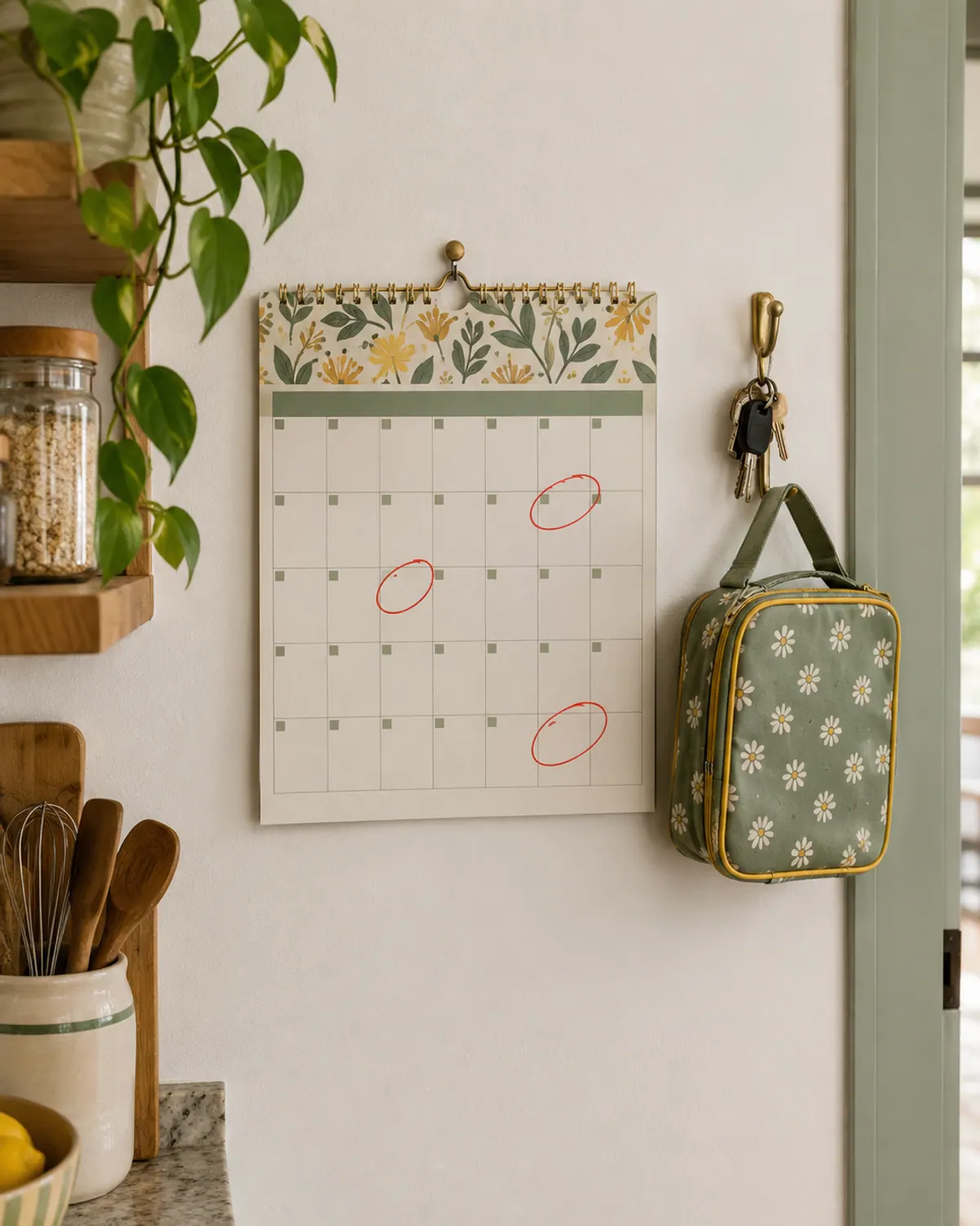
Go month by month and mark the big non-monthly costs: back-to-school, holidays, car registration, yearly subscriptions and insurance renewals. This shows which months are heavy, so you can save ahead. Our sinking funds guide lists common categories with example amounts.
-
Step 6: Give savings, debt and fun money a line
Savings and extra debt payments get a set amount, not whatever is left. Each adult also gets a small amount of personal money with no questions asked, which makes the budget easier to keep.
-
Step 7: Add a buffer for surprises
A small buffer line catches the forgotten bill, the field trip form or a higher power bill. If it is not used, move it to savings at the end of the month.
-
Step 8: Hold a monthly family money meeting
Once a month, sit down for 20 minutes. Look at what you spent, what is coming next month, and move money between lines if you need to. Keep it short and calm so both of you keep showing up.






Example Monthly Budget for a Family of 4
Here's how the example family's $5,600 could be planned. Your numbers will be different, especially housing, childcare and health costs, which change a lot by area.
| Category | Example monthly amount | Notes |
|---|---|---|
| Housing (rent or mortgage) | $1,600 | Fixed |
| Utilities, phones and internet | $450 | Use a 12-month average |
| Groceries and household | $750 | Food, toiletries, cleaning |
| Transportation | $650 | Car payment, gas, insurance |
| Insurance not taken from pay | $250 | Health, life or renters |
| Childcare and after-school care | $400 | Varies a lot by area |
| Minimum debt payments | $200 | Cards, loans |
| Kid sinking funds | $250 | See the table below |
| Holidays and gifts | $100 | Christmas and birthdays for adults |
| Car and home repairs | $150 | Sinking fund |
| Emergency savings | $350 | Until the goal is reached |
| Personal money (both adults) | $250 | Split as you like |
| Buffer | $200 | Moves to savings if unused |
| Total | $5,600 | Every dollar has a job |

A common rule of thumb, the 50/30/20 budget, splits take-home pay into about half for needs, 30% for wants and 20% for savings and debt. Families with childcare or high rent often run higher on needs, and that is okay. Use the rule as a check, not a test you have to pass.
The Kid Costs That Break Family Budgets
This is the part most free family budget templates skip. The costs below are small each month but large when they all land in August or December.
| Kid cost | Example per year | Save per month |
|---|---|---|
| Birthdays (gifts and a small party, 2 kids) | $240 | $20 |
| School supplies, fees, pictures, field trips | $480 | $40 |
| Sports, lessons and activities | $1,200 | $100 |
| Clothes and shoes | $840 | $70 |
| Summer and school break extras | $240 | $20 |
| Total | $3,000 | $250 |

Kids can join in, too. Three jars labeled save, spend and give turn allowance or birthday money into a simple lesson, and they see that money runs out when it is spent.
Common Family Budget Mistakes
Budgeting from gross pay. Your salary is not what you can spend. Start from deposits, or the budget is short from day one.
Forgetting yearly bills. Car registration, school fees and annual subscriptions break budgets that only count monthly bills. A calendar pass in step 5 fixes it.
Zero personal money. A budget with no fun money for adults usually lasts a few weeks. A small amount each makes the rest easier to keep.
One person doing it all. If only one parent knows the plan, the other spends without it. The monthly meeting keeps you both on the same page.
Family Budget Variations
Paid every two weeks? Budget on two paychecks a month and use the two extra paychecks a year for savings or sinking funds. Our biweekly budget guide has a free paycheck template.
One income? The steps are the same, but the buffer and emergency fund matter even more. Keep fixed bills as low as you can.
Income that changes month to month? Plan the budget on your lowest normal month. Extra in good months goes to the buffer and savings first.
Want every dollar assigned? Try a zero-based budget, where income minus your plan equals zero. New to budgeting in general? Start with our budget planner for beginners.
Helpful supplies (optional)
-
Undated budget planner
Typically $10 to $25
A paper planner keeps the whole family budget in one place you can both see.
Check price on Amazon for Undated budget planner -
Save spend give jars for kids
Typically $12 to $25
Three clear jars make allowance lessons easy to see.
Check price on Amazon for Save spend give jars for kids -
Desktop calculator
Typically $8 to $15
A big-button calculator makes the monthly meeting quicker.
Check price on Amazon for Desktop calculator
Want a full year of family budget pages? The Cozy Budget Planner 2027 has monthly budgets, a payday calendar, sinking funds pages, a bills tracker and a weekly check-in.
Frequently asked questions
How do I make a budget for a family of 4?
Start from take-home pay, list fixed bills, set a grocery number, add monthly sinking funds for kid costs and irregular bills, give savings and fun money a line, add a small buffer, and review it together each month.
How much should a family of 4 budget per month?
It depends on your income and where you live, especially housing and childcare. Build the budget from your own take-home pay and bills rather than a national figure.
What are the main categories in a family budget?
Housing, utilities, groceries, transportation, insurance, childcare, debt payments, kid costs, holidays, repairs, savings, personal money and a buffer.
What is the 50/30/20 rule for families?
It is a rule of thumb that puts about 50% of take-home pay toward needs, 30% toward wants and 20% toward savings and debt. Many families with childcare spend more on needs, so treat it as a guide.
How do you budget for kids' irregular expenses?
Add up a year of birthdays, school fees, activities and clothes, divide by 12, and save that amount each month in a separate kid fund.

Save it for later
Pin this to your Budgeting Basics board so it's there when you need it.
Save to Pinterest