
This post contains affiliate links. As an Amazon Associate we earn from qualifying purchases, at no extra cost to you. Read our disclosure.
Safety first: This is general money education, not personalised financial advice. Please read our financial disclaimer before you start.
Key takeaways
- The goal is one paycheck ahead: a buffer equal to one full paycheck sitting in a separate account, so a late check or a surprise bill no longer means an overdraft.
- Start with your four walls number (housing, utilities, food, transportation) and track 30 days before changing anything; the leaks are usually subscriptions, fees and convenience food.
- Budget by paycheck, not by month: assign each bill to Paycheck A or Paycheck B so no single check carries the rent and the car payment.
- Automate $25, $50 or $100 per check into the buffer; on $1,900 biweekly pay the two third-paycheck months alone get you most of the way there in one year.
- A $500 starter fund comes before extra debt payments, because without it every surprise goes back on the card.
In this post14 sections
- Why 63% of Americans Live Paycheck to Paycheck (CNBC/SurveyMonkey, July 2026)
- What 'One Paycheck Ahead' Means and Why It Is the Goal
- Step 1: Find Your Four Walls Number
- Step 2: Track 30 Days Without Changing Anything
- Step 3: Budget by Paycheck, Not by Month
- Step 4: Open the Buffer Account and Automate $25
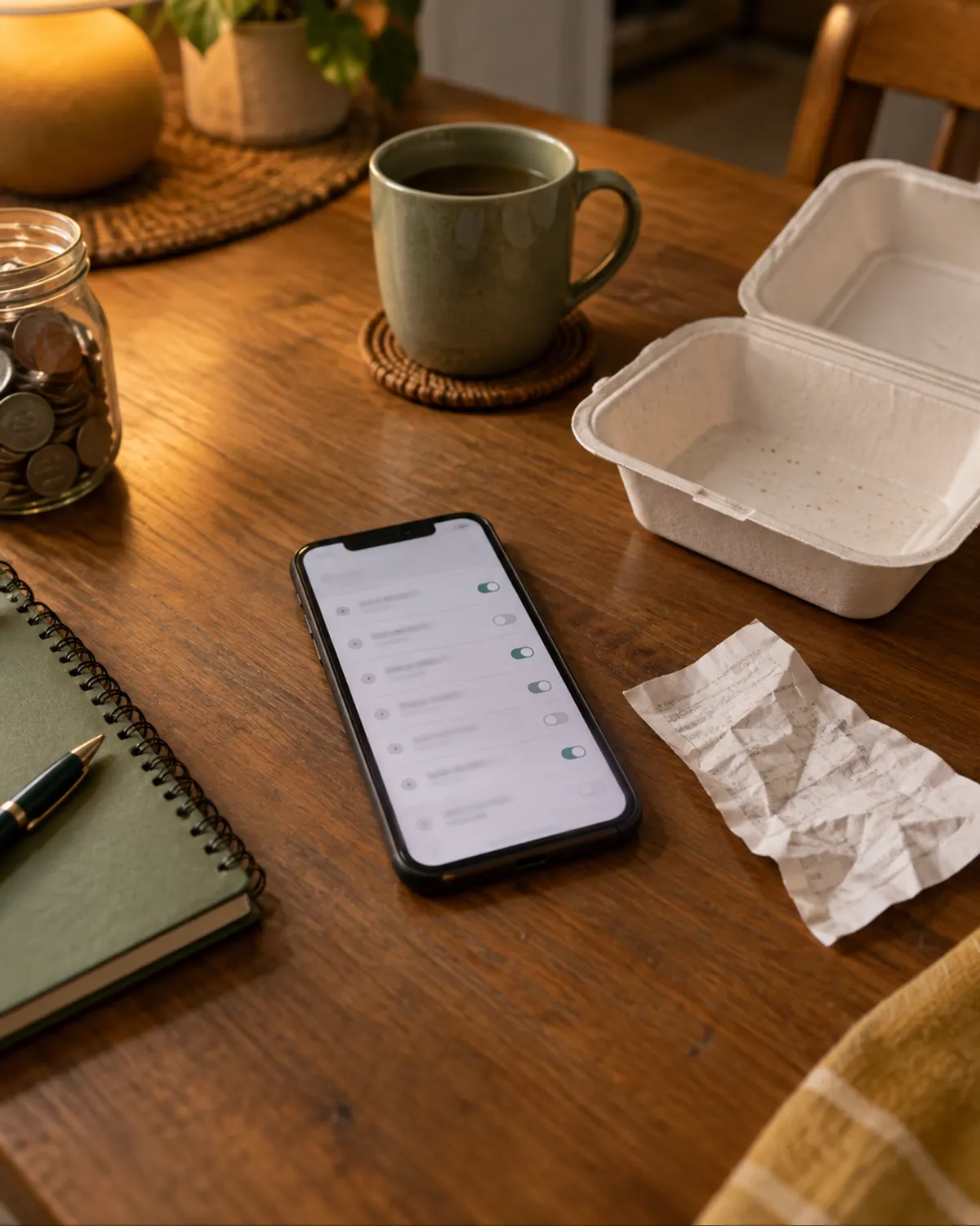
- Step 5: Plug the Three Leaks (Subscriptions, Fees, Convenience Food)
- Step 6: Build the $500 Starter Fund Before Extra Debt Payments
- Step 7: Use Windfalls and Third-Paycheck Months for the Buffer
- Example: Getting One Paycheck Ahead on $1,900 Every Two Weeks
- Mistakes That Keep You in the Cycle
- What If Your Four Walls Cost More Than Your Pay?
- Free Paycheck to Paycheck Budget Printable (and the Planner)
- FAQ
Why 63% of Americans Live Paycheck to Paycheck (CNBC/SurveyMonkey, July 2026)
In the CNBC/SurveyMonkey Quarterly Money Survey published July 20, 2026, 63 percent of Americans said they live paycheck to paycheck, and the share was 81 percent among households earning under $50,000 and still 41 percent among those earning $100,000 to $249,999 (source). Nine in ten of that group said they have less than $500 left at the end of a typical month.
That last number is the useful one. The paycheck to paycheck cycle is not usually a sign that someone is bad with money; it is what happens when the gap between income and bills is under $500 and every check gets spent the week it lands. There is no slack, so a car repair or a short week at work turns into an overdraft fee, and the fee eats next month's slack. The fix is to build slack on purpose, one small transfer at a time.

What 'One Paycheck Ahead' Means and Why It Is the Goal
One paycheck ahead means you have one full paycheck sitting in a separate account before the next one arrives, so you pay this period's bills with money that is already in the bank, not with money that is still on its way. If you earn $1,900 every two weeks, the goal is a $1,900 buffer. That is smaller than a three month emergency fund and reachable on a tight budget, which is why it is the first finish line in this guide.
Once the buffer exists, the whole month changes shape. You can pay the rent on the 1st even if payday is the 3rd, a late deposit is an annoyance instead of a crisis, and you stop paying overdraft and late fees, which for many households is $100 to $300 a year that goes straight back into the budget. The emergency fund, debt payoff and bigger savings goals all come after this, and all of them go faster once the paycheck to paycheck cycle is broken.
One paycheck ahead is the difference between paying bills with money you have and money you are expecting.

Step 1: Find Your Four Walls Number
Your four walls are housing, utilities, food and transportation: the things that keep the household running and get paid before anything else. Add them up for one month. This number tells you two things: the minimum you must cover in any month, and how much of your pay is actually negotiable. Here is an example for a household with $3,800 a month in take-home pay.
| Wall | Example monthly cost | Notes |
|---|---|---|
| Housing (rent or mortgage, renter's insurance) | $1,250 | Usually the largest line and the hardest to move quickly |
| Utilities (power, water, gas, phone, basic internet) | $280 | Ask about budget billing to flatten summer and winter spikes |
| Food (groceries only, not takeout) | $520 | See our grocery budget for a family of 4 for example tiers |
| Transportation (car payment, insurance, gas, or transit) | $450 | Include the insurance premium even if you pay it twice a year |
| Four walls total | $2,500 | About 66 percent of take-home in this example |

Step 2: Track 30 Days Without Changing Anything
Before you cut, measure. For the next 30 days write down every purchase in a notebook or a notes app, with no judgment and no changes to how you spend. Most people who try to budget skip this step and build a plan around what they think they spend, which is almost always lower than the real number, and the budget breaks in week two.
At the end of the month, sort the list into four walls, debt payments, everything else that repeats (subscriptions, memberships) and everything else that does not. The second and third groups are where the next steps will find money. If 30 days feels long, track two weeks, double it and move on; a rough real number beats a precise imaginary one.

Step 3: Budget by Paycheck, Not by Month
A monthly budget assumes all the money arrives at once; a paycheck to paycheck budget admits that it does not. List your bills by due date, then assign each one to Paycheck A (the first check of the month) or Paycheck B (the second) so that neither check is carrying the rent and the car payment together. If one check is overloaded, call the provider and move a due date; most utilities and many lenders will shift it once for free.
Our biweekly budget guide walks through the Paycheck A and B method step by step, including what to do with the two third-paycheck months in 2027. For the printable, the free monthly budget sheet (PDF, 3 pages) includes a biweekly paycheck page with Paycheck A and Paycheck B columns; no sign-up needed, and it prints on US Letter.

Step 4: Open the Buffer Account and Automate $25
Open a separate savings account, preferably at a different bank with no debit card, and name it Buffer. Then schedule a transfer for every payday morning. Start at $25 if that is what the tracking month says you can spare; the amount matters less than the automation. Here is how long each amount takes to reach one paycheck ahead on $1,900 every two weeks, before any windfalls.
| Per paycheck | Per month (about) | Paychecks to $1,900 | Time to one paycheck ahead |
|---|---|---|---|
| $25 | $54 | 76 | About 2 years and 11 months |
| $50 | $108 | 38 | About 1 year and 6 months |
| $100 | $217 | 19 | About 9 months |
| $50 plus the two third paychecks | $108 plus windfalls | Under 26 | Under 1 year |

Step 5: Plug the Three Leaks (Subscriptions, Fees, Convenience Food)
Go back to the 30 day list. Almost every household finds the same three leaks, and plugging them is usually where the $25 transfer turns into $100 without anyone feeling poorer.
The three leaks and what to do with each
For the long list of small cuts that add up, our money saving tips that add up every month post is the companion to this step. Pick three, not thirty.
Step 6: Build the $500 Starter Fund Before Extra Debt Payments
It feels wrong to save while you owe money, but a $500 starter fund is what keeps the next flat tire off the credit card. Fund it at the same time as the buffer, or before it if you have no cushion at all: on $50 a paycheck, $500 takes ten paychecks, about five months. Keep minimum payments going on every debt during this stretch; the extra payments start after the $500 exists.
Once the starter fund and the one paycheck buffer are in place, you have two layers between you and the overdraft, and that is the moment to turn the same automated transfer toward debt or toward a larger fund. The emergency fund guide explains the staircase from $500 to one month to three months, and why it goes in that order.
Step 7: Use Windfalls and Third-Paycheck Months for the Buffer
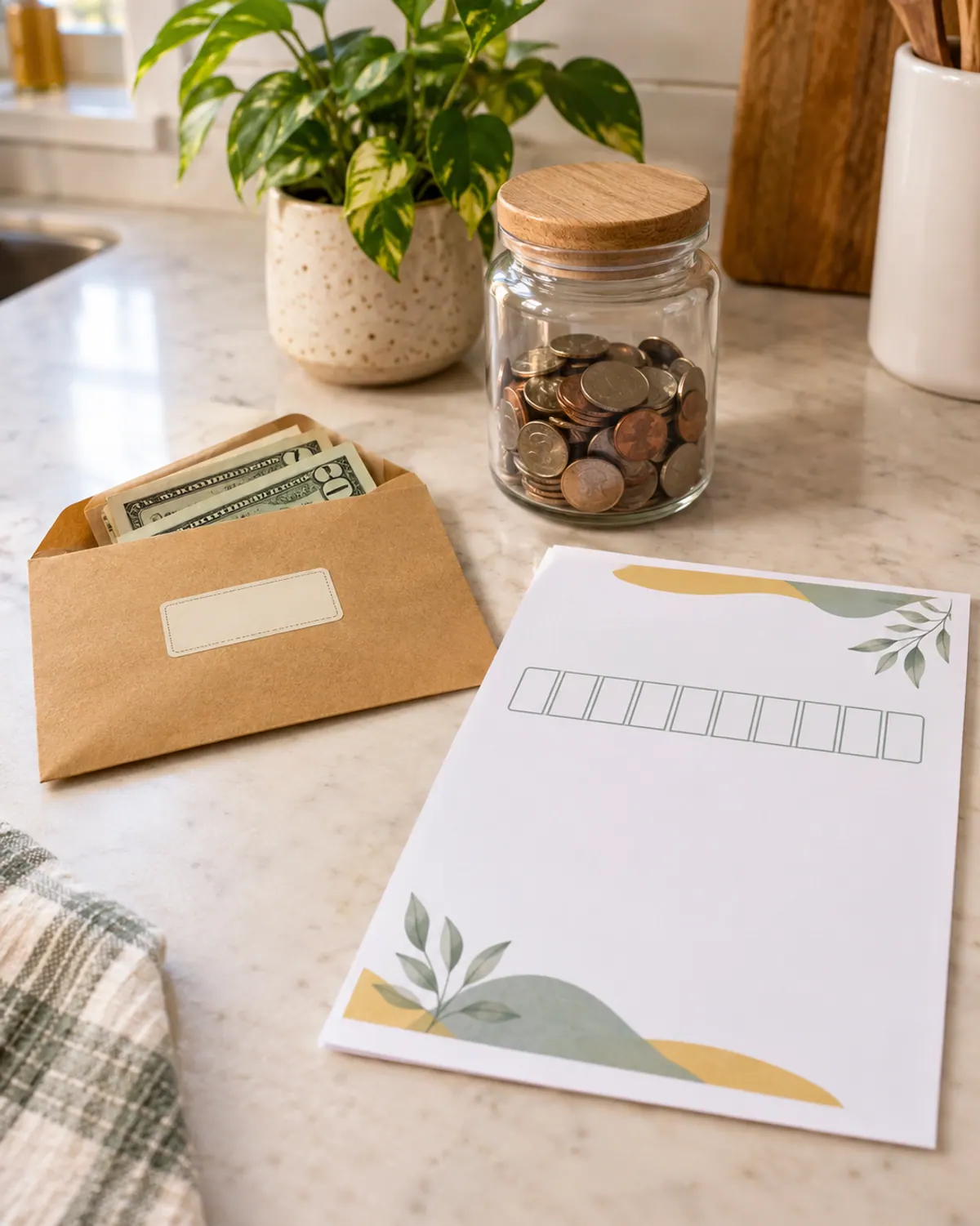
If you are paid every two weeks, two months a year contain three paychecks instead of two, and your monthly bills do not grow to match. In 2027 those months depend on your cycle, but there are always two of them. Treat the third check as buffer money from the day you know it is coming: the whole $1,900, or at least most of it, goes straight to the Buffer account before it has a chance to feel like extra spending.
The same rule applies to tax refunds, a bonus, overtime or selling something. Decide now, in writing, that windfalls go to the buffer until it is full. On $1,900 biweekly pay, one third paycheck plus $50 a check for a year is more than enough to reach one paycheck ahead, which is what the example below shows.

Example: Getting One Paycheck Ahead on $1,900 Every Two Weeks
Here is the whole plan on one household: $1,900 take-home every other Friday, $2,500 in four walls, $600 in minimum debt payments and the rest for everything else. The dates assume a first payday in early January.
-
Step 1: January: track and find the four walls
Four walls come to $2,500 a month against $3,800 in regular pay. The 30 day list shows $140 a month in subscriptions, $70 in fees and about $260 in convenience food.
-
Step 2: February: open the buffer, automate $50
Bills get split between Paycheck A and Paycheck B. Three subscriptions go, the late fee stops, and a $50 transfer starts every payday. Buffer after February: $100.
-
Step 3: March to May: raise it to $100, build the $500 starter
The three leaks free up about $250 a month, so the transfer rises to $100 a check with half going to the starter fund until it reaches $500 in May. Buffer by the end of May: $450.
-
Step 4: The first third-paycheck month: $1,900 at once
The extra check goes straight to the buffer. Buffer: about $2,350 before the second third-paycheck month even arrives, which is more than one $1,900 paycheck ahead.
-
Step 5: The month after: pay bills with last month's money
On the 1st, this month's bills are paid from the buffer, the paychecks refill it, and the $100 transfer turns toward debt. The paycheck to paycheck cycle is over, about seven months in.

Mistakes That Keep You in the Cycle
What gets you a paycheck ahead
- A separate buffer account you cannot tap from the debit card
- A transfer that runs on payday morning without a decision
- Bills split across two paychecks so neither one is overloaded
- Windfalls and third paychecks assigned in writing before they land
What keeps you in the cycle
- Keeping the buffer in checking, where it gets spent by the 20th
- Paying extra on debt with no starter fund, then charging the next surprise
- Budgeting by month when pay arrives every two weeks
- Cutting everything at once in week one and quitting in week three

What If Your Four Walls Cost More Than Your Pay?
If step 1 shows your four walls are higher than your take-home pay, no budget sheet closes that gap, and it is not a willpower problem. The honest options are to lower a wall (a cheaper place at lease renewal, a roommate, selling a car with a payment) or raise income (more hours, a second shift for a season, a side income). In the meantime, call providers before bills are late, since many utilities and lenders have hardship plans that are not advertised.
Dialing 211 in the United States connects you with local assistance for food, utilities and housing, and food banks do not require you to be out of work. None of this is financial advice; it is the list of doors most people do not know are open. The buffer plan starts the moment the four walls fit inside the paycheck again, even if it starts at $10.
Free Paycheck to Paycheck Budget Printable (and the Planner)
Everything in this guide fits on two sheets. The free monthly budget sheet (PDF, 3 pages) gives you the biweekly paycheck page with Paycheck A and Paycheck B columns for step 3; no sign-up needed. The free 100 Envelope Savings Challenge pack adds a goal thermometer that works well as a buffer tracker on the fridge.
If you want the full year in one book, the Cozy Budget Planner 2027 has a 2027 payday calendar, a reusable biweekly paycheck budget, a sinking funds tracker and a guided January money reset that covers steps 1 to 3 in one sitting. It is $12 and prints on US Letter at home.

Helpful, not required
-
Cash envelope wallet for budgeting
Typically $10 to $25
For households that run groceries and gas in cash per paycheck.
Check price on Amazon for Cash envelope wallet for budgeting -
Budget binder with cash envelopes
Typically $12 to $25
Keeps the paycheck sheet, the buffer tracker and the envelopes in one place.
Check price on Amazon for Budget binder with cash envelopes -
Portable receipt scanner
Typically $60 to $120
Only if you track for a business too; a phone camera is enough for the 30 day list.
Check price on Amazon for Portable receipt scanner
Four walls, thirty days of tracking, bills split by paycheck, one automated transfer, three leaks plugged, a $500 starter fund and a third paycheck sent to the buffer. That is how to stop living paycheck to paycheck without a raise. The numbers here are examples and not financial advice; your tracking month gives you the real ones.
Frequently asked questions
How do I stop living paycheck to paycheck on a low income?
Start with the four walls number and a 30 day tracking month, then budget by paycheck so no single check carries the big bills. Automate the smallest transfer you can keep, even $10, into a separate buffer account and send any third paycheck or refund there. If the four walls cost more than your pay, the gap closes by lowering a wall or raising income, not by a tighter budget. This is general information, not financial advice.
What is a paycheck to paycheck budget?
It is a budget built around each paycheck instead of the calendar month. You list bills by due date, assign each to Paycheck A or Paycheck B, and plan every check to zero. Our free monthly budget sheet includes a biweekly paycheck page for exactly this.
How long does it take to get one paycheck ahead?
On $1,900 every two weeks, $50 a paycheck alone takes about 18 months, $100 a paycheck about nine months, and $50 a paycheck plus one third paycheck sent to the buffer gets there in under a year. Your numbers will differ; these are planning examples.
Should I save or pay off debt first when living paycheck to paycheck?
A common order is minimum payments on everything, a $500 starter fund, then the one paycheck buffer, then extra debt payments. The starter fund keeps the next surprise off the card so the debt does not grow while you pay it. It is one approach, not financial advice.
Is there a free paycheck to paycheck budget template?
Yes. The free monthly budget sheet on this site is a 3 page PDF with a biweekly paycheck page (Paycheck A and Paycheck B columns), with no sign-up needed. The Cozy Budget Planner 2027 is the paid full-year version with a payday calendar.
Save it for later
Pin this to your Budgeting Basics board so it's there when you need it.
Save to Pinterest