Safety first: This is general money education, not personalised financial advice. Please read our financial disclaimer before you start.
Key takeaways
- Aim for 3 to 6 months of essential expenses, not 3 to 6 months of salary.
- Start with a $500 to $1,000 starter fund, then build one month, three months and six months.
- Self-employed, one-income or irregular-pay homes should lean toward 6 months or more.
- Keep it in a separate, insured savings account you can reach in a day or two.
- Refill it after you use it, and give predictable costs their own sinking funds.
In this post11 sections
- How Much Should an Emergency Fund Be? The Short Answer
- The Emergency Fund Staircase: $500, 1 Month, 3 Months, 6 Months
- Which Expenses Count Toward Your Emergency Fund Number
- Who Needs More Than 6 Months
- Is $1,000 Enough for an Emergency Fund?
- Emergency Fund or Debt First?
- Where to Keep an Emergency Fund
- Emergency Fund Savings Plan: How Long Each Step Takes
- Emergency Fund Myths vs Reality
- Emergency Fund Tracker: Keep the Next Step in View
- FAQ
| Question | Short answer |
|---|---|
| Starter goal | $500 to $1,000, or one month of bare essentials |
| Full goal | 3 to 6 months of essential expenses |
| Irregular income or one earner | Lean toward 6 months or more |
| Base it on | Monthly must-pay costs, not your salary |
| Where to keep it | A separate, insured savings account you can reach in a day or two |
| What it's for | Job loss, car or home repairs, medical bills, urgent travel |
How Much Should an Emergency Fund Be? The Short Answer
Most guides land on the same range: three to six months of essential expenses, with a smaller starter fund first. The Consumer Financial Protection Bureau adds a useful twist: the right number depends on your situation, so look at the surprise costs you've actually had before.
That's why this guide treats your emergency fund as a staircase, not one scary number. Each step protects you a little more, and each one is worth celebrating.

The Emergency Fund Staircase: $500, 1 Month, 3 Months, 6 Months
Here's the staircase for an example household whose must-pay costs are $2,400 a month. Swap in your own monthly number and the math works the same way.
| Step | Target | What it covers |
|---|---|---|
| 1. Starter fund | $500 to $1,000 | A car repair, a vet visit or a broken phone without a credit card |
| 2. One month | $2,400 | A short gap in pay or a big surprise bill |
| 3. Three months | $7,200 | A typical job search or a few months of reduced hours |
| 4. Six months | $14,400 | Longer job loss, one-income homes, self-employed income dips |
Notice the jump between steps. The starter fund handles the small emergencies that happen every year. The bigger steps cover the rare, expensive ones. You don't need step four before you start feeling safer.
Which Expenses Count Toward Your Emergency Fund Number
Use what you'd still have to pay if your income stopped tomorrow. That usually means the essentials below, not your full spending. Dropping eating out, streaming and shopping from the math makes the goal smaller and more reachable.

| Essential | Example per month |
|---|---|
| Rent or mortgage | $1,100 |
| Utilities | $180 |
| Groceries (basic) | $500 |
| Gas and transportation | $250 |
| Insurance (car, renters, health share) | $150 |
| Phone | $60 |
| Minimum debt payments | $160 |
| Total essentials | $2,400 |
Who Needs More Than 6 Months
Some households should aim past six months. A bigger cushion makes sense if your pay changes month to month, you're self-employed, you're the only earner, you work in a field where jobs take longer to find, or you have health costs that could stack up.

On the other hand, a two-income home with steady jobs might feel fine closer to three months. The goal is enough that a bad month doesn't turn into debt.
Is $1,000 Enough for an Emergency Fund?
As a starter, yes. A $1,000 cushion covers many common surprises, like a tow and repair, an urgent care visit or a replacement appliance. It's a strong first goal for anyone starting from zero.
It isn't a full emergency fund, though. If your job ended, $1,000 would last a couple of weeks for most families. Once it's built, keep going toward one month. If you'd like to build the first $1,000 fast, our save $1,000 in 30 days plan breaks it into weekly targets.
Emergency Fund or Debt First?
A common order: build a starter fund first, then put most extra money toward high-interest debt while you add a little to savings, then grow the full fund once that debt is gone. The starter fund matters because without it, the next surprise goes straight back on a card.
If you're working through cards now, our debt snowball vs avalanche guide compares the two payoff orders with free trackers. This is general information, not financial advice; your interest rates and job security may change the order.
Where to Keep an Emergency Fund
Keep it somewhere separate from everyday spending, safe and easy to reach within a day or two. For most people that's a savings account at a bank insured by the FDIC or a credit union insured by the NCUA. FDIC insurance covers deposits up to $250,000 per depositor, per insured bank, per ownership category.

Look for no monthly fees and a competitive interest rate. Skip the stock market for this money, since it can be down right when you need it. A small cash envelope at home for a power outage is fine, but keep most of it in an insured account.
Emergency Fund Savings Plan: How Long Each Step Takes
Time to each step depends on what you can set aside. Here's the same $2,400 example at three saving speeds.
| Monthly saving | Starter $1,000 | 1 month $2,400 | 3 months $7,200 | 6 months $14,400 |
|---|---|---|---|---|
| $100 a month | 10 months | 2 years | 6 years | 12 years |
| $250 a month | 4 months | about 10 months | about 2.4 years | about 4.8 years |
| $500 a month | 2 months | about 5 months | about 14 months | about 2.4 years |
Those later numbers can look slow. That's normal. Speed it up with windfalls: a tax refund, a third paycheck month or a side gig payment can move you a whole step. Biweekly savers can use our bi-weekly savings challenge charts to set a fixed amount every payday.

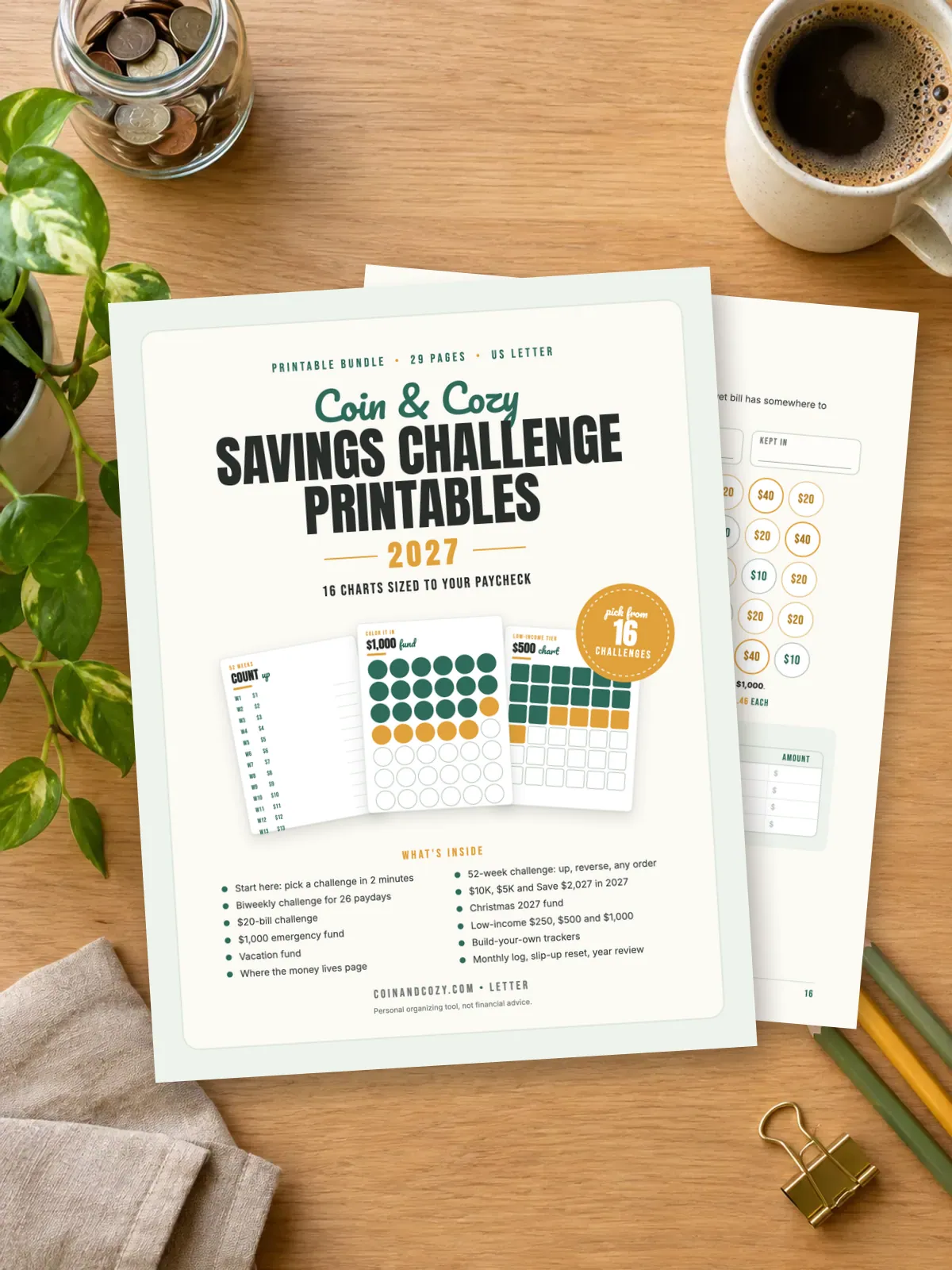
For a printed chart made for this goal, the 2027 Savings Challenge Bundle includes a $1,000 emergency fund chart plus $250 and $500 charts, so you can color your way up the first step.
Emergency Fund Myths vs Reality
| Myth | Reality |
|---|---|
| You need six months before it helps | Even $500 keeps many small surprises off a credit card |
| Base it on your salary | Base it on essential expenses, which is usually a smaller number |
| A credit card is my emergency fund | A card turns an emergency into debt with interest |
| Invest it for a better return | Emergency money should be safe and quick to reach |
| Once it's built, you're done | Refill it after you use it and recheck the number each year |
Plenty of people are building from scratch. In the Federal Reserve's 2024 household survey, 63% of adults said they would cover a $400 emergency expense with cash or its equivalent, which means many others would not. Starting small still puts you on the right side of that line.
Emergency Fund Tracker: Keep the Next Step in View
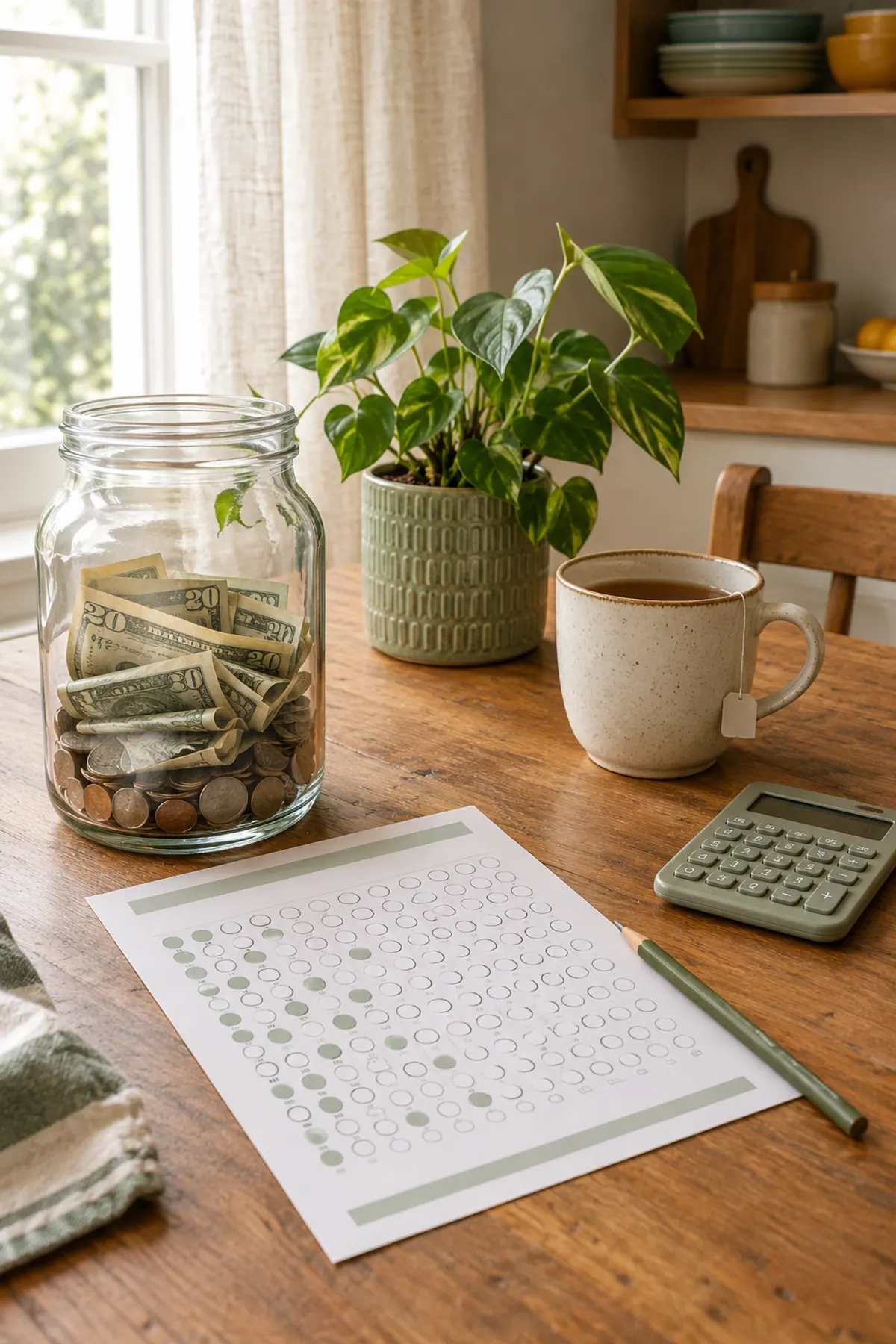
A tracker you can see helps the goal feel real. Color in a circle for every $25 or $50 you add, and write the next step's target at the top. When you use the fund, note what it covered and start refilling.

You'll find more printable options in our saving money chart roundup. If irregular bills like car registration keep raiding your emergency fund, give them their own money with sinking funds, so the emergency fund stays for real emergencies.

An emergency fund doesn't have to be finished to do its job. Every step makes the next surprise a little smaller.
For the savings jars, sinking funds and monthly budget pages in one place, the Cozy Money Binder gathers the planner and the savings charts together.
Frequently asked questions
How much should an emergency fund be?
A common guideline is three to six months of essential expenses, with a $500 to $1,000 starter fund first. If essentials cost $2,400 a month, that's $7,200 to $14,400. These are example numbers, not financial advice.
Is $1,000 enough for an emergency fund?
It's a strong starter fund that covers many small surprises like a car repair. It won't cover a job loss for long, so keep building toward one month of essentials once it's done.
Should I save an emergency fund or pay off debt first?
Many people build a starter fund first, then focus on high-interest debt while saving a little, then grow the full fund. Your rates and job security may change the order, so treat this as general information.
Where should I keep my emergency fund?
Most people use a separate savings account at an FDIC-insured bank or NCUA-insured credit union, with no monthly fees, so the money is safe and reachable within a day or two.
What counts as an emergency?
Something urgent, necessary and unexpected: job loss, a car or home repair you can't put off, a medical bill or urgent travel. Predictable costs like holidays or car registration belong in sinking funds instead.
Save it for later
Pin this to your Savings Challenges board so it's there when you need it.
Save to Pinterest