This post contains affiliate links. As an Amazon Associate we earn from qualifying purchases, at no extra cost to you. Read our disclosure.
Safety first: This is general money education, not personalised financial advice. Please read our financial disclaimer before you start.
Key takeaways
- Spend week one finding where money goes before you cut anything.
- Frugal means spending on purpose; cheap means spending less on everything.
- Three calls (phone, internet, insurance) and one subscription check are the fastest first wins.
- A 24-hour wait on non-essential buys stops most impulse spending.
- Give your savings a home on day 7 so the money does not drift back into spending.
In this post6 sections
| Day | Task | Time |
|---|---|---|
| 1 | Write your reason and track every purchase | 15 minutes |
| 2 | Check subscriptions and automatic charges | 20 minutes |
| 3 | Take stock of the pantry and plan 3 meals from it | 30 minutes |
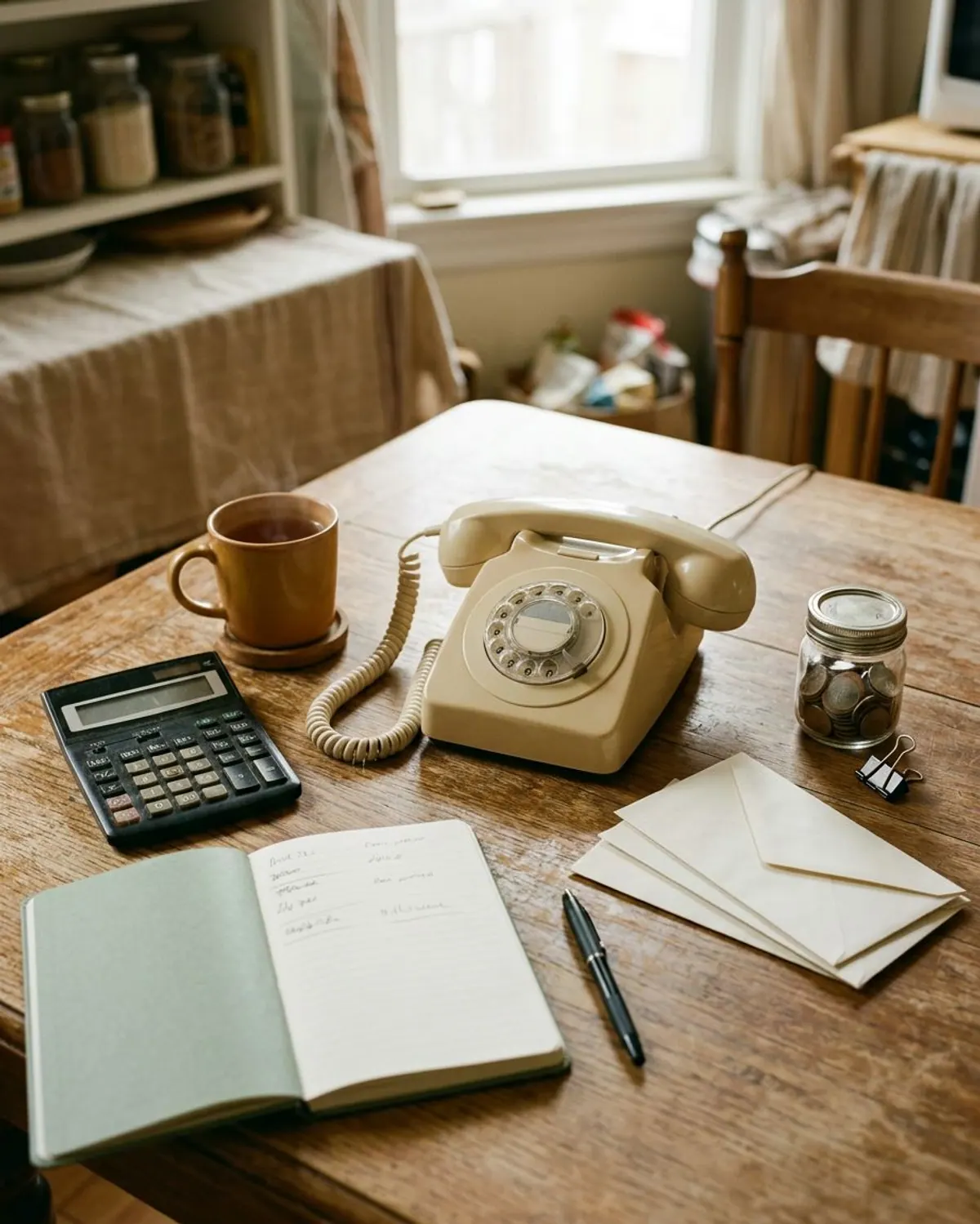
| 4 | Call phone, internet and insurance providers | 30 minutes |
| 5 | Swap one paid habit for a free one | 20 minutes |
| 6 | Start a 24-hour wait list for non-essential buys | 10 minutes |
| 7 | Set up a home for savings and review the week | 20 minutes |
What Frugal Living for Beginners Really Means
Frugal living means spending your money on purpose. You decide what matters, pay for that happily and stop paying for what does not. It is not the same as buying the cheapest thing every time, and it is not about guilt.
The Frugal Girl, one of the long-running frugal blogs, suggests starting with small steps and learning one habit at a time instead of changing everything at once. That is the idea behind this plan. If you want a long list to browse afterward, our 50 frugal living tips has one.

Frugal Living for Beginners: Your 7-Day Starter Plan
-
Step 1: Day 1: Write your reason and start tracking
Write one sentence about what you want the money to do: pay off a card, cover Christmas, stop the end-of-month panic. Put it where you will see it. Then, for the next 7 days, write down every purchase, even the $3 ones. Tracking is not judging; it is collecting the facts you need for day 2.
-
Step 2: Day 2: Check subscriptions and automatic charges
Open your bank or card statements for the last 60 days and circle anything that repeats: streaming, apps, memberships, free trials that rolled into paid ones. Cancel the ones you did not use in the last month. If you would miss one, keep it. A frugal life still has things you love in it.
-
Step 3: Day 3: Look at what you already have
Before you shop, scan your pantry, freezer and fridge and write down what you could cook from them. Plan 3 meals using those items and add only what is missing to your list. This one habit cuts waste, and the pantry challenge guide shows how to stretch it to two weeks.
-
Step 4: Day 4: Make three calls
Call your phone company, your internet provider and your car or renters insurer. Ask what the lowest-priced plan is for what you use, whether any promotion applies to existing customers and whether bundling or paying annually lowers the price. Say thank you either way. Even a $5 to $10 monthly drop repeats every month for as long as you keep the plan.
-
Step 5: Day 5: Swap one paid habit for a free one
Pick one thing you pay for and find a free version. Borrow books, audiobooks and movies from your library instead of buying them, check a local buy-nothing group before you buy something used, or swap one takeout coffee a week for a thermos. Choose only one, so it sticks.
-
Step 6: Day 6: Start a 24-hour wait list
Make a page called Wait List. Any non-essential thing you want to buy goes on it with the date. Come back after 24 hours, or after 7 days for anything over $50, and buy only what you still want. Most wants fade, and the ones that stay are the ones worth paying for.
-
Step 7: Day 7: Give your savings a home
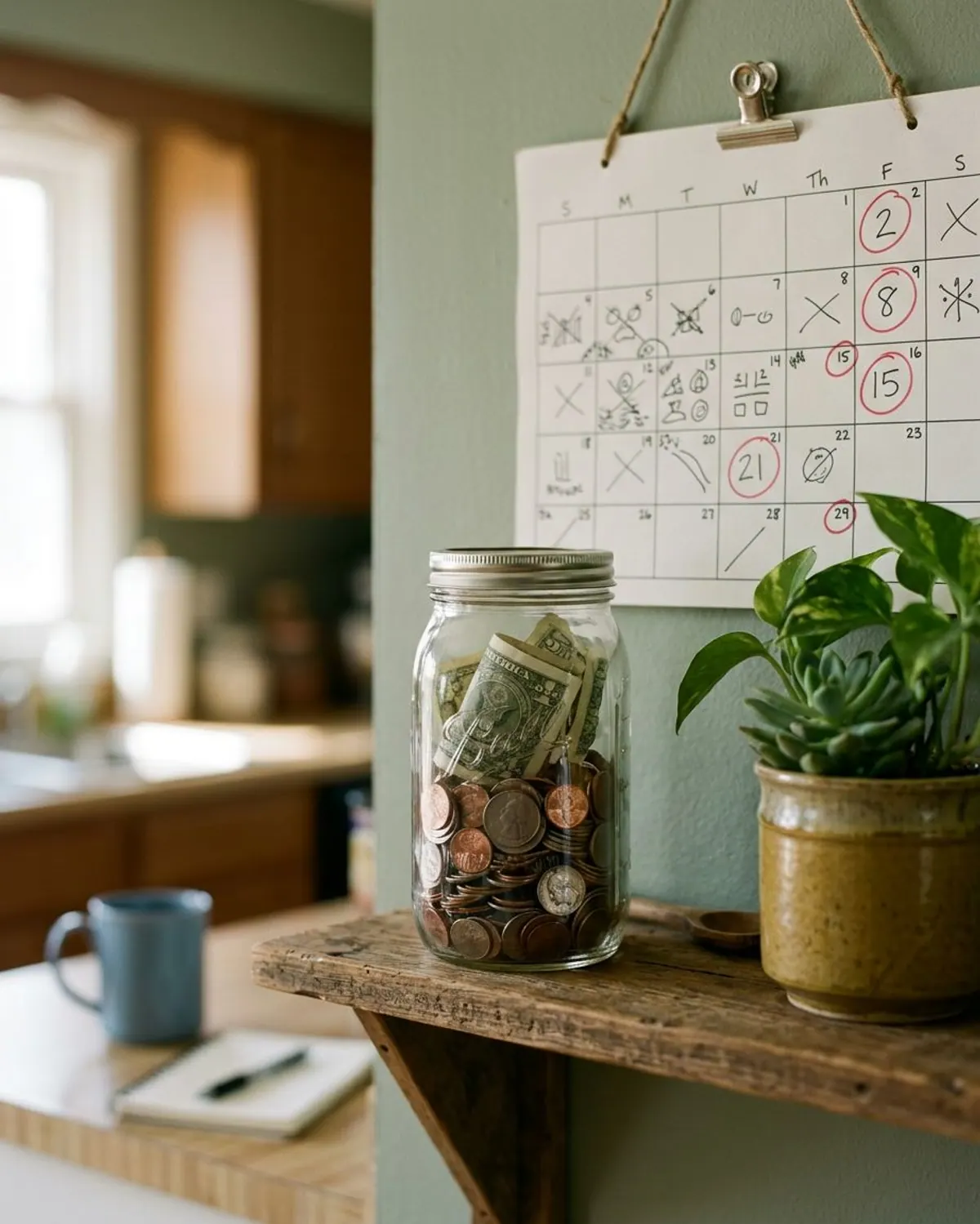
Decide where the money you freed up goes: a separate savings account, a labeled jar or an envelope. Move the first amount today, even $5. Review your tracking from day 1 and circle your top three money leaks. If you like paper tools, the budget planner for beginners turns this list into a monthly plan.





What One Week Could Add Up To
Here is how the math works with made-up numbers, so you can swap in your own. Your savings will be different, and some of these will not apply to you.
| Change | Example math | Per month |
|---|---|---|
| Cancel 2 unused subscriptions | $8 + $12 | $20 |
| Pack lunch 2 days a week | $6 saved x 2 days x 4 weeks | $48 |
| Lower one phone or internet bill | $10 less a month | $10 |
| Borrow one book a month instead of buying | $15 book | $15 |
| Skip one 24-hour wait list item | $25 impulse buy | $25 |
| Total | $118 a month, or $1,416 over 12 months |
Frugal vs Cheap: Where to Draw the Line
A simple test: frugal spending asks, "Is this worth it to me?" Cheap spending asks, "What is the lowest price?" If a cheap pan wears out in a year and a sturdier one lasts ten, the sturdier one is the cheaper pan.
| Frugal | Cheap |
|---|---|
| Buys the sturdy thing once | Buys the flimsy thing again and again |
| Cuts what you do not notice | Cuts what you value |
| Plans the treat | Feels guilty about every treat |
| Compares unit prices and quality | Only looks at the price tag |
Frugal living is not about having less. It is about choosing what you spend on.
After Week One: Keep the Habit Going
Do not add 10 new rules in week two. Pick the one change that was easiest, repeat it for 4 weeks and then add one more. Try a no-spend November if you want a structured month, or see money saving tips that add up every month for the next ideas.
Week-two checklist
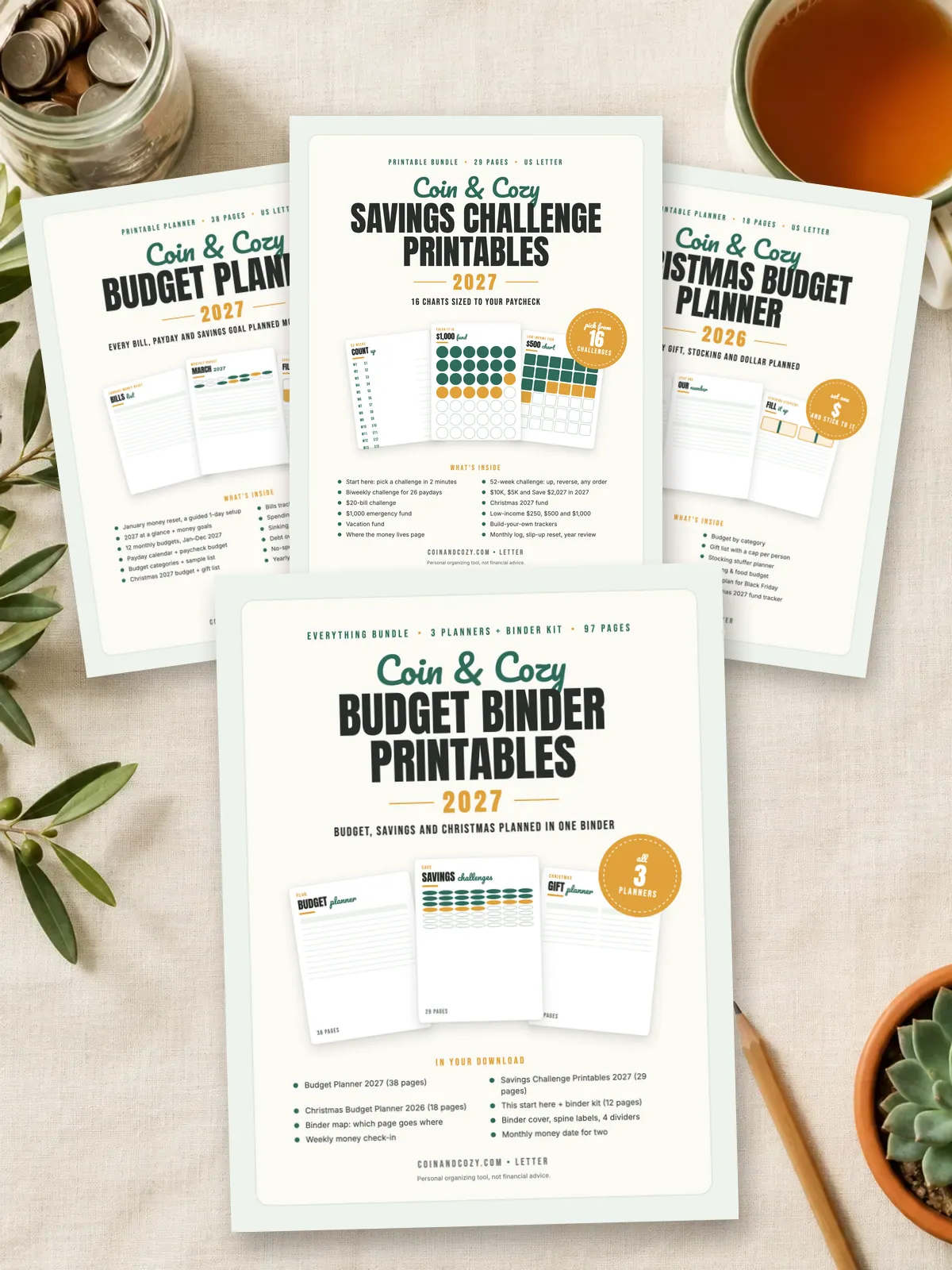
If your goal is a small cushion for surprises, the next step is a starter emergency fund. If you want every dollar planned, try the Cozy Money Binder, which pulls the budget, savings and Christmas planners into one set of pages.
Reusable basics that make frugal habits easier
-
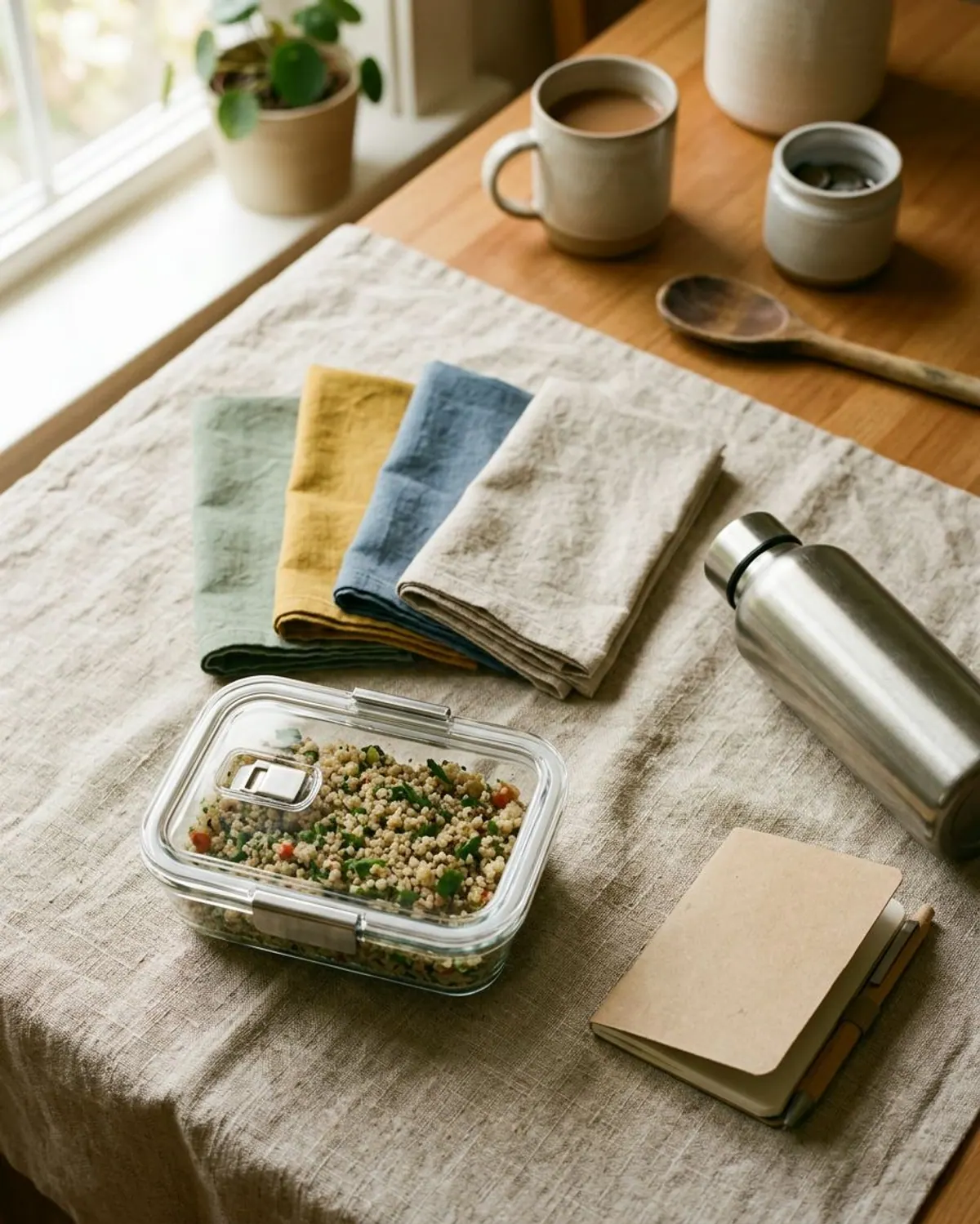
Glass food storage containers with lids
Typically $20 to $40 for a set
Pack leftovers and lunches instead of buying them.
Check price on Amazon for Glass food storage containers with lids -
Reusable cloth napkins
Typically $10 to $20 for a set
Replaces a regular paper napkin purchase.
Check price on Amazon for Reusable cloth napkins -
Insulated water bottle or thermos
Typically $12 to $25
Makes the coffee-at-home swap easy to keep.
Check price on Amazon for Insulated water bottle or thermos -
Pocket notebook for tracking
Typically $5 to $12
Holds your day 1 tracking and the Wait List.
Check price on Amazon for Pocket notebook for tracking
This article is for general information and is not financial advice. The numbers are examples, not promises, and every household is different. Talk to a qualified professional about your own situation.
Frequently asked questions
How do I start living frugally?
Start with one small task a day for a week: write your reason, track what you spend, check subscriptions, take stock of your pantry, call three providers, swap one paid habit for a free one and give your savings a home. Add one new habit at a time after that.
What should a beginner cut first?
Cut the things you do not use or notice before anything you love: unused subscriptions, bills you can lower with a call and food that goes to waste. Keep the few things that make life feel good.
What is the difference between frugal and cheap?
Frugal means spending on purpose for what you value and avoiding waste. Cheap means choosing the lowest price even when it costs you quality, time or comfort.
How much can frugal living save per month?
It depends on your income and spending. In the example table above, five small changes add up to $118 a month, but those are made-up numbers. Track your own spending for a week to see your real number.
Can I live frugally with kids?
Yes. Start with food waste, library trips and a Wait List for non-essentials, and let kids help pick one free family activity a week. Our no-spend December activity ideas are a good example.
Save it for later
Pin this to your Frugal Living Tips board so it's there when you need it.
Save to Pinterest