This post contains affiliate links. As an Amazon Associate we earn from qualifying purchases, at no extra cost to you. Read our disclosure.
Safety first: This is general money education, not personalised financial advice. Please read our financial disclaimer before you start.
Key takeaways
- New to budgeting? Print a monthly budget sheet and a spending tracker first.
- 8 of these printables download right away with no email.
- The CFPB and FTC (consumer.gov) offer free budget worksheets anyone can print.
- Paid every two weeks? Use a paycheck budget sheet instead of a monthly one.
- Start with 2 or 3 pages, not a 50-page binder.
In this post26 sections
- What Makes a Free Budget Printable Worth Printing
- Free Budget Printables With No Sign-Up
- 1. Monthly Budget Sheet
- 2. Paycheck Budget Sheet
- 3. Zero-Based Budget Template
- 4. Biweekly Zero-Based Budget
- 5. Debt Snowball Worksheet
- 6. Debt Avalanche Worksheet
- 7. 12-Month Debt Payoff Tracker
- 8. Bi-Weekly Savings Challenge Charts
- Free Budget Worksheets From the Government
- 9. Consumer.gov Budget Worksheet (FTC)
- 10. Spending Tracker (CFPB)
- 11. Bill Calendar (CFPB)
- 12. Cash Flow Budget (CFPB)
- 13. Income and Benefits Tracker (CFPB)
- 14. Savings Plan (CFPB)
- 15. Debt Log (CFPB)
- 16. SMART Goals Worksheet (CFPB)
- 17. Cutting Expenses Worksheet (CFPB)
- Two More Free Printables (Email Required)
- 18. 100 Envelope and 50 Envelope Challenge Charts
- 19. 30-Day No-Spend Tracker
- Which Free Budget Printable to Print First
- How to Set Up Your Budget Printables
- FAQ
What Makes a Free Budget Printable Worth Printing
Many printable roundups link to pages that moved years ago or hide the file behind a sign-up. We used four plain rules for this list.
How we chose these printables
We didn't test these with readers, and we don't claim one is best for everyone. Pick by the job you need done, using the table further down.
Free Budget Printables With No Sign-Up
These 8 pages come from four of our own PDFs. Click and they open; nothing to fill in first.
1Monthly Budget Sheet
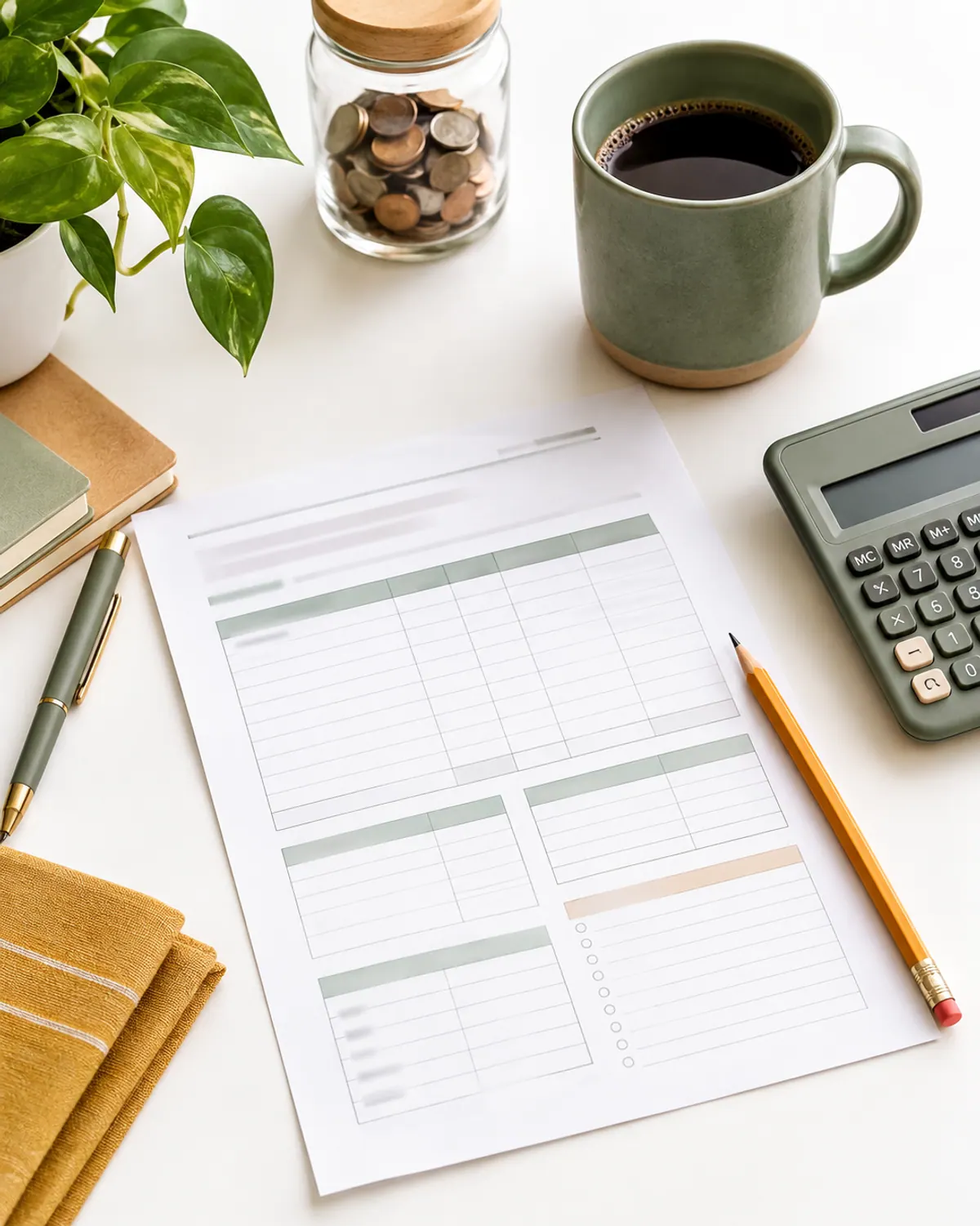
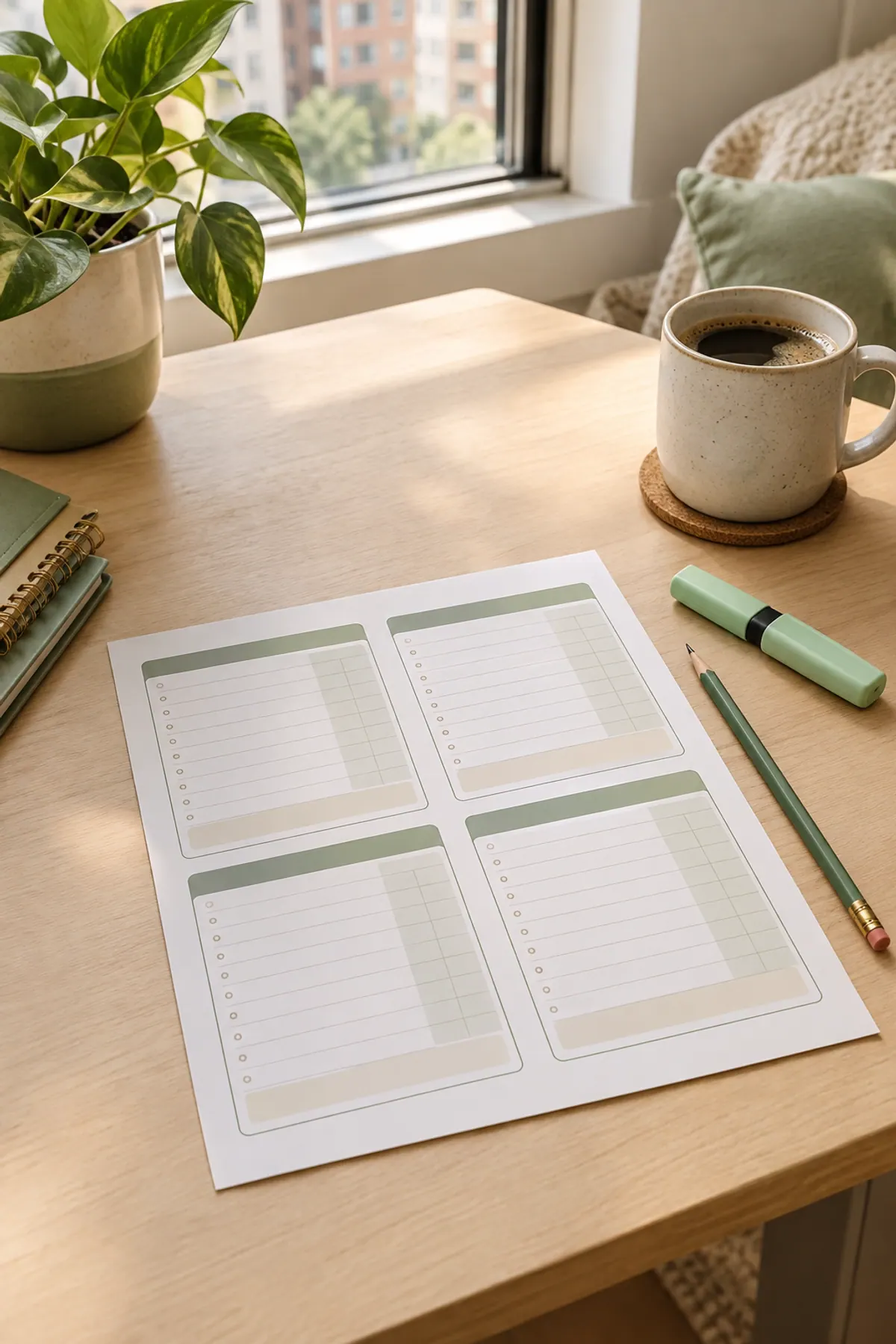
One page with four boxes: income, savings and debt, fixed bills and variable spending. It's the simplest way to see a whole month on paper. Get it in the free monthly budget sheet (PDF, 3 pages).
Best for: First-time budgets
Sign-up: None
Source: Coin & Cozy
- Fill it in pencil the first month; it will change.
2Paycheck Budget Sheet
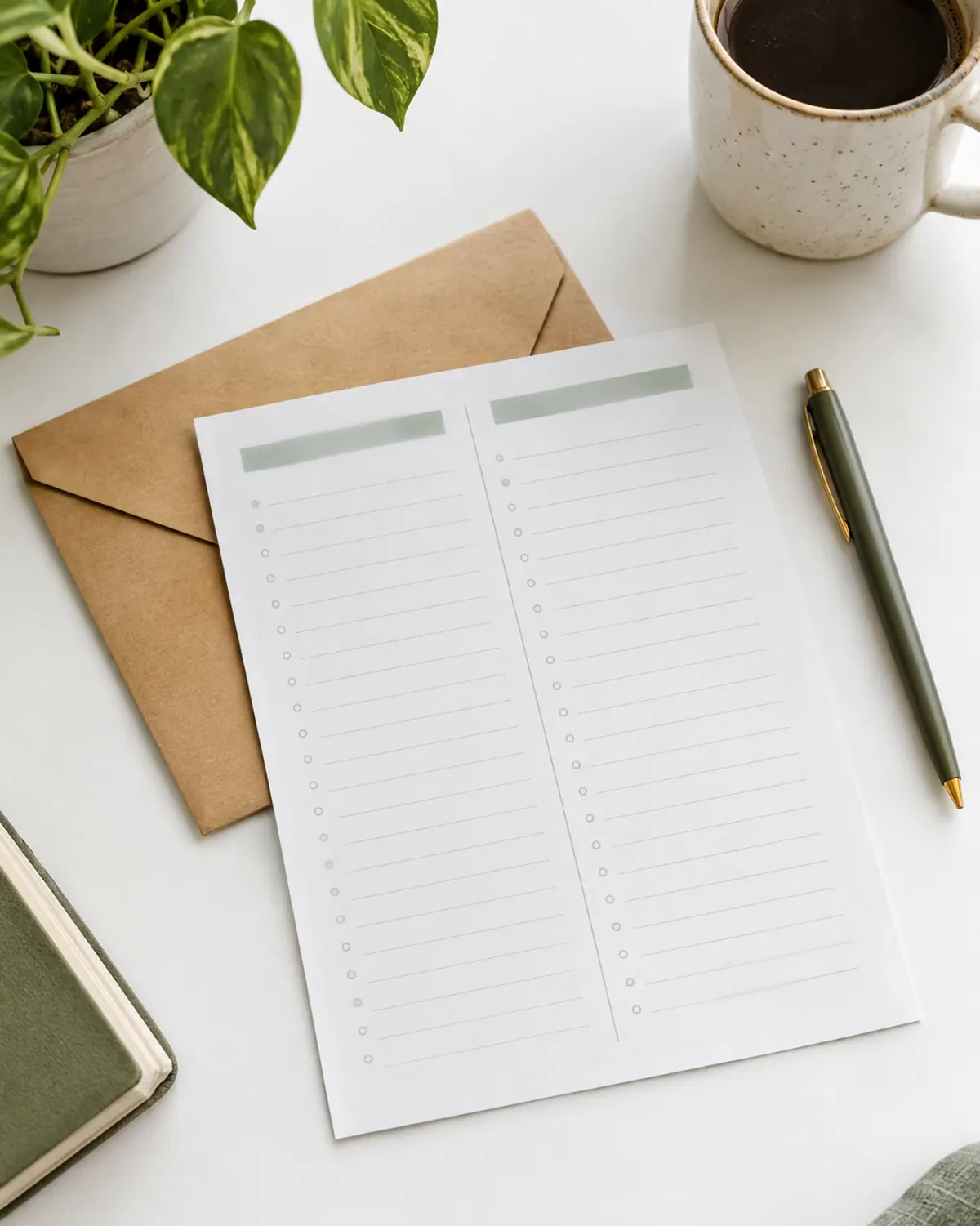
The second page of the same PDF splits the month into Paycheck 1 and Paycheck 2, with a spot for a third paycheck month. If bills are due before your next payday, this page shows it.
Best for: Biweekly or twice-a-month pay
Sign-up: None
Source: Coin & Cozy
- Write each bill under the paycheck that pays it.
Write on them with dry-erase markers and reuse a page every month.
3Zero-Based Budget Template
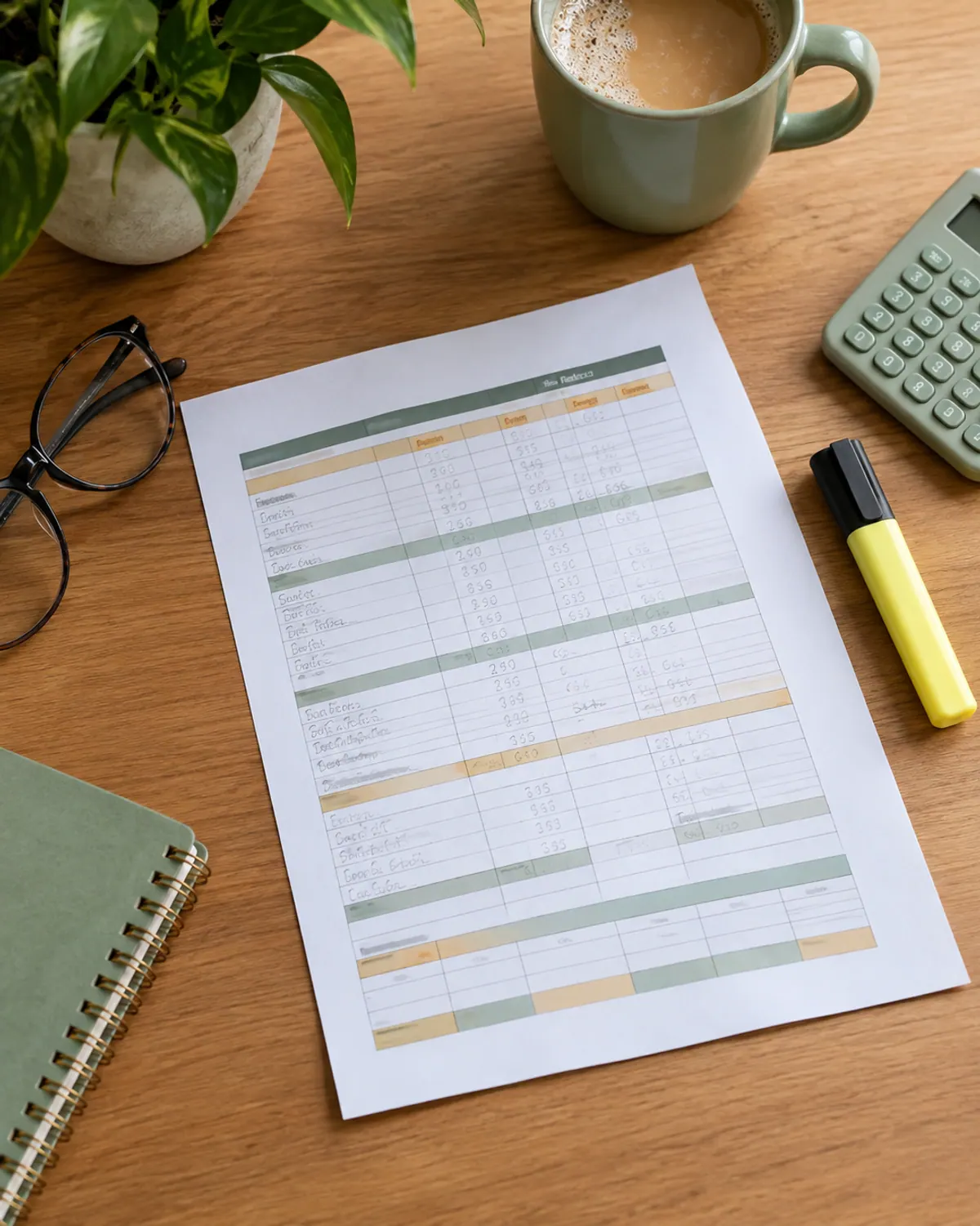
Every dollar of income gets a job until income minus your plan equals zero. The sheet walks you through it line by line. Get it in the free zero based budget template (PDF, 3 pages), and see our zero-based budget guide for a walkthrough.
Best for: People who want every dollar planned
Sign-up: None
Source: Coin & Cozy
- Plan the month before it starts, not halfway through.
4Biweekly Zero-Based Budget
The same PDF has a Paycheck A and Paycheck B version, plus a short "when the month changes" page that lists what to trim first. It pairs the zero-based method with a paycheck schedule.
Best for: Zero-based budgeting on biweekly pay
Sign-up: None
Source: Coin & Cozy
- Fill out the trim list on a calm day, before you need it.
5Debt Snowball Worksheet
List debts from smallest balance to largest, pay minimums on all, and put extra on the smallest. The worksheet has columns for each step. It's in the free debt payoff worksheets (PDF, 3 pages), and our debt snowball worksheet guide shows how to fill it in.
Best for: Quick wins on many small debts
Sign-up: None
Source: Coin & Cozy
- Cross off each paid debt with a bright marker.
6Debt Avalanche Worksheet
Same idea, but debts are ordered from highest interest rate to lowest. This order usually costs less interest over time, though the first payoff can take longer.
Best for: High-interest card debt
Sign-up: None
Source: Coin & Cozy
- Check your statements for the exact interest rates.
712-Month Debt Payoff Tracker
A year grid where you write each debt balance month by month. Seeing the numbers drop is the reason to keep going.
Best for: Tracking progress on any payoff plan
Sign-up: None
Source: Coin & Cozy
- Update it on the same day each month.
8Bi-Weekly Savings Challenge Charts
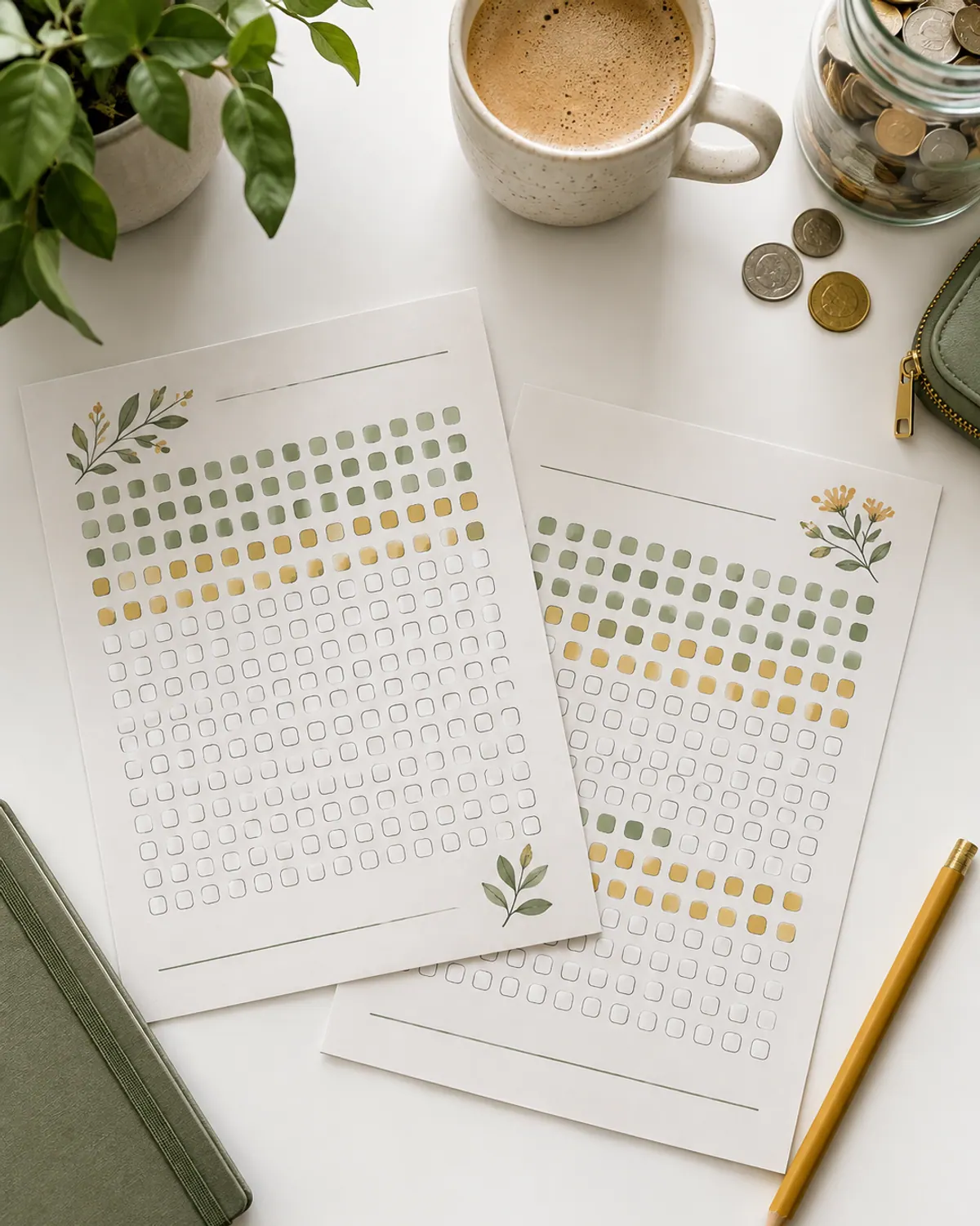
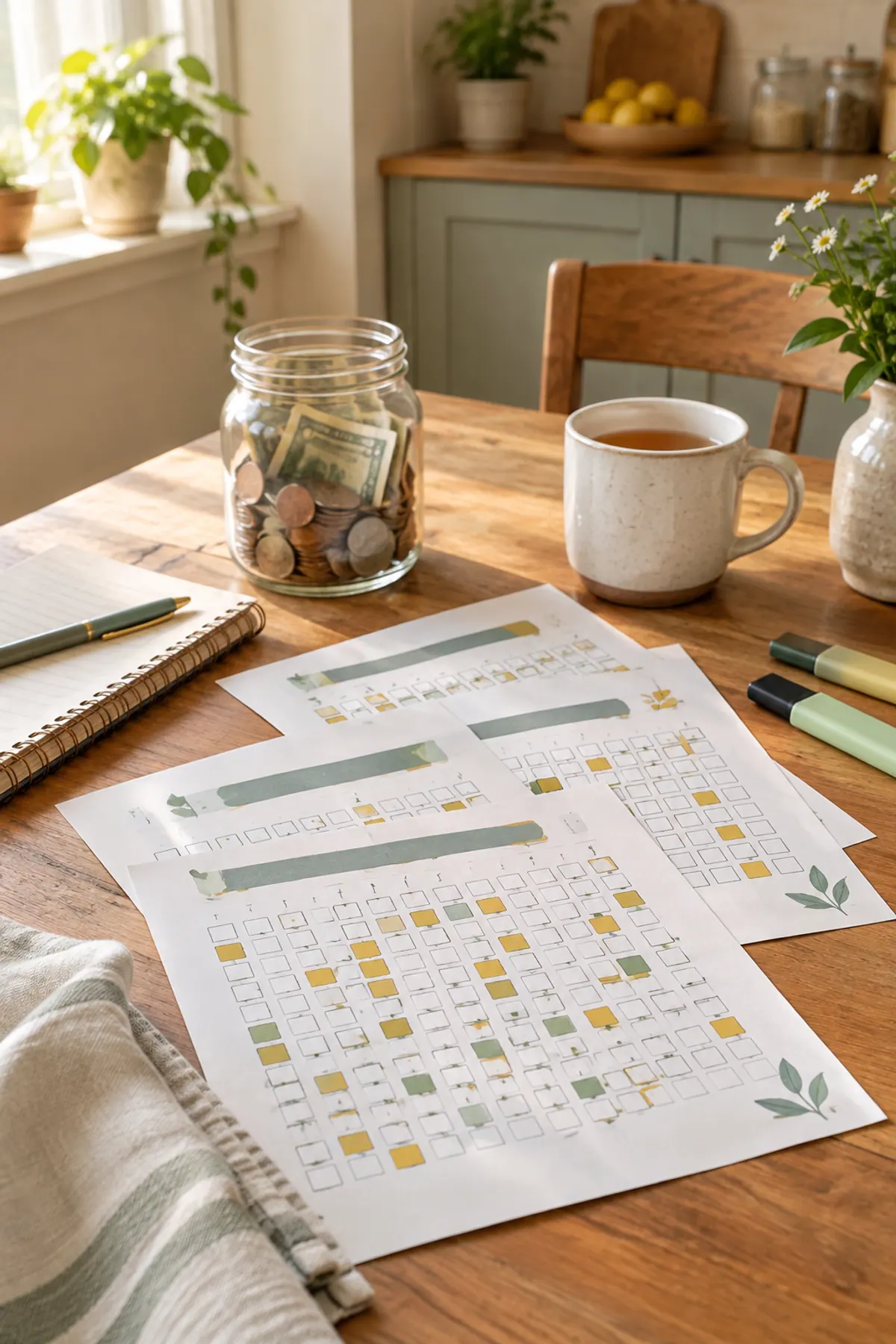
Six charts for saving every payday: a $5 or $10 flat plan, $1,000, $2,600, $5,000 and $10,000 in 25 paydays, and a blank one you fill in yourself. Get the bi-weekly savings challenge charts (PDF, 6 pages).
Best for: Saving a set amount every payday
Sign-up: None
Source: Coin & Cozy
- Start with the smallest chart you know you can finish.
Free Budget Worksheets From the Government
Two federal agencies publish free money worksheets. The CFPB (Consumer Financial Protection Bureau) has a toolkit called Your Money, Your Goals, and the FTC (Federal Trade Commission) runs consumer.gov. They're plain, but solid.
9Consumer.gov Budget Worksheet (FTC)
A 2-page fillable worksheet from the "Making a Budget" page on consumer.gov. It lists income, then expenses under housing, food, transportation, health, personal and family, school and other, and ends with income minus expenses. You can type in it or print it. Open the consumer.gov budget worksheet (PDF).
Best for: A first budget in plain language
Sign-up: None
Source: FTC, consumer.gov
- Fill it on screen, then print a copy for the fridge.
10Spending Tracker (CFPB)
Write down what you spend each day and what category it falls in. A week or two of this shows where money really goes. Open the CFPB spending tracker (PDF).
Best for: Finding where money goes
Sign-up: None
Source: CFPB
- Keep it in your wallet or on the fridge.
11Bill Calendar (CFPB)

A month calendar where you write each bill on its due date. It shows at a glance which weeks are heavy. Open the CFPB bill calendar (PDF).
Best for: Avoiding late fees
Sign-up: None
Source: CFPB
- Circle paydays in a second color.
12Cash Flow Budget (CFPB)
Plans income and spending week by week across a month, so you can see if money runs short before payday. Open the CFPB cash flow budget (PDF).
Best for: Tight months and uneven paydays
Sign-up: None
Source: CFPB
- Use it alongside the bill calendar.
13Income and Benefits Tracker (CFPB)
Lists every source of money and when it arrives, including benefits. Helpful when income comes from more than one place. Open the CFPB income and benefits tracker (PDF).
Best for: More than one income source
Sign-up: None
Source: CFPB
- List the exact dates money lands.
14Savings Plan (CFPB)
Helps you name a savings goal and plan how much to put aside to reach it. Open the CFPB savings plan (PDF).
Best for: A first savings goal
Sign-up: None
Source: CFPB
- Pair it with one of the savings charts above.
15Debt Log (CFPB)
A list of every debt with who it is owed to, the balance and the payment. Good as a first step before a snowball or avalanche plan. Open the CFPB debt log (PDF).
Best for: Seeing all debts in one place
Sign-up: None
Source: CFPB
- Pull balances from your latest statements.
16SMART Goals Worksheet (CFPB)
Turns a fuzzy goal like "save more" into a specific, measurable one with a date. Open the CFPB SMART goals worksheet (PDF).
Best for: Setting goals you can track
Sign-up: None
Source: CFPB
- Write one goal, not five.
17Cutting Expenses Worksheet (CFPB)
Helps you look at spending and pick what to cut or lower. Open the CFPB cutting expenses worksheet (PDF).
Best for: Finding room in a tight budget
Sign-up: None
Source: CFPB
- Start with subscriptions and fees; they are easy wins.
All CFPB tools above come from the Your Money, Your Goals toolkit, which lists more worksheets on credit, bills and income.
Two More Free Printables (Email Required)
These two come in our free Cozy Savings Challenge Pack. You'll need to enter your email to get them, and we'd rather say so than hide it.
18100 Envelope and 50 Envelope Challenge Charts
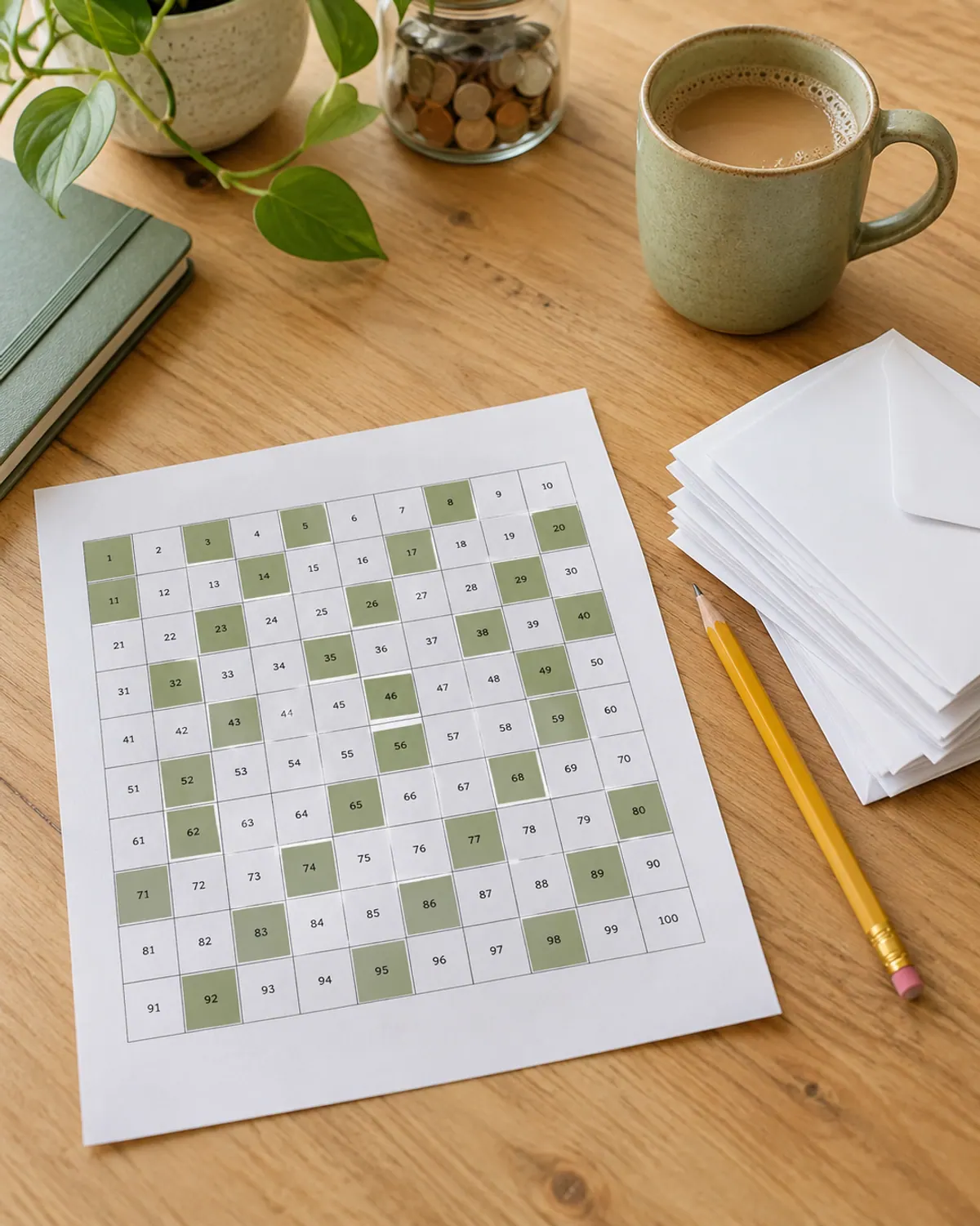
Number 100 envelopes, fill a random one each day or week with that dollar amount, and you save $5,050. The 50-envelope chart totals $1,275. Our envelope challenge guide explains how it works.
Best for: A fun savings goal
Sign-up: Email
Source: Coin & Cozy
- Try the 50-envelope version first if money is tight.
1930-Day No-Spend Tracker

A 30-day calendar for a no-spend month, plus a page to decide what is still allowed and what is on pause, and a list of free things to do. A no-spend month is a fast way to free up cash.
Best for: A spending reset
Sign-up: Email
Source: Coin & Cozy
- Decide the gray areas before day one.
Which Free Budget Printable to Print First
| Your goal | Print these first | Sign-up |
|---|---|---|
| Start a budget | Monthly Budget Sheet, CFPB Spending Tracker | None |
| Paid every two weeks | Paycheck Budget Sheet, CFPB Bill Calendar | None |
| Every dollar planned | Zero-Based Budget Template | None |
| Pay off debt | CFPB Debt Log, then Snowball or Avalanche Worksheet, 12-Month Tracker | None |
| Short before payday | CFPB Cash Flow Budget, Bill Calendar | None |
| Build savings | Bi-Weekly Savings Charts or Envelope Challenge | None or email |
| Reset spending | 30-Day No-Spend Tracker, CFPB Cutting Expenses | Email or none |
How to Set Up Your Budget Printables
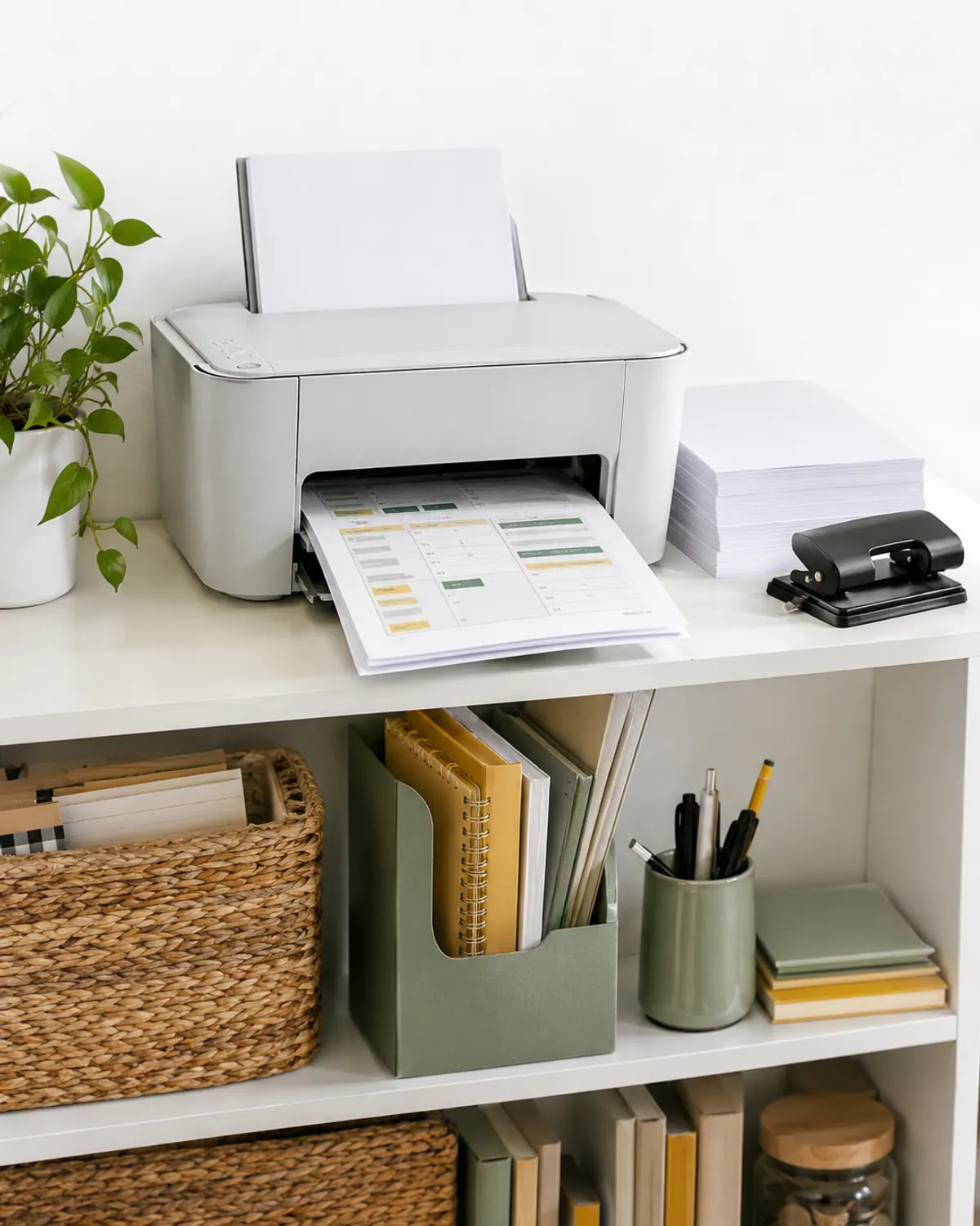
Print in black and white on regular paper. Put the pages in a simple binder in the order you use them: budget, bills, spending, then debt or savings. Our budget binder ideas shows which sections to add later.
Set one money date a week, 15 minutes, to fill in spending and check bills. Monthly pages get a fresh copy on the first of each month.
Budget binder supplies (optional)
-
1-inch three-ring binder
Typically $4 to $10
Holds a year of budget pages without getting bulky.
Check price on Amazon for 1-inch three-ring binder -
Clear sheet protectors
Typically $8 to $15
Write on them with dry-erase markers and reuse a page every month.
Check price on Amazon for Clear sheet protectors -
Three-hole punch
Typically $8 to $20
Turns any printable into a binder page.
Check price on Amazon for Three-hole punch -
Colored pencils
Typically $5 to $12
Color in savings charts and mark categories.
Check price on Amazon for Colored pencils
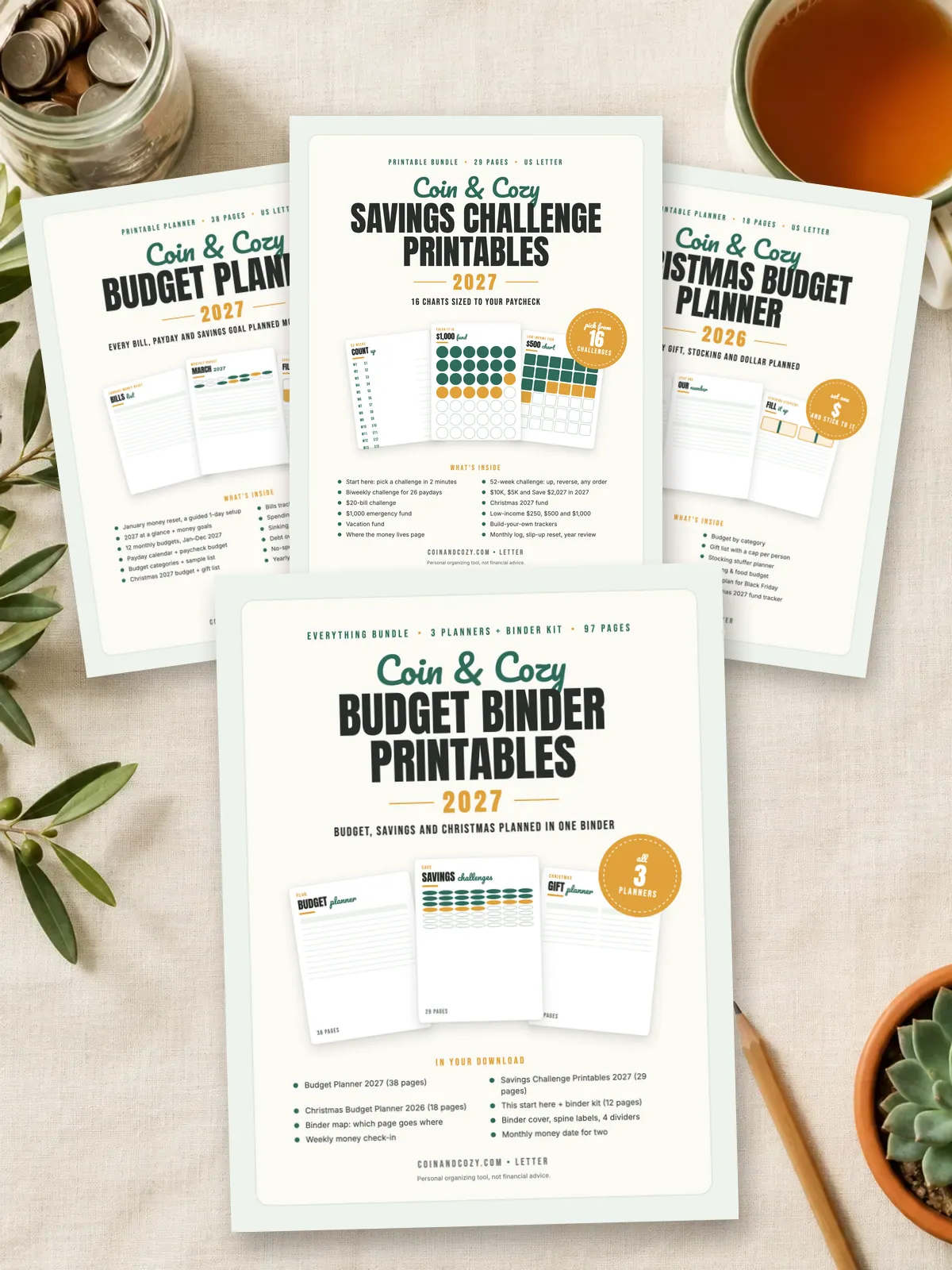
Want it all in one place? The Cozy Money Binder puts budgets, bills, sinking funds, savings challenges, debt pages and a Start Here kit in one printable set.
Frequently asked questions
Where can I get free budget printables?
This page lists 19 that work today: 8 from Coin & Cozy with no sign-up, 9 free worksheets from the CFPB and the FTC consumer.gov site, and 2 from our free email pack.
What is the best free budget template for beginners?
A one-page monthly budget sheet plus a spending tracker. Track spending for two weeks, then fill in the monthly budget with real numbers.
Does the government have a free budget worksheet?
Yes. The FTC has a budget worksheet on consumer.gov, and the CFPB has a free toolkit called Your Money, Your Goals with a spending tracker, bill calendar, cash flow budget and more.
What budget pages should I print first?
A monthly or paycheck budget, a bill calendar and a spending tracker. Add debt or savings pages once those feel easy.
Are free budget printables safe to download?
Download only PDFs from sites you trust and avoid files that ask you to install software. Every link on this page goes to a PDF on our site or a .gov site.
Save it for later
Pin this to your Budget Printables board so it's there when you need it.
Save to Pinterest