This post contains affiliate links. As an Amazon Associate we earn from qualifying purchases, at no extra cost to you. Read our disclosure.
Safety first: This is general money education, not personalised financial advice. Please read our financial disclaimer before you start.
Key takeaways
- The plan has three parts: the full list of debts with balances, rates and minimums; the payoff order; and one extra amount that rolls from debt to debt.
- Snowball (smallest balance first) keeps you going; avalanche (highest rate first) costs less interest. In the $18,400 example the gap is about $370 over 23 months.
- Minimums only on the example debts take 34 months and about $3,486 in interest; adding $250 a month cuts that to 23 months and $2,135 (snowball) or $1,762 (avalanche).
- Automate every minimum and send the extra by hand on payday, so one missed transfer never undoes the plan.
- Keep a $500 to $1,000 starter fund next to the plan so a car repair goes to cash, not back onto a card.
In this post10 sections
- The Debt Payoff Plan Template (Copy This Table)
- Steps 1 to 3: List Every Debt, Find the Minimums, Name the Extra
- Step 4: Choose the Order (Snowball, Avalanche or Hybrid)
- Steps 5 and 6: Set the Debt-Free Date and Automate the Minimums
- Worked Example: $18,400 Across Five Debts
- Steps 7 to 9: Find the Extra Money, Track It, Protect the Plan
- Which Debt Payoff Plan Is Best for You?
- Mistakes That Stall a Debt Payoff Plan
- Where the Plan Lives on Paper
- FAQ
Quick note: product links go to Amazon search results or our own shop, and we may earn a small commission if you buy, at no extra cost to you. Nothing here is financial advice; the numbers are examples so you can see how the plan works.
The Debt Payoff Plan Template (Copy This Table)
Every debt payoff plan that works has the same shape, whether it lives in a notebook, a spreadsheet or a printable. Copy this table, one row per debt, and fill it in as you go through the steps.
| Debt | Balance | Rate (APR) | Minimum | Payoff order | Monthly payment | Target payoff month |
|---|---|---|---|---|---|---|
| Credit card (name) | $ | % | $ | 1, 2, 3... | minimum + extra | Month, year |
| Car or personal loan | $ | % | $ | minimum | ||
| Medical bill or payment plan | $ | 0% usually | $ | minimum | ||
| Buy now, pay later plan | $ | 0% usually | $ | minimum | ||
| Student loan | $ | % | $ | minimum | ||
| Totals | $ | $ | minimums + extra | Debt-free date |
The three columns people skip are the ones that make the plan work: the rate (it decides the order), the minimum (it decides the floor), and the target month (it turns a wish into a date). The credit card debt payoff plan walks through a cards-only version of this table if that is your whole list.

Steps 1 to 3: List Every Debt, Find the Minimums, Name the Extra
-
Step 1: List every debt, including the ones you forget
Pull up every statement: cards, the car, the student loan, the medical payment plan, buy-now-pay-later installments, money owed to family. Write the current balance and the APR for each. The total will be bigger than you guessed, and that is fine: a plan for the real number beats a plan for the comfortable one.
-
Step 2: Write down the minimum payment on each
The minimum is printed on the statement or in the app. Add them up: that total is the floor you pay every month no matter what. In the example below the five minimums add up to $656. If the floor is more than you can cover, call the lenders before you build the rest of the plan.
-
Step 3: Name one extra amount you can send every month
This is the number that shortens the plan. Pick an amount you can repeat for a year, not your best month: $100, $150, $250. It comes from a budget line, a cut expense or a side income, and it always goes to one debt at a time. If you have never built a monthly budget, the zero-based budget for beginners finds the extra in about an hour.


Step 4: Choose the Order (Snowball, Avalanche or Hybrid)
The snowball pays the smallest balance first, then rolls that payment into the next smallest. The avalanche pays the highest interest rate first, which costs less in interest. The hybrid clears one or two tiny balances for momentum, then switches to the highest rate.
The best debt payoff plan is the one you finish, so answer honestly: do you need to see a debt disappear in the first few months, or does watching interest fall keep you going? Our snowball vs avalanche tracker comparison has the printables for both, and the debt snowball worksheet shows the rollover on paper.
Quick quiz
Which payoff order fits your debt payoff plan?
Snowball. The first small balance disappears in a few months, and that win carries the plan through the big ones.
Avalanche. Target that card first; in the example below it saves about $370 over the snowball.
Hybrid. Clear the tiny ones in months one to three, then switch to the highest rate.

Steps 5 and 6: Set the Debt-Free Date and Automate the Minimums
Step 5 gives the plan a date. The quick estimate is total balance divided by what you pay each month (minimums plus extra), then add a few months for interest. For the example below, $18,400 divided by $906 a month is about 20 months before interest; the month-by-month math lands at 23. Write that month on the template and on the fridge.
Step 6 removes willpower from the minimums. Set every minimum to autopay from checking on the day after payday, and send only the extra amount by hand. The plan survives a sick week, a holiday and a bad month because nothing depends on remembering.

Worked Example: $18,400 Across Five Debts
Here is the template filled in for a made-up household with a car loan, two cards, a medical payment plan and a buy-now-pay-later balance. Minimums total $656 a month, and the household adds $250 extra. Example numbers, not financial advice.
| Debt | Balance | APR | Minimum | Snowball order | Paid off (month) |
|---|---|---|---|---|---|
| Buy now, pay later plan | $1,250 | 0% | $104 | 1 | Month 4 |
| Card B | $1,650 | 19.9% | $50 | 2 | Month 8 |
| Medical bill plan | $2,400 | 0% | $100 | 3 | Month 11 |
| Card A | $3,900 | 24.9% | $117 | 4 | Month 17 |
| Car loan | $9,200 | 7.5% | $285 | 5 | Month 23 |
| Totals | $18,400 | $656 + $250 extra | Debt-free in month 23 |
We ran the same five debts three ways with simple month-by-month math (interest added monthly on the balance, minimums fixed, extra rolled to the next debt in line; your lender's figures will differ a little). The result is the part most debt payoff plan pages leave out.
| Approach | Monthly total | Months to debt-free | Interest paid (approx.) |
|---|---|---|---|
| Minimums only, no extra | $656 | 34 | $3,486 |
| Snowball with $250 extra | $906 | 23 | $2,135 |
| Avalanche with $250 extra | $906 | 23 | $1,762 |
| Snowball with $400 extra | $1,056 | 20 | $1,763 |
Read it two ways. The $250 extra saves 11 months and about $1,350 in interest compared with minimums only. Snowball and avalanche finish in the same month here; avalanche saves about $370 more because Card A at 24.9% gets attacked first. Both are good plans, and the one you will stick with is the better one.

If a table in a notebook feels too plain to keep going, the Debt Payoff Coloring Kit ($6) turns the same plan into a color-in chart: one square for every payment chunk, with snowball and avalanche order pages so you choose the method.
Steps 7 to 9: Find the Extra Money, Track It, Protect the Plan
-
Step 1: Find the extra in three places
Cut: one subscription, one grocery habit, one bill you can call about. Earn: a weekend of selling unused things, a few hours of side work. Catch: tax refunds, bonuses, the third paycheck in a five-week month. Decide in advance that half of every windfall goes to the debt in position one. A no spend month in January often finds the first $250.
-
Step 2: Track it where you will see it
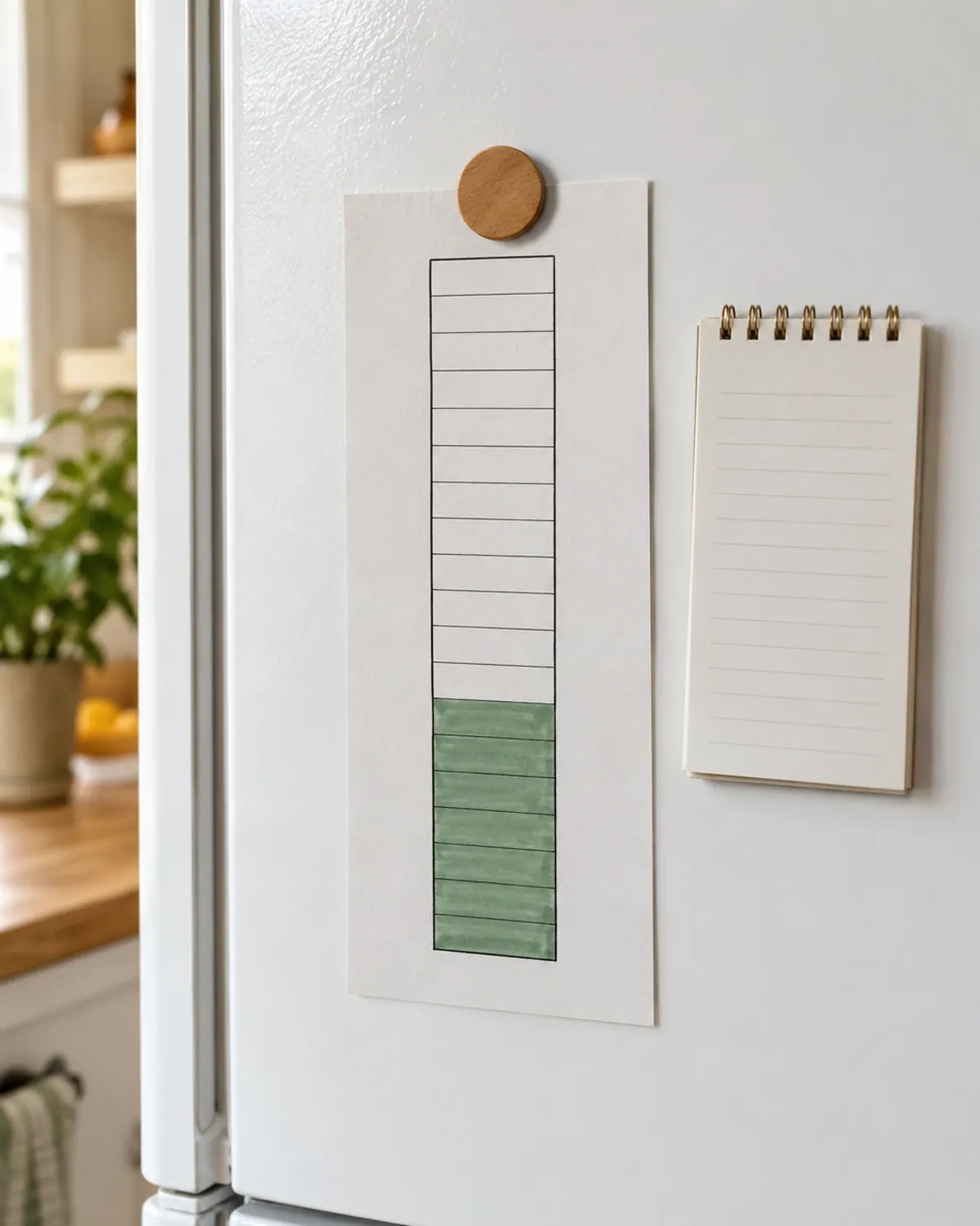
A coloring tracker on the fridge or a page in your planner, updated on payday. The plan lives or dies on the monthly check-in: update balances, move the rollover, and color in the progress. The debt payoff trackers post has free pages for both orders.
-
Step 3: Protect the plan with a starter fund
Keep $500 to $1,000 in a separate savings account before you send big extras. Without it, the first car repair goes back on the card and the plan feels pointless. The emergency fund staircase explains the starter step, and the free 100 envelope challenge is an easy way to fill it.
Which Debt Payoff Plan Is Best for You?
"Best" depends on your rates, your temperament and whether you qualify for a lower rate somewhere. Here is how the four common approaches compare for the example household. Not financial advice; a nonprofit credit counselor can look at your actual numbers for free.
| Approach | Interest cost | Speed | Who it suits |
|---|---|---|---|
| Snowball | Higher by a few hundred dollars | Same finish month as avalanche in the example | Anyone who needs early wins to keep going |
| Avalanche | Lowest | Same finish month; faster when rates differ a lot | People motivated by the interest number |
| Hybrid | In between | Same finish month | One or two tiny balances plus one big high-rate debt |
| Consolidation or balance transfer | Can be lowest if you get a low rate and stop using the cards | Depends on the new term | Good credit, high-rate cards, and the discipline not to refill them |
What we like
- Consolidation turns five due dates into one
- A 0% balance transfer can pause interest on a card like Card A for 12 to 21 months (fees apply)
- A lower rate means more of each payment hits the balance
Keep in mind
- Transfer fees of 3% to 5% are common and must be counted
- The emptied cards tempt new spending; the plan needs the cards closed or frozen
- A longer loan term can cost more total interest even at a lower rate

Mistakes That Stall a Debt Payoff Plan
Check the plan against these before month one
Most stalled plans fail on the third item: spreading the extra across every debt feels fair, but nothing gets finished, and the plan never produces a win. One debt at a time, in order, until the last row reads zero.
Where the Plan Lives on Paper
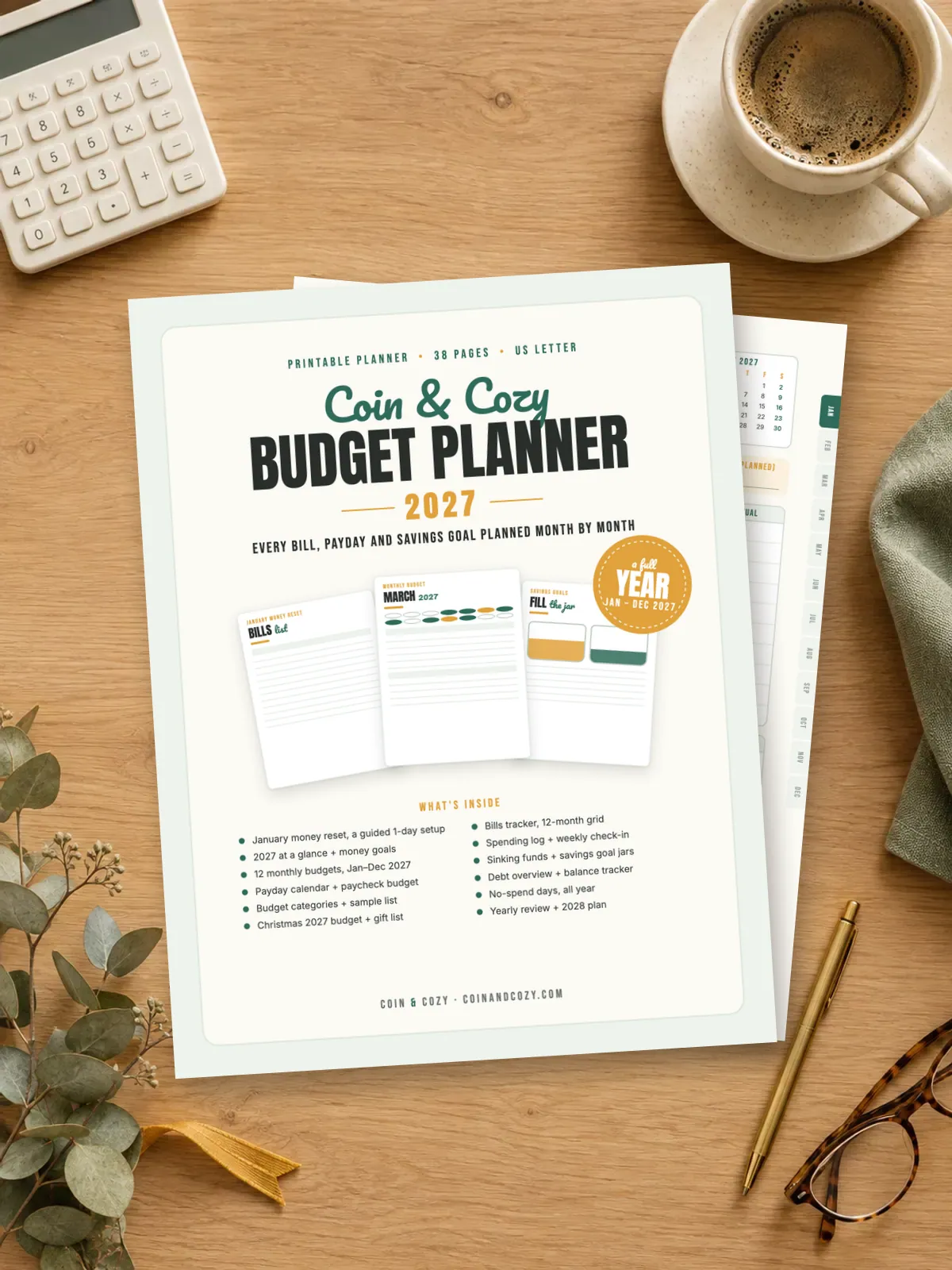
The template above fits on one notebook page. If you would rather have it printed with the budget around it, the Budget Planner 2027 ($12, 38 pages) has a debt overview page with snowball and avalanche explained, a debt balance tracker for every month of the year, and the monthly budget pages where the extra amount comes from. It is also inside the Budget Binder Printables bundle with the Christmas planner and the savings charts.

Three cheap things that keep the plan visible
-
Debt payoff planner notebook
Typically $8 to $15
Pre-ruled debt tables if you would rather not draw the template.
Check price on Amazon for Debt payoff planner notebook -
Magnetic dry-erase board for the fridge
Typically $8 to $14
The payoff order and this month's extra, where the whole household sees it.
Check price on Amazon for Magnetic dry-erase board for the fridge -
Cash envelope wallet with tabbed envelopes
Typically $10 to $18
Holds the extra amount in cash until payday so it is not spent twice.
Check price on Amazon for Cash envelope wallet with tabbed envelopes
One list, one order, one extra amount. Roll it forward every month and the date takes care of itself.
Frequently asked questions
What is the best debt payoff plan?
The one you finish. Avalanche (highest rate first) costs the least interest; snowball (smallest balance first) gives early wins; a hybrid clears a tiny balance or two and then switches to the highest rate. In our $18,400 example, both finish in month 23 and avalanche saves about $370. Not financial advice.
How do I make a debt payoff plan?
List every debt with its balance, rate and minimum; add up the minimums; pick one extra amount you can send every month; choose the order (snowball, avalanche or hybrid); estimate the debt-free month; automate the minimums; then roll each finished payment into the next debt and track it monthly.
Should I pay off the smallest debt first or the highest interest?
Highest interest first costs less; smallest first keeps more people going. If one rate is far above the others (a card above 20%), avalanche saves real money. If the rates are close, the difference is small and the order you will stick with wins.
How long will it take to pay off $18,400 in debt?
In our example, with $656 in minimums and $250 extra a month, about 23 months. On minimums alone it is about 34 months and roughly $1,350 more in interest. Your timeline depends on your rates, minimums and extra amount; example numbers, not advice.
Should I save or pay off debt first?
Most plans keep a small starter fund of $500 to $1,000 first, then send everything extra to debt, then build the full emergency fund after the high-rate debt is gone. The starter fund is what stops an emergency from going back onto a card.
Is there a free debt payoff plan printable?
The template table on this page can be copied into any notebook, and our snowball vs avalanche post has free tracker pages. The printed version with the budget pages around it is in the Budget Planner 2027.

Save it for later
Pin this to your Debt Payoff board so it's there when you need it.
Save to Pinterest