This post contains affiliate links. As an Amazon Associate we earn from qualifying purchases, at no extra cost to you. Read our disclosure.
Safety first: This is general money education, not personalised financial advice. Please read our financial disclaimer before you start.
Key takeaways
- A debt free aesthetic works when it tracks progress: a pencil date, a thermometer or grid you color in and a monthly update.
- Pick four colors and stop; sage, cream, mustard and forest green read as calm.
- Divide-by-12 dates ignore interest, so use your lender payoff estimate and write the date in pencil.
- Add small rewards that cost $0 to $10, like a wish farm page, so the plan is not only restrictions.
- Keep account numbers and bank screenshots off anything on display, and add a Christmas card with a spending cap for December.
In this post25 sections
- Debt Free Aesthetic Vision Board Ideas
- 1. A Calm Green and Cream Palette Strip
- 2. A Debt Free Date Card in Pencil
- 3. A Paid in Full Placeholder Frame
- 4. A Why Page in Your Own Handwriting
- 5. Debt Free Quote Cards Written by You
- 6. A One-Line Phone Wallpaper
- Debt Thermometer and Tracker Ideas You Can Color In
- 7. A Wipe-Off Board Debt Thermometer
- 8. A Color-In Payoff Grid
- 9. A Paper Chain of Payments
- 10. One Marble Jar per Debt
- 11. A Fridge Dot Chart for the Household
- 12. A Monthly Balance Snapshot Page
- Small Rewards and Wish Farm Ideas
- 13. A Wish Farm Page
- 14. A Free Milestone Reward List
- 15. A Monthly Payoff Night
- Christmas and Everyday Motivation Ideas
- 16. A Christmas Without New Debt Card
- 17. A Payoff Station Basket
- Bonus: How to Set the Date on Your Board Without Fooling Yourself
- Debt Free Aesthetic Ideas Compared
- Print Your Trackers and Keep the Board Going
- FAQ
Quick note: product links go to Amazon search results, and we may earn a small commission if you buy, at no extra cost to you. We haven't tested these products ourselves; prices are typical ranges and change often. Craft ideas and examples here are general information, not financial advice.
Debt Free Aesthetic Vision Board Ideas
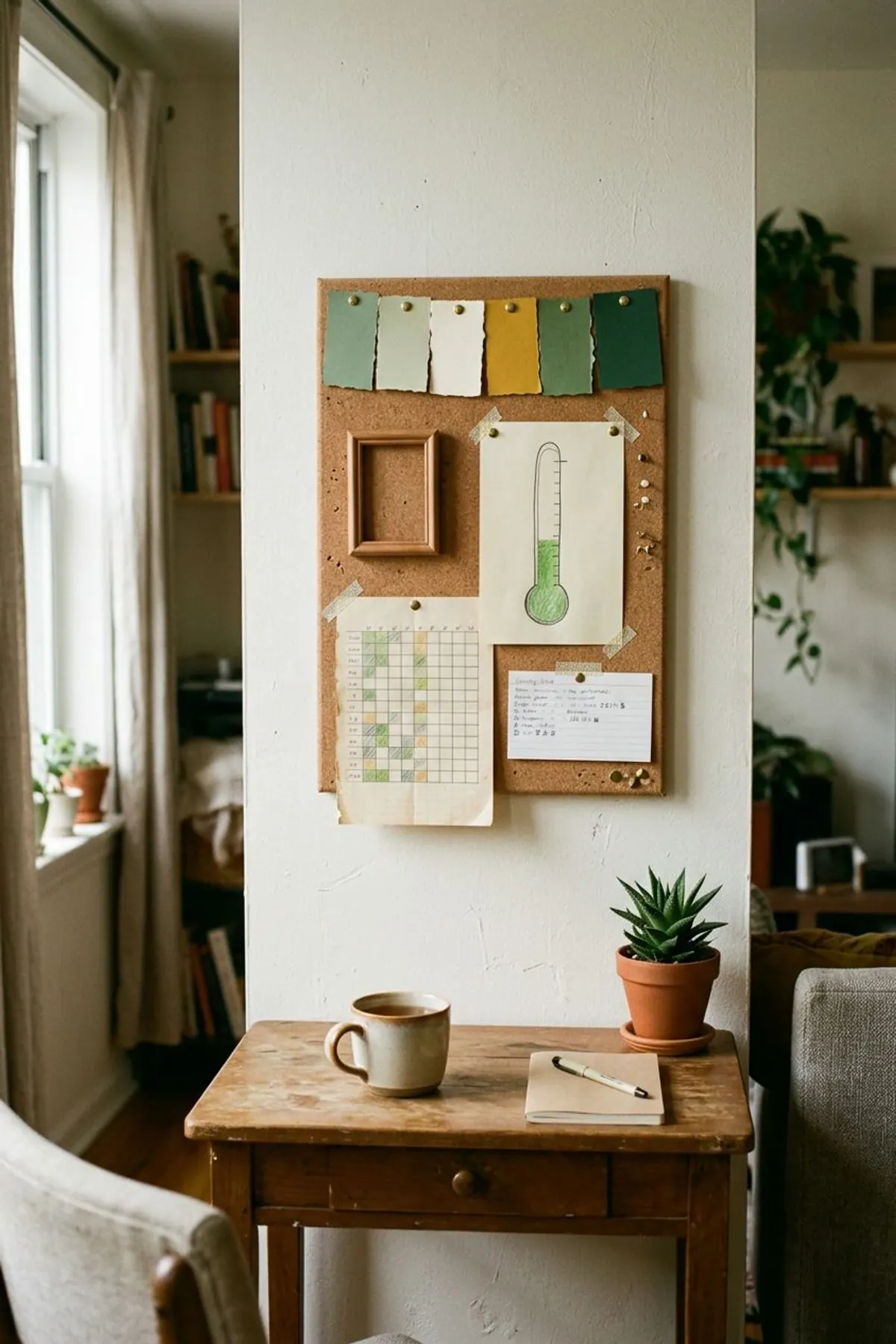
A debt free vision board can be poster board, a Pinterest board or a phone graphic, according to the Making Frugal Fun vision board guide. The first six ideas below work on any of the three. Pick four to six, not all of them; a board with white space gets looked at.
1A Calm Green and Cream Palette Strip
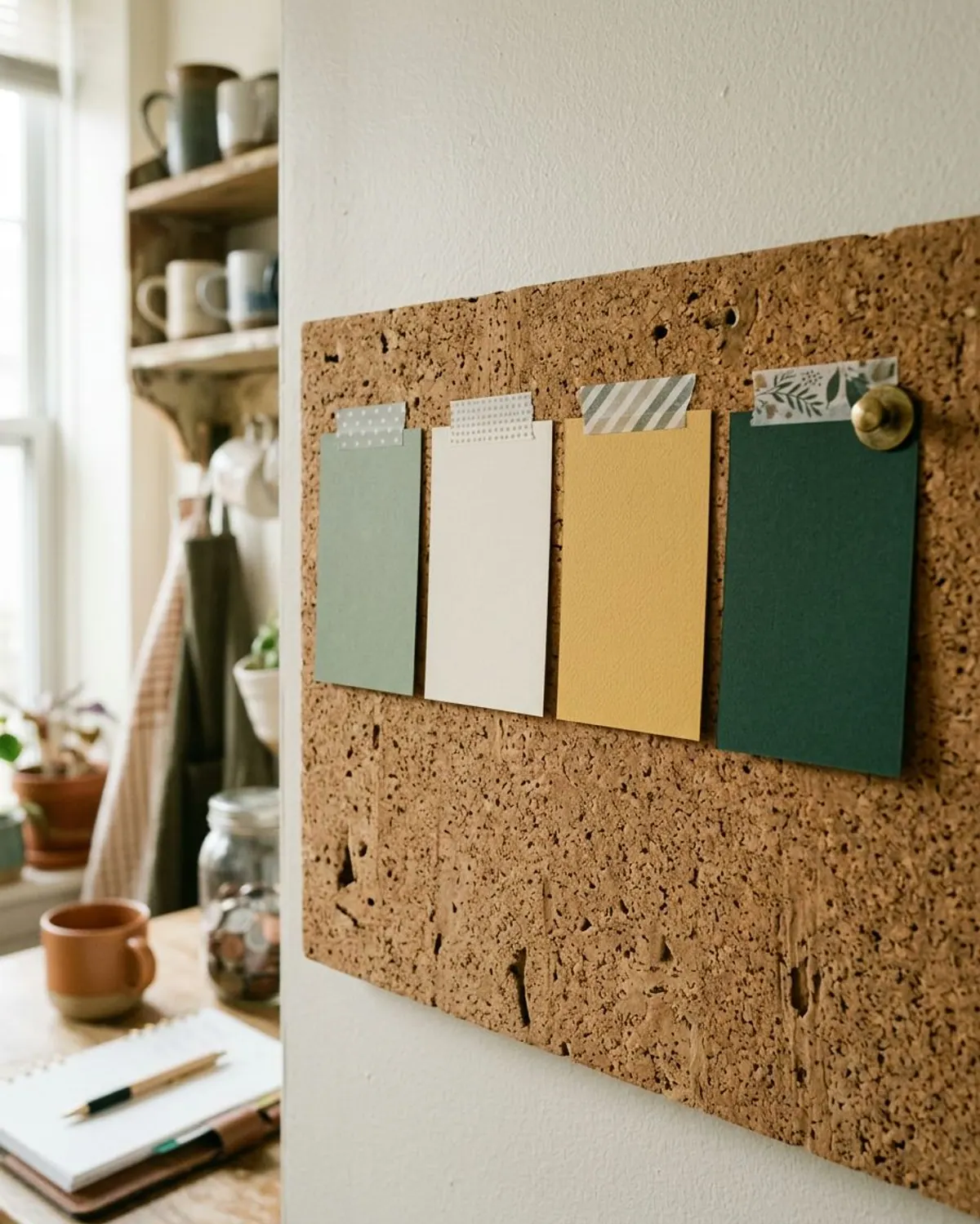
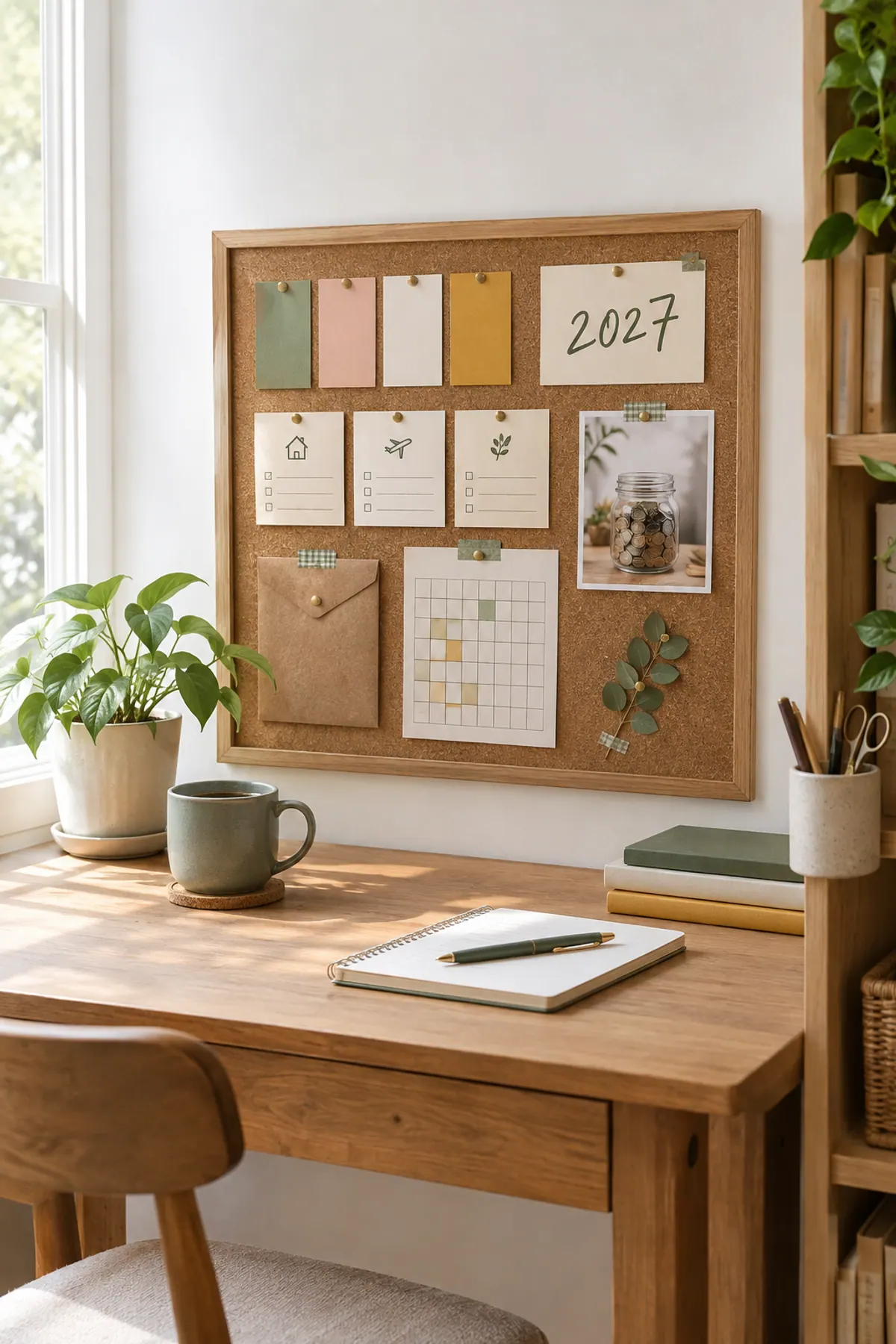
Many debt free aesthetic boards lean on red, black or hot pink, which can feel like a warning label every time you look at them. A calmer start is a strip of four cardstock swatches: sage, cream, soft mustard and a deep forest green. Tape them across the top of the board and let every other piece borrow from them. The strip is what makes a homemade board look planned instead of scrapbooked, and it makes paying off debt feel like clearing space. If you love red, brown or black, swap in your own four colors; the only rule is to pick four and stop.
- Cost: about $3 in cardstock, or free paint chips.
One pack covers the swatch strip, the date card and every quote card, so the whole board shares the same colors.
2A Debt Free Date Card in Pencil
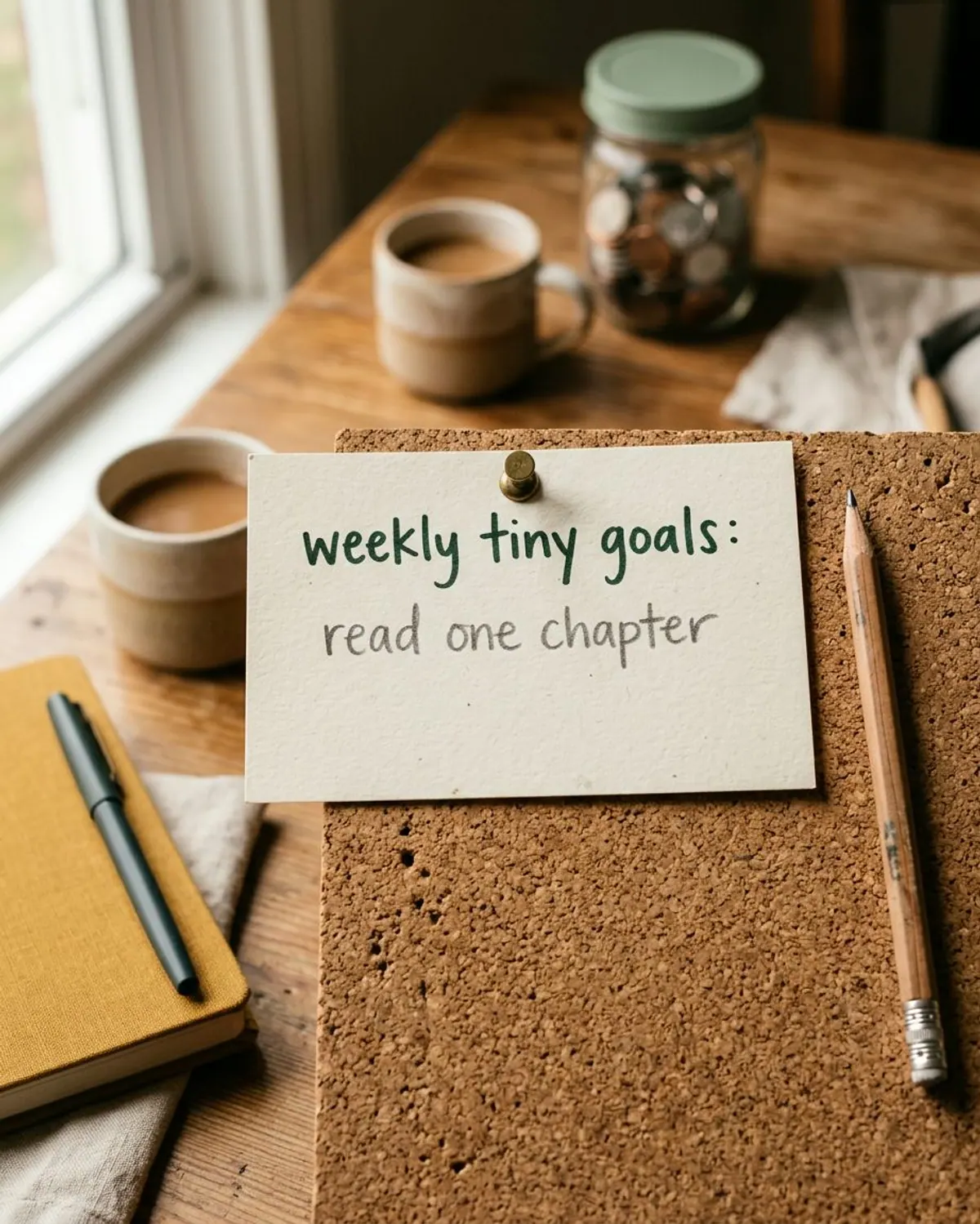
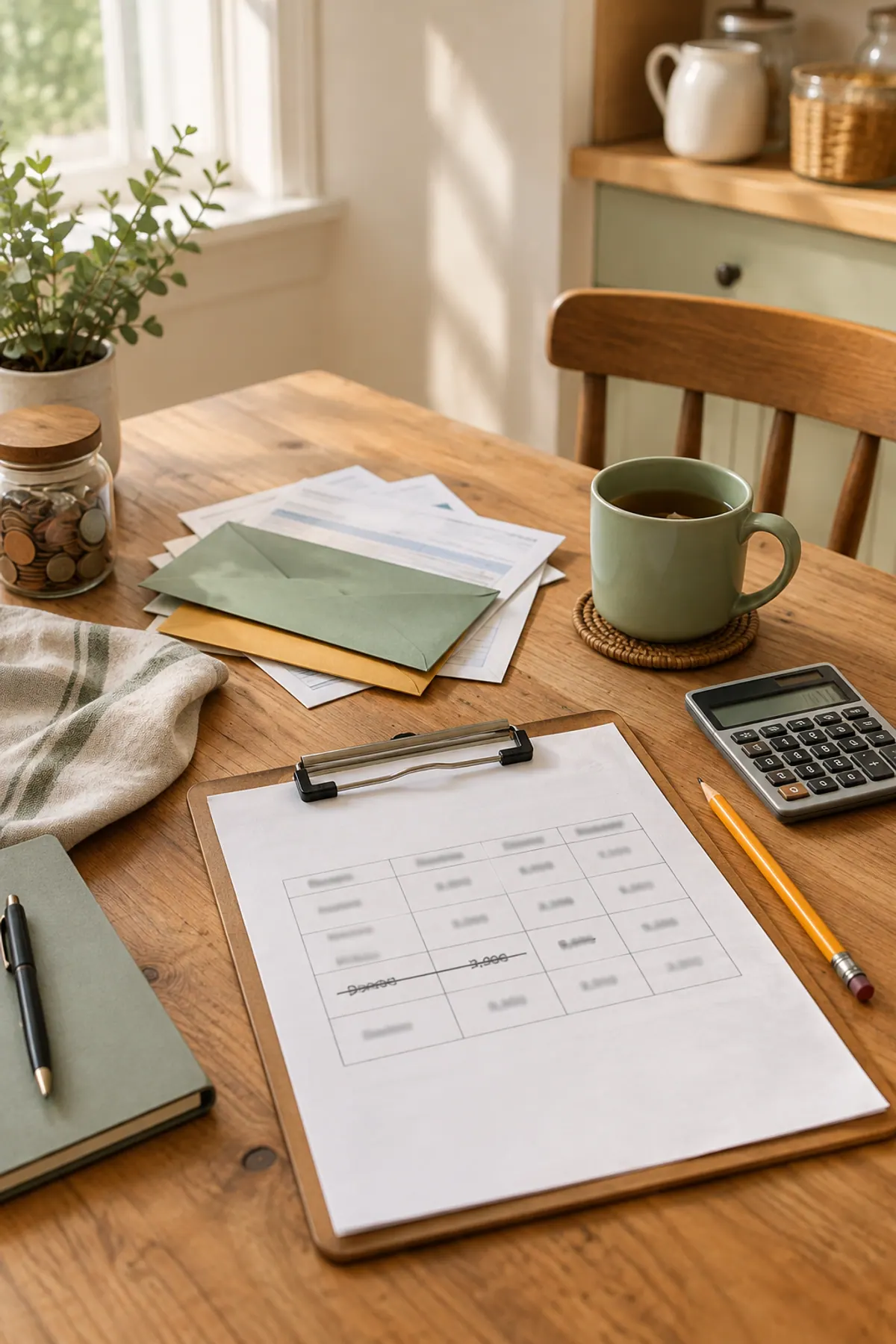
One cream card sits top center and says "Debt free by" with a month and year written in pencil. The pencil is on purpose. A date is a target, and it moves when a balance, a rate or a paycheck changes. Work it out from your lender's own payoff estimate or a payoff calculator, not from total debt divided by 12, which is the method in that Making Frugal Fun guide and ignores interest. In our examples, the card reads "June 2028 (example)".
- Cost: one index card and a pencil.
3A Paid in Full Placeholder Frame

Set a plain 4x6 frame on a shelf near the board with a card inside that says "Paid in full" and a blank line for the date. When your first balance reaches zero, you slip in the payoff confirmation or a note and fill in the date. The frame turns an invisible goal into an object, and an empty frame is a quiet nudge every time you walk past. Choose a frame in your palette so it reads as decor, not a to-do. Keep account numbers off anything on display.
- Cost: $3 to $10 for a frame, or a thrifted one.
A set gives you one frame per debt, so every payoff gets its own spot.
4A Why Page in Your Own Handwriting

One journal page starts with "I want to be debt free so that..." and runs for five lines. Real reasons beat borrowed quotes: sleeping better, a Christmas without a new balance, a birthday dinner you do not dread. Photograph the page for your phone and tuck the original behind the board. When the budget gets tight in December, this is the page to reread, and it is the one piece that is only yours.
- Cost: free, any notebook works.
5Debt Free Quote Cards Written by You
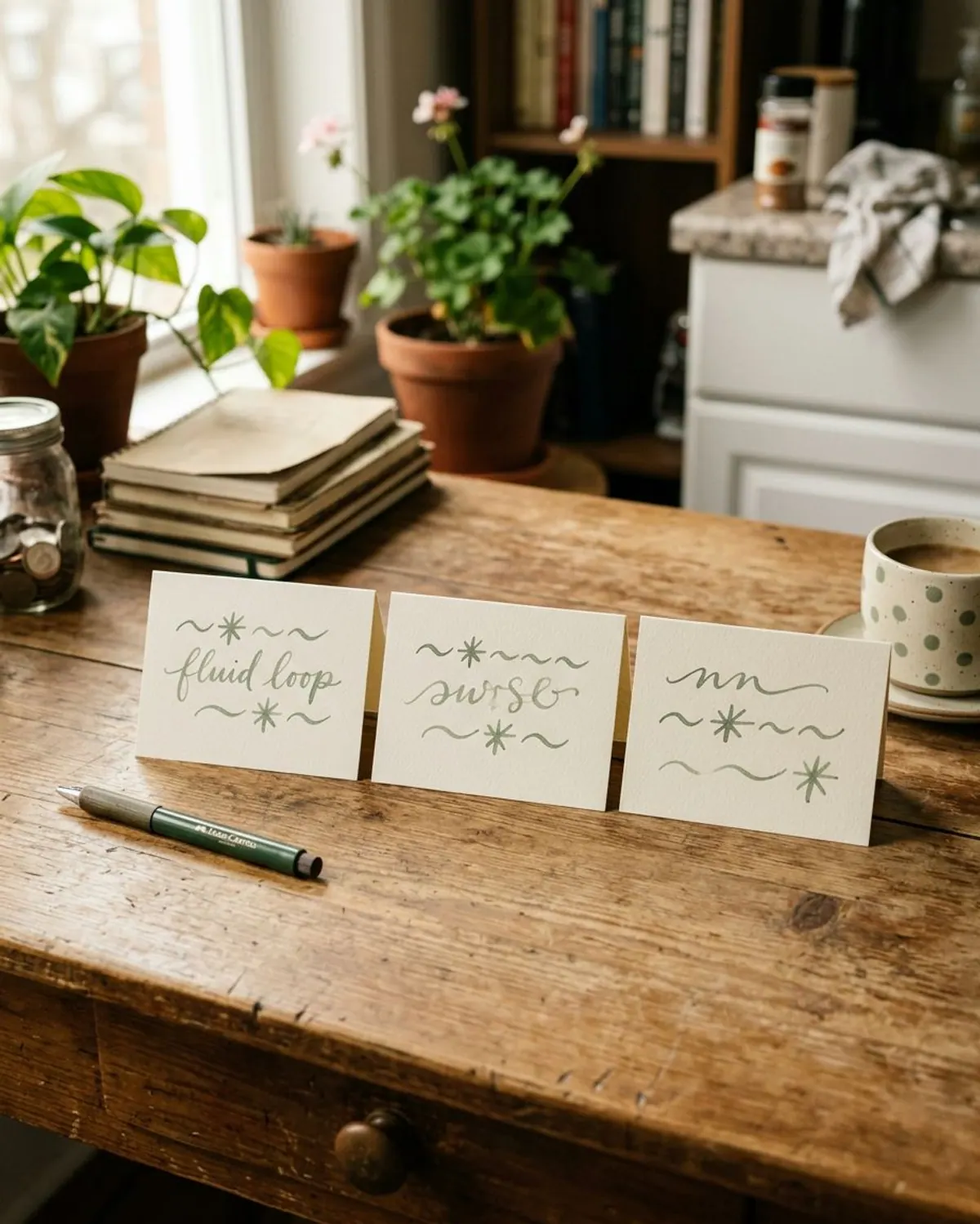
Quote cards are a staple of these boards, but borrowed quotes rarely stick. Write three of your own, each under eight words, such as "One balance at a time", "Paid for, not borrowed" and "Small payments still count". Letter them in dark green on cream cards and pin them where the date card and the thermometer sit. Short lines in your own handwriting read as a plan. A wall of tiny motivational type reads as a poster, and it will not get looked at twice.
- Cost: cardstock and a pen you already own.
6A One-Line Phone Wallpaper
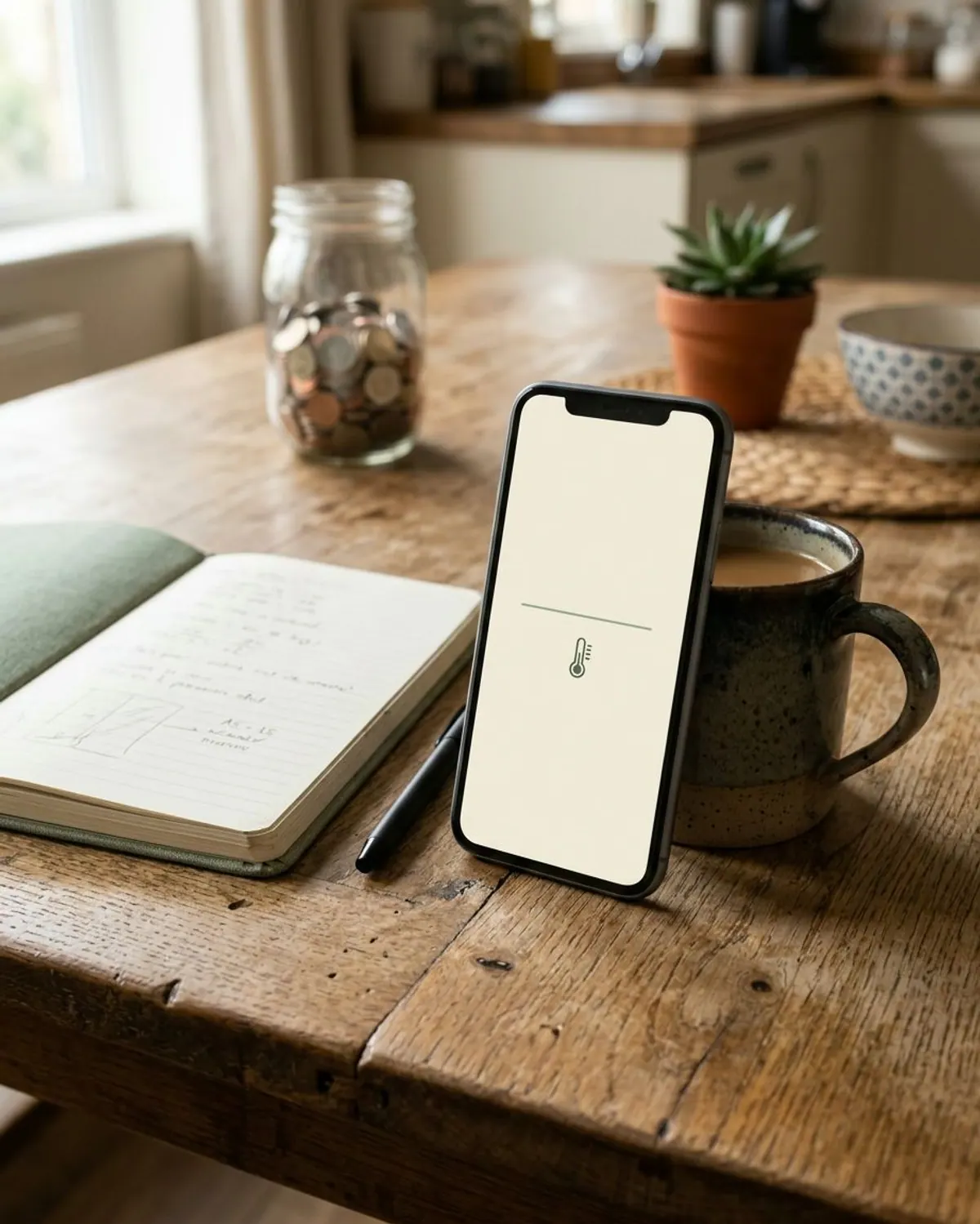
Take a photo of the finished board or build a simple graphic in a free design app: cream background, one thin green line, your date card and nothing else. Set it as your lock screen so the board is with you in the checkout line. One picture is enough. Skip bank-app screenshots and balance widgets as wallpaper, because they put account details on a screen other people glance at.
- Cost: free.
Debt Thermometer and Tracker Ideas You Can Color In
Trackers do the real work on a debt free aesthetic board, because they change when you pay. The thermometer is the classic one. Make it on a chalkboard, a wipe-off board, paper or poster board, as the A Cultivated Nest debt visualization post describes, then add the ideas below.
7A Wipe-Off Board Debt Thermometer
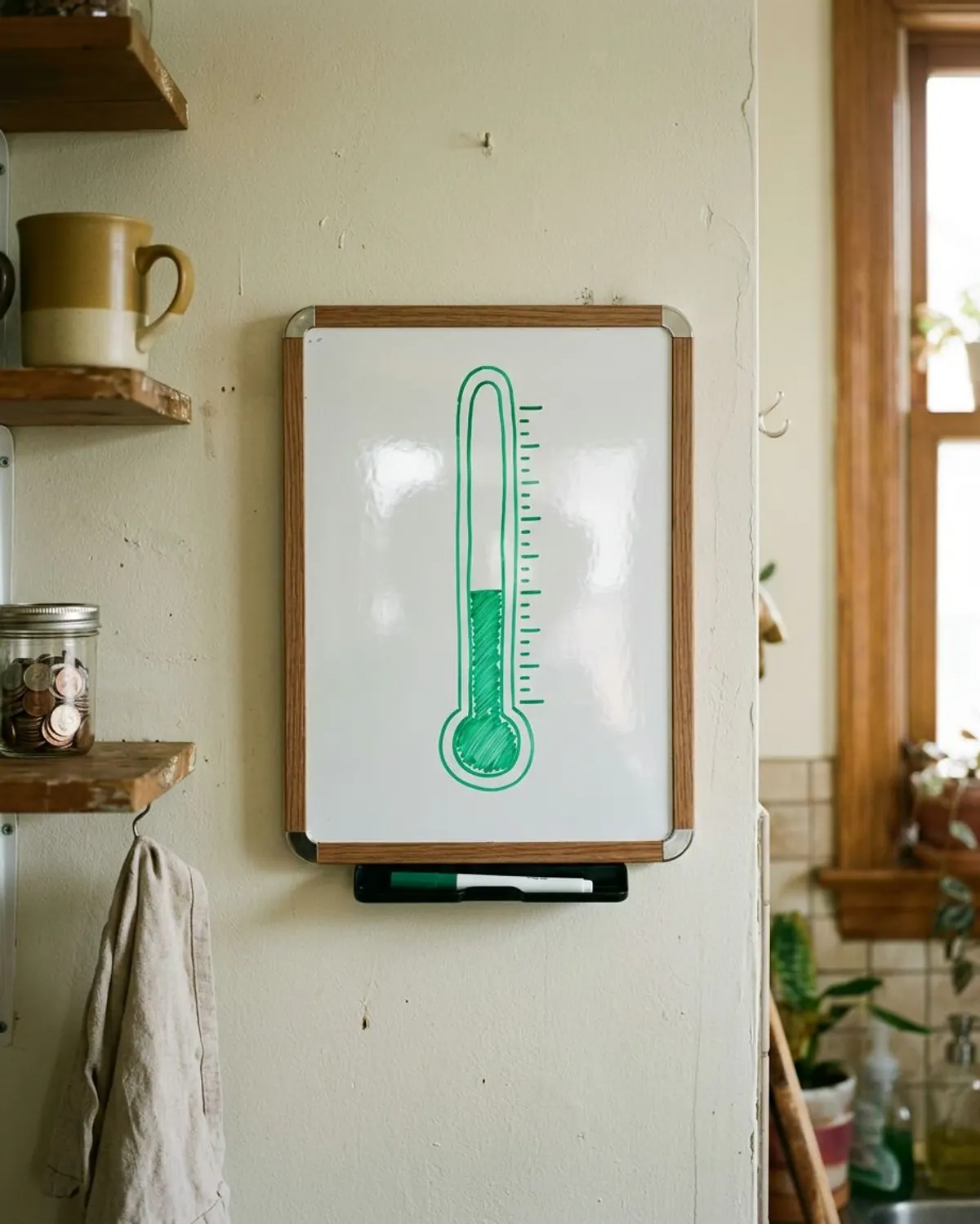
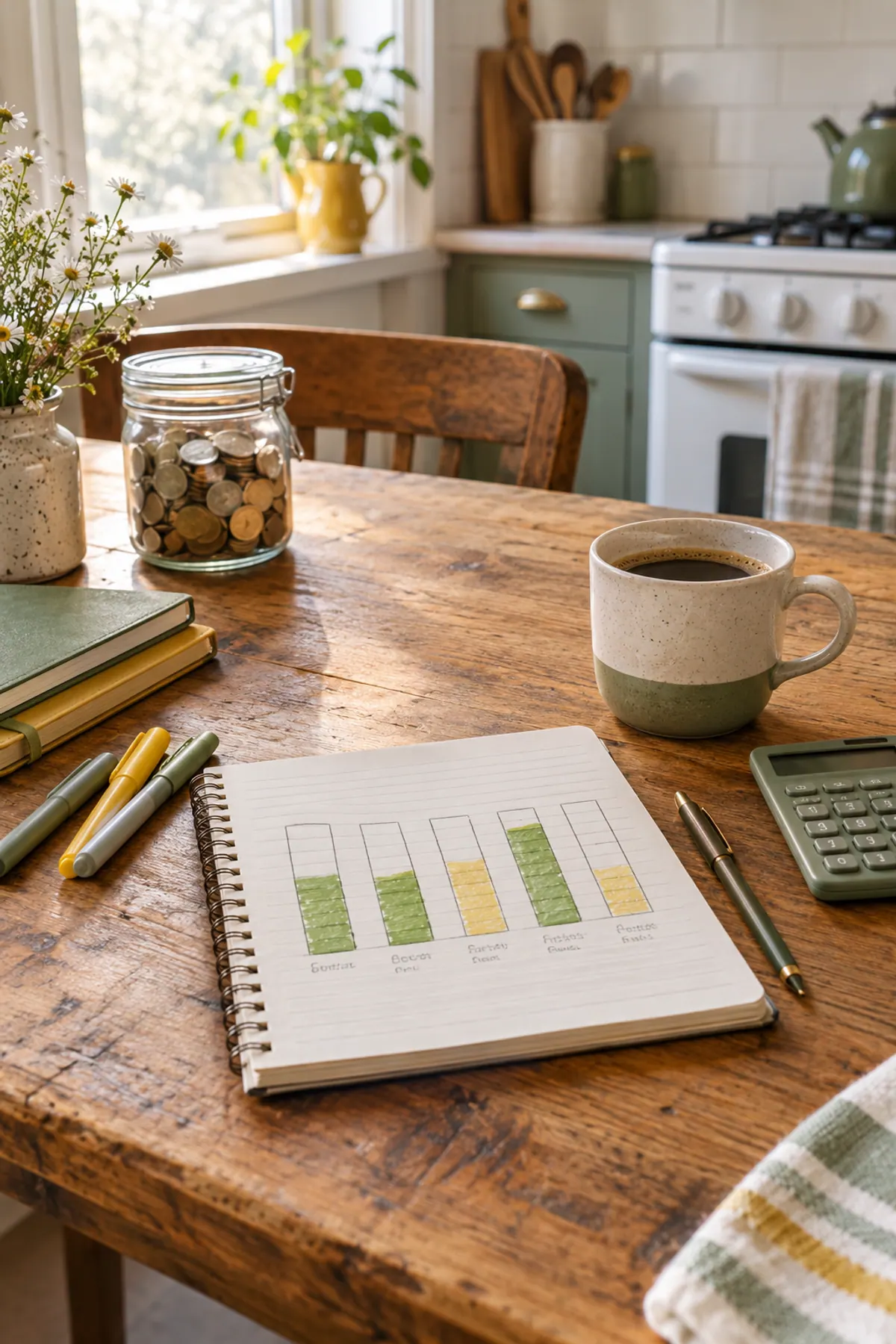
Draw a tall thermometer on a small wipe-off board and mark the top with your starting balance. Every time a payment lands, color the thermometer up by the amount you have paid off. The board is erasable, so you can redraw the tick marks when your balance changes, and the colored bar is easy to read from across the kitchen. Use the same green as your palette strip so it fits the board. Put the real balance in the tick marks only if you are comfortable with guests seeing it.
- Cost: $5 to $15 for a small board and marker.
Erasable, so the thermometer can be redrawn as your balance and your marks change.
8A Color-In Payoff Grid
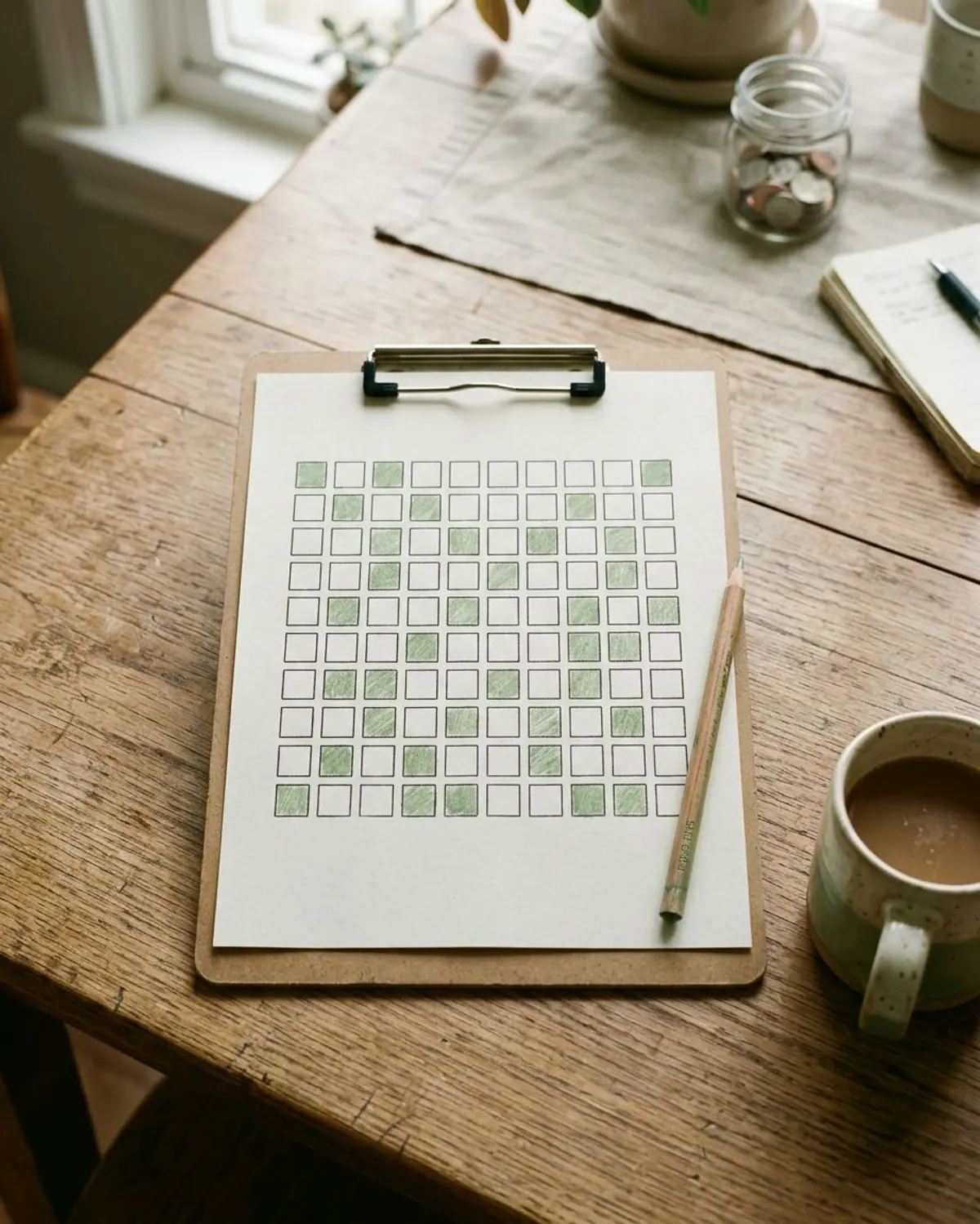
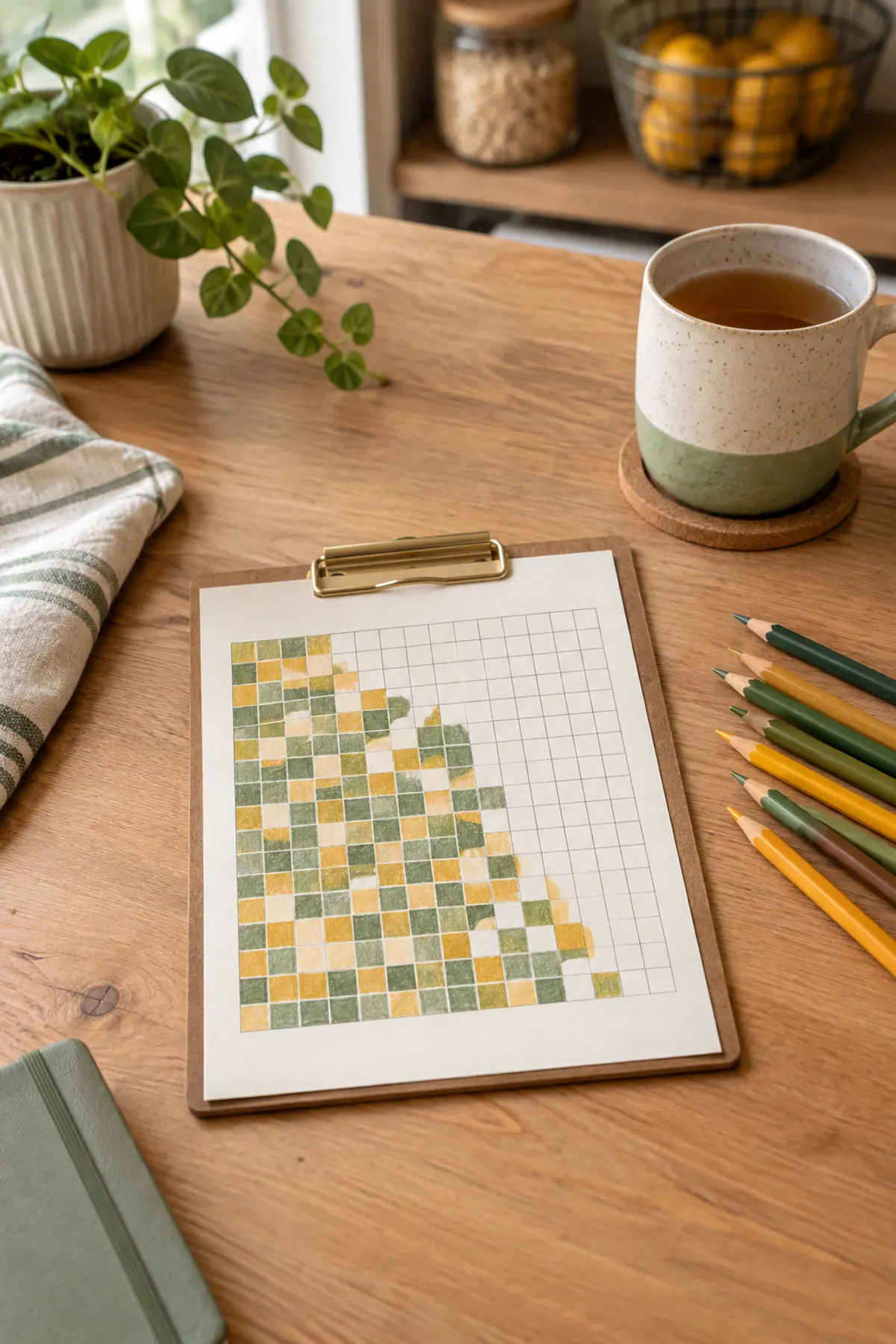
Draw a 10 by 10 grid and let each square stand for a slice of your starting balance. In our example, a $5,000 balance means each square is $50. Color a square every time that much of the balance goes away. The honest catch is that interest counts, so color only what lowers the balance, using the statement's new balance. It is the same idea as a savings chart in reverse, and the visible fill is what makes people keep going.
- Cost: a printed page and a green pencil.
9A Paper Chain of Payments
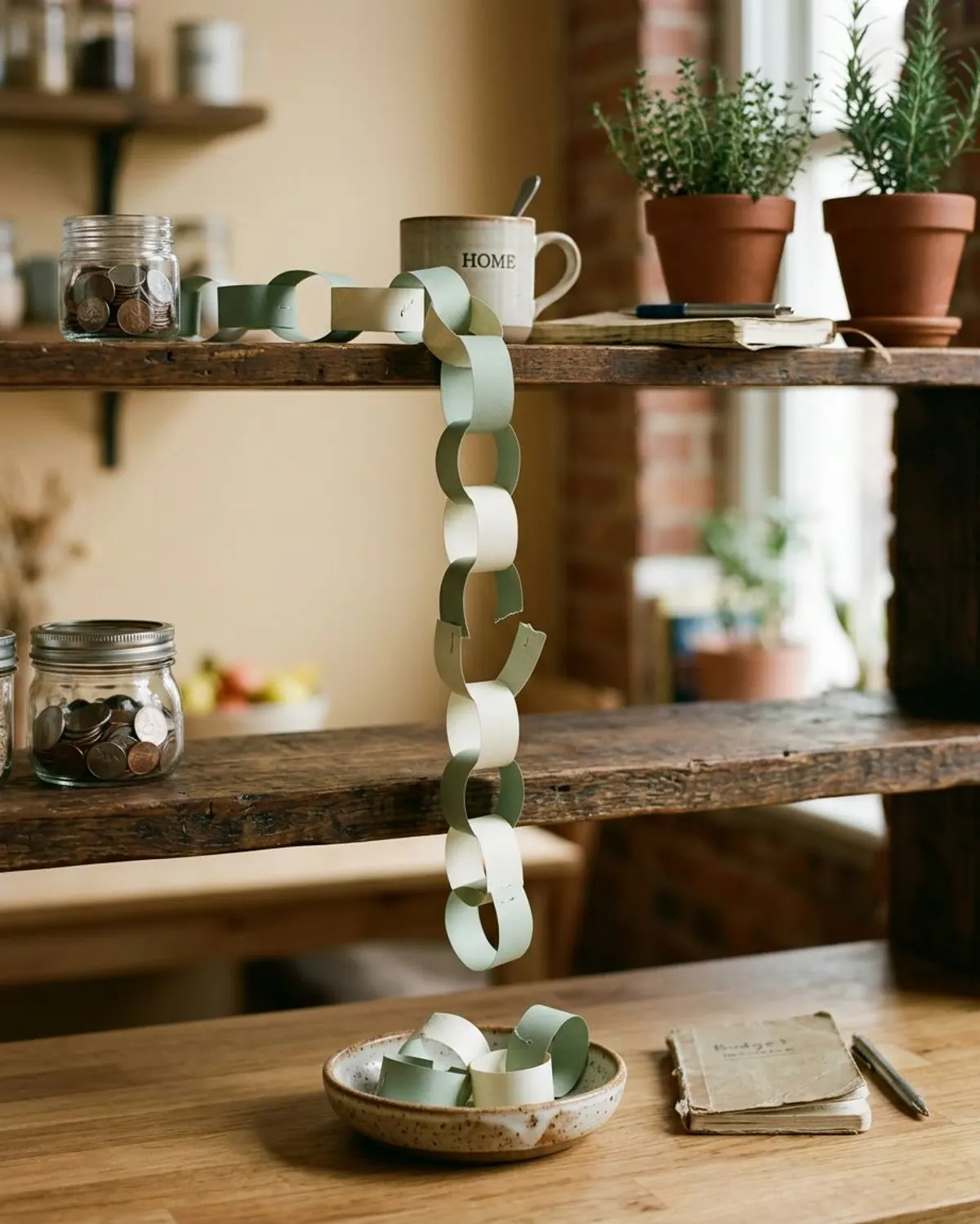
Make one paper link for every payment you plan to make, alternating sage and cream. Hang the chain on a shelf and tear off a link each time you pay. In our example, 24 monthly payments make 24 links. The chain shows time instead of dollars, which helps when the balance is too big to feel real. Tear off the link on payday, put it in a dish and do not count the interest it cost; the chain is a mood, not a statement.
- Cost: scrap paper and a stapler.
10One Marble Jar per Debt
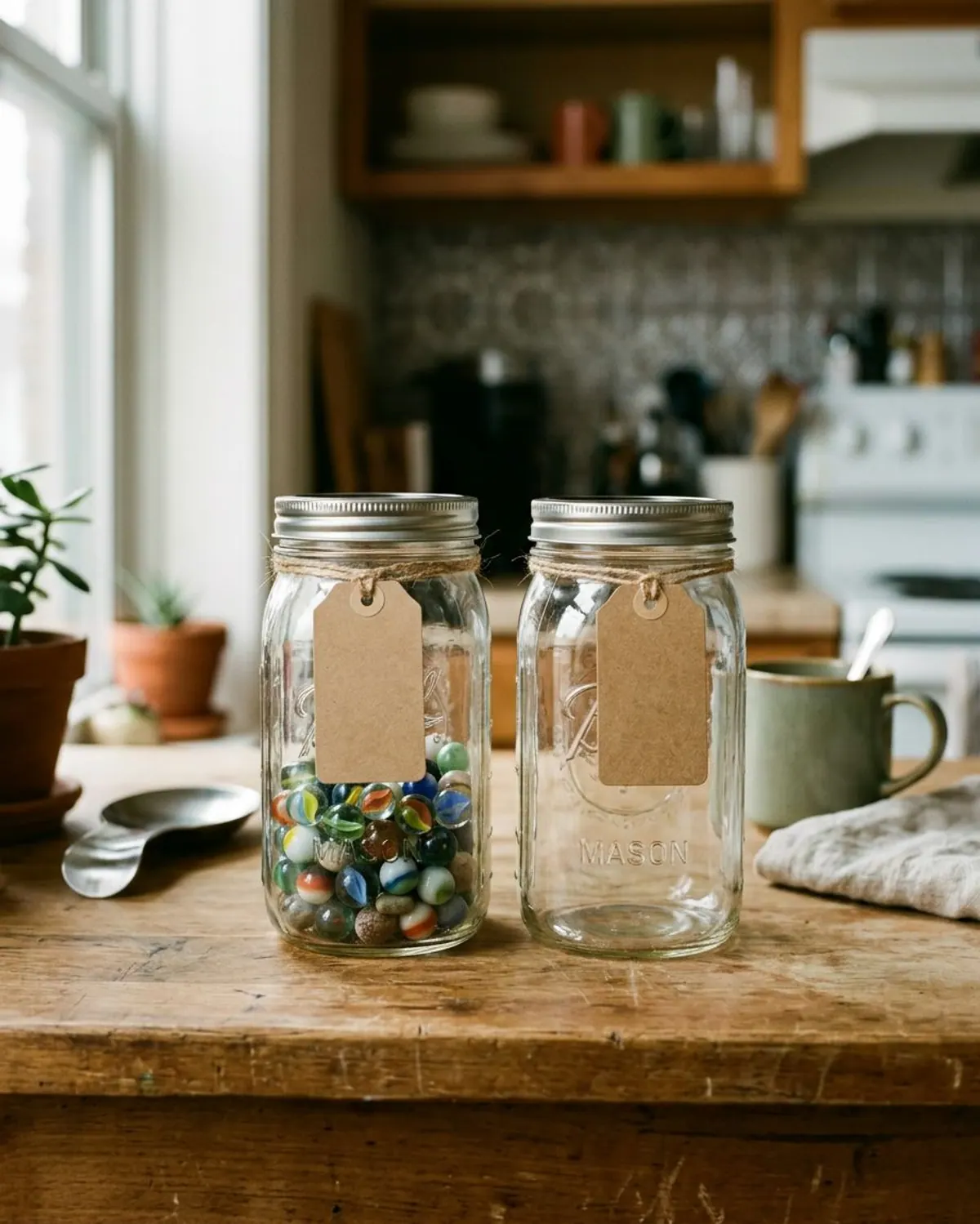
Label one jar for each debt and fill the first one with glass stones. Move one stone to the empty jar each time you pay a set amount, like $25 in our example. When a debt hits zero, move to the next jar, which is the snowball in object form. Keep stones and marbles out of reach of young children, since they are a choking hazard. If you have little ones, use big wooden beads or a drawn tally on paper instead.
- Cost: $5 to $12 for two jars and stones.
Large flat stones are easy to count and fit a jar without rolling around the counter.
11A Fridge Dot Chart for the Household
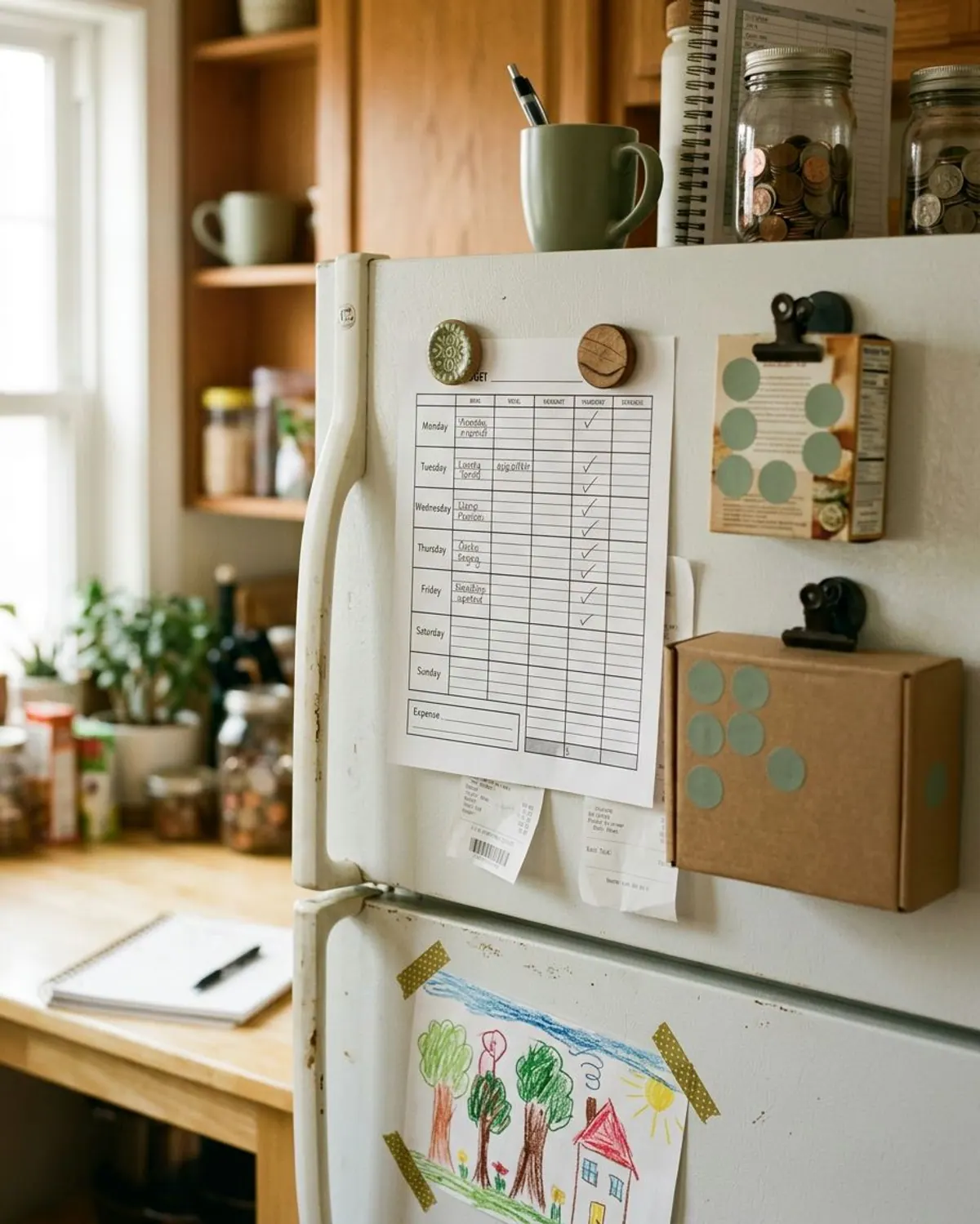
If more than one person pays the bills, put the chart where everyone sees it. A dot sticker for each payment or each extra $50 fills the grid and gives partners and older kids a way to join without discussing a balance at the dinner table. Keep it simple: one dot, one payment. The chart works because it is boring and visible, and because a sticker is a smaller ask than a conversation.
- Cost: $2 to $5 for dot stickers.
Dots are faster than coloring and make the chart readable from the doorway.
12A Monthly Balance Snapshot Page

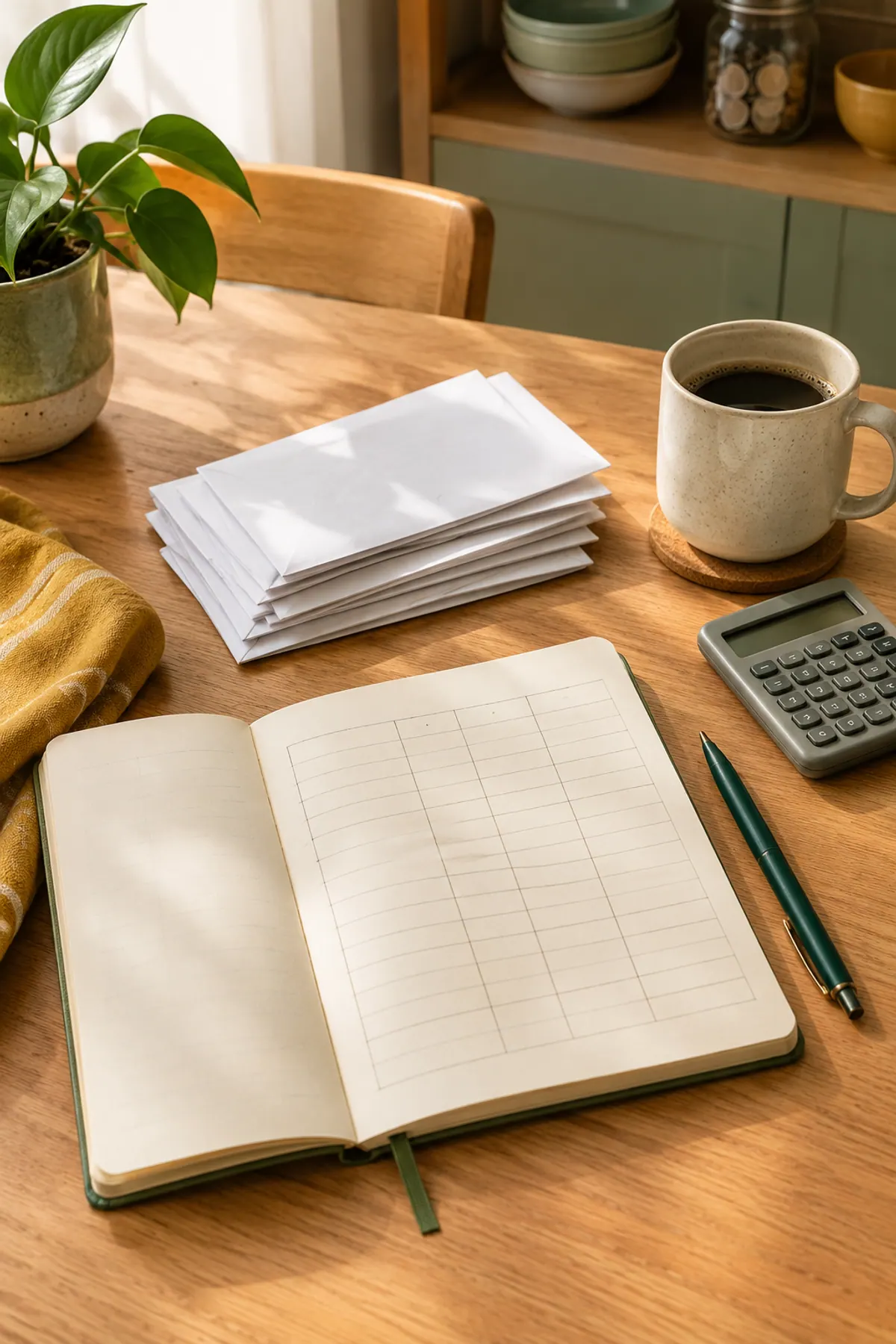
Once a month, on the same day, write the date and your new balance on one line and add a dot to a tiny line chart. After a few months the dots slope down, and you can see the trend even when one month goes sideways. This is the only tracker on the list that uses real balances, so keep it in a notebook and not on the board. Let the board hold the color; let the notebook hold the math.
- Cost: a notebook you already own.
Small Rewards and Wish Farm Ideas
A board of only restrictions wears out quickly. The YNAB team suggests a wish farm, a list of small named things you budget for as rewards. The next three ideas bring that into the aesthetic.
13A Wish Farm Page
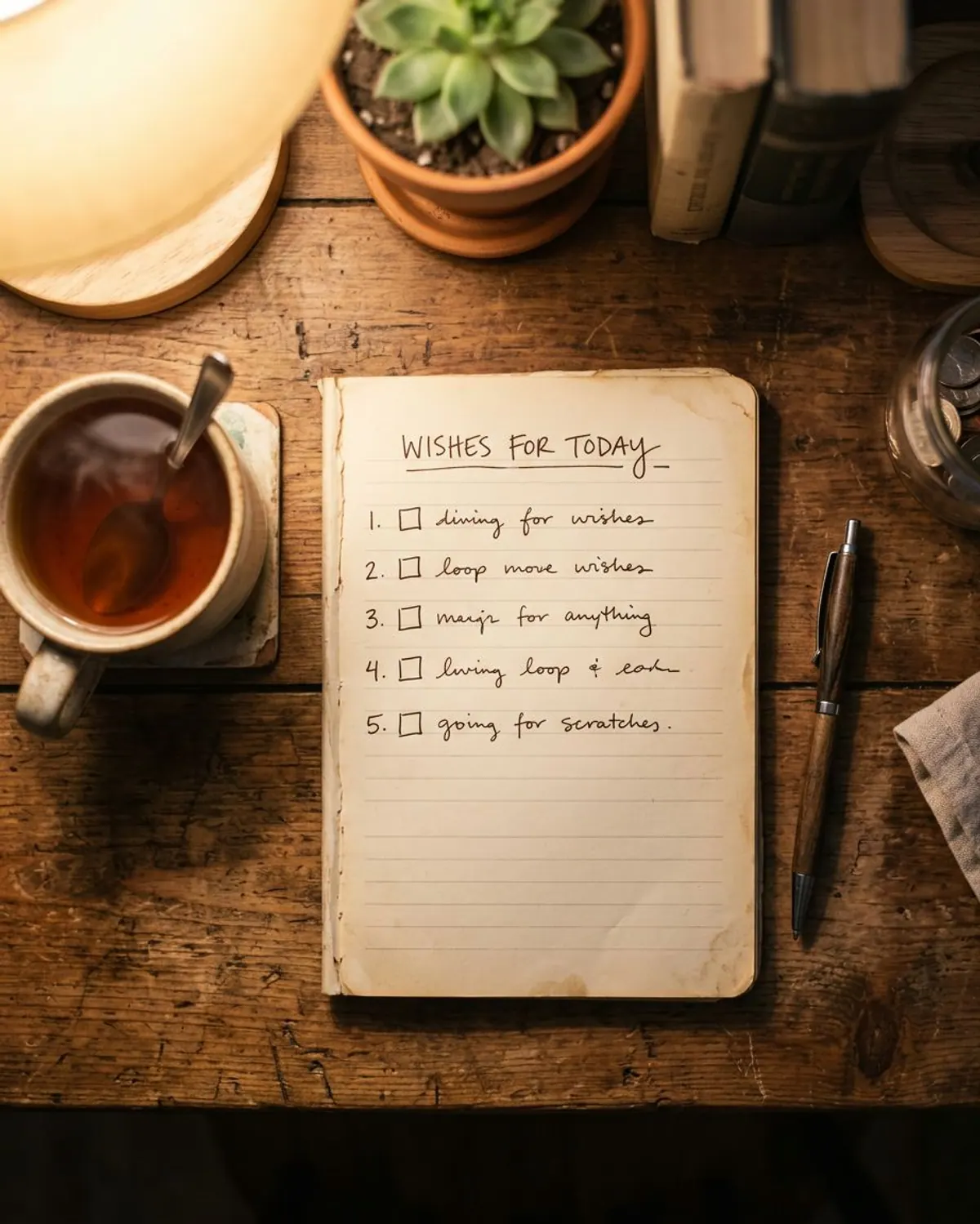
List five small, named things you want, each $5 to $20 in our example: a good candle, a paperback, a coffee with a friend, a plant or a movie night. Budget for them like a bill and check them off as you reach milestones. The idea is that a plan with small yeses lasts longer than a plan with only noes. Pin the page to the board as an equal part of the design, not as a secret.
- Cost: the cost of the rewards, which you set.
14A Free Milestone Reward List
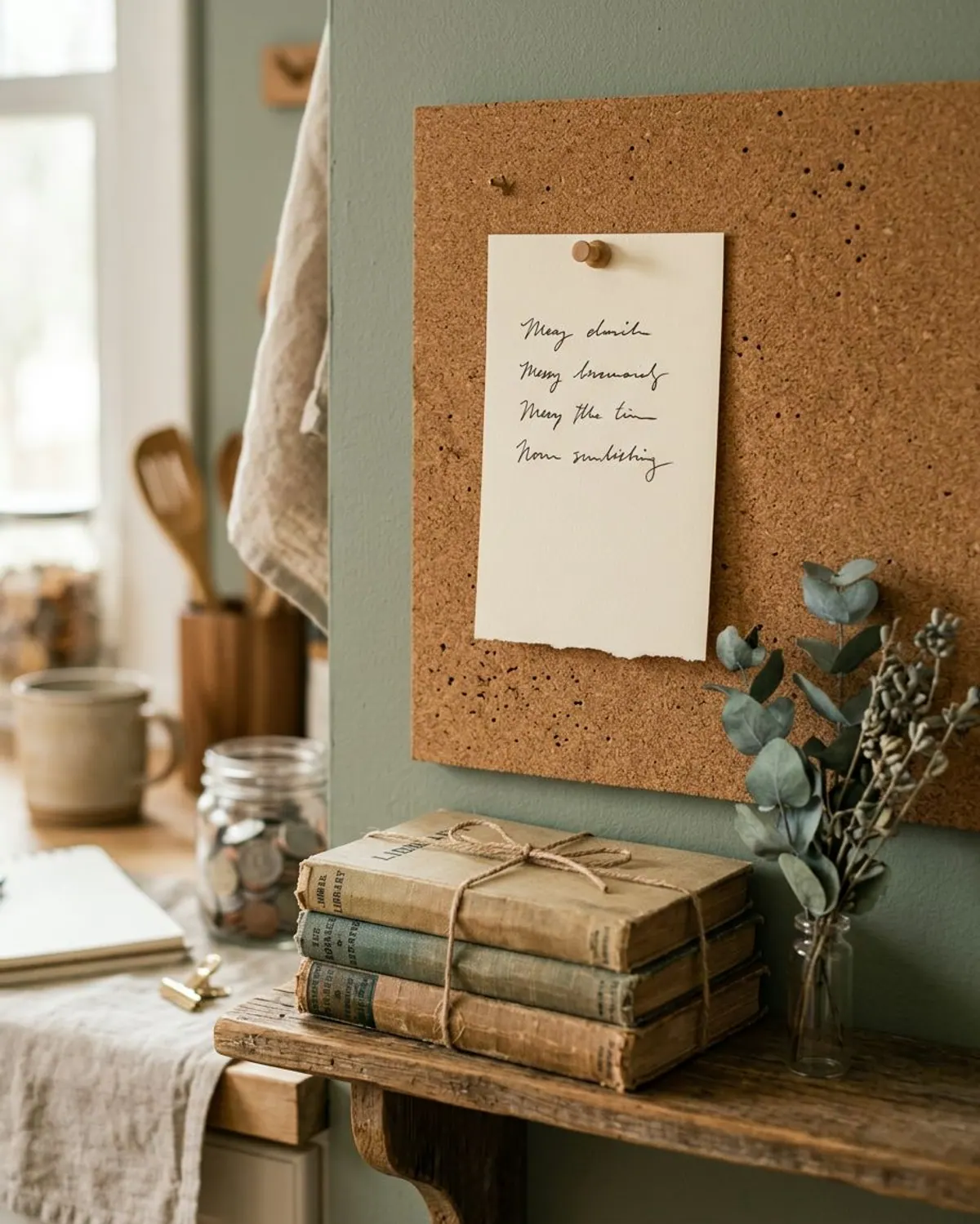
Pick four milestones, such as 25, 50, 75 and 100 percent of a balance, and write one free or nearly free reward beside each. A library hold, a picnic, a long bath or a night of board games all cost little. Put the list on a card on the board so the reward is part of the picture, not an afterthought. Rewards that cost $0 to $10 keep the plan honest, because a big prize can undo the progress that earned it.
- Cost: free to $10 per reward.
15A Monthly Payoff Night

Choose one evening a month, like the first Sunday, and make it a small ritual: tea, a candle and twenty minutes. Update the thermometer, color the grid, write the balance in the notebook and read the why page. Then put the tools away. Treating the update as an appointment instead of a chore makes it easier to keep up, and a tidy, cozy table beats a stressful pile of statements. Skip the shopping tabs during this time.
- Cost: the candle and tea you already have.
Christmas and Everyday Motivation Ideas
The hardest month for a debt payoff plan is often December. These last two ideas keep the board useful through the holidays and after.
16A Christmas Without New Debt Card
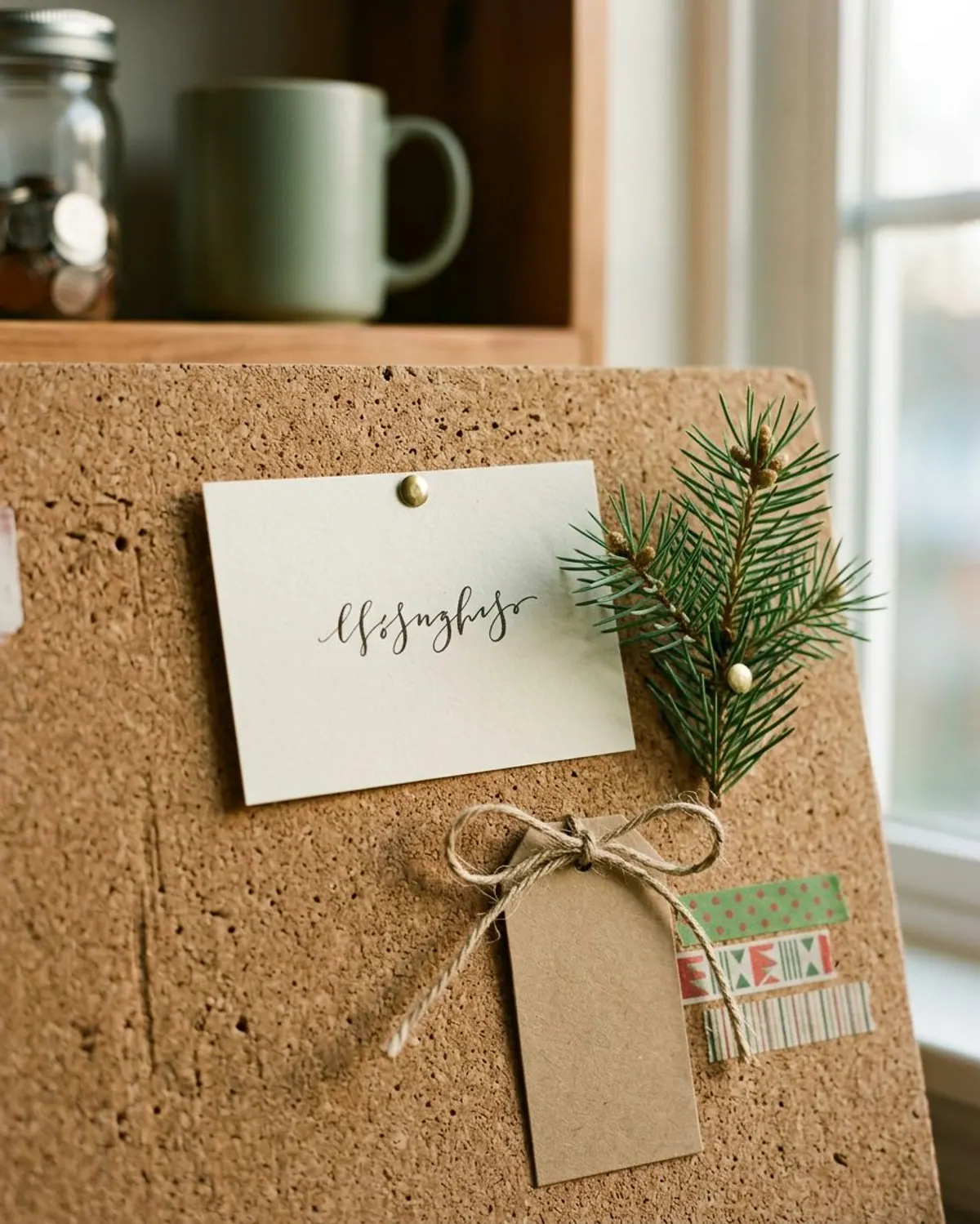
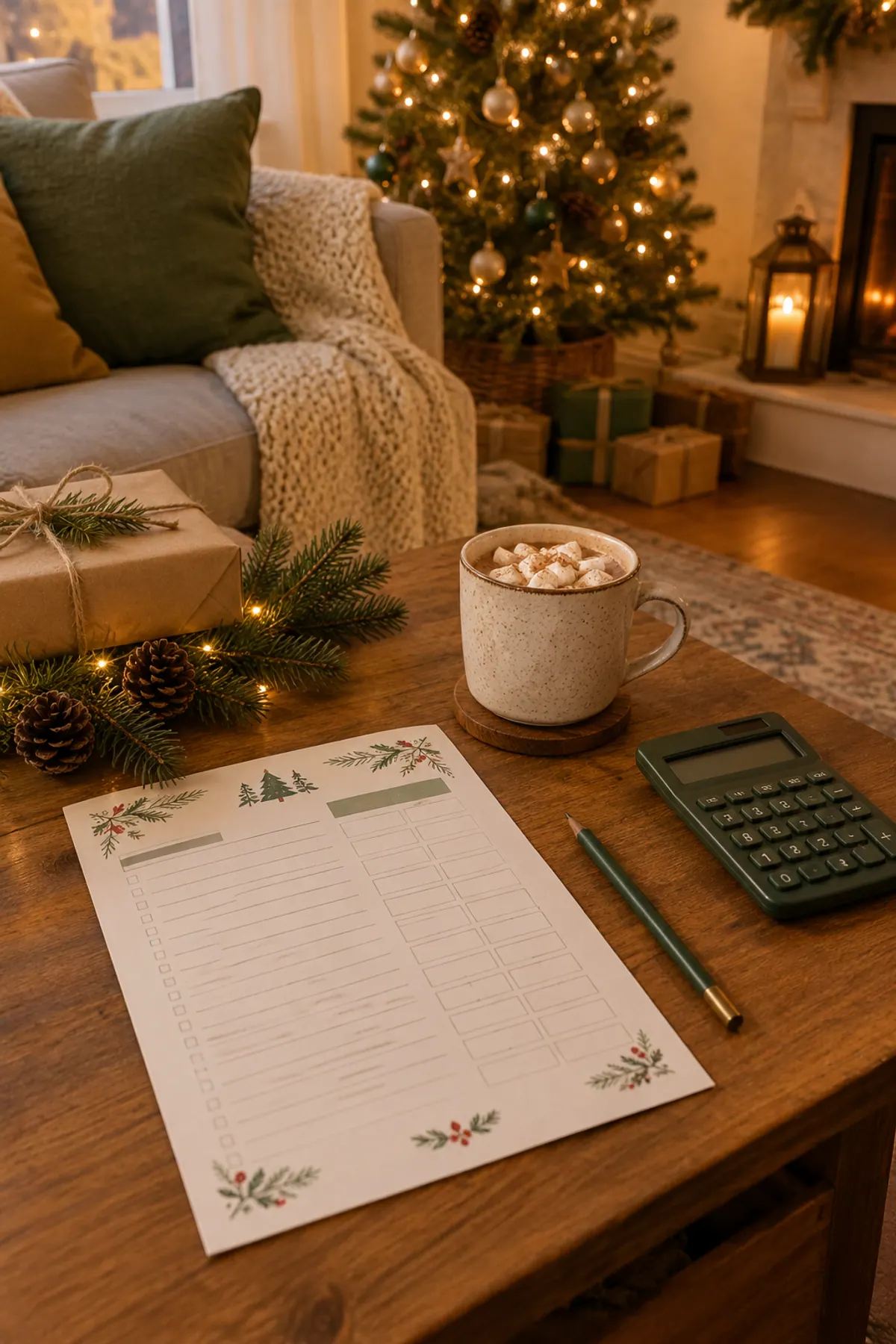
Add a December card to the board with your Christmas spending cap written in pencil and a line that says what the cap protects. Work the cap out ahead of time with our Christmas budget calculator, and start putting money aside early using the Christmas savings plan. A gift plan with a number on it is easier to keep than a vague promise to spend less. Keep the card pinned through the holidays and take it down only in January.
- Cost: a card and your cap number.
17A Payoff Station Basket

Keep everything in one basket: the binder with your debt pages, the pen, the stickers and an envelope for payment confirmations. When the tools live in one place, the monthly update takes ten minutes instead of a search party. Set the basket within sight of the board so they read as one corner. A simple station is also easy to move if you share the space, and it keeps papers with account numbers out of view.
- Cost: a basket you already have, or $8 to $15.
Holds a binder, pens and envelopes in one grab-and-go spot.
Bonus: How to Set the Date on Your Board Without Fooling Yourself
Older debt free vision board guides tend to skip the math, or use a shortcut that leaves out interest. The easy fix is a date you can defend. This is general information, not financial advice, and every number here is an example.
| Step | Shortcut | Honest version |
|---|---|---|
| Starting point | $4,800 total debt | $4,800 balance at a stated rate |
| Monthly payment | $400 a month | $400 a month, minus the interest that month |
| Date on the card | 12 months from now | Use the lender payoff estimate or a calculator |
| What to expect | A finish line that moves later | A pencil date you can adjust |
Set your pencil date in 15 minutes
A debt free date is something you plan, not something you wait for.
Debt Free Aesthetic Ideas Compared
| Idea | Cost | Time | Tracks progress? |
|---|---|---|---|
| Palette strip | $0 to $3 | 10 minutes | No |
| Debt free date card | $0 | 5 minutes | Yes, when updated |
| Paid in full frame | $0 to $10 | 10 minutes | Yes |
| Why page | $0 | 20 minutes | No |
| Quote cards | $0 to $3 | 15 minutes | No |
| Phone wallpaper | $0 | 10 minutes | No |
| Wipe-off thermometer | $5 to $15 | 15 minutes | Yes |
| Color-in grid | $0 to $2 | 20 minutes | Yes |
| Paper chain | $0 to $2 | 30 minutes | Yes |
| Marble jars | $5 to $12 | 10 minutes | Yes |
| Fridge dot chart | $2 to $5 | 10 minutes | Yes |
| Balance snapshot page | $0 | 10 minutes a month | Yes |
| Wish farm page | $0 to $20 | 15 minutes | No |
| Milestone reward list | $0 to $10 | 10 minutes | No |
| Payoff night | $0 | 20 minutes a month | Yes |
| Christmas card | $0 | 5 minutes | No |
| Payoff station basket | $0 to $15 | 15 minutes | No |
What we like
- Your own handwriting and a pencil date
- One or two trackers you update monthly
- Small rewards that cost $0 to $10
- Palette limited to four colors
Keep in mind
- Account numbers, lender logos or bank screenshots
- Shaming words or other people's balances
- A date you cannot defend
- Big prizes that cancel progress
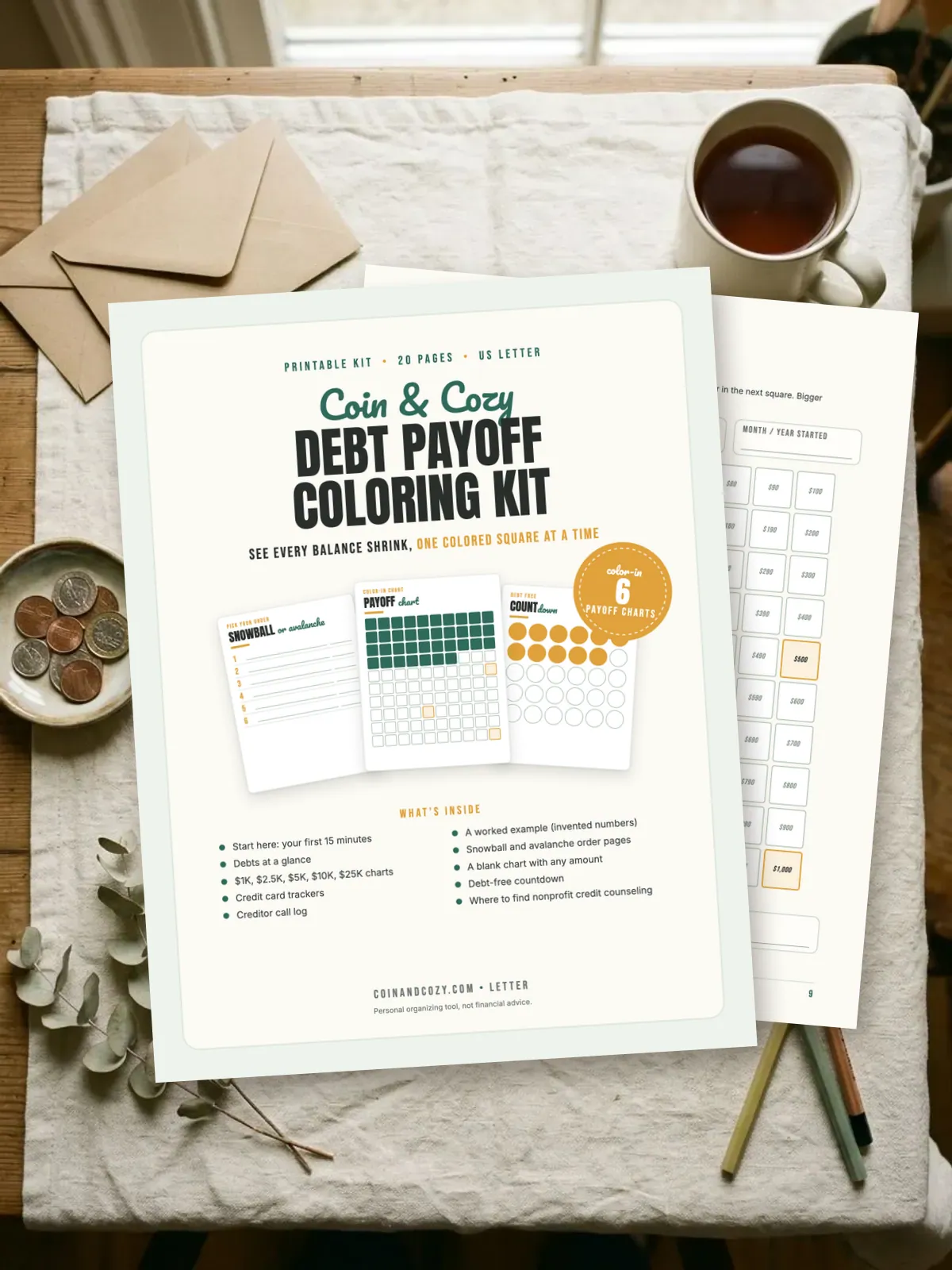
The color-in payoff grid is an easy one to start with. The Debt Payoff Coloring Kit ($6) has ready-made grids for $1,000, $2,500, $5,000, $10,000 and $25,000, plus a debt-free countdown with 36 monthly circles.
Supplies for a debt free aesthetic board
-
Cork board with wood frame, 17 x 23 inches
Typically $12 to $30
Big enough for the palette strip, thermometer and cards, small enough for a kitchen wall.
Check price on Amazon for Cork board with wood frame, 17 x 23 inches -
Sage, cream and mustard cardstock pack
Typically $6 to $15
One pack covers the swatch strip, date card and quote cards.
Check price on Amazon for Sage, cream and mustard cardstock pack -
Small magnetic dry erase board
Typically $8 to $20
Erasable thermometer you can redraw when your balance changes.
Check price on Amazon for Small magnetic dry erase board -
Colored dot stickers
Typically $4 to $8
Fast tracking for a grid or a fridge chart.
Check price on Amazon for Colored dot stickers -
Washi tape set in muted tones
Typically $6 to $15
Tape corners instead of pins for photos and cards.
Check price on Amazon for Washi tape set in muted tones -
Fine-tip pen set in muted colors
Typically $8 to $18
A green fine-tip pen keeps handwriting in the palette.
Check price on Amazon for Fine-tip pen set in muted colors
Print Your Trackers and Keep the Board Going
Printed pages make the board easier to maintain. The Cozy Budget Planner 2027 includes a debt overview with plain explanations of snowball and avalanche and a debt balance tracker, next to the monthly budget pages that fund your payments. If you would like a free starting point, the Cozy Savings Challenge Pack has a goal thermometer and a color-in chart you can adapt for debt. For the worksheet side of the plan, see our debt snowball worksheet guide, and for the big picture, our credit card debt payoff plan.
If you slip, the board is still there. Pencil the date again, color the next square and carry on. This article is general information and creative ideas, not financial advice; talk to a nonprofit credit counselor or a licensed professional about your own situation.
Frequently asked questions
What is a debt free aesthetic?
A debt free aesthetic is a calm, visual way to keep a payoff goal in view: a limited color palette, a date card, a thermometer or grid you color in and a few small rewards. It works best when it tracks real progress instead of only showing quotes.
How do I make a debt free vision board?
Choose a base such as poster board, a Pinterest board or a phone graphic. Add a four-color palette, a pencil date card, your why page and one or two trackers you can update monthly. Keep account numbers off anything on display.
What should go on a debt free vision board?
A date in pencil, a thermometer or grid, a few quote cards in your own words, a reward list and a placeholder frame for the first paid-off balance. Skip bank screenshots and lender logos.
How do I stay motivated paying off debt?
Track progress you can see, schedule a short monthly update and attach small rewards to milestones. A wish farm of small named rewards, as YNAB suggests, keeps the plan from feeling like only restrictions.
How do I set a debt free date?
Use your lender payoff estimate or a payoff calculator and write the date in pencil. Dividing total debt by 12 ignores interest, so the date it gives is usually too early.
Can I keep a debt free aesthetic through Christmas?
Yes. Add a December card with a spending cap, set the cap early and keep the board up through the holidays. A cap written down is easier to keep than a promise to spend less.
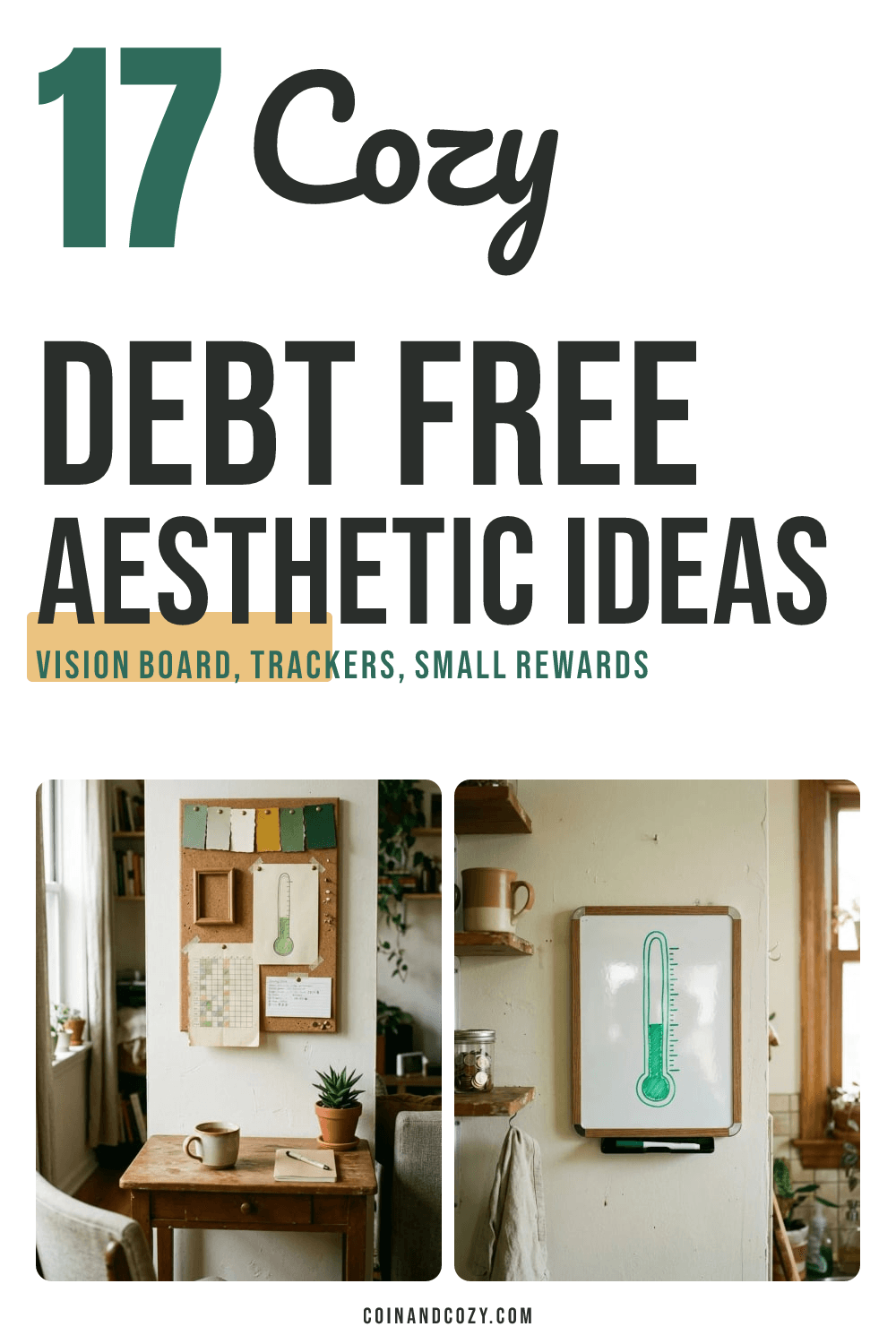
Save it for later
Pin this to your Debt Payoff board so it's there when you need it.
Save to Pinterest