This post contains affiliate links. As an Amazon Associate we earn from qualifying purchases, at no extra cost to you. Read our disclosure.
Safety first: This is general money education, not personalised financial advice. Please read our financial disclaimer before you start.
Key takeaways
- Use 20 to 100 squares, and divide your total debt by that number.
- Choose a square value you can fill in one to two weeks.
- Color by how much the balance dropped, not by what you paid.
- Use one chart for the total or one per card for quick wins.
- A chart tracks progress; the snowball or avalanche method sets the order.
In this post10 sections
- Debt Payoff Coloring Pages: What They Are and Why They Work
- Step 1: Pick Your Chart Size From Your Total Debt
- Step 2: Make Your Own Chart in 10 Minutes
- Step 3: Color the Squares Without Fooling Yourself
- Credit Card Payoff Coloring Page: One Chart or One Per Card?
- Mortgage and Car Loan Coloring Charts
- Bonus: Add a Countdown So the Chart Has a Finish Line
- Make It Feel Cozy, Not Grim
- When a Coloring Chart Is Not Enough
- FAQ
Debt Payoff Coloring Pages: What They Are and Why They Work
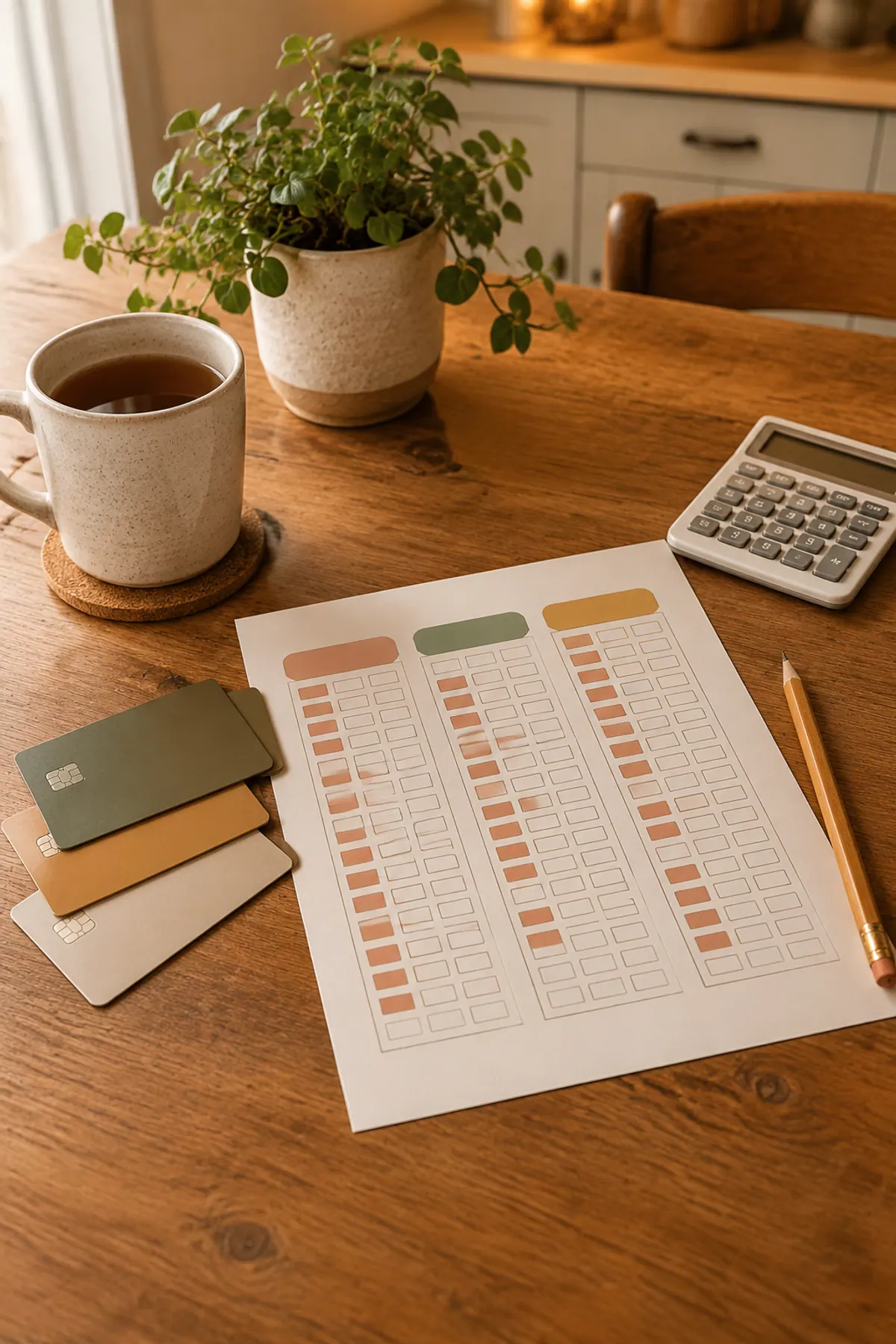
A debt payoff coloring page is a chart of small squares, circles or hearts, where each one stands for a set amount of debt. Every time you pay that amount toward the balance, you color one in. It looks simple, and that is the point: a long list of balances is hard to look at, but a chart that slowly fills with color shows progress you can see from across the room.
This guide shows you how to size a chart to your own debt, how to decide what each square is worth, and how to use one for credit cards, a car loan or a mortgage. It also covers the one mistake that makes a coloring chart lie to you. All numbers are examples, and nothing here is financial advice.

Step 1: Pick Your Chart Size From Your Total Debt
The trick is to keep the chart between about 20 and 100 squares. Fewer than 20 and the squares are so big that weeks pass between colorings. More than 100 and coloring turns into a chore. Divide your total debt by the number of squares you want, then round to a friendly amount.
| Total debt | Squares | Each square is worth | Good for |
|---|---|---|---|
| $1,000 | 20 | $50 | One small card or a medical bill |
| $2,500 | 25 | $100 | A couple of small balances |
| $5,000 | 50 | $100 | Several credit cards |
| $10,000 | 50 | $200 | A car loan or a larger card balance |
| $25,000 | 100 | $250 | Student loans or several debts together |

Step 2: Make Your Own Chart in 10 Minutes
You do not need a template to start. A ruler, a pencil and a sheet of paper are enough, and a hand-drawn chart often feels more personal than a printed one.
-
Step 1: Write the total at the top
Put today's date and your starting balance across the top, for example "Start: $5,000."
-
Step 2: Draw the grid
Draw 5 rows of 10 boxes for 50 squares, or 10 rows of 10 for 100. Make each box about the size of a postage stamp so it is easy to fill.
-
Step 3: Write the value of one square
Add "1 square = $100" in a corner. This one line keeps the chart honest.
-
Step 4: Choose your colors
Pick one color for card payments, another for loan payments, or use a new color each month. Mixed colors make the finished chart look like a quilt.
-
Step 5: Hang it where you see it
The fridge, a binder cover or the inside of a cabinet all work. A chart in a drawer does not change habits.

Step 3: Color the Squares Without Fooling Yourself
Here is the mistake that makes a coloring chart lie. Your payment is not the same as your progress. If you pay $250 on a card and $40 of it is interest, the balance drops by only $210. The honest way is to color by how much the balance went down, not by how much you paid.
| Month | You paid | Interest in that payment | Balance dropped by | Squares to color |
|---|---|---|---|---|
| Month 1 | $250 | $40 | $210 | 2 |
| Month 2 | $250 | $38 | $212 | 2 |
| Month 3 | $400 | $36 | $364 | 3 |
Your card statement shows how much of each payment went to interest. Add up the drops and color a square each time you pass another $100. Partial squares can wait: shade a quarter or half of a square in pencil until it fills.
Credit Card Payoff Coloring Page: One Chart or One Per Card?
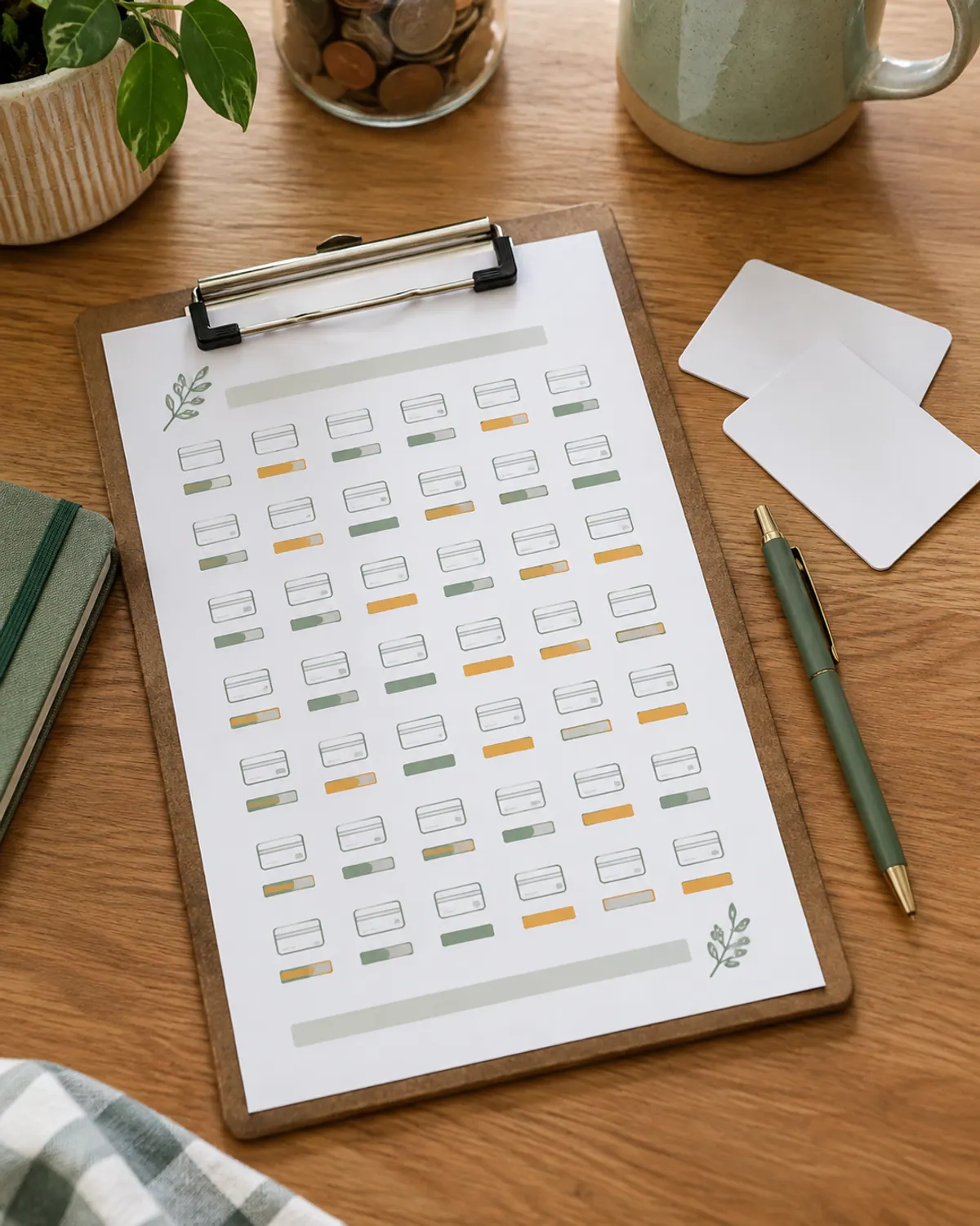
If you have three cards, you have two good options. One big chart for the combined total gives you a single picture of progress. One small chart per card gives you a quick win each time a card hits zero, and that quick win is the idea behind the debt snowball method.
Not sure which method to use for the order? The debt snowball vs avalanche tracker guide compares them with the same example, and the debt snowball worksheet walks through the columns. If you need a plan from scratch, start with the credit card debt payoff plan.

Mortgage and Car Loan Coloring Charts
Big loans work best with a longer chart where one square equals a month of payments or a fixed sum, such as $1,000. A house-shaped or leaf-shaped grid is a popular choice because the shapes fill slowly and look nice on a wall. For a mortgage the combined interest is large, so color by the principal portion on your statement.

If you are working on a car loan, check your lender's page for the payoff amount and write it at the top. Check it again every few months so the chart matches the lender's records.
Bonus: Add a Countdown So the Chart Has a Finish Line
Below the grid, write one sentence: "If I keep this pace, I finish around ______." Work it out by dividing your remaining balance by your average monthly drop. For example, if $3,000 is left and the balance has been dropping by about $300 a month, that is about 10 months. This is an estimate from your numbers, and it will shift when you pay extra or when interest changes.
Your debt coloring chart setup

Make It Feel Cozy, Not Grim
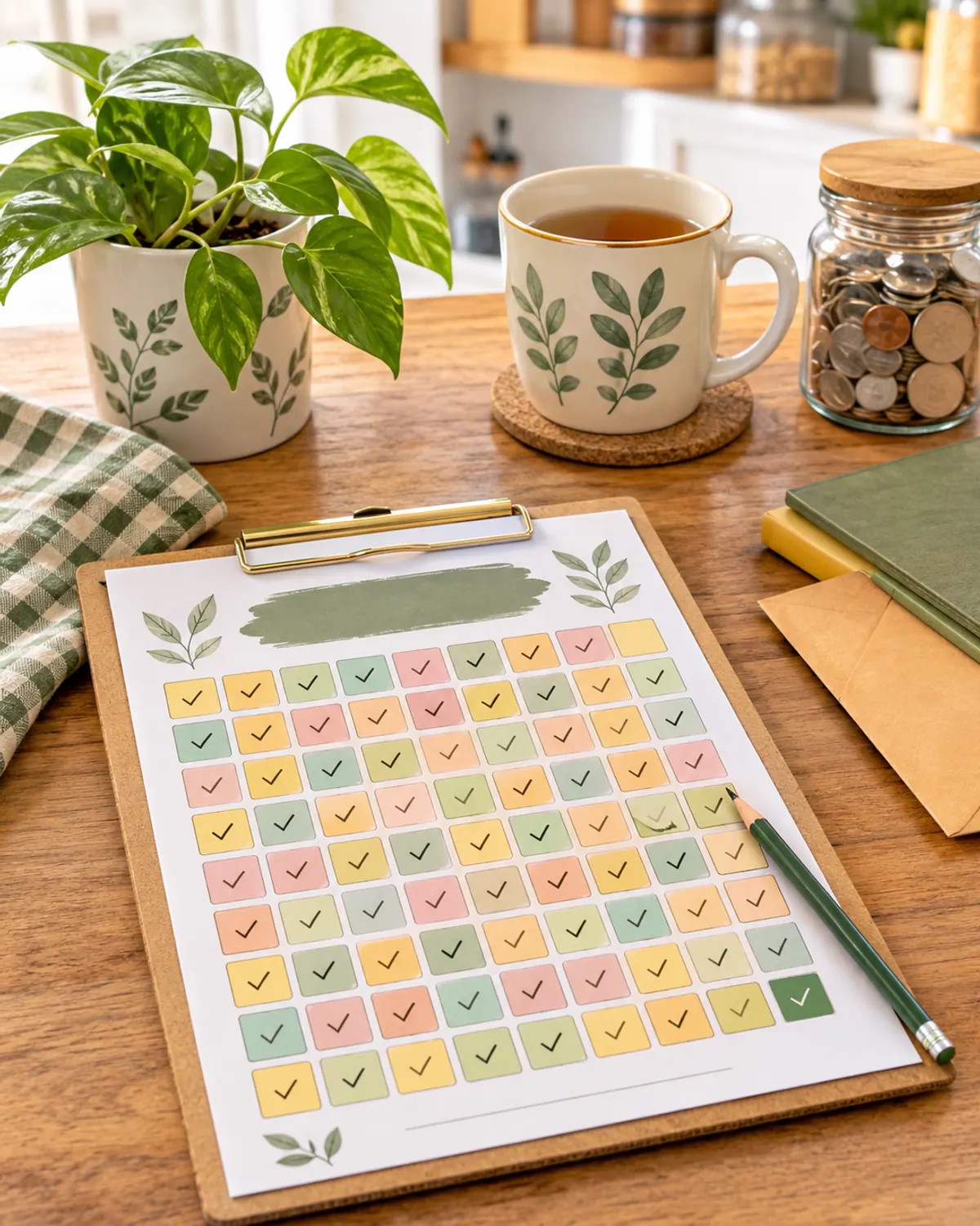
Debt charts do not have to feel heavy. Use pencil colors you like, add a small reward line for every ten squares (a library trip, a candle, a walk with a friend) and keep the cost of the reward tiny. For more ideas on vision boards, thermometers and small rewards, see the debt free aesthetic ideas guide.
Color the progress you make, not the guilt you feel.
When a Coloring Chart Is Not Enough
A chart shows progress, but it does not lower your interest rate or fix a payment you cannot afford. If you are missing payments, being called by collectors or choosing between bills and debt, talk to a nonprofit credit counselor. The National Foundation for Credit Counseling is a place to start looking, and the FTC advises checking any agency's fees and credentials first.
This page is a personal organizing guide, not financial, legal or tax advice.
Supplies for a hand-drawn debt chart
-
Colored pencil set, 24 colors
Typically $8 to $20
A small range of calm colors makes the finished chart look good enough to hang.
Check price on Amazon for Colored pencil set, 24 colors -
Clear-edge ruler
Typically $3 to $8
Straight lines make 50 or 100 squares quick to draw.
Check price on Amazon for Clear-edge ruler -
Clipboard
Typically $5 to $12
Keeps the chart flat and easy to hang on a hook.
Check price on Amazon for Clipboard
Frequently asked questions
What is a debt payoff coloring page?
It is a chart of squares, circles or hearts where each shape stands for a set amount of debt. You color one in each time your balance drops by that amount, so progress becomes visible.
How many squares should a debt payoff chart have?
Between about 20 and 100. Fewer squares make each one too large to fill quickly, and more make coloring feel like a chore. Divide your total debt by the number you choose.
Should I color by what I paid or by how much the balance dropped?
Color by how much the balance dropped. Part of each payment goes to interest, so the balance falls by less than you paid. Your statement shows the split.
Can I use a coloring chart for a mortgage or car loan?
Yes. Use a longer chart where one square equals a fixed sum such as $1,000, and color by the principal portion shown on your lender statement.
Is a debt payoff coloring page the same as the snowball method?
No. The chart only tracks progress. The snowball or avalanche method decides the order you pay debts, and you can use either with the same chart.
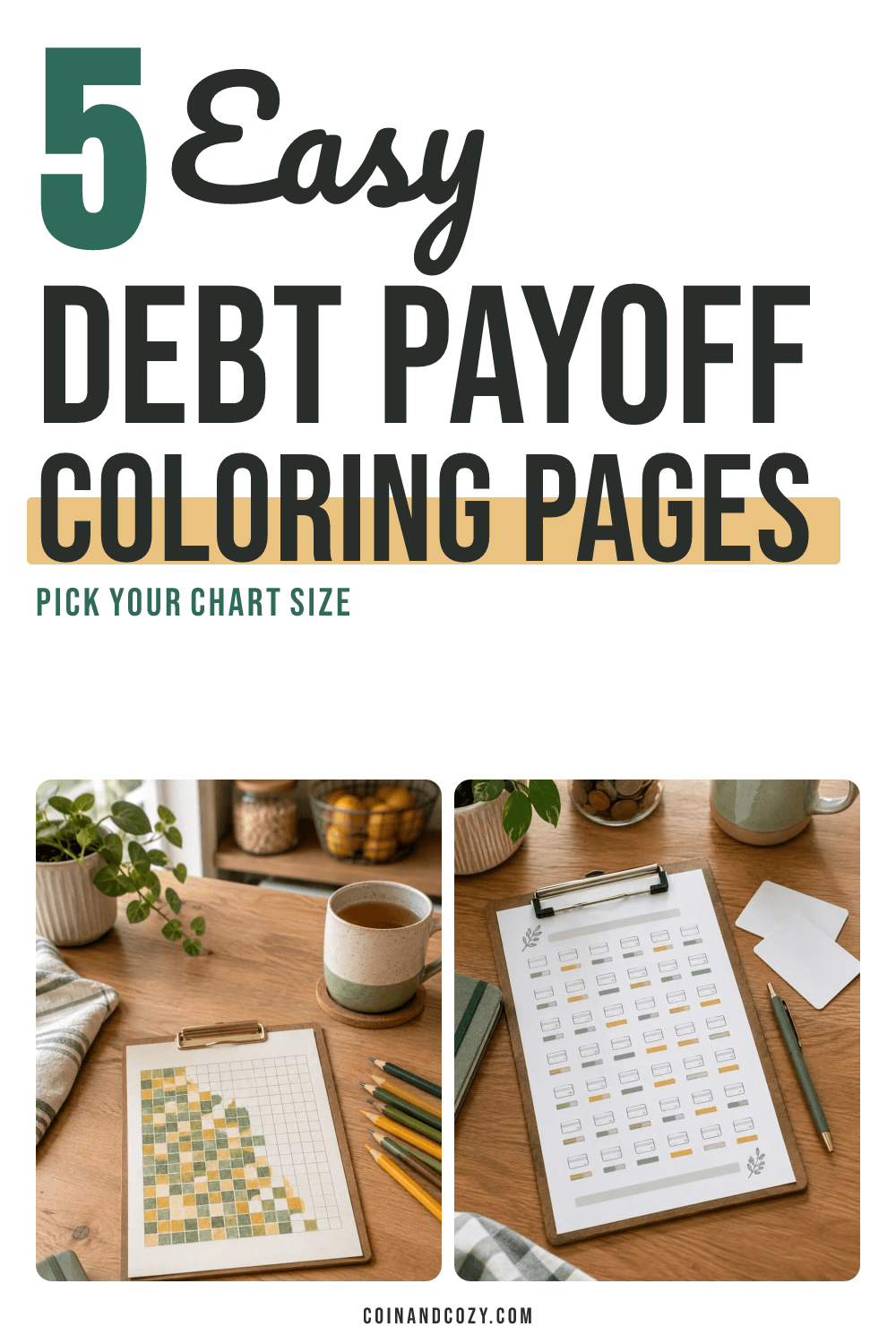
Save it for later
Pin this to your Debt Payoff board so it's there when you need it.
Save to Pinterest