This post contains affiliate links. As an Amazon Associate we earn from qualifying purchases, at no extra cost to you. Read our disclosure.
Safety first: This is general money education, not personalised financial advice. Please read our financial disclaimer before you start.
Key takeaways
- The free sinking funds tracker is a 4-page PDF with a one-page tracker of 12 fund rows, a worked example and a Christmas-first box.
- Yearly cost divided by 12 is the monthly amount. Yearly cost divided by your paychecks is the payday amount: a $600 cost is $50 a month, or $23.08 every 2 weeks.
- With 39 days to Christmas, divide what is still to save by the paychecks left before Dec 25: $300 over 3 paychecks is $100 each.
- Start with three funds, not twelve, and keep the money in envelopes, named savings buckets or one account.
- Examples only, not financial advice: your own bills and debts come first.
In this post11 sections
- What Is on the Free Sinking Funds Printable
- How to Fill In the Sinking Funds Tracker in 10 Minutes
- Sinking Funds Math: Yearly Cost Divided by 12, With an Example
- Christmas First: A Dated Plan From Mon Nov 16 to Fri Dec 25
- Car, Annual Bills and Other Costs You Can See Coming
- Where to Keep the Money: Envelopes, Savings Buckets or One Account
- If the Total Is More Than Your Paycheck Can Carry
- Keep the Page Where You Pay Bills
- A 10-Minute Monthly Check So the Page Stays True
- When One Page Is Not Enough
- FAQ
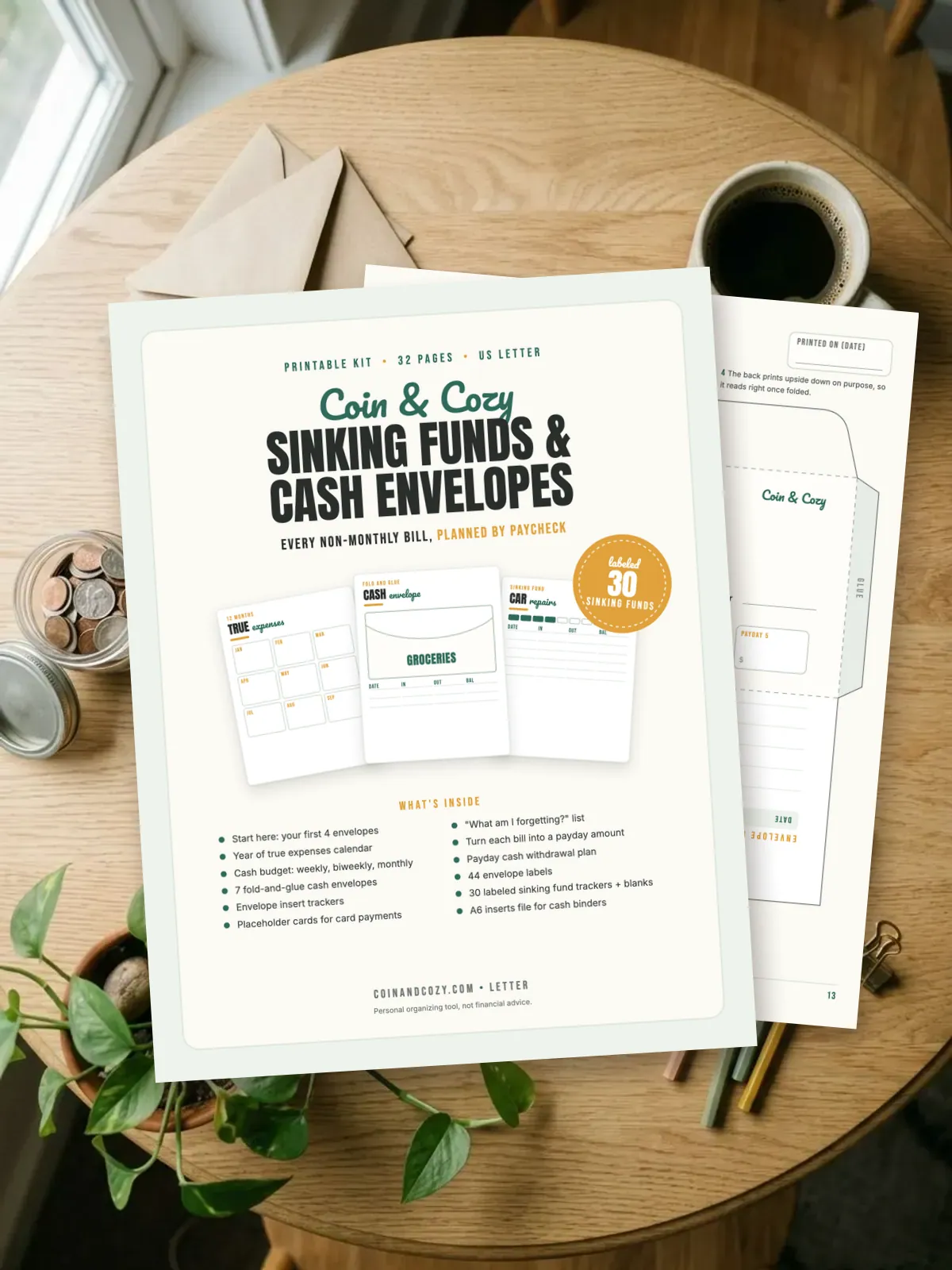
The free tracker is one page with 12 fund rows, so Christmas, the car and your yearly bills can sit side by side. If you want every non-monthly bill planned by paycheck instead of one page, the Cash Stuffing Sinking Funds Kit ($9) is the next step. It starts with a "What am I forgetting?" checklist and has 30 labeled fund trackers.
Some links on this page are Amazon affiliate links. If you buy through one, we may earn a small commission at no extra cost to you.
What Is on the Free Sinking Funds Printable
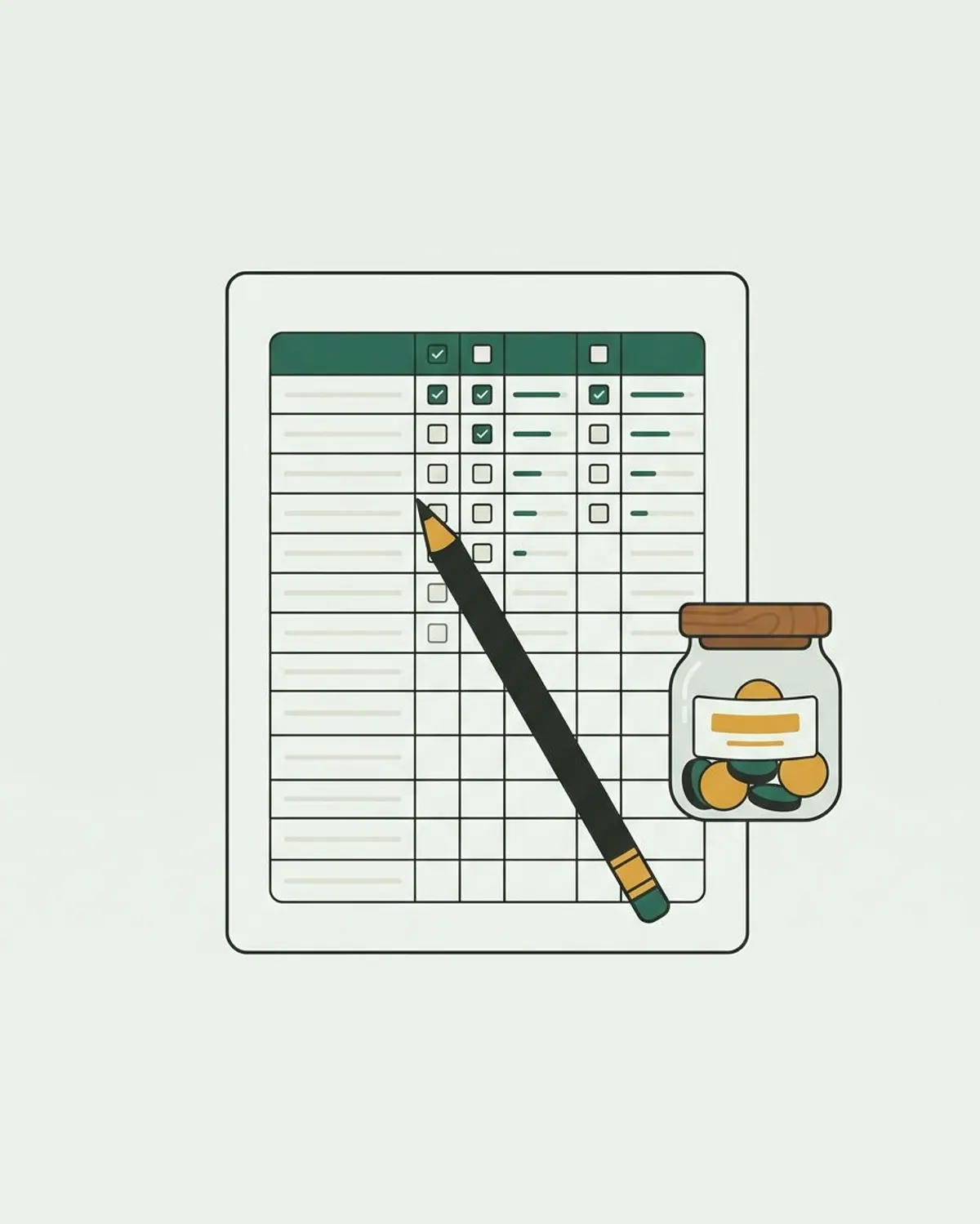
The download is a 4-page PDF in US Letter size. Page 1 is the cover. Page 2 is the one-page tracker: a pay schedule row, then 12 fund rows with Fund, Due, Yearly cost, Per month, Per payday and Saved so far, and a totals line at the bottom.
Page 3 explains the math in four steps, shows a worked example of five funds and has a Christmas first box for the money you still need before Dec 25. Page 4 shows what the full kit adds, so you can see it without any pressure to buy.

Print it at home or at a print shop on standard letter paper. Use a pencil, because a yearly cost will change at least once when the real statement shows up.
How to Fill In the Sinking Funds Tracker in 10 Minutes
Start with one fund, not twelve. You need last year's bank or card statements, or your banking app, and a pencil.
-
Step 1: Write the fund and when it is due
Put Christmas on the first row and the month it is due. Then add the car and the one yearly bill that caught you off guard last year.
-
Step 2: Find the yearly cost
Search last year's statements for the same charge. If a cost comes every 2 or 3 years, divide it by 2 or 3 first, then round up a little.
-
Step 3: Divide the yearly cost by 12
That is the Per month amount. A $600 cost is $50 a month.
-
Step 4: Divide by your paychecks
Tick how often you are paid at the top of the page: weekly is 52 paychecks, every 2 weeks is 26, twice a month is 24 and monthly is 12. The yearly cost divided by that number is what you move on each payday.

If you cannot find a cost in your statements, estimate it and mark the row with a question mark. A first guess is better than a blank, because a blank row gets no money. Three ways to estimate:
Ways to estimate a cost you cannot find
A cost that comes every 2 or 3 years still needs a row. A $900 tire set every 3 years is $300 a year, which is $25 a month, and the fund will be full when the tires wear out.
Sinking Funds Math: Yearly Cost Divided by 12, With an Example
Here is one example, filled in. Every amount is made up for planning, so swap in your own. The five funds below add up to $1,860 a year, which is $155 a month.
| Fund | Due | Yearly cost | Per month | Every 2 weeks (26 paychecks) |
|---|---|---|---|---|
| Christmas gifts and food | Dec | $600 | $50 | $23.08 |
| Car repairs and maintenance | Any time | $600 | $50 | $23.08 |
| Car registration | Aug | $180 | $15 | $6.92 |
| Annual app and membership renewals | Mar | $120 | $10 | $4.62 |
| Vet visits | Any time | $360 | $30 | $13.85 |
| Total | $1,860 | $155 | $71.54 |
Paid twice a month, the same $155 is $77.50 a payday. Paid monthly, it is $155. The per-payday amounts are rounded to the cent, so that column adds to 1 cent more than the total.
Christmas First: A Dated Plan From Mon Nov 16 to Fri Dec 25
Checked Mon Nov 16, 2026: Christmas is on Fri Dec 25, which is 39 days away. You cannot divide by 12 this year, so use the Christmas first box on page 3: what is still to save, divided by the paychecks left before Dec 25.
In this example you are paid every other Friday and the next payday is Fri Nov 20. The paydays before Christmas are Fri Nov 20, Fri Dec 4 and Fri Dec 18, which is 3 paychecks. Fri Jan 1 is the next one, too late for gifts.
| Already set aside | Still to save | Set aside each payday (3 paychecks) |
|---|---|---|
| $0 | $300 | $100 |
| $60 | $240 | $80 |
| $120 | $180 | $60 |
If the payday amount is more than you can spare, lower the Christmas number rather than skip the fund. A gift list with a cap beside each name shows where to cut, and our free Christmas gift list printable has the columns ready.

To hold the Christmas money in cash, see Christmas cash stuffing with a dollar cap for each person. If you want a lighter December, the free No Spend December printable pairs well with this page. For next year, start the Christmas sinking fund in January: $600 divided by 12 is $50 a month.
Car, Annual Bills and Other Costs You Can See Coming
Christmas is the fund everyone knows about. The costs that wreck a month are the quieter ones, like a car repair or a renewal that comes once a year. Look back through 12 months of statements and note every charge that did not come monthly.
Look for these in last year's statements

Not sure what a fund should be called or how big to make it? See 20 sinking funds categories with monthly amounts for examples to copy, then put your own numbers on the tracker.
Where to Keep the Money: Envelopes, Savings Buckets or One Account
The page tracks the money. It does not hold it, so pick one place to keep it and one way to see the balance. Any of the three below works, and you can mix them by fund.
| Where | Works well for | Watch out for |
|---|---|---|
| Cash envelopes | Funds you spend in cash, like gifts and small repairs | Cash can be lost or spent, so keep it in one folder or binder |
| Named savings buckets | Bigger funds like car repairs and insurance, if your bank lets you name separate goals | Check the bank's rules, since not every account offers them |
| One savings account with this page as the ledger | Anyone who wants the fewest accounts | You must update Saved so far every payday, or the page drifts from the balance |

New to envelopes? Our guide to starting a cash envelope system by paycheck walks through the first four. If cash stuffing sounds like too much work, see whether it suits you first.

If the Total Is More Than Your Paycheck Can Carry
Add up the Per payday column. If it is more than you can set aside, you have not failed. It just means the plan is bigger than this season's money. Start with the three funds that are due soonest, and leave the others on the page with a due month.
If your pay changes from month to month, build the amounts from your lowest month, as in how to budget on an irregular income. Many yearly bills also land right after Christmas, so the free January budget template has a yearly bills table to match this page.

Keep the Page Where You Pay Bills
Put the sheet next to the place where you pay bills and update Saved so far the same minute you move the money. A clipboard and a pencil are enough.

A 10-Minute Monthly Check So the Page Stays True
A tracker only works if the numbers on it match the money. Once a month, sit down with the page, a pencil and your bank balances.
Once a month
After a few months you will see which funds are on track. A fund that is behind is not a failure. It is a signal to raise the payday amount a little or to cut the cost it is saving for.
Sinking funds sit beside an emergency fund rather than replacing it. A sinking fund is for a cost you can predict, like Christmas or car registration. An emergency fund is for the cost you cannot. If you have no emergency savings yet, put a small amount there first or at the same time, and treat this page as a plan for the bills you can see.
Helpful, not required
-
Letter-size clipboard
Typically $6 to $15
Keeps the tracker flat and in sight where you pay bills.
Check price on Amazon for Letter-size clipboard -
Pencils with erasers
Typically $4 to $10
Yearly costs change once the real statement shows up, so write them in pencil.
Check price on Amazon for Pencils with erasers -
Kraft cash envelopes
Typically $6 to $14
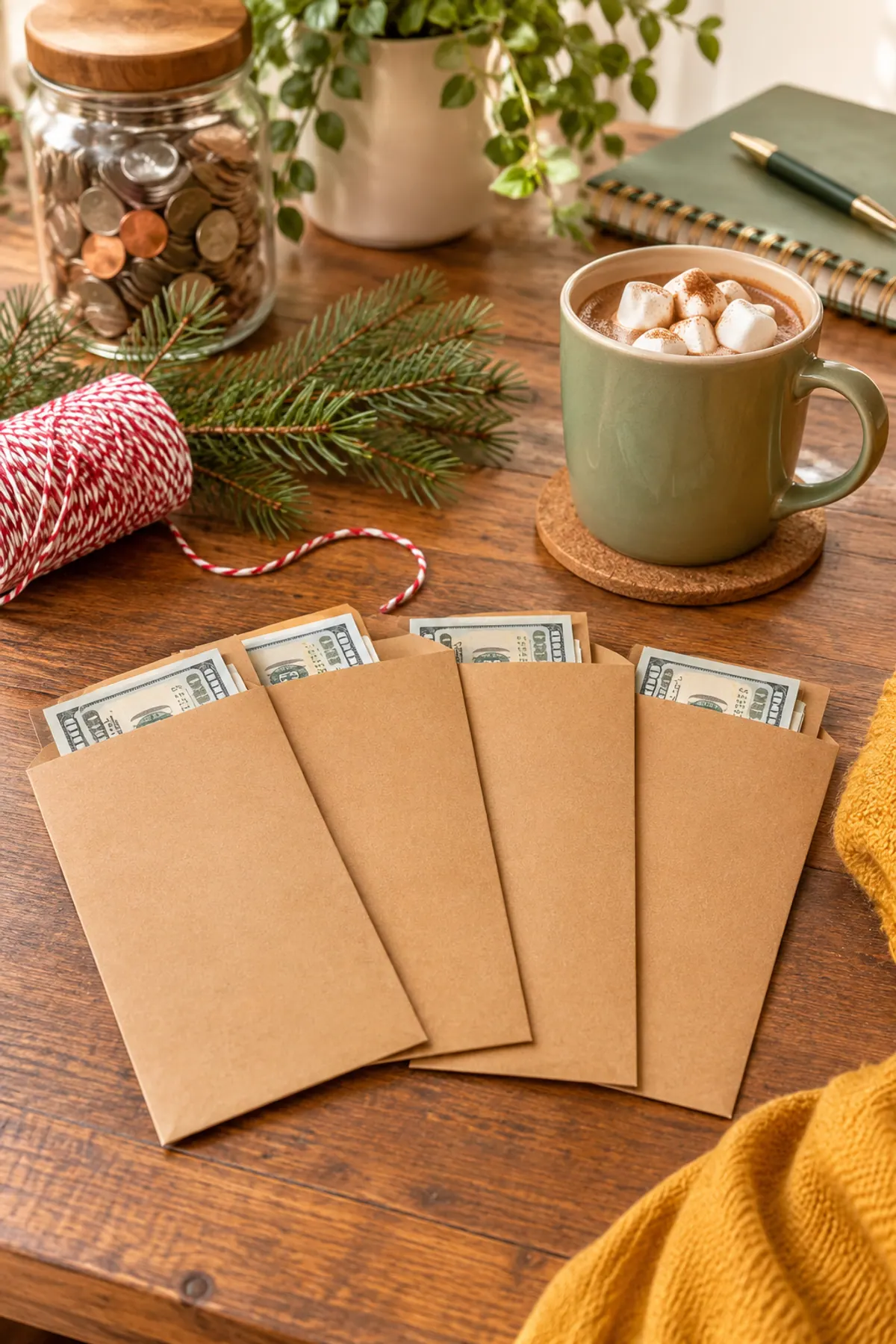
One envelope per fund if you want to hold part of the money in cash.
Check price on Amazon for Kraft cash envelopes -
Zipper binder pouches
Typically $7 to $15
Hold cash envelopes and the printed page in one small binder.
Check price on Amazon for Zipper binder pouches
When One Page Is Not Enough
The free page tracks your first funds. If you want every non-monthly bill planned, the Cash Stuffing Sinking Funds Kit ($9) starts with a "What am I forgetting?" checklist and a year of true expenses calendar. It also has a payday split page, 30 labeled fund trackers, and 7 fold-and-glue cash envelopes, and the code COZY20 takes 20% off at checkout.
If you also want the budget, savings, cash, debt and grocery pages in one binder, the Cozy Money Binder ($21) holds them all. All amounts and dates here are examples for planning, not financial advice. Your own income, bills and debts come first.
Frequently asked questions
Is there a free sinking funds printable I can print today?
Yes. The free 4-page sinking funds tracker has a one-page tracker with 12 fund rows, a worked example of five funds and a Christmas-first box. Enter your email in the form on this page and the PDF is sent to you, then print page 2.
How do I figure out how much to put in each sinking fund?
Divide the yearly cost by 12 for the monthly amount, then divide the yearly cost by your number of paychecks for the payday amount. A $600 cost is $50 a month, or $23.08 a payday if you are paid every 2 weeks (26 paychecks).
Which sinking funds should I start with?
Start with the cost that is due soonest, which in November is usually Christmas, then the car and one yearly bill that surprised you last year. Three funds are easier to keep up than twelve.
What if Christmas is only a few weeks away?
You cannot divide by 12 this year, so take what is still to save and divide it by the paychecks left before Dec 25. In the example here, $300 with 3 paychecks left is $100 a payday.
Where should I keep sinking fund money?
Use cash envelopes, named savings buckets if your bank offers them, or one savings account with the tracker as the ledger. Pick one place so the balance on the page matches the money.
Are sinking funds the same as an emergency fund?
No. A sinking fund covers a cost you know is coming, like car registration or Christmas. An emergency fund covers what you cannot predict. This is general information, not financial advice.
Save it for later
Pin this to your Budget Printables board so it's there when you need it.
Save to Pinterest