This post contains affiliate links. As an Amazon Associate we earn from qualifying purchases, at no extra cost to you. Read our disclosure.
Safety first: This is general money education, not personalised financial advice. Please read our financial disclaimer before you start.
Key takeaways
- The free tracker is 5 pages: a planning page, a 30-day tracker and 30 free ideas.
- Set the gift budget first, in November, then pick two gift shopping days.
- Write one rule each for gifts, postage, party food and work events before Dec 1.
- The worked example: $400 total, five planned days and 25 no spend days, from Tue Dec 1 to Wed Dec 30.
- A slip gets one line in the tracker and a fresh start tomorrow.
In this post10 sections
- Free No Spend December Challenge Printable: What You Get
- Why December Breaks a No Spend Challenge
- Set the Gift Budget First
- The Four December Rules: Gifts, Postage, Party Food and Work Events
- A Worked December Example: Planned Days and No Spend Days
- What Counts as a Slip, and What to Do About It
- Can You Do a No Spend Month at Christmas?
- Free Things to Do When You Want to Spend
- After December: Where to Go Next
- FAQ
Quick note: product links go to Amazon search results, and we may earn a small commission if you buy, at no extra cost to you. We haven't tested these products ourselves; prices are typical ranges and change often. This is general information, not financial advice.
The tracker gives you the days. The part that decides whether you finish is the December rules, so write them in the same sitting: what happens to gifts, postage, party food and work events. If you want those rules on ready-made pages, the No-Spend and Low-Spend Pack 2027 ($5) has a gray-area page for gifts and postage, a December edition with a gift cap per person, hosting, work events, cards and postage, and a slip reset page. It shows "Coming soon" until it launches, and the free tracker is enough to run the challenge in the meantime.
Free No Spend December Challenge Printable: What You Get
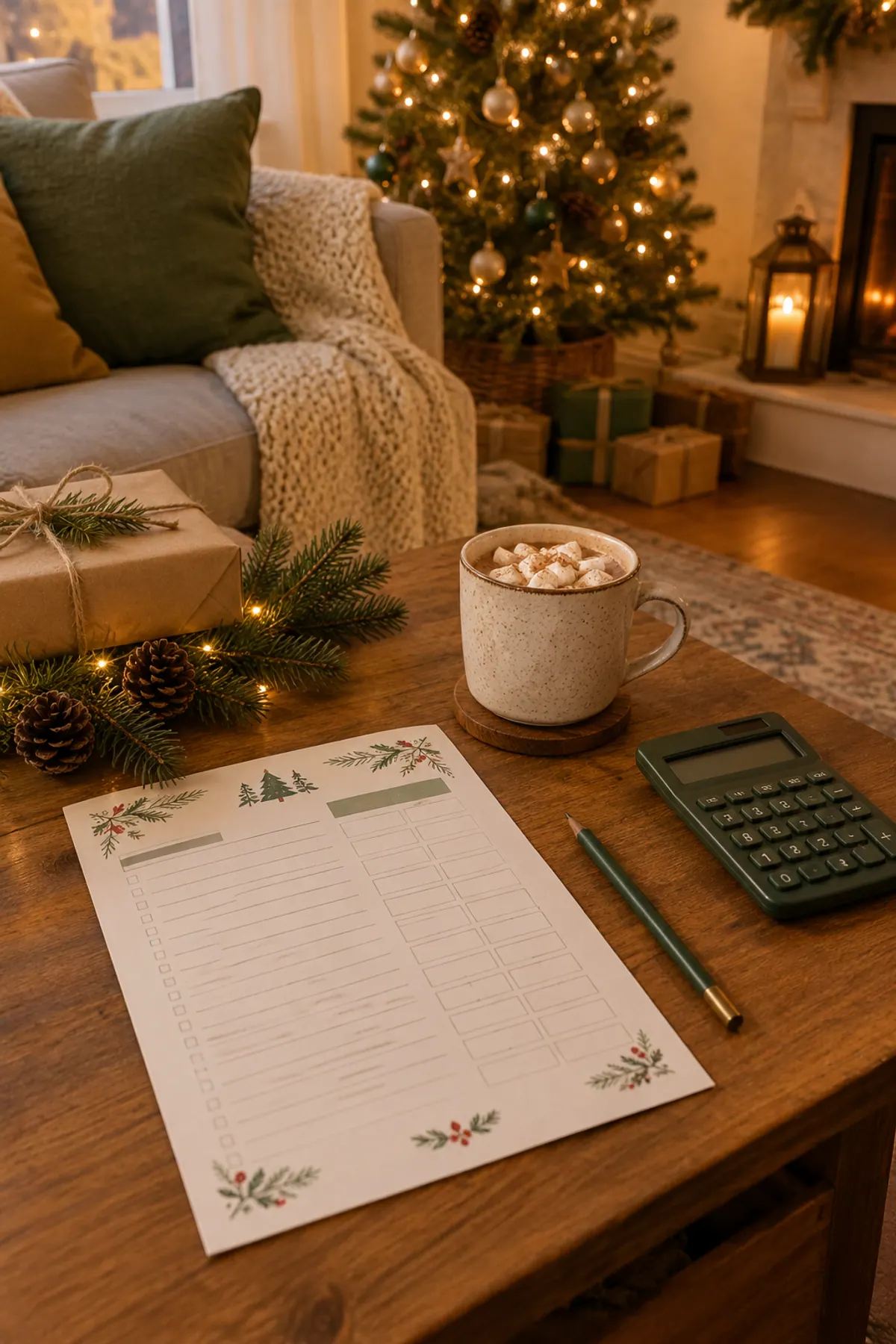
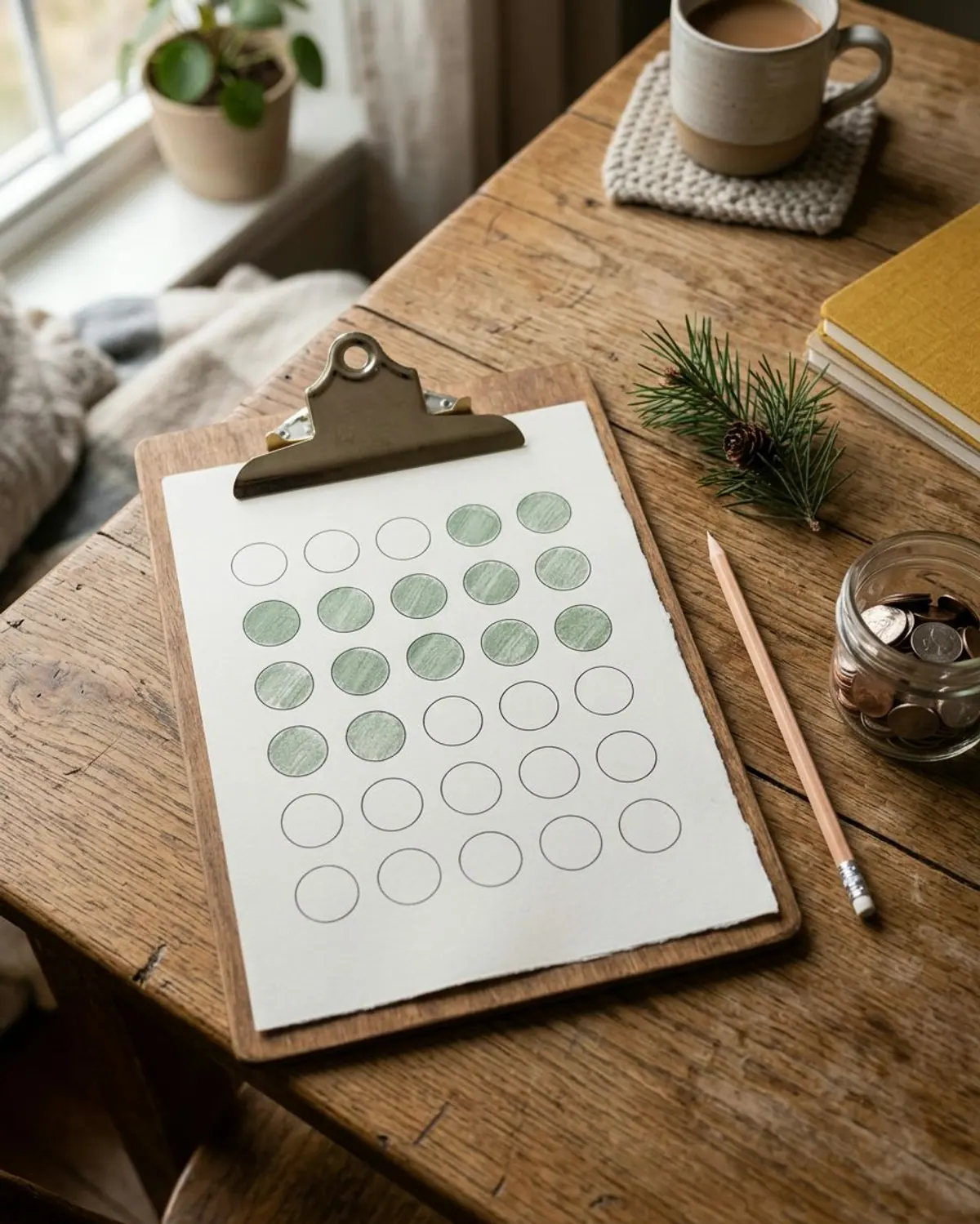
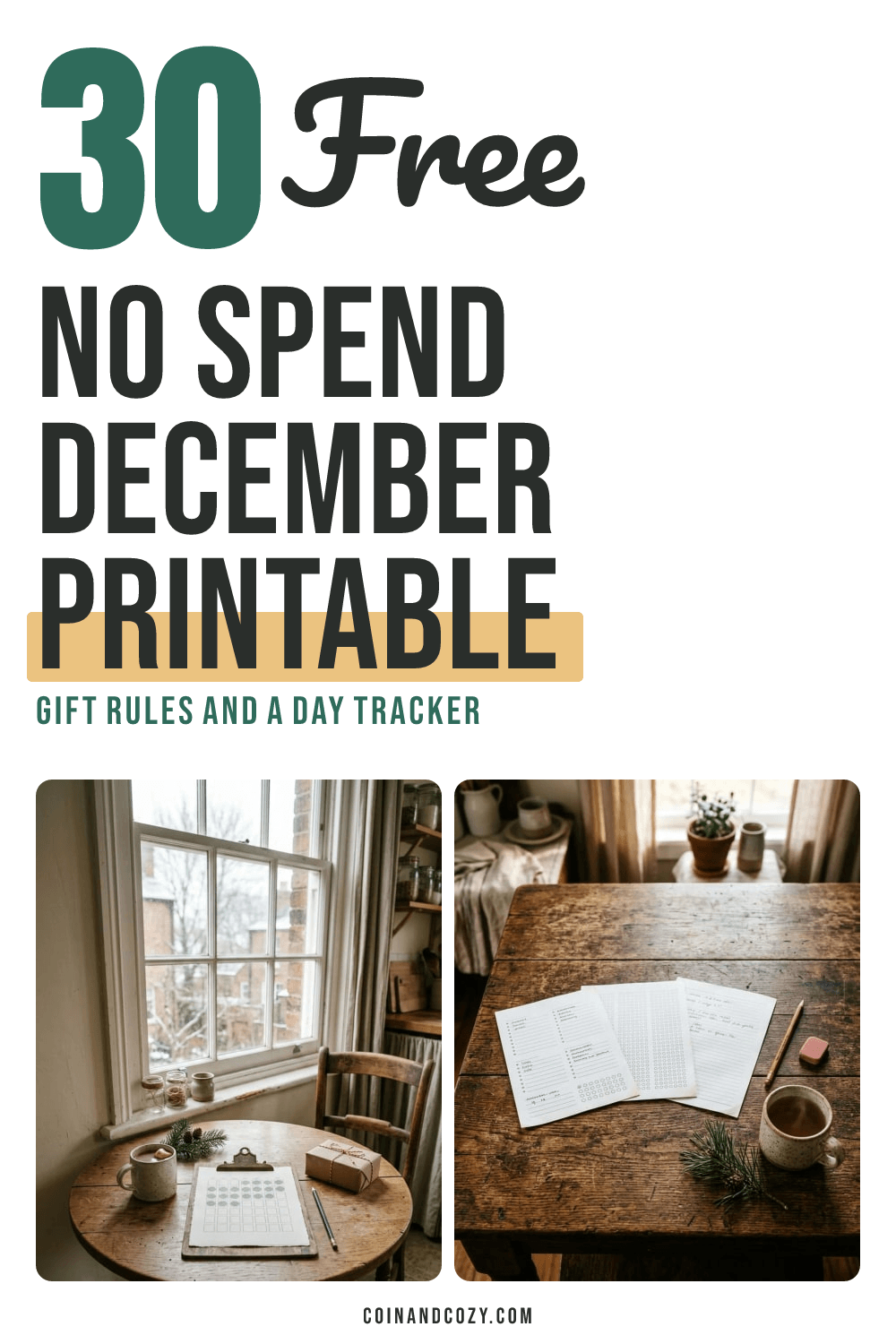
The free No Spend Challenge Tracker is a 5-page PDF in US Letter size. Page 1 is a planning page with two lists, what is still allowed (rent, groceries, gas) and what is on pause, plus space for the gray areas and a line for your why. Then there is a 30-day tracker with a circle for each no-spend day and room to note what you skipped, and a list of 30 free cozy ideas for slow evenings.

Print it on standard letter paper, at home or at a print shop, and use a pencil. December has 31 days and the tracker has 30 circles, so start on Tue Dec 1 and the last circle lands on Wed Dec 30. Thu Dec 31 is your review day, when you write planned against spent.
Why December Breaks a No Spend Challenge
Most no spend months fail on the gray areas, not on the coffee. In December the gray areas are not small. Gifts, postage, food for a party and a work event all show up inside the same 30 days, and if the rules do not say how to treat them, the first one turns into "I already failed".
The fix is to decide each one on paper before Dec 1. Once a category has a rule, a purchase that follows the rule is the plan working, not a slip. For a looser version of the same idea, see our low spend month rules, and for free things to fill the evenings, see no spend December activities for families.
Set the Gift Budget First
Gifts are the biggest gray area, so they get their number before anything else. Do this in November, while shopping is still optional, and then the challenge can stay at zero on every other day.
-
Step 1: Write every name
Include teachers, coworkers and neighbors, who are the names that get bought in a rush. The free Christmas gift list printable has room for 20.
-
Step 2: Put a dollar cap beside each name
Write the price you will pay, tax included. Add the column up before you shop and write the total on your rules sheet.
-
Step 3: Choose two gift shopping days
In the example below they are Sat Dec 5 and Sat Dec 12. Everything on the list gets bought on those days, so the other days can stay at $0.
-
Step 4: Keep gift money separate
A cash envelope or its own line in your budget keeps gift spending from mixing with the rest. Our Christmas cash stuffing guide shows how.

If you do not have a total yet, our Christmas budget calculator helps you pick one. The numbers below are examples for planning, and your own income, bills and debts come first.
The Four December Rules: Gifts, Postage, Party Food and Work Events
Here are the four gray areas and one way to write each rule. Copy the ones that fit your household and change the amounts. A rule you wrote down is easier to follow than a rule you have to invent while standing in a checkout line.
| Gray area | Example rule | Counts as a slip? |
|---|---|---|
| Gifts | Buy only from the capped list, on the two shopping days | No, if on the list and at or under the cap |
| Postage and cards | One post office trip, with cards and parcels together | No, if it is the one trip |
| Party food | Bring one dish made from the pantry plus one planned item | No, up to the cap on the sheet |
| Work events | Pay for one exchange gift at the set cap, skip the extras | No, one exchange only |
| Everything else | Paused until Dec 30: takeout, new clothes, impulse buys | Yes, so write one line and start fresh tomorrow |

For postage, check your own carrier's cutoff dates, because they change every year. Putting all the cards and parcels in one trip is the part that protects the challenge. Mon Dec 7 is the example date below.

For party food, decide the dish before the invitation arrives. A dish made from what is already in the pantry costs little new money, and a single planned item covers the rest. Hosting at home works the same way: the menu is a groceries line, written down before the shop.

For work events, you can opt out of extras without a long explanation. Say yes to the one exchange, give a gift at your cap, and skip the collections for flowers, cards and drinks. Our cheap Christmas gifts for coworkers under $10 list has ideas at that price.
A Worked December Example: Planned Days and No Spend Days
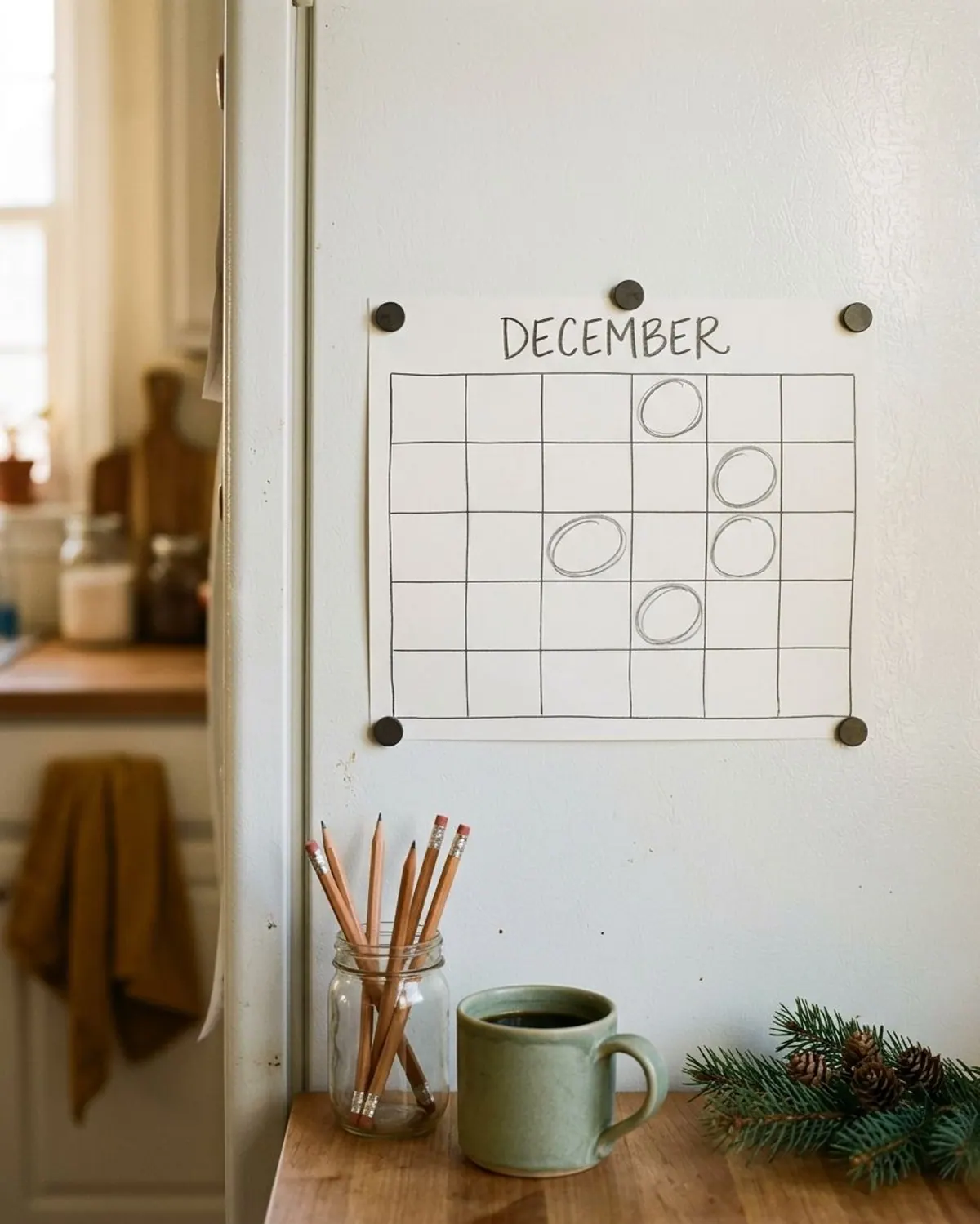
Checked Nov 13, 2026: Christmas is 42 days away, and the challenge starts on Tue Dec 1, 18 days from today. Below is one example with a $400 Christmas total. Five days are planned spending days, and the other 25 of the 30 days are no spend days.
| Line | Amount | When it is spent |
|---|---|---|
| Gifts | $240 | Sat Dec 5 and Sat Dec 12 (the gift list totals $225, plus a $15 cushion) |
| Food and hosting | $80 | Sat Dec 12 for $45 and Mon Dec 21 for $35 |
| Cards and postage | $25 | Mon Dec 7, one trip |
| Party dish and work exchange | $35 | Thu Dec 17, $15 for the dish and $20 for the exchange |
| Decor and wrap | $20 | Sat Dec 5, with the gift shopping |
| Total | $400 | Matches the Christmas number |
That adds up: $240 plus $80 plus $25 plus $35 plus $20 is $400. The $45 and $35 food trips come to $80, and the $15 dish and $20 exchange gift come to $35. Planned days are not slips, so mark them with a square in the margin and color a circle on every other day.
| Date | What happens |
|---|---|
| Fri Nov 20 | Print the tracker, write the rules sheet and finish the gift list |
| Sun Nov 29 | Add up the gift caps and set the gift budget |
| Tue Dec 1 | Day 1: the challenge starts |
| Sat Dec 5 | Planned day: gift shopping 1 and decor and wrap |
| Mon Dec 7 | Planned day: cards and parcels, one post office trip |
| Sat Dec 12 | Planned day: gift shopping 2 and food trip 1 |
| Thu Dec 17 | Planned day: party dish and work exchange gift |
| Mon Dec 21 | Planned day: food trip 2 |
| Fri Dec 25 | Day 25: Christmas, a no spend day |
| Wed Dec 30 | Day 30: the last circle |
| Thu Dec 31 | Review: planned against spent |
What Counts as a Slip, and What to Do About It
A slip is spending that is not on the rules sheet. The plan for a slip should be small enough that you will actually use it: write one line in the tracker, say what it was, and start fresh the next day. If you want a longer slip plan with a weekly check-in, see our low spend month rules.
Planned, not a slip
- A gift on the list, at or under its cap
- The one post office trip
- The party dish and the work exchange at their caps
- A repair or medicine you could not wait on
A slip, so log it
- Takeout because the day was long
- A second trip for gifts not on the list
- Extra collections at work
- Stocking up on Dec 30 for the week after
Can You Do a No Spend Month at Christmas?
Yes, if the gifts are planned first. A strict zero is hard in December because gifts and food are real costs, and a challenge that ignores them tends to end in a week. The version above is a no spend challenge with a short list of planned days, which keeps the other 25 days at zero.
If even that feels like too much, run a low spend December instead. Set the gift cap first, add a small allowance for coffee and cocoa, and keep the rest on pause, as in our low spend month rules. In the example there, $400 is split into $240 for gifts and a $35 allowance.

Free Things to Do When You Want to Spend
Most December spending is a feeling first and a purchase second. A list of free things makes the feeling easier to ride out, which is why the free tracker comes with 30 of them. Our no spend December activities for families adds more, from a lights walk to a library trip.

Your December no spend checklist
Helpful, not required
-
Letter-size clipboard
Typically $6 to $15
Keeps the tracker flat on the fridge or the table.
Check price on Amazon for Letter-size clipboard -
Colored pencils or crayons
Typically $5 to $12
Filling a circle in sage green or red is the daily win.
Check price on Amazon for Colored pencils or crayons -
Kraft cash envelopes
Typically $6 to $15
Holds the gift money apart from everything else.
Check price on Amazon for Kraft cash envelopes
After December: Where to Go Next
The free tracker plus your rules sheet is enough to run the whole challenge. If a vague rule is what usually breaks it, the No-Spend and Low-Spend Pack 2027 ($5) is the next step: a rules builder, a gray-area page for gifts and postage, a December and a January edition, and a slip reset page for the day it goes wrong. It shows "Coming soon" until launch.
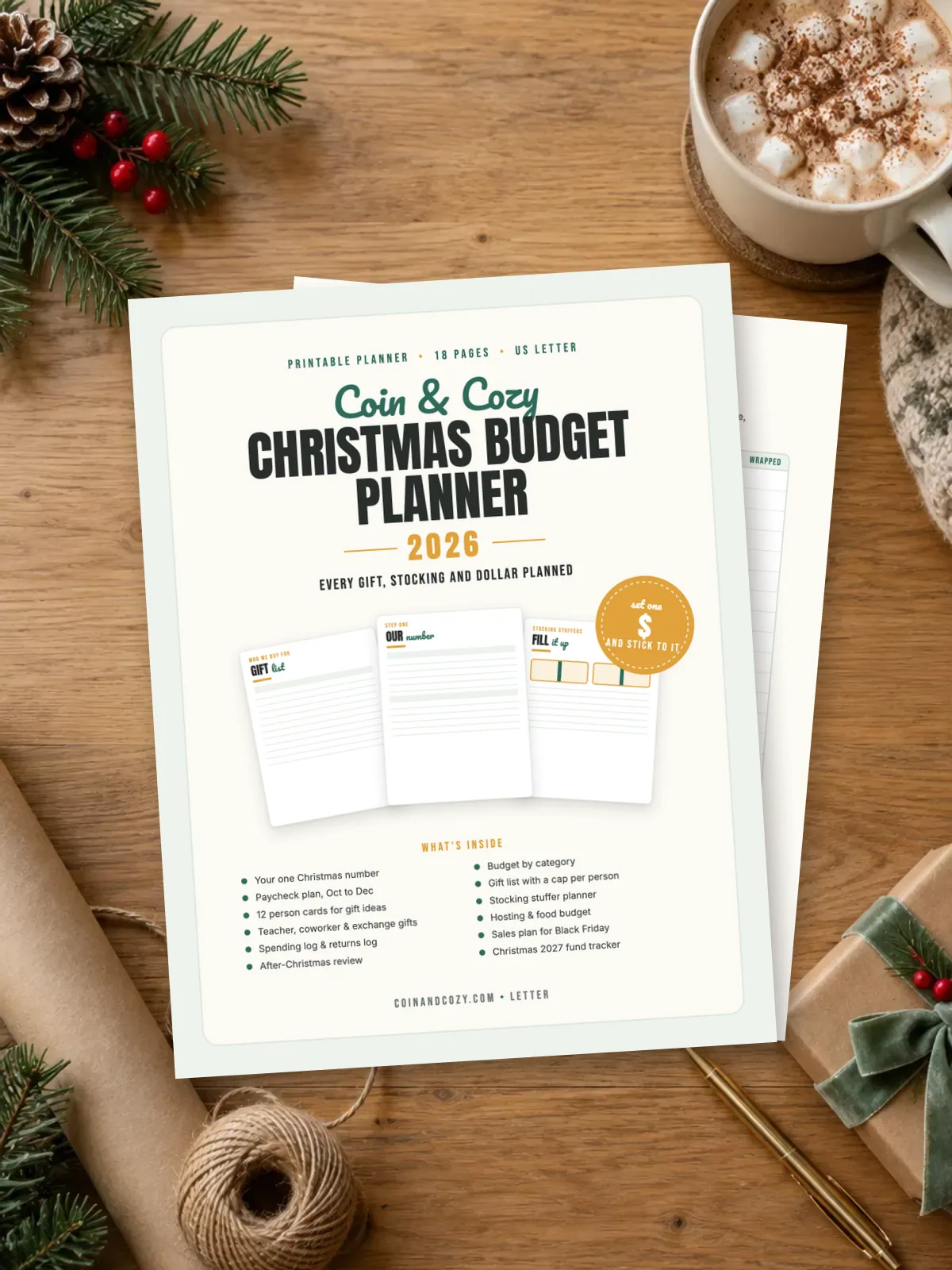
If gifts are the hard part, the Christmas Budget Planner ($6) gives every gift a cap, plans how much of each payday goes to Christmas and has a spending log, so you can see what you really spent. If you want the budget, savings, cash, debt and grocery pages in one binder, the Cozy Money Binder ($21) includes it, and the code COZY20 takes 20% off at checkout, which makes it $16.80.
The January version of this challenge has its own rules, so see our No Spend January rules, tracker and survival list when you are ready, and our money reset for the 30 days after that. All amounts here are examples for planning, not financial advice, and your income, bills and debts come first.
Frequently asked questions
Is there a free No Spend December challenge printable?
Yes. The free No Spend Challenge Tracker is a 5-page PDF with a planning page, a 30-day tracker and 30 free ideas. Enter your email in the form on this page and the PDF is sent to you.
Can you do a no spend month at Christmas?
You can if the gifts, postage, party food and work events are decided first. This page uses a short list of planned spending days and keeps every other day at zero, and if zero is not realistic, a low spend December with a small allowance works too.
What should be allowed in a no spend December?
Essentials such as rent, bills, groceries, gas and medicine, plus the gray areas you wrote down before Dec 1: gifts at their caps, one post office trip, a party dish and one work exchange. Everything else goes on the pause list.
How do I start a no spend December challenge?
Print the free tracker, write the rules sheet, add up your gift caps and pick your planned days before Tue Dec 1. Then color one circle on each no spend day through Wed Dec 30, and review on Thu Dec 31.
What if I slip during the challenge?
Write one line in the tracker saying what it was and start fresh the next day. One slip does not end the challenge; two slips in a week is a sign to shorten the pause list.
Is this financial advice?
No. The amounts are examples for planning, and your own income, bills and debts come first. If money is tight, set a smaller Christmas number you can fund and set the caps to match.
Save it for later
Pin this to your No-Spend Challenges board so it's there when you need it.
Save to Pinterest