This post contains affiliate links. As an Amazon Associate we earn from qualifying purchases, at no extra cost to you. Read our disclosure.
Safety first: This is general money education, not personalised financial advice. Please read our financial disclaimer before you start.
Key takeaways
- Check the inside size: a US bill is about 6 inches long, and an A6 binder is about 5.8 inches on its long side.
- A zipper or snap closure matters more than the material.
- Start with 5 to 7 envelopes, not 20.
- Use an A6 or A7 binder for the week and an A5 binder or a notebook at home as the master record.
- You can start for under $25 and print your own inserts.
In this post16 sections
- What to Check Before You Buy a Cash Stuffing Binder
- Cash Stuffing Binders for Beginners
- 1. A6 zipper budget binder with clear envelopes
- 2. Binder with a set of clear zippered cash envelopes
- 3. A7 mini cash binder
- 4. Zip-around cash envelope wallet
- 5. Minimalist leather envelope wallet
- 6. A5 six-ring master binder for home
- Add-Ons That Make a Binder Work
- 7. Category dividers and tabs
- 8. Extra clear zipper pouches
- 9. Label stickers and washi tape
- 10. Printed savings trackers cut to size
- A Starter Setup for Under $25
- Who Should Skip a Cash Binder
- FAQ
| If you... | Look at | Typically |
|---|---|---|
| Are brand new to cash stuffing | A6 zipper binder with clear envelopes | $10 to $25 |
| Carry cash in a small bag | A7 mini binder or zip wallet | $8 to $20 |
| Only have 2 or 3 categories | Envelope wallet | $8 to $30 |
| Want a home master record | A5 six-ring binder | $12 to $25 |
| Want it to look cozy | Neutral binder plus labels | $15 to $35 |
What to Check Before You Buy a Cash Stuffing Binder
Cash stuffing is a way to budget with physical cash in labeled envelopes. If you are still deciding whether it suits you, read is cash stuffing worth it first. A binder is only worth buying if you will use it.
Guides from budgeting shops and stationery sellers mostly point to A6 as the standard size. A6 is 105 by 148 mm, about 4.1 by 5.8 inches, while a US bill is a little over 6 inches long, so check the listing's inside measurements and the pocket height, and hold a bill up to the numbers. Many sellers sell A6 binders for cash anyway, and bills may sit slightly above the pocket edge.
Binder buying checklist
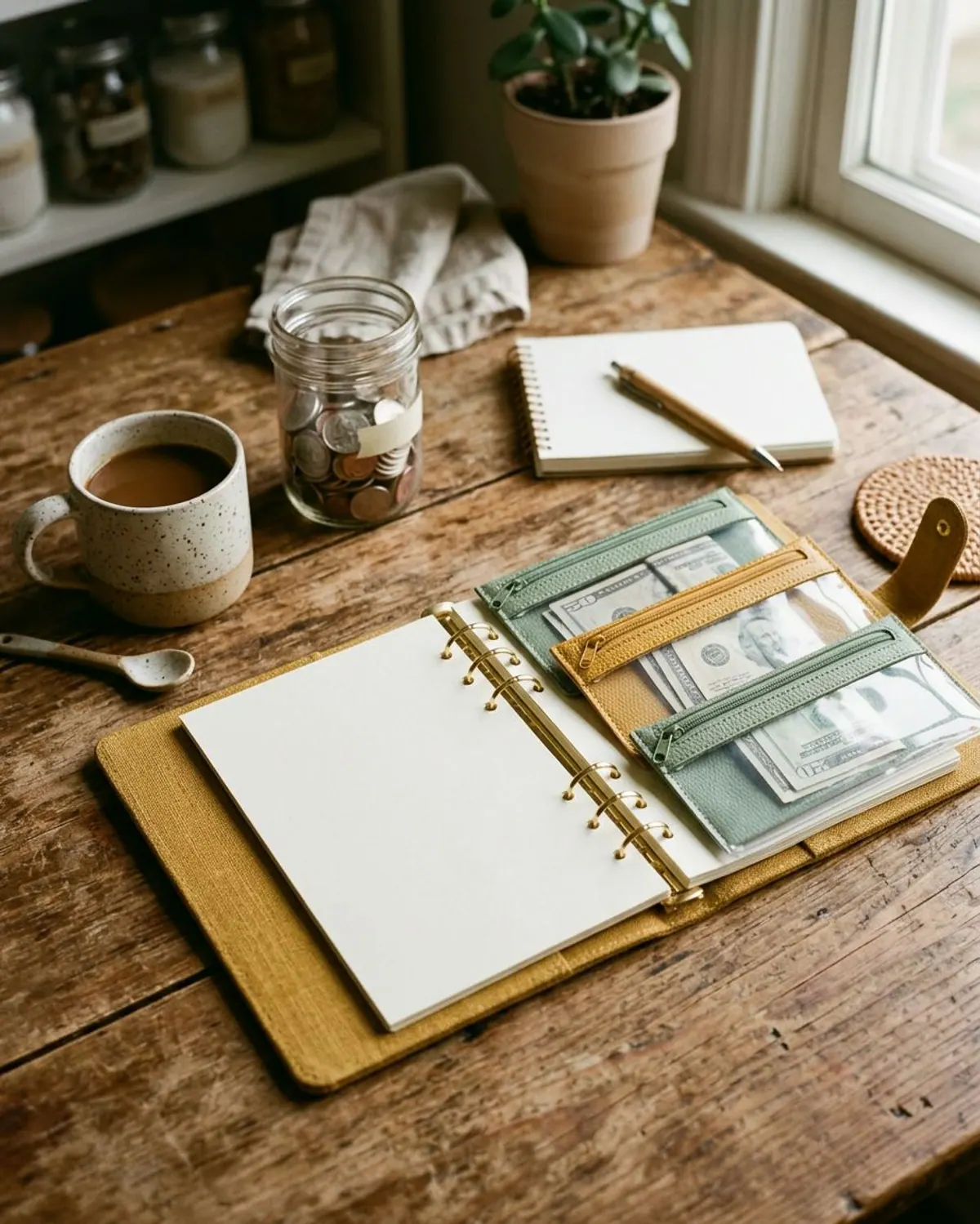
Cash Stuffing Binders for Beginners
These are the types to start with. Each link goes to an Amazon search so you can compare current listings, and brand names that appear in those results are not an endorsement.
1A6 zipper budget binder with clear envelopes
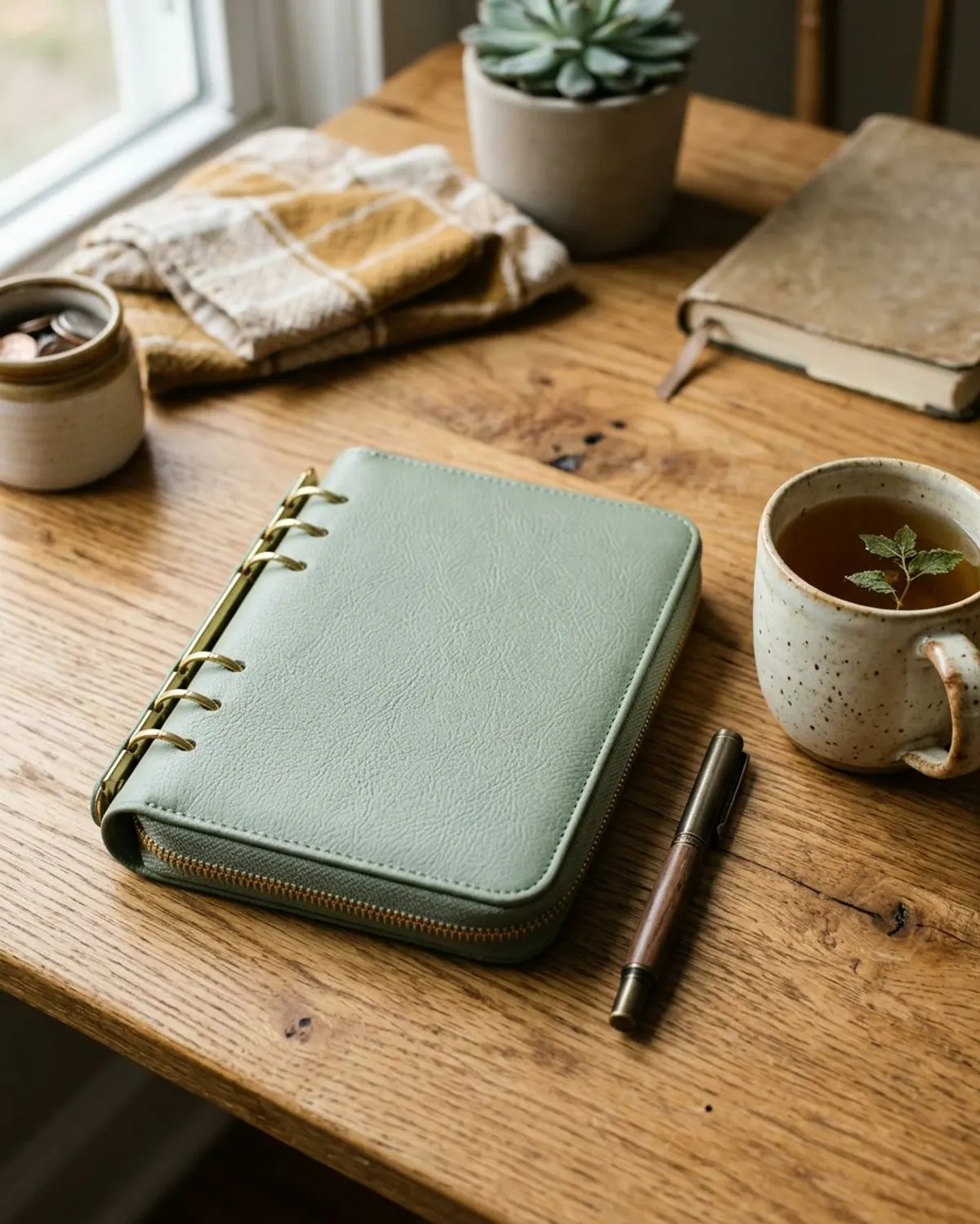
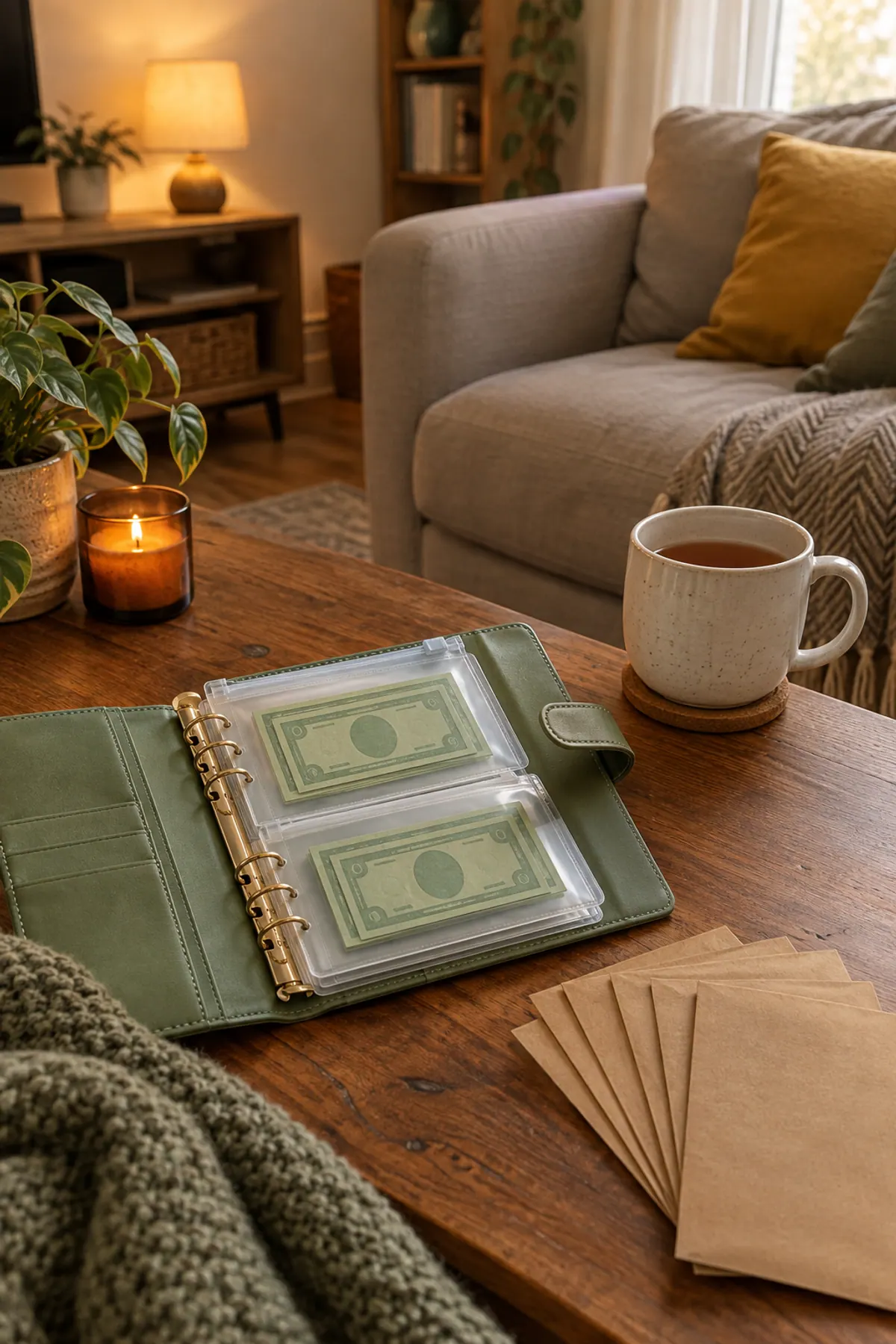
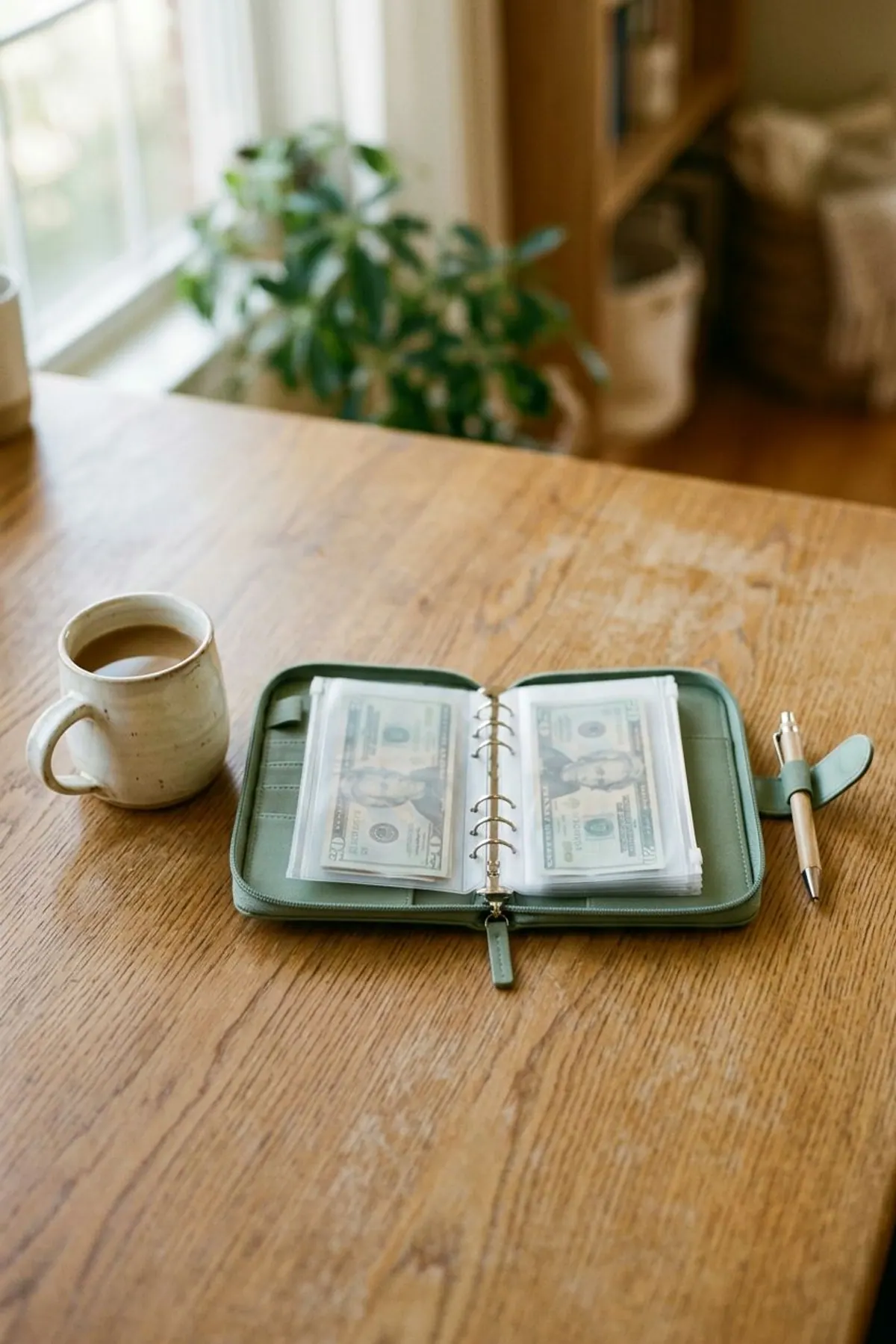
A small ring binder with a zipper around the outside and 6 to 12 clear zip envelopes is the most common starter setup. It keeps cash, a pen and a few cards in one place. Look for a design with a snap or zipper closure and envelopes tall enough for bills.
- Mark a bill against the envelope height before you commit to 12 pockets.
Covers most beginner setups.
2Binder with a set of clear zippered cash envelopes
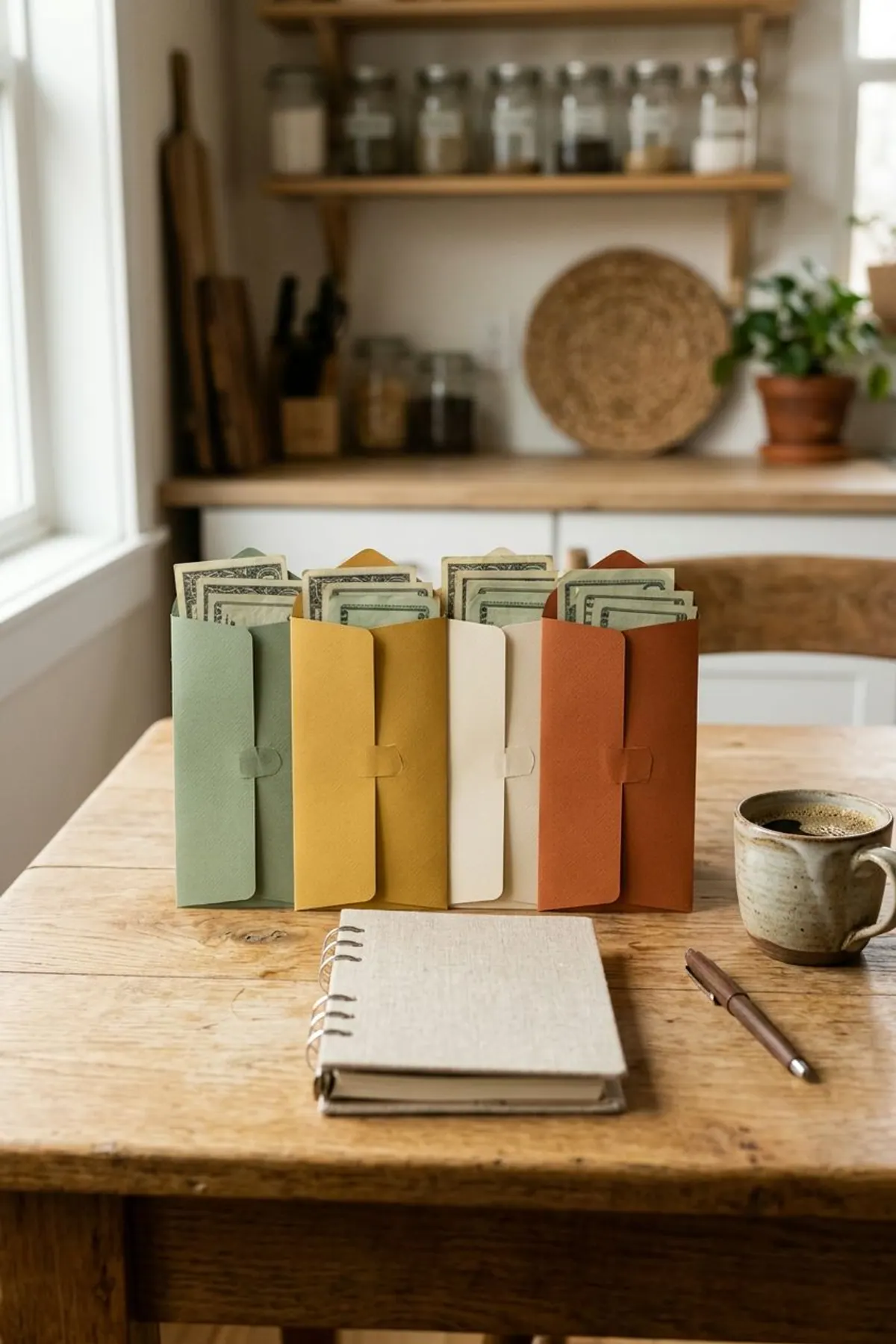
If you prefer more space per category, buy the binder and clear envelope set together. Pockets in several colors help you see categories at a glance, and spares are handy if you add a sinking fund later.
- Use one color per type: bills, spending, saving.
Color coding makes categories easier to find.
3A7 mini cash binder
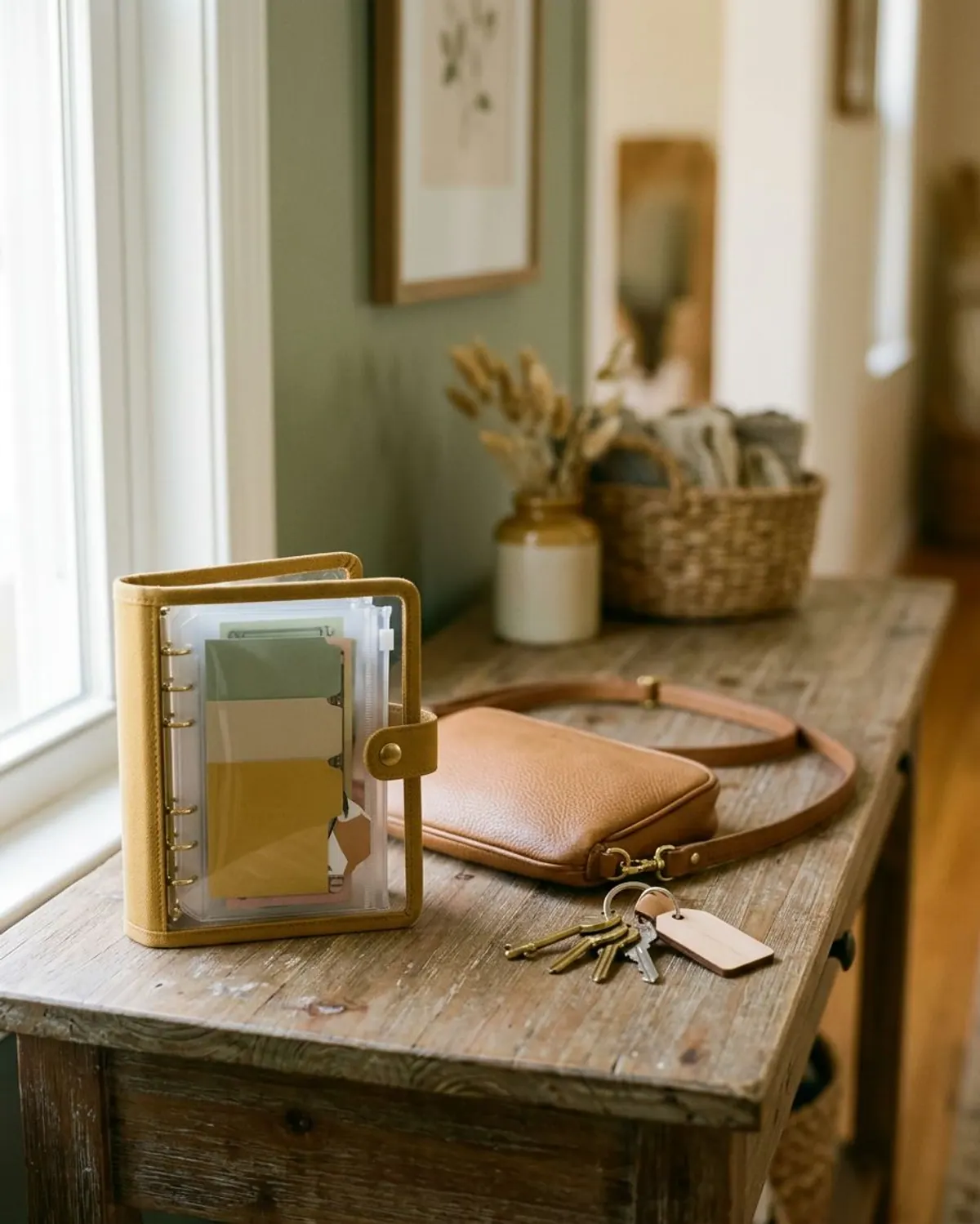
A7 binders fit in a small bag or large pocket. They hold fewer bills, so they suit people who only stuff cash for a few spending categories like groceries, gas and fun money.
- Keep a spare envelope at home for the rest of the cash.
Fits the smallest bags.
4Zip-around cash envelope wallet
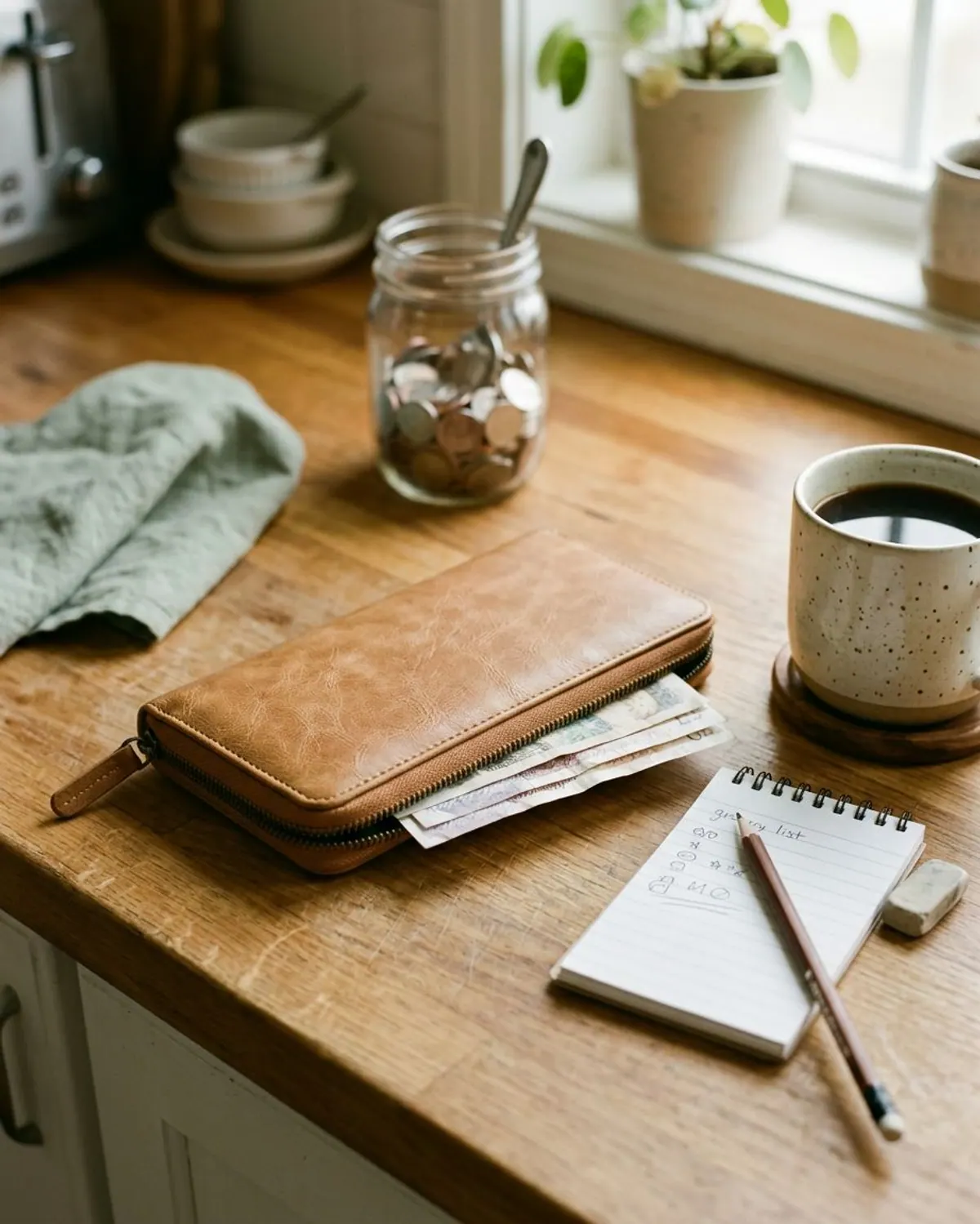
A wallet with several zipped or snapped compartments works for 3 to 6 cash categories. It is quicker than a binder in a checkout line, and it avoids the ring spine.
- Label each compartment with a small sticker so you do not have to guess.
Fast to carry and use.
5Minimalist leather envelope wallet

A slim wallet suits people who only use cash for 1 to 3 categories, like groceries and fun money, and use a debit card for everything else. Genuine leather can cost more, but synthetic versions work too.
- Pick a closure you can open with one hand.
A durable pick for a small number of categories.
6A5 six-ring master binder for home
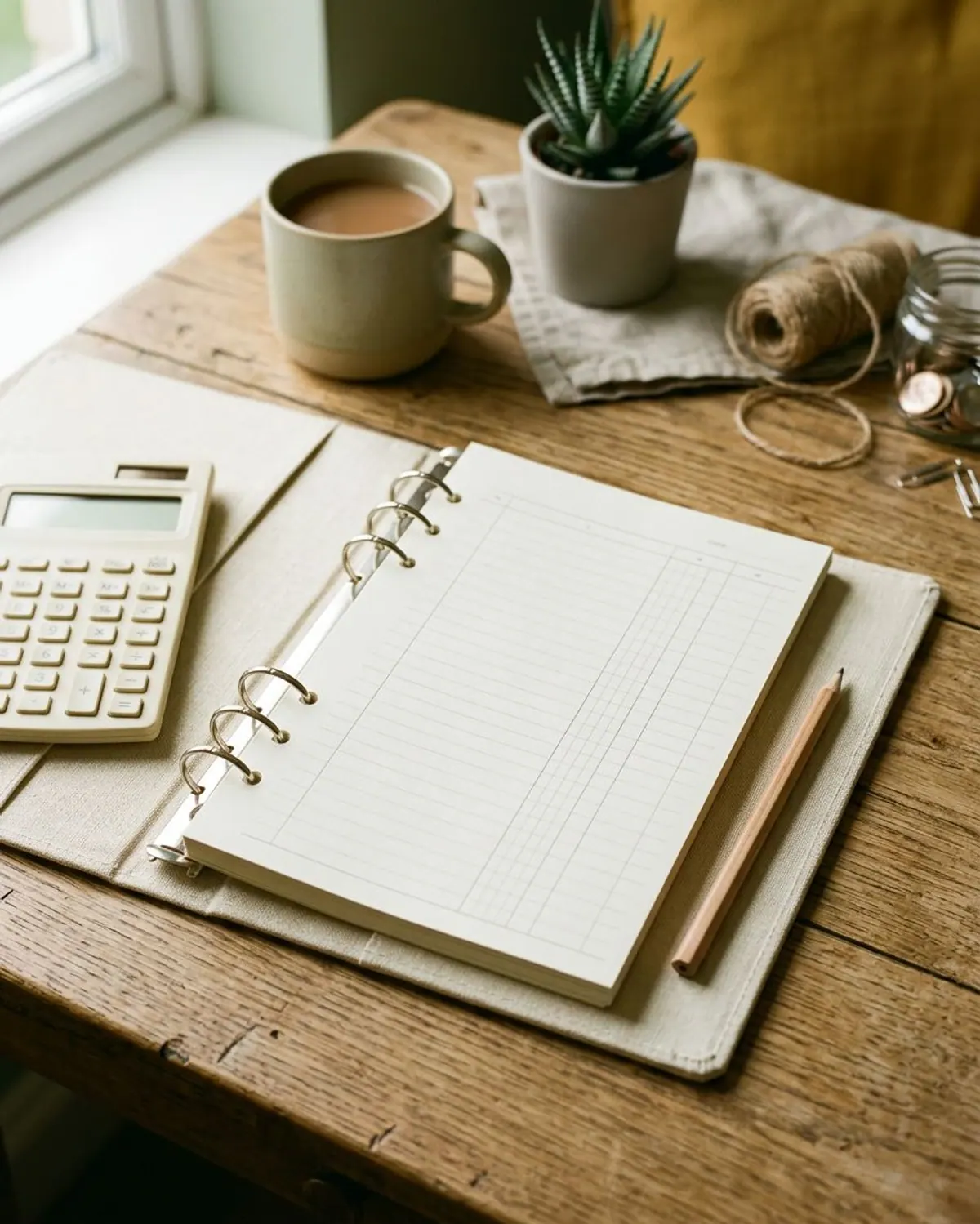
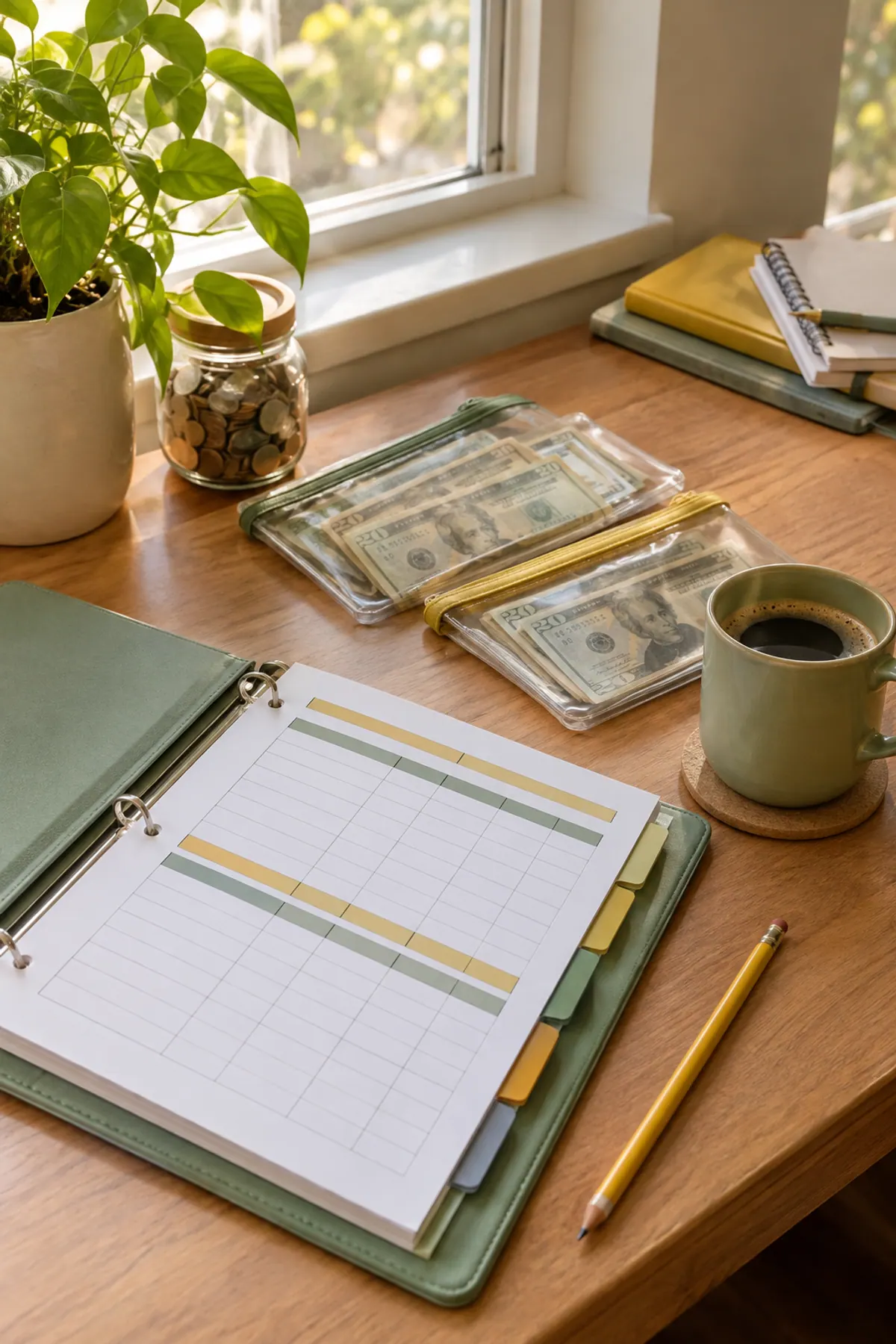
Not every dollar needs to travel. An A5 binder stays on your desk with your paycheck plan, bill list and sinking funds, and you move only the week's spending cash to the small binder. It is the best place to keep printed trackers.
- Pair it with the budget binder ideas list of sections.
A stay-home record for the full plan.
Add-Ons That Make a Binder Work
7Category dividers and tabs
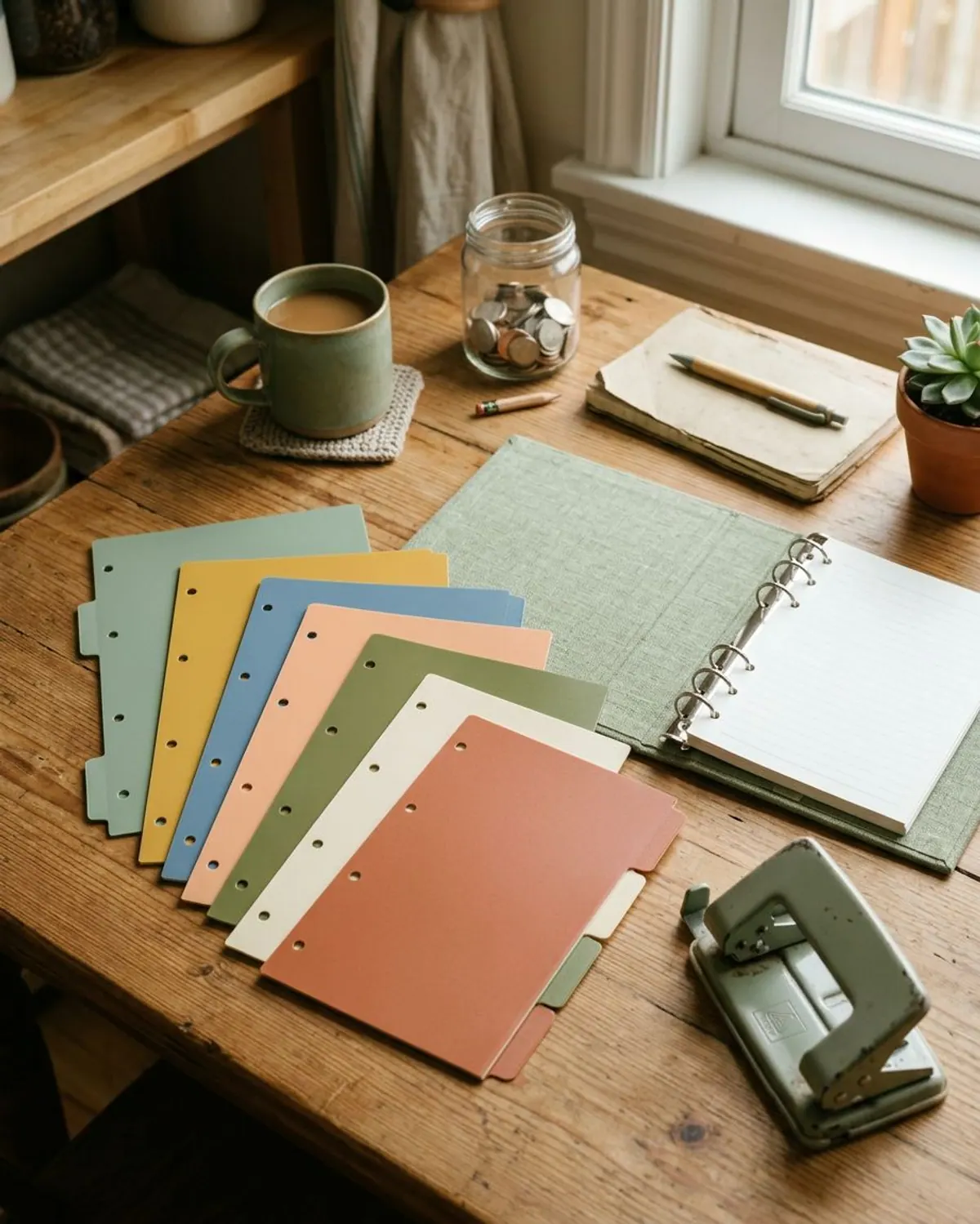
Plain tabbed dividers let you keep paper sheets, a payday plan and sinking fund pages in the binder behind the cash. Choose dividers that match the hole pattern of your binder, and check that they close the rings.
- Use 5 tabs: Bills, Spending, Saving, Sinking funds and Tracker.
Keeps paper and cash sections separate.
8Extra clear zipper pouches
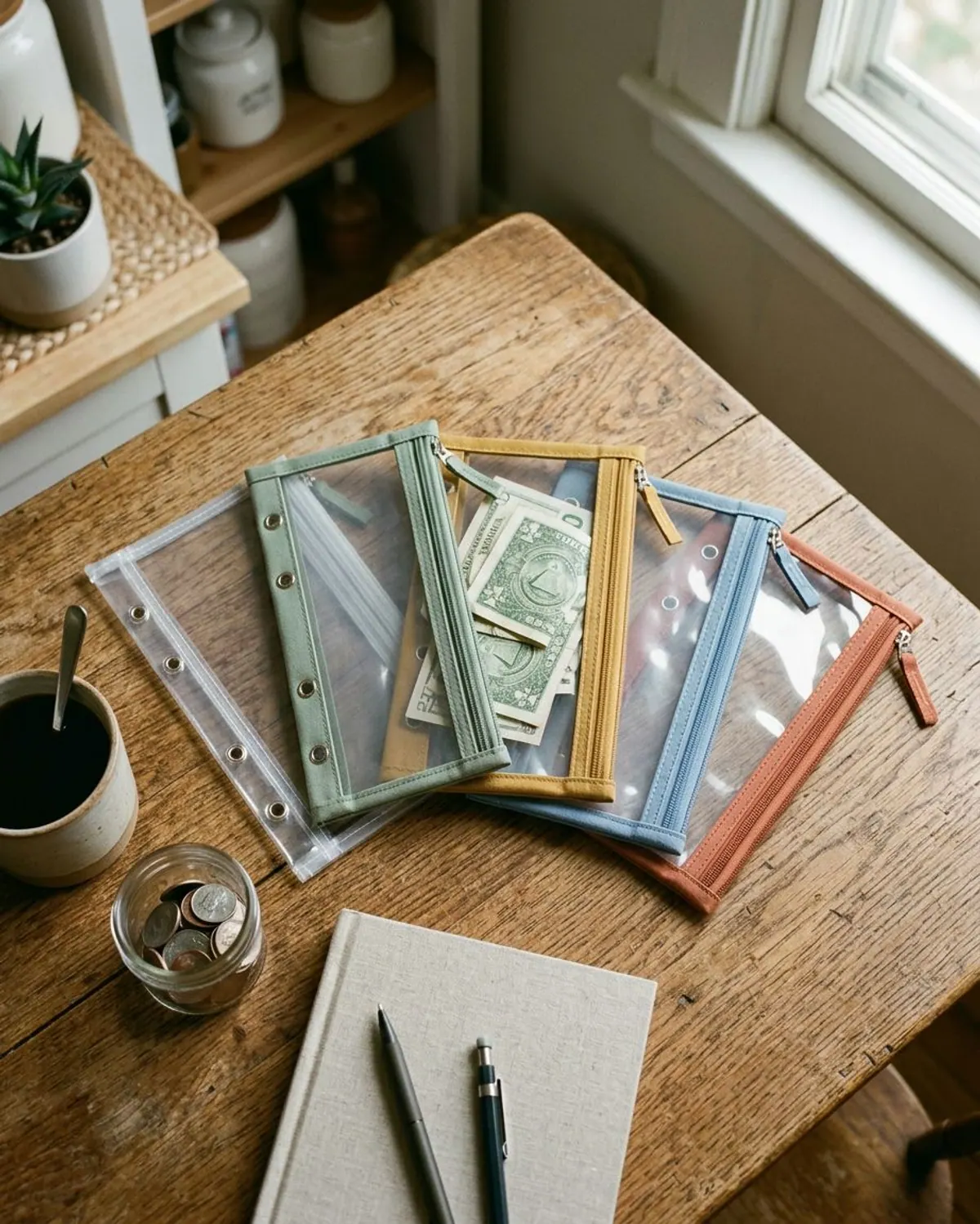
Refill pouches let you add a sinking fund for car repairs or Christmas without buying a new binder. Make sure the size and hole count match your rings.
- Count your current pockets before buying more.
Easy to add categories.
9Label stickers and washi tape
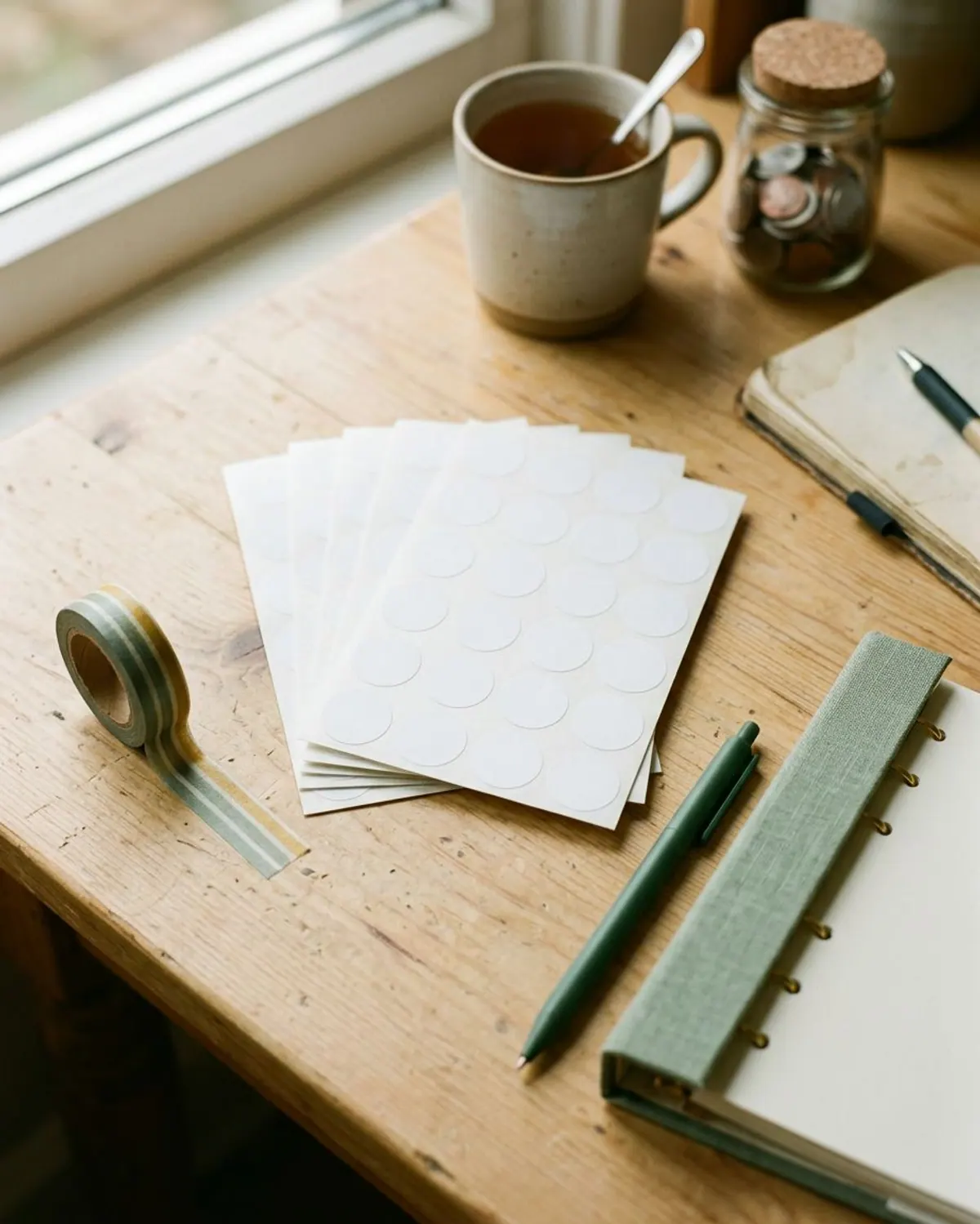
Labels turn a plain pouch into a clear category, and washi tape in sage or mustard makes the binder match your style. Label with a pencil first in case your categories change.
- Write amounts on the label only if you are sure they will not change.
Cheap way to make it look cozy.
10Printed savings trackers cut to size

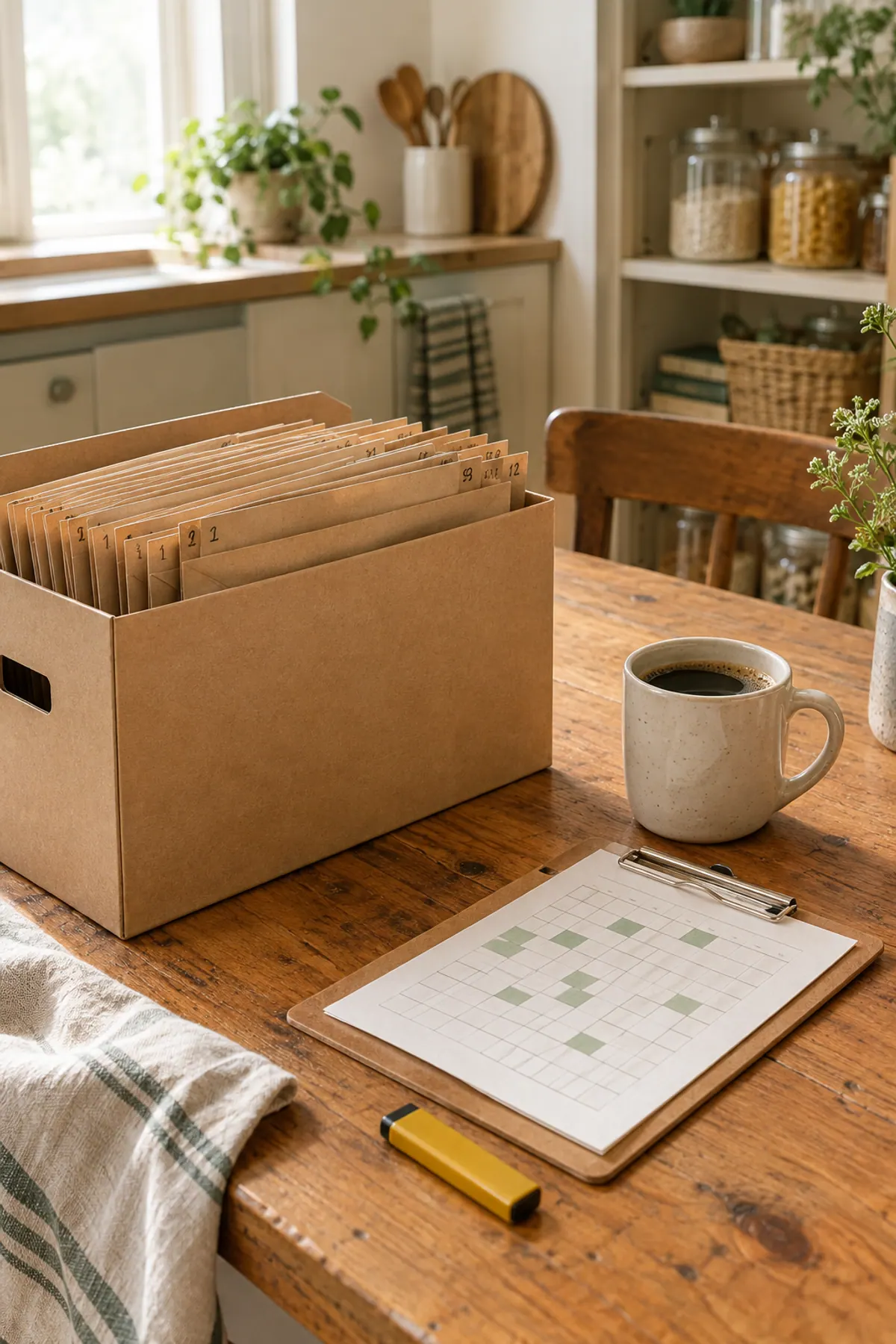
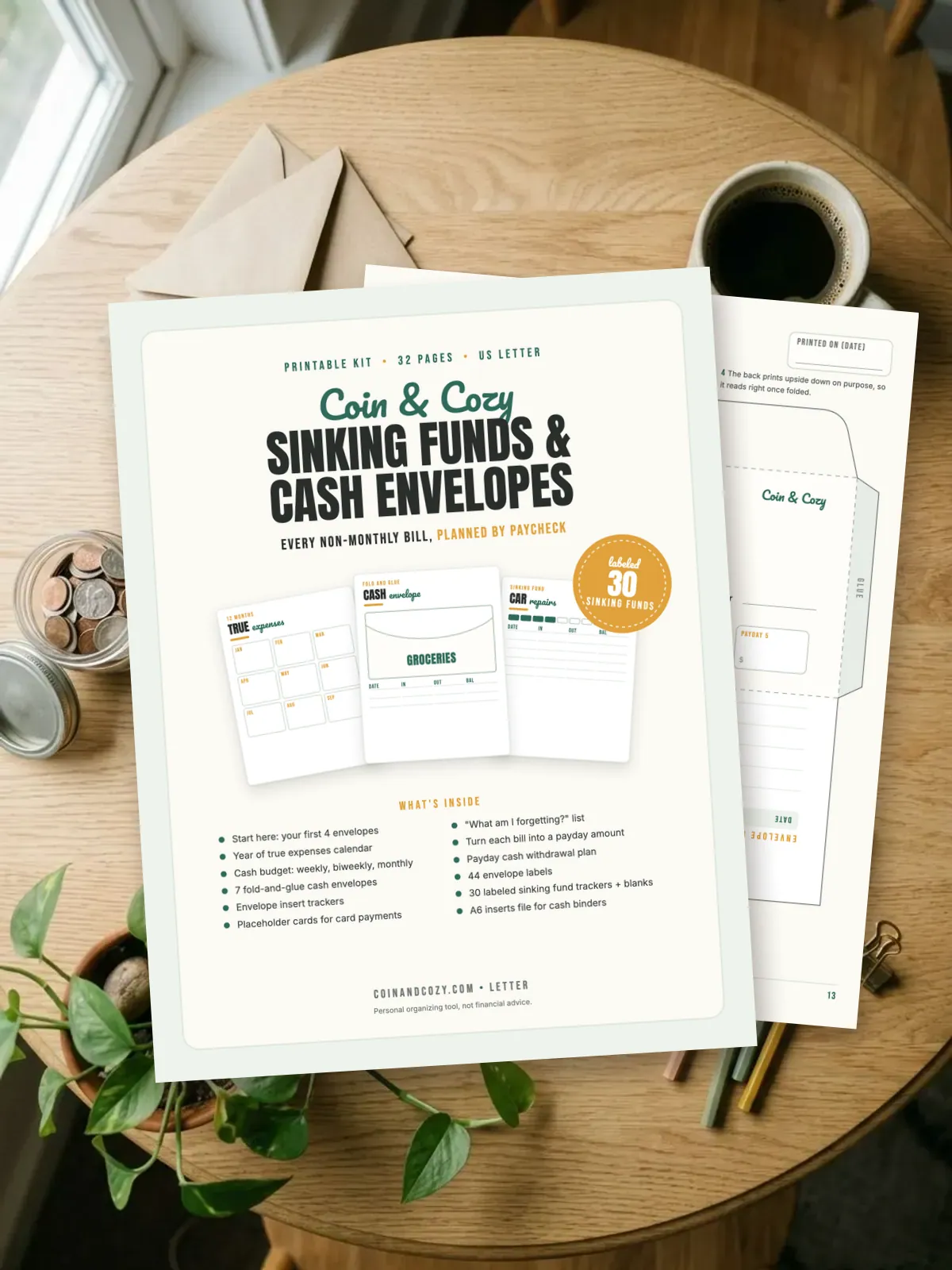
A binder works best with a tracker, such as a sinking fund page or a savings challenge. You can print pages at home at A6 size, or buy printable pages sized for a binder. Our Sinking Funds and Cash Envelope Printables include A6 inserts, and the 100 envelope challenge has a free tracker.
- A hole punch that fits A6 paper saves a lot of trimming.
Turns a binder into a plan, not just a wallet.
A Starter Setup for Under $25
If you want to try cash stuffing without spending much, you can build a basic binder for roughly the cost of lunch. These price ranges are typical, not quotes.
| Item | What you need | Typical cost |
|---|---|---|
| A6 zipper binder with envelopes | 1 | $10 to $25 |
| Labels or sticky notes | 1 pack | $0 to $5 |
| Printed inserts from the kit or a free tracker | As needed | $0 to $9 |
| Pen | 1 | $0 |
| Estimated total | About $10 to $39 |
Then choose 5 to 7 categories. Common ones are groceries, gas, fun money, personal care and one sinking fund, and the sinking funds categories guide has more. If this is your first month, stuff only what you can afford and add categories later.
Who Should Skip a Cash Binder
What we like
- You like seeing money leave as you spend
- You overspend with a card
- You only need cash for groceries and fun money
- You will use it every payday
Keep in mind
- You are paid by direct deposit and do not want to withdraw cash
- You pay almost everything online
- You would feel unsafe carrying cash
- A spreadsheet or app suits you better
If a binder is not for you, the best budgeting apps guide compares paper-free options, and the Cozy Money Binder gives you a printable binder of planners if you want paper without the cash.
This guide is for general information and is not financial advice. Prices and products change, we have not tested these items and the budgeting examples are not personalized advice.
Frequently asked questions
What size binder is best for cash stuffing?
A6 is the most common size for cash stuffing binders. A6 is about 4.1 by 5.8 inches, a US bill is a little over 6 inches long, so check the inside pocket measurements and expect bills to sit slightly above the edge in some designs. A7 is smaller for light carry, and A5 is a good home master binder.
Is a budget binder worth it?
It is worth it if you will use it every payday and you like seeing physical cash. It is not worth it if you pay almost everything online or you would prefer an app. Start with an under-$25 setup before buying anything expensive.
What is the difference between a budget binder and a cash binder?
A budget binder holds papers like your budget and trackers. A cash binder holds clear envelopes for physical cash. Many people use one binder for both, or an A5 budget binder at home and an A6 cash binder in a bag.
How many envelopes should a beginner use?
Start with 5 to 7. Groceries, gas, fun money, personal care and a sinking fund cover most households. Add more when the first ones feel easy.
Can I use a wallet instead of a binder?
Yes. A zip-around envelope wallet works for 3 to 6 categories, and a slim wallet works for 1 to 3. A binder is better if you want paper trackers inside.
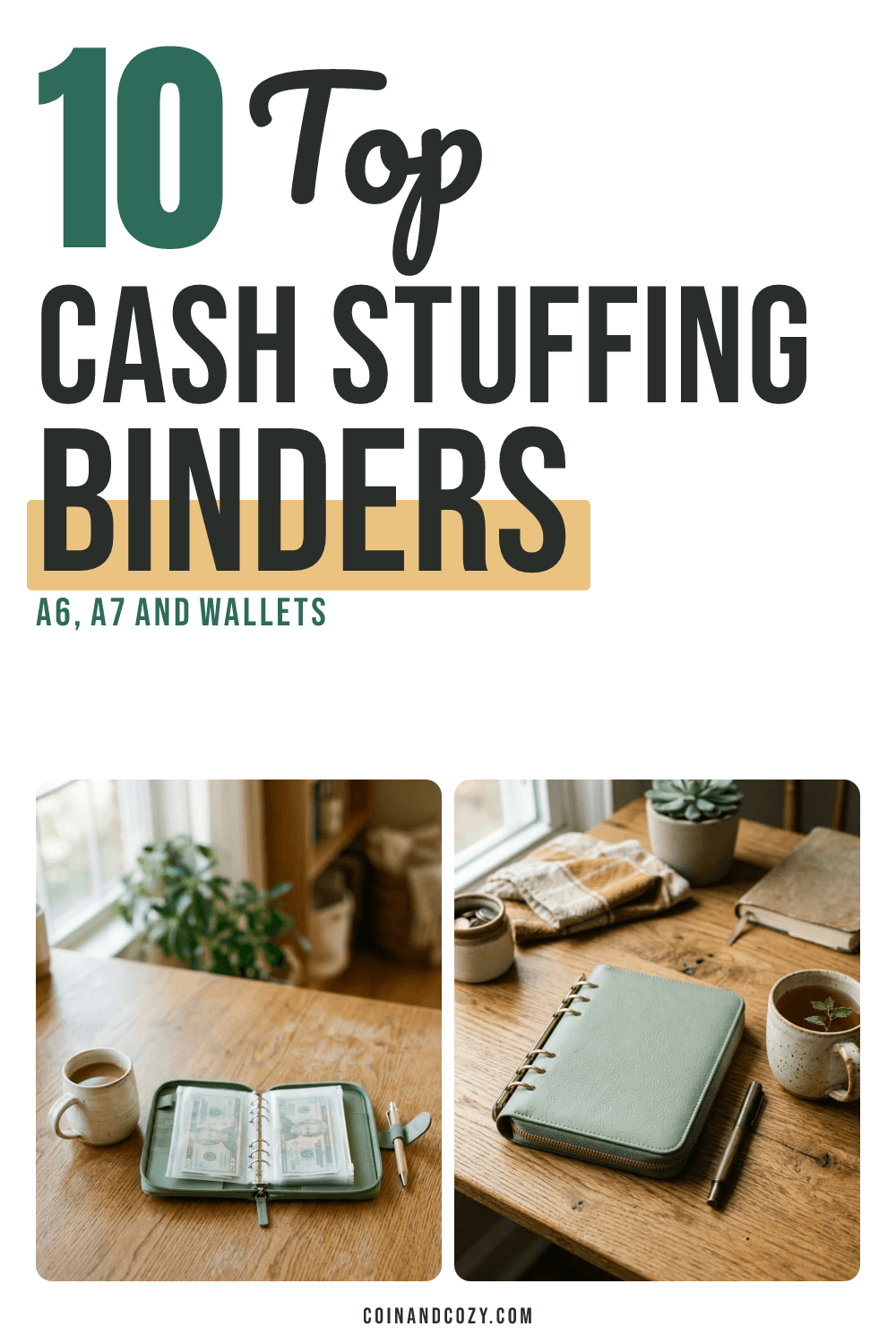
Save it for later
Pin this to your Budgeting Basics board so it's there when you need it.
Save to Pinterest