This post contains affiliate links. As an Amazon Associate we earn from qualifying purchases, at no extra cost to you. Read our disclosure.
Safety first: This is general money education, not personalised financial advice. Please read our financial disclaimer before you start.
Key takeaways
- Pick one per-guest number ($8, $10 or $15), then multiply: 10 guests at $10 is a $100 pot (our arithmetic).
- Split the pot into four lines: food 60%, drinks 20%, tableware and extras 10%, buffer 10%.
- The American Farm Bureau Federation priced a classic Thanksgiving menu for 10 at $55.18 in 2025, food only; the 2026 survey is usually out in mid to late November.
- Assign jobs by category (main, vegetable, starch, bread, dessert, drinks, tableware) so the table is balanced.
- Settle up within two days and roll small leftovers into next year's pot.
In this post13 sections
- What Friendsgiving Costs When Everyone Chips In
- The Per Guest Number: Pick $8, $10 or $15
- The Four Line Split: Where the Pot Goes
- Three Ways to Split the Bill
- Who Brings What for 10 Guests
- Friendsgiving on a Budget in 6 Steps
- A Group Text That Does Not Feel Awkward
- Borrow, Share or Skip: Tableware and Extras
- Settle Up Without Spreadsheet Drama
- Leftovers: Who Takes What
- If the Budget Is Even Tighter: A $5 a Guest Plan
- Where Friendsgiving Fits in Your Holiday Money
- FAQ
Quick note: product links go to Amazon search results or our own shop, and we may earn a small commission if you buy, at no extra cost to you. Dollar amounts are labelled examples, not advice about your money, and prices change by store and week. This is general information, not financial advice.
What Friendsgiving Costs When Everyone Chips In
Our Thanksgiving dinner on a budget article is about feeding one household. Friendsgiving is a different money problem: one person has the oven and the table, and everyone else has a share of the bill. Without a plan, the host quietly pays for the turkey, the drinks and the paper plates, and the guests bring one bag of chips.
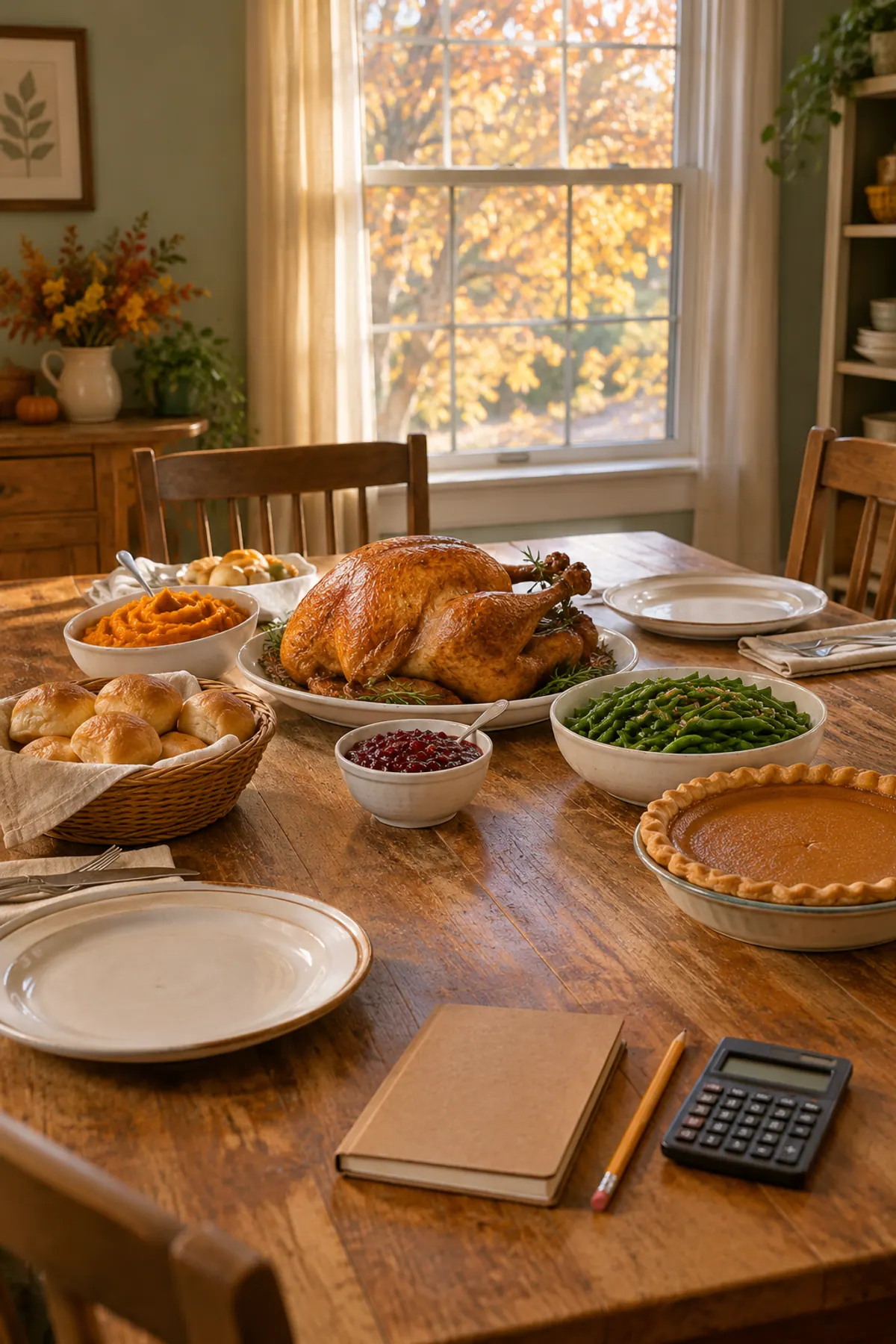
A useful price anchor is the American Farm Bureau Federation's annual Thanksgiving survey. In 2025 it priced a classic menu for 10 people at $55.18, about $5.52 a person, and an expanded menu at $77.09 (AFBF, November 19, 2025). That figure is food only: the survey counts a gallon of milk as the one drink and nothing for appetizers, decor or tableware. Those are 2025 prices, and the 2026 survey is usually released in mid to late November, so treat the number as a reference point, not a promise.
Friendsgiving adds three lines the survey leaves out: drinks, tableware and a small buffer. The plan below turns all four lines into one per-guest number your group can agree on in a single text.

The Per Guest Number: Pick $8, $10 or $15
Start with one number per guest, then multiply. That is the whole pot. These amounts are our own arithmetic for a group that wants a full dinner, not a survey of what people spend.
| Per guest | 6 guests | 10 guests | 14 guests |
|---|---|---|---|
| $8 | $48 | $80 | $112 |
| $10 | $60 | $100 | $140 |
| $15 | $90 | $150 | $210 |
If $10 a guest feels high for your group, drop to $8 and ask for the same jobs. If you want a bigger main dish or a drinks table, go to $15. The number matters less than saying it out loud before anyone shops.
The Four Line Split: Where the Pot Goes
A single pot is easy to overspend. Four lines keep each part of the dinner honest. Here is the $100 pot for 10 guests at $10 each, which scales to any group size by keeping the same shares.
| Line | Share | Amount | Who covers it |
|---|---|---|---|
| Food | 60% | $60 | Main dish, sides, rolls, dessert |
| Drinks | 20% | $20 | Cider, sparkling water, coffee or tea |
| Tableware and extras | 10% | $10 | Plates, cups, napkins, candles |
| Buffer | 10% | $10 | Forgotten items, ice, a spare dish |
| Total | 100% | $100 |
The $60 food line sits close to the Farm Bureau's 2025 food figures for a classic menu for 10, though your local prices, your stores and your menu will move it. If your group wants the expanded menu, raise the food share before you raise the buffer.
Three Ways to Split the Bill
Pick the style before you pick the date. Each one moves money differently and suits a different kind of group.
| Style | How it works | Best for | Watch for |
|---|---|---|---|
| Pooled pot | Everyone sends the per-guest amount to the host, who shops once and keeps the receipts | Groups of friends who trust one organized host | The host does all the shopping and needs a clear refund rule |
| Host cooks the main, guests bring sides | Host buys the main and gravy; each guest buys one side, dessert or drinks | Groups with a small kitchen or a host who likes cooking | Uneven costs if one side is much pricier than another |
| Full potluck | Every dish is assigned and every guest pays for their own | Larger groups or very tight budgets | Five desserts and no vegetables unless jobs are assigned |
Most groups of six to ten do well with the pooled pot. Groups of twelve or more usually get a better dinner from a full potluck with assigned categories.
Who Brings What for 10 Guests
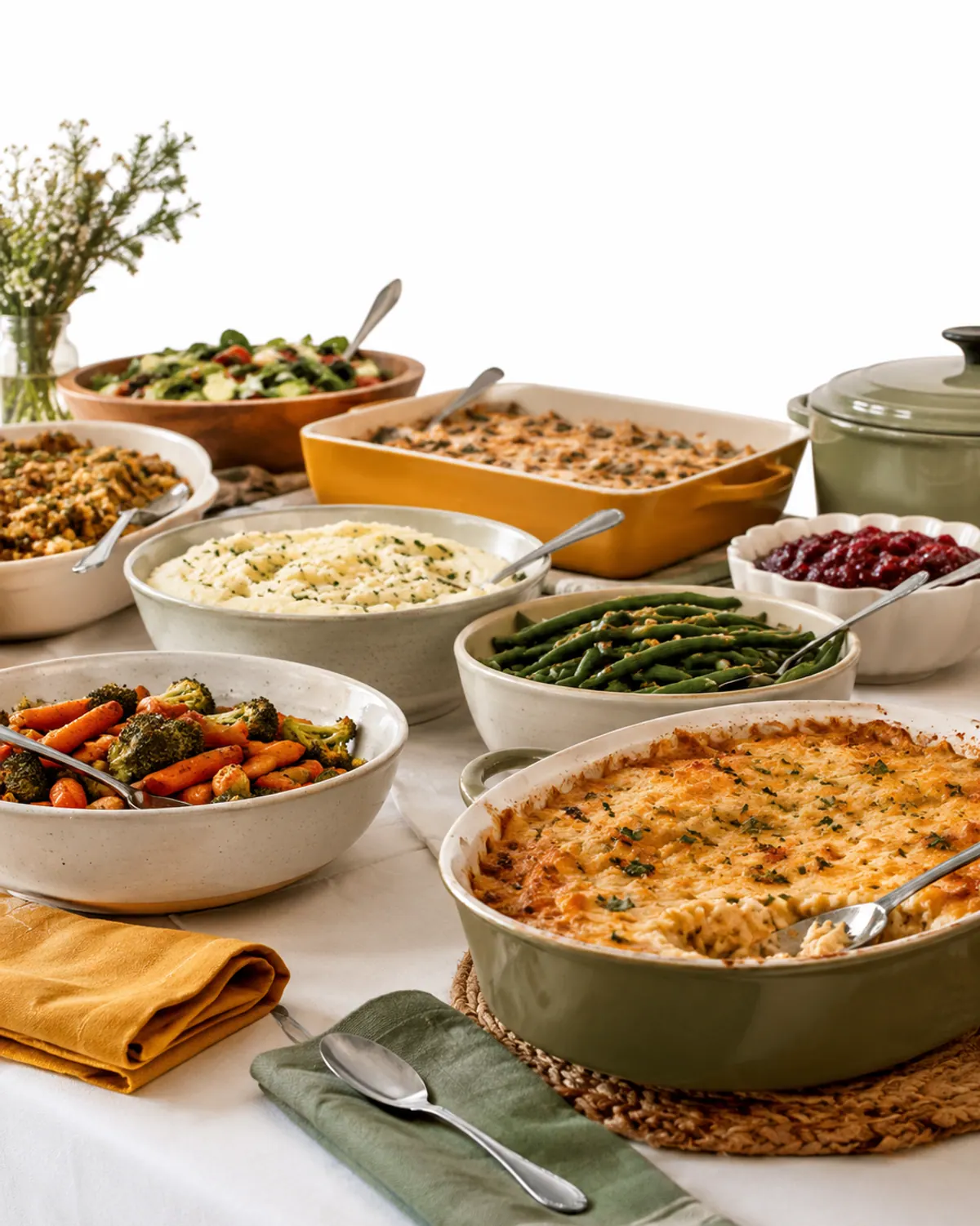
Assign jobs by category so the table has a main dish, vegetables, a starch, bread and dessert. This example matches the $100 pot above, with the host covering the main.
| Job | Who | Example budget |
|---|---|---|
| Main dish and gravy | Host | $24 |
| Vegetable side | Guest A | $7 |
| Starch side | Guest B | $7 |
| Cranberry sauce and a salad | Guest C | $7 |
| Rolls and butter | Guest D | $5 |
| Dessert | Guest E | $10 |
| Drinks | Guest F | $20 |
| Plates, cups, napkins and candles | Guest G | $10 |
| Ice and leftover containers | Guests H and I | About $0 to $5 each, from the buffer |
| Buffer | Host holds | $10 |
The jobs total $100 across ten people. The menu can name any dishes your group likes, since the plan only needs a category and a spending cap for each one. For recipes, bring your own family favorites.
Friendsgiving on a Budget in 6 Steps
Thanksgiving is Thursday, November 26, 2026. The weekends of November 7 to 8, 14 to 15 and 21 to 22 are the usual Friendsgiving dates, so there is still time to plan without rushing.
-
Step 1: Pick the date and count heads
Choose a weekend, ask who is in, and write the number down. Every dollar figure below depends on it, so settle the headcount before you talk money.
-
Step 2: Set the per-guest number
Use $8, $10 or $15 from the table above. Say it plainly in the first message so nobody is surprised later.
-
Step 3: Send one group message
Include the date, the number, the split style, the deadline to claim a job and how to send money. One clear message beats ten side chats.
-
Step 4: Assign jobs by category
Write down who has the main, vegetables, starch, bread, dessert, drinks and tableware. This stops five desserts and no gravy.
-
Step 5: Shop once, from the pantry first
Check what the host already has: butter, flour, oil, salt and spices. Make one list, one trip and keep every receipt.
-
Step 6: Settle up within two days
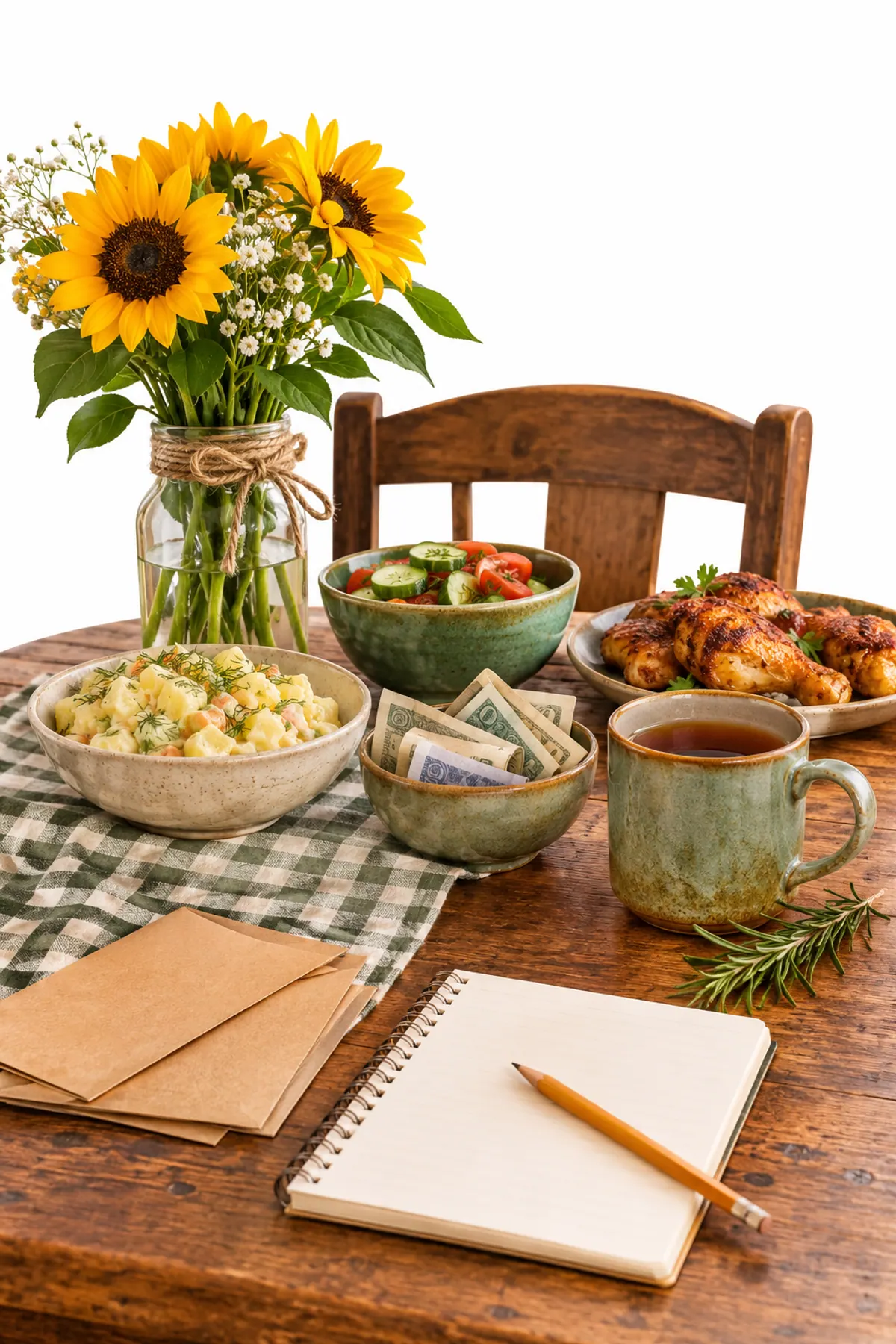
Compare receipts to the pot, return any extra and thank everyone. Tracking it in a notebook takes five minutes and keeps the group friendly.

A Group Text That Does Not Feel Awkward
Talking about money with friends is the hardest part. Use plain words, keep it short and make it sound like a plan, not a bill. Copy and change this message:
Friendsgiving is on Saturday, November 14 at 5. To keep it easy and fair, let's each put in $10 or bring a dish worth about that. I'll host and cook the main. Reply with the job you want: vegetable, starch, rolls, dessert, drinks or plates and cups.
If someone is short on cash, offer a trade: they bring a dish from their own pantry, wash up or bring the playlist. The goal is that everyone can say yes.
Borrow, Share or Skip: Tableware and Extras
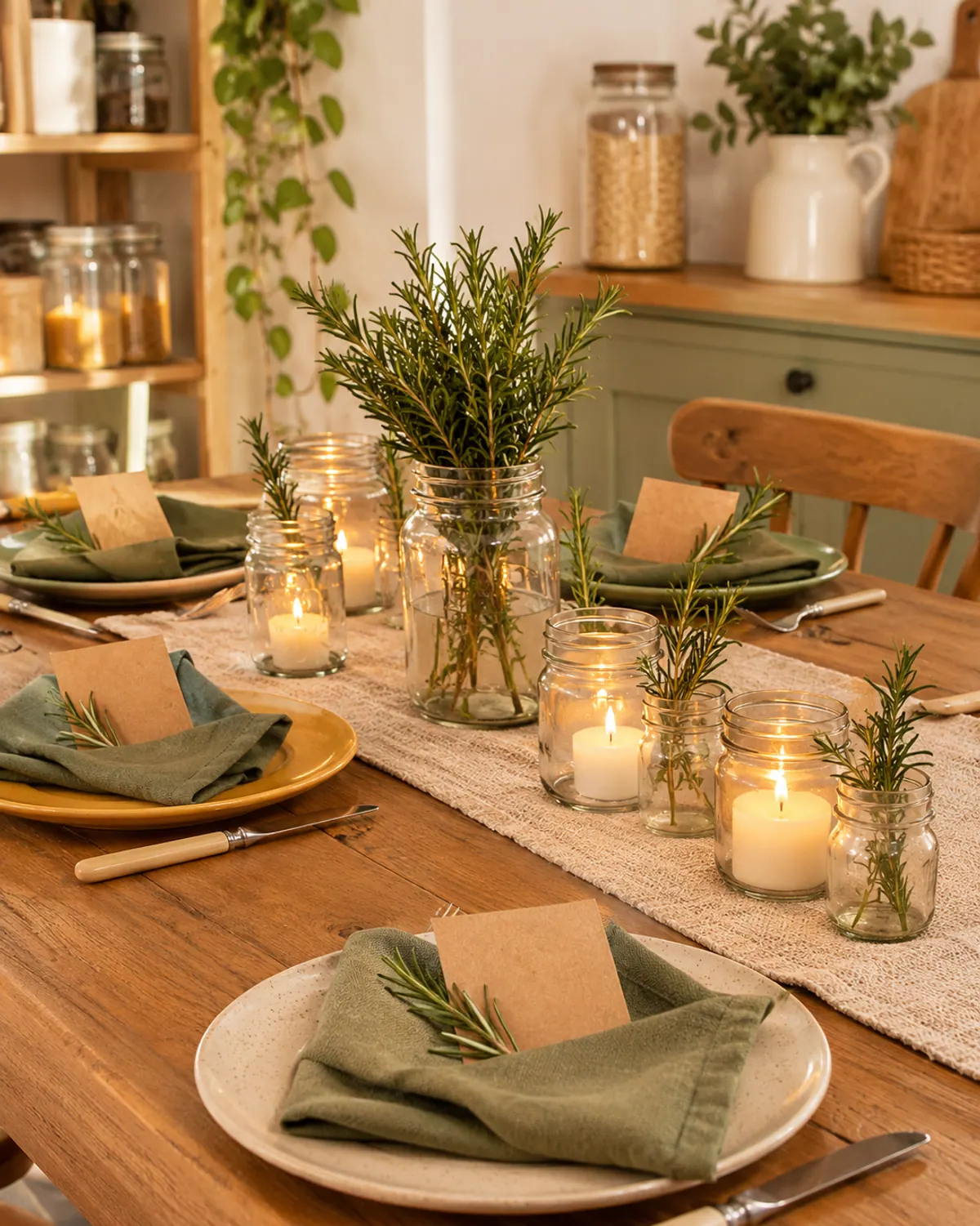
The tableware line is the easiest one to cut. Ask the group before you buy anything.
Borrow before you buy
If you do need supplies, buy once and keep the cost small. These are useful for a group dinner and reusable for the next one.
Low-cost supplies for a group dinner
-
Reusable plastic tablecloth
Typically $6 to $14
Covers a mismatched table and wipes clean.
Check price on Amazon for Reusable plastic tablecloth -
Disposable foil serving pans
Typically $8 to $16
Lets guests bring a dish and take leftovers without worrying about the pan.
Check price on Amazon for Disposable foil serving pans -
Compostable plates and cups
Typically $10 to $20
Skips the dish pile when you have no dishwasher space.
Check price on Amazon for Compostable plates and cups -
Small reusable food containers
Typically $10 to $20
Splits leftovers fairly at the end.
Check price on Amazon for Small reusable food containers
Settle Up Without Spreadsheet Drama
Money gets awkward when no one agrees on the rule. Pick one rule before the dinner and write it in the group text.
| Item | Amount |
|---|---|
| Pot collected (10 guests at $10) | $100 |
| Receipts total | $91 |
| Left in the pot | $9 |
| Share returned or rolled to next time (per guest) | $0.90 |
Rolling the leftover into next year's pot is simpler than sending ninety cents to nine people. If someone skipped a job, the host can ask for a dish or a small extra share. Keep it kind.
Leftovers: Who Takes What
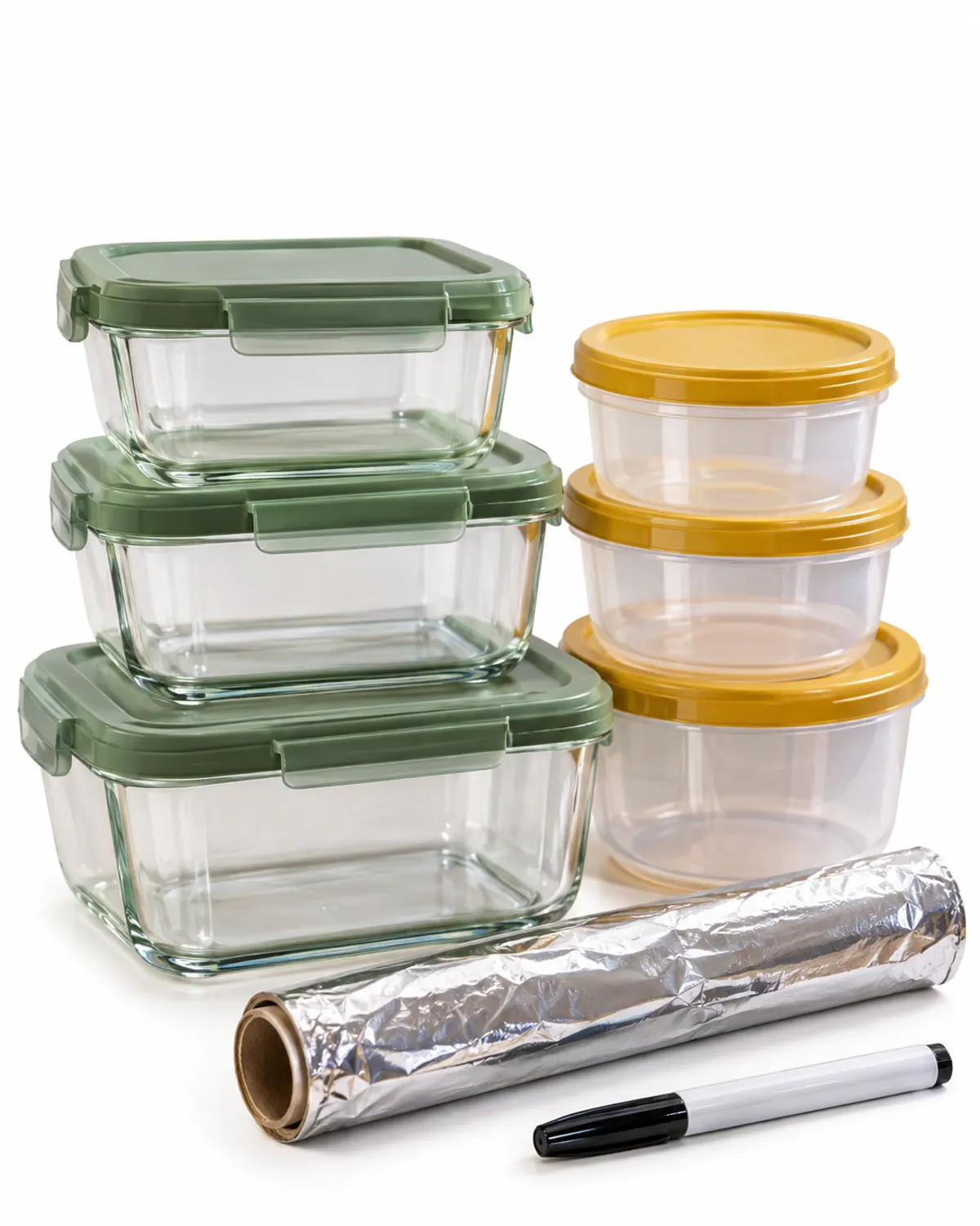
Ask each guest to bring a container. The host serves the leftovers last, starting with the main, and keeps the smaller share of each dish for the household that hosted. Anyone who brought a dish takes home some of what is left of it. Label the lids with a marker so nothing goes home twice.
If you want a plan for using the leftovers, our $75 a week meal plan and cheap dinner ideas under $10 are useful for the week after.
If the Budget Is Even Tighter: A $5 a Guest Plan
When $10 is too much, $5 a guest still makes a dinner. Ten guests at $5 is a $50 pot, which is below the Farm Bureau's 2025 $55.18 full menu, so adjust the menu rather than the guest list.
| Line | Amount | How to keep it low |
|---|---|---|
| Main dish | $20 | A smaller main such as roasted chicken parts instead of a whole turkey |
| Sides and bread | $20 | Two sides and rolls, each guest adds one from their pantry |
| Dessert | $5 | One pie or baked dessert |
| Drinks | $5 | Water, a pot of tea or coffee, one pitcher of cider |
| Tableware | $0 | Borrow plates, cups and chairs |
Where Friendsgiving Fits in Your Holiday Money
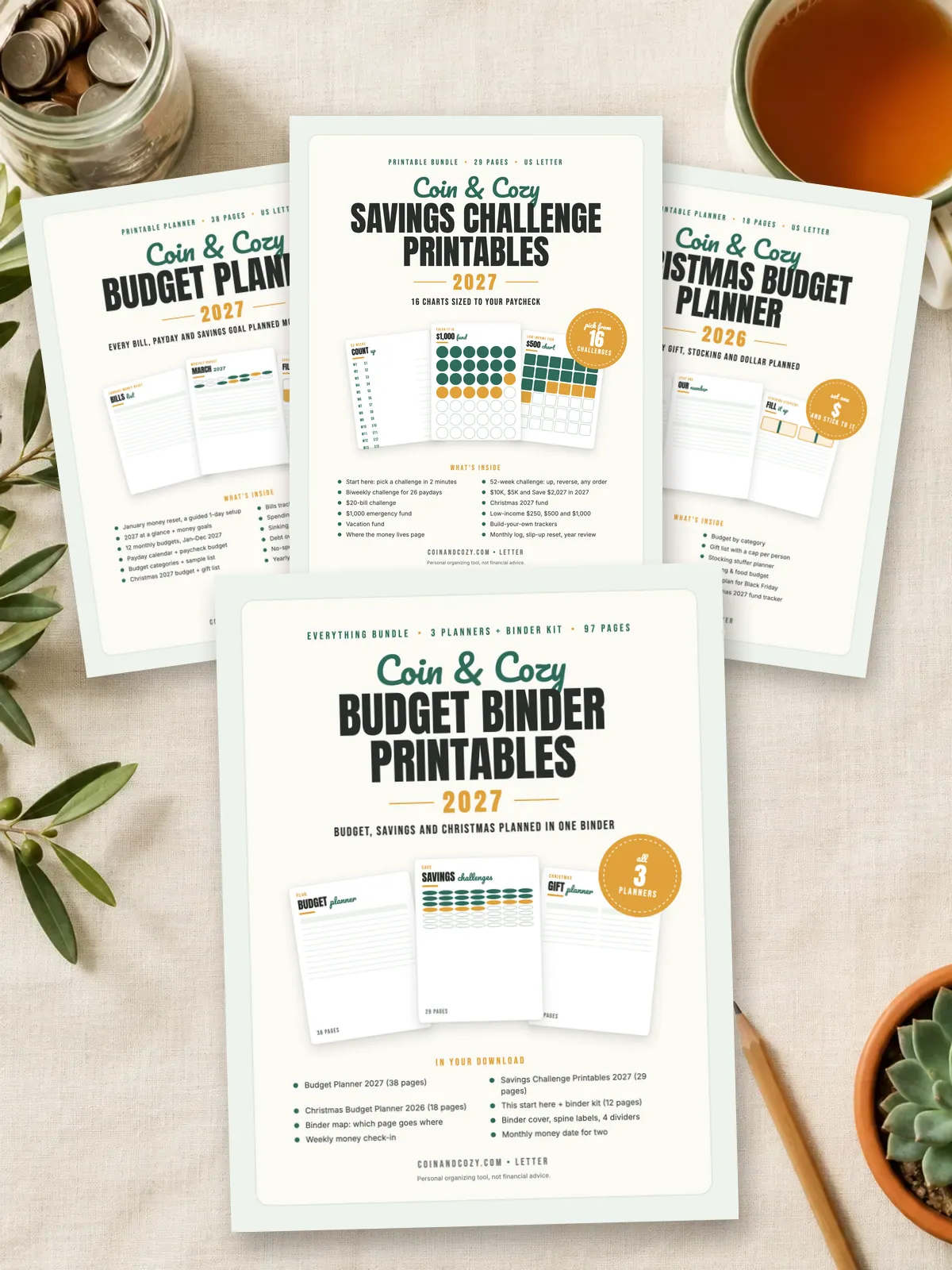
Friendsgiving is one of several November costs. Our Black Friday budget plan keeps shopping on a list, the no spend November challenge helps you find room for it, and the Christmas budget calculator shows how to set the next number. If you want a simple way to track the pot, the shop's money binder has sections for each line.
Frequently asked questions
How much should each person pay for Friendsgiving?
A common starting point is $8 to $15 a guest for a full dinner, which makes a $100 pot for 10 guests at $10 each. It is our own example, so adjust it for your menu, your stores and your group.
How do you split Friendsgiving costs when one person hosts?
Use a pooled pot where everyone sends the same amount to the host, or let the host cook the main while each guest covers one side, dessert or drinks. Agree on the rule in the first group message.
Is a potluck or a pooled pot better?
A pooled pot suits six to ten friends with one organized host. A full potluck with assigned categories often works better for twelve or more guests or very tight budgets.
How do I ask friends to chip in without it being awkward?
Send one plain message with the date, the per-guest amount, the jobs and the deadline. Offer a trade, like a pantry dish or washing up, for anyone who is short on cash.
How much does a Thanksgiving dinner for 10 cost?
In 2025 the American Farm Bureau Federation priced its classic menu for 10 at $55.18, food only. Drinks, tableware and appetizers are extra, and the 2026 survey is not out yet.
What if the cost is more than the pot?
That is what the 10% buffer is for. If receipts go over, the host can ask for a small top-up from everyone, split evenly, with the receipts shared.
Save it for later
Pin this to your Frugal Living Tips board so it's there when you need it.
Save to Pinterest